

P0441 on 2000-2009 Toyota Tundra 4.7L V8: Causes and Fixes for Incorrect Purge Flow
For a 2000-2009 Toyota Tundra, code P0441 usually points to a faulty vapor canister purge valve (solenoid) in the engine bay or cracked vacuum hoses connected to it. Expect to pay $40-$130 for the part and about 30 minutes for this DIY-friendly repair.
- P0441 means the EVAP system has an incorrect purge flow, not necessarily a leak.
- The most likely cause is a faulty purge valve (VSV) or a cracked vacuum hose in the engine bay.
- Always check the gas cap first; make sure it's tight and the seal isn't cracked.
- A smoke test is the best way to find hairline cracks in hoses that are not visible to the naked eye.
- The location of EVAP components differs between the 1st gen (2000-06) and 2nd gen (2007-09) Tundra.
What's Unique About the 2000-2009 Toyota Tundra
The 2000-2009 Tundra spans two distinct generations with different EVAP system designs. First-generation trucks (2000-2006) are known for aging rubber vacuum hoses that crack and cause this code. On these earlier models, the charcoal canister and its associated valves are located near the spare tire. Second-generation models (2007-2009) use a more complex 'key-off' system with a leak detection pump, and rodent damage to wiring and hoses near the fuel tank has been noted as a cause for this code. For both generations, the purge valve (VSV) in the engine bay remains a primary failure point due to age and wear.
Generation note: This guide covers the first generation (2000-2006) and the beginning of the second generation (2007-2009) Tundra. The location of EVAP components differs significantly. On 1st-gen models, the purge valve is in the engine bay near the battery, and the charcoal canister is near the spare tire. On 2nd-gen models, the purge valve is often on top of the intake manifold, and the EVAP system is a more complex design with a leak detection pump near the tank.
Symptoms You May Notice
- Check Engine Light is on
- A slight decrease in fuel economy
- Possible faint fuel smell
- Difficulty starting immediately after refueling (rare)
- Loss of power or a sensation similar to the vehicle switching gears (as noted in NHTSA ODI #10314949)
- Simultaneous illumination of ABS, Brake, and Traction Control lights (reported in NHTSA ODI #11651658)
- Replacing the oxygen sensors. O2 sensors are not related to the EVAP system.
- Replacing the charcoal canister when the actual problem is a simple cracked hose or faulty purge valve. A smoke test should be performed before condemning an expensive canister.
Most Likely Causes
- Faulty Vapor Purge Valve / Solenoid (VSV) 🔴 High Probability → Shop Vapor Canister This valve cycles thousands of times and can get stuck open or closed from wear over time. It's a common failure item on many Toyotas of this era, including its platform mates like the Sequoia and GX470.
How to confirm: With the engine off, disconnect the hose from the purge valve that goes to the intake manifold. Try to blow through the valve; it should be closed (no air passes). Then, apply 12V power to the valve's electrical contacts; it should click open, allowing you to blow through it. If it's stuck open or closed, it has failed.
Typical fix: Replace the vapor purge valve. It is typically located in the engine bay.
Est. part cost: $65-$130 - Cracked or Disconnected EVAP Vacuum Hoses 🟡 Medium Probability → Shop Vacuum Hose The rubber hoses, especially on first-generation (2000-2006) models, become brittle and crack with age and engine heat. This is a very common cause. The small elbow-shaped hoses connected directly to the purge valve are frequent failure points.
How to confirm: Visually inspect all vacuum lines connected to the purge valve and the charcoal canister. Pay close attention to the small rubber elbows and connectors, which often split. A smoke test is the most effective way to find small, hard-to-see cracks.
Typical fix: Replace the cracked section of hose with new, fuel-rated vacuum tubing.
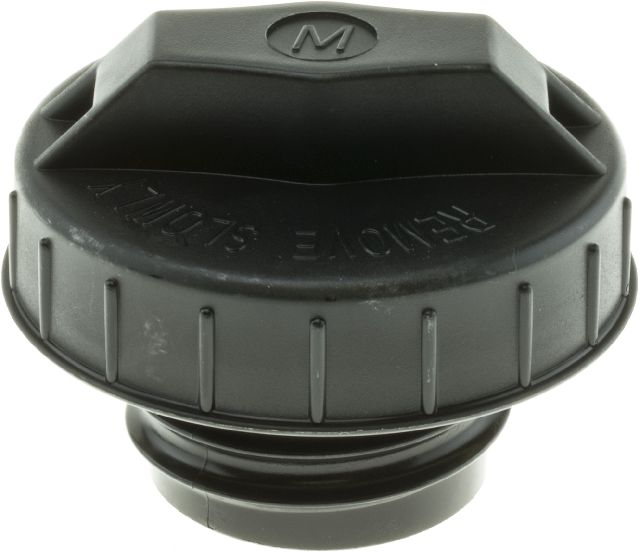
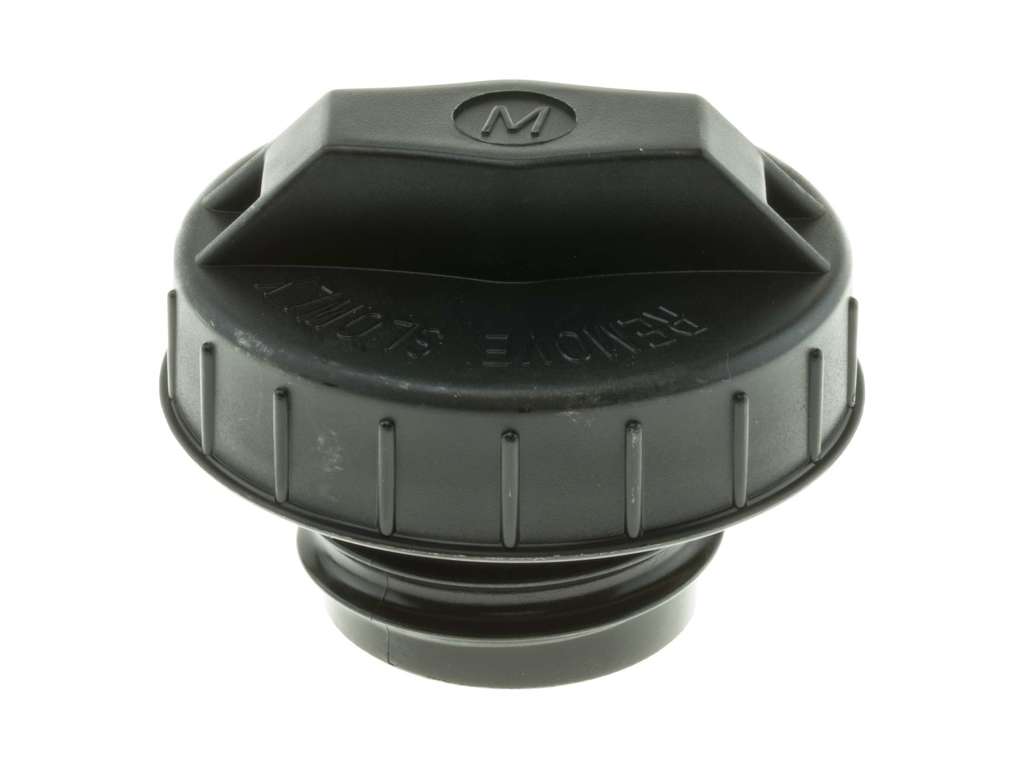
Est. part cost: $5-$20 - Faulty or Loose Gas Cap ⚪ Low Probability → Shop Fuel Tank Cap While a loose gas cap typically sets a large leak code (P0455), a worn-out seal can sometimes contribute to incorrect purge flow issues. It's a simple and cheap item to check first. A revised gas cap was made available for some platform mates to address this.
How to confirm: Check that the cap is tightened until it clicks. Inspect the rubber O-ring on the cap for cracks or deformities. If it looks worn, replacement is recommended as a cheap first step.
Typical fix: Replace the gas cap with a new OEM or high-quality aftermarket equivalent.
Est. part cost: $15-$30
Rare But Worth Checking
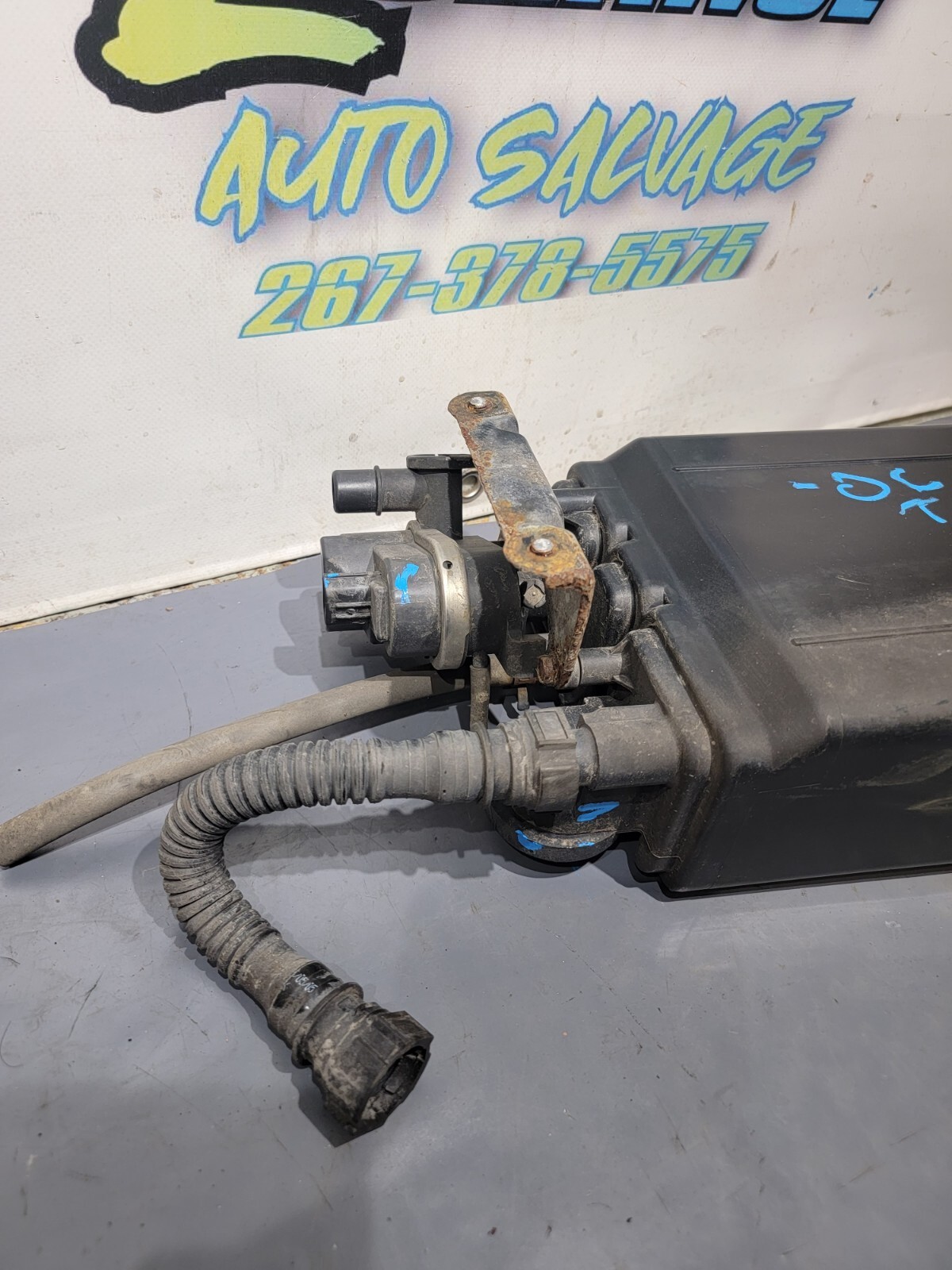
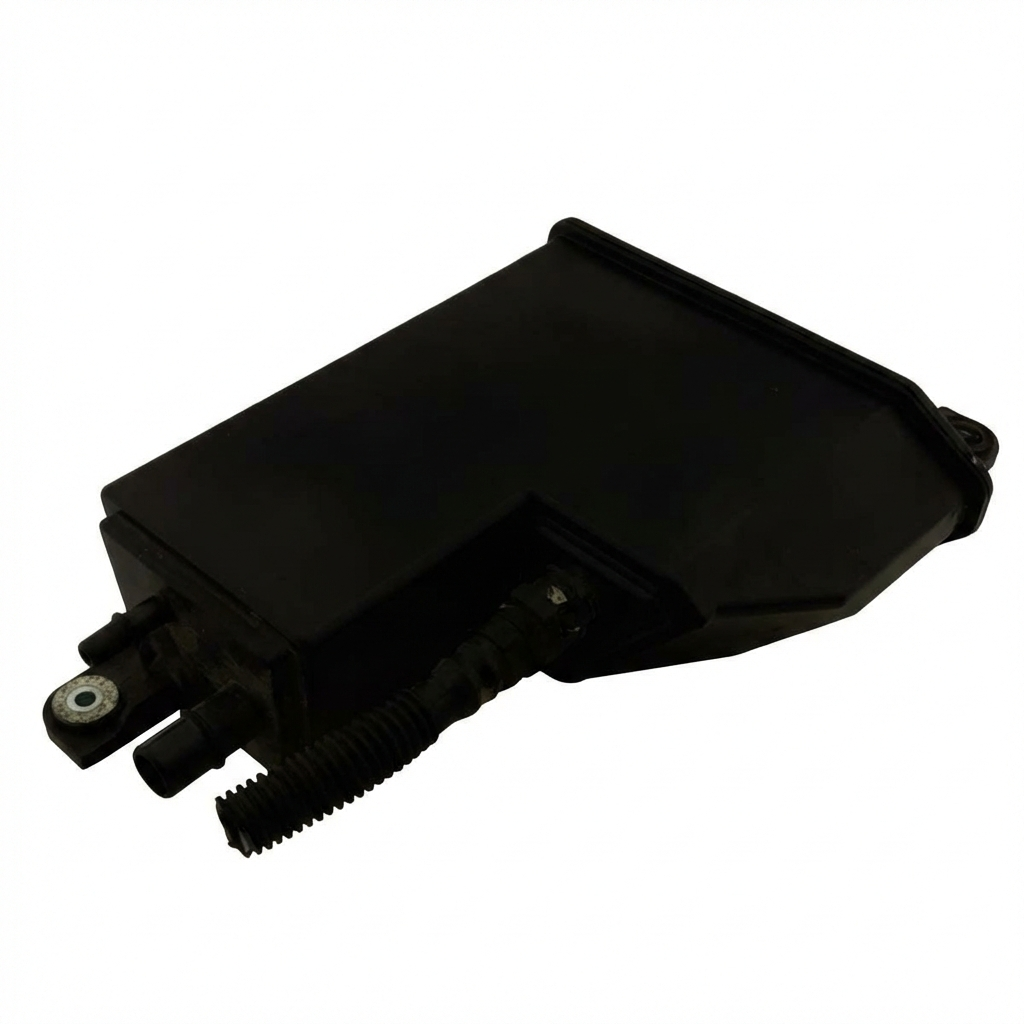
- Failed Charcoal Canister: → Shop Vapor Canister The canister can become clogged or saturated with fuel, usually from habitually overfilling the gas tank ('topping off'). This restricts airflow and can trigger P0441. When this happens, charcoal pellets can sometimes be drawn into the purge lines, clogging the purge valve as well. It may also be accompanied by other codes like P0446.
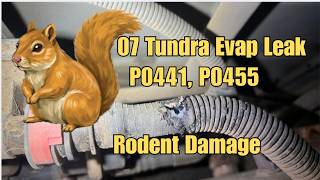
- Rodent Damage: On second-generation Tundras (2007+), there are documented cases of rodents chewing through the EVAP lines near the fuel tank, causing this code along with P0455 (large leak).
- Faulty EVAP Vent Valve/Solenoid: → Shop Vapor Canister Located near the charcoal canister, this valve allows fresh air into the system. If it gets stuck, it can disrupt the purge flow test and trigger P0441, often along with P0446.
- Engine Control Module (ECM) Fault: In rare instances, the ECM itself may require replacement to resolve P0441, as documented in NHTSA ODI #10314949 regarding a similar Toyota platform.
Diagnosis Steps
- Check the gas cap. Ensure it is tight and the seal is in good condition. Clear the code and drive to see if it returns.
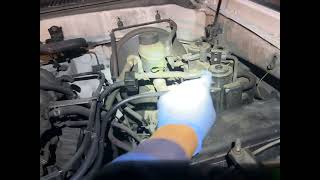
- Visually inspect the engine bay. Look for any cracked, brittle, or disconnected vacuum hoses around the purge solenoid (VSV). Pay special attention to the small rubber elbows attached to the valve.
- Locate the purge solenoid. On 2000-2006 models, it's usually near the battery on the driver's side fender. On 2007-2009 models, it's often on top of the intake manifold.
- Test the purge solenoid. With the engine off, it should be closed. Apply 12V power to see if it opens. If it's stuck open or closed, it needs replacement.
- If the purge valve and hoses appear good, perform a smoke test. This involves injecting smoke into the EVAP system to find any hidden leaks in hoses, the canister, or the fuel tank filler neck.
- Inspect the components near the charcoal canister (by the spare tire). Check the vent valve and its associated hoses for cracks or damage.
Parts You'll Likely Need
- Vapor Canister Purge Valve / Solenoid (VSV)
(OEM #90910-12271 (For 1st Gen, 2000-2004), 90910-12276 (For 2nd Gen, 2005-2009))— This is the most common mechanical failure point that causes P0441. It gets stuck open or closed from normal wear and tear.
Trusted brands: Denso, Aisin, Standard Motor Products
OEM price range: $65-$130
Aftermarket price range: $40-$90 - EVAP Vacuum Hose — Rubber hoses become brittle with age and heat, leading to cracks that cause vacuum leaks and trigger this code. This is especially common on 2000-2006 models.
OEM price range: $5-$20
Aftermarket price range: $5-$15 - Fuel Cap
(OEM #77300-47010 (Common for 1st Gen), 77300-0C010 (Common for 2nd Gen))— A worn-out gas cap seal can cause EVAP system pressure issues. It's an inexpensive and easy part to replace during diagnosis.
Trusted brands: Toyota (OEM), Stant
OEM price range: $25-$40
Aftermarket price range: $15-$25
Related Codes That Often Appear With This One
- P0446 — This code points to a problem with the EVAP system's vent control circuit. Since the vent and purge systems work together, a fault in one can sometimes trigger a code for the other. A stuck vent valve or clogged canister can cause both codes.
- P0455 — This indicates a large leak in the EVAP system. If a hose is completely broken, disconnected, or chewed through by a rodent, you may get both a large leak code and an incorrect flow code.
- P0171 — System Too Lean; this code often appears alongside P0441 when an EVAP leak also causes an unmetered air condition (NHTSA ODI #11703613, #11331260).
- P0505 — Idle Control System; a fault in the EVAP purge flow can sometimes correlate with idle stability issues (NHTSA ODI #11331260).
Mechanic-Grade Diagnostic Values
- Purge Valve (VSV) Coil Resistance — expected: 30 to 34 Ohms at 20°C (68°F) for many 2UZ-FE applications. Some sources state 30-38 Ohms.. Failure: A reading of infinite resistance (open circuit) or zero resistance (short circuit) indicates a failed solenoid coil.
Scan Tool Commands That Help
- Toyota Techstream: EVAP System Check (Automatic) — This function allows the technician to manually initiate the entire EVAP system self-test sequence without having to perform a specific drive cycle. It can confirm if the system is capable of running its monitors and can help pinpoint which part of the test is failing (e.g., pressure sensor check, purge flow check).
- Toyota Techstream: Active Test: Control the Purge VSV — This bidirectional command allows you to manually open and close the purge valve while the engine is running or off. You can use this to verify the valve clicks, and when combined with a vacuum gauge or smoke machine, you can confirm it is sealing properly when commanded closed and flowing when commanded open.
Wiring & Ground Locations
- EA — On the front left fender in the engine compartment.. This is a primary engine bay ground point. A corroded or loose connection here can cause intermittent electrical issues for various components, including the purge valve solenoid (VSV).
- EB / EC — At the rear of the right (EB) and left (EC) cylinder heads, near the transmission bell housing.. These are the main engine-to-chassis grounds. While less likely to be the sole cause for a single P0441 code, poor grounding here can lead to a host of unpredictable sensor and actuator problems.
- IE / IF — Behind the left kick panel inside the cabin.. This is a major ground distribution point for the instrument panel and driver-side controls. A fault here could potentially affect the Engine Control Module (ECM) or its inputs, though it would likely be accompanied by other codes and symptoms.
Real Owner Repair Stories
- Tundras.com user 'Bro_Dozer' (2014 Tundra SR5 (Note: This is a newer generation but the diagnostic process with Techstream is relevant)) — Failed emissions test with a P0441 code, but the Check Engine Light was not on.
❌ Tried (didn't work) Replaced aftermarket locking gas cap with a new one., Visually checked hoses., Pulled charcoal canister and blew air through lines.
✅ What actually fixed it The purge valve (VSV) under the hood was intermittently sticking. It would pass the Techstream active test sometimes and fail others. Replacing the purge valve resolved the issue. - NHTSA ODI #11415574 — An owner reported that replacing the EVAP system leak detection pump and the vapor canister purge solenoid did not resolve the P0441 and P0455 codes, suggesting deeper diagnostic proof was required.
OEM Part Supersession History
90910-12109→90910-12271— Standard part evolution and supplier changes.
Heads up: 90910-12271 is the correct service part for early 1st Gen Tundras (approx. 2000-2004) that originally used 90910-12109.90910-TC001→90910-12276— Part consolidation and design update.
Heads up: 90910-12276 is the current service part for later 1st Gen and early 2nd Gen Tundras (approx. 2005-2009). These parts are often physically similar but may have different internal flow rates or coil resistance, so using the correct number for the vehicle's specific year is important.
Model Year Variations Within This Range
- 2000-2004 vs 2005-2006: Within the first generation, there was a change in the purge valve (VSV) part number around the 2004-2005 model year. Early models use 90910-12271, while later models use 90910-12276. This corresponds with other minor system updates Toyota implemented.
- 2007-2009: The second-generation Tundra introduced a more complex EVAP system featuring a leak detection pump (LDP) as part of its 'key-off' monitor. This adds another potential failure point (the pump itself or its associated filter/hoses) that is not present on 2000-2006 models.
Diagnostic Flowchart
Other Known Issues on This Vehicle
Issues unrelated to this code that are worth knowing about as an owner of this generation:
- Frame Rust / Corrosion 🔴 High — Very common on 2000-2006 models, especially in salt-belt states. Less common but still present on 2007-2009 models. (Ref: Multiple recalls and warranty enhancement programs (e.g., LSC AOF, ZH7) were issued for frame inspection and replacement on 2000-2008 models.)
- Front Lower Ball Joint Failure 🔴 High — Common on 1st Gen (2000-2006) models, can lead to wheel separation. Often replaced preventatively around 100k miles. (Ref: Recalls issued for 2001-2004 and 2004-2007 models (e.g., 05V-225, 07V013000) due to manufacturing defects causing premature wear.)
- Cracked Exhaust Manifolds 🟠 Medium — Widespread across all 2UZ-FE applications. Presents as a 'ticking' noise when the engine is cold, which may disappear as the manifold heats up and expands.
- Secondary Air Injection Pump (SAIP) Failure 🟠 Medium — Common on 2007-2009 models (and later). The system is prone to moisture intrusion, causing pumps and valves to seize. Repair is expensive, leading many to use bypass kits. (Ref: Toyota issued a warranty extension for this issue on some models.)
- Internal Radiator Failure (1st Gen) 🔴 High — On 1st Gen automatic transmission models, the internal transmission cooler within the radiator can rupture, mixing coolant and transmission fluid ('pink milkshake') and destroying the transmission.
Used vs. New Parts: Buying Guide for This Vehicle
When a used part is the smart pick: For this repair, using a used part is generally not recommended for the electronic solenoids (purge valve, vent valve). The failure is due to internal wear and age, so a used part has unknown remaining life. A used charcoal canister can be a cost-effective option if the failure is physical damage (cracked housing), but not if it's saturated with fuel.
Donor-vehicle mileage cap: roughly under 80000 miles for the part to have meaningful remaining life.
What to inspect on the donor part:
- For a canister: Inspect for any cracks, broken hose nipples, or signs of being soaked in fuel.
- For hoses: Ensure they are still pliable and not brittle, cracked, or swollen.
- For a purge valve: Avoid. If you must, check that the electrical connector pins are clean and not corroded.
OEM-only on this vehicle (don't cheap out):
- Vapor Canister Purge Valve / Solenoid (VSV): Strongly recommended to use OEM (Toyota) or an OEM supplier like Denso or Aisin. Aftermarket valves can have incorrect flow rates or premature failures, causing the code to return.
- Gas Cap: OEM is highly recommended. Aftermarket caps are a frequent source of EVAP leaks and codes.
Aftermarket brands forum-validated for this vehicle:
- Denso (often the original OEM manufacturer)
- Aisin (often the original OEM manufacturer)
- Standard Motor Products (SMP)
Brands owners have reported issues with on this vehicle:
- Unbranded, 'white-box' parts from online marketplaces. These often have high failure rates and may not meet the precise flow specifications required by the Toyota ECU, leading to the code returning.
Real Owner Stories
Aggregated from forums and TSBs cited above. Mileages and costs reflect what owners reported in those sources.
2002 Toyota Tundra 4.7L
Symptoms: Check Engine Light with codes P0441 and P0446 found during annual inspection.
What fixed it: The owner replaced the Evap Control Solenoid Switch for $60, but it did not fix the problem; other users suggested the gas cap as the next step.
Cost: $60
Source hint: Tundras.com thread 'My recent annual inspection report says I have two fault codes: P0441...'
2005 Toyota Tundra 4.7L
Symptoms: Check Engine, VSC, and TRAC lights on with codes P0441, P0442, and P0446.
What fixed it: Replacing the two small vacuum hoses connected to the VSV near the battery. The original hoses were found to be cracked and brittle.
Source hint: Tundras.com Thread 'Check Engine, VSC, TRAC lights on'
2005 Lexus GX470 4.7L 2UZ-FE
Symptoms: EVAP codes P0441 and P0455 that were not resolved by the gas cap.
What fixed it: Troubleshooting steps included testing the purge solenoid and performing a smoke test to find leaks in the 2UZ-FE engine's EVAP system.
Source hint: Reddit r/MechanicAdvice 'When evap codes (P0441/P0455) are not the gas cap (2005 Lexus GX470)'
Documented NHTSA Reports
- An owner reported an incorrect purge flow code (P0441) alongside a large leak code (P0445), idle control system code (P0505), and a lean system code (P0171) (NHTSA ODI #11703613).
- A report described the vehicle not performing properly with multiple codes including P0171, P0505, P0441, and P0455, while also noting a noisy fuel pump (NHTSA ODI #11331260).
- NHTSA ODI #11651658 describes a case where ABS, Brake, and Traction Control lights illuminated simultaneously with error codes C1391 and P0441.
- A manufacturer report noted that for certain EVAP issues involving P0441 and P2716, the correction involved the removal and replacement of the Engine Control Module (NHTSA ODI #10314949).
Related OBD-II Codes
Frequently Asked Questions
Is there a recall for the frame rust issue on my 2000-2008 Toyota Tundra?
My 2005 Tundra has the Check Engine, VSC, and TRAC lights on. Could this be related to P0441?
Where is the purge solenoid (VSV) located on my 2008 Tundra 4.7L?
Is the 'ticking' sound on my 2UZ-FE V8 related to the EVAP system?
Are there any recalls for the front lower ball joints on a first-generation Tundra?
Can I use a bypass kit for the Secondary Air Injection Pump failure on my 2007 Tundra?
Helpful Videos
Used OEM Parts in Stock
New Aftermarket Parts Available


The information in this article is provided for general reference and educational purposes only. Vehicle specifications, procedures, and part compatibility can vary by production date, trim level, and region. Always consult your vehicle's factory service manual and verify part numbers before purchasing or performing repairs. Safety-critical components such as airbags, seat belts, and braking systems should be installed by a qualified professional.
- Toyota Tundra:
- 🧭 Diagnostic Flowchart
- 🎬 Helpful Videos
- 🛍️ Shop This Part
- What's Unique About the 2000-2009 Toyota Tundra
- Symptoms You May Notice
- Most Likely Causes
- Rare But Worth Checking
- Diagnosis Steps
- Parts You'll Likely Need
- Related Codes That Often Appear With This One
- Mechanic-Grade Diagnostic Values
- Scan Tool Commands That Help
- Wiring & Ground Locations
- Real Owner Repair Stories
- OEM Part Supersession History
- Model Year Variations Within This Range
- Other Known Issues on This Vehicle
- Used vs. New Parts: Buying Guide for This Vehicle
- Real Owner Stories
- 2002 Toyota Tundra 4.7L
- 2005 Toyota Tundra 4.7L
- 2005 Lexus GX470 4.7L 2UZ-FE
- Documented NHTSA Reports
- Related OBD-II Codes
- Frequently Asked Questions
- 🎟️ Get 5% Off