

P0441 on 2010-2017 Volvo XC60: EVAP Incorrect Purge Flow Causes and Fixes
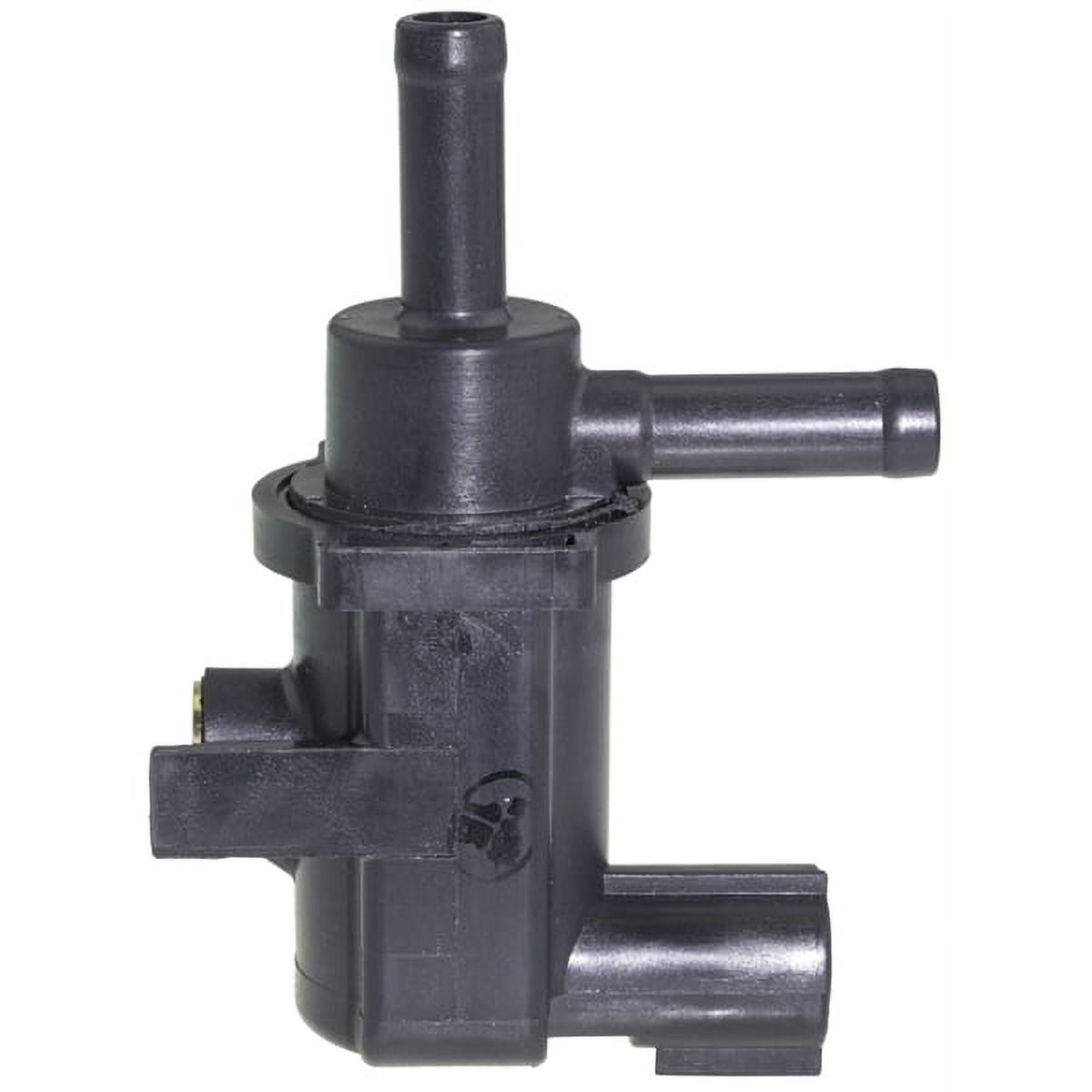
On a 2010-2017 Volvo XC60, code P0441 is most often caused by a faulty EVAP purge valve. This is a relatively inexpensive part (around $50-$100 for an OEM-quality replacement) and is accessible for DIY replacement with basic tools, often in under 15 minutes. The valve is typically located in the engine bay near the intake manifold.
- P0441 means the EVAP system has an incorrect purge flow, which is almost always caused by a faulty purge valve on the 2010-2017 XC60.
- Driving with this code is safe, but you will not pass an emissions inspection.
- Diagnosis is straightforward: start by checking the gas cap, then inspect the EVAP hoses in the engine bay, and finally test the purge valve itself.
- Replacing the purge valve (OEM Part #31338885) is a simple DIY job that requires basic hand tools and typically takes less than 15 minutes.
What's Unique About the 2010-2017 Volvo XC60
While P0441 is a standard OBD-II code, on this generation of Volvo XC60, the diagnosis is typically straightforward. The system is not known for widespread, complex issues. The most common point of failure by a wide margin is the purge valve itself, which is a simple solenoid located in the engine bay. Unlike some vehicles that may have frequent issues with cracked canisters or complex software-related faults for this code, the XC60 usually points to this single, easily replaceable component. The part is shared across many P3 platform Volvos, making it widely available.
Symptoms You May Notice
- Check Engine Light is illuminated on the dashboard.
- A faint fuel smell around the vehicle (this is rare).
- In some cases, a rough or unstable idle if the purge valve is stuck open, allowing unmetered air into the intake manifold.
- Difficulty starting the engine immediately after refueling (rare).
- Replacing the gas cap when the purge valve is the actual problem. While a gas cap is an easy first check, it's a less frequent cause for P0441 specifically.
- Replacing the charcoal canister before properly diagnosing the purge valve and hoses. The canister is more expensive, harder to access, and fails less often for this specific code.
- Assuming a major vacuum leak exists elsewhere in the system. While possible, the purge valve itself is a much more probable point of failure for P0441.
Most Likely Causes
- Faulty EVAP Purge Valve/Solenoid 🔴 High Probability → Shop Vapor Canister This is the most common failure point in the EVAP system for this code across most modern vehicles, including Volvos. The internal solenoid can wear out and get stuck open or closed. It is a frequently discussed and simple fix on Volvo owner forums.
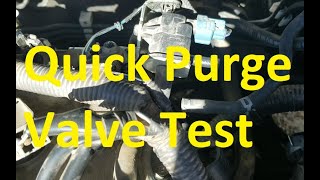
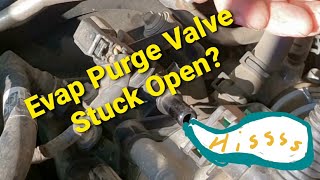
How to confirm: Locate the valve in the engine bay, typically near the intake manifold. With the engine off, disconnect the hose leading to the intake and try to blow through it; it should be closed and allow no air to pass. If you can blow through it, it's stuck open and faulty. You can also apply 12 volts to its electrical connector pins to see if it clicks open and closed. A scan tool can also command the valve to open and close to test its function. 🎬 See how to test your purge valve without any special tools.
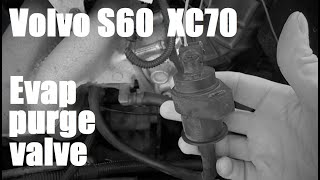
Typical fix: Replace the purge valve. This is often a 15-minute job requiring no special tools. 🎬 Watch: This walkthrough shows how simple the replacement process is.
Est. part cost: $50-$120 - Cracked or Disconnected EVAP Hose 🟡 Medium Probability The vacuum and vapor hoses, especially those in the engine bay, are exposed to heat and can become brittle and crack over time. Check the small vacuum lines connected to and surrounding the purge valve.
How to confirm: Perform a careful visual inspection of all hoses connected to the purge valve and running from the engine bay toward the back of the vehicle. Look for obvious cracks, loose connections, or collapsed sections. Pay close attention to the rubber elbows and connectors.
Typical fix: Replace the damaged section of hose or the entire line assembly.
Est. part cost: $10-$50 - Loose or Faulty Gas Cap ⚪ Low Probability → Shop Fuel Tank Cap While a bad gas cap more commonly causes large leak codes (like P0455), a cap that is not sealing correctly can sometimes contribute to incorrect flow readings by the system. It's an easy and inexpensive check.
How to confirm: Ensure the gas cap is tightened until it clicks. Inspect the rubber seal on the cap for cracks or signs of wear. If it looks worn, it's a cheap and easy part to replace as a first step.
Typical fix: Tighten or replace the gas cap. Using an OEM or high-quality aftermarket cap is recommended.
Est. part cost: $15-$30
Rare But Worth Checking
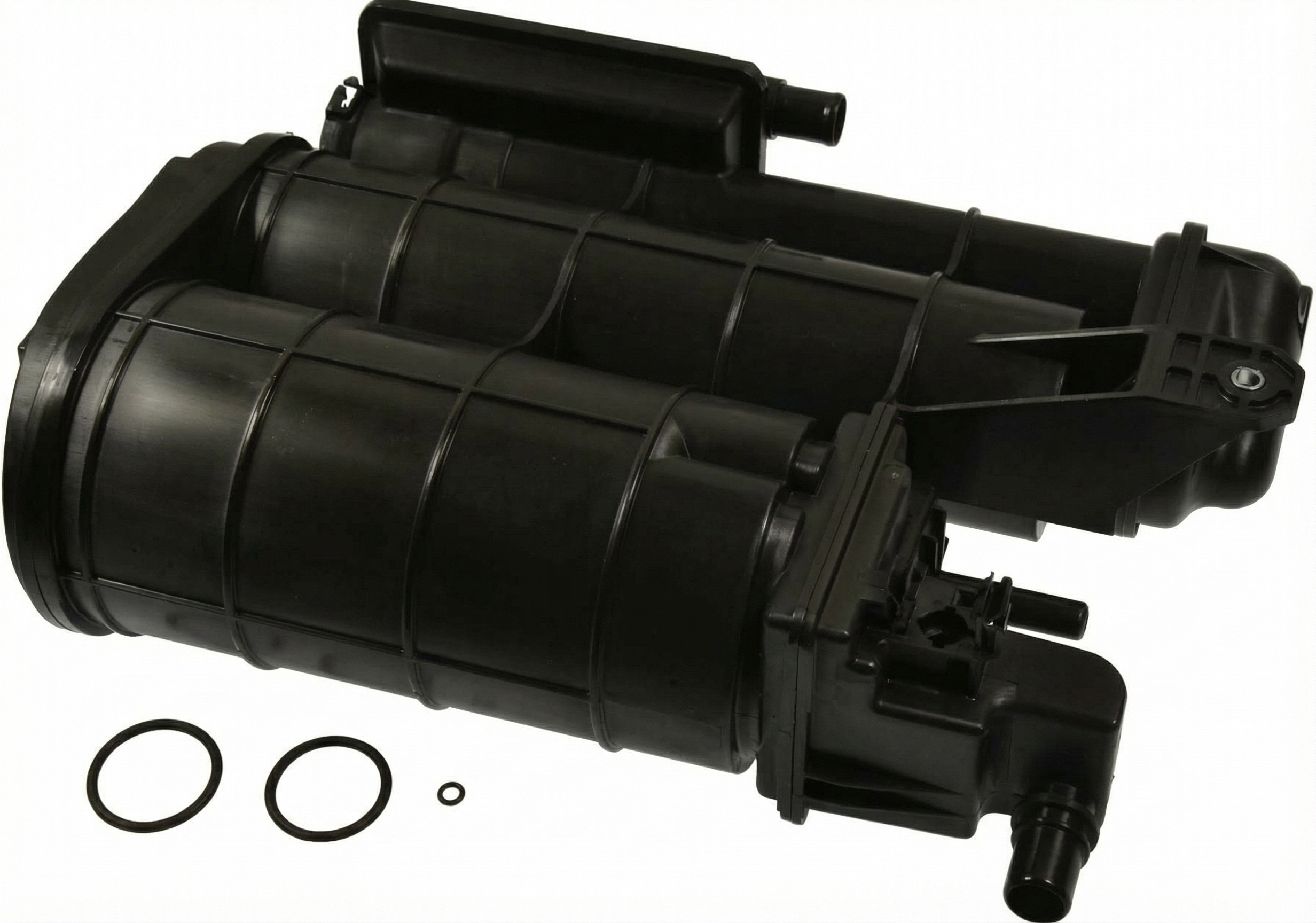
- Clogged or Failed Charcoal Canister: → Shop Vapor Canister This can happen if you habitually overfill your fuel tank, which forces liquid gasoline into the canister, saturating the charcoal pellets and causing a blockage. It is much less common than a faulty purge valve.
- Faulty Fuel Tank Pressure Sensor: → Shop Fuel Tank The sensor that measures pressure in the EVAP system can fail and send incorrect data to the computer. However, this failure will usually trigger its own specific trouble code, such as P0453.
- Blocked Purge Line: Debris from a deteriorating charcoal canister can travel up the purge line and cause a blockage, preventing flow. This is uncommon but can occur on higher-mileage vehicles.
Diagnosis Steps
- Read the code with an OBD-II scanner to confirm P0441 is present. Note any other accompanying EVAP codes like P04DF or P04F1.
- Check the gas cap. Ensure it is tight and the seal is in good condition. A cracked or worn seal warrants replacement.
- Visually inspect the engine bay. Look for any cracked, disconnected, or brittle rubber hoses connected to the EVAP purge valve and the intake manifold.
- Locate the purge valve. On the XC60 (both T6 and 3.2), it is typically mounted on the intake manifold or nearby, easily accessible under the plastic engine cover. It will have an electrical connector and two hoses attached.
- Test the purge valve for being stuck open. With the engine off, disconnect the valve's electrical connector and the hose running to the intake manifold. Try to blow through the valve from the inlet to the outlet port; it should be closed and not allow air to pass. If air passes, the valve is stuck open and must be replaced.
- Test the purge valve's solenoid operation. If it wasn't stuck open, use a pair of jumper wires to briefly apply 12V power and ground to the two pins on the valve. It should make an audible click. If it doesn't click, the solenoid is dead and the valve needs replacement.
- If the valve and hoses appear to be in good condition, the issue could be a blockage in the line from the charcoal canister or a more complex system fault. At this point, a professional smoke test is recommended to find any hairline cracks or leaks in the EVAP system that are not visible to the naked eye.
Parts You'll Likely Need
- EVAP Canister Purge Valve
(OEM #31338885)— This is the most common failure point for the P0441 code. The internal solenoid fails, causing it to stick open or closed.
Trusted brands: Bosch (OEM), Standard Motor Products, Genuine Volvo
OEM price range: $80-$120
Aftermarket price range: $40-$70
Related Codes That Often Appear With This One
- P04DF: EVAP System High Purge Flow Detected
- P04F1: EVAP System Low Purge Flow Detected
Technical Service Bulletins (TSBs) & Recalls
- While no specific TSB for P0441 on the XC60 was found, Volvo has issued Technical Journal (TJ) 31250 for some models regarding EVAP leak detection issues, which can be related. This is not a direct fix for P0441 but indicates manufacturer attention to the EVAP system.
Platform-Specific Known Issues
- Purge Valve Part Number Confusion: → Shop Vapor Canister The OEM part number 31338885 is sometimes listed as a 'Plastic Pipe' or 'Water Pipe' in various online catalogs, which can be confusing. However, it is also correctly identified as a 'Breathing Hose Exhaust Pipe' or ventilation system part, confirming its role in the EVAP system.
Mechanic-Grade Diagnostic Values
- EVAP Purge Valve Solenoid Resistance — expected: Approximately 15-30 Ohms. A real-world measurement on a Volvo valve was 21.3 Ohms.. Failure: A reading significantly outside the 15-30 Ohm range, or an open circuit (infinite resistance), indicates a failed solenoid coil.
- Voltage at Purge Valve Connector — expected: Approximately 11-12 Volts (or battery voltage) with the key in the ON position (engine off).. Failure: Zero volts or significantly low voltage points to a wiring issue, a blown fuse (F38 or F39), or a problem with the Engine Control Module (ECM) driver circuit.
- Purge Valve Vacuum Test — expected: The valve should hold a vacuum of at least 15 inches of mercury (inHg) for several minutes without dropping.. Failure: If the vacuum level drops, it indicates a leak in the valve's seal, meaning it is not closing completely.
Scan Tool Commands That Help
- Volvo VIDA (Vehicle Information & Diagnostics for Aftersales): EVAP System Test — This is the dealer-level method to command a full system self-test. The software seals the EVAP system and monitors pressure changes to diagnose leaks and flow issues that may not be obvious from a simple component test. It is the most thorough way to confirm a repair or find a very small leak.
Wiring & Ground Locations
- EVAP Purge Valve Location — At the left rear of the engine, near the intake manifold.. This is the physical location of the primary component that fails and causes P0441, needed for inspection and replacement.
- Fuse F39 (6-Cyl Engines) — In the engine compartment distribution box (fuse box).. This fuse provides power to the EVAP purge valve on 6-cylinder models. If there is no voltage at the valve's connector, this fuse should be the first place to check.
- Fuse F38 (4-Cyl Turbo Engines) — In the engine compartment distribution box (fuse box).. This fuse provides power to the EVAP purge valve on later 4-cylinder turbo models. A blown fuse will cut power and trigger a flow-related code.
Real Owner Repair Stories
- Swedespeed Forums user (2012 Volvo S60 T6 (P3 Platform sibling to the XC60)) — P0441 Check Engine Light code.
❌ Tried (didn't work) The user went straight to the most likely cause.
✅ What actually fixed it Replacing the EVAP purge valve (part number 31338885). The user noted the repair took only 5 minutes after removing the plastic engine cover.
OEM Part Supersession History
31372681→31478982— Manufacturer update or supplier change. A supersession indicates the new part is the correct and current replacement for the old one.
Heads up: The new part is backwards compatible.
Model Year Variations Within This Range
- 2010-2017: The fuse powering the EVAP purge valve differs by engine. On 6-cylinder models (3.2L, 3.0L T6), it is typically fuse F39. On later 4-cylinder turbo models, it is often fuse F38. Always verify with a vehicle-specific diagram.
Diagnostic Flowchart
Other Known Issues on This Vehicle
Issues unrelated to this code that are worth knowing about as an owner of this generation:
- Excessive Oil Consumption (Drive-E Engines) 🔴 High — Common on 2015-2016 models with 2.0L 4-cylinder 'Drive-E' engines. Caused by faulty piston rings. (Ref: Volvo issued extended warranty programs (e.g., P10207 / P10186) for affected vehicles, but it is not a full recall.)
- Automatic Transmission Shift Flare/Harsh Shifting 🟠 Medium — Reported on some earlier models with the 6-speed Geartronic transmission. Can be caused by valve body wear or outdated software. (Ref: Software updates from dealers sometimes resolved issues, but mechanical wear may require valve body replacement.)
- PCV / Breather System Failure (Petrol Engines) 🟠 Medium — The positive crankcase ventilation system can clog, leading to high crankcase pressure, oil leaks (e.g., from the camshaft seals), and sometimes a whistling noise.
- DPF and EGR Issues (Diesel Engines) 🟠 Medium — Common on diesel models, especially those used for frequent short trips. The Diesel Particulate Filter (DPF) can clog, and the EGR valve can fail due to carbon buildup.
- Leaking Windscreen 🟡 Low — Some early production models reportedly had issues with the windscreen sealant, leading to water leaks into the cabin. (Ref: Likely addressed under warranty or during service for most affected vehicles.)
Used vs. New Parts: Buying Guide for This Vehicle
When a used part is the smart pick: For the EVAP purge valve, a used OEM part from a reputable salvage yard is a very reasonable choice. It is a simple solenoid that does not experience significant mechanical wear. A part from a low-mileage, rear-ended donor vehicle can provide OEM quality for a fraction of the price.
Donor-vehicle mileage cap: roughly under 80000 miles for the part to have meaningful remaining life.
What to inspect on the donor part:
- Check for a clean, corrosion-free electrical connector.
- Ensure the plastic housing has no visible cracks or damage.
- Ask the seller for the donor vehicle's mileage if possible.
- Perform the 'blow-through' test on the spot; it should not allow air to pass.
OEM-only on this vehicle (don't cheap out):
- While not strictly 'OEM-only', the purge valve is a critical emissions component. It is highly recommended to use either a Genuine Volvo part, the OEM supplier (Bosch), or a trusted used OEM part. Avoid unbranded, extremely cheap online parts.
Aftermarket brands forum-validated for this vehicle:
- Bosch (often the original OEM supplier)
- Standard Motor Products (SMP)
- Dorman
Brands owners have reported issues with on this vehicle:
- URO Parts: Multiple forum discussions across different car communities report poor fitment, premature failure, and low-quality materials for URO-branded rubber and plastic components.
Real Owner Stories
Aggregated from forums and TSBs cited above. Mileages and costs reflect what owners reported in those sources.
2012 Volvo S60 T6 (P3 Platform)
Symptoms: Check Engine Light with code P0441.
What fixed it: Replacement of the purge valve, part number 31338885.
Source hint: Swedespeed Forums - 'P0441 Code' thread
2011 Volvo XC60 T6
Symptoms: P0441 Incorrect Purge Flow code.
What fixed it: Replacement of the EVAP purge valve; the owner noted the job was easier than performing an oil change.
Source hint: Matthews Volvo Site - 'P0441 Incorrect Purge Flow'
Related OBD-II Codes
Frequently Asked Questions
I'm looking for the purge valve for my XC60 but the catalog lists part 31338885 as a 'Plastic Pipe'. Is this the right part?
Is there a specific Technical Journal for EVAP issues on the 2010-2017 XC60?
How difficult is it to replace the purge valve on a T6 engine?
Could my P0441 code be related to the oil consumption issues on my 2015 XC60 Drive-E?
Can a bad gas cap cause P0441 on the XC60?
Helpful Videos

Used OEM Parts in Stock
New Aftermarket Parts Available


The information in this article is provided for general reference and educational purposes only. Vehicle specifications, procedures, and part compatibility can vary by production date, trim level, and region. Always consult your vehicle's factory service manual and verify part numbers before purchasing or performing repairs. Safety-critical components such as airbags, seat belts, and braking systems should be installed by a qualified professional.
- Volvo XC60:
- 🧭 Diagnostic Flowchart
- 🎬 Helpful Videos
- 🛍️ Shop This Part
- What's Unique About the 2010-2017 Volvo XC60
- Symptoms You May Notice
- Most Likely Causes
- Rare But Worth Checking
- Diagnosis Steps
- Parts You'll Likely Need
- Related Codes That Often Appear With This One
- Technical Service Bulletins (TSBs) & Recalls
- Platform-Specific Known Issues
- Mechanic-Grade Diagnostic Values
- Scan Tool Commands That Help
- Wiring & Ground Locations
- Real Owner Repair Stories
- OEM Part Supersession History
- Model Year Variations Within This Range
- Other Known Issues on This Vehicle
- Used vs. New Parts: Buying Guide for This Vehicle
- Real Owner Stories
- 2012 Volvo S60 T6 (P3 Platform)
- 2011 Volvo XC60 T6
- Related OBD-II Codes
- Frequently Asked Questions
- 🎟️ Get 5% Off