

P0442 on 2005-2008 Audi A4 2.0T: Causes and Fixes for Small EVAP Leaks
For a 2005-2008 (B7) Audi A4, a P0442 code is most often caused by a loose gas cap or a failing N80 EVAP Purge Valve. Check the gas cap first by ensuring it's tight and the seal is not cracked. If the light returns, the N80 valve is the next likely culprit, costing around $30-$60 for a quality aftermarket part and is a simple DIY replacement.
- Always check that the gas cap is tight before attempting any repairs. It's the most common fix.
- The N80 Purge Valve is the second most likely cause and is a simple, inexpensive DIY replacement located in the engine bay.
- If a new gas cap and N80 valve do not fix the code, a smoke test is necessary to find the leak and avoid wasting money on other parts.
- This code will not affect how your car drives, but it will cause an automatic failure on an emissions test.
What's Unique About the 2005-2008 Audi A4
On the B7 platform Audi A4 with the 2.0T FSI engine, the EVAP system has a few well-known failure points. The N80 Purge Valve is a notoriously common issue across many VW and Audi models of this era, often failing internally and getting stuck open or closed. While many EVAP leaks can be difficult to find, the high probability of a bad gas cap or N80 valve on this specific car means there's a good chance you can fix it without needing an expensive smoke test.
Symptoms You May Notice
- Check Engine Light is on
- A faint smell of fuel, especially around the gas cap area or after parking in a garage.
- Slightly reduced fuel economy (rarely noticeable).
- Difficulty starting the engine immediately after refueling (a symptom of a stuck-open N80 valve).
- Rough or unstable idle (if the N80 valve is stuck open, creating a vacuum leak).
- Replacing the charcoal canister before performing a smoke test. The canister is more expensive and less likely to fail than the N80 valve or gas cap.
- Replacing the fuel tank pressure sensor. While possible, this sensor is more likely to set its own specific fault codes if it fails.
- Immediately assuming a complex leak exists before thoroughly checking the gas cap seal and the filler neck for cleanliness and corrosion.
Most Likely Causes
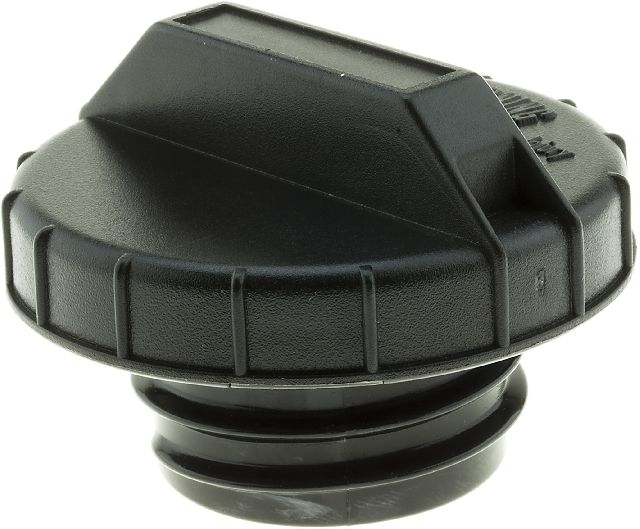
- Loose or Faulty Gas Cap 🔴 High Probability → Shop Fuel Tank Cap The rubber O-ring seal on the gas cap degrades over time, developing cracks and losing its ability to create a perfect seal. It's also very common for the cap to simply not be tightened correctly after refueling. The mating surface on the fuel filler neck can also become dirty or corroded, preventing a good seal.
How to confirm: Ensure the gas cap is tightened until it clicks at least once. Inspect the rubber seal for visible cracks, stiffness, or damage. Clean the filler neck surface with a cloth and a light solvent. If the seal looks worn, it's best to replace it.
Typical fix: Tighten the cap. If that doesn't work, replace the gas cap with a new OEM or high-quality aftermarket part. Some owners have successfully replaced just the rubber gasket on the original cap.
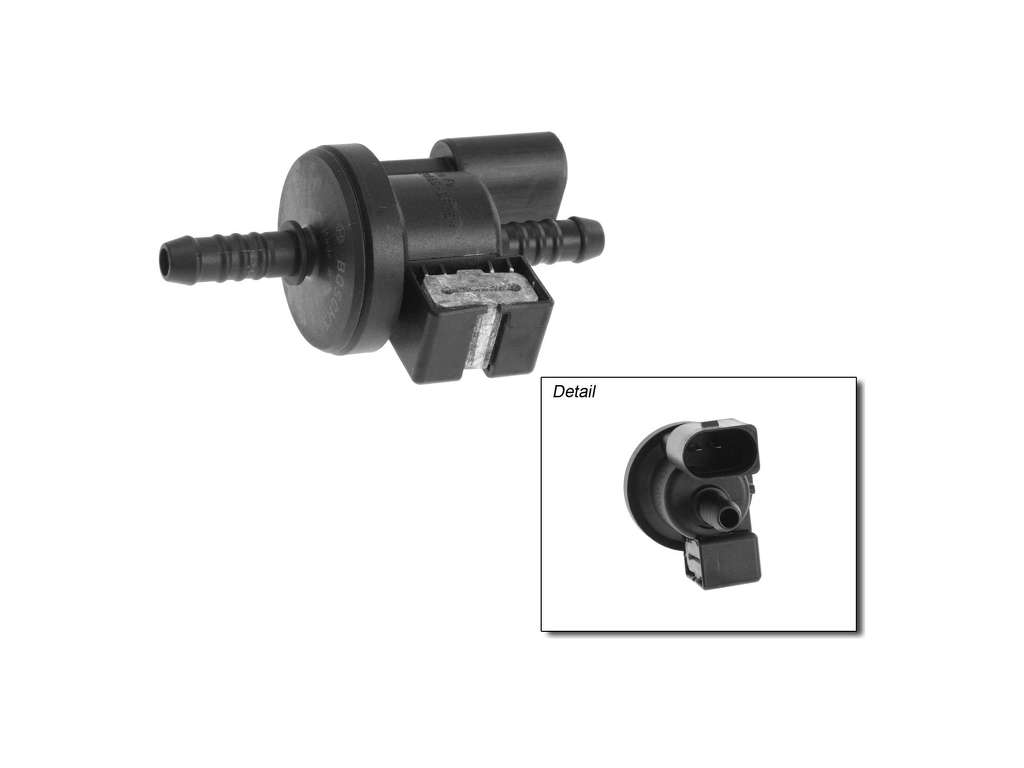
Est. part cost: $15-$45 - EVAP Canister Purge Valve (N80 Valve) 🔴 High Probability → Shop Vapor Canister This valve is a very common failure point on the 2.0T FSI engine and related VW/Audi platforms. It can get stuck partially open or closed, creating a leak path that the system detects during its self-test. A stuck-open valve can also cause rough idle and starting issues after fueling.
How to confirm: The valve is located in the engine bay, near the intake manifold. You can test it by removing it and seeing if you can blow air through it; when unpowered, it should be closed and not allow air to pass. A failing valve may also make a clicking noise that is louder than usual.
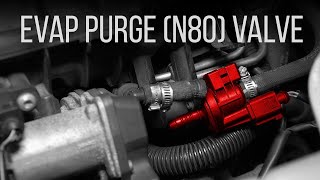
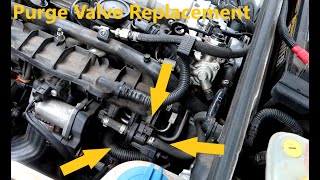
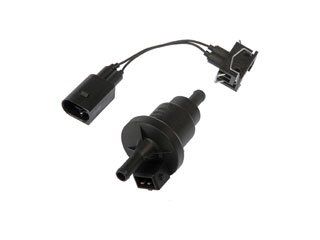
Typical fix: Replacement of the N80 valve. It is held in place by two hoses and one electrical connector. 🎬 Watch: Step-by-step N80 valve replacement for the B7 Audi A4. The original factory hose clamps are often single-use and must be cut off and replaced with standard worm-gear clamps.
Est. part cost: $30-$80 - Cracked or Disconnected EVAP/Vacuum Hoses 🟡 Medium Probability → Shop Vacuum Hose The plastic and rubber hoses in the engine bay and around the EVAP system become brittle with age and heat cycles, leading to hairline cracks. The corrugated plastic hose connected to the N80 valve is a frequent culprit.
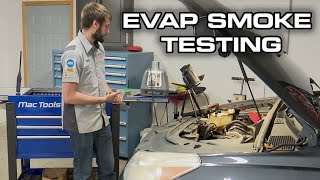
How to confirm: A visual inspection may reveal obvious cracks, especially on the lines connected to the N80 valve. However, smaller leaks are best found using a smoke machine, which fills the system with visible vapor to pinpoint the source of the leak. 🎬 See how to perform a smoke test to find hidden leaks.
Typical fix: Replace the specific cracked hose section. In some cases, owners replace all accessible vacuum lines with more durable silicone hoses as a preventative measure.
Est. part cost: $10-$50
Rare But Worth Checking
- Leaking Leak Detection Pump (LDP): → Shop Evaporative Emissions System Leak Detection Pump The LDP pressurizes the system for the leak test. It can develop an internal leak, causing a P0442 or related code even if all hoses are sealed. Audi has a Technical Service Bulletin (TSB 2035519/3) that points to a faulty LDP as a cause when no other external leaks are found after a smoke test. The LDP is located near the fuel tank, often behind the rear passenger-side wheel well liner. 🎬 Watch: How to diagnose and solve a persistent P0442 code.
- Cracked Charcoal Canister: → Shop Vapor Canister The canister itself, located near the fuel tank (often under the spare tire well area), can develop small cracks from road debris or age, creating a leak. This is usually found with a smoke test. Overfilling the fuel tank can also saturate the canister with raw fuel, causing it to fail.
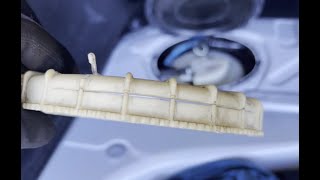
- Cracked Fuel Tank Sealing Nut/Cap: → Shop Fuel Tank There is a large plastic sealing nut/cap on the top of the fuel tank that secures the fuel pump/sending unit. This cap can develop hairline cracks and cause an EVAP leak. It is accessible by removing the rear seat bottom cushion. This failure is often only found with a smoke test, as smoke will be seen coming from under the rear seat area.
Diagnosis Steps
- Read the code with an OBD-II scanner to confirm P0442 is present.
- Inspect the gas cap. Ensure it is tight and clicks when closed. Remove the cap and carefully inspect the rubber seal for any signs of cracking, brittleness, or wear. Clean the fuel filler neck surface where the cap seals.
- Clear the code. If the cap was loose or the seal is suspect, replace the cap with an OEM part. Drive for a few days to see if the code returns.
- If the code returns, locate the N80 Purge Valve in the engine bay. Inspect the connected hoses for visible cracks or loose connections.
- Test or replace the N80 valve. This is the second most likely culprit and is a common DIY fix. A new valve is often cheaper than the diagnostic time to test the old one.
- If the gas cap and N80 valve have been addressed and the code persists, the next step is a professional smoke test. This test will fill the EVAP system with a harmless, visible smoke, making it easy to spot the exact location of the leak, whether it's a hose, the charcoal canister, the LDP, or the fuel tank sealing cap.
Parts You'll Likely Need
- EVAP Canister Purge Valve (N80 Valve)
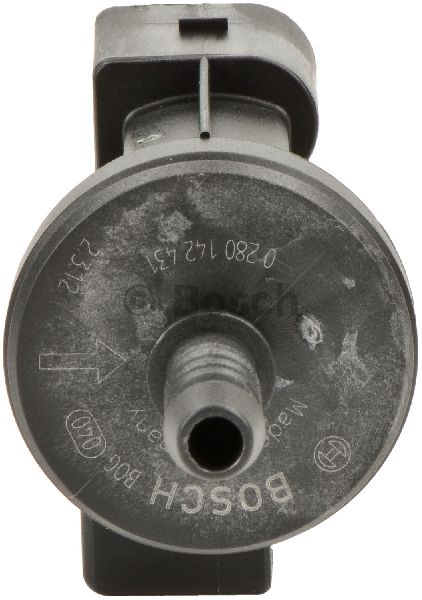
(OEM #06E906517A)— This is the most common mechanical failure for P0442 on this engine after the gas cap. It frequently gets stuck and is a common failure item across many VW/Audi vehicles.
Trusted brands: Bosch, Genuine VW/Audi
OEM price range: $60-$90
Aftermarket price range: $30-$60 - Fuel Cap
(OEM #8E0201553E)— The seal wears out, causing it to be the most common and simplest reason for a small EVAP leak.
Trusted brands: Genuine VW/Audi, Stant, Blau
OEM price range: $30-$45
Aftermarket price range: $15-$25
Related Codes That Often Appear With This One
- P0441 — This code for 'Incorrect Purge Flow' is often caused by the same faulty N80 purge valve that triggers P0442. If the valve is stuck, it can cause both a flow issue and a leak.
- P0455 — This code indicates a large EVAP leak. Sometimes a component that starts with a small leak (P0442) can worsen over time and trigger a large leak code.
- P0171 — This code for 'System Too Lean' can sometimes appear if a vacuum leak in the EVAP system (like a stuck-open N80 valve) is large enough to allow unmetered air into the intake manifold, affecting the air-fuel mixture.
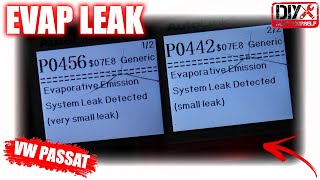
- P0456 — This code indicates a 'Very Small Leak', which is even smaller than the leak for P0442. It can be caused by the same components, and sometimes a failing part can trigger either code intermittently.
Technical Service Bulletins (TSBs) & Recalls
- Audi TSB 2035519/3: Identifies a faulty Leak Detection Pump (LDP) as a potential cause for P0442 when no other external leaks can be found via a smoke test. The TSB directs technicians to replace the LDP if it is found to be leaking internally.
Platform-Specific Known Issues
- Original N80 Valve Hose Clamps: If the N80 valve has never been replaced, it will likely have single-use crimp-style hose clamps. These must be carefully cut off with diagonal cutters, taking care not to damage the underlying hoses. They need to be replaced with standard screw-type hose clamps.
Mechanic-Grade Diagnostic Values
- N80 EVAP Canister Purge Valve coil resistance — expected: 22 - 32 Ohms. Failure: An 'open circuit' (infinite resistance) or a reading significantly outside the expected range indicates a failed coil.
- Leak Detection Pump (LDP) V144 internal resistance (Terminal 1 to 3) — expected: 640 - 720 Ohms. Failure: A reading outside this range indicates a fault within the LDP's internal heating element.
- Leak Detection Pump (LDP) V144 internal resistance (Terminal 2 to 3) — expected: 15 - 17 Ohms. Failure: A reading outside this range indicates a fault within the LDP's reed switch solenoid.
- VCDS Measuring Block 070 (EVAP Purge) — expected: Field 1 shows duty cycle percentage (e.g., 0-40%) during test; Field 4 shows test status 'Test ON/Test OFF' and result 'EVAP OK'.. Failure: If the test aborts or fails, or the duty cycle does not change when commanded, it points to an issue with the N80 valve or its circuit.
- VCDS Measuring Block 071 (EVAP Leak Test) — expected: Shows test status (e.g., 'System test', 'measurement') and final result 'Syst. OK'.. Failure: A result of 'Small leak', 'Large leak', or 'Syst. Not OK' confirms the ECU has detected a leak.
Scan Tool Commands That Help
- VCDS (VAG-COM): Engine -> Basic Settings -> Group 070 — To initiate the diagnostic test for the N80 EVAP Purge Valve. The ECU will cycle the valve and report back if the system is functioning correctly ('EVAP OK').
- VCDS (VAG-COM): Engine -> Basic Settings -> Group 071 — To command the ECU to perform the full EVAP system leak test using the Leak Detection Pump (LDP). This is the test that sets the P0442 code. Running it manually can confirm a fix without waiting for a full drive cycle.
- VCDS (VAG-COM): Engine -> Output Tests — To manually cycle individual components. You can select the N80 valve to hear it click, confirming the solenoid is activating. You can also activate the LDP to listen for its operation at the rear wheel well.
Wiring & Ground Locations
- Leak Detection Pump (LDP) — Located in the left rear wheel well, behind the fender liner.. This pump pressurizes the system for the self-test. Its wiring and connector are exposed to road spray and can corrode, causing test failure. It can also fail internally.
- G12 Ground Point — Located at the center of the firewall in the engine bay.. This is a primary ground for the Engine Control Module (ECM). A poor connection here can cause a wide range of erratic engine management behavior, including faulty sensor readings and failed diagnostic tests.
- Ground Point 135 — An earth connection located in the dash panel wiring harness.. This ground serves various interior and engine-related electronics. A fault here could interrupt signals between the ECM and EVAP system components.
- N80 Purge Valve — On the driver's side of the engine bay, mounted near the intake manifold and master cylinder.. This is a primary failure point. Knowing its exact location is key for inspection and replacement. The wiring connector faces downwards and can collect debris.
Real Owner Repair Stories
- YouTube user 'audimex' (Audi A4 (generation not specified but repair is identical for B7)) — P0442 'Small Leak' check engine light.
❌ Tried (didn't work) Checking the gas cap., Checking the N80 purge valve., Checking the charcoal canister and hoses.
✅ What actually fixed it A smoke test revealed smoke coming from under the rear seat. The cause was a large, cracked plastic sealing nut that secures the fuel sending unit to the top of the gas tank. The nut was replaced to fix the leak. - AudiWorld Forums user 'kpatz' (Audi A8 (D3), but with identical EVAP components and diagnostic path to the A4 B7.) — Recurring P0442 code.
❌ Tried (didn't work) Replacing all vacuum lines., Replacing the N80 purge valve (code returned after one month).
✅ What actually fixed it The user found a cracked plastic fitting on the fuel filler neck expansion tank, located in the right rear fender well area. The fitting likely cracked during previous repairs. A temporary fix with tubing and clamps resolved the code, proving it was the source of the leak.
"I Checked Everything" — The Actual Cause
- The official Audi TSB (2035519/3) for this code addresses the exact scenario where a smoke test reveals no external leaks. In this case, the fault is often an internal leak within the Leak Detection Pump (LDP) itself, which requires replacing the pump.
- An intermittently sticking N80 purge valve can pass a static smoke test (when it happens to be closed) but will fail the ECU's dynamic self-test when it sticks open during the test cycle, triggering a P0442 with no visible leak source.
When the Usual Fixes Don't Work
- While the N80 valve and gas cap are the most common culprits, numerous owner reports confirm that a persistent P0442 code is frequently caused by more obscure issues after these parts have been replaced. In one case, a user who replaced the N80 valve still had the code return, and the final fix was a cracked plastic fitting on the fuel filler expansion tank. In another documented repair, the final cause was a large cracked sealing nut on top of the fuel tank, found only after a smoke test pointed to a leak under the rear seat. These cases highlight that if the two simple fixes don't work, a smoke test is not optional; it is essential for finding the true root cause.
OEM Part Supersession History
6E906517→06E906517A— Standard part number evolution and minor revisions.
Heads up: These parts are fully cross-compatible. The Bosch equivalent part number is 0280142431. While other revisions like a 'C' suffix may exist, the 'A' version is the most common and correct replacement for this platform.
Model Year Variations Within This Range
- 2005-2008: No significant variations in the EVAP system components, common failures, or diagnostic procedures for code P0442 have been documented for the B7 platform A4 2.0T. The fixes are consistent across the entire model year range.
Diagnostic Flowchart
Other Known Issues on This Vehicle
Issues unrelated to this code that are worth knowing about as an owner of this generation:
- High-Pressure Fuel Pump (HPFP) Cam Follower Failure 🔴 High → Shop Fuel Pump — Very common. Recommended for preventative replacement every 30,000-40,000 miles. Failure can destroy the camshaft and HPFP.
- PCV System Failure 🟠 Medium — Common failure item. Can lead to high oil consumption, rough idle, oil leaks, and various engine codes.
- Excessive Oil Consumption 🟠 Medium — Widespread issue, often attributed to failing piston rings or a bad PCV system. Consumption of 1 quart per 1,000-1,500 miles is reported by many owners.
- Diverter Valve (DV) Failure 🟡 Low — The original diaphragm-style DV is prone to tearing, causing a loss of boost pressure (Code P0299). An updated piston-style valve is available.
- Clogged Oil Pickup Tube 🔴 High — Less common but catastrophic. Debris from a failing PCV system or dipstick tube can clog the oil pickup, leading to oil starvation and engine failure.
Used vs. New Parts: Buying Guide for This Vehicle
When a used part is the smart pick: For purely structural, non-electronic parts, a used component can be a cost-effective option. This includes EVAP hoses (if visually inspected for cracks and still flexible), the charcoal canister (if from a low-mileage, non-flooded donor and not saturated with fuel), or the plastic fuel tank sealing nut.
Donor-vehicle mileage cap: roughly under 100000 miles for the part to have meaningful remaining life.
What to inspect on the donor part:
- For hoses: Squeeze the hose to ensure it is pliable and not hard or brittle. Check for any visible surface cracking.
- For electronic parts (LDP, N80): Ask for the donor vehicle's mileage and check for visible corrosion on connectors.
- For charcoal canister: Ensure there is no smell of raw fuel and no physical damage or cracks to the housing.
OEM-only on this vehicle (don't cheap out):
- Fuel Cap: Aftermarket gas caps are a frequent cause of EVAP codes. It is strongly recommended to use a Genuine VW/Audi cap (P/N 8E0201553E) to ensure a perfect seal.
Aftermarket brands forum-validated for this vehicle:
- Bosch: Bosch is the original equipment manufacturer (OEM) for the N80 Purge Valve (P/N 06E906517A). A Bosch-branded replacement is equivalent to the genuine part.
Brands owners have reported issues with on this vehicle:
- Unbranded 'no-name' electronic sensors and valves from online marketplaces. These often have incorrect internal resistance values, leading to immediate or premature failure.
Real Owner Stories
Aggregated from forums and TSBs cited above. Mileages and costs reflect what owners reported in those sources.
2007 Audi A4 2.0T — 60000 miles
Symptoms: Rougher idle than usual, throttle stutters with light pressure between 2000-3500 RPMs, tachometer jumps/twitches, and the dash flashed 'Tighten Fuel Cap'.
What fixed it: The owner replaced the fuel cap, though the initial report noted the codes P0442 and P0456 persisted immediately after.
Source hint: AudiWorld Forums: My 2007 A4 2.0 auto has been acting differently as of late...
2005-2008 Audi A4 2.0T
Symptoms: A recurring P0442 code that persisted even after replacing vacuum lines and the N80 valve.
What fixed it: The discussion concluded that a professional smoke test is required to identify if the Leak Detection Pump (LDP) or charcoal canister is the source.
Source hint: AudiWorld Forums: P0442 Evap Leak Saga Continues
Related OBD-II Codes
Frequently Asked Questions
Does Audi TSB 2035519/3 apply to my A4 if a smoke test doesn't find a leak?
Why does my A4 2.0T struggle to start only after I fill up the gas tank?
Can I just replace the rubber seal on my gas cap instead of buying a whole new assembly?
Are the hose clamps on the N80 valve reusable on the 2005-2008 models?
Is the N80 valve failure unique to the Audi A4?
What specific hose is most likely to crack and cause this small EVAP leak?
Helpful Videos
We Have This Part in Stock


The information in this article is provided for general reference and educational purposes only. Vehicle specifications, procedures, and part compatibility can vary by production date, trim level, and region. Always consult your vehicle's factory service manual and verify part numbers before purchasing or performing repairs. Safety-critical components such as airbags, seat belts, and braking systems should be installed by a qualified professional.
- Audi A4:
- 🧭 Diagnostic Flowchart
- 🎬 Helpful Videos
- 🛍️ Shop This Part
- What's Unique About the 2005-2008 Audi A4
- Symptoms You May Notice
- Most Likely Causes
- Rare But Worth Checking
- Diagnosis Steps
- Parts You'll Likely Need
- Related Codes That Often Appear With This One
- Technical Service Bulletins (TSBs) & Recalls
- Platform-Specific Known Issues
- Mechanic-Grade Diagnostic Values
- Scan Tool Commands That Help
- Wiring & Ground Locations
- Real Owner Repair Stories
- "I Checked Everything" — The Actual Cause
- When the Usual Fixes Don't Work
- OEM Part Supersession History
- Model Year Variations Within This Range
- Other Known Issues on This Vehicle
- Used vs. New Parts: Buying Guide for This Vehicle
- Real Owner Stories
- 2007 Audi A4 2.0T — 60000 miles
- 2005-2008 Audi A4 2.0T
- Related OBD-II Codes
- Frequently Asked Questions
- 🎟️ Get 5% Off