

P0442 on 2009-2016 Audi A4: Causes and Fixes for Small EVAP Leaks
For a 2009-2016 Audi A4, a P0442 code is most often caused by a faulty gas cap or a failing EVAP purge valve (N80). Start by checking the gas cap for a good seal. If that doesn't work, the N80 valve is the next likely culprit, costing around $20-$50 for a DIY replacement. If these simple fixes don't work, a smoke test is necessary to find the leak, which could be a cracked hose, a faulty Leak Detection Pump (LDP), or even a cracked fuel tank lock ring.
- Always start with the simplest fix: check that your gas cap is tight. If that fails, replace it.
- The second most likely culprit on a 2009-2016 A4 is the N80 purge valve, an inexpensive and relatively easy part to replace.
- A P0442 code will not leave you stranded, but it will cause you to fail an emissions test.
- If a new gas cap and N80 valve don't fix the code, you will likely need a professional smoke test to find the leak.
What's Unique About the 2009-2016 Audi A4
On the B8 generation Audi A4 (2009-2016), the EVAP system components are well-known to owners and mechanics. While a loose gas cap is a universal cause, these Audis are particularly known for failures of the N80 EVAP purge valve, which is conveniently located on the engine. Another, less common but notable issue, can be a cracked plastic lock ring on the fuel tank sending unit, which requires a smoke test to find. Additionally, the fuel filler neck can corrode, preventing the gas cap from sealing properly, and the Leak Detection Pump (LDP) itself can fail, as noted in Audi Technical Service Bulletins.
Generation note: The 2009-2016 model years cover the Audi A4 B8 platform, which includes the pre-facelift (2009-2012) and facelift (B8.5, 2013-2016) models. The core EVAP system design and common failure points like the N80 valve and Leak Detection Pump (LDP) are largely the same across this generation and shared with platform mates like the A5, S4, and Q5.
Symptoms You May Notice
- Check Engine Light is on
- A faint smell of fuel, especially around the rear of the car or after refueling
- Difficulty starting the engine immediately after refueling (if the purge valve is stuck open)
- A "Close Gas Cap" message on the instrument cluster display, even if the cap is tight.
- Rough idle shortly after starting the engine.
- Replacing the oxygen sensor, as it has no relation to the EVAP system.
- Replacing the charcoal canister when the actual fault is a much cheaper and simpler component like the gas cap or N80 valve. A smoke test should always be performed before replacing expensive components.
- Assuming the code is always a loose gas cap and repeatedly clearing it without further diagnosis when it returns.
Most Likely Causes
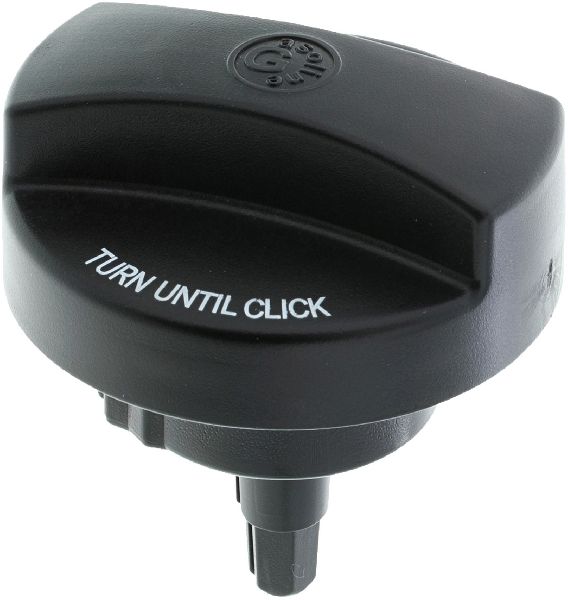
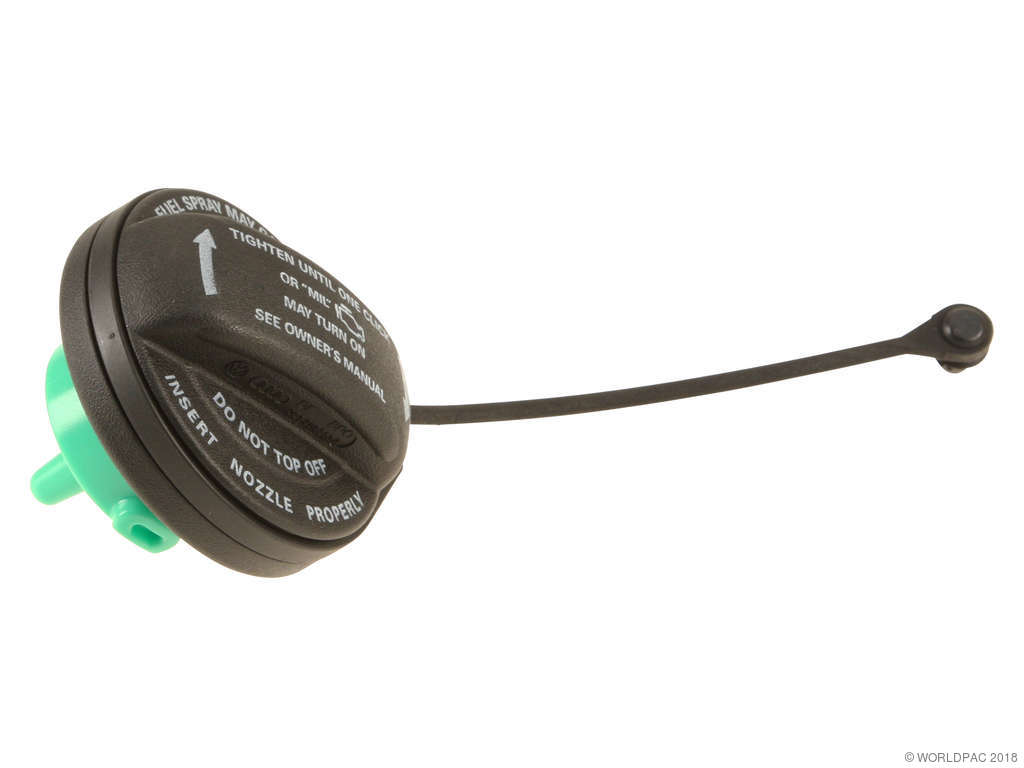
- Loose or Worn Gas Cap 🔴 High Probability → Shop Fuel Tank Cap The gas cap seal is a rubber component that degrades over time from exposure to fuel vapors and weather, losing its ability to create a perfect seal. It is the most common and easiest fix for a P0442 code.
How to confirm: Ensure the cap is tightened until it clicks several times. Inspect the rubber O-ring on the cap for cracks, stiffness, or visible damage. Also, inspect the mating surface on the fuel filler neck for rust or debris, which can prevent a good seal, and clean it with a wire brush if necessary.
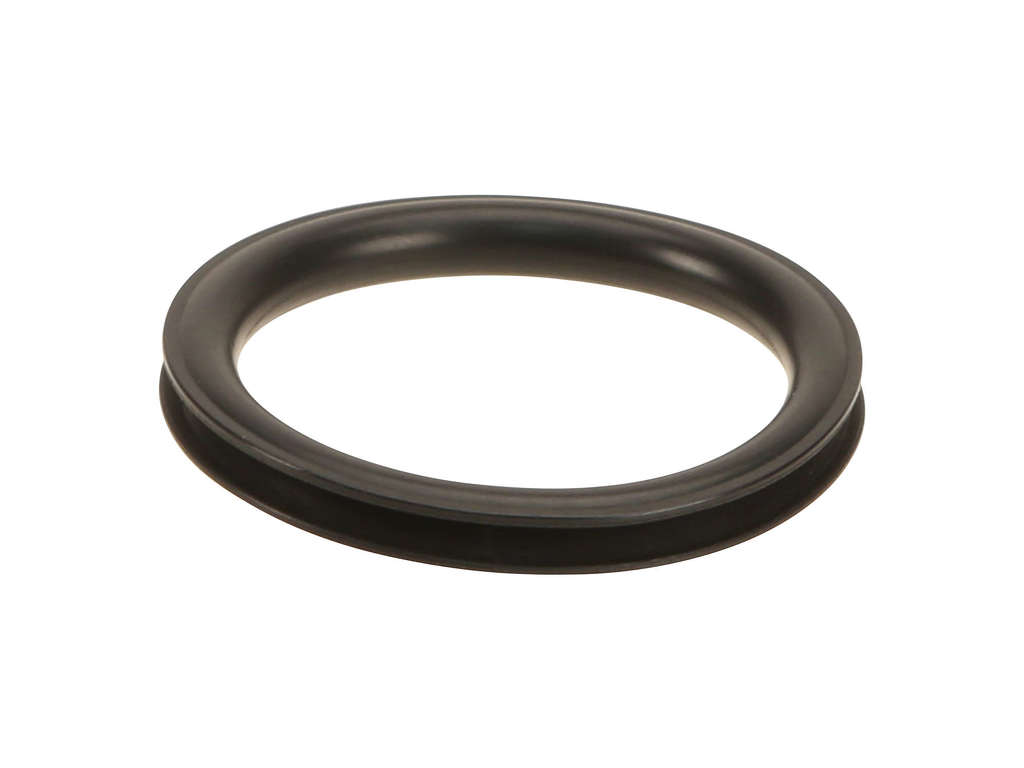
Typical fix: Replace the gas cap with a new OEM or high-quality aftermarket part. Using a genuine OEM cap is often recommended as some aftermarket caps may not seal correctly. A cheaper alternative is to replace only the rubber sealing ring, part number 191-201-557.
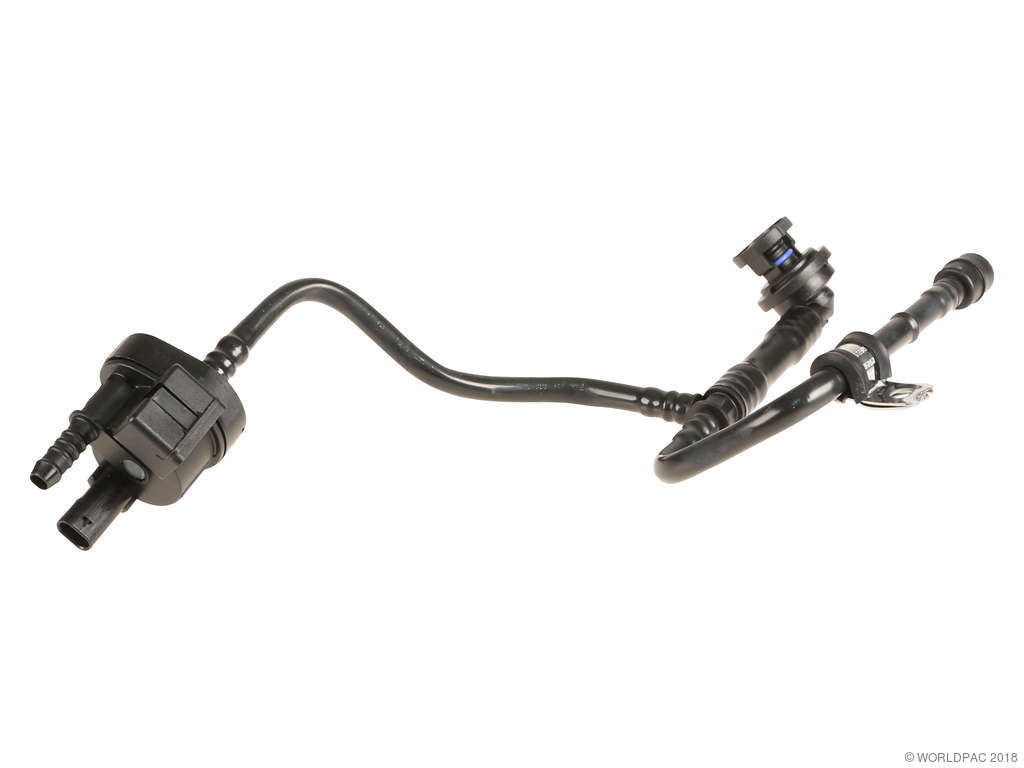
Est. part cost: $15-$40 - Faulty EVAP Purge Valve (N80 Valve) 🟡 Medium Probability → Shop Vapor Canister This valve is a very common failure item on many VW and Audi models of this era. It can get stuck open or closed, or leak internally, causing the system to fail its pressure test. A stuck-open valve is a frequent cause of hard starting after refueling.
How to confirm: With the engine off, try to blow through the valve; it should be closed and not allow air to pass. With the engine running, you can disconnect the vapor line and feel for vacuum with your finger. A loud clicking noise from the valve at idle is also a common symptom of failure. A more definitive test involves measuring the valve's electrical resistance, which should be between 15 and 25 ohms.
Typical fix: Replace the N80 valve. It is located on the driver's side of the engine bay and is easy to access and replace with basic tools. 🎬 Watch: Step-by-step guide to replacing the N80 purge valve.
Est. part cost: $20-$50 - Cracked or Disconnected EVAP Hoses ⚪ Low Probability Over time, the plastic and rubber hoses in the engine bay and under the car can become brittle and crack, especially at connection points and plastic fittings.
How to confirm: A visual inspection may reveal obvious cracks or loose connections, particularly around the N80 valve and charcoal canister. However, a smoke test is the most effective way to find small, hard-to-see leaks in the hose network.
Typical fix: Replace the specific section of damaged hose or the faulty connector. In some cases, a simple hose clamp may be needed to secure a loose connection.
Est. part cost: $10-$60
Rare But Worth Checking
- Faulty Leak Detection Pump (LDP): → Shop Evaporative Emissions System Leak Detection Pump The LDP is the component that pressurizes the system for the leak test. If the pump itself has an internal leak, it can trigger a P0442 or P0456 code. Audi TSB 2035519/3 specifically identifies a faulty LDP as a potential cause when no other system leaks are found. The LDP is located near the fuel tank, often behind the rear passenger-side wheel liner.
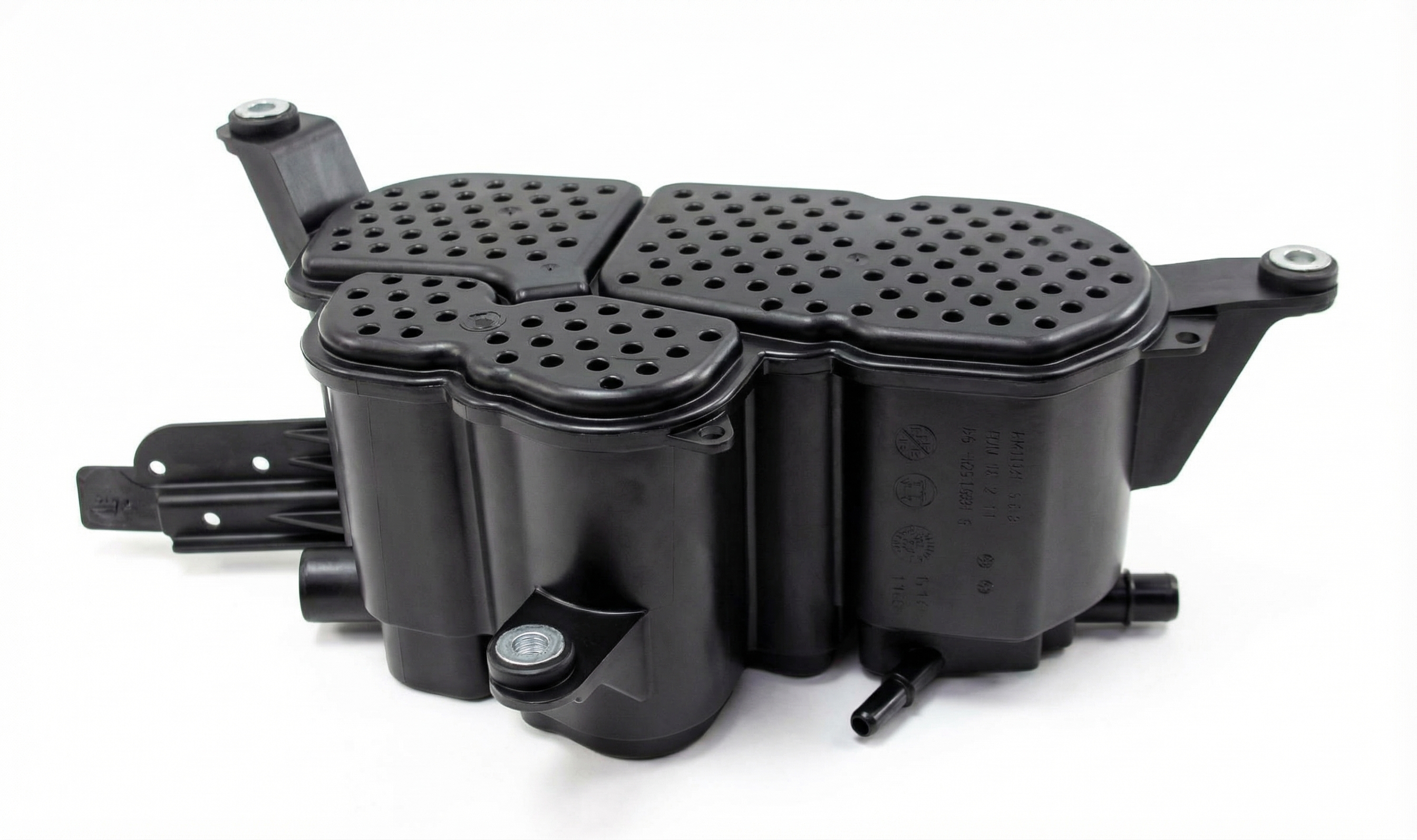
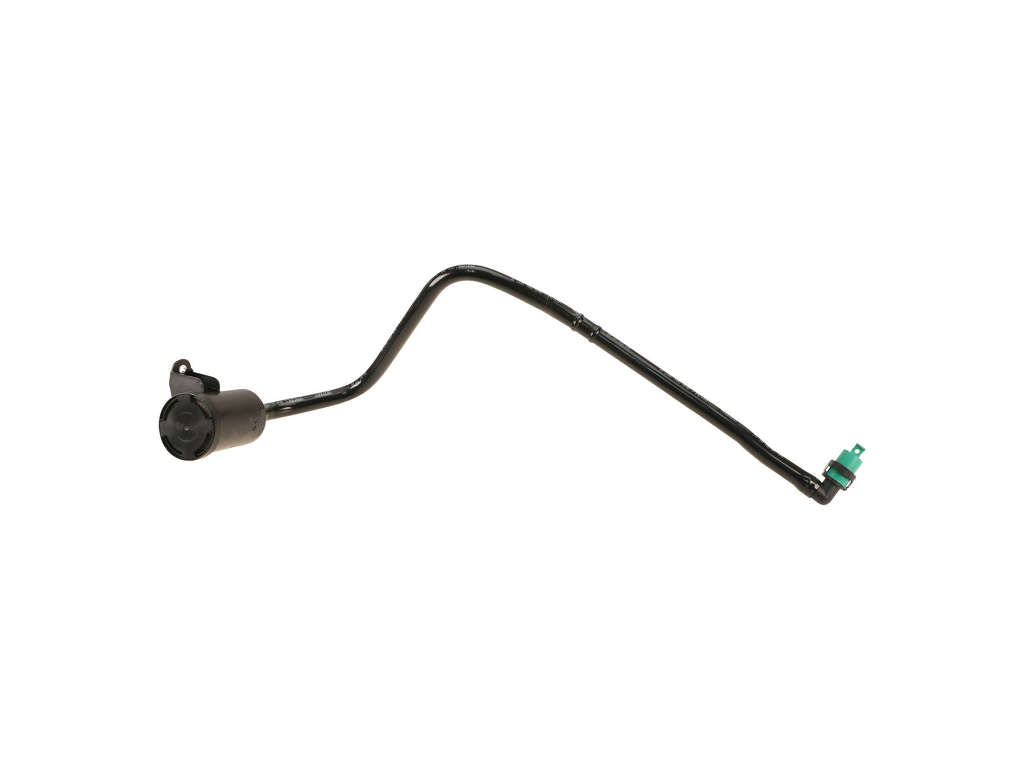
- Cracked Charcoal Canister: → Shop Vapor Canister The canister itself can develop hairline cracks over time from stress or debris impact, creating a small leak. This is usually found with a smoke test after more common components have been ruled out.
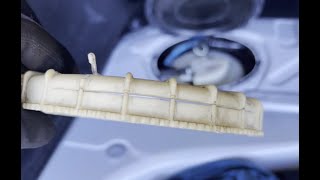
- Leaking Fuel Tank Sending Unit Seal/Lock Ring: → Shop Fuel Tank A video specific to an Audi showed a P0442 caused by a cracked plastic lock ring on top of the fuel tank, accessible from under the rear seat or in the trunk. 🎬 Watch: Finding a leak at the fuel tank lock ring. Forum users have also reported fuel leaks from a bad seal under this lock ring, especially when the tank is full. This is a difficult leak to find without a smoke test.
- Corroded Fuel Filler Neck: → Shop Fuel Filler Neck The metal surface where the gas cap seals can rust and become pitted, preventing the cap's gasket from creating a perfect seal. This can be cleaned with a wire brush and some silicone paste to restore the seal.
Diagnosis Steps
- Read the code with an OBD-II scanner to confirm P0442 is present and check for any other related EVAP codes.
- Inspect the gas cap. Remove it, check the seal for cracks, and clean the cap and filler neck. The filler neck surface can corrode; use a wire brush to clean it if rust is present. Reinstall the cap, ensuring it clicks multiple times. Clear the code and drive for a few days to see if it returns.
- If the code returns, purchase a new, high-quality OEM gas cap. This is an inexpensive and very common fix. Aftermarket caps can sometimes fail to seal properly.
- If the problem persists, locate the EVAP Purge Valve (N80) in the engine bay. Visually inspect its hoses for cracks and listen for a loud, incessant clicking sound at idle.
- Test the N80 valve for leakage. If it's suspected to be faulty, it's an inexpensive part to replace. Many DIY videos are available showing the process.
- If the above steps do not resolve the issue, a smoke test is required. This involves injecting pressurized smoke into the EVAP system (often through the service port near the N80 valve) to visually locate the source 🎬 See how to use a smoke tester to find leaks. of the leak.
- During the smoke test, carefully inspect all EVAP lines, the charcoal canister, the Leak Detection Pump (LDP) area near the rear wheel, and the top of the fuel tank under the rear seat access panel for the sending unit lock ring.
- Based on the smoke test results, replace the leaking component. This could be a hose, the charcoal canister, the LDP as per TSB 2035519/3, or the fuel tank lock ring/seal.
Parts You'll Likely Need
- Gas Cap
(OEM #8K0201550N (supersedes 8K0201550C, 8K0201550F, 8T0201550B))— The seal wears out over time, making it the most common cause of small EVAP leaks.
Trusted brands: Audi Genuine, Gates, Blau
OEM price range: $30-$50
Aftermarket price range: $15-$25 - EVAP Canister Purge Valve (N80 Valve)
(OEM #06E906517A)— This is a very common failure point on this platform, often getting stuck or leaking internally, leading to P0442 and sometimes P0441 or starting issues after refueling.
Trusted brands: Bosch, Pierburg, Audi Genuine
OEM price range: $40-$60
Aftermarket price range: $20-$40 - Leak Detection Pump (LDP)
(OEM #8K0906271 or 8K0906253N (check VIN, multiple revisions exist))— Less common, but a known failure point that can cause a P0442 code if the pump itself is leaking, as noted in Audi TSB 2035519/3.
Related Codes That Often Appear With This One
- P0456 — P0456 indicates a 'very small leak', while P0442 indicates a 'small leak'. They point to the same type of problem, just differing in the leak size detected. A failing component can trigger one code, and then the other at a later time. An Audi TSB groups these two codes together for the same diagnostic procedure.
- P0441 — This code indicates 'Incorrect Purge Flow'. If the N80 purge valve is failing (e.g., stuck partially open or closed), it can cause both a flow problem (P0441) and a leak (P0442), making them likely to appear together.
- P0455 — This code indicates a 'large leak'. While less common to see with P0442, a component that starts with a small leak can worsen over time, eventually triggering a large leak code. A cracked fuel tank lock ring was shown to cause P0455, P0442, or P0456 depending on conditions.
Technical Service Bulletins (TSBs) & Recalls
- 2035519/3 - Addresses testing procedures for P0456 and P0442. It instructs technicians to perform a smoke test and, if no external leaks are found, points towards an internal leak in the Leak Detection Pump (LDP) as the likely cause, requiring pump replacement.
Platform-Specific Known Issues
- Corrosion on Fuel Filler Neck: → Shop Fuel Filler Neck The metal lip of the fuel filler neck where the gas cap seals can develop rust and pitting, especially in regions that use road salt. This prevents even a new gas cap from sealing correctly. Owners have fixed this by sanding or using a wire brush on the neck surface to make it smooth again.
- Cracked Fuel Pump/Sending Unit Lock Ring: → Shop Fuel Pump A notable but uncommon failure is a crack in the large plastic lock ring that secures the fuel pump or sending unit to the top of the gas tank. This is typically found under an access panel below the rear seat or trunk floor. A smoke test is required to identify this leak, which may only be apparent when the fuel tank is full.
Mechanic-Grade Diagnostic Values
- N80 Purge Valve Coil Resistance — expected: 15 - 25 Ohms. Failure: A reading of 'OL' (open loop/infinite resistance) or significantly lower than 15 Ohms indicates a failed coil.
- EVAP System Pressure (via LDP test) — expected: System should hold pressure of ~25 mbar.. Failure: If the pressure drops and the LDP reed switch closes in approximately 1.2 to 3.2 seconds, a 'small leak' (P0442) is detected by the ECM.
Scan Tool Commands That Help
- VCDS (VAG-COM): Engine -> Basic Settings -> Group 071 — This command initiates the fuel tank leak detection test. The engine must be running. The tool will cycle the Leak Detection Pump (LDP) and report 'System OK' or a leak status. This is the primary function for verifying the system's integrity after a repair.
- VCDS (VAG-COM): Engine -> Output Tests -> EVAP Purge Valve (N80) — This allows you to manually cycle the N80 valve. You should hear it clicking. This test helps determine if the valve is electrically functional and not seized.
- VCDS (VAG-COM): Engine -> Output Tests -> EVAP Leak Detection Pump (V144) — This test manually activates the LDP solenoid, which should produce a clicking sound. It helps verify the electrical side of the LDP circuit before suspecting a mechanical pump failure or system leak.
Wiring & Ground Locations
- G44 — Located behind the driver's side kick panel.. This is a major grounding point for the driver's side of the vehicle, including the Body Control Module (BCM) which communicates with various systems. A poor ground here can cause intermittent electrical issues.
- G78 — Located at the bottom of the passenger side B-pillar, behind the carpet.. This ground point serves the fuel pump motor. While not directly part of the EVAP system, electrical instability in the fuel delivery system can sometimes manifest in related codes.
- G12 — Located in the left rear of the engine compartment.. This is a primary engine compartment ground. The N80 valve and other engine bay sensors rely on clean engine grounds to function correctly.
- G50 — Located in the left side of the luggage compartment/trunk.. This ground is in the vicinity of the charcoal canister and LDP. A corroded or loose ground here could affect the LDP's operation.
Real Owner Repair Stories
- AudiWorld Forums (Audi A4 (B8 generation)) — Recurring P0442 code.
❌ Tried (didn't work) Replacing all vacuum lines, Replacing the N80 purge valve (code returned after a month), Cleaning the gas cap
✅ What actually fixed it The final fix was a cracked plastic fitting on the expansion tank, which was discovered after manipulating hoses near the N80 valve. The user noted the crack was not obvious at first but broke further while working in the area. - Ross-Tech Forums (2006 Audi A3 2.0T (similar EVAP system)) — P0442 (Small Leak) and P0456 (Very Small Leak) codes.
❌ Tried (didn't work) Running VCDS Basic Settings test, which failed., Pinching off the hose to the N80 valve and re-running the test, which still failed.
✅ What actually fixed it The user noticed the rubber sealing ring on the gas cap was old and cracked. Pressing down firmly on the gas cap while running the VCDS test resulted in a 'System Okay' pass. The issue was resolved by replacing only the gas cap seal (VW/Audi P/N 191-201-557) instead of the entire cap.
"I Checked Everything" — The Actual Cause
- A common scenario is for a smoke test to show no leaks, yet the P0442 code persists. In this situation, the N80 purge valve can be the culprit. It may be leaking internally, allowing vacuum to bleed off during the self-test, but not be leaking externally in a way that smoke would escape. A definitive test is to run the VCDS Basic Settings test; if it fails, pinch off the hose between the N80 and the charcoal canister and run the test again. If the test now passes, the N80 valve is the source of the leak.
OEM Part Supersession History
8K0201550C, 8K0201550F, 8T0201550B→8K0201550N— Part revision and consolidation by the manufacturer.N/A→191-201-557— This is the part number for just the gas cap's rubber sealing ring. It fits a wide range of VW/Audi threaded caps from 1947-2010.
Heads up: This is a cost-effective alternative to replacing the entire gas cap assembly if only the seal is cracked or hardened.
Model Year Variations Within This Range
- 2009-2012 (B8) vs 2013-2016 (B8.5): The B8.5 facelift introduced significant exterior and interior changes, as well as a switch from hydraulic to electromechanical power steering. However, the core 2.0T engine and its associated EVAP system, including the N80 valve and LDP, remained largely unchanged, meaning the common causes and fixes for P0442 are consistent across the entire 2009-2016 generation.
Diagnostic Flowchart
Real Owner Stories
Aggregated from forums and TSBs cited above. Mileages and costs reflect what owners reported in those sources.
Audi A4
Symptoms: Chased a persistent P0442 code that kept returning even after replacing the gas cap and the N80 purge valve.
What fixed it: Performed a smoke test which revealed a hard-to-find leak in the fuel filler neck area.
Source hint: AudiWorld Forums thread titled 'P0442 Evap Leak Saga Continues'
Audi A4
Symptoms: Experienced a fuel leak that only occurred when the gas tank was completely full.
What fixed it: Identified and replaced a rusted metal/cracked plastic lock ring securing the fuel pump to the top of the gas tank.
Source hint: Reddit r/audia4b7 thread titled 'Fuel pump lock ring'
Audi A4
Symptoms: Had a hard-to-find EVAP leak triggering the P0442 code.
What fixed it: Used a smoke test to locate and replace a cracked plastic sending unit lock ring on top of the fuel tank, accessed through the trunk.
Source hint: YouTube video titled 'Audi EVAP Leak Problem Solved Code P0442'
Related OBD-II Codes
Frequently Asked Questions
Does TSB 2035519/3 apply to my 2009-2016 Audi A4 for the P0442 code?
I replaced the gas cap on my Audi A4 but the P0442 code came back. What should I check next?
Can I just replace the rubber seal on my A4's gas cap instead of buying a whole new cap?
Why is my Audi A4 hard to start and idling roughly right after I get gas?
I smell fuel near the rear of my A4 when the tank is full, but I can't find a leak underneath. What could cause this?
How do I test the N80 purge valve on my B8 Audi A4?
Helpful Videos
Used OEM Parts in Stock

New Aftermarket Parts Available


The information in this article is provided for general reference and educational purposes only. Vehicle specifications, procedures, and part compatibility can vary by production date, trim level, and region. Always consult your vehicle's factory service manual and verify part numbers before purchasing or performing repairs. Safety-critical components such as airbags, seat belts, and braking systems should be installed by a qualified professional.
- Audi A4:
- 🧭 Diagnostic Flowchart
- 🎬 Helpful Videos
- 🛍️ Shop This Part
- What's Unique About the 2009-2016 Audi A4
- Symptoms You May Notice
- Most Likely Causes
- Rare But Worth Checking
- Diagnosis Steps
- Parts You'll Likely Need
- Related Codes That Often Appear With This One
- Technical Service Bulletins (TSBs) & Recalls
- Platform-Specific Known Issues
- Mechanic-Grade Diagnostic Values
- Scan Tool Commands That Help
- Wiring & Ground Locations
- Real Owner Repair Stories
- "I Checked Everything" — The Actual Cause
- OEM Part Supersession History
- Model Year Variations Within This Range
- Real Owner Stories
- Audi A4
- Audi A4
- Audi A4
- Related OBD-II Codes
- Frequently Asked Questions
- 🎟️ Get 5% Off