

P0442 on 2005-2011 Audi A6: Causes and Fixes for Small EVAP Leaks
For a 2005-2011 Audi A6, a P0442 code is most often caused by a loose or faulty gas cap or a failing EVAP Purge Valve (N80). Start by tightening or replacing the gas cap with an OEM part (Part No. 4F0201550F, superseded by 4F0201550J). If the code returns, the N80 valve (Part No. 06E906517A) is the next likely culprit, costing around $30-$60 for a simple DIY replacement. If these common fixes don't work, a smoke test is required to find the leak, which could be a cracked hose or a less common is
- Always start with the simplest fix: tighten and inspect the gas cap. If in doubt, spend the money on an OEM replacement cap before any other parts.
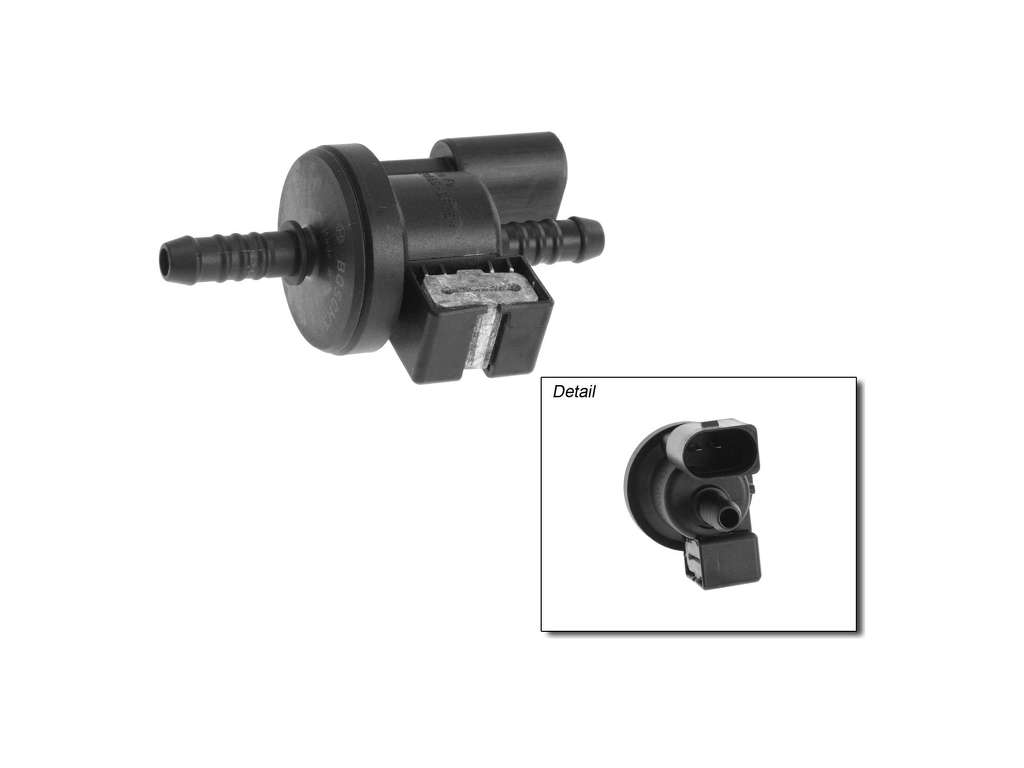
- The N80 EVAP Purge Valve (Part #06E906517A) is the second most likely cause and is an inexpensive, 15-minute DIY replacement located in the engine bay.
- If you have trouble starting the car after getting gas, the N80 valve is almost certainly the problem.
- If the simple fixes don't work, a professional smoke test is the most efficient way to find the leak, which could be a simple cracked hose.
- Do not immediately assume the expensive charcoal canister is bad; it's a less common failure point than the gas cap, N80 valve, and hoses.
What's Unique About the 2005-2011 Audi A6
On the C6 generation Audi A6, the EVAP system components, particularly the N80 purge valve and various plastic hoses, are known to degrade over time. While a loose gas cap is a universal cause, the N80 valve is a very frequent failure point specific to this and other VW/Audi platforms of the era. Unlike some vehicles where leaks are deep within the chassis, many common failure points like the N80 valve and associated hoses are relatively accessible in the engine bay, making diagnosis and repair more straightforward for DIYers.
Symptoms You May Notice
- Check Engine Light is on.
- Difficulty starting the engine, especially right after refueling (a classic sign of a stuck-open N80 purge valve).
- Slightly rough or unstable idle.
- Gas pump nozzle clicks off frequently when trying to fill the tank (often points to a clogged LDP filter).
- A faint fuel smell may be noticeable, but this is less common with a small leak.
- Replacing the charcoal canister when the actual problem is a simple cracked hose or faulty N80 valve.
- Assuming a smoke test failure means a major, expensive component has failed, when it could be a cheap, brittle plastic fitting.
- Replacing the gas cap with an aftermarket version that fails to seal properly, leading to a continued search for a non-existent leak elsewhere.
Most Likely Causes
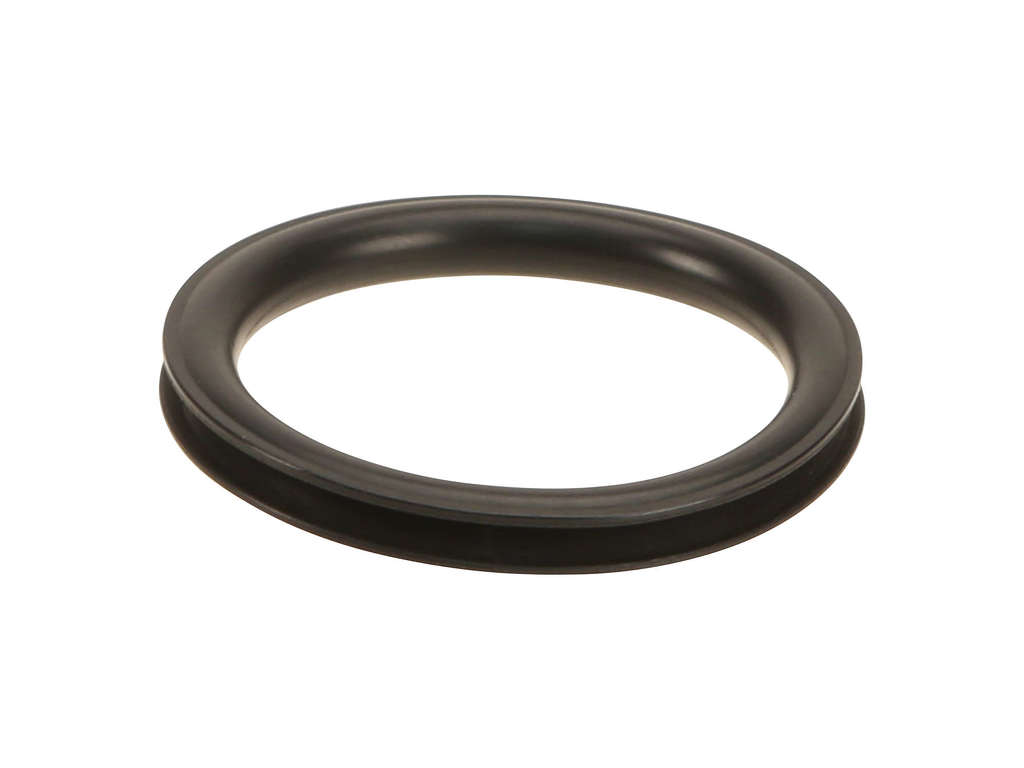
- Loose or Faulty Gas Cap 🔴 High Probability → Shop Fuel Tank Cap The rubber seal on the gas cap degrades over time, losing its ability to create a perfect seal. Aftermarket gas caps are notoriously unreliable and often do not seal correctly on Audis. Cold weather can also cause intermittent sealing issues.
How to confirm: First, ensure the cap is tightened until it clicks several times. Inspect the cap's rubber O-ring for cracks or brittleness. Check the fuel filler neck for rust or debris that could prevent a good seal.
Typical fix: Replace the gas cap with a new, OEM (Original Equipment Manufacturer) part. This is an inexpensive and critical first step before attempting more complex repairs. The original OEM part number 4F0201550F has been superseded by 4F0201550J.
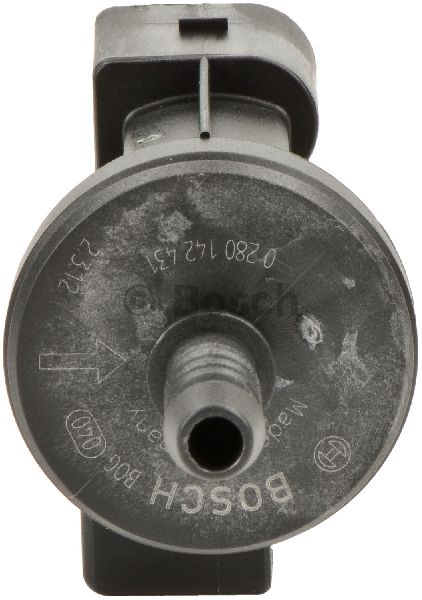
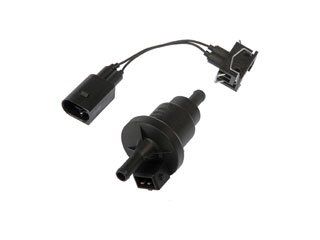
Est. part cost: $25-$50 - Faulty EVAP Purge Valve (N80 Valve) 🔴 High Probability → Shop Vapor Canister This valve is a very common failure point on VW/Audi platforms of this era. It can get stuck open or closed, or develop an internal leak, directly causing a P0442 or related P0441 code.
How to confirm: The valve is located in the engine bay and is easy to access. A stuck-open valve often causes difficulty starting after refueling. A diagnostic scan tool (like VCDS) can run a functional test. You can also remove the valve and try to blow through it; if air passes, it's stuck open and faulty. The coil resistance should be between 22-30 Ohms.
Typical fix: Replacement of the N80 valve is straightforward, typically requiring the removal of two hose clamps and an electrical connector. It is a common DIY job. The common OEM part number is 06E906517A.
Est. part cost: $30-$60 - Cracked or Disconnected EVAP Hoses 🟡 Medium Probability The plastic and rubber hoses in the engine bay and around the fuel tank become brittle with age and heat cycles, leading to small cracks that are often difficult to see. A cracked fitting on an expansion tank near the N80 valve has been noted as a specific failure point.
How to confirm: A visual inspection may reveal obvious cracks, especially at connection points. However, the most effective method is a smoke test, which forces smoke through the EVAP system, making any leaks visible.
Typical fix: Replace the specific cracked hose or fitting. In some cases, a small section of vacuum hose can be used for repair.
Est. part cost: $10-$100 - Faulty Leak Detection Pump (LDP) or Clogged LDP Filter ⚪ Low Probability → Shop Evaporative Emissions System Leak Detection Pump The LDP, located in the rear driver's side wheel well, pressurizes the system for testing and can fail internally. More commonly, its associated filter can become clogged with dirt, causing pressure issues and refueling problems.
How to confirm: A clogged LDP filter often presents with the gas pump repeatedly shutting off during refueling. A faulty LDP is typically diagnosed with a smoke test after all other common causes have been ruled out. An Audi-specific TSB for other models points to the LDP if no external leaks are found. A VCDS scan tool can run an output test on the pump.
Typical fix: Replace the clogged LDP filter or the entire LDP assembly. This requires removing the rear driver's side wheel and wheel well liner. An owner on AudiWorld documented this exact fix for a 2005 A6 3.2, which resolved both P0442/P0455 codes 🎬 Watch this walkthrough of an Audi EVAP leak repair. and refueling issues.
Est. part cost: $20-$40 (Filter), $100-$180 (Pump)
Rare But Worth Checking
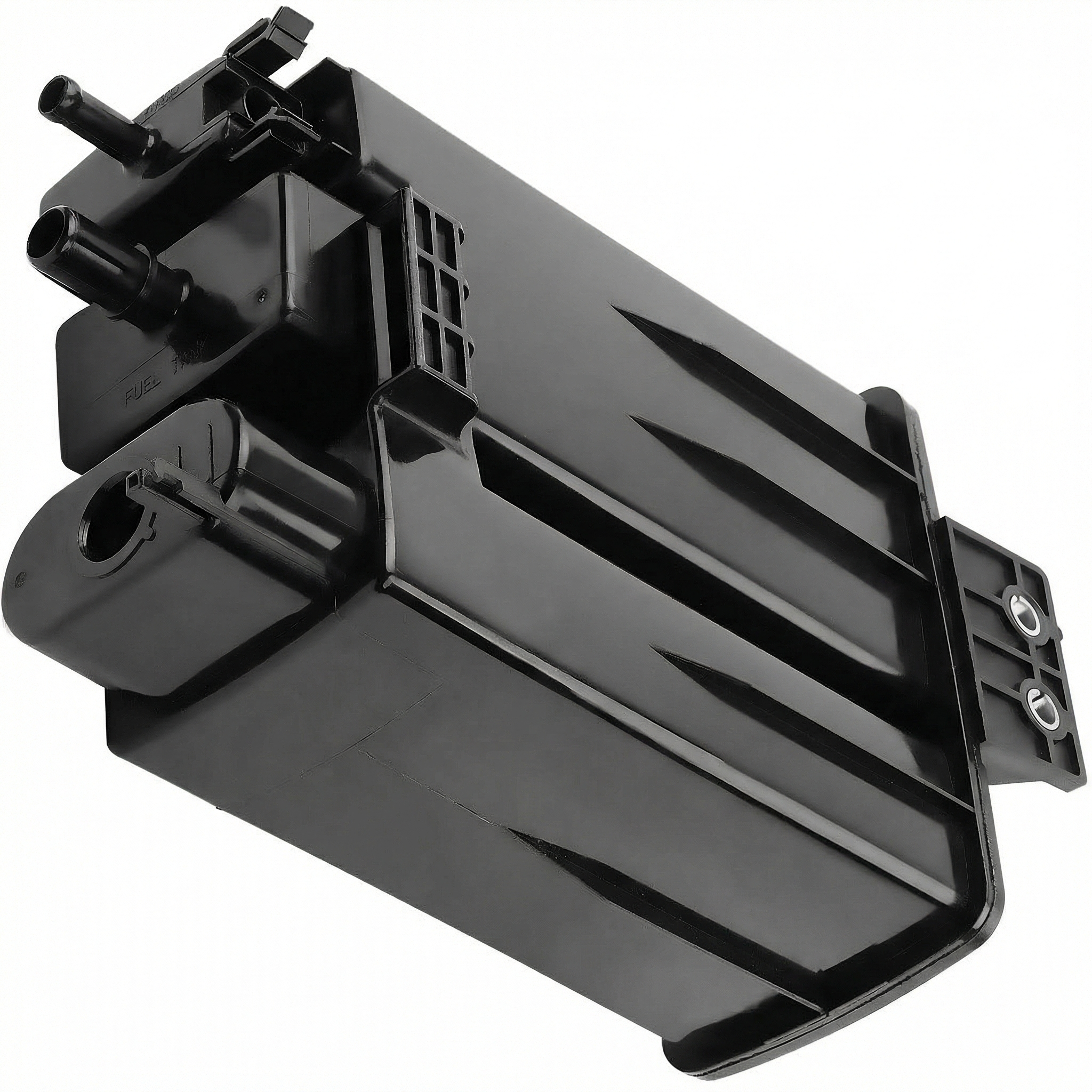
- Cracked Charcoal Canister: → Shop Vapor Canister The canister itself, located under the car near the spare tire well, can develop cracks from road debris or age. This is usually found during a smoke test.
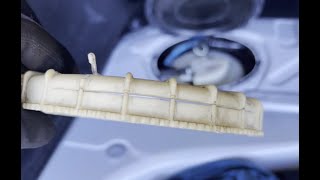
- Cracked Fuel Tank Sending Unit Cover: → Shop Fuel Tank A video for an Audi showed a smoke test revealing a crack in the white plastic cover/lock ring of the fuel sending unit, accessible under a panel in the trunk or under the rear seat. This is an uncommon but possible leak source that can be found with a smoke test.
- Faulty Engine Control Module (ECM): In very rare instances, the ECM itself can be faulty and incorrectly report an EVAP leak, sometimes accompanied by code P2404. This should only be considered after all other possibilities have been exhaustively tested.
Diagnosis Steps
- Check the Gas Cap: Remove, inspect the seal for cracks, and retighten it until it clicks multiple times. Clear the code and drive for a few days to see if it returns.
- Consider an OEM Gas Cap: If the code returns, replace the gas cap with a genuine OEM part (e.g., 4F0201550J), as aftermarket caps are a frequent source of issues.
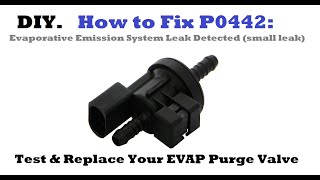
- Inspect the N80 Purge Valve: Locate the N80 valve in the engine bay. Check for any obvious cracks on the valve body or its connecting hoses. Listen for a clicking sound from the valve with the engine running (it should not be clicking constantly at idle). Test for being stuck open by removing it and attempting to blow through it. 🎬 Watch: How to test and replace the N80 purge valve.
- Replace the N80 Valve: Given its high failure rate and low cost, many owners choose to replace the N80 valve (OEM P/N: 06E906517A) as the next step after the gas cap. It is a simple DIY job.
- Visual Hose Inspection: Carefully inspect all visible EVAP hoses in the engine bay for brittleness, cracks, or loose connections, paying close attention to plastic fittings.
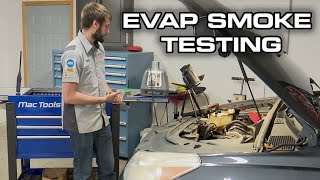
- Perform a Smoke Test: If the above steps do not resolve the issue, a smoke test is the definitive way to find the leak. This involves injecting smoke into the EVAP system and watching where it escapes. 🎬 See how to perform a professional EVAP smoke test. This can pinpoint leaks in hoses, the charcoal canister, the LDP, or the fuel tank seals.
- Inspect LDP and Filter: If a smoke test reveals no leaks and you experience issues with refueling, investigate the Leak Detection Pump (LDP) and its filter in the rear driver's side wheel well for clogs or internal failure.
Parts You'll Likely Need
- Gas Cap
(OEM #4F0201550F (verify for specific year/engine))— The seal wears out, making it the most common and simplest fix. An OEM part is strongly recommended for a proper seal.
Trusted brands: Audi Genuine
OEM price range: $25-$50
Aftermarket price range: $15-$30 - EVAP Canister Purge Valve (N80 Valve)
(OEM #06E906517A)— Extremely common failure point on VW/Audi vehicles of this era, causing P0442 and P0441 codes.
Trusted brands: Bosch, Audi Genuine
OEM price range: $50-$70
Aftermarket price range: $25-$50 - Leak Detection Pump (LDP) Filter — The filter can become clogged with road debris, causing refueling issues and triggering EVAP codes.
Trusted brands: Audi Genuine
OEM price range: $20-$40
Aftermarket price range: $15-$30
Related Codes That Often Appear With This One
- P0455 — This code indicates a large EVAP leak. It can appear with P0442 if the leak is intermittent or on the borderline between small and large, or if there are multiple leaks.
- P0441 — This code means 'Incorrect Purge Flow' and is very commonly caused by the exact same faulty N80 Purge Valve that triggers P0442.
- P0456 — This indicates a 'very small leak' and points to the same set of potential failures as P0442, just at a different detected leak size.
Technical Service Bulletins (TSBs) & Recalls
- While no specific TSB for the A6 C6 was found, Audi TSB 2035519/3 for the similar A4 platform addresses P0442 by suggesting that if a smoke test finds no external leaks, the Leak Detection Pump (LDP) is likely leaking internally and should be replaced.
Mechanic-Grade Diagnostic Values
- EVAP Purge Valve (N80) Coil Resistance — expected: 22.0 to 30.0 Ohms. Failure: A reading of 'OL' (open circuit) or a value significantly outside the specified range indicates a faulty valve coil.
- EVAP Purge Valve (N80) Connector Voltage — expected: Pin 1: Battery Voltage (approx. 12V) during starter operation. Pin 2: Ground signal from ECM (variable).. Failure: No voltage at Pin 1 indicates a wiring or relay (J17 Fuel Pump Relay) issue. If voltage is present but the valve doesn't operate during a VCDS output test, the ECM ground signal or the valve itself may be faulty.
- Leak Detection Pump (LDP) Resistance — expected: 640 to 720 Ohms. Failure: A resistance reading outside this range suggests the LDP is faulty.
Scan Tool Commands That Help
- VCDS (VAG-COM): Engine (01) -> Basic Settings -> Group 071 (EVAP Leak Test) — This is the primary function to command the vehicle to perform a full EVAP system leak test. The engine usually needs to be cold and not running. VCDS will report the test status, such as 'System OK' or 'Small Leak Detected', providing a more definitive result than just waiting for the code to reappear after a repair.
- VCDS (VAG-COM): Engine (01) -> Basic Settings -> IDE00744 (EVAP Valve test) — On newer controller modules that use the drop-down menu interface instead of groups, this command specifically tests the N80 purge valve function.
- VCDS (VAG-COM): Engine (01) -> Output Tests — This allows a technician to manually cycle individual components like the N80 purge valve and the Leak Detection Pump (LDP) to confirm they are receiving a signal and are mechanically functioning (e.g., listening for clicks or pump noises).
Wiring & Ground Locations
- N80 Purge Valve — In the engine compartment, on the right (passenger) side.. This is the primary location for initial visual inspection and electrical testing. The 2-pin connector has Pin 1 for voltage supply (often from the fuel pump relay) and Pin 2 for the ground signal from the ECM.
- Leak Detection Pump (LDP) — In the left rear wheel housing, behind the wheel well liner.. Accessing the LDP and its filter requires removing the wheel and liner. This is where to look for clogged filters or to test the pump itself if other causes are ruled out.
- EVAP Canister — Located at the bottom of the spare wheel well.. This is a key component of the system. While failure is less common, a smoke test may reveal a crack in the canister body itself.
- Engine Ground Point — A small ground wire is located on one of the bolts for the oil filter housing.. While not exclusive to the EVAP system, this ground is known to be left disconnected after engine-out services. A poor ground connection can cause a wide range of difficult-to-diagnose electrical faults and codes, including intermittent sensor readings that could potentially affect the EVAP monitor.
Real Owner Repair Stories
- AudiWorld Forum User (2005 Audi A6 3.2L) — Check Engine Light with codes P0442 and P0455, gas pump nozzle clicking off constantly during refueling, thumping sound from the rear.
❌ Tried (didn't work) Initial thought was a bad charcoal canister.
✅ What actually fixed it The in-line LDP (Leak Detection Pump) filter was replaced. This resolved all symptoms: the CEL turned off, the thumping noise stopped, and the refueling issue was gone. - YouTube channel briansmobile1 (General older car, applicable to Audi) — P0442 code after replacing gas cap.
❌ Tried (didn't work) Replacing the gas cap with a new one did not fix the code.
✅ What actually fixed it The metal fuel filler neck surface, where the gas cap seal meets it, was corroded and rusty. The fix was to thoroughly clean the rust off the filler neck with a wire brush and then apply a thin layer of silicone paste to ensure a perfect, lubricated seal for the new gas cap.
"I Checked Everything" — The Actual Cause
- In a documented case for a related EVAP code (P2404), after extensive testing including EVAP system tests that would intermittently pass and fail, the root cause was determined to be a faulty Engine Control Module (ECM). The ECM itself had a defect in the sense circuit for the leak detection system. The final repair was replacing the ECM, not any component of the EVAP system.
OEM Part Supersession History
4F0201550F→4F0201550J— Standard part revision and improvement by the manufacturer.
Heads up: The new part (4F0201550J) is a direct replacement for the old one and also replaces an even earlier version, 4F0201550B.06E906517→06E906517A— Standard part revision.
Heads up: 06E906517A is the common replacement part. Bosch is the OEM manufacturer, and their equivalent part number is 0280142431.
Diagnostic Flowchart
Other Known Issues on This Vehicle
Issues unrelated to this code that are worth knowing about as an owner of this generation:
- Timing Chain Tensioner Failure (3.2L & 4.2L FSI) 🔴 High — Common after 60,000-100,000 miles. Characterized by a metallic rattle from the rear of the engine on cold starts.
- Carbon Buildup on Intake Valves (FSI Engines) 🟠 Medium — A systemic issue with all direct-injection (FSI) engines. Causes rough idle, hesitation, and loss of power. Typically requires cleaning (e.g., walnut blasting) every 60,000-80,000 miles.
- MMI System Electrical Failures 🟠 Medium — The MMI screen can go black or buttons become unresponsive. Often caused by a break in the fiber optic loop or water damage to control modules located in the trunk or under the passenger seat/glove box.
- Upper Timing Chain Tensioner Guide Wear (3.2L FSI) 🔴 High — The plastic guides on the upper tensioners can become brittle and break, causing chain slack and noise. While the upper tensioners can be replaced without engine removal, failure can lead to catastrophic damage if ignored.
Used vs. New Parts: Buying Guide for This Vehicle
When a used part is the smart pick: For this specific repair, most key components are either wear items or inexpensive enough that buying new is the best strategy. However, a used part could be considered for a larger structural component like the charcoal canister if it's visually inspected and confirmed to be free of cracks, or a complete fuel filler neck assembly if the original is damaged or severely corroded.
Donor-vehicle mileage cap: roughly under 80000 miles for the part to have meaningful remaining life.
What to inspect on the donor part:
- For a charcoal canister, check for any physical cracks or damage to the housing and hose ports.
- For an LDP, inspect the electrical connector for any signs of corrosion or water intrusion.
- For any plastic or rubber part, check for brittleness, discoloration, or heat stress.
OEM-only on this vehicle (don't cheap out):
- Gas Cap: Aftermarket gas caps are a well-documented source of persistent P0442 codes on Audis due to improper sealing. Always use a genuine OEM cap (or one from the OEM supplier).
- N80 Purge Valve: While some aftermarket versions exist, the OEM-supplier part (Bosch) is readily available, inexpensive, and known to work correctly. The risk of a faulty aftermarket valve causing diagnostic confusion outweighs the small cost savings.
Aftermarket brands forum-validated for this vehicle:
- Bosch: Bosch is the original equipment manufacturer for the N80 Purge Valve (06E906517A) and is a reliable choice.
Brands owners have reported issues with on this vehicle:
- Generic/No-Name Gas Caps: Avoid unbranded or 'universal' gas caps, as they are highly likely to cause sealing issues.
Real Owner Stories
Aggregated from forums and TSBs cited above. Mileages and costs reflect what owners reported in those sources.
2005 Audi A6 3.2
Symptoms: P0442 and P0455 codes present along with gas pump shut-off issues during refueling.
What fixed it: Replacement of the clogged in-line LDP filter located in the rear driver's side wheel well.
Source hint: AudiWorld Forums: Evap Leak Fixed
Audi A8 (D2 Platform)
Symptoms: Persistent P0442 code that remained after replacing the N80 purge valve and the gas cap.
What fixed it: Discovery and repair of a cracked plastic fitting on an expansion tank near the N80 valve.
Source hint: AudiWorld Forums: P0442 Evap Leak Saga Continues
Audi S4 (B5 Platform)
Symptoms: Intermittent P0455 and P0442 codes that started appearing during cold weather; a new gas cap did not immediately resolve the issue.
What fixed it: The owner noted the complexity of the leak and the intermittent nature of the sealing issues in cold temperatures.
Source hint: AudiWorld Forums: Evap codes...intermittent..p0455 and p0442
Related OBD-II Codes
Frequently Asked Questions
What is the correct OEM gas cap part number for my 2005-2011 Audi A6?
My A6 is hard to start specifically after I fill up at the gas station. Is this related to P0442?
Does Audi TSB 2035519/3 apply to the P0442 code on my A6?
Why does the gas pump nozzle keep clicking off when I try to refuel my A6?
Can I use an aftermarket gas cap from a local auto parts store to fix this?
Where is the Leak Detection Pump (LDP) located on the C6 A6?
Helpful Videos
Used OEM Parts in Stock
New Aftermarket Parts Available


The information in this article is provided for general reference and educational purposes only. Vehicle specifications, procedures, and part compatibility can vary by production date, trim level, and region. Always consult your vehicle's factory service manual and verify part numbers before purchasing or performing repairs. Safety-critical components such as airbags, seat belts, and braking systems should be installed by a qualified professional.
- Audi A6:
- 🧭 Diagnostic Flowchart
- 🎬 Helpful Videos
- 🛍️ Shop This Part
- What's Unique About the 2005-2011 Audi A6
- Symptoms You May Notice
- Most Likely Causes
- Rare But Worth Checking
- Diagnosis Steps
- Parts You'll Likely Need
- Related Codes That Often Appear With This One
- Technical Service Bulletins (TSBs) & Recalls
- Mechanic-Grade Diagnostic Values
- Scan Tool Commands That Help
- Wiring & Ground Locations
- Real Owner Repair Stories
- "I Checked Everything" — The Actual Cause
- OEM Part Supersession History
- Other Known Issues on This Vehicle
- Used vs. New Parts: Buying Guide for This Vehicle
- Real Owner Stories
- 2005 Audi A6 3.2
- Audi A8 (D2 Platform)
- Audi S4 (B5 Platform)
- Related OBD-II Codes
- Frequently Asked Questions
- 🎟️ Get 5% Off