

P0442 on 2011-2026 Audi Q7: Causes and Fixes for Small EVAP Leaks
For a 2011-2026 Audi Q7, code P0442 is most often caused by a loose or faulty gas cap. If tightening or replacing the cap doesn't work, the next most likely culprit is a failing EVAP Purge Valve (N80), a well-documented failure point on VW/Audi vehicles. A new gas cap costs around $20-$50, and a purge valve is about $40-$150. If neither is the cause, a smoke test is required to find the leak.
- P0442 signifies a small leak in the emissions system, which won't stop you from driving but will cause you to fail an emissions test.
- Always start with the simplest fix: check that your gas cap is tight and the seal is in good condition. A new gas cap is an inexpensive potential solution.
- The EVAP Purge Valve (N80) is a very common failure point on the Audi Q7 and is the next most likely cause after the gas cap.
- For leaks that aren't obvious, a smoke test performed by a professional is the most reliable way to find the exact source of the leak, saving you from replacing parts unnecessarily.
What's Unique About the 2011-2026 Audi Q7
The Audi Q7, like many other VW/Audi vehicles, frequently experiences P0442 due to a faulty N80 Purge Valve. While the gas cap is always the first and easiest check, the N80 valve is a well-documented failure point across multiple Audi models sharing similar engine and EVAP system designs. The vehicle's year range also spans two distinct generations (4L and 4M), which may have different EVAP component locations and part numbers, though the common causes remain consistent. The first generation Q7 (4L) shares its platform with the VW Touareg and Porsche Cayenne, which are also known for P0442 issues.
Generation note: The specified year range covers the end of the first generation (4L, 2011-2015) and the entire second generation (4M, 2016-present) of the Audi Q7. While the fundamental causes of P0442 are the same (gas cap, purge valve, hoses), the exact location and part numbers for components like the N80 valve and charcoal canister may differ. For example, the N80 valve part number 06E906517A is listed for the 2011-2015 Q7, but may not fit later 4M models. Always verify parts for your specific model year before purchasing.
Symptoms You May Notice
- Check Engine Light is on.
- A faint smell of fuel, particularly around the rear of the vehicle or in a garage.
- Slightly reduced fuel economy.
- Difficulty starting immediately after refueling (a classic symptom of a purge valve stuck open).
- Rough idle.
- Replacing the charcoal canister when the actual problem is a simple cracked hose or a faulty purge valve. A smoke test should always be performed before replacing expensive components like the canister.
- Repeatedly replacing the gas cap when the leak is elsewhere in the system. If a new OEM cap doesn't fix the code, the problem is almost certainly another component.
Most Likely Causes
- Loose or Faulty Gas Cap 🔴 High Probability → Shop Fuel Tank Cap The gas cap seal is a simple rubber component that can degrade, crack, or become stiff over time, preventing a proper seal. It may also simply not have been tightened correctly after refueling.
How to confirm: Ensure the gas cap is tightened until it clicks at least once. Inspect the rubber O-ring on the cap for cracks, stiffness, or damage. Cleaning the cap and filler neck sealing surface can also help.
Typical fix: Tighten the cap. If the seal is damaged or the issue persists, replace the gas cap with a new OEM or high-quality aftermarket part. After replacement, the code must be cleared with a scanner.
Est. part cost: $20-$50 - Faulty EVAP Purge Valve (N80 Valve) 🔴 High Probability → Shop Vapor Canister This valve is a known common failure point on many VW and Audi models, including the Q7. It can get stuck open or closed, causing both leak codes (P0442) and incorrect flow codes (P0441).
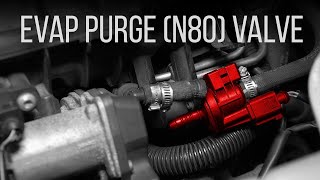
How to confirm: The valve is typically located in the engine bay, on the passenger side near the top of the engine on the 4L generation. When functioning correctly, it should be closed with the engine off. You can test it with a hand-held vacuum pump to see if it holds vacuum. A faulty valve may also click loudly or buzz. A key symptom of it being stuck open is difficulty starting after filling the gas tank.
Typical fix: Replacement of the N80 purge valve. This is generally a straightforward DIY job that can be done in under 30 minutes with basic tools. 🎬 See this walkthrough for replacing the N80 purge valve.
Est. part cost: $40-$150 - Cracked or Disconnected EVAP Hoses 🟡 Medium Probability The plastic and rubber hoses in the EVAP system become brittle with age and exposure to heat cycles in the engine bay, leading to small cracks, especially at connection points and fittings.
How to confirm: A visual inspection may reveal obvious cracks, especially at connection points. However, the most effective method is a smoke test, which forces visible smoke through the EVAP system to reveal the exact location of any leaks. This is the definitive way to find hard-to-see hose leaks. 🎬 Watch: How to find small EVAP leaks using a smoke test.
Typical fix: Replace the specific cracked hose or fitting. A smoke test is often required to find the leak.
Est. part cost: $15-$100 - Leaking Charcoal Canister or Leak Detection Pump (LDP) ⚪ Low Probability → Shop Evaporative Emissions System Leak Detection Pump The charcoal canister can be damaged by consistently overfilling the fuel tank, which forces liquid gasoline into it and ruins the charcoal. The canister or the LDP can also develop hairline cracks over time.
How to confirm: A smoke test is the best way to confirm a leak from the canister body, the LDP, or their connections. These components are typically located near the fuel tank, often behind a wheel well liner.
Typical fix: Replacement of the charcoal canister or Leak Detection Pump. This should only be done after a smoke test confirms the component is the source of the leak.
Est. part cost: $150-$400
Rare But Worth Checking
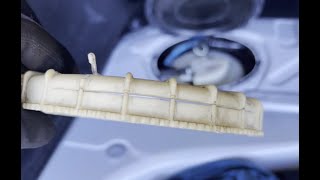
- Cracked Fuel Tank Lock Ring: → Shop Fuel Tank A plastic lock ring that seals a component (like the fuel pump or a sensor) on top of the fuel tank can develop hairline cracks, causing a small leak. This is very difficult to find without a smoke test, which will show smoke seeping from under the rear seat or cargo area where the top of the tank is accessed. A YouTube video demonstrates finding this exact failure on an Audi. 🎬 Watch: How to find a hidden fuel tank lock ring leak.
- Cracked Brake Booster Vacuum Hose: → Shop Power Brake Booster On the first-generation Q7's platform mates (Porsche Cayenne 955/957), a cracked brake booster vacuum hose is a surprisingly common cause for P0442. The EVAP and brake booster systems share a vacuum source, and a leak in the booster line can be misinterpreted by the ECU as an EVAP leak. This is worth inspecting on the 4L Q7.
Diagnosis Steps
- Read the code with an OBD-II scanner to confirm P0442 is present.
- Inspect the gas cap. Remove it, check the seal for cracks or wear, and retighten it until it clicks. Clear the code and drive for a few days to see if it returns.
- If the code returns, replace the gas cap with a new OEM part. This is an inexpensive and very common fix. Clear the code and drive.
- If the code persists, perform a visual inspection of all accessible EVAP hoses in the engine bay for obvious cracks, disconnections, or damage.
- Test the EVAP Purge Valve (N80). With the engine off, it should be closed and hold vacuum. A simple test is to remove it and try to blow through it; if air passes, it's faulty. Also, listen for hard starting after refueling, a key symptom of a bad N80 valve.
- If the above steps do not reveal the issue, the most effective next step is to have a professional smoke test performed. This test will fill the EVAP system with smoke and make even the smallest leaks visible from hoses, the canister, the LDP, or fuel tank seals.
- Based on the smoke test results, replace the leaking component. This is the most accurate way to avoid replacing unnecessary parts.
Parts You'll Likely Need
- Fuel Cap — This is the most common and easiest fix. The seal wears out over time, causing a small leak.
Trusted brands: Audi Genuine, Blau
OEM price range: $30-$50
Aftermarket price range: $15-$30 - EVAP Canister Purge Valve (N80 Valve)
(OEM #06E906517A)— A very common failure item on VW/Audi vehicles that gets stuck open or closed, triggering a P0442 code. Note: Part number 06E906517A is confirmed for many VW/Audi models, including the 2007-2015 Q7. Verify for 2016+ models.
Trusted brands: Bosch, Audi Genuine
OEM price range: $70-$150
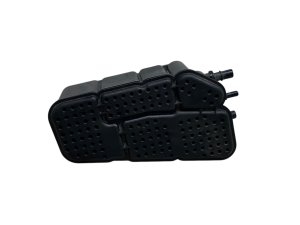
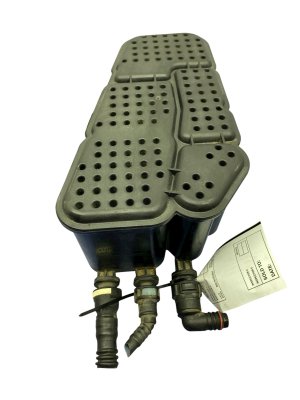
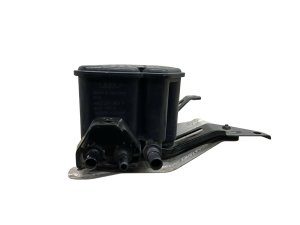
Aftermarket price range: $40-$80 - EVAP Charcoal Canister — Can become saturated with fuel from overfilling the tank or can develop cracks with age, requiring replacement. Should only be replaced after a smoke test confirms it is the source of the leak.
Trusted brands: Audi Genuine
OEM price range: $250-$400
Aftermarket price range: $150-$250
Related Codes That Often Appear With This One
- P0455 — Indicates a large EVAP leak. A component that starts with a small leak (P0442), like a cracked hose or seal, can worsen over time and trigger a large leak code.
- P0456 — Indicates a very small EVAP leak. These codes are related and point to the same set of potential failures, just at different leak sizes. A failing component can trigger different leak codes at different times.
- P0441 — Indicates incorrect purge flow. A failing N80 purge valve can be stuck partially open, causing both a flow issue (P0441) and being detected as a leak (P0442).
Technical Service Bulletins (TSBs) & Recalls
- Audi TSB 2035519/3 has been noted for other Audi models like the A4, identifying a faulty Leak Detection Pump (LDP) as a potential cause for EVAP codes when no other leaks are found. While not specific to the Q7 in this search, it highlights the LDP as a known, though less common, failure point in the VAG family.
Platform-Specific Known Issues
- On the first generation (4L) Q7, the N80 purge valve is located on the passenger side of the engine bay, sometimes tucked away making access a bit tight but still manageable for a DIY repair.
- The first generation's shared platform with the Porsche Cayenne means some unusual fixes, like checking the brake booster vacuum hose for cracks, may apply to the Q7 as well.
Mechanic-Grade Diagnostic Values
- N80 Purge Valve internal resistance — expected: 22 to 30 Ohms (some sources suggest 15-25 Ohms for similar valves). Failure: A reading outside this range indicates a faulty solenoid coil.
- N80 Purge Valve connector voltage (Key On, Engine Off) — expected: Pin 1 to Ground: Battery Voltage (approx. 12V). Pin 2 is the ground signal from the ECM.. Failure: No voltage at Pin 1 indicates a wiring or fuse issue. A forum user reported seeing only 1.25V on a faulty circuit, while a working one showed ~9V.
Scan Tool Commands That Help
- VCDS (VAG-COM): Engine (01) -> Basic Settings -> "IDE00553 Automatic test sequence" (for UDS controllers) — This is a forced readiness test. After a repair, this command runs the entire EVAP monitor sequence (and others) without needing to perform a full drive cycle. The user must hold the brake and accelerator pedals down during the test.
- VCDS (VAG-COM): Engine (01) -> Basic Settings -> "B200 Readiness Code" (for older controllers) — This serves the same function as the 'Automatic test sequence' for older, non-UDS engine controllers.
- VCDS (VAG-COM): Engine (01) -> Measuring Blocks -> Group 070 or 071 — To monitor the status of the EVAP leak detection test in real-time. The fields will update to show the test progress and result (e.g., 'System OK' or 'Small Leak').
- Professional Scan Tool (General): EVAP System Vent Valve/Solenoid Control — To command the normally-open vent valve closed. This is a required step to seal the system before introducing smoke for a smoke test.
Wiring & Ground Locations
- J519 — Onboard power supply control unit, located in the cockpit at the front left on the control unit holder near the steering column.. The J519 module controls many body and electrical functions and a poor ground connection to this unit can cause a variety of difficult-to-diagnose electrical faults.
- G43 / 752 — Ground connection on the right lower A-pillar, behind the kick panel.. This is a major chassis ground point. While not exclusive to the EVAP system, poor contact here can cause intermittent issues for various components grounded in this area.
- G61 / G62 — Ground connection at the base of the left 'C' pillar (G61) and right 'C' pillar (G62).. These ground points are in the rear of the vehicle, closer to components like the charcoal canister, Leak Detection Pump (LDP), and fuel tank sending units. A bad ground here could affect the electrical operation of these parts.
Real Owner Repair Stories
- YouTube video by 'Fixing cars and stuff' (Audi (model not specified, but EVAP system is similar)) — P0442 (Small EVAP Leak)
❌ Tried (didn't work) Initial visual inspection did not reveal the leak.
✅ What actually fixed it A smoke test revealed a crack in the plastic lock ring/seal nut on top of the fuel tank. The leak was only visible after removing an access cover inside the trunk/cargo area. The smoke was seeping into the vehicle's interior. - AudiWorld Forums (Audi A4 (B8), similar EVAP components to Q7) — Recurring P0442 code.
❌ Tried (didn't work) Replacing all vacuum lines., Replacing the N80 purge valve (code returned after a month)., Cleaning the gas cap.
✅ What actually fixed it The final fix was a cracked plastic fitting on the expansion tank. The crack was not obvious and was only discovered after physically manipulating the hoses near the N80 valve, at which point it broke further.
"I Checked Everything" — The Actual Cause
- If a smoke test reveals no external leaks, the fault may be an electrically or internally failed component. The N80 purge valve can fail its electrical resistance test (spec is 22-30 Ohms) or be mechanically stuck without showing an external leak. In this case, it fails to operate correctly when commanded by the ECM, but doesn't leak smoke when the system is sealed and tested statically.
OEM Part Supersession History
06E906517→06E906517A— Standard part revision and update by the manufacturer.
Heads up: Part number 06E906517A is widely confirmed for the first generation (4L) Q7 (up to 2015). It may not be compatible with the second generation (4M, 2016+), which may use a different EVAP system design. Always verify by VIN.
Model Year Variations Within This Range
- 2011-2015 (4L Generation): This generation uses the well-documented N80 purge valve (PN 06E906517A) and a traditional LDP-based (Leak Detection Pump) EVAP system.
- 2016-2026 (4M Generation): The 4M generation underwent a major redesign, including a switch from supercharged to turbocharged V6 engines and updated electronics. The EVAP system may have shifted to a more modern NVLD (Natural Vacuum Leak Detection) system, which uses different components and diagnostic strategies than the older LDP system. Component locations and part numbers are likely different from the 4L generation.
Diagnostic Flowchart
Other Known Issues on This Vehicle
Issues unrelated to this code that are worth knowing about as an owner of this generation:
- Timing Chain Tensioner Failure (3.0T Supercharged) 🔴 High — Common on pre-2016 3.0T engines, often manifesting as a 'death rattle' on cold starts. Can occur after 60,000 miles. Repair is an engine-out service. (Ref: A service campaign was issued for faulty tensioners on 3.0T Q7s up to 2015.)
- Water Pump & Thermostat Failure (3.0T Supercharged) 🔴 High — Very common, especially on 2011-2012 models. The plastic components become brittle and crack, leading to coolant leaks and potential overheating. (Ref: Updated parts were released for 2013+ models, and some earlier models were covered by a customer satisfaction bulletin.)
- Intake Valve Carbon Buildup (Direct Injection Engines) 🟠 Medium — A systemic issue with direct injection engines where fuel doesn't clean the intake valves. Leads to rough idle and loss of power over time. Typically requires manual cleaning (e.g., walnut blasting) every 60k-80k miles. (Ref: Some models had a warranty extension for secondary air port cleaning, which is related to carbon buildup.)
- PCV Valve (Oil Separator) Failure (3.0T Supercharged) 🟠 Medium — The PCV valve, located under the supercharger, is a common failure item leading to excessive oil consumption, lean codes, and potential oil seal leaks.
- Upper Control Arm Bushing Wear 🟠 Medium — Front upper control arm bushings are a known wear item, causing clunking noises over bumps and imprecise steering feel. Typically requires replacement between 60,000 and 100,000 miles.
- Leaking Panoramic Sunroof Drains 🟠 Medium — The drain tubes for the panoramic sunroof can become clogged, causing water to leak into the cabin, potentially damaging electronics and causing mold.
Used vs. New Parts: Buying Guide for This Vehicle
When a used part is the smart pick: For purely mechanical, non-electronic parts like specific EVAP hoses or mounting brackets, a used part from a reputable salvage yard can be a cost-effective option. A used charcoal canister can also be viable, but only if it can be thoroughly inspected for fuel saturation or physical damage before purchase.
Donor-vehicle mileage cap: roughly under 80000 miles for the part to have meaningful remaining life.
What to inspect on the donor part:
- For charcoal canisters: Smell the part. If it smells strongly of raw fuel, it is saturated and should be avoided.
- For hoses: Inspect for any visible cracks, hardening, or swelling. The rubber should still be somewhat pliable.
- For plastic components: Check carefully for hairline cracks, especially around mounting points and hose connections.
OEM-only on this vehicle (don't cheap out):
- Gas Cap: Aftermarket gas caps are a frequent source of issues. An OEM cap is strongly recommended to ensure a perfect seal with the filler neck.
- N80 Purge Valve: While OEM-supplier parts are good, cheap, unbranded electronic valves are a gamble and may fail prematurely. Stick to Audi Genuine or Bosch.
Aftermarket brands forum-validated for this vehicle:
- Bosch: Bosch is an original equipment manufacturer for the N80 purge valve, making their aftermarket version a reliable and cost-effective alternative to the dealer part.
Brands owners have reported issues with on this vehicle:
- No-name/unbranded electronic sensors and valves from online marketplaces. These often have high failure rates and may not meet the precise operational specifications required by the Audi ECU.
Real Owner Stories
Aggregated from forums and TSBs cited above. Mileages and costs reflect what owners reported in those sources.
2014 Audi Q7 — 35000 miles
Symptoms: The vehicle was throwing an error code P0442.
What fixed it: The community recommended starting with the gas cap and the N80 purge valve as the most likely solutions.
Source hint: Reddit r/AudiQ7: 'My audi Q7 2014 with 35K miles on it is throwing an error code P0442...'
Audi Q7 (4L Generation)
Symptoms: Recurring P0442 code and a diagnostic journey involving multiple parts.
What fixed it: After replacing the N80 valve did not solve the issue, a smoke test was performed which successfully located a cracked hose.
Source hint: AudiWorld Forums: 'P0442 Evap Leak Saga Continues'
2003-2010 Porsche Cayenne (Q7 Platform Mate)
Symptoms: Small EVAP leak code P0442.
What fixed it: The leak was traced to a cracked brake booster vacuum line (Part #955-355-579-30).
Source hint: Rennlist: 'Small Evap Leak Investgation - P0442'
Related OBD-II Codes
Frequently Asked Questions
I have a 2014 Audi Q7 with low mileage; is it common to see a P0442 code this early?
My Q7 is difficult to start specifically after I fill up the gas tank. Is this related to P0442?
Does Audi TSB 2035519/3 apply to the Q7's EVAP system?
Where is the N80 purge valve located on a first-generation (4L) Audi Q7?
Could a vacuum leak outside the fuel system cause a P0442 on my Q7?
Can overfilling my gas tank cause the P0442 code on an Audi Q7?
Helpful Videos
![How to Fix P0442 Engine Code in 3 Minutes [2 DIY Methods / Only $4.67]](https://img.youtube.com/vi/73AR8Tl6YZU/mqdefault.jpg)
We Have This Part in Stock

The information in this article is provided for general reference and educational purposes only. Vehicle specifications, procedures, and part compatibility can vary by production date, trim level, and region. Always consult your vehicle's factory service manual and verify part numbers before purchasing or performing repairs. Safety-critical components such as airbags, seat belts, and braking systems should be installed by a qualified professional.
- Audi Q7:
- 🧭 Diagnostic Flowchart
- 🎬 Helpful Videos
- 🛍️ Shop This Part
- What's Unique About the 2011-2026 Audi Q7
- Symptoms You May Notice
- Most Likely Causes
- Rare But Worth Checking
- Diagnosis Steps
- Parts You'll Likely Need
- Related Codes That Often Appear With This One
- Technical Service Bulletins (TSBs) & Recalls
- Platform-Specific Known Issues
- Mechanic-Grade Diagnostic Values
- Scan Tool Commands That Help
- Wiring & Ground Locations
- Real Owner Repair Stories
- "I Checked Everything" — The Actual Cause
- OEM Part Supersession History
- Model Year Variations Within This Range
- Other Known Issues on This Vehicle
- Used vs. New Parts: Buying Guide for This Vehicle
- Real Owner Stories
- 2014 Audi Q7 — 35000 miles
- Audi Q7 (4L Generation)
- 2003-2010 Porsche Cayenne (Q7 Platform Mate)
- Related OBD-II Codes
- Frequently Asked Questions
- 🎟️ Get 5% Off