

P0442 on 2014-2016 Cadillac ELR: EVAP Small Leak Causes and Fixes
For the 2014-2016 Cadillac ELR, a P0442 code is most often caused by a faulty gas cap or a failing vapor canister purge valve. Always check that the gas cap is tight and its seal is intact before replacing any parts. A new OEM purge valve (ACDelco 55593172 or 214-2317) is an affordable and common DIY repair that frequently resolves the issue.
- P0442 indicates a small leak in the fuel vapor system and is not a threat to the vehicle's drivability.
- Always check the gas cap first; ensure it's tight and the seal is not cracked or worn. This is the most common and cheapest fix.
- The second most likely culprit is the vapor canister purge valve located on the engine, which is an accessible and affordable DIY replacement.
- For persistent leaks, a professional smoke test is the best way to find the exact source and avoid replacing parts that aren't broken.
What's Unique About the 2014-2016 Cadillac ELR
The Cadillac ELR is a plug-in hybrid that shares its core powertrain, including the 1.4L range-extender engine and EVAP system, with the first-generation Chevrolet Volt. Because the gasoline engine may run less frequently than in a conventional car, EVAP system components like valves and seals can sometimes be prone to drying out or sticking from infrequent use. However, the shared platform with the more common Volt means that parts and repair information are widely available and often identical.
Diagnostic Flowchart
Tap your situation to follow the diagnostic path that matches what you're seeing on this vehicle.
Symptoms You May Notice
- Check Engine Light is on
- A faint fuel smell, in some cases.
- Difficulty starting the engine immediately after refueling (if the purge valve is stuck open).
- Slightly rough idle if the purge valve is leaking.
- Replacing the purge valve without first checking the gas cap. Always start with the simplest and most common fix.
- Replacing parts without confirming the leak location. A smoke test is the most effective way to pinpoint the exact source of a small leak, preventing unnecessary parts replacement.
Most Likely Causes
- Loose or Faulty Gas Cap 🔴 High Probability → Shop Fuel Tank Cap This is the most common cause for a P0442 on any vehicle. The rubber O-ring seal on the cap can crack, harden, or get dirty over time, preventing a proper seal. Aftermarket caps are also a frequent source of leaks.
How to confirm: First, ensure the cap is tightened until it clicks several times. If the light returns, remove the cap and inspect the rubber seal for any cracks, tears, or debris. Check the fuel filler neck for rust or dirt that could prevent a seal.
Typical fix: Clean the cap's seal and the fuel filler neck. If the seal is damaged, replace the entire gas cap. It's highly recommended to use an OEM ACDelco cap (Part #13502507) to ensure a proper seal.
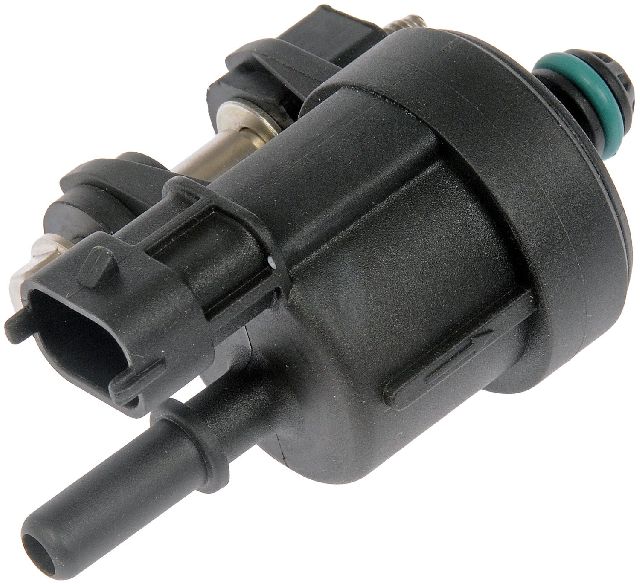
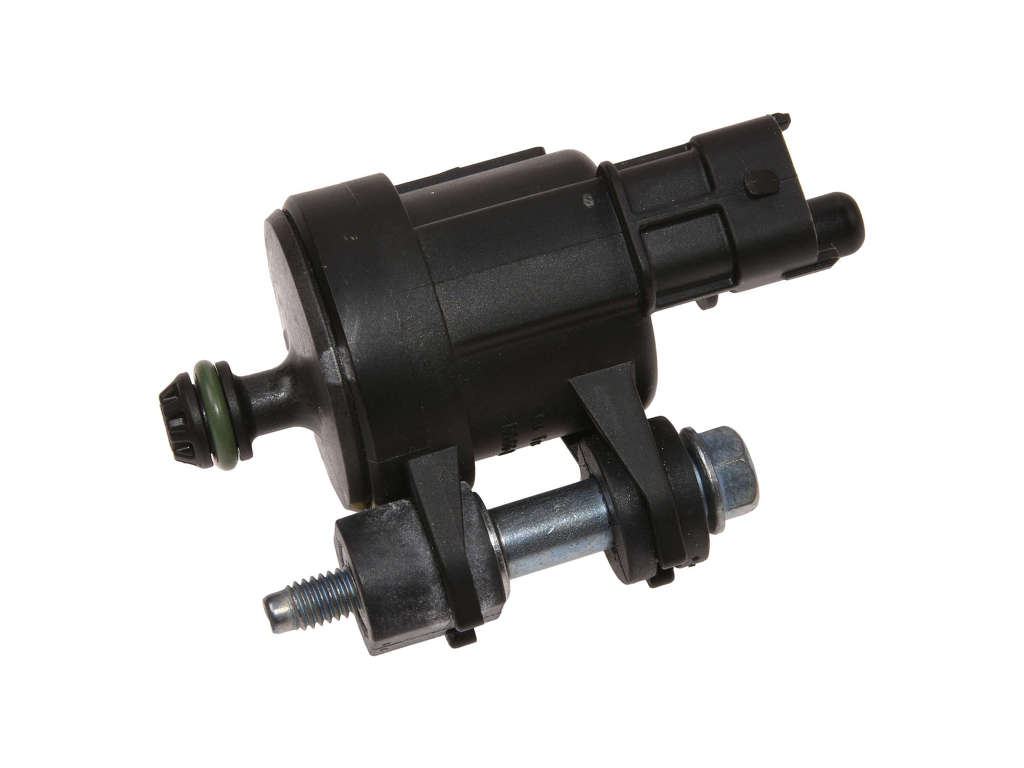
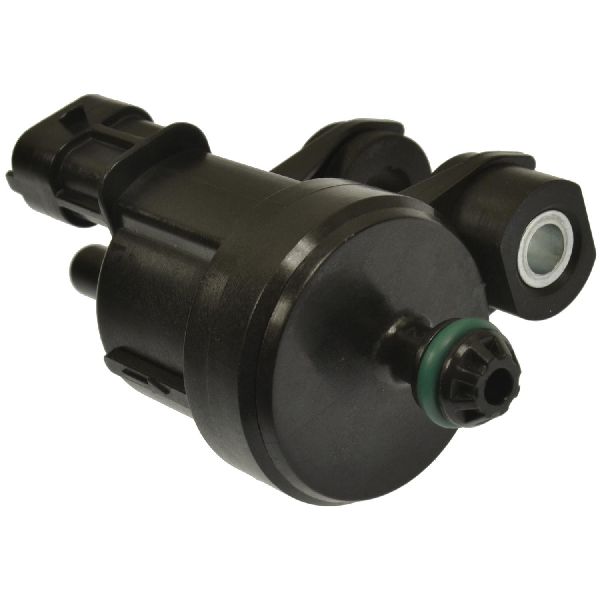
Est. part cost: $20-$40 - Vapor Canister Purge Solenoid/Valve Failure 🟡 Medium Probability → Shop Vapor Canister This valve is a very common failure point on many GM vehicles, including the ELR/Volt platform. It can fail by sticking open or closed, or by developing a leak in its diaphragm. A stuck-open valve creates a vacuum leak that can trigger P0442 and often P0496.
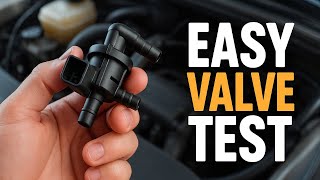
How to confirm: A scan tool can command the valve to open and close to test its function. A key symptom of a stuck-open purge valve is difficulty starting the car after filling the gas tank. You can also remove the valve and try to blow through it; if air passes, it's stuck open and faulty.
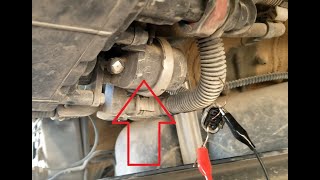
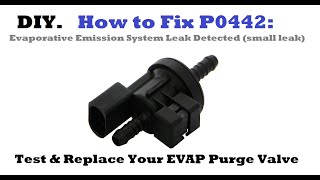
Typical fix: Replacement of the purge solenoid. It is located on top of the engine and is easily accessible, making it a common DIY repair. The OEM part is ACDelco #55593172, which may be listed under the interchangeable number 214-2317.
Est. part cost: $25-$60 - Cracked or Disconnected EVAP Hose ⚪ Low Probability The plastic and rubber hoses in the EVAP system can become brittle and crack due to age and heat cycles from the engine bay. GM TSB 21-NA-124 specifically calls out checking the seven critical connection points in the EVAP line as a key diagnostic step.
How to confirm: A visual inspection of all accessible EVAP lines between the engine, charcoal canister, and fuel tank may reveal obvious cracks or loose connections. The most definitive method is a smoke test, which forces low-pressure smoke through the system to reveal the exact location of any small leaks.
Typical fix: Replace the cracked section of hose or reconnect any loose fittings.
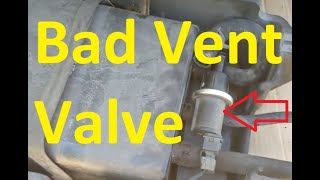
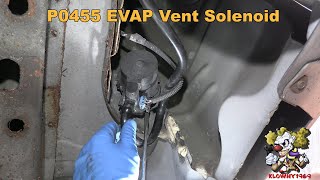
Est. part cost: $10-$50 - EVAP Vent Solenoid Failure ⚪ Low Probability → Shop Vapor Canister The vent solenoid is responsible for sealing the EVAP system during its self-test. Located near the charcoal canister under the car, it is exposed to road debris and moisture, which can cause it to fail or its filter to clog.
How to confirm: A scan tool can be used to command the valve closed during a smoke test. If smoke escapes from the vent valve, or if the valve doesn't operate when commanded, it is faulty.
Typical fix: Replace the vent solenoid and its associated filter if clogged. The OEM part number for some applications is GM #13575702.
Est. part cost: $30-$75
Rare But Worth Checking
- Leaking Charcoal Canister: → Shop Vapor Canister The plastic housing of the charcoal canister can develop hairline cracks over time, causing a small leak. This is usually found with a smoke test after all other components have been checked.
- Leaking Fuel Tank or Filler Neck: → Shop Fuel Tank Rust or physical damage can cause a small leak in the fuel tank or the filler neck. This is uncommon but possible, and would be identified during a smoke test.
- Cracked Fuel Pump Gasket Mating Surface: → Shop Fuel Pump In a documented case on a platform-mate Chevy Volt, a persistent P0442 that wasn't solved by replacing common parts was ultimately traced to cracks on the fuel tank's mating surface for the fuel pump gasket. This required dropping the tank to identify and replacing the fuel pump assembly.
Diagnosis Steps
- Retrieve the P0442 code using an OBD-II scanner and note any other codes present, especially P0455 or P0496.
- Inspect the gas cap. Ensure it is tight. Remove it and check the rubber seal for cracks, dirt, or damage. Clean the seal and filler neck opening. An OEM cap is recommended if replacement is needed.
- If the cap looks good, clear the code and drive for a few days to see if it returns. The EVAP monitor runs under specific conditions, often with the fuel tank between 1/4 and 3/4 full.
- Visually inspect the EVAP purge valve and hoses in the engine bay for any obvious cracks or disconnections. Per TSB 21-NA-124, pay close attention to the seven critical connection points between the purge valve, chassis lines, and canister.
- If a scan tool is available, command the EVAP purge and vent solenoids to check for correct operation. Listen for an audible click from the valves.
- Perform a smoke test. This involves injecting low-pressure smoke into the EVAP system's service port and looking for where the smoke escapes. This is the most reliable way to find the exact source of a small leak.
- Based on the smoke test results, replace the leaking component (e.g., hose, purge valve, vent valve, or gas cap).
- After repair, clear the codes and perform a drive cycle to allow the vehicle's computer to re-run the EVAP monitor and confirm the fix.
Parts You'll Likely Need
- Vapor Canister Purge Valve
(OEM #55593172 (or ACDelco #214-2137))— This is a very common failure item on GM vehicles of this era that causes EVAP codes. It often sticks open, causing P0442 and/or P0496.
Trusted brands: ACDelco, Standard Motor Products, Dorman
OEM price range: $40-$60
Aftermarket price range: $25-$45 - Fuel Tank Cap
(OEM #13502507)— The seal on the gas cap is the most frequent cause of small EVAP leaks. It's an inexpensive and simple first step in diagnosis. Using a non-OEM cap can also cause this code.
Trusted brands: ACDelco, Gates, Motorad
OEM price range: $20-$40
Aftermarket price range: $15-$25 - Vapor Canister Vent Solenoid
(OEM #13575702)— This valve can fail due to its location under the vehicle, exposed to the elements. It's less common than the purge valve but a known possibility addressed in GM service bulletins.
Trusted brands: ACDelco, Dorman
OEM price range: $50-$75
Aftermarket price range: $30-$50
Related Codes That Often Appear With This One
- P0455 — This code indicates a large EVAP leak. A component that is failing intermittently can sometimes trigger a small leak code (P0442) and other times a large leak code. TSB 21-NA-124 addresses both codes together.
- P0496 — This code means 'EVAP Flow During a Non-Purge Condition' and almost always points directly to a faulty purge valve that is stuck open. It's very common to see P0496 alongside P0442.
Technical Service Bulletins (TSBs) & Recalls
- 21NA124: Provides diagnostic tips for testing EVAP leaks related to DTCs P0442 and/or P0455, emphasizing checking connections first, then the vent valve, then the purge valve.
- PIT4943D: Directs technicians to use an Evaporative Emissions System Tester (GE 41413-A) to diagnose a P0442 code and provides a detailed testing procedure.
Platform-Specific Known Issues
- TSB #21NA124 provides a clear diagnostic hierarchy for P0442/P0455. It advises technicians to first inspect all EVAP line connections for proper seating and damage, then check the vent valve for being stuck open, and finally investigate the purge valve.
- TSB #PIT4943D gives specific instructions for using the dealer-level Evaporative Emissions System Tester (EEST) for P0442. It warns that aftermarket testers may lead to misdiagnosis and that temperature differences between the car and the tool can affect accuracy. It also details how to test a suspect purge solenoid by removing it and pressurizing it with the EEST.
Mechanic-Grade Diagnostic Values
- EVAP Purge Solenoid Coil Resistance — expected: 15 to 30 Ohms. Failure: An open circuit (infinite resistance) or a value significantly outside the expected range indicates a failed solenoid coil.
- EVAP Purge Solenoid Connector Voltage (Key On, Engine Off) — expected: One pin should show battery voltage (approx. 12V). The other pin is the ground-side control from the ECM.. Failure: No voltage on the power feed pin indicates a blown fuse or wiring issue. Voltage on both pins may indicate an open in the control wire back to the ECM.
- Fuel Tank Pressure (FTP) Sensor Voltage (Atmospheric Pressure) — expected: Approximately 1.5V. Failure: A voltage significantly different from 1.5V with the system open to atmosphere (e.g., gas cap off) suggests a faulty FTP sensor.
Scan Tool Commands That Help
- GM GDS2 / Professional Scan Tool: EVAP Purge/Seal Test — This is a crucial bidirectional test to verify system integrity. The tool commands the vent valve closed and then opens the purge valve to create a vacuum. It then seals the system and monitors for vacuum decay. This can confirm a leak exists and verify that a repair has fixed it without waiting for the onboard monitor to run.
- GM GDS2 / Professional Scan Tool: Vent Solenoid Control — Used during a smoke test to command the vent solenoid closed. If smoke is seen exiting the vent with the valve commanded closed, the vent solenoid is faulty and needs replacement.
Wiring & Ground Locations
- G103 — Located at the left rear of the engine compartment on the cowl, above the brake booster.. This ground point serves the Engine Control Module (ECM) and Body Control Module (BCM). A poor connection here can cause a wide range of erratic electronic issues, including incorrect sensor readings or improper operation of ECM-controlled components like the EVAP purge and vent valves.
- EVAP Vent Solenoid Wiring Harness — The wiring runs near the connector behind the right rear wheel inner fender.. A real-world report on a 2014 Volt indicated that a persistent EVAP code was finally resolved by finding and repairing a broken wire in this location, about two feet away from the vent solenoid itself. This is an area to inspect if the solenoid itself tests good.
Real Owner Repair Stories
- Reddit user 'groovylarry' on r/volt (2014 Chevrolet Volt) — Persistent EVAP Check Engine Light.
❌ Tried (didn't work) Replaced gas cap, Replaced fuel filler tube assembly, Replaced leak detection pump, Performed a smoke test which initially pointed to the gas cap area
✅ What actually fixed it The user was advised to check the canister vent solenoid wiring. Another user pointed out that the wire can break near the connector behind the right rear wheel inner fender, about 2 feet from the solenoid itself, which was the likely resolution.
"I Checked Everything" — The Actual Cause
- A documented case on a 2014 Chevy Volt, a platform mate, showed that after passing a smoke test and replacing multiple common EVAP components, the final cause was found to be hairline cracks in the plastic fuel tank itself, specifically on the mounting surface for the fuel pump assembly. This required dropping the tank to find and fix.
OEM Part Supersession History
20910150, 22891981→23294932— Standard part evolution and design updates.
Heads up: These part numbers are for the vapor canister assembly used on the Gen 1 Volt platform, which includes the 2014-2016 ELR. They are not interchangeable with the Gen 2 Volt (2016+) canister.12610560, 12661763→55593172, 12690512— Part consolidation and evolution for the vapor canister purge valve across many GM models.
Heads up: The part number 55593172 is often sold under the ACDelco number 214-2137. These are generally interchangeable for this application.
Model Year Variations Within This Range
- 2014-2016: The EVAP system self-test on the Volt/ELR platform has unique conditions. The test often runs after the vehicle has been shut off and sits for a period, using the principle of Engine Off Natural Vacuum (EONV). It also requires the fuel level to be between 15% and 85% (roughly 1/4 to 3/4 of a tank) to run.
Helpful Videos

![How to Fix P0442 Engine Code in 3 Minutes [2 DIY Methods / Only $4.67]](https://img.youtube.com/vi/73AR8Tl6YZU/mqdefault.jpg)

Used OEM Parts in Stock

New Aftermarket Parts Available


The information in this article is provided for general reference and educational purposes only. Vehicle specifications, procedures, and part compatibility can vary by production date, trim level, and region. Always consult your vehicle's factory service manual and verify part numbers before purchasing or performing repairs. Safety-critical components such as airbags, seat belts, and braking systems should be installed by a qualified professional.
- Cadillac ELR:
- 🧭 Diagnostic Flowchart
- 🎬 Helpful Videos
- 🛍️ Shop This Part
- What's Unique About the 2014-2016 Cadillac ELR
- Symptoms You May Notice
- Most Likely Causes
- Rare But Worth Checking
- Diagnosis Steps
- Parts You'll Likely Need
- Related Codes That Often Appear With This One
- Technical Service Bulletins (TSBs) & Recalls
- Platform-Specific Known Issues
- Mechanic-Grade Diagnostic Values
- Scan Tool Commands That Help
- Wiring & Ground Locations
- Real Owner Repair Stories
- "I Checked Everything" — The Actual Cause
- OEM Part Supersession History
- Model Year Variations Within This Range
- 🎟️ Get 5% Off