

P0442 on 2005-2010 Chevrolet Cobalt: EVAP Small Leak Causes and Fixes
For a 2005-2010 Cobalt, a P0442 code is most often a loose or bad gas cap. If that's not it, the EVAP purge solenoid on the engine is the next likely culprit. Replacing the purge solenoid is a simple 15-minute DIY job with the part costing around $20-$40. If neither of those fix it, check for rusted EVAP lines near the driver's side rear wheel well, a known issue on this platform.
- Always check that your gas cap is tight and its seal is in good condition before attempting any other repairs. Use an OEM cap for replacement.
- The EVAP purge solenoid, located on the engine, is the second most likely cause and is an inexpensive and very easy part to replace yourself.
- If the gas cap and purge valve don't fix the issue, have the EVAP lines near the rear driver's side wheel inspected for rust, as this is a known Cobalt issue.
- A smoke test is the most reliable way to find the exact location of a small leak if it is not one of the common components.
What's Unique About the 2005-2010 Chevrolet Cobalt
The Chevrolet Cobalt, and its platform mates like the Pontiac G5 and Saturn Ion, are generally straightforward for this code. The most common failures are typical GM weak points: the gas cap and the EVAP purge and vent solenoids. However, a notable and very common issue on this specific platform is the tendency for the steel fuel and EVAP vapor lines to rust through where they are routed near the rear driver's side wheel well. Moisture gets trapped under a silver heat shield wrap, causing the lines to corrode and create a persistent small leak that may be missed without a thorough inspection or smoke test.
Symptoms You May Notice
- Check Engine Light is on
- A faint smell of gasoline, particularly around the rear of the car or near the driver's side door if fuel lines are rusted.
- Difficulty starting the engine immediately after filling the gas tank (a classic sign of a stuck-open purge valve).
- Slightly rough idle
- Inability to use remote start feature, if equipped.
- Replacing the O2 sensors. Oxygen sensors are not related to the EVAP system.
- Replacing the catalytic converter. This is an expensive part related to exhaust treatment (like code P0420), not fuel vapor leaks.
- Replacing the fuel tank pressure (FTP) sensor without proper diagnosis. While a faulty FTP sensor can cause EVAP codes, it's less common for P0442 and often has its own specific codes. It should be tested, not guessed.
Most Likely Causes
- Loose or Faulty Gas Cap 🔴 High Probability → Shop Fuel Tank Cap The gas cap seal is a simple rubber O-ring that degrades over time with exposure to fuel vapors and weather. It's the most frequently removed and re-installed part of the system, leading to wear and the most common cause of P0442.
How to confirm: First, ensure the cap is tightened until it clicks at least three times. If the code returns, visually inspect the rubber seal on the cap for cracks, stiffness, or dirt. A definitive test is to replace it with a new OEM cap, as aftermarket caps are known to cause sealing issues.
Typical fix: Clean the fuel filler neck and the cap's seal. If the seal is damaged or the code persists, replace the gas cap. It is highly recommended to use a genuine ACDelco/GM part (ACDelco GT284 is a common part number for this platform).
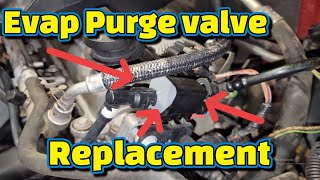
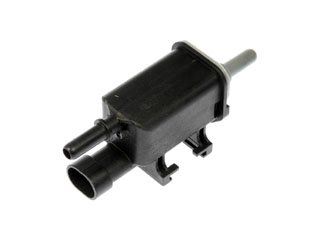
Est. part cost: $15-$30 - Faulty EVAP Purge Solenoid/Valve 🟡 Medium Probability → Shop Vapor Canister This valve cycles frequently during engine operation and is a very common failure point on many GM vehicles from this era, including the Cobalt and HHR. It can get stuck open or closed, or develop a small internal leak.
How to confirm: The valve is located on the driver's side of the engine. A key symptom of it being stuck open is difficulty starting after refueling. You can test it by removing it; with no power applied, it should be closed and not allow air to pass when you blow through it. Applying 12V should make it click and open.
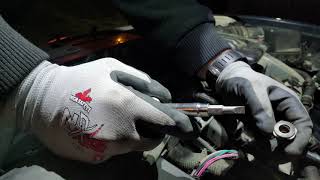
Typical fix: Replacement is very easy. Disconnect the electrical connector and two hoses, then slide the valve off its mounting bracket. The entire process takes less than 15 minutes. 🎬 Watch: How to test and replace the purge valve yourself. The OEM part number is 12597567, which corresponds to ACDelco part 214-1680.
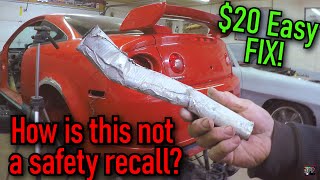
Est. part cost: $20-$50 - Rotted Fuel/EVAP Vapor Lines 🟡 Medium Probability On the Cobalt and HHR, there is a section of fuel and vapor lines near the rear driver's side wheel that is wrapped in a silver heat shield. Moisture gets trapped under this shield, causing the steel lines to rust and eventually leak, which can also present as a fuel smell or visible drip.
How to confirm: A visual inspection is required. Locate the lines running along the frame rail near the rear driver's side wheel. Carefully cut away the silver heat tape and inspect the lines underneath for swelling, flaking rust, or active fuel/vapor leaks. A smoke test will definitively show smoke exiting from this area if a leak exists.
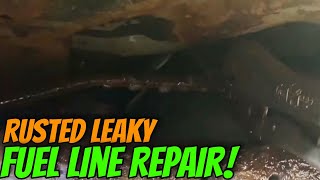
Typical fix: The rusted section of the lines must be replaced. Aftermarket replacement line kits are available for this specific, common repair. Dorman makes kits for this repair. 🎬 See how to replace these common rusted fuel lines. This is a more involved repair than the solenoids or gas cap.
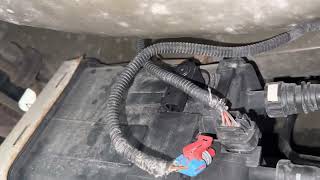
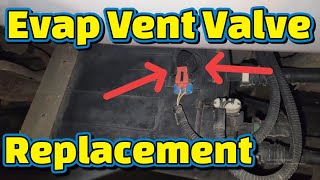
Est. part cost: $60-$150 for line kits - Faulty EVAP Vent Solenoid/Valve ⚪ Low Probability → Shop Vapor Canister Located near the charcoal canister at the rear of the car, this valve is exposed to road salt and debris, which can cause it to fail or stick. It is a normally open valve that closes to allow the system to be pressure tested.
How to confirm: This valve is often replaced when code P0449 (EVAP Vent Valve Solenoid Circuit) is also present. It can be tested by applying 12V to see if it actuates. A smoke test is the most effective way to confirm if it's leaking when it should be closed.
Typical fix: The valve is located near the charcoal canister under the rear of the vehicle, often above the rear axle. It is removed by twisting it out of the canister. Some replacement parts, like ACDelco 214-2149 (supercedes GM 25932571), may come with a new wiring harness adapter if the connector style has been updated.
Est. part cost: $30-$60
Rare But Worth Checking
- Cracked or Disconnected EVAP Hose: The plastic and rubber hoses in the EVAP system can become brittle with age and heat, leading to small cracks. Check all accessible lines in the engine bay and under the car, especially at connection points and rubber elbows.
- Cracked Charcoal Canister: → Shop Vapor Canister The charcoal canister itself can develop cracks, especially if the vehicle has been impacted from below. This is best found with a smoke test.
- Faulty Fuel Tank Pressure (FTP) Sensor: → Shop Fuel Tank While less common for P0442, a faulty FTP sensor can provide incorrect readings to the ECM, causing it to believe there is a leak when there isn't one. This is difficult to diagnose without advanced scan tools.
Diagnosis Steps
- Check the Gas Cap: Remove the gas cap, inspect the seal for damage, and reinstall it, ensuring it clicks several times. Clear the code and drive for a few days to see if it returns.
- Replace the Gas Cap: If the seal looks worn or the light comes back, replace the gas cap with a new OEM part (e.g., ACDelco GT284) as the next step. This is the cheapest and most common fix.
- Inspect the Purge Solenoid: Locate the purge solenoid on the driver's side of the engine. Check for any obvious cracks on the valve body or its hoses. A common symptom of failure is difficulty starting after refueling.
- Test/Replace the Purge Solenoid: This is the second most likely failure. Given the low cost (~$25) and ease of replacement (15 minutes), many owners choose to replace it as a diagnostic step.
- Inspect for Rotted Lines: Specifically check the fuel/vapor lines under the heat shield near the rear driver's side wheel for rust and leaks. This is a very common Cobalt-specific failure point.
- Inspect the Vent Solenoid and Hoses: Visually inspect the EVAP vent solenoid (near the gas tank) and all accessible EVAP lines for cracks, damage, or loose connections.
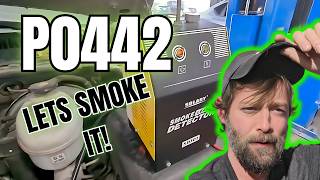
- Perform a Smoke Test: If the leak is not obvious, the most effective way to find it is to have a smoke test performed. This involves injecting pressurized smoke into the EVAP system and watching where it escapes. 🎬 Watch: How to find a small leak using a smoke test. This is the definitive way to find cracked hoses or rotted lines.
Parts You'll Likely Need
- Vapor Canister Purge Solenoid
(OEM #12597567)— This is a very common failure item on GM vehicles of this era and a frequent cause of P0442. It often gets stuck partially open, causing hard starting after refueling.
Trusted brands: ACDelco (214-1680), Standard Motor Products (SMP), Dorman
OEM price range: $30-$50
Aftermarket price range: $20-$40 - Fuel Tank Cap
(OEM #ACDelco GT284)— The gas cap seal wears out over time, causing it to no longer seal the system properly. This is the most common and easiest fix. Using a non-OEM cap is a frequent cause of repeat codes.
Trusted brands: ACDelco
OEM price range: $20-$30
Aftermarket price range: $10-$20 - Vapor Canister Vent Solenoid
(OEM #25932571)— Located under the car near the fuel tank, this valve is exposed to the elements and can fail, often causing a P0449 code alongside P0442. The original part is often superseded by a newer design that may include a wiring adapter.
Trusted brands: ACDelco (214-2149), Dorman (911-140), Standard Motor Products (CVS38)
OEM price range: $40-$60
Aftermarket price range: $30-$50
Related Codes That Often Appear With This One
- P0455 — A P0455 (Large EVAP Leak) can appear with P0442 if the leak is intermittent or on the borderline between small and large. The same components are responsible for both codes.
- P0449 — P0449 specifically indicates a problem with the EVAP Vent Solenoid circuit. If you have both P0442 and P0449, the vent solenoid is almost certainly the problem.
- P0496 — P0496 indicates 'EVAP Flow During a Non-Purge Condition,' which almost always points directly to a faulty EVAP Purge Solenoid that is stuck open or leaking.
Technical Service Bulletins (TSBs) & Recalls
- 21-NA-124: A general GM bulletin providing diagnostic tips for P0442 and P0455, advising technicians to check for proper line connections and damage before replacing parts.
- PIT4943D: A bulletin for the Cobalt/G5 platform indicating that special diagnostic procedures may be required to find the source of a P0442 leak. It specifically references using the Techlink article "Using the Evaporative Emissions System Tester."
Platform-Specific Known Issues
- A known weak point is the fuel and EVAP vapor lines that run along the frame near the rear driver's side wheel. They are covered by a silver heat shield that traps moisture, causing the lines to rust through and leak.
Mechanic-Grade Diagnostic Values
- EVAP Purge Solenoid Coil Resistance — expected: 15 to 40 Ohms. Failure: A reading of infinity (Open Loop) or near-zero (short circuit) indicates a failed coil.
- EVAP Vent Solenoid Coil Resistance — expected: Approximately 20 Ohms. Failure: An open circuit reading on a multimeter indicates a bad solenoid coil.
- Fuel Tank Pressure (FTP) Sensor Signal Voltage (Key On, Engine Off) — expected: 0.1 - 4.9 Volts. A high voltage indicates low pressure/vacuum, while a low voltage indicates high pressure.. Failure: Voltage that is stuck high or low regardless of actual tank pressure, or readings outside the specified range, often indicates a faulty sensor or wiring issue. Codes P0452 (low) and P0453 (high) point directly to this circuit.
- EVAP Purge Solenoid Connector Voltage (Key On, Engine Off) — expected: One pin should have battery voltage (~12V). The other is a ground-side control from the ECM.. Failure: No voltage on the power feed wire suggests a blown fuse (e.g., EMISSIONS fuse) or a break in the wiring.
Scan Tool Commands That Help
- GM Tech2 / GDS2: EVAP Service Bay Test — This is a comprehensive, automated test that allows the technician to run the vehicle's own EVAP leak test procedure on demand in the service bay, rather than waiting for the monitor to run during a drive cycle. It requires holding the engine RPM between 1800-2200 for several minutes.
- GM Tech2 / GDS2 or capable bidirectional scanner: EVAP Purge/Seal — This command seals the EVAP system by closing the normally-open vent solenoid. This is a required step before performing a smoke test to ensure the system is closed and can be pressurized with smoke.
- GM Tech2 / GDS2 or capable bidirectional scanner: EVAP Purge Solenoid Control — Allows the technician to command the purge solenoid open and closed (or by a specific percentage) to verify its mechanical function and check for response on live data, such as O2 sensor readings or short-term fuel trim.
Wiring & Ground Locations
- Engine Bay Ground (Driver's Side) — On the driver's side strut tower, behind the underhood fuse block.. A poor ground here can cause a variety of electrical issues for components controlled by the ECM, potentially affecting sensor readings and solenoid operation.
- Engine Bay Ground (Coolant Reservoir) — Located underneath the coolant reservoir; the reservoir must be removed for access.. This is a key ground point for the engine harness. Corrosion here is common and can lead to intermittent electrical faults for engine management systems, including EVAP components.
- Transmission Ground — A main ground strap that connects from the chassis to the transmission housing.. This is a primary ground for the entire powertrain. If corroded or loose, it can cause widespread, difficult-to-diagnose electrical problems, including erratic sensor data and improper solenoid function.
- EVAP Purge Solenoid Connector — On the driver's side of the engine, connected to the purge solenoid.. The two pins are for 12V power and the ground-side control signal from the ECM. Verifying power and signal here is a key diagnostic step. The connector pigtail is available as a separate part (e.g., ACDelco PT2784) if it becomes damaged.
Real Owner Repair Stories
- CobaltSS.net forum user (Chevrolet Cobalt SS) — Check Engine Light with codes P0449 and P0455.
❌ Tried (didn't work) Replacing the gas cap three times in two years.
✅ What actually fixed it The user suspected a leak in the fuel tank hose or the tank itself, but the resolution pointed towards an issue with the EVAP system components beyond the gas cap, as P0449 specifically relates to the vent solenoid circuit. The discussion highlights the canister and solenoids located above the rear crossmember as the next logical place to inspect. - NHTSA ODI #10513074 — An owner reported that after having their fuel pump replaced for free by a dealership, the engine light remained on with code P0442. Despite the fuel pump replacement, the small EVAP leak persisted.
OEM Part Supersession History
10382105, 15750484, 22728634→25932571— Part consolidation and design updates for the EVAP Vent Solenoid.
Heads up: The replacement part 25932571, and its aftermarket equivalent ACDelco 214-2149, may have a different electrical connector than the original part on some early models. Some replacement kits include a new wiring harness pigtail adapter to address this.
Diagnostic Flowchart
Other Known Issues on This Vehicle
Issues unrelated to this code that are worth knowing about as an owner of this generation:
- Ignition Switch Failure 🔴 High — Extremely widespread, subject to a major safety recall (NHTSA Campaign 14V047000). The switch can move out of the 'Run' position while driving, disabling the engine, power steering, and airbags. (Ref: NHTSA Recall 14V047000)
- Electric Power Steering (EPS) Failure 🔴 High — Very common, subject to a safety recall (NHTSA Campaign 10V073000). Results in a sudden loss of power steering assist, making the vehicle difficult to steer, especially at low speeds. (Ref: NHTSA Recall 10V073000)
- Faulty Timing Chain Tensioner 🟠 Medium — Common around 100,000 miles. A failing tensioner can cause a rattling noise on cold starts. If ignored, the chain can skip or break, leading to significant engine damage.
- Key Stuck in Ignition 🟡 Low — A very common annoyance caused by a failed shifter cable or a problem with the ignition lock cylinder solenoid. A recall was issued for some shifter cable issues. (Ref: Recall for shifter cable on some models.)
- Fuel Line / Brake Line Corrosion 🟠 Medium → Shop Fuel Line — Common in regions with road salt. The lines, particularly where they run under the car near the rear wheels, are prone to severe rust, leading to fuel or brake fluid leaks. This is directly related to a cause of P0442 but is also a broader safety issue.
Used vs. New Parts: Buying Guide for This Vehicle
When a used part is the smart pick: For this repair, used parts are generally not recommended. The key failure points are rubber seals (gas cap), plastic/rubber lines (rotted lines), and electro-mechanical solenoids that wear out over cycles and exposure. The cost of new, reliable aftermarket parts is low enough that the risk and labor of installing a used part with unknown remaining life is not a smart choice.
Donor-vehicle mileage cap: roughly under 50000 miles for the part to have meaningful remaining life.
What to inspect on the donor part:
- For solenoids, check for cracks in the plastic housing or connector body.
- For hoses, ensure they are still pliable and not brittle or cracked.
- Avoid any parts from vehicles in the 'salt belt' due to high risk of corrosion on electrical connectors and metal components.
OEM-only on this vehicle (don't cheap out):
- Fuel Tank Cap - Aftermarket gas caps are a notorious cause of P0442 codes. It is strongly recommended to use a genuine ACDelco/GM cap to ensure a proper seal.
Aftermarket brands forum-validated for this vehicle:
- ACDelco (Professional line for solenoids)
- Standard Motor Products (SMP)
- Dorman (Specifically for their fuel/EVAP line repair kits)
Brands owners have reported issues with on this vehicle:
- Unbranded, 'white-box' parts from online marketplaces, especially for the gas cap and purge/vent solenoids.
Real Owner Stories
Aggregated from forums and TSBs cited above. Mileages and costs reflect what owners reported in those sources.
2010 Chevy Cobalt
Symptoms: P0442 Evap Leak detected; replaced the purge valve but the check engine light remained on.
What fixed it: Commenters suggested replacing the gas cap with an OEM part and checking the vent valve.
Source hint: Reddit user in thread '2010 Chevy Cobalt P0442 Evap Leak, replaced purge valve and light still on.'
2009 Chevy HHR (Platform Mate)
Symptoms: P0442 code accompanied by a gas smell and visible dripping fuel.
What fixed it: Diagnosed as rotted fuel lines, a problem shared with the Cobalt due to moisture trapped under the heat shield.
Source hint: ChevyHHR.net thread 'P0442 chevy hhr 2009 .... help please'
2005-2010 Chevrolet Cobalt
Symptoms: Persistent P0442 and a slow fueling issue.
What fixed it: Diagnostic process focused on a blocked vent path versus a system leak.
Source hint: Chevrolet Forum thread 'P0442 keeps coming back'
2005-2010 Chevrolet Cobalt
Symptoms: Small EVAP leak detected (P0442).
What fixed it: Discussion identified common causes ranging from the gas cap to the notorious rusted fuel lines under the heat tape near the rear wheel.
Source hint: CobaltSS.net thread 'P0442 ( Evap leak detected - small leak )'
Related OBD-II Codes
Frequently Asked Questions
I have a 2010 Chevy Cobalt with P0442 and already replaced the purge valve, but the light is still on. What should I do next?
Is there a specific TSB for diagnosing P0442 on my Cobalt?
I smell gas near my rear driver's side wheel; could this be related to P0442?
Why does my Cobalt struggle to start only after I fill up the gas tank?
Can I use an aftermarket gas cap to fix this leak?
Where is the vent solenoid located on the Cobalt?
Helpful Videos
Used OEM Parts in Stock
New Aftermarket Parts Available


The information in this article is provided for general reference and educational purposes only. Vehicle specifications, procedures, and part compatibility can vary by production date, trim level, and region. Always consult your vehicle's factory service manual and verify part numbers before purchasing or performing repairs. Safety-critical components such as airbags, seat belts, and braking systems should be installed by a qualified professional.
- Chevrolet Cobalt:
- 🧭 Diagnostic Flowchart
- 🎬 Helpful Videos
- 🛍️ Shop This Part
- What's Unique About the 2005-2010 Chevrolet Cobalt
- Symptoms You May Notice
- Most Likely Causes
- Rare But Worth Checking
- Diagnosis Steps
- Parts You'll Likely Need
- Related Codes That Often Appear With This One
- Technical Service Bulletins (TSBs) & Recalls
- Platform-Specific Known Issues
- Mechanic-Grade Diagnostic Values
- Scan Tool Commands That Help
- Wiring & Ground Locations
- Real Owner Repair Stories
- OEM Part Supersession History
- Other Known Issues on This Vehicle
- Used vs. New Parts: Buying Guide for This Vehicle
- Real Owner Stories
- 2010 Chevy Cobalt
- 2009 Chevy HHR (Platform Mate)
- 2005-2010 Chevrolet Cobalt
- 2005-2010 Chevrolet Cobalt
- Related OBD-II Codes
- Frequently Asked Questions
- 🎟️ Get 5% Off