

P0442 on 2005-2012 Chevrolet Corvette: EVAP Small Leak Causes and Fixes
For a P0442 code on a C6 Corvette, the most common and easiest fix is to inspect and tighten or replace the gas cap. If that doesn't solve it, the next likely culprit is a faulty EVAP vent solenoid located near the rear passenger-side wheel well. A smoke test is the most definitive way to find the leak's source.
- Always check your gas cap first for a P0442 code. Ensure it's tight and the seal is intact.
- If the gas cap isn't the issue, the EVAP vent solenoid (located near the rear passenger wheel) is the next most likely part to have failed.
- A fuel smell is a common symptom that accompanies this code on the C6 Corvette.
- While you can replace parts yourself, a professional smoke test (costing ~$80-$150) is the fastest way to accurately pinpoint the leak's location.
- The issue is not critical and will not prevent you from driving the car, but it will cause a failed emissions test.
What's Unique About the 2005-2012 Chevrolet CORVETTE

The C6 Corvette's dual-tank fuel system and compact packaging can make accessing some EVAP components tight. Specifically, the EVAP vent solenoid, located on the passenger side near the transmission and differential, can be challenging to reach, especially on automatic transmission models where owners report having to loosen exhaust components for better access. While the causes for P0442 are common across many GM vehicles, owner forums for the C6 Corvette frequently point to the EVAP vent solenoid as a common failure point after the gas cap has been ruled out. Manufacturer bulletins confirm that diagnosing these small leaks often requires a systematic approach with a smoke machine, as outlined in TSB #PIT4943D and TSB #21-NA-124.
Diagnostic Flowchart

Tap your situation to follow the diagnostic path that matches what you're seeing on this vehicle.
Symptoms You May Notice
- Check Engine Light is on
- A noticeable fuel smell, especially at low speeds, at a stop, or after filling the tank. [OWNER COMPLAINT] NHTSA ODI #11390824
- A "Check Gas Cap" message may appear on the driver information center, sometimes preceding or accompanying the P0442 code.
- Difficulty starting the car immediately after refueling (long crank time), which can point to a stuck-open purge valve.
- Replacing the purge valve (in the engine bay) when the vent valve (at the rear of the car) is the actual problem. The vent valve is a more common failure point for this code on the C6 Corvette. [32, OWNER COMPLAINT] NHTSA ODI #11564943]
- Replacing other components without first checking for a loose or faulty gas cap, which is the simplest and most common fix.
- Assuming the system has no leak just because one isn't immediately visible. A smoke test is often required to find the very small leaks that trigger P0442.
Most Likely Causes

- Loose, Worn, or Incorrect Gas Cap 🔴 High Probability → Shop Fuel Tank Cap The gas cap is the most frequently handled part of the EVAP system, and its seal can degrade over time or simply not be tightened correctly. Aftermarket caps are a frequent source of sealing issues. Several Corvette owners have fixed the P0442 code simply by replacing an old, even if visually okay, gas cap with a new OEM one.
How to confirm: Ensure the cap is tightened until it clicks at least once. Inspect the rubber O-ring on the cap for cracks, stiffness, or damage. Cleaning the filler neck surface can also resolve the issue.
Typical fix: Replace the gas cap with a new, high-quality OEM or equivalent part. Clearing the code and driving for a few days is necessary to see if the fix worked, as the EVAP monitor runs intermittently.
Est. part cost: $15-$40 - Faulty EVAP Vent Solenoid/Valve 🟡 Medium Probability → Shop Vapor Canister This component is exposed to the elements near the rear passenger-side wheel well and can fail by getting stuck open due to dirt, debris, or internal corrosion, causing a leak. This was the confirmed fix in an owner complaint after a smoke test. [OWNER COMPLAINT] NHTSA ODI #11564943. Numerous forum threads cite this as the fix after a gas cap replacement failed.
How to confirm: The solenoid can be tested with a capable scan tool to see if it actuates. A smoke test is the most definitive method; smoke will exit the valve if it's leaking when commanded closed. [OWNER COMPLAINT] NHTSA ODI #11564943. You can also apply 12V power to the solenoid's terminals; it should click closed. If it doesn't, or if it's stuck open at rest, it's faulty.
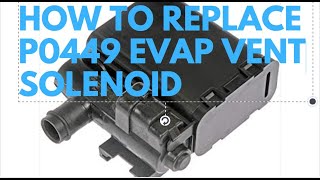
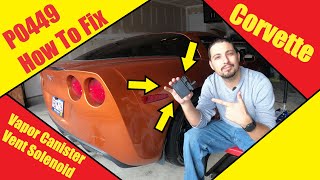
Typical fix: Replace the EVAP vent solenoid. It is located on a bracket on the passenger side, near the transmission and differential. 🎬 Watch this walkthrough on swapping the vent solenoid in tight spaces. Some model years may require a wiring harness adapter for the replacement part, which is often included with aftermarket solenoids.
Est. part cost: $25-$50 - Faulty EVAP Purge Solenoid/Valve ⚪ Low Probability → Shop Vapor Canister This valve, located in the engine bay, can fail by not closing completely, creating a constant small leak from the EVAP canister to the intake manifold.
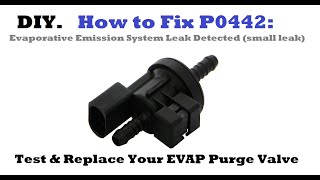
How to confirm: With the engine off, disconnect the hose from the purge valve that leads to the intake manifold and try to blow through it. No air should pass. If it does, the valve is stuck open. A symptom of a stuck-open purge valve can be difficulty starting after refueling. 🎬 See how to test and replace the EVAP purge valve yourself.
Typical fix: Replace the purge solenoid. On the C6, it's typically found on the passenger side of the engine, near the fuel rail cover.
Est. part cost: $25-$60 - Cracked or Disconnected EVAP Hoses ⚪ Low Probability Over time, the rubber and plastic hoses that make up the EVAP system can become brittle and crack, especially at connection points or bends. A forum user reported finding a cracked plastic hose covered in foam near the passenger side fuel rail, which resolved their P0442 code.
How to confirm: A visual inspection may reveal obvious cracks or disconnections. A smoke test is the most effective way to find small, hard-to-see leaks in the lines. The smoke is introduced via a service port, often near the purge valve in the engine bay. 🎬 Watch a mechanic use a smoke machine to find small leaks.
Typical fix: Replace the damaged section of hose or reconnect it securely. Using screw-type clamps instead of the original spring clamps can be easier during reassembly.
Est. part cost: $10-$30
Rare But Worth Checking
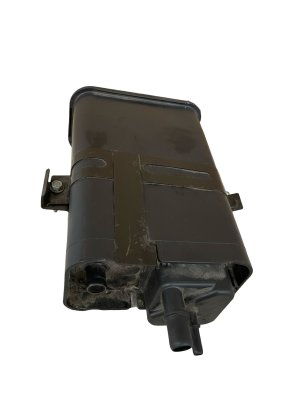
- Leaking Charcoal Canister: → Shop Vapor Canister The plastic housing of the canister itself can develop cracks over time, leading to a leak. This is less common than solenoid failure but should be checked during a smoke test, as it's located near the vent solenoid.
- Leaking Fuel Tank or Filler Neck: → Shop Fuel Tank While a small leak in the fuel tank or filler neck is possible, it's more likely to trigger a large leak code (P0455). However, a pinhole leak from rust on the filler neck could potentially set a P0442. A forum user with a 2010 GS model confirmed via smoke test that their leak was coming from the top of the right-side fuel tank, requiring the tank to be dropped for repair.
Diagnosis Steps

- Visually inspect the gas cap. Ensure it is tight and the seal is not cracked or damaged. Clean the cap seal and fuel filler neck. If in doubt, replace it with an OEM cap as it's an inexpensive first step.
- Clear the code with a scan tool and drive the car for a few days to see if the code returns. The EVAP monitor runs under specific conditions (e.g., fuel level between 15% and 85% tank, specific ambient temperatures).
- If the code returns, perform a thorough visual inspection of all accessible EVAP hoses and lines between the engine bay and the fuel tank, looking for obvious cracks or loose connections, paying special attention to the lines near the fuel rail covers.
- Locate the EVAP vent solenoid near the rear passenger wheel/differential area. Check its electrical connector and hose for a secure fit. You can test it by applying 12V to see if it clicks.
- The most definitive diagnostic step is to perform a smoke test. A mechanic will introduce low-pressure smoke into the EVAP system's service port. Smoke will emerge from the location of the leak, whether it's a hose, solenoid, canister, or the gas cap seal. [29, OWNER COMPLAINT] NHTSA ODI #11564943]
Parts You'll Likely Need
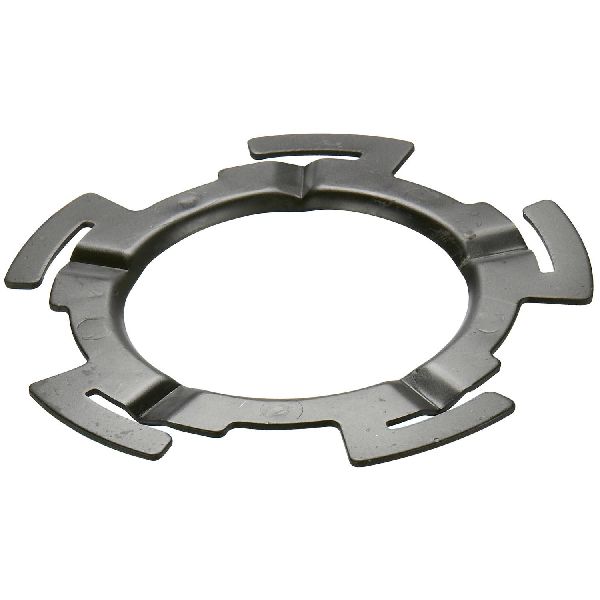
- Fuel Tank Cap
(OEM #19432733 (supersedes 15832215))— This is the most common cause of a P0442 code due to improper tightening or a worn seal. Many owners report fixing the code with a new OEM cap after an aftermarket one failed.
Trusted brands: ACDelco (GM Original Equipment)
OEM price range: $20-$35
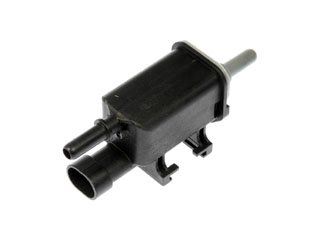
Aftermarket price range: $15-$25 - Vapor Canister Vent Solenoid
(OEM #214-2308 (ACDelco), 13575703 (GM))— A very common failure point on the C6 Corvette that gets stuck open, causing a small leak. Confirmed fix in owner complaints and numerous forum discussions. [32, OWNER COMPLAINT] NHTSA ODI #11564943]
Trusted brands: ACDelco, Dorman, Standard Motor Products (CVS92)
OEM price range: $28-$45
Aftermarket price range: $20-$35 - Vapor Canister Purge Solenoid
(OEM #12597341)— Less common than the vent solenoid, but can fail and get stuck open, causing a leak. Located in the engine bay for easier access.
Trusted brands: ACDelco, Dorman, Standard Motor Products
OEM price range: $25
Aftermarket price range: $20
Related Codes That Often Appear With This One
- P0455 — This indicates a large EVAP leak. If a component fails catastrophically, a hose becomes completely disconnected, or the gas cap is left off, you might see this code along with or instead of P0442.
- P0449 — This code specifically points to a fault in the EVAP vent solenoid valve control circuit. If you have P0449, the vent solenoid is almost certainly the problem, which would also cause the leak detected by P0442.
Technical Service Bulletins (TSBs) & Recalls
- Bulletin #21-NA-124: Provides general diagnostic tips for P0442 and P0445, advising a systematic check of lines, then the vent valve, then the purge valve.
- Bulletin #PIT4943D: Details the process for using the specific GM Evaporative Emissions System Tester (EEST) tool to accurately diagnose small leaks associated with P0442.
- Bulletin #EI07238: An engineering information bulletin from 2008 specifically requesting technician feedback on P0442/P0455 codes on 2005-2006 Corvettes to investigate the root cause of fuel cap sealing issues.
Platform-Specific Known Issues
- Owner complaint NHTSA ODI #11564943 for a 2009 Corvette specifically identifies the EVAP vent solenoid as the cause of a P0442 code, found via a smoke test after a new fuel cap did not solve the issue.
- Owner complaint NHTSA ODI #11390824 for a 2011 Corvette links the P0442 code with a distinct fuel smell at low speeds and stops, a key symptom to watch for.
- Access to the EVAP vent solenoid is noted by owners to be more difficult on automatic transmission models, sometimes requiring loosening of the passenger-side exhaust for adequate hand clearance.
Mechanic-Grade Diagnostic Values
- Fuel Tank Pressure (FTP) Sensor Voltage — expected: 0.1V (high pressure) to 4.9V (high vacuum). With gas cap off (atmospheric pressure), voltage should be stable around 1.45V - 1.5V.. Failure: A sensor that is stuck in range (e.g., always at 1.5V) even when vacuum is applied via a scan tool command will set a P0442 but may not set a sensor-specific code.
- EVAP Canister Vent Solenoid Resistance — expected: 14-30 Ohms (typical for many GM solenoids, though not C6-specific value found).. Failure: A reading of infinite resistance (open circuit) or zero resistance (short circuit) indicates a failed solenoid coil.
Hidden / Shadow Codes Worth Checking
- Mode $06, Test ID $02: This is not a DTC but the underlying monitor data for the 'Enhanced Evaporative Emission System Monitor #1 (.040" Leak)'. A technician can view this data with an advanced scan tool to see the system's test values and limits before a DTC is officially set. (see via Advanced scan tool with Mode $06 capability.)
Scan Tool Commands That Help
- Tech2 / GDS2 (or clone like VCX Nano): EVAP Service Bay Test — This is a guided diagnostic test to force the EVAP monitor to run, allowing a technician to check the entire system's integrity in the shop without having to perform a full drive cycle.
- Tech2 / GDS2 (or clone like VCX Nano): EVAP Purge/Seal — This function allows manual control of the EVAP solenoids. A technician can command the vent solenoid closed and the purge solenoid open (with engine running) to apply vacuum to the system and monitor the FTP sensor voltage. If voltage doesn't rise, there's a blockage or a large leak.
- Tech2 / GDS2 (or clone like VCX Nano): EVAP Vent Solenoid ON/OFF — Used to command the vent solenoid closed. With the system sealed, a technician can introduce smoke or light pressure to see if the valve is leaking internally. It also verifies the control circuit is working.
Wiring & Ground Locations
- Fuse #13 (Underhood Fuse Block) — Located in the fuse block in the engine compartment, labeled 'MRRTD'. It is a 25A fuse.. This fuse supplies ignition voltage to the EVAP canister vent solenoid. A blown fuse will cause a P0449 (vent control circuit fault) and can lead to a P0442 leak code since the valve cannot be commanded closed.
- G402 — On the inner side of the right (passenger) frame rail, towards the rear of the vehicle.. This is a primary ground point for components at the rear of the car. A poor connection here could potentially affect the operation of the nearby EVAP vent solenoid.
- EVAP Vent Solenoid Harness — Runs near the passenger side exhaust pipe to the vent solenoid.. This harness is susceptible to damage during exhaust work. A nicked or melted wire can cause an open or short in the vent solenoid circuit, preventing it from sealing the system for the leak test.
Real Owner Repair Stories
- CorvetteForum user (2006 Corvette, Automatic Transmission) — Recurring P0442 code every few days.
❌ Tried (didn't work) Clearing the code with a scanner., Replacing the gas cap.
✅ What actually fixed it Replacing the EVAP vent solenoid located at the right rear of the car. The owner noted they had to loosen the exhaust to get enough access and recommended replacing the factory spring clamp with a screw-type clamp for easier installation. - CorvetteForum user (1999 Corvette (similar C5 architecture, relevant failure mode)) — P0449 (EVAP Vent Solenoid Control Circuit), which is directly related to P0442.
❌ Tried (didn't work) The solenoid itself tested good.
✅ What actually fixed it The electrical connector plug for the vent solenoid had failed internally due to age. A technician diagnosed the bad plug and wired a new connector into the harness, which resolved the code.
"I Checked Everything" — The Actual Cause
- A known diagnostic challenge is when a vent or purge solenoid passes a pressure test (from a smoke machine) but fails a vacuum test (which is how the ECM tests the system). A valve can have a weak seal that holds light pressure but allows air to be drawn in under vacuum, triggering a P0442. The fix is to test the solenoids by applying vacuum with a hand pump to see if they hold.
When the Usual Fixes Don't Work
- In several documented cases, replacing the gas cap—even with a new one—did not resolve the P0442 code. The subsequent successful repair was the replacement of the EVAP vent solenoid located at the rear of the car, confirming it as the second-most-likely culprit. In one instance, the issue was not the solenoid itself but its electrical connector, which had failed with age, requiring a new pigtail to be wired in. This highlights that diagnosis should not stop at just the component, but also include its wiring and connections, especially on older vehicles.
OEM Part Supersession History
15832215→19432733— Standard part revision/update by GM.
Heads up: Both parts are compatible, but 19432733 is the current OEM replacement for the C6 Corvette gas cap.N/A→N/A— N/A
Heads up: When replacing the EVAP vent solenoid with some aftermarket parts (e.g., Dorman), a wiring harness adapter is often required and included. The connector on the aftermarket solenoid may not match the factory harness directly.
Model Year Variations Within This Range
- 2005-2007 vs 2008-2013: The primary change was the engine, from the 6.0L LS2 in 2005-2007 to the 6.2L LS3 in 2008-2013. While this brought significant performance improvements, the fundamental design and common failure points of the EVAP system (gas cap, vent solenoid) remained consistent across the C6 generation.
Helpful Videos


Used OEM Parts in Stock
New Aftermarket Parts Available


The information in this article is provided for general reference and educational purposes only. Vehicle specifications, procedures, and part compatibility can vary by production date, trim level, and region. Always consult your vehicle's factory service manual and verify part numbers before purchasing or performing repairs. Safety-critical components such as airbags, seat belts, and braking systems should be installed by a qualified professional.
- Chevrolet CORVETTE:
- 🧭 Diagnostic Flowchart
- 🎬 Helpful Videos
- 🛍️ Shop This Part
- What's Unique About the 2005-2012 Chevrolet CORVETTE
- Symptoms You May Notice
- Most Likely Causes
- Rare But Worth Checking
- Diagnosis Steps
- Parts You'll Likely Need
- Related Codes That Often Appear With This One
- Technical Service Bulletins (TSBs) & Recalls
- Platform-Specific Known Issues
- Mechanic-Grade Diagnostic Values
- Hidden / Shadow Codes Worth Checking
- Scan Tool Commands That Help
- Wiring & Ground Locations
- Real Owner Repair Stories
- "I Checked Everything" — The Actual Cause
- When the Usual Fixes Don't Work
- OEM Part Supersession History
- Model Year Variations Within This Range
- 🎟️ Get 5% Off