

P0442 on 2008-2015 Chevrolet Impala: Causes and Fixes for a Small EVAP Leak
On a 2008-2015 Impala, P0442 usually means a faulty gas cap or a bad EVAP purge or vent valve. A new gas cap is under $25. If that doesn't work, the purge valve is the next most likely culprit and a common DIY fix. A smoke test is the best way to find the exact source of the leak.
- P0442 on a 2008-2015 Impala indicates a small leak in the fuel vapor system.
- Always start with the simplest fix: check that your gas cap is tight. If it's old, replace it.
- The most common faulty part is the EVAP purge solenoid valve, located on top of the engine. It's a relatively easy and affordable DIY replacement.
- The EVAP vent solenoid, located under the car, is the next most likely part to fail due to its exposure to the elements.
- If simple fixes don't work, a professional smoke test is the most reliable way to find the exact source of the leak.
What's Unique About the 2008-2015 Chevrolet IMPALA

The 2008-2015 Impala range covers two distinct generations, which can have different parts and procedures. The 9th generation (2008-2013 and 2014-2016 "Limited" models) has well-documented issues with the EVAP purge and vent valves. For the 10th generation (2014-2015), GM issued a technical service bulletin (PI1034A) for P0442 specifically caused by a misaligned fuel filler pipe seal from the factory. Another TSB (17-NA-409) for 2014-2018 models with the 3.6L LFX engine notes that a faulty camshaft cover gasket can cause oil contamination that leads to purge valve failure and a P0442 code.
Diagnostic Flowchart

Tap your situation to follow the diagnostic path that matches what you're seeing on this vehicle.
Generation note: This range includes the end of the 9th generation (2006-2013, plus 2014-2016 as the "Impala Limited") and the beginning of the 10th generation (2014-2020). While the causes are similar, part numbers and locations for components like the EVAP vent solenoid can differ. For example, the 9th gen vent solenoid is located near the rear driver's side wheel, while the purge valve is on top of the engine. Always verify parts for your specific year and model.
Symptoms You May Notice
- Check Engine Light is on
- A faint fuel smell, especially when parked in an enclosed space like a garage
- Difficulty starting the car immediately after refueling (this strongly points to a stuck-open purge valve which floods the engine with vapors).
- Rough or low idle due to an unmetered vacuum leak from a faulty purge valve.
- Replacing the Fuel Tank Pressure Sensor. While this sensor can fail, it is not a common cause for a P0442 leak code. A faulty sensor would typically set a different code related to sensor performance or circuit issues (e.g., P0451, P0452, P0453).
Most Likely Causes


- Loose or Faulty Gas Cap 🔴 High Probability → Shop Fuel Tank Cap The gas cap is a frequently handled part and its seal can wear out over time, or it may simply not have been tightened correctly. Aftermarket caps are a known source of issues; using an OEM cap is highly recommended as even new aftermarket caps can fail to seal properly.
How to confirm: First, ensure the cap is tightened until it clicks multiple times. Inspect the rubber seal on the cap for cracks, stiffness, or damage. Check the filler neck sealing surface for rust or debris and clean it with a wire brush if necessary.
Typical fix: Replace the gas cap with a new, high-quality OEM (ACDelco) part. This is the cheapest and easiest first step.
Est. part cost: $15-$30 - Faulty EVAP Purge Solenoid/Valve 🔴 High Probability → Shop Vapor Canister This valve is a very common failure point on this platform, often getting stuck open or closed. TSB 17-NA-409 specifically notes that on 2014-2018 3.6L models, oil contamination from a bad cam cover gasket (Part No. 12688703) can cause the purge valve to fail repeatedly. It is often seen with code P0496 when it fails.
How to confirm: With the engine off, remove the valve (located on top of the engine) and try to blow through it. If air passes through, the valve is stuck open and is bad. A mechanic can also command it open and closed with a scan tool to test its function and listen for a click.
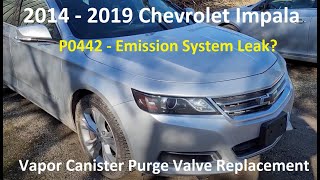
Typical fix: Replace the purge solenoid valve. This is a simple repair, usually involving one bolt and two hose connections. 🎬 Watch: Step-by-step purge valve replacement for 10th gen models. Using an OEM ACDelco part is strongly advised, as aftermarket versions are known to fail quickly.
Est. part cost: $40-$85 - Faulty EVAP Vent Solenoid/Valve 🟡 Medium Probability → Shop Vapor Canister Located under the car near the rear driver's side wheel, this valve is exposed to road grime, moisture, and corrosion, which can cause it to fail or its filter to clog. A GM service bulletin mentions that a leaking vent solenoid can cause P0442 on some 2011-2013 models.
How to confirm: The valve should be normally open. A mechanic can command it closed with a scan tool during a smoke test. If smoke escapes from the vent valve when it's commanded closed, it is faulty. Sometimes the valve will work intermittently and may not close until tapped on.
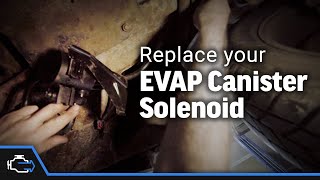
Typical fix: Replace the vent solenoid assembly. This is located under the car near the driver's side rear wheel, attached near the charcoal canister. 🎬 See how to replace the vent solenoid on 9th gen Impalas.
Est. part cost: $40-$70 - Cracked or Disconnected EVAP Hoses ⚪ Low Probability Over time, the plastic and rubber hoses in the EVAP system can become brittle and crack, especially in harsh climates or due to engine bay heat.
How to confirm: A visual inspection may reveal obvious cracks, but small leaks often require a smoke test. A mechanic forces low-pressure smoke into the EVAP system (often through the service port or a special gas cap adapter) and looks for where it escapes. This is the most definitive way to find a leak, as mentioned in TSB #21-NA-124.
Typical fix: Replace the damaged section of hose.
Est. part cost: $10-$50
Rare But Worth Checking
- Improperly Seated Fuel Filler Pipe Housing Seal: → Shop Fuel Filler Neck Specific to 2014 models, GM issued a Preliminary Information bulletin (PI1034A) stating that the seal on the fuel tank filler pipe housing may not have been seated properly during assembly, causing a P0442. The fix is to simply push the seal into place.
- Leaking Fuel Tank or Filler Neck: → Shop Fuel Tank Rust and corrosion, particularly in areas that use road salt, can cause pinhole leaks in the fuel tank or the filler neck. A smoke test is the best way to identify these leaks. Replacement filler necks are available from aftermarket suppliers like Dorman and Spectra Premium.
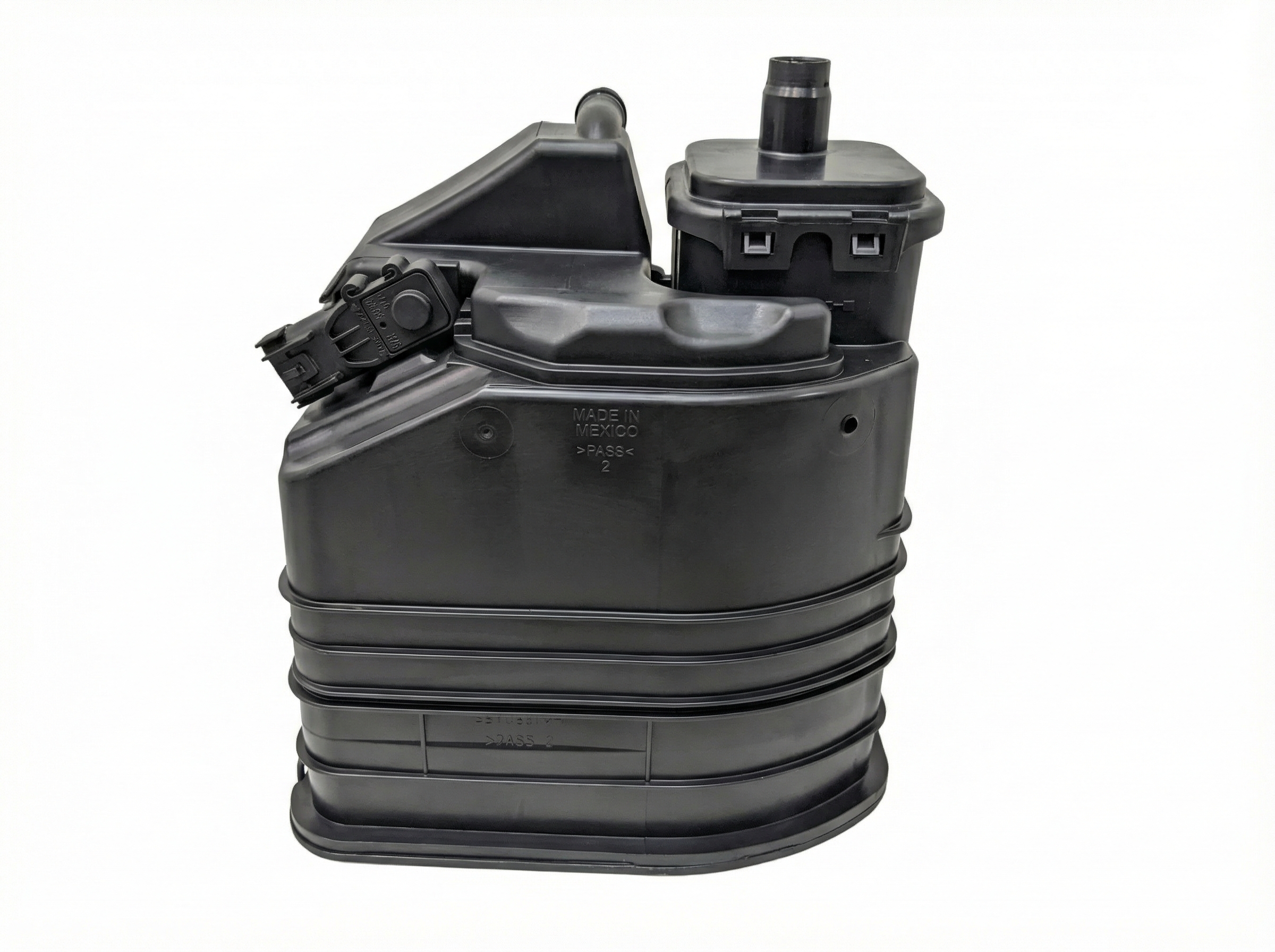
- Cracked Charcoal Canister: → Shop Vapor Canister While less common, the plastic housing of the charcoal canister itself can develop cracks over time, leading to a small leak. This would be found during a smoke test.
Diagnosis Steps
- Check the gas cap. Remove it, inspect the seal for damage, and reinstall it, ensuring it clicks at least three times. Clear the code and see if it returns.
- If the gas cap is old or looks worn, replace it with an OEM part. This is an inexpensive and common fix. An owner on a forum chased a P0442 for weeks, only to solve it by replacing a new aftermarket cap with an OEM one.
- Visually inspect all accessible EVAP hoses and lines under the hood and near the gas tank for obvious cracks, disconnections, or damage.
- Test the EVAP purge valve. It's located on top of the engine. Disconnect it and try to blow through it; if air passes, it's stuck open and needs replacement.
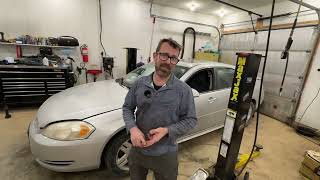
- If the previous steps do not reveal the issue, the most effective next step is a professional smoke test. This test fills the EVAP system with visible vapor to pinpoint the exact location of any small leaks. Some DIYers create their own smoke tester or a special adapter from a spare fuel cap to connect a smoke machine to the filler neck. 🎬 Watch: A mechanic's guide to diagnosing a P0442 small leak.
- During the smoke test, use a scan tool to command the EVAP vent solenoid (near the rear driver's side wheel) to close. If it fails to close or if smoke leaks from it, it is faulty and needs replacement.
Parts You'll Likely Need
- EVAP Canister Purge Solenoid Valve
(OEM #12610560 (supersedes 12592015 for many 9th gen); 12690512 (common for 10th gen 3.6L))— This is one of the most common failure points for P0442 on this platform, often getting stuck open. Aftermarket versions are known for premature failure.
Trusted brands: ACDelco, GM Genuine Parts
OEM price range: $50-$85
Aftermarket price range: $40-$60 - Fuel Cap
(OEM #GT295 (ACDelco for many 9th gen))— A worn or loose gas cap is the simplest and most common cause for an EVAP leak code. Always start here, and use an OEM part for best results.
Trusted brands: ACDelco, Stant
OEM price range: $20-$30
Aftermarket price range: $15-$25 - EVAP Canister Vent Solenoid
(OEM #214-2324 (ACDelco, fits many 9th gen models))— This valve is exposed to the elements under the car and can fail due to corrosion or getting clogged with debris, causing a leak.
Trusted brands: ACDelco, Dorman
OEM price range: $50-$70
Aftermarket price range: $40-$60
Related Codes That Often Appear With This One
- P0455 — A large EVAP leak. Sometimes a leak can be on the borderline between small (P0442) and large (P0455), or both codes may appear as the system tries to diagnose the fault.
- P0496 — EVAP System Flow During Non-Purge. This code very strongly points to a faulty purge valve that is stuck open, allowing fuel vapors into the engine at the wrong time. It's a frequent companion to P0442 on these models.
Technical Service Bulletins (TSBs) & Recalls
- 21-NA-124: Provides diagnostic tips for finding EVAP leaks related to P0442 and P0455.
- PIT4943D: Directs technicians to use an evaporative emissions system tester to diagnose a P0442 code.
Platform-Specific Known Issues
- TSB PI1034A points to an improperly seated fuel filler pipe housing seal as a cause for P0442 on 2014 models.
- TSB 17-NA-409 identifies that on 2014-2018 models with the 3.6L LFX engine, a faulty camshaft cover gasket can cause oil to contaminate and destroy the purge valve, leading to codes P0442, P0455, and/or P0496. Replacing only the purge valve without addressing the gasket leak may lead to repeat failures.
Mechanic-Grade Diagnostic Values
- Fuel Tank Pressure (FTP) Sensor Voltage (Key On, Engine Off, Gas Cap Off) — expected: Approximately 1.45V to 1.6V.. Failure: A reading significantly outside this range may indicate a faulty sensor or wiring issue, though this typically sets other codes like P0452/P0453. This baseline reading is crucial for interpreting scan tool test results.
- Fuel Tank Pressure (FTP) Sensor Reading during Scan Tool Purge/Seal Test — expected: When the purge valve is commanded open, the pressure (measured in inches of water or kPa) should drop, indicating a vacuum is being pulled. On a 2010 Impala, a good system pulled down to -5.6 inH2O.. Failure: If the pressure reading does not change significantly when the purge valve is commanded open, it indicates the valve is not opening or there is a major blockage. If the system pulls a vacuum but it bleeds off quickly after being sealed, it confirms a leak.
Scan Tool Commands That Help
- GDS2 / Tech2 or equivalent professional scan tool: EVAP Purge/Seal Test — This is a primary diagnostic function to verify system integrity without a smoke machine. The tool commands the vent valve closed to seal the system, then opens the purge valve to create a vacuum. It monitors the FTP sensor to see if the vacuum holds, directly testing for the leak that sets P0442.
- GDS2 / Tech2 or equivalent professional scan tool: EVAP Vent Solenoid Control — This command is used during a smoke test. The technician commands the normally-open vent valve to close. If smoke still escapes from the vent valve assembly, the valve is confirmed to be faulty and needs replacement.
Wiring & Ground Locations
- G301 (9th Gen) — On the floor, to the left of the driver's seat.. A poor ground at this location can cause erratic behavior in various interior modules and sensors. While not directly tied to the EVAP solenoids, it is part of the main body ground system that the BCM relies on.
- G111 (9th Gen / 10th Gen Limited) — On the lower left rear of the engine, sometimes specified as above the starter motor.. This is a primary engine block ground. A corroded or loose connection here can affect the Engine Control Module (ECM) and its ability to correctly read sensors and control actuators like the EVAP purge and vent solenoids.
- Underhood Fuse Block — Right side of the engine compartment.. This block contains the fuses and relays that supply power to the ECM and EVAP system components, such as the 'ECM IGN' and 'FUEL/PUMP' fuses. A poor connection or corrosion in the fuse block can cause intermittent power issues for the solenoids.
Real Owner Repair Stories
- BAT Auto Technical forum (2006 Chevrolet Impala, 3.5L, 100k miles) — Initially had a P0455 (gross leak), which turned into a persistent P0442 (small leak) after replacing the EVAP vent valve.
❌ Tried (didn't work) Replacing the EVAP vent solenoid (ACDelco), Replacing the Fuel Tank Pressure sensor, Replacing the gas cap with a new aftermarket (Stant) cap, Performing a professional smoke test at a Chevy dealer, which found no leaks.
✅ What actually fixed it The dealer's final recommendation, after the smoke test passed, was to replace the new aftermarket Stant gas cap with a genuine OEM GM gas cap, suggesting the aftermarket cap was the likely cause despite being new. - YouTube channel 'Bennie Aust' (2012 Chevrolet Impala) — Check Engine Light with codes P0442 and P0496 (EVAP Flow During Non-Purge).
❌ Tried (didn't work) Initial diagnosis directly targeted the most likely cause.
✅ What actually fixed it The mechanic removed the EVAP purge valve from the top of the engine and performed a simple blow-through test. Air was able to leak through the valve, which should be normally closed. Replacing the faulty purge valve with a new one (which did not allow air to pass) resolved the issue. - YouTube channel 'TeamDIYNow' (2011 Buick Lacrosse (platform-mate with similar issue)) — P0442 and P0455 EVAP leak codes.
❌ Tried (didn't work) The video presumes common parts like the purge valve have already been checked.
✅ What actually fixed it A smoke test revealed smoke billowing from the fuel filler neck area, under the car. The metal vent tube integrated into the filler neck assembly had rusted through, creating a leak. Replacing the entire fuel filler neck assembly fixed the codes. This is a very common failure in regions that use road salt.
"I Checked Everything" — The Actual Cause
- In one documented case, a 2006 Impala with a persistent P0442 passed a professional smoke test at a Chevrolet dealership. The suspected cause was an aftermarket gas cap that sealed well enough to pass the low-pressure smoke test but failed to hold the specific vacuum level required by the ECM's self-test, which is a different kind of stress on the seal.
- Technicians note that it's possible for a purge or vent valve to seal correctly under the positive pressure of a smoke machine but fail to seal under the vacuum pulled by the engine during the EVAP monitor test. Testing the valves by applying vacuum with a hand pump can sometimes reveal a leak that a smoke test misses.
OEM Part Supersession History
12592015→12610560— Updated design for the EVAP Canister Purge Solenoid Valve for 9th generation models (e.g., 2008-2011 Impala).Multiple (e.g., 12690512, 12661763)→12610560 (often cited as a replacement for many V6 models)— Part consolidation and design updates for the EVAP Canister Purge Solenoid Valve across numerous GM 3.0L and 3.6L V6 platforms, including the 10th generation Impala.
Heads up: Always verify the correct part number for your specific year and engine, as several designs were used. The 10th gen Impala (2014+) uses a different valve design than the 9th gen.
Model Year Variations Within This Range
- 2008-2013 (9th Gen) vs 2014-2015 (10th Gen, non-Limited): The entire vehicle architecture changed. The 10th generation (2014+) has different part numbers for EVAP components like the vapor canister. The electrical system is also more complex, with different ground locations and more control modules involved, as seen in wiring diagrams.
- 2014-2016: Chevrolet sold two different Impalas simultaneously. The 'Impala Limited' was a continuation of the 9th generation body style, sold primarily to fleets. It uses 9th generation parts (e.g., 2012-2013 components). The all-new 10th generation 'Impala' was sold to the public. It is critical to distinguish which model you have when ordering parts.
Helpful Videos

Used OEM Parts in Stock

New Aftermarket Parts Available


The information in this article is provided for general reference and educational purposes only. Vehicle specifications, procedures, and part compatibility can vary by production date, trim level, and region. Always consult your vehicle's factory service manual and verify part numbers before purchasing or performing repairs. Safety-critical components such as airbags, seat belts, and braking systems should be installed by a qualified professional.
- Chevrolet IMPALA:
- 🧭 Diagnostic Flowchart
- 🎬 Helpful Videos
- 🛍️ Shop This Part
- What's Unique About the 2008-2015 Chevrolet IMPALA
- Symptoms You May Notice
- Most Likely Causes
- Rare But Worth Checking
- Diagnosis Steps
- Parts You'll Likely Need
- Related Codes That Often Appear With This One
- Technical Service Bulletins (TSBs) & Recalls
- Platform-Specific Known Issues
- Mechanic-Grade Diagnostic Values
- Scan Tool Commands That Help
- Wiring & Ground Locations
- Real Owner Repair Stories
- "I Checked Everything" — The Actual Cause
- OEM Part Supersession History
- Model Year Variations Within This Range
- 🎟️ Get 5% Off