

P0442 on 2016-2020 Chevrolet Impala: EVAP Small Leak Causes and Fixes
For a 2016-2020 Impala with the 3.6L V6, a P0442 code is most often caused by a faulty gas cap or a failing EVAP purge valve. A new OEM gas cap is about $25-$35, while a purge valve (ACDelco #12690512) is typically $20-$50 for the part and is a very common DIY repair.
- P0442 on a 2016-2020 Impala indicates a small leak in the EVAP (emissions) system.
- Always check the gas cap first. Make sure it's tight and the seal isn't cracked. This is the simplest and most common fix.
- The EVAP purge valve is the next most likely culprit and is a common, inexpensive DIY repair located on top of the engine.
- The vehicle is safe to drive, but the issue should be fixed to pass an emissions test and reduce pollution.
- If a new gas cap and purge valve do not solve the issue, a smoke test is the best way to find the source of the leak.
What's Unique About the 2016-2020 Chevrolet IMPALA
The 2016-2020 Impala belongs to the tenth generation and primarily uses the 3.6L LFX V6 engine. Like many modern GM vehicles with this engine, the EVAP purge valve is a very common failure point that leads to code P0442. The part is located on top of the engine and is relatively easy to access and replace, making it a frequent DIY fix for this specific code. Manufacturer service bulletins exist that guide technicians on specific diagnostic procedures for this platform, indicating GM is aware of the need for precise testing to pinpoint leaks. TSB 17-NA-409 was even issued specifically for the 2014-2018 Impala with the LFX engine for codes P0442, P0496, and P0455.
Diagnostic Flowchart
Tap your situation to follow the diagnostic path that matches what you're seeing on this vehicle.
Symptoms You May Notice
- Check Engine Light is on.
- A faint fuel smell may be noticeable, but often there are no other symptoms.
- In some cases, a faulty purge valve can cause difficulty starting the engine immediately after refueling.
- Remote start may be disabled while the Check Engine Light is active.
- Replacing the O2 sensor, as this is an emissions system code but is not related to the oxygen sensors.
- Replacing the charcoal canister when the actual problem is a much cheaper and simpler component like the purge valve or gas cap.
- Assuming a smoke test passing under pressure means there is no leak. Some components, like the gas cap, can leak under vacuum but seal under pressure.
Most Likely Causes
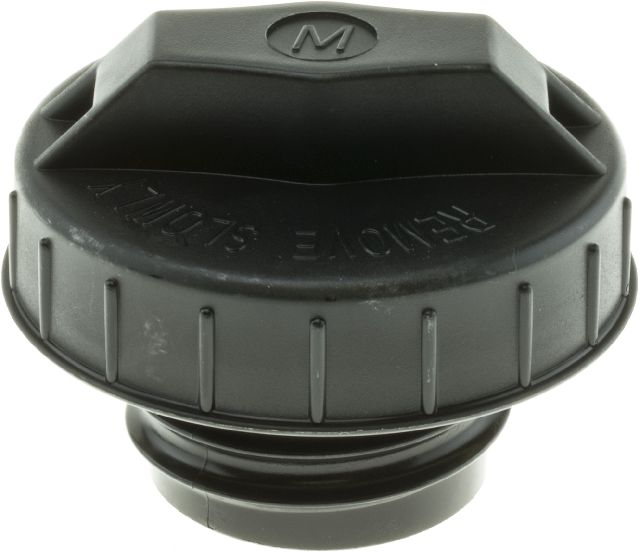
- Loose or Faulty Gas Cap 🔴 High Probability → Shop Fuel Tank Cap The gas cap is the most frequently removed and re-installed part of the emissions system. Its seal can wear out or it can simply be left loose after refueling. This is the first and easiest thing to check.
How to confirm: Ensure the gas cap is tightened until it clicks several times. Inspect the rubber seal on the cap for cracks, stiffness, or damage. A Reddit user with a 2020 Impala reported changing the gas cap, which fixed the P0442 code for a month before it returned, indicating it's a valid first step but not always the final fix.
Typical fix: Tighten or replace the gas cap. It is highly recommended to use an OEM-quality cap (like ACDelco) as some aftermarket caps may not seal correctly, a point often repeated in owner forums.
Est. part cost: $15-$35 - EVAP Purge Valve/Solenoid Failure 🔴 High Probability → Shop Vapor Canister This is a very common failure item on many GM vehicles with the 3.6L V6 engine, including the Impala. The valve gets stuck open, allowing un-metered fuel vapor into the intake manifold at the wrong time.
How to confirm: Remove the purge valve from the top of the engine. It should be normally closed. Try to blow through it; if air passes through, the valve is stuck open and is faulty. A hard start after refueling is also a strong indicator of a bad purge valve because the engine is being flooded with fuel vapors.
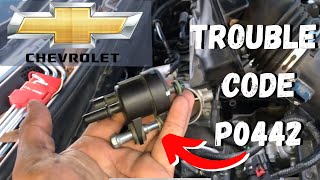
Typical fix: Replace the EVAP purge valve. This part is located on the intake manifold and is held by one 10mm bolt, making it a simple replacement that takes only a few minutes. 🎬 Watch: Step-by-step guide to replacing the EVAP purge valve.
Est. part cost: $20-$50 - Cracked or Disconnected EVAP Hose 🟡 Medium Probability The plastic and rubber hoses in the EVAP system can become brittle over time due to heat and age, leading to small cracks, especially at connection fittings.
How to confirm: Visually inspect all accessible EVAP lines running from the engine bay to the fuel tank area. Look for any obvious cracks, splits, or loose connections. A smoke test is the most effective way to find a leak that isn't visually apparent. TSB 21-NA-124 specifically advises checking that all EVAP line connections are fully seated before checking other components.
Typical fix: Replace the damaged section of the hose or reconnect it securely.
Est. part cost: $10-$40 - EVAP Vent Valve/Solenoid Failure ⚪ Low Probability → Shop Vapor Canister
How to confirm: The vent valve is normally open and closes when the system runs its self-test. It can be tested with a scan tool that can command it closed. A smoke test will reveal if the valve is failing to seal when commanded shut. According to TSB 21-NA-124, this should be investigated after checking all EVAP lines but before suspecting the purge valve.
Typical fix: Replace the vent valve, which is typically located near the charcoal canister by the fuel tank.
Est. part cost: $30-$60
Rare But Worth Checking
- Cracked EVAP Charcoal Canister: → Shop Vapor Canister The canister itself can develop cracks from road debris or age, causing a leak. This is usually found during a smoke test after more common causes have been ruled out. A YouTube video for a 2018 Impala with P0442 showed a smoke test revealing a leak from the canister vent valve area, requiring the fuel tank to be dropped for access and replacement.
- Leaking Fuel Tank Filler Neck: → Shop Fuel Tank Rust or corrosion on the metal filler neck where the gas cap screws on can prevent a proper seal, even with a new cap. This is more common on older vehicles or those in rust-prone areas.
Diagnosis Steps
- Read the code with an OBD-II scanner to confirm P0442 is present.
- Inspect the gas cap. Remove it, check the seal for damage, and reinstall it, ensuring it clicks multiple times. Clear the code and drive for a few days to see if it returns.
- If the code returns, visually inspect all visible EVAP hoses in the engine bay for cracks or disconnections, paying close attention to fittings as per TSB 21-NA-124.
- Locate the EVAP purge valve on the engine. Disconnect the electrical connector and the EVAP line. Start the engine and check for vacuum at the valve's inlet port. If there is any vacuum, the valve is stuck open and has failed. Alternatively, with the valve removed, try to blow through it. If air passes, it's bad.
- If the purge valve is good, the next step according to GM's diagnostic flow is to check the EVAP vent solenoid and charcoal canister near the fuel tank for any visible damage or leaks.
- If no obvious issues are found, the most reliable method to find the leak is to have a professional perform a smoke test on the EVAP system. TSB PIT4943D emphasizes using a quality, factory-approved smoke machine and allowing the vehicle to acclimate to shop temperature to avoid misdiagnosis.
Parts You'll Likely Need
- Vapor Canister Purge Valve
(OEM #12690512)— This is a very common failure point on the 3.6L V6 engine used in the Impala, directly causing P0442 and/or P0496 codes. It often gets stuck open. This part number supersedes older numbers like 12610560 and 12661763.
Trusted brands: ACDelco, Dorman, SKP
OEM price range: $35-$50
Aftermarket price range: $20-$40 - Fuel Tank Cap
(OEM #19432734)— A worn or loose gas cap is the most common and simplest cause for a small EVAP leak code. Owner forums often advise sticking with an OEM cap to ensure a proper seal.
Trusted brands: ACDelco, Gates, Motorad
OEM price range: $25-$35
Aftermarket price range: $15-$25
Related Codes That Often Appear With This One
- P0455 — This indicates a large EVAP leak. It can appear with P0442 if a component fails intermittently or if there are multiple leaks. TSB #21-NA-124 and TSB #17-NA-409 specifically mention diagnosing these codes together.
- P0496 — This code means "EVAP Flow During a Non-Purge Condition" and very commonly points directly to a faulty EVAP purge valve that is stuck open. It is frequently seen with P0442 on this platform. 🎬 Watch: Diagnosing P0496 and replacing the solenoid on a 3.6L.
Technical Service Bulletins (TSBs) & Recalls
- 21-NA-124: Provides diagnostic tips for testing EVAP leaks causing P0442 and/or P0455.
- PIT4943D: Directs technicians to use proper EVAP testing procedures and equipment to avoid misdiagnosis due to temperature changes.
- 17-NA-409: Specifically addresses P0442, P0496, and P0455 on the 2014-2018 Impala 3.6L, confirming it's a known issue.
Platform-Specific Known Issues
- TSB #21-NA-124 - Diagnostic Order of Operations: This bulletin provides dealers with a specific diagnostic order for P0442/P0455: 1) Check all EVAP lines are properly seated. 2) Inspect lines for damage. 3) Investigate the vent valve for malfunction. 4) Finally, investigate the purge valve. This suggests that while the purge valve is a common failure, technicians should first rule out simpler connection issues.
- TSB #PIT4943D - Importance of Proper Test Conditions: This bulletin directs technicians to a specific guide on using an evaporative emissions system tester. It warns that a large temperature difference between the vehicle and the shop can affect test accuracy, and that aftermarket testers may not be sensitive enough, leading to misdiagnosis.
- TSB #17-NA-409 - Impala-Specific EVAP Codes: This TSB specifically targets the 2014-2018 Impala with the 3.6L LFX engine for codes P0442, P0496, and P0455, confirming this is a recognized issue on this exact platform.
Mechanic-Grade Diagnostic Values
- Fuel Tank Pressure (FTP) Sensor Voltage — expected: Approximately 1.4V - 1.6V with key on, engine off.. Failure: A voltage significantly outside this range can indicate a faulty sensor, though this is less common than a system leak.
Hidden / Shadow Codes Worth Checking
- Permanent DTC (P-DTC): After a repair, even if the Check Engine Light is cleared with a basic scanner, the code may be stored as a 'Permanent DTC'. This permanent code cannot be erased with a scanner and will only clear itself after the vehicle's computer successfully runs and passes the internal EVAP monitor test, which may require several specific drive cycles. (see via Visible with most standard OBD-II scanners, but cannot be cleared by the 'Erase Codes' command.)
Scan Tool Commands That Help
- GDS2 or similar professional scan tool: EVAP Purge/Seal — This function allows a technician to command the purge and vent solenoids on and off to seal the EVAP system. While monitoring the Fuel Tank Pressure (FTP) sensor, the technician can verify if the system holds a vacuum, confirming the integrity of the valves and hoses.
- GDS2 or similar professional scan tool: Purge Solenoid Control — Allows for commanding the purge solenoid open by a specific percentage (e.g., 30-40%). A working system will show a change in fuel trims and possibly a rougher idle as fuel vapors are introduced into the intake. No change indicates a blocked line or failed solenoid.
- GDS2 or similar professional scan tool: Vent Solenoid Control — Used to command the normally-open vent valve to close. This is a required step before performing a smoke test, as smoke will otherwise exit through the open valve, preventing proper system diagnosis.
Wiring & Ground Locations
- G102 / G111 — G102 is typically near the battery in the engine compartment. G111 is often located above the starter motor.. The Engine Control Module (ECM) and its related sensors, including the EVAP system components, rely on clean ground connections. A corroded or loose engine bay ground can cause erratic sensor readings or solenoid failures, mimicking a component fault.
- G202 — Located on the left side of the dash, behind the instrument panel.. This ground serves various interior modules. While less likely to be the primary cause for P0442, a fault here could affect the Body Control Module (BCM) or Instrument Panel Cluster (IPC), which communicate with the ECM.
- EVAP Purge Solenoid Connector — On top of the engine, connected directly to the purge solenoid.. This is the direct electrical connection for the most common failure part. The connector and its wiring should be inspected for damage or corrosion when replacing the valve.
Real Owner Repair Stories
- Reddit user in r/MechanicAdvice (2019 Chevrolet Impala, ~131,000 miles) — P0442 code and a rough start immediately after refueling.
❌ Tried (didn't work) The owner had the purge valve replaced twice before. The most recent replacement failed after only 4 months.
✅ What actually fixed it The user was still diagnosing, but the rapid repeat failure of the purge valve strongly suggests an underlying issue, such as charcoal particles from a deteriorating EVAP canister contaminating and destroying the new valves. This highlights that replacing the purge valve may not be the final fix if it fails again quickly. - YouTube channel 'Oz Mechanics' (2016 Chevrolet Impala) — P0442 (EVAP small leak) and P0506 (Idle speed low), with a primary complaint of hard starting after filling the gas tank.
❌ Tried (didn't work) The diagnosis immediately focused on the purge valve due to the hard-start-after-refueling symptom.
✅ What actually fixed it The technician confirmed the old purge valve was stuck open by blowing through it. Replacing the EVAP purge solenoid resolved the issue.
"I Checked Everything" — The Actual Cause
- In a detailed forum post about a similar GM vehicle, an owner replaced multiple EVAP components (vent valve, aftermarket gas cap, pressure sensor) for a persistent P0442 code. A Chevrolet dealer then performed both a pressure test and a smoke test, both of which found no leaks. The forum's expert suggestion was that a smoke test creates positive pressure, which can sometimes seal a small crack or a faulty gas cap seal that only leaks under the negative pressure (vacuum) of the engine's normal EVAP test cycle. The dealer's final recommendation, despite the clean smoke test, was to replace the new aftermarket gas cap with a genuine OEM cap.
OEM Part Supersession History
12610560, 12661763→12690512— Standard part evolution and revision by the manufacturer.
Heads up: The newer part number (12690512) is the correct direct replacement for the earlier versions on this platform.
Model Year Variations Within This Range
- 2016-2020: While not a model-year change, owners frequently confuse the two primary EVAP solenoids. The 'Purge Valve' (PN 12690512) is on top of the engine and typically causes P0496/P0442 and hard starts after refueling. The 'Vent Valve' is located under the car near the fuel tank and typically causes a P0449 code and difficulty filling the fuel tank.
Helpful Videos
Used OEM Parts in Stock
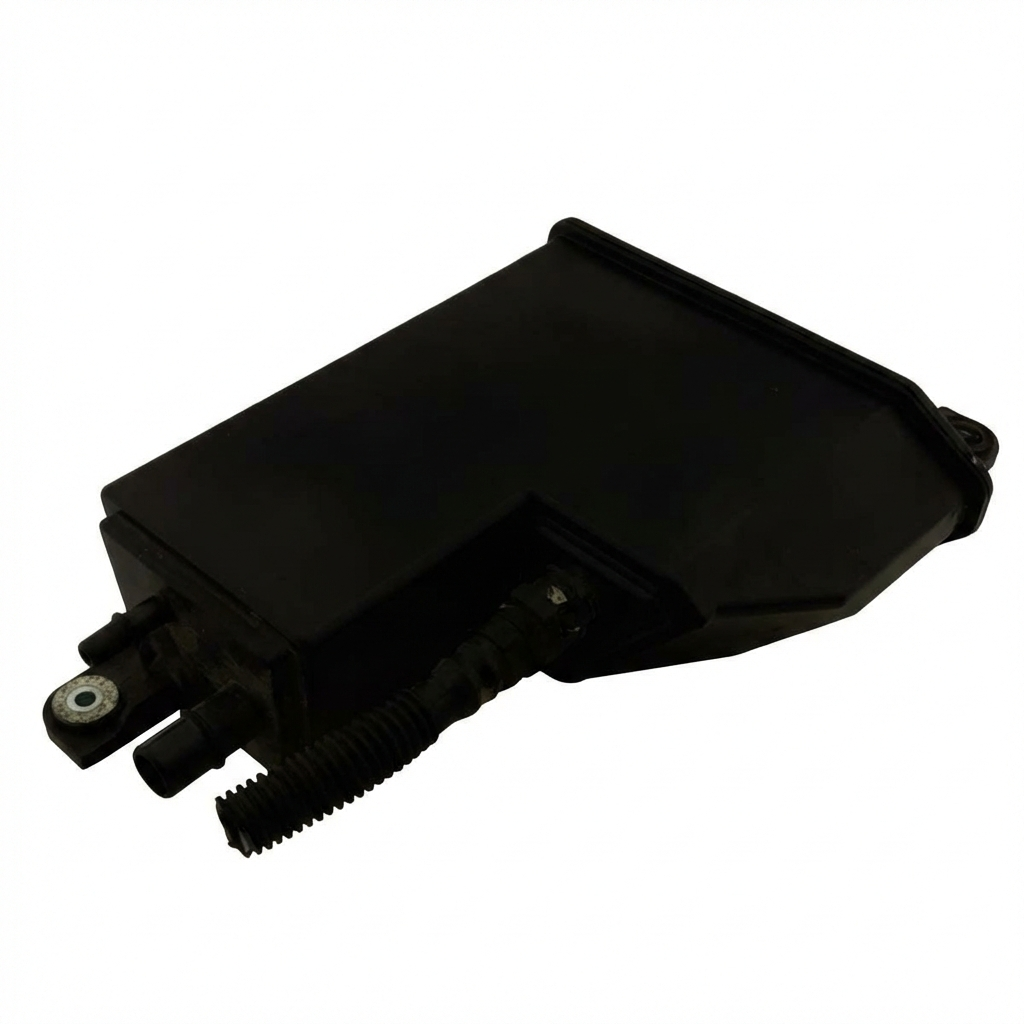
New Aftermarket Parts Available



The information in this article is provided for general reference and educational purposes only. Vehicle specifications, procedures, and part compatibility can vary by production date, trim level, and region. Always consult your vehicle's factory service manual and verify part numbers before purchasing or performing repairs. Safety-critical components such as airbags, seat belts, and braking systems should be installed by a qualified professional.
- Chevrolet IMPALA:
- 🧭 Diagnostic Flowchart
- 🎬 Helpful Videos
- 🛍️ Shop This Part
- What's Unique About the 2016-2020 Chevrolet IMPALA
- Symptoms You May Notice
- Most Likely Causes
- Rare But Worth Checking
- Diagnosis Steps
- Parts You'll Likely Need
- Related Codes That Often Appear With This One
- Technical Service Bulletins (TSBs) & Recalls
- Platform-Specific Known Issues
- Mechanic-Grade Diagnostic Values
- Hidden / Shadow Codes Worth Checking
- Scan Tool Commands That Help
- Wiring & Ground Locations
- Real Owner Repair Stories
- "I Checked Everything" — The Actual Cause
- OEM Part Supersession History
- Model Year Variations Within This Range
- 🎟️ Get 5% Off