

P0442 on 2000-2007 Chevrolet Monte Carlo: EVAP Small Leak Causes and Fixes
For a 2000-2007 Monte Carlo, P0442 is most often caused by a loose or worn-out gas cap. Before buying any parts, tighten the cap, clear the code, and drive for a few days. If it returns, a new OEM-spec gas cap, like an ACDelco GT281, costs about $15-$30 and is the next logical step. If that doesn't work, the purge or vent solenoid are the next most likely culprits.
- P0442 means your Monte Carlo has a small leak in the emissions system; it is safe to drive.
- Always start with the simplest fix: check that your gas cap is tight and the seal is not cracked. A new gas cap fixes this problem more than half the time.
- If a new gas cap doesn't solve the issue, the next most likely culprits are the EVAP purge valve (in the engine bay) or the vent valve (near the gas tank).
- Do not replace expensive parts like the charcoal canister or fuel tank pressure sensor unless a smoke test has confirmed they are the source of the leak.
What's Unique About the 2000-2007 Chevrolet MONTE CARLO
On the sixth-generation Monte Carlo, which is built on the GM W-body platform, the P0442 code is a very common issue that GM has addressed in technical service bulletins. The primary culprits are the same as on other GM vehicles of this era (like the Impala, Grand Prix, and LaCrosse): aging rubber and plastic components in the EVAP system. The most frequent failure points are the gas cap seal, the purge solenoid on the engine, and the vent solenoid located near the fuel tank, which is exposed to road debris and weather. Overfilling the fuel tank is a known accelerator of canister and valve problems on these vehicles.
Diagnostic Flowchart
Tap your situation to follow the diagnostic path that matches what you're seeing on this vehicle.
Symptoms You May Notice
- Check Engine Light is on.
- A faint fuel smell may be noticeable, especially around the gas cap area or after parking in an enclosed space like a garage.
- In some cases, difficulty refueling (the gas pump nozzle clicks off before the tank is full) can occur if the vent path is also restricted, which can be related to a faulty vent valve or a clogged charcoal canister.
- A rough or low idle can sometimes occur if the purge valve is stuck open, creating a constant vacuum leak.
- Replacing the O2 sensors. O2 sensors are not part of the EVAP system and will not cause a P0442 code.
- Replacing the catalytic converter. This is a costly repair for exhaust issues (like P0420) and has no relation to the EVAP system.
- Immediately replacing the charcoal canister. The canister itself is less likely to fail than the valves connected to it or the gas cap. It should only be replaced if a smoke test confirms it is leaking or if it's known to be saturated with fuel.
Most Likely Causes
- Loose, Worn, or Incorrect Gas Cap 🔴 High Probability → Shop Fuel Tank Cap The gas cap seal is a simple rubber O-ring that degrades, cracks, and hardens over time, preventing a proper seal. This is the most common cause for P0442 across all vehicles. Using a non-OEM cap can also lead to sealing issues.
How to confirm: First, ensure the cap is tight (clicks at least once). Remove the cap and inspect the rubber seal for cracks, stiffness, or damage. Also, check the fuel filler neck's sealing surface for rust or debris that could prevent a good seal.
Typical fix: Replace the gas cap. It's highly recommended to use an OEM (ACDelco) part to ensure a proper seal. An incorrect or cheap aftermarket cap is a common reason for the code to persist after replacement.
Est. part cost: $15-$30 - Faulty EVAP Purge Valve (Purge Solenoid) 🟡 Medium Probability → Shop Vapor Canister Located on top of the engine, this solenoid valve can get stuck partially open due to age or carbon buildup, creating a small, constant leak. It's a very common failure item on GM 3.4L and 3.8L engines from this period.
How to confirm: With the engine off, remove the valve. Try to blow through it; if any air passes, it's faulty and needs replacement as it should be normally closed. You can also test it by applying 12V power to its terminals to see if it clicks open and closed. A long crank time after refueling is a strong symptom of a purge valve stuck open.
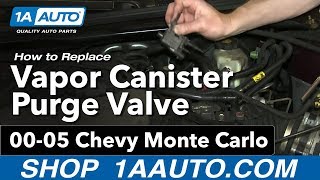
Typical fix: Replace the purge valve. It is typically mounted on the engine intake with one 10mm bolt and two hose connections, making for a simple 15-minute replacement. 🎬 Watch: Step-by-step guide to replacing the purge solenoid.
Est. part cost: $20-$50 - Faulty EVAP Vent Valve (Vent Solenoid) 🟡 Medium Probability → Shop Vapor Canister Vent Valve This valve is located near the charcoal canister by the fuel tank. Its location under the car exposes it to road salt, water, and debris, which causes corrosion and can cause the valve to stick open or its seals to leak.
How to confirm: Visually inspect the valve and its connecting hoses for cracks or damage. The valve is normally open and closes when powered for the EVAP test. A smoke test is the most effective way to confirm a leak at the vent valve. Sometimes the valve gets clogged with dust, causing refueling issues.
Typical fix: Replace the vent solenoid. This may require safely raising the rear of the vehicle 🎬 See how to replace the vent solenoid valve. for access. On some GM vehicles, a relocation kit was issued to move the filter to a less exposed area.
Est. part cost: $30-$80 - Cracked or Disconnected EVAP Hoses ⚪ Low Probability The plastic and rubber hoses that make up the EVAP system become brittle with age and engine heat cycles, leading to small cracks, especially at connection points and elbows.
How to confirm: Visually inspect all accessible EVAP lines, from the engine bay back to the fuel tank. Pay close attention to rubber fittings. A smoke test is the definitive method to find a cracked hose that isn't obvious visually.
Typical fix: Replace the cracked section of hose. In some cases, a pre-formed harness may need to be purchased from the dealer.
Est. part cost: $10-$60
Rare But Worth Checking
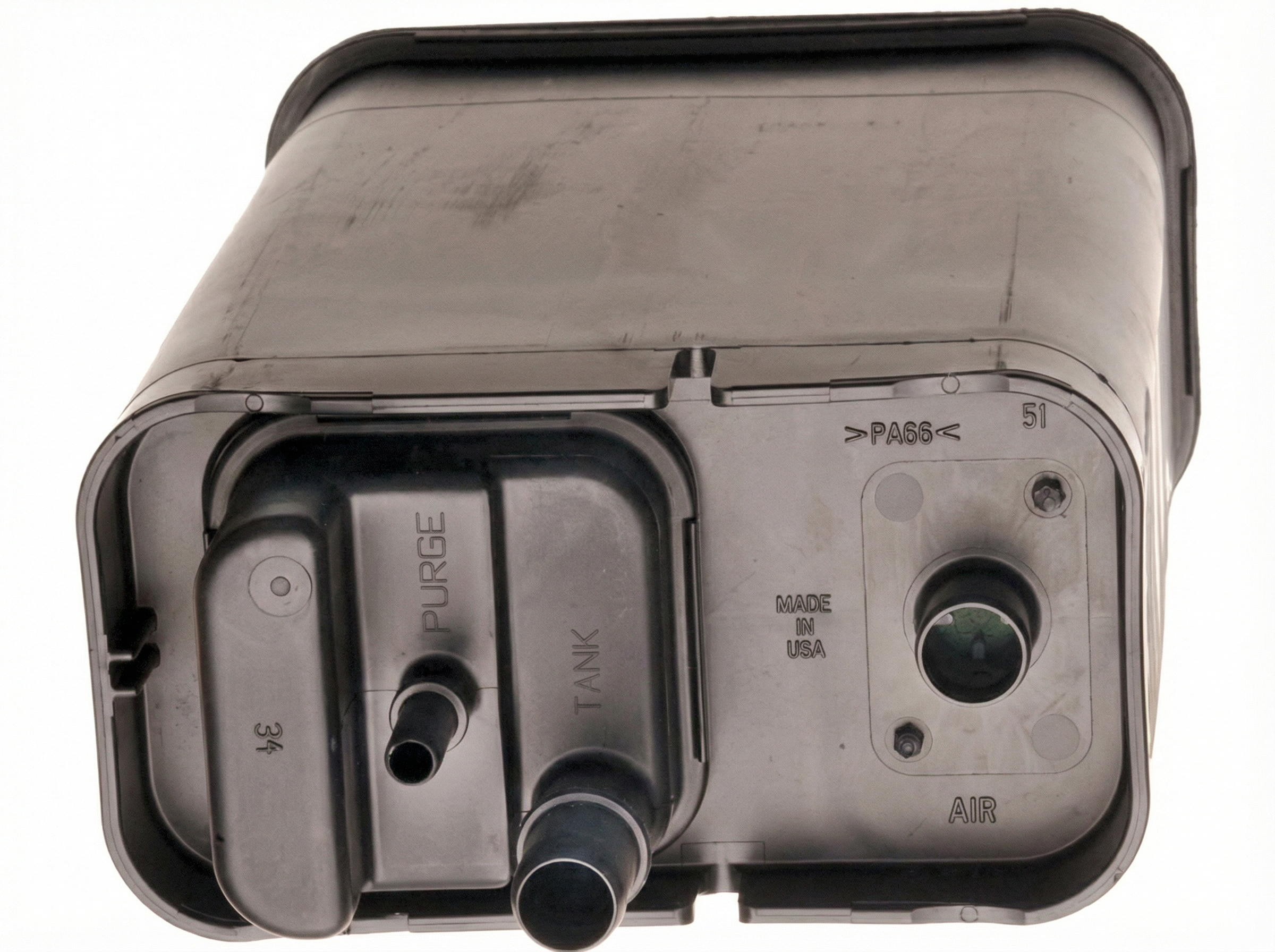
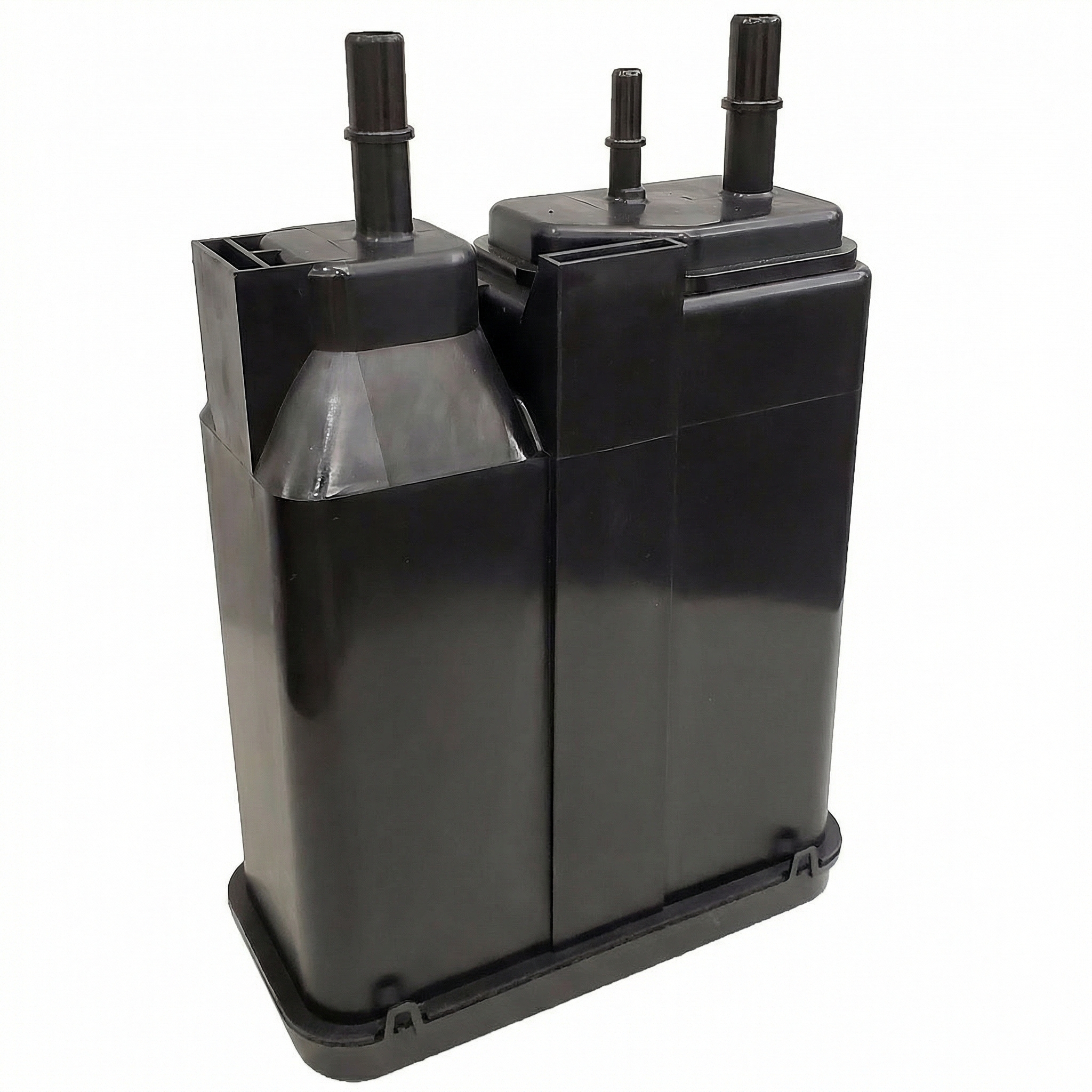
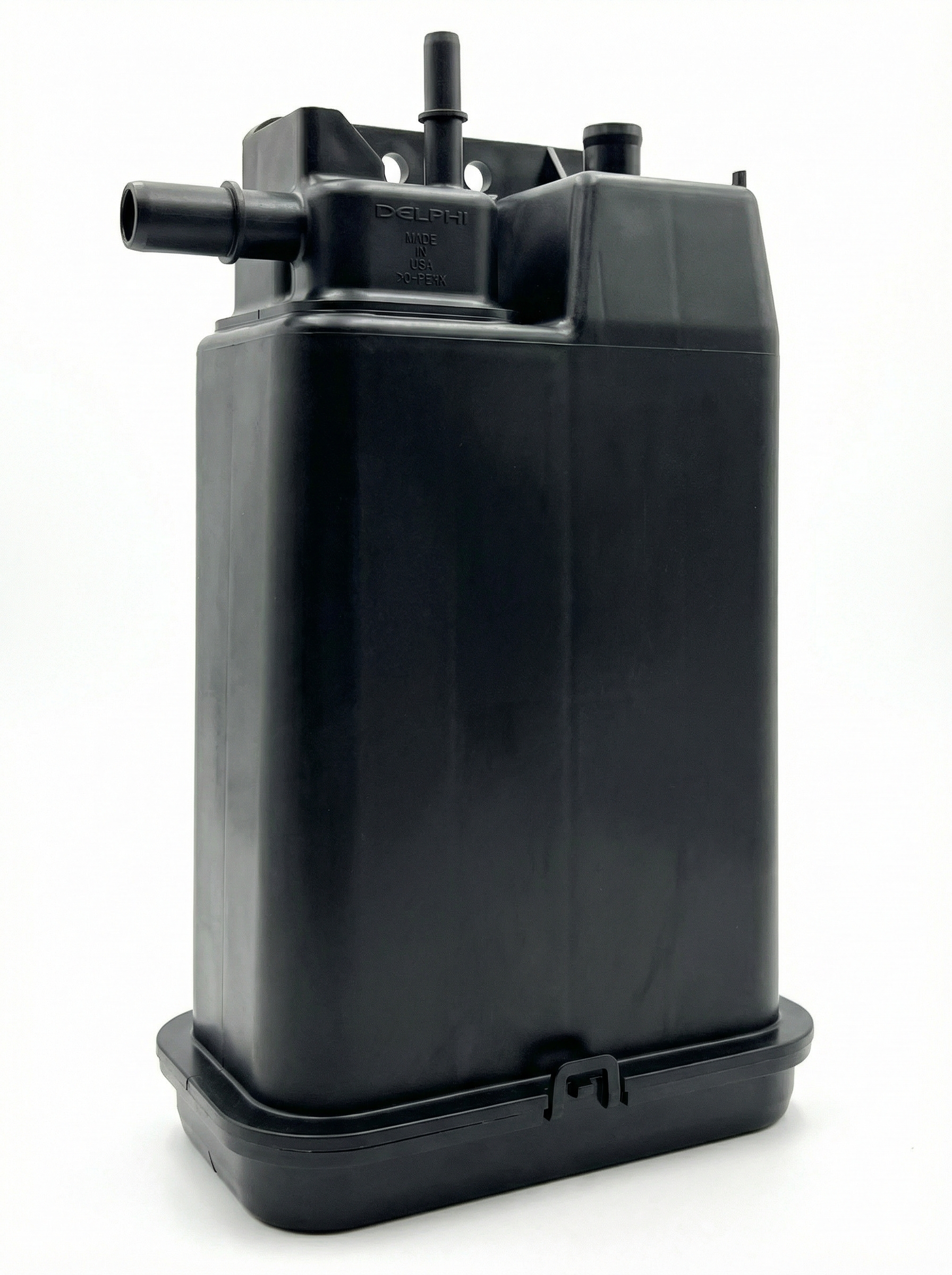
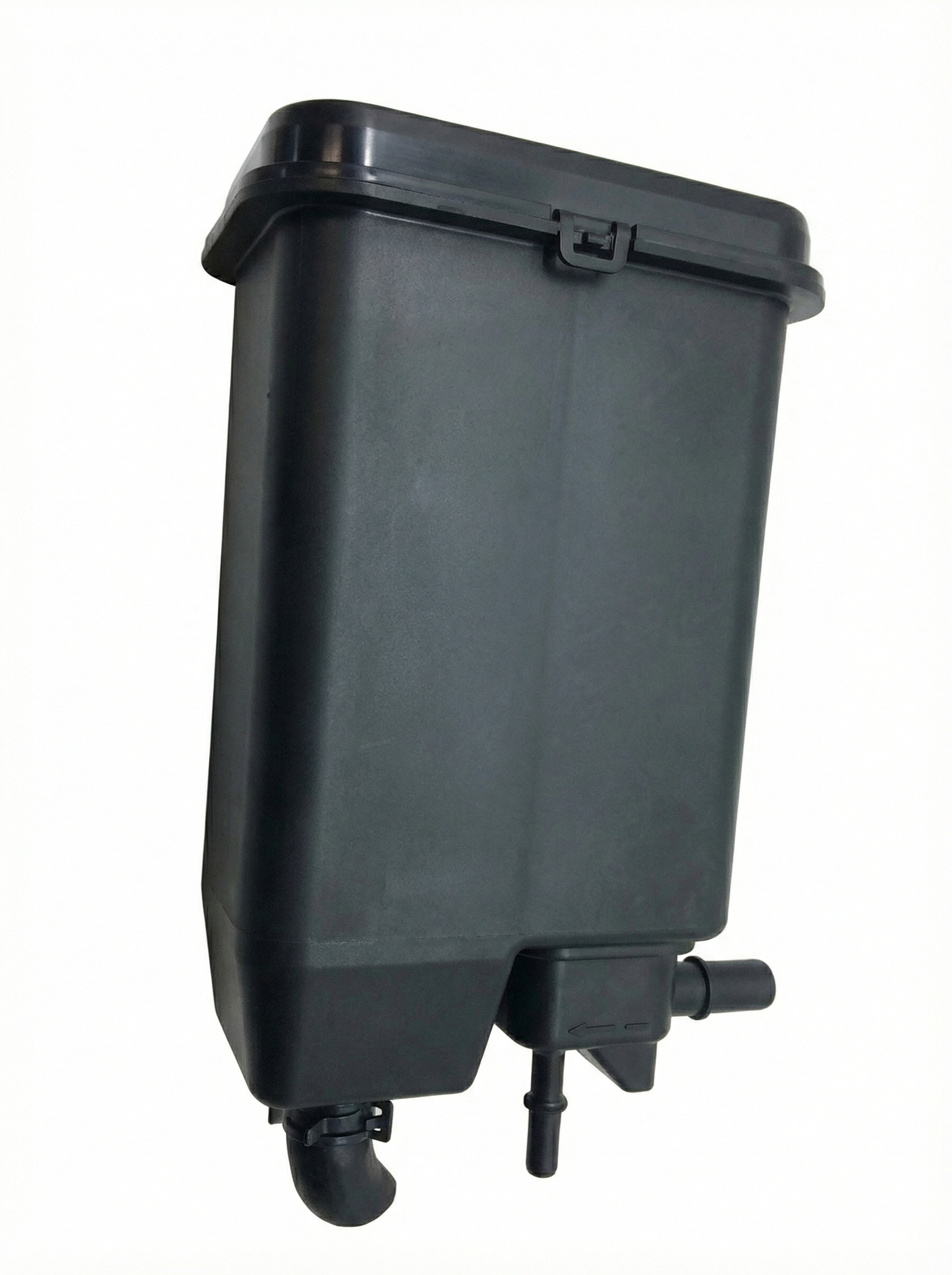
- Cracked Charcoal Canister: → Shop Vapor Canister The plastic body of the canister itself can develop a hairline crack from age or impact from road debris. More commonly, the canister can become saturated with fuel from repeatedly overfilling the gas tank, which can damage it internally and cause related codes.
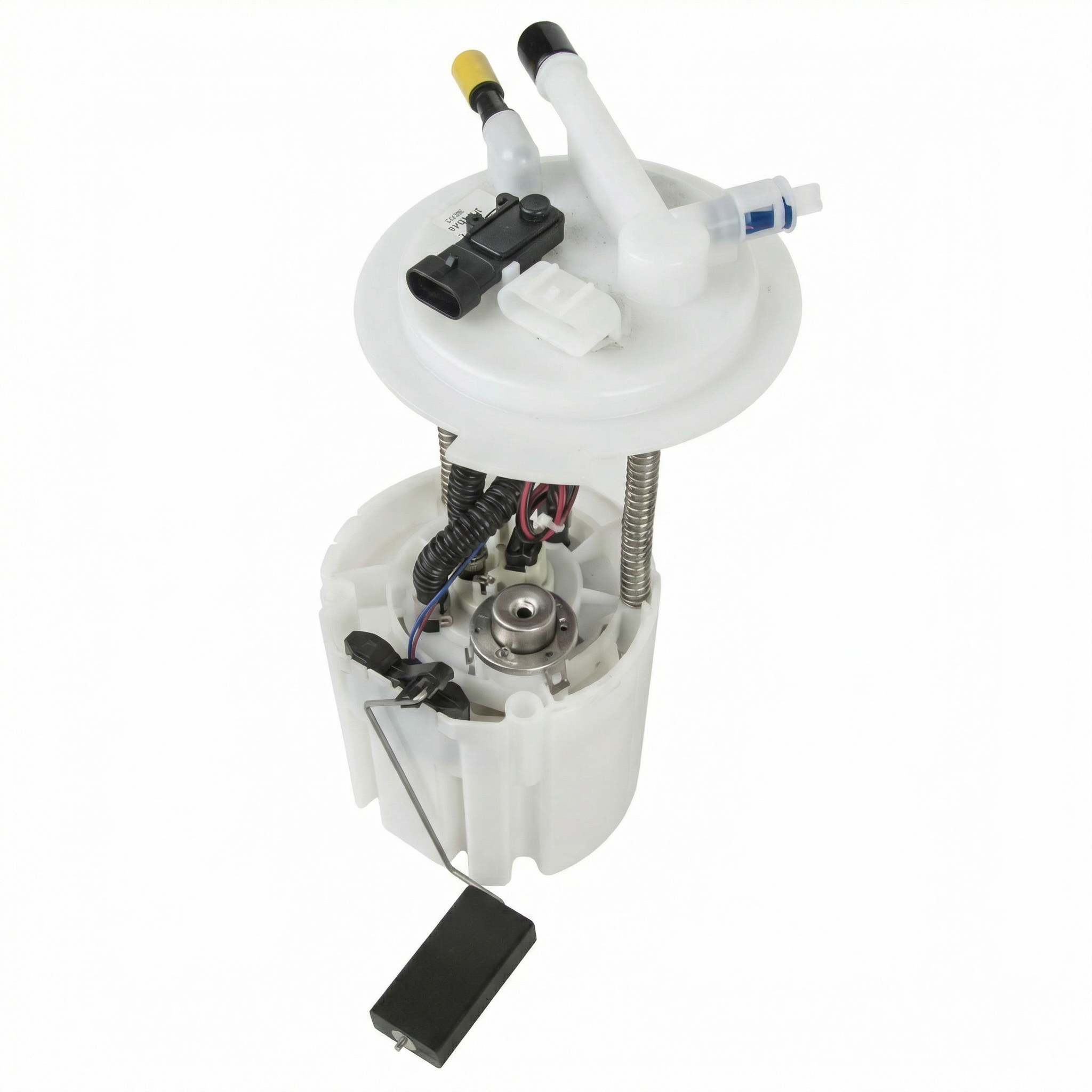
- Leaking Fuel Tank Pressure Sensor: → Shop Fuel Tank The sensor, usually located on the fuel pump module on top of the tank, has a seal that can fail. More rarely, the sensor itself can report incorrect pressure, tricking the computer into setting a P0442 code. Accessing it requires dropping the fuel tank.
- Cracked or Rusted Fuel Filler Neck: → Shop Fuel Filler Neck The metal pipe leading from the gas cap to the tank can rust and develop small pinholes, causing a leak that is often accompanied by a strong fuel smell after filling up. This is more common in regions that use road salt.
Diagnosis Steps
- Read the code with an OBD-II scanner to confirm P0442 is present and note any other codes.
- Inspect the gas cap. Ensure it's tight. Remove it and check the seal for cracks or damage. Clean the sealing surface on the filler neck. If in doubt, replace it with an OEM cap, clear the code, and drive for a few days.
- If the code returns, perform a visual inspection of the EVAP purge solenoid in the engine bay (on top of the intake manifold) and the hoses connected to it.
- Perform a simple bench test on the purge solenoid. Remove it, and try to blow air through it. If air passes, it has failed.
- Visually inspect the EVAP vent solenoid and charcoal canister area under the car, near the fuel tank, for any obvious cracks in hoses or components.
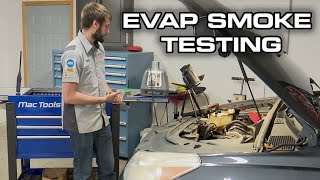
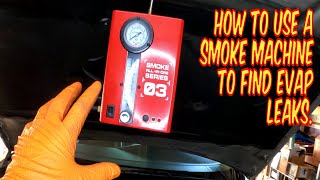
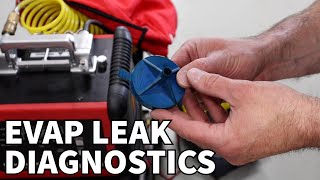
- If no visual faults are found, the most effective next step is a professional smoke test. This involves injecting vaporous smoke into the EVAP system to quickly and accurately reveal the location of the leak. 🎬 Watch: How to perform a professional EVAP smoke test.
- Test the purge and vent valves for proper operation using a scan tool to command them on and off, or by applying a 12V source to check for clicking. The purge valve should be closed with no power, and the vent valve should be open.
- If all components and lines are confirmed to be sealed, investigate the fuel tank pressure sensor for correct readings, though this is a less common failure.
Parts You'll Likely Need
- Fuel Cap
(OEM #ACDelco GT281 (confirm with VIN))— This is the most frequent cause of a P0442 code due to the rubber seal wearing out over time.
Trusted brands: ACDelco, Stant
OEM price range: $20-$35
Aftermarket price range: $15-$25 - Vapor Canister Purge Valve / Solenoid
(OEM #ACDelco 214-641 (for 3.4L/3.8L, confirm with VIN))— A common failure point located in the engine bay. It can stick open, causing a persistent small leak.
Trusted brands: ACDelco, Delphi, Dorman
OEM price range: $35-$60
Aftermarket price range: $20-$45 - Vapor Canister Vent Valve / Solenoid
(OEM #ACDelco 214-2324 or 214-1091 (varies by year/submodel, confirm with VIN))— Located near the fuel tank, this part is exposed to the elements and can fail, preventing the EVAP system from sealing properly for its self-test.
Trusted brands: ACDelco, Dorman
OEM price range: $50-$90
Aftermarket price range: $30-$70
Related Codes That Often Appear With This One
- P0455 — P0455 indicates a 'Gross EVAP Leak'. If a small leak (P0442) worsens, or if the gas cap is left off entirely, it can trigger the large leak code. They often share the same root causes.
- P0449 — P0449 specifically points to a fault in the EVAP vent valve/solenoid control circuit. If you have both P0442 and P0449, the vent valve assembly is almost certainly the problem.
- P0446 — P0446 indicates a fault in the EVAP vent control system, often related to a blockage rather than a leak. If you experience difficulty filling the fuel tank along with a P0442, a faulty vent valve could be the cause of both.
Technical Service Bulletins (TSBs) & Recalls
- Bulletin #21-NA-124: Provides diagnostic tips for testing EVAP system leaks related to DTCs P0442 and/or P0455.
- Bulletin #PIT4943D: Directs technicians to use an Evaporative Emissions System Tester (smoke machine) to diagnose a P0442 code, highlighting the need for proper test equipment to find small leaks.
- Bulletin #02-06-04-037J: While for trucks, this bulletin's logic is relevant. It recommends replacing the vent valve solenoid assembly and adding a filter box relocation kit for recurring EVAP codes, showing a pattern of issues with GM's vent valve design of the era.
Platform-Specific Known Issues
- Purge Solenoid Location and Ease
Mechanic-Grade Diagnostic Values
- Fuel Tank Pressure (FTP) Sensor Voltage — expected: Approximately 1.3V to 1.7V at atmospheric pressure (engine off, gas cap removed). The sensor receives a 5V reference from the PCM.. Failure: A reading below 0.1V will trigger a P0452 (low voltage) code. A reading stuck at a low value (e.g., 0.2V) or a high value (e.g., 5V) indicates a faulty sensor or wiring issue.
Scan Tool Commands That Help
- Tech2: EVAP System Test > Vent Valve Control — During a smoke test, a technician can use a Tech2 to command the normally open vent valve to close ('Not Venting'). This seals the system, allowing it to be filled with smoke to find leaks. If the system doesn't seal, it points to a faulty vent valve or a large leak.
- Tech2: EVAP System Test > Purge/Seal — This function commands the purge solenoid to open and the vent solenoid to close, allowing the scan tool to monitor the Fuel Tank Pressure sensor's response to engine vacuum. This helps verify the operation of the purge solenoid and the integrity of the system under a vacuum.
Wiring & Ground Locations
- G101 — Top left front of the radiator support.. This is a primary forward lamp and engine component ground. A poor connection here could potentially affect various sensors, though it's not a direct ground for the EVAP solenoids.
- G111 — Top right of the engine, below the ignition control module.. This is a major engine ground point. The EVAP Purge Solenoid is located on the engine and may share this ground path. A corroded or loose ground here can cause intermittent electrical issues.
- ABS/PCM Fuse — In the instrument panel fuse box on the driver's side.. This fuse supplies power to the Canister Vent Solenoid. If this fuse is blown, you will likely see other codes (like P0449) in addition to P0442, as the vent solenoid will not have power to close during the EVAP test.
- Fuel Tank Pressure Sensor Connector — On top of the fuel tank, part of the fuel pump module.. The three wires are typically a 5V reference (tan), a signal wire (dark green), and a ground (gray). Testing for 5V at the connector is a key step in diagnosing a suspected bad sensor.
Real Owner Repair Stories
- LS1Tech Forum (2007 Monte Carlo SS) — Check Engine Light with code P0442. Also had a P3400 (Cylinder Deactivation Solenoid) code.
❌ Tried (didn't work) Replaced gas cap., Dealer replaced both EVAP solenoids (purge and vent)., Dealer cleared codes and added oil.
✅ What actually fixed it The forum thread ends with the P0442 code still present after the dealer replaced both solenoids. The user was still seeking advice, highlighting that even professional component replacement isn't always a guaranteed fix and the leak could be elsewhere (hoses, filler neck, canister).
"I Checked Everything" — The Actual Cause
- A common scenario where a smoke test shows no external leaks is a faulty EVAP purge valve that is leaking internally. The valve is normally closed when the engine is off. If it's stuck slightly open, it creates a leak path from the EVAP system directly into the engine's intake manifold. A smoke test performed at the service port may not reveal this leak because the smoke will simply be drawn into the engine. The definitive test is to remove the purge valve, and try to blow through it; if any air passes, it has failed.
OEM Part Supersession History
Varies by year, potentially 15759044→ACDelco 214-1091— Updated design for durability.
Heads up: Part number 214-1091 is a common replacement vent valve for many GM vehicles of this era.N/A→ACDelco 214-2324— Design change for vent valve.
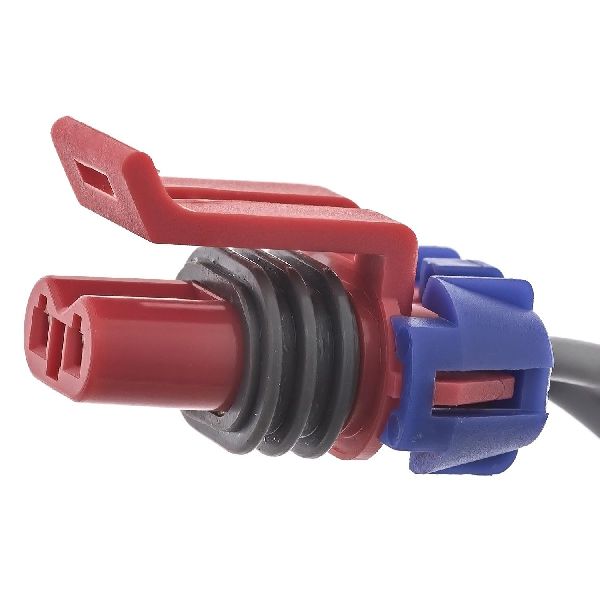
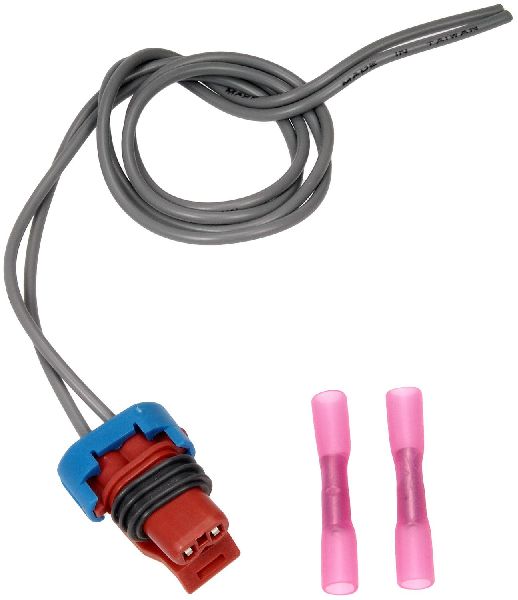
Heads up: For some early models, a '2nd Design' vent valve (214-2324) is specified, which may also require an updated wiring harness adapter (p/n 19257603) because the connector style was changed. Always confirm the correct part for your specific year.
Model Year Variations Within This Range
- 2006-2007: The 2006-2007 Monte Carlo SS was equipped with the 5.3L LS4 V8 engine. While the basic principles of the EVAP system are the same, the physical location and routing of some components, like the purge solenoid, may differ slightly from the V6 models. However, the common failure points (gas cap, purge/vent valves) remain the same.
- 2000-2005: These models primarily used the 3.4L LA1 V6 and the 3.8L L36/L67 V6 engines. The EVAP purge solenoid is located directly on top of the intake manifold, making it very easy to access and replace.
Helpful Videos

Used OEM Parts in Stock
New Aftermarket Parts Available


The information in this article is provided for general reference and educational purposes only. Vehicle specifications, procedures, and part compatibility can vary by production date, trim level, and region. Always consult your vehicle's factory service manual and verify part numbers before purchasing or performing repairs. Safety-critical components such as airbags, seat belts, and braking systems should be installed by a qualified professional.
- Chevrolet MONTE CARLO:
- 🧭 Diagnostic Flowchart
- 🎬 Helpful Videos
- 🛍️ Shop This Part
- What's Unique About the 2000-2007 Chevrolet MONTE CARLO
- Symptoms You May Notice
- Most Likely Causes
- Rare But Worth Checking
- Diagnosis Steps
- Parts You'll Likely Need
- Related Codes That Often Appear With This One
- Technical Service Bulletins (TSBs) & Recalls
- Platform-Specific Known Issues
- Mechanic-Grade Diagnostic Values
- Scan Tool Commands That Help
- Wiring & Ground Locations
- Real Owner Repair Stories
- "I Checked Everything" — The Actual Cause
- OEM Part Supersession History
- Model Year Variations Within This Range
- 🎟️ Get 5% Off