

P0442 on 2008-2015 Chevrolet Tahoe: EVAP Small Leak Causes and Fixes
P0442 on a 2008-2015 Tahoe indicates a small leak in the EVAP system. The most common causes are a loose or worn gas cap, a faulty EVAP purge solenoid on the engine, or a bad EVAP vent solenoid near the fuel tank. Start by checking the gas cap, as it's the simplest and cheapest fix. If that doesn't work, the purge and vent solenoids are the next most likely culprits.
- P0442 signifies a small leak in the EVAP emissions system.
- Always start by inspecting and tightening the gas cap; it's the most common and cheapest fix.
- The next most likely culprits are the EVAP purge solenoid (on the engine) and the EVAP vent solenoid (near the fuel tank).
- While you can drive with this code, your vehicle will fail an emissions test and may have a slight fuel odor.
- If simple checks don't find the leak, a professional smoke test is the most reliable way to diagnose the problem.
What's Unique About the 2008-2015 Chevrolet TAHOE

For the GMT900 (2008-2014) and K2XX (2015) Tahoe generations, the P0442 code is a very common issue. Owners frequently report problems with the EVAP vent and purge solenoids. The vent solenoid, located near the spare tire and charcoal canister, is particularly susceptible to dirt, dust, and moisture from the road, which can cause it to fail and trigger a leak code. The purge solenoid, located on the engine intake manifold, is also a frequent failure point due to constant cycling and engine heat. While the gas cap is always a possibility, many owners on forums like Tahoe Yukon Forum report that replacing one of these two valves ultimately resolves the code.
Diagnostic Flowchart

Tap your situation to follow the diagnostic path that matches what you're seeing on this vehicle.
Generation note: This range covers two Tahoe generations: the GMT900 (2008-2014) and the first year of the K2XX (2015). While the EVAP system components are similar, part numbers can differ, especially for the 2015 model which marked a new platform. For example, the purge solenoid for 2007-2014 models is different from the one used in 2015 and newer Tahoes. Always verify the part number for your specific year, make, and model before purchasing.
Symptoms You May Notice
- Check Engine Light is on
- A faint fuel smell, especially after parking or during idle.
- Slight decrease in fuel economy.
- Difficulty starting the vehicle immediately after refueling (less common with a small leak, more common with a stuck-open purge valve).
- Rough or low idle due to an unmetered vacuum leak.
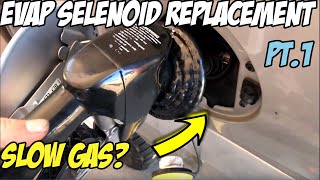
- Fuel pump nozzle clicks off repeatedly when refueling (often associated with a clogged vent solenoid or canister).
- Replacing the O2 sensors. Oxygen sensors are not part of the EVAP system and will not cause a P0442 code.
- Replacing the catalytic converter. This is a costly repair related to different codes (like P0420/P0430) and has no connection to the EVAP system.
Most Likely Causes

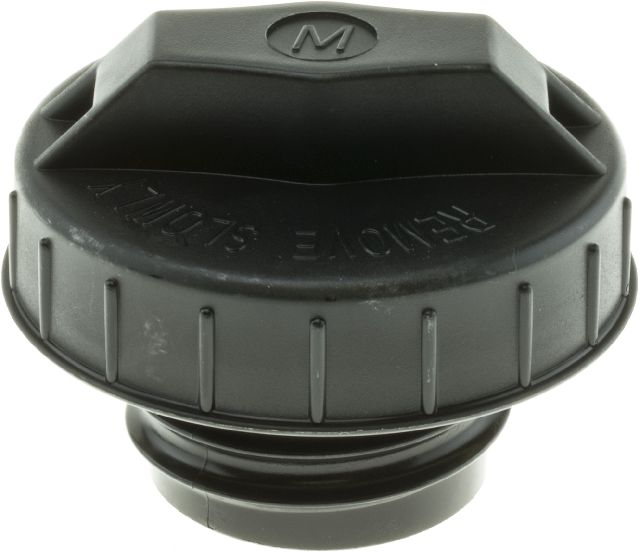
- Loose or Worn Gas Cap 🔴 High Probability → Shop Fuel Tank Cap The gas cap is a simple seal that is frequently removed and replaced. The rubber O-ring can dry out, crack, or get dirty over time, preventing a proper seal. Rust on the filler neck can also compromise the seal.
How to confirm: First, ensure the cap is tightened until it clicks several times. Inspect the rubber seal on the cap for any cracks, stiffness, or debris. Check the fuel filler neck for rust or dirt where the cap seals. Some owners suggest using a new OEM cap as a cheap and easy first diagnostic step.
Typical fix: Clean the cap and filler neck sealing surfaces. If the seal is damaged or the cap is old, replace it with a new OEM or equivalent part. Aftermarket caps can sometimes fail to seal properly.
Est. part cost: $15-$30 - Faulty EVAP Purge Solenoid/Valve 🟡 Medium Probability → Shop Vapor Canister This valve is located on the engine and cycles frequently, leading to eventual wear. It can get stuck partially open due to internal failure or debris, creating a small, constant leak. Owners on forums report replacing this part multiple times.
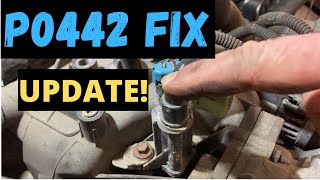
How to confirm: The purge solenoid is located on the top of the engine intake manifold, often near the alternator. With the engine off, you can remove the valve and try to blow through it; no air should pass as it is normally closed. A scan tool can also be used to command the valve to open and close while monitoring its function. A common failure mode is a cracked plastic body from engine heat. 🎬 Watch: A quick guide on how to test the purge valve.
Typical fix: Replacement of the purge solenoid. This is a relatively easy DIY job, typically requiring only basic hand tools and taking less than 30 minutes.
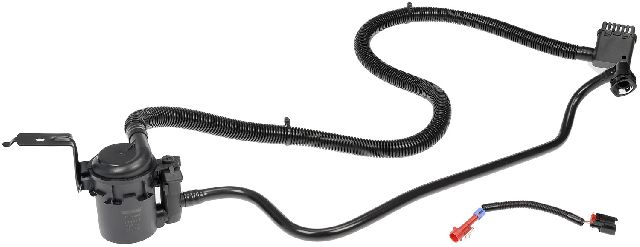
Est. part cost: $25-$60 - Faulty EVAP Vent Solenoid/Valve 🟡 Medium Probability → Shop Vapor Canister Located near the fuel tank and charcoal canister, this valve is exposed to road debris, dirt, and moisture, which can cause it to fail or get stuck. This is a very common failure point on GMT900 trucks, with many owners on forums confirming it was their fix.
How to confirm: The vent solenoid is typically mounted on or near the charcoal canister, above the spare tire. It can be tested with a scan tool to see if it actuates correctly. A definitive diagnosis involves a smoke test to see if it's leaking externally or failing to seal the system when commanded closed. Often, the valve will be full of dirt when removed.
Typical fix: Replace the vent solenoid. Accessing it often requires lowering the spare tire. Some replacement parts may come with an updated design or require a wiring harness adapter, so it's important to get the correct kit for your vehicle year. 🎬 See how to upgrade your vent solenoid to the updated model.
Est. part cost: $30-$70 - Cracked or Disconnected EVAP Hoses ⚪ Low Probability Over time, the rubber and plastic hoses in the EVAP system can become brittle from heat and age, leading to small cracks, especially at connection points. A user on a forum reported a split rubber hose was the cause of their P0442.
How to confirm: A thorough visual inspection of all accessible EVAP lines between the engine, charcoal canister, and fuel tank is the first step. The most effective method is to have a professional perform a smoke test, which will force smoke through the system and make even the smallest leaks visible where the smoke escapes.
Typical fix: Replace the cracked section of hose or the entire hose assembly. Sometimes simply trimming the end of a rubber hose and re-clamping it can fix a split at a connection point.
Est. part cost: $10-$50
Rare But Worth Checking
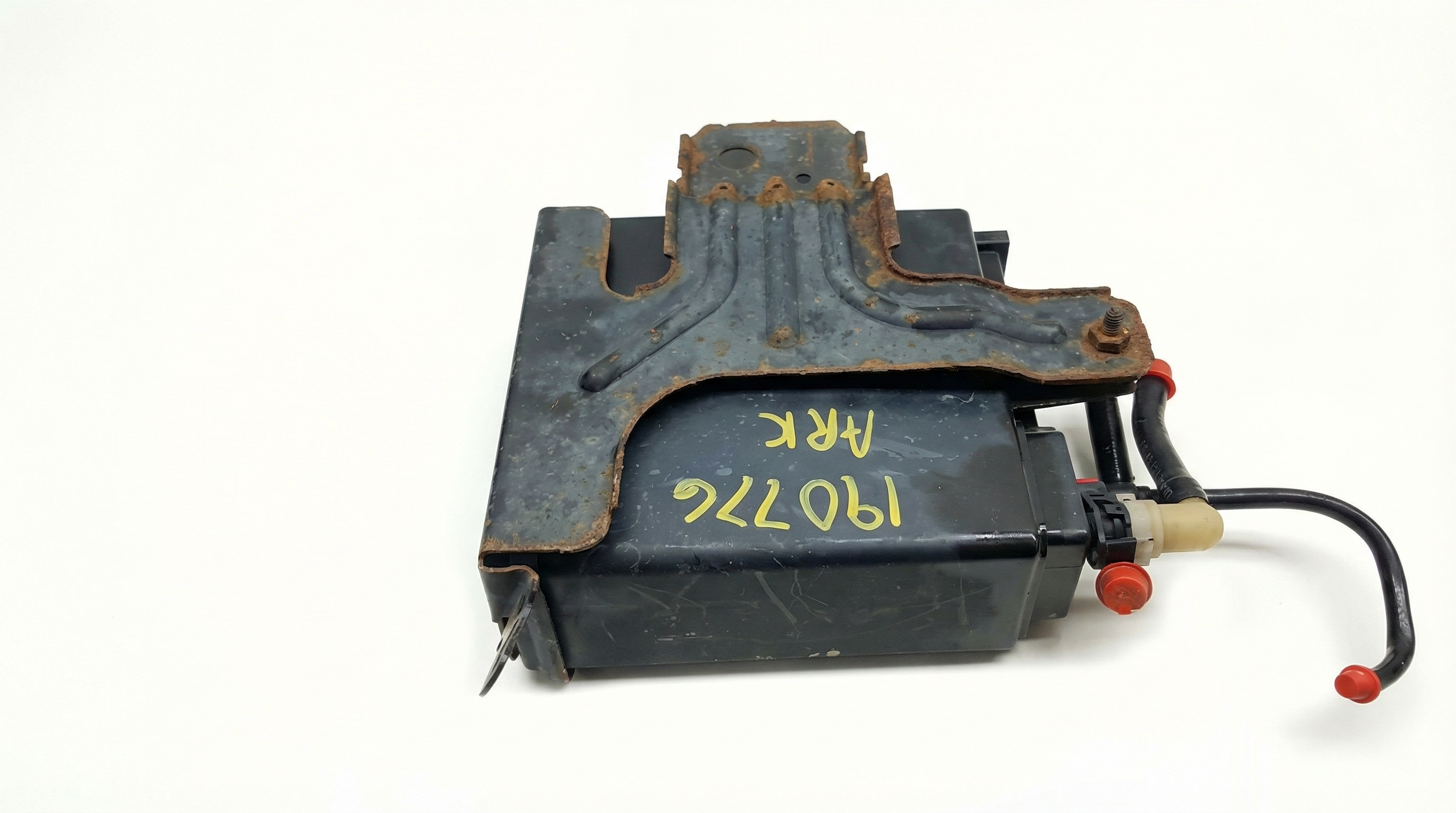
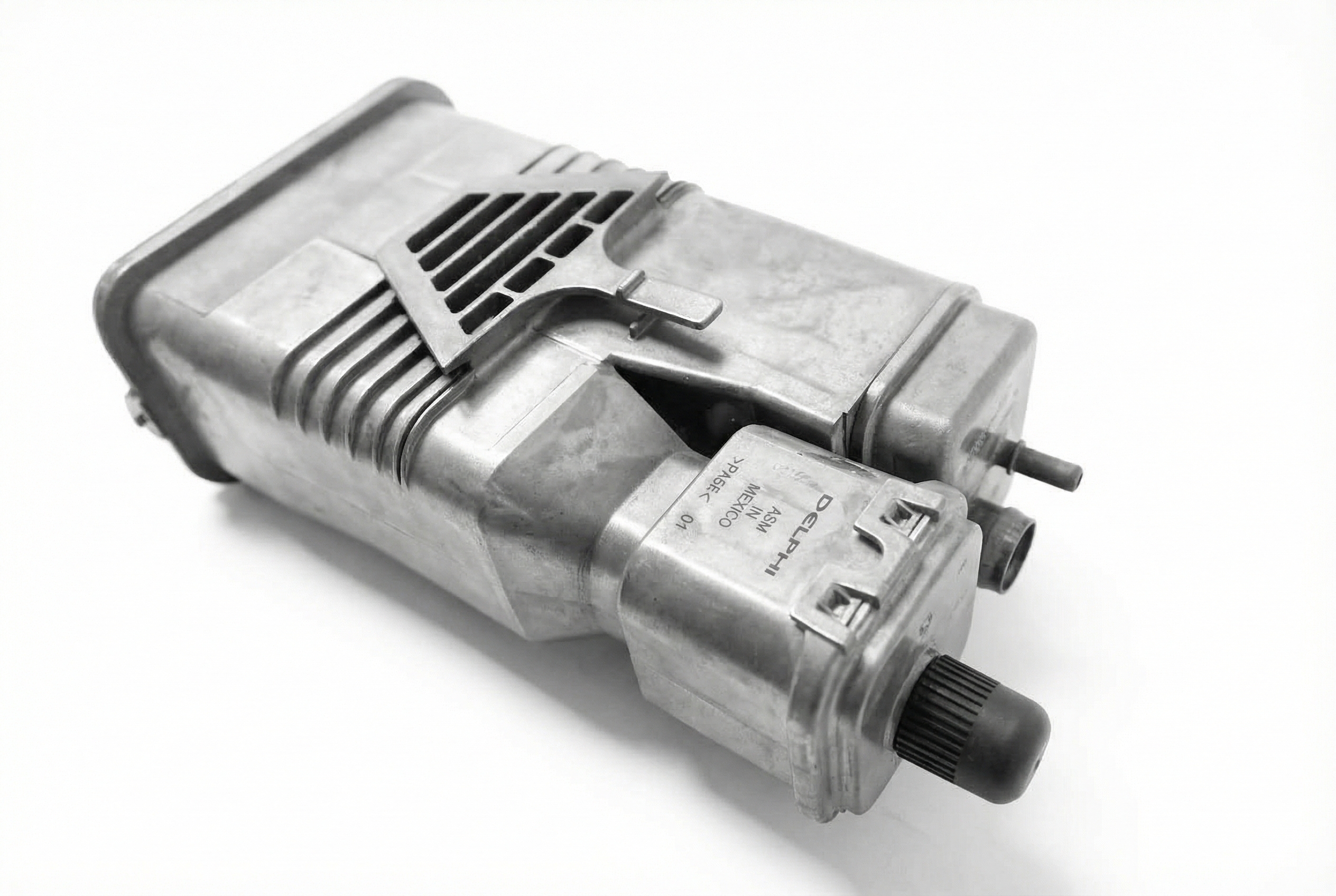
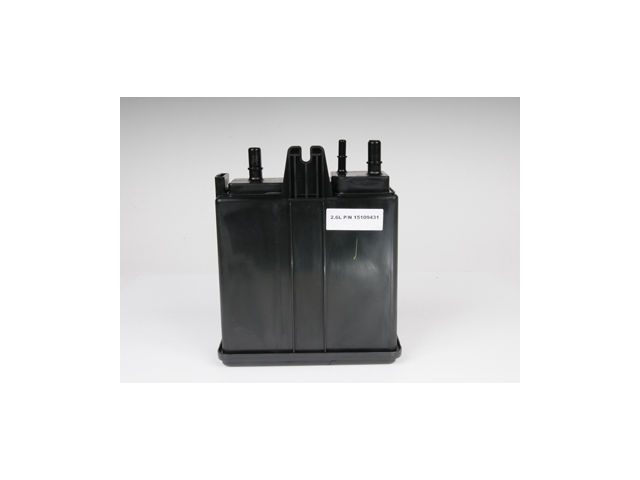
- Leaking Charcoal Canister: → Shop Vapor Canister The plastic housing of the canister itself can develop cracks over time, causing a leak. More commonly, it can become saturated with fuel from overfilling the tank or clogged with dust, especially on vehicles driven on gravel roads, which can affect system pressure and function.
- Faulty Fuel Tank Pressure (FTP) Sensor: → Shop Fuel Tank The sensor that reports pressure to the ECM can fail, causing the computer to believe there is a leak when there isn't one. This is usually diagnosed after all other potential leak sources have been ruled out, as it often requires dropping the fuel tank to access. A GM tech suggested this as a possible cause when a smoke test passes.
- Leaking Fuel Filler Neck: → Shop Fuel Filler Neck Corrosion or damage to the metal pipe leading to the fuel tank can cause a leak that prevents the system from sealing. TSB #15-NA-019 specifically addresses a fractured fuel tank filler vent hose connector on 2013-2014 Tahoes that can cause a fuel odor and P0442/P0455 codes.
Diagnosis Steps

- Check the gas cap. Remove it, inspect the seal for damage or cracking, clean it, and reinstall it, ensuring it clicks multiple times. Clear the code and drive for a few days to see if it returns.
- If the code returns, perform a visual inspection of all visible EVAP hoses and lines under the hood and near the fuel tank for obvious cracks, disconnections, or damage. Pay close attention to the rubber ends of the hoses.
- Locate the EVAP purge solenoid on the engine. With the engine off, disconnect it and try to blow through it. If air passes, it has failed and needs to be replaced. This is a common failure and a relatively inexpensive part to replace as a diagnostic step.
- Locate the EVAP vent solenoid near the fuel tank, usually above the spare tire. Inspect it and its wiring for damage or corrosion. Given its high failure rate due to its exposed location, it is a primary suspect.
- If the simple checks do not reveal the issue, the most effective next step is a professional smoke test. A machine fills the EVAP system with a harmless, visible smoke, and any leak will be quickly identified by where the smoke escapes. Some DIYers have successfully built their own smoke testers. 🎬 Watch: How to find a small EVAP leak when nothing is obvious.
- Based on the smoke test results, replace the leaking component, which could be a solenoid, hose, the charcoal canister, or the fuel tank filler neck.
Parts You'll Likely Need
- Gas Cap
(OEM #13595903)— The seal wears out over time, making it the most common and easiest fix for a P0442 code. It's a cheap first step in diagnosis.
Trusted brands: ACDelco (OEM), Stant
OEM price range: $20-$30
Aftermarket price range: $15-$25 - EVAP Vapor Canister Purge Solenoid (Valve)
(OEM #12610560 (Also cross-references to 12597567, 12690512))— Located on the engine, this valve cycles frequently and is prone to failure from heat and wear, causing a constant small leak. It's a common fix for P0442.
Trusted brands: ACDelco (OEM), Dorman, Standard Motor Products
OEM price range: $30-$50
Aftermarket price range: $25-$40 - EVAP Vapor Canister Vent Solenoid (Valve)
(OEM #23481275 (Often sold as a kit, e.g., Dorman 911-239 or ACDelco 214-2081))— Its location near the rear axle exposes it to road grime and moisture, causing it to stick or fail. This is a very frequent cause of EVAP codes on this platform.
Trusted brands: ACDelco (OEM), Dorman
OEM price range: $40-$70
Aftermarket price range: $30-$50
Related Codes That Often Appear With This One
- P0455 — This code indicates a large EVAP leak. It can appear with P0442 if a small leak worsens or if the computer detects different leak sizes during its tests. TSB #15-NA-019 mentions both codes occurring together from a leaking fuel filler vent hose.
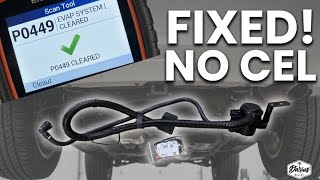
- P0449 — This code specifically points to a fault in the EVAP vent solenoid control circuit. If you see P0449 along with P0442, the vent solenoid or its wiring is almost certainly the culprit.
- P0446 — This code indicates a fault in the EVAP vent control system, often pointing to a restriction rather than a leak. However, it can appear alongside P0442 if the vent valve is malfunctioning in a way that causes both a blockage and a leak.
Technical Service Bulletins (TSBs) & Recalls
- Provides diagnostic tips for technicians to test for EVAP leaks related to P0442 and P0455 codes on 2015 models.
- Addresses a fuel odor and P0442/P0455 codes caused by a fractured fuel tank filler vent hose connector on 2013-2014 Tahoes, providing a specific part number (22802074) for the replacement hose assembly.
- Directs technicians to a Techlink article for proper use of an EVAP system tester when diagnosing a P0442 code, emphasizing the need for correct diagnostic procedures.
Platform-Specific Known Issues
- Recurring Purge Valve Failure: → Shop Vapor Canister An owner on the Tahoe Forum reported replacing the EVAP purge valve solenoid four times over several years to clear a recurring P0442 code, with each replacement fixing the issue for about three years. This suggests the part may have a limited service life on these vehicles.
- Dirt Ingress into Vent Solenoid and Canister: A user on the Tahoe Yukon Forum described a persistent P0442 on a 2009 Yukon XL. Upon inspection, the vent solenoid and charcoal canister were found to be filled with a large amount of fine dirt and sand, a common issue for vehicles used on unpaved roads. Despite replacing the parts and blowing out the lines, the code remained, highlighting how severe contamination can be and the diagnostic challenges it presents.
- Cracked Hose at Vent Solenoid: A Reddit user with a 2010 Tahoe fixed their P0442 code by discovering a split in the rubber hose that connects to the vent solenoid located above the spare tire. This highlights the importance of inspecting the flexible hose sections, not just the hard plastic lines or the components themselves.
- Frustrating Diagnosis Chase: One forum member detailed an exhaustive and expensive chase to fix a P0442 code, replacing the tank, filler neck, pump, pressure sensor, both solenoids, canister, and more, only for the code to return. They noted the code would reliably set when the fuel level dropped to 1/4 tank or when parked on an incline. This illustrates that in rare cases, the cause can be extremely elusive and may be related to specific operating conditions or a faulty replacement part.
Mechanic-Grade Diagnostic Values
- EVAP Canister Vent Solenoid Resistance — expected: 48 to 65 Ohms or 20 to 30 Ohms. Failure: A reading outside the expected range, or an open/infinite reading, indicates a bad solenoid coil.
- EVAP Canister Purge Valve Resistance — expected: 30 to 38 Ohms (when engine is cool). Failure: A reading outside this range suggests a faulty coil.
Hidden / Shadow Codes Worth Checking
- Mode $06 Data: This is not a specific code but a diagnostic mode accessible with advanced scan tools. For the EVAP system, it provides raw data from the ECM's self-tests, such as the measured leak rate (e.g., Test ID $0E, Comp ID $12). A technician can compare these values against manufacturer limits to see exactly how much the system failed the test by, even if a standard code reader only shows P0442. (see via Professional bidirectional scan tool like a GM Tech2 or a high-end scanner with Mode $06 capability.)
Scan Tool Commands That Help
- GM Tech2 / GDS2: EVAP System Test (Purge/Seal) — This is a guided diagnostic function that commands the vent valve to close and the purge valve to open, allowing the tool to monitor the Fuel Tank Pressure (FTP) sensor and determine if the system can hold a vacuum. It's the factory-level method for confirming a leak without a smoke machine.
- Bidirectional Scan Tool: EVAP Vent Valve Control — This command manually opens and closes the vent valve. A technician can use this to listen for the valve clicking or to seal the system before introducing smoke from a smoke machine.
- Bidirectional Scan Tool: EVAP Purge Valve Control — This command manually duty-cycles the purge valve. It's used to check if the valve responds to commands and to test for vacuum flow when it's supposed to be open.
Wiring & Ground Locations
- G101 — Lower left front of the engine, on the lower block.. This is a primary ground location for the Engine Control Module (ECM). A poor connection here can cause erratic behavior from the ECM, potentially leading to false codes or incorrect sensor readings related to the EVAP system.
- G103 — Located at the left rear of the engine compartment on the cowl, above the brake booster.. This ground serves the Body Control Module (BCM) and the Data Link Connector (DLC). Issues here can cause communication problems between modules or with a diagnostic scan tool.
- Vent Solenoid Connector — At the EVAP vent solenoid, typically above the spare tire near the charcoal canister.. The wiring to the vent solenoid is often supplied with 12V power with the key on, and the ECM controls the ground to activate it. The exposed location makes this connector and its wiring susceptible to corrosion and damage, which can cause a P0449 (circuit fault) or prevent the valve from sealing, leading to a P0442.
Real Owner Repair Stories
- Tahoe Yukon Forum user 'Shackman7878' (2009 Yukon XL 2500 6.0L) — Permanent P0442 code present, but no Check Engine Light. EVAP monitor would not set.
❌ Tried (didn't work) Replaced gas cap. Replaced purge solenoid. Had a shop perform a smoke test and overnight vacuum test, both of which passed with no leaks found.
✅ What actually fixed it The owner found the vent solenoid and charcoal canister were completely filled with fine dirt and sand. After replacing the vent solenoid, canister, and cleaning all EVAP lines, the issue was resolved. This highlights that a component can be functionally failed (clogged) without causing a visible leak during a smoke test. - Tahoe Yukon Forum user 'swathdiver' (Year not specified, but in a thread with GMT900 owners.) — Persistent P0442 code that returns about two weeks after every attempted fix.
❌ Tried (didn't work) Replaced gas tank, filler neck, fuel pump, FTP sensor, vent valve, charcoal canister, purge valve (30 times in one year), vacuum lines, and wiring harnesses. Multiple smoke tests and overnight vacuum tests passed with zero leaks detected.
✅ What actually fixed it The issue was never definitively resolved in the thread, but the owner discovered a repeatable pattern: the code would only set when the fuel level dropped to exactly 1/4 tank, or if the vehicle was parked on an unlevel surface with the passenger side low. This points to a highly specific, non-standard failure mode, possibly related to fuel slosh affecting a marginal component or an ECM software issue.
"I Checked Everything" — The Actual Cause
- A passed smoke test does not guarantee the EVAP system is functional. A common scenario on the Tahoe is the vent solenoid or charcoal canister being clogged with dirt and debris; this may not present as a leak but will prevent the system from operating correctly, eventually setting a code.
- A faulty Fuel Tank Pressure (FTP) sensor can send incorrect data to the ECM, making it believe there is a leak when the system is perfectly sealed. This is a common suggestion from experienced technicians after a smoke test comes back clean.
- In rare cases, a very specific condition is required to trigger the code that a standard test won't replicate. One owner documented their P0442 would only appear when the fuel tank reached 1/4 full or when the vehicle was parked on an incline, despite all parts being replaced and passing leak tests.
When the Usual Fixes Don't Work
- While the most common fixes (gas cap, purge/vent solenoids) resolve the P0442 for many owners, a significant number of cases documented on forums show these fixes failing to solve the problem. In these instances, the vehicle often passes multiple smoke and vacuum tests, leading to a frustrating diagnostic dead-end. The root cause in these difficult cases can be a faulty Fuel Tank Pressure (FTP) sensor providing bad data, a canister clogged with debris that doesn't show as a leak, or a highly conditional failure related to fuel level or vehicle angle that standard tests cannot replicate.
OEM Part Supersession History
12610560→12737252— Standard part update/revision by the manufacturer.
Heads up: The new part number is a direct replacement for the old one for the specified applications (typically 2008-2014 models).N/A (Original Vent Solenoid)→Kits like ACDelco 214-2081 or Dorman 911-239— The original vent solenoid design was prone to water/debris intrusion. The replacement is often a kit that includes a new valve, bracket, and a length of hose to relocate the filter/air inlet to a cleaner, more protected location (like higher up in the frame rail or near the fuel filler neck).
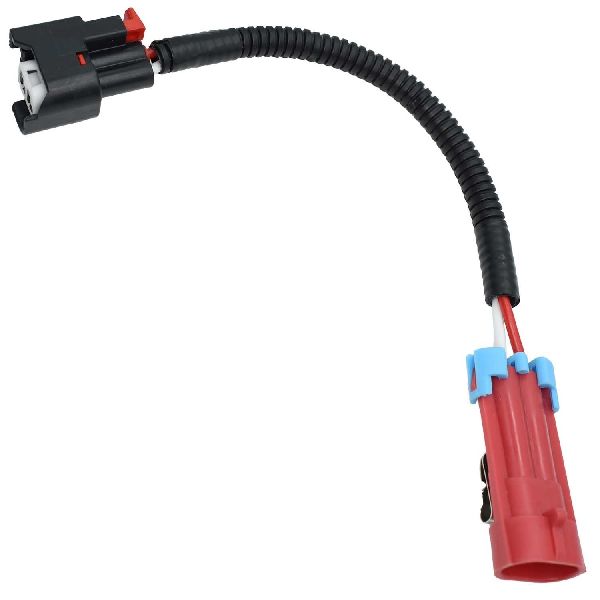
Heads up: These kits often come with a wiring harness adapter, as the connector on the new solenoid may be different from the vehicle's original harness. It is crucial to use the supplied adapter for the new part to function.
Model Year Variations Within This Range
- 2008-2014 (GMT900): These models typically use purge solenoid part numbers like 12597567, which was superseded by 12610560 and later 12737252.
- 2015 (K2XX): The 2015 model year marked a new platform. The vapor canister purge solenoid is a different part, typically GM part #12630282. The parts are not interchangeable between generations.
Helpful Videos
Used OEM Parts in Stock
New Aftermarket Parts Available


The information in this article is provided for general reference and educational purposes only. Vehicle specifications, procedures, and part compatibility can vary by production date, trim level, and region. Always consult your vehicle's factory service manual and verify part numbers before purchasing or performing repairs. Safety-critical components such as airbags, seat belts, and braking systems should be installed by a qualified professional.
- Chevrolet TAHOE:
- 🧭 Diagnostic Flowchart
- 🎬 Helpful Videos
- 🛍️ Shop This Part
- What's Unique About the 2008-2015 Chevrolet TAHOE
- Symptoms You May Notice
- Most Likely Causes
- Rare But Worth Checking
- Diagnosis Steps
- Parts You'll Likely Need
- Related Codes That Often Appear With This One
- Technical Service Bulletins (TSBs) & Recalls
- Platform-Specific Known Issues
- Mechanic-Grade Diagnostic Values
- Hidden / Shadow Codes Worth Checking
- Scan Tool Commands That Help
- Wiring & Ground Locations
- Real Owner Repair Stories
- "I Checked Everything" — The Actual Cause
- When the Usual Fixes Don't Work
- OEM Part Supersession History
- Model Year Variations Within This Range
- 🎟️ Get 5% Off