

P0442 on 2011-2023 Chrysler 300: Causes and Fixes for Small EVAP Leaks
For a 2011-2023 Chrysler 300, code P0442 is most often caused by a faulty gas cap (on older models) or a failed EVAP purge valve in the engine bay. If the gas cap is good, the purge valve is the next most likely culprit, costing around $25-$75 for an aftermarket part and being relatively easy to replace. On later models with a capless fuel filler, debris in the filler neck seal should be checked first.
- P0442 indicates a small leak in the EVAP system and will not prevent you from driving the car, but it will cause an emissions test failure.
- For models with a gas cap, always check that it's tight and the seal is intact before attempting any other repairs. This is the most common fix.
- For all models, the EVAP purge valve in the engine bay is a very frequent cause of this code and is a straightforward part to test and replace.
- If simple checks don't solve the issue, a smoke test is the most reliable and cost-effective way to find the exact source of the leak, preventing you from replacing parts unnecessarily.
What's Unique About the 2011-2023 Chrysler 300
The 2011-2023 Chrysler 300 (LD generation) and its platform mates (Dodge Charger, Dodge Challenger) use an EVAP System Integrity Module (ESIM) for leak detection, which is a known failure point. While earlier models in this range use a traditional gas cap that is a frequent cause of this code, many later models feature a capless fuel filler system. On capless models, the diagnostic focus shifts from a loose cap to other components like the purge valve, the ESIM, or debris in the filler neck seal.
Symptoms You May Notice
- Check Engine Light is on
- Remote start may be disabled
- A faint fuel smell may be noticeable, though this is not common
- For a faulty purge valve, a long crank time after refueling may occur
- Replacing the charcoal canister when only the attached ESIM has failed.
- Replacing the fuel tank pressure sensor, which is rarely the cause of a leak code.
- Assuming the cause is complex before thoroughly checking the gas cap (on applicable models) and cleaning the capless filler neck.
Most Likely Causes
- Loose, Worn, or Incorrect Gas Cap 🔴 High Probability → Shop Fuel Tank Cap Applies only to models with a traditional gas cap. The rubber seal degrades over time, preventing a proper seal. Aftermarket caps are also a frequent source of sealing issues.
How to confirm: Ensure the cap is tightened until it clicks several times. Inspect the rubber O-ring for cracks, stiffness, or damage. Check the fuel filler neck for rust or debris that could prevent a good seal.
Typical fix: Tighten or replace the gas cap. It is highly recommended to use a genuine OEM Mopar gas cap for a reliable seal.
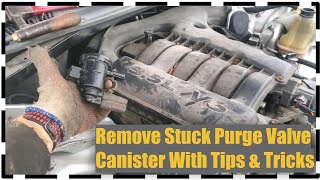
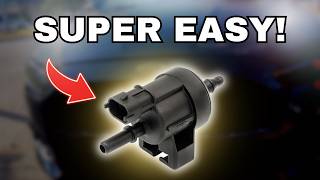
Est. part cost: $15-$40 - Faulty EVAP Purge Solenoid/Valve 🔴 High Probability → Shop Vapor Canister This is a very common failure point on many Chrysler products, including the 300 and its platform mates. The valve, located in the engine bay, gets stuck open and creates a constant leak within the EVAP system.
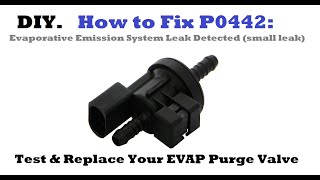
How to confirm: Remove the purge valve (usually held by one or two bolts). With it disconnected, try to blow through it. If air passes, it is stuck open and faulty. A long crank after refueling is another strong indicator. 🎬 Watch: How to test and replace the EVAP purge valve. A scan tool can also command the valve to check its operation.
Typical fix: Replace the purge valve. It is located on the passenger side of the intake manifold on the 3.6L V6 and near the firewall on the 5.7L V8.
Est. part cost: $25-$75 - Cracked or Disconnected EVAP Hoses 🟡 Medium Probability The plastic and rubber hoses in the engine bay and under the vehicle become brittle with age and exposure to heat, developing small cracks that are the perfect size to trigger a P0442 code. The rubber ends at the purge valve are a particularly common failure point.
How to confirm: Visually inspect all accessible EVAP lines, especially the connections at the purge valve and charcoal canister. A professional smoke test is the most reliable way to find a hard-to-see crack.
Typical fix: Replace the cracked section of hose or the damaged connector.
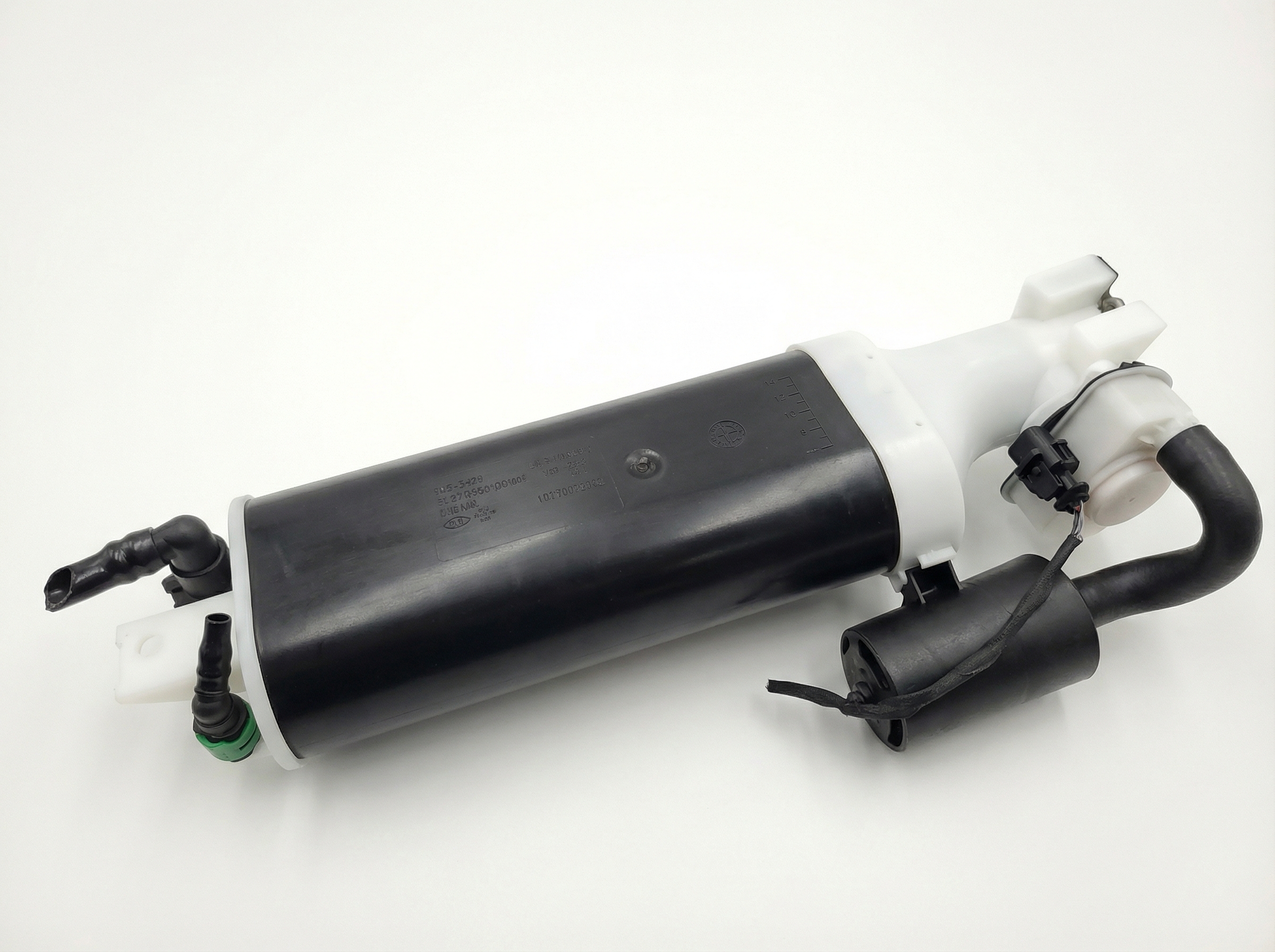
Est. part cost: $10-$50 - Faulty EVAP System Integrity Module (ESIM) 🟡 Medium Probability → Shop Vapor Canister The ESIM (also called a leak detection pump) is mounted to the charcoal canister and is a known high-failure part on this platform. Its O-ring seal can also degrade and cause a leak.
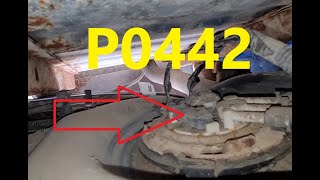
How to confirm: The ESIM is located behind the passenger-side rear wheel well liner. If you remove the part and shake it, a distinct rattling sound often indicates it has failed internally. A smoke test will show a leak from the ESIM body or its seal.
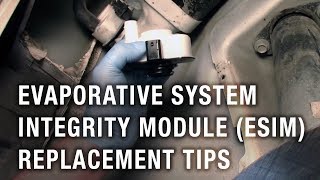
Typical fix: Replace the ESIM. It typically twists into place on the charcoal canister. 🎬 See these helpful tips for replacing the ESIM module.
Est. part cost: $30-$75 - Debris in Capless Fuel Filler Neck ⚪ Low Probability → Shop Fuel Filler Neck Applies only to models with a capless system. Dirt, dust, or rust can prevent the spring-loaded filler door from sealing completely.
How to confirm: Visually inspect the opening of the fuel filler neck for any debris or corrosion around the sealing surface.
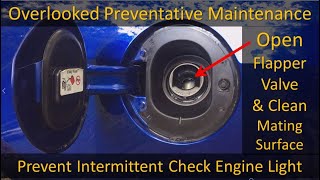
Typical fix: Clean the sealing area carefully with a rag. A special funnel is usually included with the vehicle to open the flap for cleaning.
Est. part cost: $0
Rare But Worth Checking
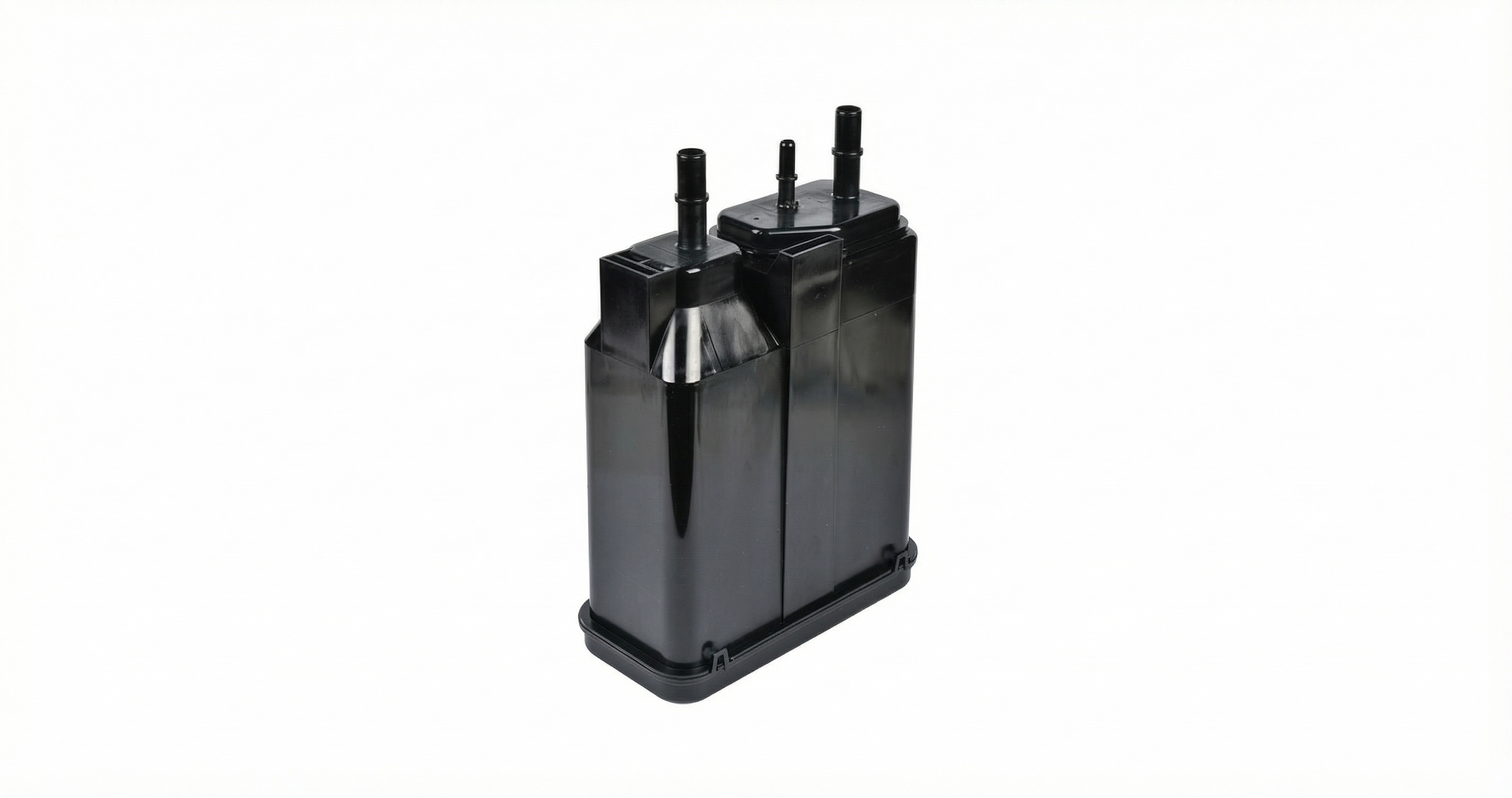
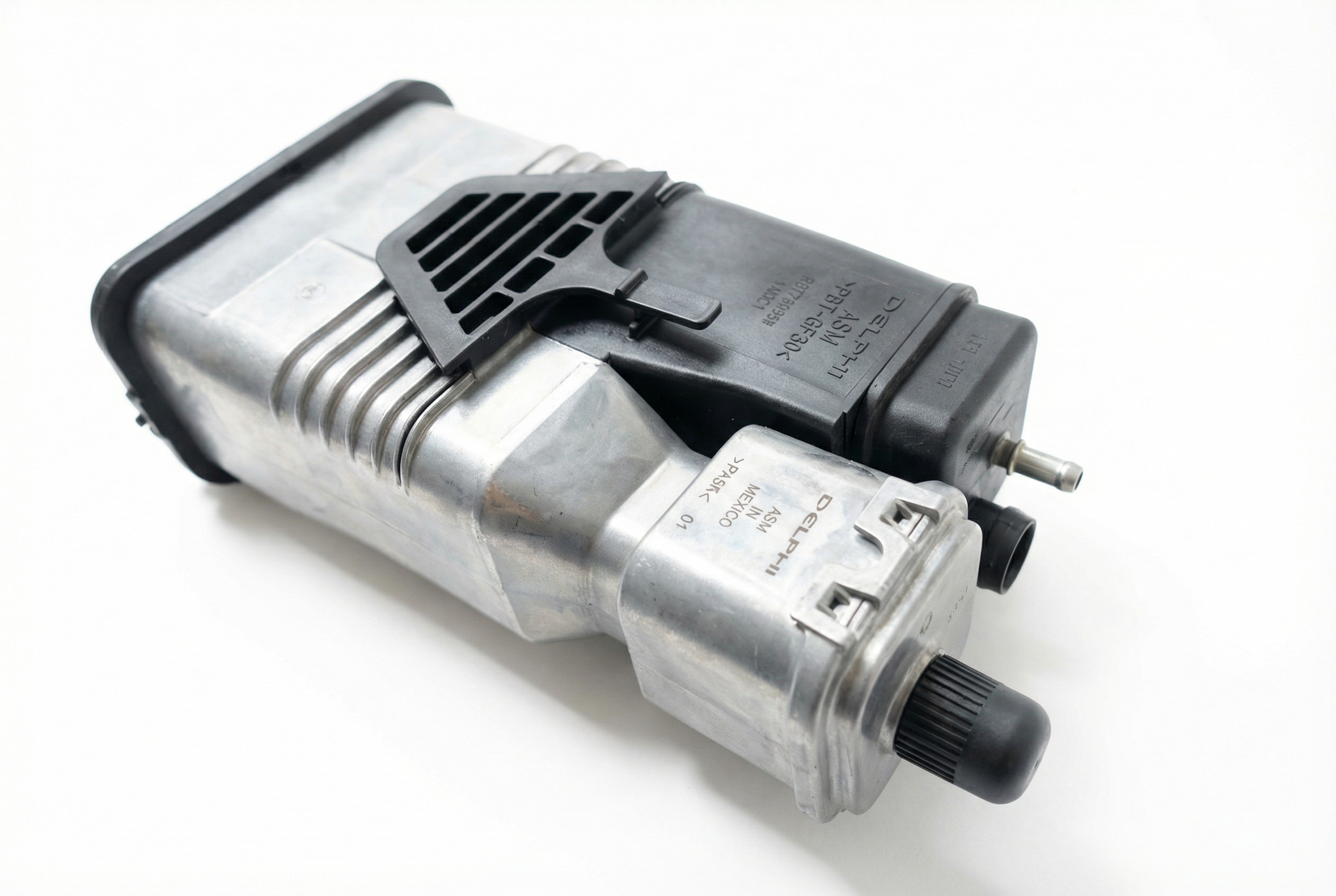
- Cracked Charcoal Canister: → Shop Vapor Canister The plastic housing of the canister can develop a hairline crack from road debris or age, causing a leak. This is usually found with a smoke test.
- Rusted Fuel Filler Neck: → Shop Fuel Filler Neck In areas with heavy road salt use, the metal fuel filler neck can rust and develop small pinhole leaks that are difficult to see but can be found with a smoke test.
Diagnosis Steps
- Read the code with an OBD-II scanner to confirm P0442 is present.
- If your vehicle has a gas cap, inspect it first. Ensure it is tight and the seal is not cracked or brittle. If in doubt, replace it with an OEM part.
- If your vehicle has a capless system, inspect the fuel filler opening for debris and clean it. 🎬 Watch: How to properly clean a capless fuel filler neck.
- Clear the code and drive for a few days to see if it returns. The EVAP monitor can take several drive cycles to run again.
- If the code returns, move to the engine bay. Locate the EVAP purge valve on the passenger side of the engine.
- Visually inspect all accessible EVAP hoses for obvious cracks, brittleness, or loose connections, paying close attention to the rubber ends.
- Test the purge valve. Disconnect it and attempt to blow through it. If air passes, it's faulty and needs replacement. Also note if you experience long cranks after refueling.
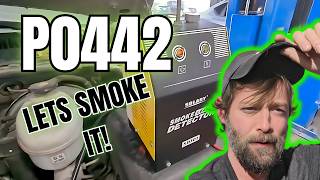
- If the above steps do not reveal the cause, the most effective next step is a professional smoke test. This test fills the EVAP system with a visible vapor, making it easy to spot the exact location of the leak.
- Pay close attention to the ESIM/charcoal canister area (behind the rear passenger wheel) during the smoke test, as this is a common leak point.
Parts You'll Likely Need
- Gas Cap
(OEM #Mopar 52124512AA (Example, verify by VIN))— The most common cause for models equipped with a cap. The seal wears out over time.
Trusted brands: Mopar, Stant
OEM price range: $20-$40
Aftermarket price range: $15-$25 - EVAP Purge Solenoid
(OEM #04891731AC (V6/V8), 4891741AA (V6, alternate))— A very common failure point on this platform. It gets stuck open, causing a constant leak. Part 04891731AC is widely cited for both V6 and V8 engines in this generation.
Trusted brands: Mopar, Bosch, Dorman, Standard Motor Products (SMP)
OEM price range: $50-$90
Aftermarket price range: $25-$75 - EVAP System Integrity Module (ESIM)
(OEM #Mopar 4861959AA (Example, verify by VIN))— This leak detection switch is a known weak point on the 2011-2023 platform and frequently fails, causing various EVAP codes.
Trusted brands: Mopar, Bosch
OEM price range: $50-$100
Aftermarket price range: $30-$75
Related Codes That Often Appear With This One
- P0456 — This indicates a 'Very Small Leak'. Both codes share the same causes, but P0456 is triggered by a smaller leak threshold. You may see one or the other depending on the severity of the leak at the time of the test.
- P0455 — This indicates a 'Large Leak'. If a component fails catastrophically (e.g., a hose completely disconnects), a P0442 might eventually become a P0455.
- P0441 — This indicates 'Incorrect Purge Flow'. It often points directly to a faulty EVAP purge valve that is stuck open or closed, which is also a primary cause of P0442.
Platform-Specific Known Issues
- Owner Experience: Purge Valve Replacement: → Shop Vapor Canister An owner on a popular forum for Chrysler minivans (which share the same purge valve) with a P0442 code fixed the issue by replacing the purge valve solenoid (part 04891731AC). The repair took 15 minutes and the code did not return. This is a common story across many Chrysler platforms.
- DIY Tip: Checking Purge Valve Hoses: → Shop Vapor Canister Forum users on Ram forums (another platform using similar EVAP components) note that the rubber hose ends connected to the purge valve and the intake are notorious for developing small cracks, which are a perfect cause for a P0442. Before replacing the valve itself, it's worth disconnecting and closely inspecting the rubber connectors.
Mechanic-Grade Diagnostic Values
- EVAP Purge Solenoid Coil Resistance — expected: 14 to 30 Ohms. Failure: An open circuit (infinite resistance) or a short circuit (near-zero resistance) indicates a failed solenoid.
- ESIM Vacuum Switch Closing Threshold — expected: Closes at 0.8 to 2.2 inches of water vacuum. Failure: If the switch does not change state (from open to closed) within this vacuum range, the ESIM is faulty.
Scan Tool Commands That Help
- wiTECH or equivalent advanced scanner: EVAP Monitor Test / System Test — This forces the PCM to run the entire EVAP leak detection sequence on demand. It's used to confirm if a fault is currently present after a repair, without having to complete multiple drive cycles.
- wiTECH or equivalent advanced scanner: Vent Valve Actuation / System Seal — This command manually closes the EVAP vent valve (part of the ESIM assembly) to seal the system. This is a required step before performing a smoke test to ensure the system is actually closed for the test.
- wiTECH or equivalent advanced scanner: Large Leak Test — A technician may run this test to specifically verify that the ESIM's internal switch closes properly under vacuum. If the ESIM switch doesn't work, the small leak test (P0442) cannot run correctly, pointing directly to a faulty ESIM as the root cause.
Wiring & Ground Locations
- EVAP Purge Solenoid Connector — On the passenger side of the engine. On the 3.6L V6, it is on top of the engine near the air filter housing. On the 5.7L V8, it is near the firewall.. This is the connection point for the most common electrical failure part. Checking for power (battery voltage with key on) at this connector is a key diagnostic step.
- ESIM Connector — Under the vehicle, behind the passenger-side rear wheel well liner, connected to the ESIM on the charcoal canister.. This connector provides power and ground to the ESIM and sends the switch status back to the PCM. Corrosion or damage here can mimic a failed ESIM.
"I Checked Everything" — The Actual Cause
- A faulty ESIM can cause a smoke test to incorrectly show no leaks. A technician noted that the correct procedure is to first use a scan tool to command the ESIM closed and verify its switch changes state. If the ESIM fails to seal the system, the smoke test pressure will simply escape through the ESIM's own vent port, leading the technician to believe there are no leaks in the hoses or canister, when the ESIM itself is the problem.
OEM Part Supersession History
4891731AA→04891731AC— Standard part revision and update by the manufacturer.
Model Year Variations Within This Range
- Approximately 2011-2013: These earlier models in the generation are more likely to have a traditional, screw-on gas cap. Diagnosis for P0442 should always start with inspecting the cap and its seal.
- Approximately 2014-2023: These later models feature a capless fuel filler system. The primary diagnostic step shifts from the gas cap to checking for debris in the filler neck's spring-loaded seal. A special funnel, usually found with the spare tire tools, is required to open the flap for cleaning or adding fuel from a can.
Diagnostic Flowchart
Other Known Issues on This Vehicle
Issues unrelated to this code that are worth knowing about as an owner of this generation:
- 3.6L Pentastar Oil Filter Housing Leak 🔴 High — Extremely common. The plastic housing is prone to cracking and warping from heat cycles, causing significant oil and/or coolant leaks into the engine valley. Often misdiagnosed as a rear main seal leak. Onset can be as early as 60,000 miles.
- 5.7L HEMI Lifter/Camshaft Failure ('Hemi Tick') 🔴 High — A well-documented issue where the roller lifters (especially on MDS cylinders) fail, seize, and destroy the camshaft lobes. Often preceded by a distinct ticking noise when the engine is warm. Can lead to catastrophic engine failure if ignored. More common on 2009-2014 models but can affect later years.
- Electronic 'Monostable' Shifter Issues 🟠 Medium — Affects earlier models in this generation (approx. 2012-2014). The electronic shifter was not intuitive and led to numerous rollaway incidents when drivers exited the vehicle believing it was in Park. This prompted a major recall (NHTSA #16V240). Later models switched to a rotary dial or a conventional mechanical-feeling shifter. (Ref: NHTSA Recall 16V240)
- Alternator Failure 🔴 High — A recall was issued for 2011-2014 models for alternators that could fail without warning, causing the vehicle to stall and lose all electrical power. (Ref: NHTSA Recall 14V634)
- Rough Shifting / Transmission Shudder 🟠 Medium — Owners report rough shifting, shuddering, and hesitation, particularly with the 8-speed automatic transmission. In many cases, this can be addressed with a software update to the Powertrain Control Module (PCM) and Transmission Control Module (TCM).
- Warped Interior Door Panels 🟡 Low — Commonly reported issue where the interior door panel material delaminates and warps, especially when exposed to heat.
Used vs. New Parts: Buying Guide for This Vehicle
When a used part is the smart pick: Structural, non-electronic parts like EVAP hoses or a charcoal canister (if thoroughly inspected for cracks) can be sourced from a low-mileage donor vehicle. The fuel filler neck is also a viable used part if it comes from a dry, salt-free climate and is free of rust.
Donor-vehicle mileage cap: roughly under 75000 miles for the part to have meaningful remaining life.
What to inspect on the donor part:
- For hoses, check for any signs of dry rot, cracking, or brittleness. The rubber should still be pliable.
- For a charcoal canister, inspect the plastic body for any hairline cracks or damage, especially around the mounting tabs and hose ports.
- For an ESIM or Purge Valve, visually inspect for corrosion on electrical pins and cracks in the plastic housing. There is no reliable way to test function without installing it.
OEM-only on this vehicle (don't cheap out):
- Gas Cap: Aftermarket gas caps are a notorious source of EVAP codes. It is strongly recommended to use a genuine Mopar cap to ensure a proper seal.
- EVAP System Integrity Module (ESIM): While some aftermarket versions exist, this is a sensitive diagnostic component. Using an OEM Mopar part is recommended to avoid compatibility or premature failure issues.
Aftermarket brands forum-validated for this vehicle:
- Bosch (for Purge Solenoid, ESIM)
- Standard Motor Products (SMP) (for Purge Solenoid, ESIM)
- Dorman (for Purge Solenoid, Hoses)
Brands owners have reported issues with on this vehicle:
- Unbranded or "white-box" electronic parts (solenoids, sensors) from online marketplaces, as their quality control and specifications can be inconsistent.
Real Owner Stories
Aggregated from forums and TSBs cited above. Mileages and costs reflect what owners reported in those sources.
2011-2023 Chrysler 300 (Platform Mate)
Symptoms: Check engine light with code P0442.
What fixed it: Replacing the purge valve solenoid (part 04891731AC). The repair took 15 minutes and the code did not return.
Source hint: vehicle_specific_issues: Owner Experience: Purge Valve Replacement
2011-2023 Dodge Ram (Platform Mate)
Symptoms: Small EVAP leak detected (P0442).
What fixed it: Inspecting and replacing the rubber hose ends connected to the purge valve and the intake, which are notorious for developing small cracks.
Source hint: vehicle_specific_issues: DIY Tip: Checking Purge Valve Hoses
Related OBD-II Codes
Frequently Asked Questions
Why is my Chrysler 300's remote start not working when the P0442 code is present?
I have a 2014 Chrysler 300 with a P0442 code; should I replace the gas cap first?
Where is the EVAP purge valve located on the 3.6L V6 Chrysler 300?
Where is the EVAP purge valve located on the 5.7L V8 Chrysler 300?
What is an ESIM, and why does it cause P0442 on my Chrysler 300?
My Chrysler 300 has a capless fuel filler; can it still cause a P0442 code?
Why does my Chrysler 300 struggle to start only after I fill up the gas tank?
Helpful Videos
We Have This Part in Stock

The information in this article is provided for general reference and educational purposes only. Vehicle specifications, procedures, and part compatibility can vary by production date, trim level, and region. Always consult your vehicle's factory service manual and verify part numbers before purchasing or performing repairs. Safety-critical components such as airbags, seat belts, and braking systems should be installed by a qualified professional.
- Chrysler 300:
- 🧭 Diagnostic Flowchart
- 🎬 Helpful Videos
- 🛍️ Shop This Part
- What's Unique About the 2011-2023 Chrysler 300
- Symptoms You May Notice
- Most Likely Causes
- Rare But Worth Checking
- Diagnosis Steps
- Parts You'll Likely Need
- Related Codes That Often Appear With This One
- Platform-Specific Known Issues
- Mechanic-Grade Diagnostic Values
- Scan Tool Commands That Help
- Wiring & Ground Locations
- "I Checked Everything" — The Actual Cause
- OEM Part Supersession History
- Model Year Variations Within This Range
- Other Known Issues on This Vehicle
- Used vs. New Parts: Buying Guide for This Vehicle
- Real Owner Stories
- 2011-2023 Chrysler 300 (Platform Mate)
- 2011-2023 Dodge Ram (Platform Mate)
- Related OBD-II Codes
- Frequently Asked Questions
- 🎟️ Get 5% Off