

P0442 on 2017-2024 Chrysler Pacifica: EVAP Small Leak Causes and Fixes
For a 2017-2024 Chrysler Pacifica, code P0442 is most often caused by a faulty EVAP purge valve located on top of the engine. If the capless fuel filler door is sealing correctly, this valve is the next logical part to replace. Expect to pay $35-$75 for the part, which is a DIY-friendly fix.
- P0442 is a minor issue that won't stop you from driving but will cause you to fail an emissions test.
- The most likely cause on a Pacifica is a faulty EVAP purge valve (Part No. 4627694AB), which is an easy and relatively cheap DIY replacement located on top of the engine.
- Before buying any parts, carefully inspect the seal of the capless fuel filler neck for debris or damage.
- If the purge valve doesn't fix the issue, the next most likely causes are a faulty ESIM switch on the charcoal canister or a leak that requires a professional smoke test to locate.
What's Unique About the 2017-2024 Chrysler Pacifica
The Chrysler Pacifica uses a capless fuel filler system, which means a common cause for EVAP leaks on other cars—a loose or bad gas cap—is replaced by potential issues with the filler neck's internal spring-loaded seal. Additionally, like many modern Chrysler products, the Pacifica uses an Evaporative System Integrity Module (ESIM) to test for leaks, and this component itself is a known failure point that can trigger a code without an actual leak being present. The purge valve on the 3.6L Pentastar engine is also a very common failure item across many Chrysler/Dodge/Jeep models, including the Pacifica.
Symptoms You May Notice
- Check Engine Light is on.
- A faint fuel smell may be noticeable, particularly when parked in an enclosed space like a garage.
- In rare cases, if the purge valve is stuck open, you might experience a rough idle or difficulty starting the engine immediately after refueling.
- Replacing the charcoal canister when the actual fault is the much cheaper and easier-to-replace ESIM switch attached to it.
- Assuming a major, hard-to-find leak exists before thoroughly checking the purge valve, which is a very common and simple fix.
Most Likely Causes
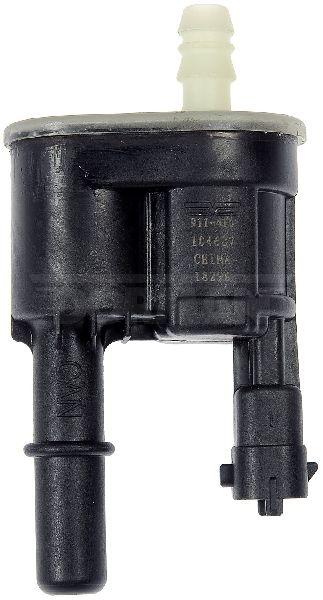
- Faulty EVAP Purge Valve 🔴 High Probability → Shop Vapor Canister The purge valve on the 3.6L Pentastar engine is a well-documented, high-failure part across numerous Chrysler, Dodge, and Jeep vehicles. It can get stuck partially open or fail to seal completely, creating a small leak that the system detects.
How to confirm: Remove the valve from the top of the engine. With the valve disconnected from power, try to blow through the port that leads to the engine intake. If any air passes through, the valve is stuck open and has failed; it should be normally closed. A multimeter can also be used to test the solenoid's resistance; a typical reading for a 3.6L Pentastar is between 14 and 30 Ohms.
Typical fix: Replace the purge valve. It is located on top of the engine under the plastic cover and is held in place by a grommet and two hose connections, making it a simple replacement.
Est. part cost: $35 - $75 - Leaking Capless Fuel Filler Neck 🟡 Medium Probability → Shop Fuel Filler Neck Instead of a traditional gas cap, the Pacifica uses a spring-loaded flap to seal the fuel system. Debris, wear, or damage to this seal can prevent the system from holding pressure.
How to confirm: Visually inspect the fuel filler opening for any debris holding the flap open. Ensure the flap closes securely. Some owners have reported noticing the filler neck area is wet with fuel after filling the tank, which is a strong indicator of a bad seal. A definitive diagnosis often requires a smoke test to see if smoke escapes from the filler neck area.
Typical fix: First, try cleaning the seal area with a clean cloth. If the seal is damaged, the entire fuel filler neck assembly typically needs to be replaced.
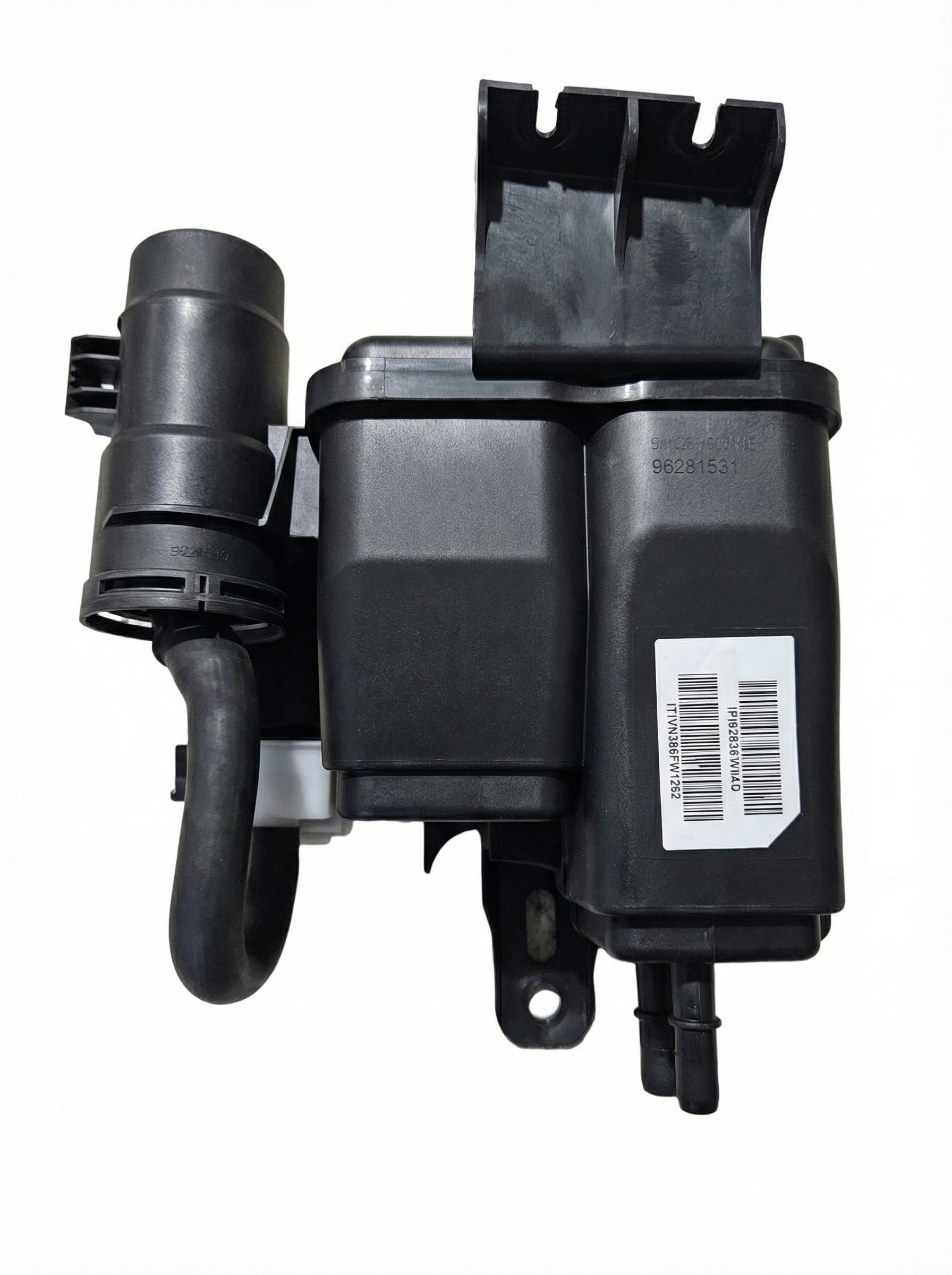
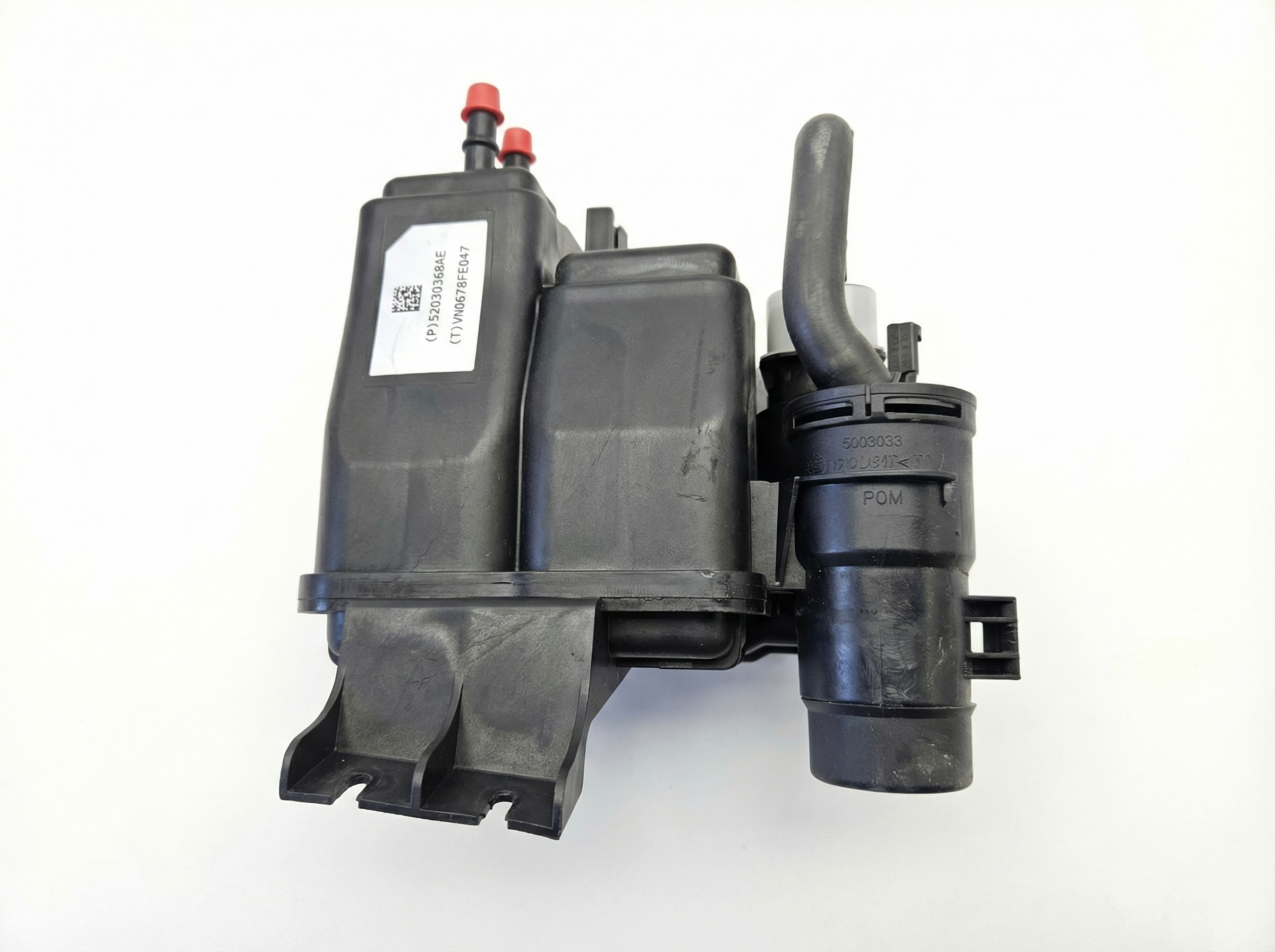
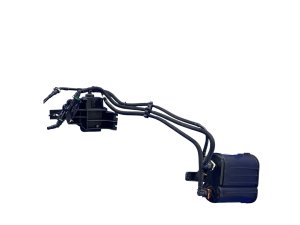
Est. part cost: $200 - $350 - Faulty EVAP System Integrity Module (ESIM) 🟡 Medium Probability → Shop Vapor Canister The ESIM (also called a leak detection pump or detector) is a known high-failure-rate component on Chrysler vehicles. It contains weights and a switch to detect pressure changes and can fail internally, causing it to report a leak when none exists.
How to confirm: The ESIM can be tested with a hand-held vacuum/pressure pump, but for most DIY mechanics, it is difficult to test accurately. It is often replaced after a smoke test reveals no other visible leaks. A professional scan tool can also command the EVAP system test to run, which helps isolate the fault.
Typical fix: Replace the ESIM. It is located on the charcoal canister, typically accessible from a rear wheel well, and is removed with a quarter-turn twist. 🎬 Watch: Pro tips for replacing the ESIM leak detector.
Est. part cost: $30 - $60 - Cracked or Disconnected EVAP Hoses ⚪ Low Probability The plastic and rubber hoses in the EVAP system can become brittle over time due to heat and exposure, developing small cracks, especially at connection points.
How to confirm: Visually inspect all accessible EVAP lines, especially the connections at the purge valve in the engine bay and around the charcoal canister in the rear. A smoke test is the most effective way to find a small hose leak.
Typical fix: Replace the cracked section of hose or the damaged connector.
Est. part cost: $10 - $50
Rare But Worth Checking
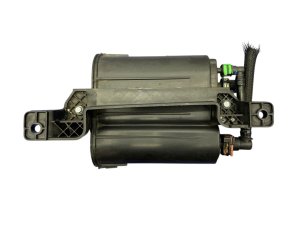
- Cracked Charcoal Canister: → Shop Vapor Canister The canister itself can develop a hairline crack from road debris impact. This is usually found only with a smoke test after all other common causes have been ruled out.
- Leaking Fuel Tank Seal: → Shop Fuel Tank The seal for the fuel pump module on top of the gas tank can degrade and cause a small leak, though this is uncommon.
- Faulty Fuel Tank Pressure (FTP) Sensor: → Shop Fuel Tank An inaccurate FTP sensor can report pressure values that the PCM misinterprets as a leak, even when the system is sealed. This is an uncommon cause and may be accompanied by other codes.
Diagnosis Steps
- Inspect the Capless Fuel Filler: Open the fuel door and inspect the internal flap. Ensure it's clean, free of debris, and springs back to a closed position properly.
- Clear the Code and Drive: After checking the filler neck, clear the code with a scanner and drive for a few days to see if it returns. Sometimes a temporary sealing issue can trigger the code.
- Inspect and Test the Purge Valve: Locate the purge valve on top of the engine under the plastic cover. Check its electrical connection. Remove the valve and try to blow air through it. If air passes, it's faulty and needs replacement. You can also test its coil resistance with a multimeter, which should be 14-30 ohms.
- Visually Inspect Hoses: Check all visible EVAP hoses in the engine bay and around the rear wheel wells for obvious cracks, brittleness, or loose connections.
- Perform a Smoke Test: If the above steps do not reveal the cause, the most effective next step is to introduce smoke into the EVAP system using a smoke machine. This will make even very small leaks visible 🎬 See how to perform a smoke test on this engine. at their source (e.g., a cracked hose, filler neck seal, ESIM seal, or canister).
- Inspect ESIM and Canister: During the smoke test, pay close attention to the ESIM and where it mounts to the charcoal canister, as this is a common leak point. The canister and ESIM are located near the rear of the vehicle, accessible by removing the passenger side rear wheel and inner fender liner.
Parts You'll Likely Need
- EVAP Purge Valve
(OEM #4627694AB)— This is the most common failure point on the 3.6L Pentastar engine that causes a P0442 code. It's an inexpensive and easy part to replace as a first step. This part number supersedes 4627694AA. 🎬 Watch: Step-by-step purge valve replacement on a Pacifica Hybrid.
Trusted brands: Mopar, Dorman, Standard Motor Products
OEM price range: $50-$75
Aftermarket price range: $35-$60 - EVAP System Integrity Module (ESIM)
(OEM #4861962AD)— This leak detection switch is a frequent failure item on Chrysler vehicles and can incorrectly report a leak. It's often replaced if a smoke test shows no visible leaks. This part number supersedes 4861962AA, 4861962AB, and 4861962AC.
Trusted brands: Mopar, Standard Motor Products
OEM price range: $40-$60
Aftermarket price range: $30-$50 - Fuel Filler Neck
(OEM #68245334AB (Example, verify by VIN))— The seal on the capless fuel filler neck can fail, requiring the replacement of the entire assembly. Part number varies by model year and AWD vs FWD, so confirming with a VIN is essential.
Related Codes That Often Appear With This One
- P0456 — This code indicates a 'very small' EVAP leak. P0442 and P0456 are often caused by the exact same failing components; the size of the leak detected by the PCM determines which code is set.
- P0455 — This indicates a 'large' EVAP leak. If a component fails catastrophically (e.g., a hose pops off completely), you may see this code instead of, or along with, P0442.
- P0441 — This code means 'Incorrect Purge Flow' and often points directly to a malfunctioning EVAP purge valve, a primary cause of P0442.
Technical Service Bulletins (TSBs) & Recalls
- TSB 18-003-21: Addresses an issue on 2018 Pacifica Hybrids where the Powertrain Control Module (PCM) software prevents permanent fault codes from clearing, which can cause a vehicle to fail a state smog check. The fix is a PCM software update.
- TSB 18-001-19 REV. B: This bulletin for the 2018 Pacifica with the 3.6L engine involves a PCM software update to address several potential DTCs, including P0456 (EVAP System Small Leak). If no physical faults are found for a P0442, checking for an available PCM update is a valid diagnostic step, as the logic for small leak detection may have been revised.
Mechanic-Grade Diagnostic Values
- EVAP Purge Valve Solenoid Coil Resistance — expected: 14 to 30 Ohms. Failure: An open circuit (infinite resistance) or a short circuit (near-zero resistance) indicates a failed solenoid.
- ESIM Vacuum Switch Operation — expected: The switch should close (show continuity) when a vacuum of 0.8 to 2.2 inches of water is applied.. Failure: If the switch does not close under the specified vacuum, or is stuck closed with no vacuum, the ESIM is faulty.
Scan Tool Commands That Help
- wiTECH (Dealer Tool) or advanced aftermarket scanner (e.g., Autel): EVAP System Test / Leak Test — This command forces the vehicle's onboard diagnostic sequence for checking the EVAP system integrity. It can be used to confirm if a leak is currently present after a repair, without waiting for multiple drive cycles. It will command the vent valve closed and the purge valve on/off to monitor for pressure changes.
- wiTECH or advanced aftermarket scanner: Close EVAP Vent Valve — This bidirectional control is essential during a smoke test. The vent valve is normally open, so to seal the system and build pressure with smoke, the valve must be commanded shut electronically. If smoke immediately exits the vent filter, it confirms the command is working and the rest of the system can be checked.
Wiring & Ground Locations
- G304 — Behind the right rear quarter panel trim.. This is a major body ground point in the rear of the vehicle, near the charcoal canister and ESIM. A corroded or loose G304 can cause intermittent or faulty operation of the ESIM, leading to false leak codes.
- G102 / G103 / G104 — In the engine compartment, on the left side frame rail or shock tower area.. These are primary engine bay grounds. The EVAP purge solenoid is controlled by the PCM, which relies on these grounds for a stable reference. A poor ground here can affect the solenoid's operation, although it would likely cause other engine codes as well.
- Purge Valve Connector — On the EVAP purge valve, top of the engine.. This 2-pin connector supplies power and control to the purge solenoid. One pin should have battery voltage with the key on. The other is the control wire, which the PCM pulses to ground to open the valve. Checking for voltage here is a key step in diagnosing a P0443 (circuit code) and can help rule out wiring issues for a P0442.
"I Checked Everything" — The Actual Cause
- In some cases for Chrysler vehicles, a smoke test may not reveal any leaks, yet a P0442 or P0456 code persists. The cause can be a faulty ESIM (Evaporative System Integrity Module). The ESIM contains internal weights and a switch to detect pressure changes; it can fail internally and send an incorrect signal to the PCM, reporting a leak when none exists.
- A PCM software glitch can cause a false P0442 or P0456 code. TSB 18-001-19 REV. B for the 2018 Pacifica addresses this, where an update to the PCM software resolves the issue if no physical leaks are found.
OEM Part Supersession History
4627694AA→4627694AB— Likely an internal design or material revision for improved durability, as this is a very high-failure-rate part across the Pentastar engine family.4861962AA, 4861962AB, 4861962AC→4861962AD— Revisions to the ESIM are common to improve the reliability of the internal switch and weight mechanism to prevent false leak reports.
Model Year Variations Within This Range
- 2018: A specific PCM software update (TSB 18-001-19 REV. B) was released to address false P0456 codes. While the TSB is for P0456, the detection logic is closely related to P0442, making a software check relevant for this year if no physical leak is found.
Diagnostic Flowchart
Other Known Issues on This Vehicle
Issues unrelated to this code that are worth knowing about as an owner of this generation:
- 9-Speed Automatic Transmission Harsh Shifting / Failure 🔴 High — Very common on 2017-2019 models. Owners report violent jerking or clunking between gears, hesitation, and sometimes complete transmission failure requiring replacement. Some cases can be improved with a dealer software update (flash). (Ref: Multiple software-related TSBs exist. A common owner experience involves dealers attempting software fixes before recommending mechanical repair.)
- Uconnect Infotainment System Glitches 🟠 Medium — Widespread across all model years. Symptoms include the main screen freezing, becoming unresponsive to touch, random reboots, and unstable Apple CarPlay/Android Auto connections. (Ref: Dealers address this with software updates. Owners often resolve temporary freezes with a 'soft reset' (holding power and tune knobs for 10-15 seconds).)
- Engine Stalling and Electrical Faults 🔴 High — Numerous owner complaints of the engine shutting off while driving, particularly in early model years and hybrids. Also includes issues with parasitic battery drain that can leave the vehicle unable to start. (Ref: NHTSA has multiple investigations and recalls related to engine and electrical issues, including Recall 23V-010 for a wiring harness short on hybrids.)
- Premature Paint Peeling and Bubbling 🟡 Low — Most common on 2017 models, particularly around the hood. Owners report paint bubbling up and peeling off, exposing the metal underneath which can then rust.
Used vs. New Parts: Buying Guide for This Vehicle
When a used part is the smart pick: For this specific repair, buying used parts is generally not recommended for the most common failure items (purge valve, ESIM) because they are known wear items with a high failure rate. A used part may have limited remaining life. A used charcoal canister or fuel filler neck could be a cost-effective option if it comes from a low-mileage, non-corroded donor vehicle and is inspected carefully.
Donor-vehicle mileage cap: roughly under 50000 miles for the part to have meaningful remaining life.
What to inspect on the donor part:
- For a charcoal canister, ensure there are no visible cracks in the plastic housing and all hose ports are intact.
- For a fuel filler neck, inspect the spring-loaded flap for smooth operation and check that the seal is pliable and not cracked or deformed.
- Avoid parts from vehicles in the salt belt, as corrosion can damage the components and their connections.
OEM-only on this vehicle (don't cheap out):
- EVAP Purge Valve
- EVAP System Integrity Module (ESIM)
Aftermarket brands forum-validated for this vehicle:
- Dorman (for structural parts like the canister or filler neck)
- Standard Motor Products (SMP) (for electronic components like the purge valve or ESIM)
Brands owners have reported issues with on this vehicle:
- Unbranded, 'white-box' parts from online marketplaces should be avoided, as their internal components may not meet the precise calibration required for the EVAP system, leading to the code returning.
Real Owner Stories
Aggregated from forums and TSBs cited above. Mileages and costs reflect what owners reported in those sources.
2018 Chrysler Pacifica 3.6L
Symptoms: Check engine light on with codes P0442 and P0456.
What fixed it: The owner discussed these codes in relation to the capless fuel filler system and potential leaks at the ESIM or purge valve.
Source hint: https://www.pacificaforums.com/threads/check-engine-light-p0442-and-p0456.39999/
2017-2024 Chrysler Pacifica
Symptoms: Small EVAP leak detected; owner suspected the capless fuel filler system.
What fixed it: Cleaning the seal area of the capless fuel filler neck with a clean cloth or replacing the filler neck assembly if the seal is damaged.
Source hint: https://bobistheoilguy.com/forums/threads/p0442-and-capless-fuel-filler.373215/
Related OBD-II Codes
Frequently Asked Questions
I have a 2018 Chrysler Pacifica Hybrid; is there a specific TSB for EVAP codes and smog checks?
My 2018 Pacifica with the 3.6L engine has a P0442 code but no physical leaks were found. Is there a software fix?
How can I tell if the purge valve on my 3.6L Pentastar engine has failed?
Where is the ESIM located on the Chrysler Pacifica?
Does the Pacifica use a standard gas cap that could cause a P0442 code?
Can a faulty purge valve cause starting issues on my Pacifica?
Helpful Videos
Used OEM Parts in Stock
New Aftermarket Parts Available


The information in this article is provided for general reference and educational purposes only. Vehicle specifications, procedures, and part compatibility can vary by production date, trim level, and region. Always consult your vehicle's factory service manual and verify part numbers before purchasing or performing repairs. Safety-critical components such as airbags, seat belts, and braking systems should be installed by a qualified professional.
- Chrysler Pacifica:
- 🧭 Diagnostic Flowchart
- 🎬 Helpful Videos
- 🛍️ Shop This Part
- What's Unique About the 2017-2024 Chrysler Pacifica
- Symptoms You May Notice
- Most Likely Causes
- Rare But Worth Checking
- Diagnosis Steps
- Parts You'll Likely Need
- Related Codes That Often Appear With This One
- Technical Service Bulletins (TSBs) & Recalls
- Mechanic-Grade Diagnostic Values
- Scan Tool Commands That Help
- Wiring & Ground Locations
- "I Checked Everything" — The Actual Cause
- OEM Part Supersession History
- Model Year Variations Within This Range
- Other Known Issues on This Vehicle
- Used vs. New Parts: Buying Guide for This Vehicle
- Real Owner Stories
- 2018 Chrysler Pacifica 3.6L
- 2017-2024 Chrysler Pacifica
- Related OBD-II Codes
- Frequently Asked Questions
- 🎟️ Get 5% Off