

P0442 on 2013-2018 Ford C-Max: Causes and Fixes for Small EVAP Leaks
P0442 on a Ford C-Max means a small leak was detected in the evaporative emissions system. The most common cause is a problem with the capless fuel filler neck not sealing correctly. Other likely causes are a faulty canister purge valve or cracked EVAP hoses. A smoke test is the most reliable way to pinpoint the leak.
- P0442 signifies a small leak in the EVAP system, most often caused by a poor seal at the capless fuel filler.
- Before buying parts, carefully clean and inspect the fuel filler opening.
- The second most likely culprit is a faulty canister purge valve, a known issue for this vehicle with an associated recall.
- A smoke test is the most reliable way to find a leak if visual inspection doesn't reveal the cause.
- Driving with this code is not dangerous, but it will cause you to fail an emissions test.
What's Unique About the 2013-2018 Ford C-Max
The 2013-2018 Ford C-Max uses a capless fuel filler system, which can be a common source for this code if the sealing flap is dirty or worn. Additionally, Ford issued a recall (18S32) and a TSB (19-2207) for some vehicles in this year range, including the C-Max, for a faulty canister purge valve (CPV) that could stick open or have a degraded seal, leading to various EVAP codes. While this issue often triggers other codes like P1450 ('Unable to Bleed Up Fuel Tank Vacuum'), a leaking CPV can also be a direct cause of P0442.
Symptoms You May Notice
- Check Engine Light is on
- A faint smell of fuel, particularly around the rear of the vehicle or near the gas cap.
- Difficulty starting immediately after refueling (if the purge valve is stuck open, it can flood the engine with vapors).
- Slightly reduced fuel economy.
- Vehicle may fail an emissions inspection.
- Replacing the charcoal canister when the problem is a much cheaper purge valve or a simple cracked hose.
- Immediately assuming a major component failure before checking the capless fuel filler neck for debris, which is a very common and easy fix.
Most Likely Causes
- Capless Fuel Filler Neck Not Sealing 🔴 High Probability → Shop Fuel Filler Neck The spring-loaded flap in the capless system can accumulate dirt or debris, or the seal can wear out, preventing a proper seal and causing a small leak. This is one of the most common starting points for P0442 on Fords.
How to confirm: Visually inspect the fuel filler opening for any debris, dirt, or damage to the seal. Use the emergency fuel funnel provided with the vehicle to gently open and close the flap to check for smooth operation and proper sealing.
Typical fix: Clean the sealing area of the fuel filler neck with a clean, lint-free cloth. Sometimes a light application of silicone lubricant on the seal can restore its function. If the seal is damaged or the problem persists, the entire fuel filler neck assembly must be replaced.
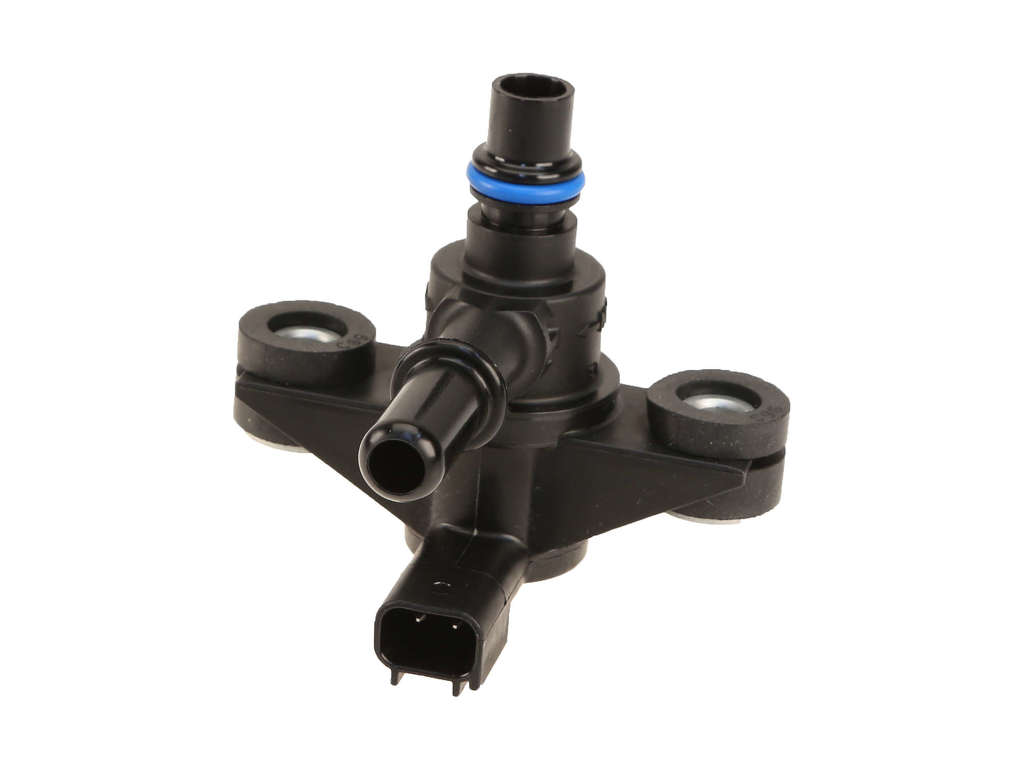
Est. part cost: $50-$150 - Faulty Canister Purge Valve (CPV) 🟡 Medium Probability → Shop Vapor Canister The purge valve on these models is a known failure point, subject to a recall (18S32) and TSB 19-2207. It can leak internally or get stuck, causing an EVAP system leak. This is a very common fix reported by owners in forums.
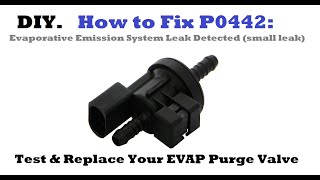
How to confirm: With the engine off, remove the purge valve and try to blow through it. A normally closed valve should not allow air to pass. If it does, it's leaking and needs replacement. A DIY test can be done by applying a 12v source (like a small battery) to the valve's electrical pins; you should hear a distinct click as it opens and closes. The coil resistance should be between 30 and 38 ohms.
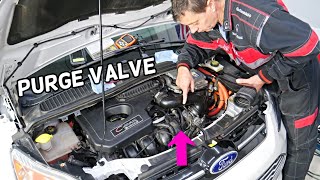
Typical fix: Replace the canister purge valve. It is located in the engine bay and is relatively easy to access after removing the engine cover 🎬 Watch: A quick walkthrough on replacing the purge valve yourself. or air intake components.
Est. part cost: $30-$70 - Cracked or Disconnected EVAP Hoses 🟡 Medium Probability Rubber and plastic hoses become brittle over time due to heat and age, leading to small cracks, especially at connection points or bends.
How to confirm: Visually inspect all accessible EVAP lines running from the fuel tank to the charcoal canister (near the rear axle) and up to the purge valve in the engine bay. A smoke test is the most effective way to find a small leak that isn't visually obvious.
Typical fix: Replace the cracked section of hose or the entire hose assembly. Ensure all connections are secure.
Est. part cost: $10-$50
Rare But Worth Checking
- Leaking Charcoal Canister: → Shop Vapor Canister The plastic housing of the charcoal canister can develop cracks from road debris impact or age. This is less common than valve or hose failures but should be checked if other causes are ruled out. Manufacturer bulletin SSM 49313 notes that on similar Ford platforms, damage to the carbon canister can occur during vehicle transportation, leading to P0442.
- Faulty Canister Vent Solenoid (CVS): → Shop Vapor Canister The vent solenoid, located near the charcoal canister, can fail or stick, creating a leak. It's less common for a small leak code but possible. In some cases, dust or debris can prevent it from closing properly. Its coil resistance should be between 48 and 65 ohms.
- Line Chaffing: As noted in TSB 25-2308 for other Ford models, a rubbing condition between the fuel vapor canister line and the air vent hose can cause an illuminated MIL with code P0442.
Diagnosis Steps
- Check the capless fuel filler neck. Ensure it is clean, free of debris, and the internal flap seals tightly. Use the supplied funnel to operate it a few times.
- Clear the code with an OBD-II scanner and drive for a few days to see if it returns. Sometimes the issue is temporary, like not inserting the fuel nozzle correctly.
- Visually inspect all accessible EVAP hoses and lines for obvious cracks, damage, or loose connections. Pay close attention to rubber elbows and connection points, especially the lines connected to the purge valve in the engine bay. A smoke test may be necessary; NHTSA ODI #10351913 describes a case where a smoke test successfully located a severed fuel line on top of the tank.
- Test the canister purge valve. It is located in the engine bay. With the vehicle off, disconnect it and see if you can blow air through it. If you can, it's faulty. For a more definitive test, use jumper wires to connect it to a 12V battery and listen for a click. Check its resistance; it should be between 30-38 ohms.
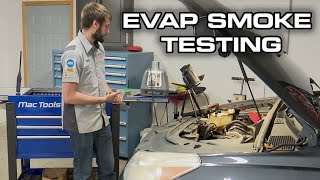
- If the leak source is still not found, the most effective next step is to have a professional or a well-equipped DIYer perform a smoke test. This involves injecting low-pressure smoke into the EVAP system (often through the purge valve line) to visually identify the source of the leak. 🎬 Watch: How to perform a smoke test to find hidden leaks.
- Inspect the canister vent solenoid and the charcoal canister near the rear of the vehicle for any cracks or damage. The vent solenoid can be tested similarly to the purge valve, though it is normally open and should close when energized.
Parts You'll Likely Need
- Canister Purge Valve
(OEM #FV6Z-9C915-A (This part is often superseded, check with dealer. Latest may be AU5Z-9C915-E))— This is a very common failure point on many Ford vehicles of this era, including the C-Max, and is often the cause of various EVAP codes.
Trusted brands: Motorcraft, Bosch, Delphi, Duralast (PV716)
OEM price range: $40-$60
Aftermarket price range: $25-$45 - Fuel Tank Filler Neck
(OEM #DM5Z-9034-E)— If the seal on the capless system fails or is damaged, the entire filler neck assembly must be replaced to fix the leak.
Trusted brands: Motorcraft
OEM price range: $80-$120
Aftermarket price range: $50-$90 - Canister Vent Solenoid
(OEM #Not consistently available as OEM, often replaced with aftermarket.)— Though less common for a P0442, this valve can get stuck or fail, preventing the EVAP system from sealing properly for its self-test.
Trusted brands: Dorman (911-537), Standard Motor Products (CPV110), Carquest Premium (CPC1054)
OEM price range: N/A
Aftermarket price range: $25-$50
Related Codes That Often Appear With This One
- P0456 — This code indicates a 'very small leak,' while P0442 indicates a 'small leak.' They point to the same type of problem, just differing in the detected leak size. It's common to see these codes together or interchangeably depending on conditions.
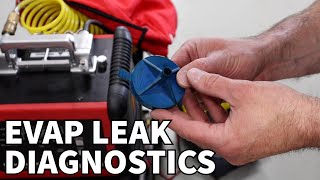
- P1450 — This code means 'Unable to Bleed Up Fuel Tank Vacuum.' It's often related to a stuck-open canister purge valve, which is a common issue on the C-Max and was the subject of recall 18S32 and TSB 19-2207. 🎬 See how to test for the most common cause of P1450. A valve stuck open can also cause the P0442 leak code.
- P0455 — This code indicates a 'gross leak' in the EVAP system. While P0442 is a small leak, sometimes a problem can worsen and trigger the large leak code, or a faulty sensor might misinterpret the leak size.
Technical Service Bulletins (TSBs) & Recalls
- 18S32 - Canister Purge Valve Malfunction: Recall for a stuck-open CPV that can lead to fuel tank deformation and other issues.
- TSB 19-2207: For 2013-2017 C-MAX models, this TSB addresses various EVAP codes (P1450, P0456, etc.) caused by a faulty canister purge valve seal. The fix is to replace the valve and update the PCM software.
- TSB 25-2308: Manufacturer service bulletin noting that some Ford vehicles may exhibit P0442 due to a chaffing or rubbing condition between the fuel vapor canister line and the air vent hose.
- SSM 49313: Manufacturer bulletin stating that P0442 and other EVAP codes may be due to damage to the carbon canister occurring during vehicle transportation.
Platform-Specific Known Issues
- Recall 18S32 / NHTSA 18V735: Ford recalled certain 2013-2018 C-Max vehicles because the canister purge valve (CPV) could stick open, causing excessive vacuum that could deform the fuel tank, leading to inaccurate fuel gauge readings and potential engine stalling.
- Capless Fuel Filler Funnel: Owners report that using the white plastic emergency funnel that comes with the car to actuate the filler flap a few times can help dislodge debris and temporarily solve the sealing issue.
Mechanic-Grade Diagnostic Values
- Canister Purge Valve (CPV) coil resistance — expected: 30 to 38 Ohms. Failure: A reading outside this range indicates a faulty solenoid coil.
- Canister Vent Solenoid (CVS) coil resistance — expected: 48 to 65 Ohms. Failure: A reading outside this range indicates a faulty solenoid coil.
- Fuel Tank Pressure (FTP) sensor voltage, Key On Engine Off (KOEO) — expected: ~2.6 Volts (system vented to atmosphere). Failure: A significantly different voltage at atmospheric pressure may indicate a faulty sensor or wiring issue.
- Fuel Tank Pressure (FTP) sensor voltage during EVAP test (vacuum applied) — expected: Drops to 1.0 Volts or less. Failure: Failure to drop indicates a blockage or a non-functioning purge valve; a slow rise after the test indicates a leak.
Scan Tool Commands That Help
- Ford IDS, FORScan, or equivalent professional scanner: EVAP System Test / Output State Control (OSC) — This function allows a technician to manually command the Canister Purge Valve (CPV) and Canister Vent Solenoid (CVS) on and off. To test for a stuck-open purge valve, run the engine, command the CPV off (0% duty cycle) and the CVS closed (commanded on), then monitor the FTP sensor PID. If the pressure/voltage drops (indicating vacuum is building), the CPV is leaking internally and must be replaced.
Wiring & Ground Locations
- G105 — Left side of the engine compartment.. This is a major ground point for components in the engine bay. A poor connection here could potentially cause erratic behavior in EVAP system solenoids or sensors located nearby.
- G201 — Left kick panel, inside the cabin.. This ground serves various interior and dash-related modules. While less likely to be a direct cause, it's part of the overall electrical system health check if strange sensor readings are observed.
- FTP Sensor Signal Wire — In the harness running to the PCM.. On some Ford platforms, the FTP sensor signal return wire (often Yellow/Violet) may be shared with the Power Steering Pressure (PSP) sensor. A shorted PSP sensor can send incorrect voltage down this shared line, tricking the PCM into thinking there's an EVAP leak.
"I Checked Everything" — The Actual Cause
- On some Ford vehicles, a P0442 code can be triggered even if the EVAP system is perfectly sealed and passes a smoke test. The root cause can be electrical interference from a faulty Power Steering Pressure (PSP) sensor that shares a signal return wire with the Fuel Tank Pressure (FTP) sensor. An internal short in the PSP sensor can raise the voltage on the signal line, which the PCM misinterprets as a pressure change (leak) in the EVAP system. Disconnecting the PSP sensor is a key diagnostic step if a smoke test finds no leaks.
OEM Part Supersession History
FV6Z-9C915-A→AU5Z-9C915-B, then AU5Z-9C915-E— Revisions to improve the valve's sealing capability and prevent it from sticking, as identified in TSB 19-2207.
Heads up: Using an older part number may lead to a repeat failure. Always use the latest superseded part number available from the dealer for this repair.
Model Year Variations Within This Range
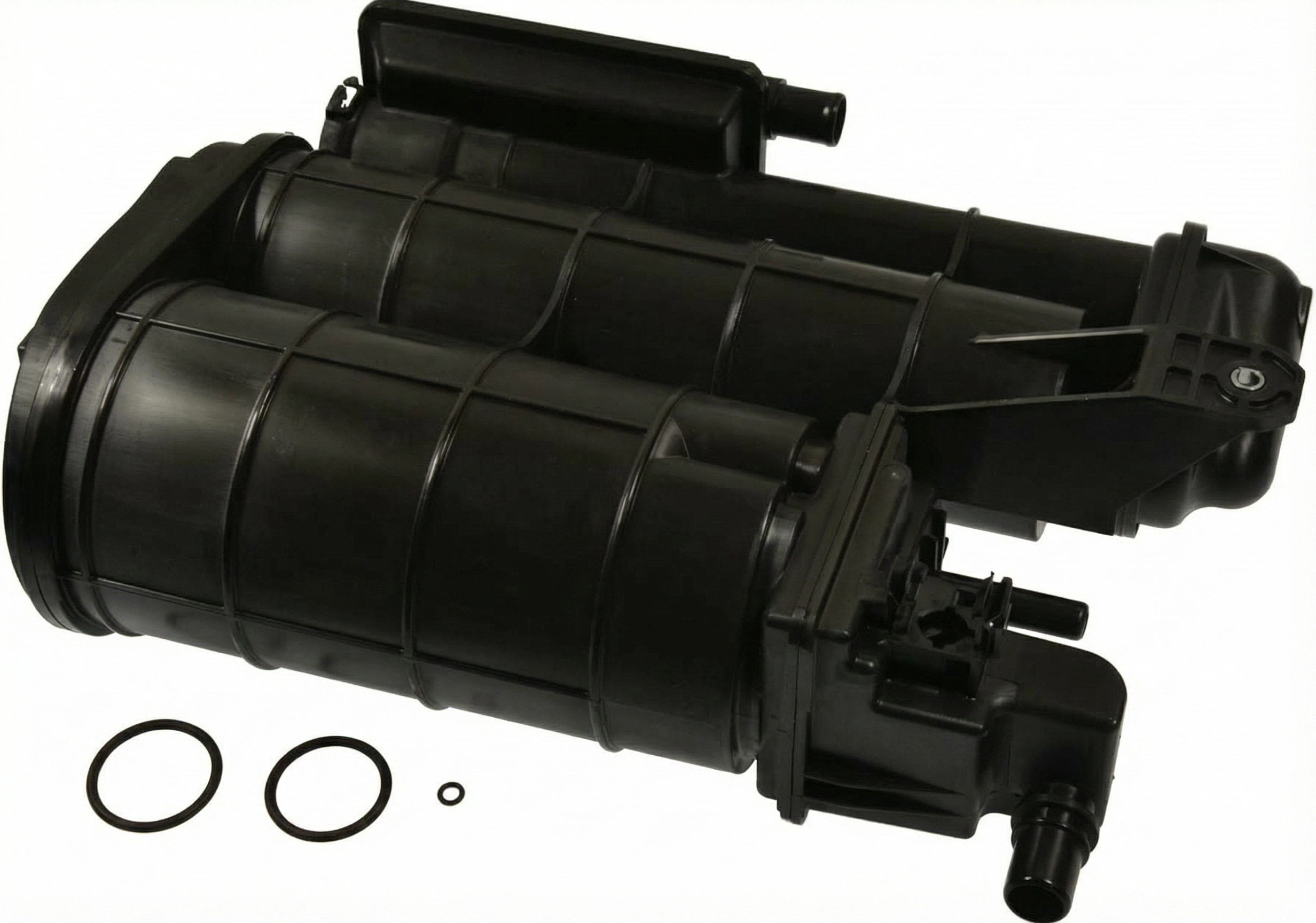
- 2013-2018: The vapor canister is different between the standard C-Max Hybrid and the C-Max Energi (plug-in) models. They are not interchangeable. The standard Hybrid uses part number FV6Z-9D653-K. Ordering the wrong canister will cause fitment problems and persistent EVAP codes.
Diagnostic Flowchart
Other Known Issues on This Vehicle
Issues unrelated to this code that are worth knowing about as an owner of this generation:
- HF35 eCVT Transmission Failures 🔴 High — Common in earlier models (2013-2014), often presenting as a grinding or rubbing noise between 30-70k miles. Less frequent in later model years. (Ref: TSB 14B07 addressed premature bearing failure, but many owners report issues outside this scope.)
- 12-Volt Battery Parasitic Drain 🟠 Medium — A widely reported issue where the 12v battery dies unexpectedly, even after short periods of being parked. Often traced to software glitches or a faulty Audio Control Module (ACM) that fails to shut down. (Ref: Multiple TSBs exist for software updates (e.g., TSB 13-9-19) but don't always solve the root cause.)
- Power Steering Gear Failure 🔴 High — Less common, but can lead to a sudden loss of power steering assist, increasing crash risk at low speeds. (Ref: Recall 14S18 was issued for a small batch of 2014 models with incorrectly assembled steering gears. Another recall covered loss of assist due to sensor faults.)
- Cracked Intercooler Pipe (EcoBoost models) 🟡 Low — Not applicable to the C-Max Hybrid/Energi which are naturally aspirated, but a known issue on other C-Max models with EcoBoost engines, causing power loss.
Used vs. New Parts: Buying Guide for This Vehicle
When a used part is the smart pick: A used OEM fuel filler neck or vapor canister from a low-mileage donor vehicle can be a good value, especially since new aftermarket canisters are not widely available. These are structural parts that are less likely to fail from wear than electronic components.
Donor-vehicle mileage cap: roughly under 80000 miles for the part to have meaningful remaining life.
What to inspect on the donor part:
- For a filler neck, check that the spring-loaded flap moves freely and the sealing surface is clean and undamaged.
- For a vapor canister, inspect the plastic housing for any cracks, especially around mounting tabs and hose connections.
- Avoid parts from vehicles in the rust belt, as corrosion can damage the filler neck and hose fittings.
- Verify the donor vehicle is the same model (Hybrid vs. Energi) to ensure canister compatibility.
OEM-only on this vehicle (don't cheap out):
- Canister Purge Valve: While aftermarket is available, the OEM part has been revised multiple times to fix the root cause of the failure. Using the latest Motorcraft part is the safest bet to avoid a repeat repair.
Aftermarket brands forum-validated for this vehicle:
- Bosch
- Delphi
Brands owners have reported issues with on this vehicle:
- No-name, unbranded parts sold on online marketplaces are a gamble, as the internal valve quality may be poor, leading to premature failure.
Real Owner Stories
Aggregated from forums and TSBs cited above. Mileages and costs reflect what owners reported in those sources.
2013-2018 Ford C-Max
Symptoms: Check engine light on with EVAP codes P0442 and P0456.
What fixed it: A technician performed a smoke test from the purge valve back to the fuel tank and found a disconnected EVAP line; reconnecting the line resolved the leak.
Source hint: Caldwell Automotive Service History in owner_reports
2013-2018 Ford C-Max
Symptoms: Experienced a trifecta of EVAP codes including P0442, P0456, and P1450.
What fixed it: Replaced the canister purge valve (part # AU5Z-9C915-B) as a DIY repair.
Source hint: fordcmaxhybridforum.com
2015 Ford C-Max
Symptoms: Check engine light for EVAP system leak.
What fixed it: Replaced the EVAP purge solenoid, which was easily accessed after removing the air intake.
Source hint: r/cmaxhybrid on Reddit
Documented NHTSA Reports
Ford Owner Report
Symptoms: Check engine light illuminated for code P0442.
What fixed it: An owner reported that the code was caused by a faulty purge valve, noting that the vehicle had already been recalled for this specific component (NHTSA ODI #11540072).
Ford Owner Report
Symptoms: Check engine light for EVAP system small leak and a scent of gas was present.
What fixed it: An owner attempted to change the fuel cap, but the issue remained (NHTSA ODI #10852382).
Related OBD-II Codes
Frequently Asked Questions
Does Recall 18S32 apply to my 2013-2018 Ford C-Max regarding the P0442 code?
I heard there is a TSB for EVAP codes on the 2013-2017 C-Max; what does it involve?
Can I use the emergency fuel funnel to fix a P0442 leak on my C-Max?
What is the specific resistance range I should look for when testing the C-Max purge valve?
Is the P0442 code on my C-Max related to the common transmission or battery drain issues?
Helpful Videos



Used OEM Parts in Stock
New Aftermarket Parts Available


The information in this article is provided for general reference and educational purposes only. Vehicle specifications, procedures, and part compatibility can vary by production date, trim level, and region. Always consult your vehicle's factory service manual and verify part numbers before purchasing or performing repairs. Safety-critical components such as airbags, seat belts, and braking systems should be installed by a qualified professional.
- Ford C-Max:
- 🧭 Diagnostic Flowchart
- 🎬 Helpful Videos
- 🛍️ Shop This Part
- What's Unique About the 2013-2018 Ford C-Max
- Symptoms You May Notice
- Most Likely Causes
- Rare But Worth Checking
- Diagnosis Steps
- Parts You'll Likely Need
- Related Codes That Often Appear With This One
- Technical Service Bulletins (TSBs) & Recalls
- Platform-Specific Known Issues
- Mechanic-Grade Diagnostic Values
- Scan Tool Commands That Help
- Wiring & Ground Locations
- "I Checked Everything" — The Actual Cause
- OEM Part Supersession History
- Model Year Variations Within This Range
- Other Known Issues on This Vehicle
- Used vs. New Parts: Buying Guide for This Vehicle
- Real Owner Stories
- 2013-2018 Ford C-Max
- 2013-2018 Ford C-Max
- 2015 Ford C-Max
- Documented NHTSA Reports
- Ford Owner Report
- Ford Owner Report
- Related OBD-II Codes
- Frequently Asked Questions
- 🎟️ Get 5% Off