

P0442 on 2005-2012 Ford Escape Hybrid: EVAP Small Leak Causes and Fixes
For 2005-2007 models, P0442 is often a bad gas cap. For 2008-2012 models with the capless system, the issue is frequently the fuel filler neck or the canister purge valve on the engine. A gas cap is ~$35, while a purge valve is ~$50 and is a common DIY fix. A filler neck replacement is more involved and costs around $150 for the part.
- For 2005-2007 models, always check or replace the gas cap first.
- For 2008-2012 models, start by cleaning the capless fuel filler neck thoroughly before buying any parts.
- The canister purge valve, located on the engine, is the second most likely culprit for all years and is a relatively simple DIY replacement.
- If you have a 2009 model, be aware of TSB 10-1-3, which indicates a possible software fix.
- A smoke test is the best way to find the leak if it's not one of the common components.
What's Unique About the 2005-2012 Ford Escape Hybrid
The 2005-2012 year range covers two generations of the Escape with a critical difference in the fuel system. First-generation models (2005-2007) use a traditional gas cap, which is a frequent cause of this code when its seal fails. Second-generation models (2008-2012) use Ford's 'Easy Fuel' capless filler neck, which is a well-documented source of EVAP leaks and P0442 codes when the internal spring-loaded flap fails to seal properly due to dirt or wear. Additionally, a technical service bulletin (TSB 10-1-3) exists for some 2009 models where a software update is the required fix.
Generation note: Yes, this range covers the first generation (2005-2007) and the second generation (2008-2012) of the Ford Escape Hybrid. The primary difference for this code is that 1st-gen models have a standard gas cap, while 2nd-gen models have a capless fuel filler. This changes the most likely cause from a simple bad cap to a faulty filler neck assembly.
Symptoms You May Notice
- Check Engine Light is on
- A faint smell of fuel, particularly around the gas cap area or after refueling.
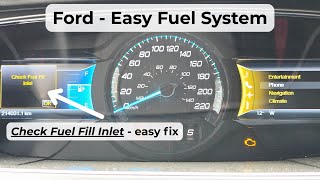
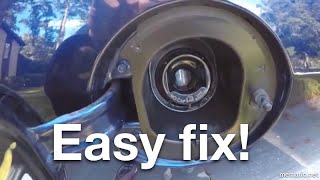
- For 2008+ models, a "Check Fuel Fill Inlet" message may appear on the dash. 🎬 Watch: How to quickly clean and fix the capless inlet.
- In some cases where the purge valve is stuck open, the vehicle may be difficult to start immediately after refueling due to excess fuel vapors flooding the engine.
- Replacing the purge valve when the issue is a dirty capless fuel filler neck on a 2008-2012 model.
- Replacing other EVAP components before checking the gas cap on a 2005-2007 model.
- Assuming any EVAP component is bad without performing or getting a smoke test to confirm the leak's location.
Most Likely Causes
- Loose or Faulty Gas Cap (2005-2007 models) 🔴 High Probability → Shop Fuel Tank Cap The rubber O-ring on the gas cap degrades over time from exposure to fuel vapors, becoming hard, brittle, and cracked, which prevents a proper seal.
How to confirm: Inspect the gas cap for visible cracks or hardness in the rubber O-ring. Ensure it clicks at least 2-3 times when tightened. A definitive diagnosis can be made with a professional smoke test.
Typical fix: Replace the gas cap with a new OEM part. The Motorcraft part number is a common replacement.
Est. part cost: $25-$40 - Faulty Capless Fuel Filler Neck (2008-2012 models) 🔴 High Probability → Shop Fuel Filler Neck The spring-loaded flap in the 'Easy Fuel' system can get stuck with dirt, debris, or fuel residue, or the seal can fail, preventing it from closing properly and sealing the system. This is a known issue on many Ford products with this system.
How to confirm: Visually inspect the fuel filler inlet for debris. Use the plastic funnel that came with the vehicle to insert and remove it several times to try and clear any obstruction and exercise the flap. If the problem persists, a smoke test is the definitive way to confirm a leak at the neck. Some owners report the filler neck being wet with fuel after driving.
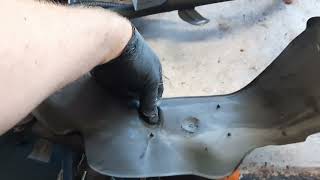
Typical fix: Thoroughly clean the inlet with a rag and some cleaner. If cleaning doesn't work, the entire fuel filler neck assembly must be replaced. Using an OEM part is highly recommended. Replacement involves removing the left rear wheel and drilling out three rivets holding the assembly. 🎬 See this walkthrough on replacing the entire fuel filler neck.
Est. part cost: $120-$200 - Faulty Canister Purge Valve (Vapor Canister Purge Solenoid) 🟡 Medium Probability → Shop Vapor Canister This solenoid valve is a common failure point on many Ford vehicles. It can get stuck open or closed, creating a leak path. It is normally closed when the engine is off.
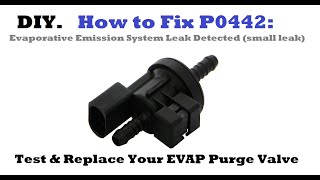
How to confirm: The valve is located on the engine. With the engine off, disconnect the valve and try to blow through it; if air passes, it's stuck open and is faulty. A hard start after refueling is another strong indicator of a stuck-open purge valve. 🎬 Watch: How to test and replace the EVAP purge valve.
Typical fix: Replacement is straightforward, typically held by two 8mm bolts and has one electrical and one hose connection. The Motorcraft part number is a common replacement.
Est. part cost: $40-$70 - Cracked or Disconnected EVAP Hoses ⚪ Low Probability Rubber hoses become brittle with age and exposure to engine heat and can develop small cracks, particularly at connection points.
How to confirm: A visual inspection may reveal obvious cracks, but a smoke test is the most effective way to find a small hose leak. Pay close attention to the hoses around the purge valve in the engine bay and near the charcoal canister under the vehicle. A manufacturer service bulletin for other Ford models, TSB 25-2308, notes that P0442 can be caused by a chaffing or rubbing condition between the fuel vapor canister line and the air vent hose.
Typical fix: Replace the damaged section of the hose. Ensure new clamps are used for a secure connection.
Est. part cost: $10-$30
Rare But Worth Checking
- PCM Software Glitch (2009 models): Ford issued TSB 10-1-3 for some 2009 Escape Hybrids built before 4/6/2009 that may incorrectly set P0442, P0456, or P1450. The fix is to reprogram the PCM with updated software at a dealership. Always verify VIN applicability before proceeding.
- Faulty Canister Vent Solenoid: → Shop Vapor Canister This valve is located near the charcoal canister under the vehicle. It's normally open and closes during EVAP system self-tests. It is less likely to fail than the purge valve but can get stuck and cause a leak.
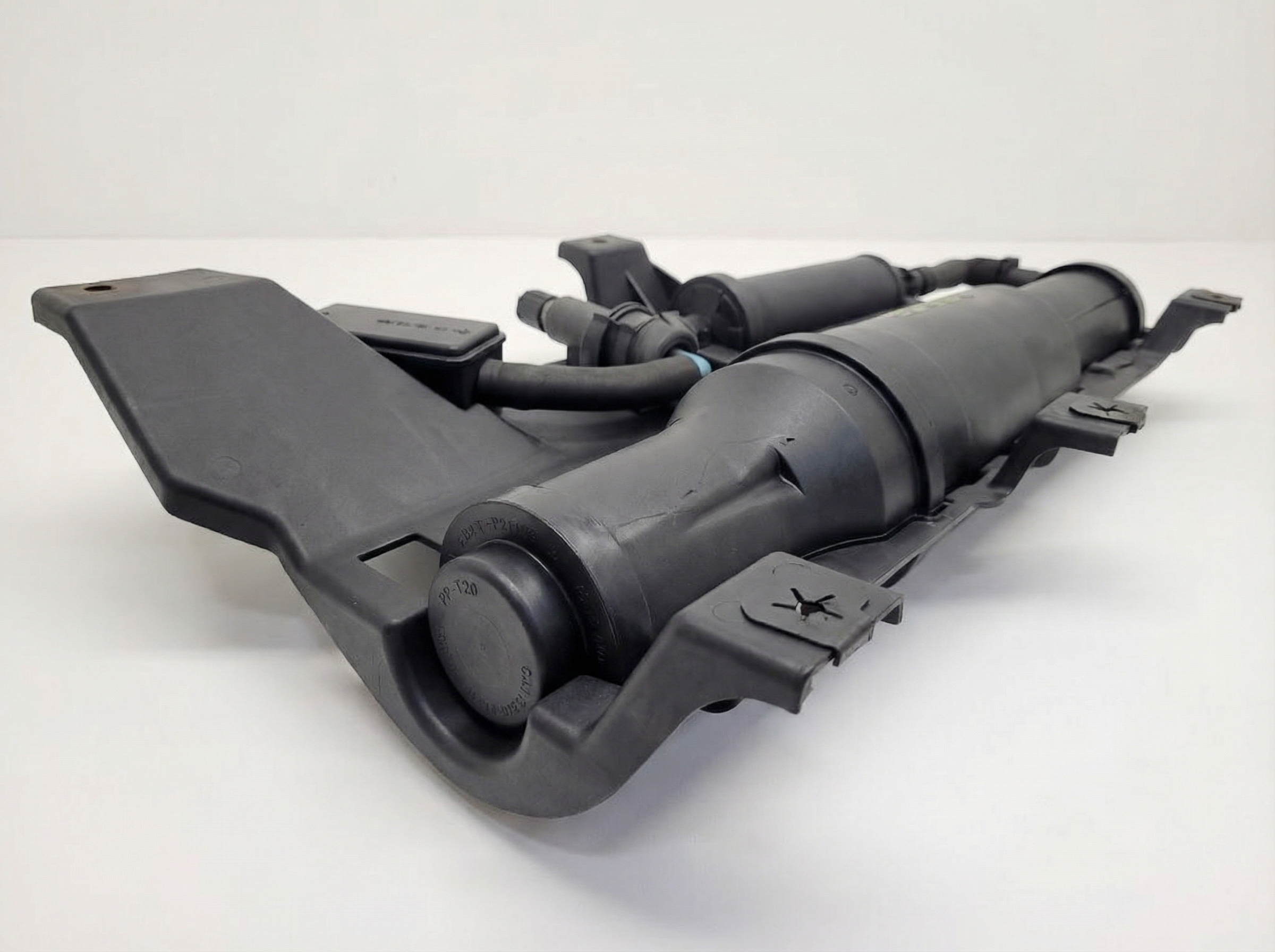
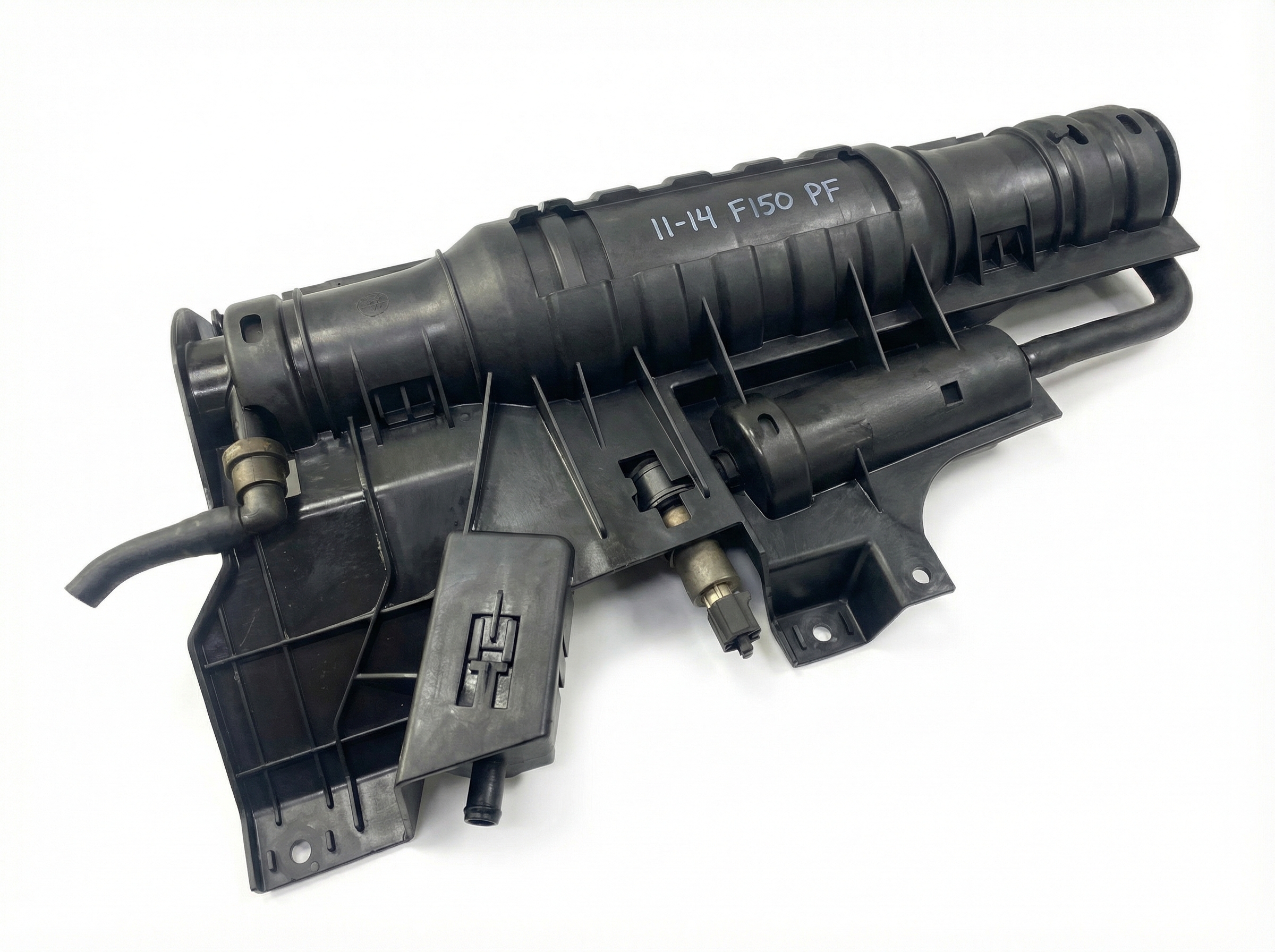
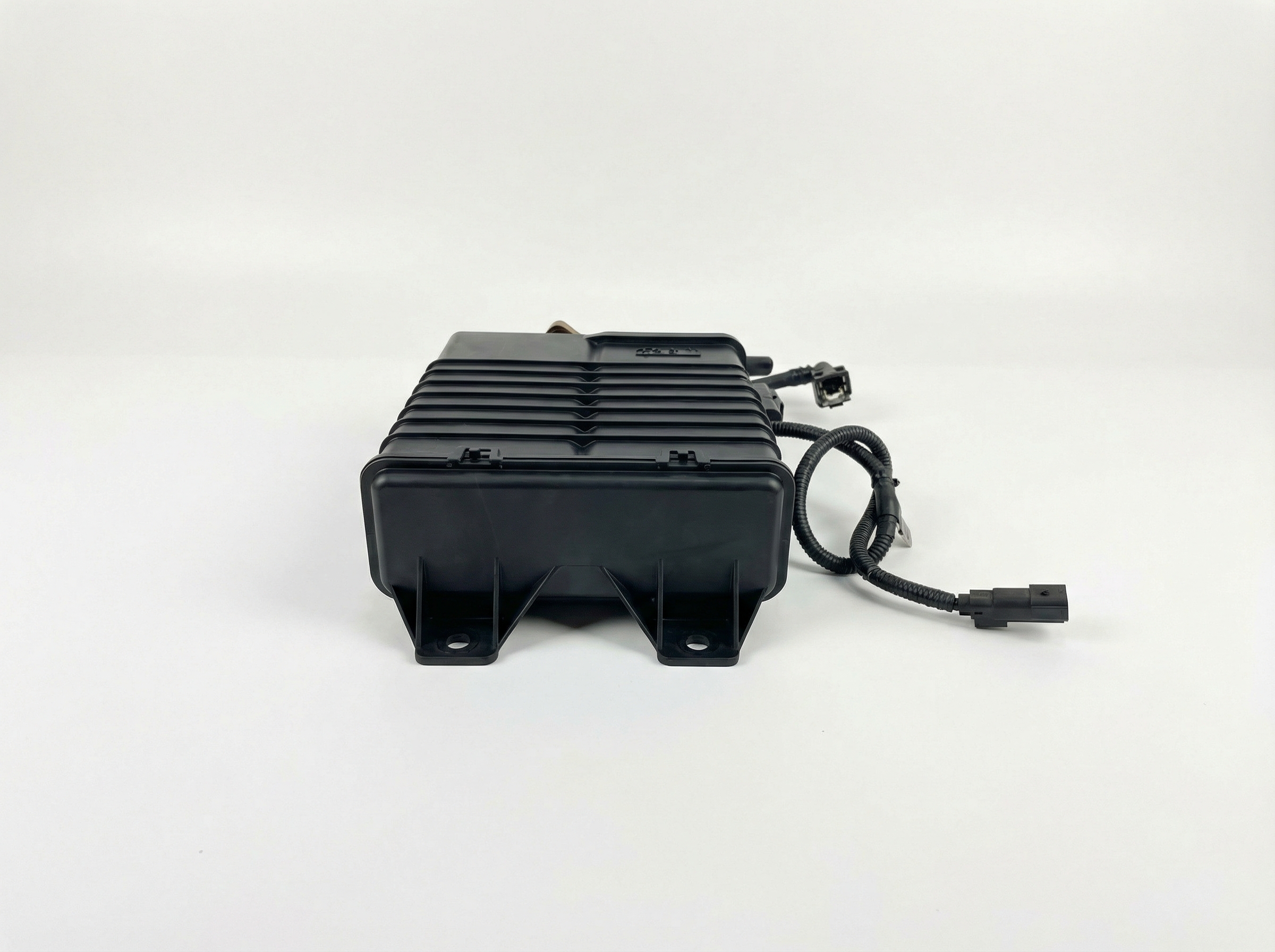
- Cracked Charcoal Canister: → Shop Vapor Canister Physical damage from road debris or internal failure of the canister can cause a leak, though this is less common for a small leak code. Overfilling the fuel tank can also saturate the canister with raw fuel, causing it to fail. Manufacturer bulletin SSM 49313 notes that on some Ford models, damage to the carbon canister can occur during vehicle transportation, leading to P0442.
Diagnosis Steps
- Check for a loose gas cap (2005-2007) or debris in the capless filler neck (2008-2012). Tighten the cap until it clicks multiple times or clean the filler neck with the supplied funnel.
- Clear the code with a scanner and drive for a few days to see if it returns. The EVAP monitor requires specific driving conditions to run, often including a fuel level between 1/4 and 3/4 full.
- If the code returns, visually inspect all accessible EVAP hoses in the engine bay for cracks or disconnections, especially around the purge valve.
- Locate the canister purge valve on the engine. With the engine off, disconnect it and try blowing through it. If air passes, it is stuck open and needs replacement.
- If the above steps do not resolve the issue, a professional smoke test is the most effective next step. This involves feeding pressurized, UV-dyed smoke into the EVAP system to visually identify the source of the leak. NHTSA ODI #10351913 describes a case where a smoke test successfully identified a severed fuel line on top of the tank that was causing a P0442 code.
- For 2009 models, check with a dealer if TSB 10-1-3 applies to your vehicle's VIN before performing extensive repairs.
Parts You'll Likely Need
- Gas Cap (2005-2007)
(OEM #Motorcraft FC964)— This is the most common failure point for the first-generation models. The seal wears out over time.
Trusted brands: Motorcraft
OEM price range: $30-$40
Aftermarket price range: $15-$25 - Canister Purge Valve
(OEM #Motorcraft CX2146 (or Dorman 911-222 as a common aftermarket alternative))— A very common failure item across both generations that causes a small leak when it sticks open.
Trusted brands: Motorcraft, Dorman, Bosch
OEM price range: $50-$70
Aftermarket price range: $30-$50 - Fuel Filler Neck (2008-2012)
(OEM #8L8Z-9034-C (Example for 2008 model, verify by VIN))— The capless system is a known weak point. When cleaning doesn't work, replacement is the only fix.
Trusted brands: Motorcraft
OEM price range: $120-$200
Aftermarket price range: $80-$120
Related Codes That Often Appear With This One
- P0456 — P0456 indicates a 'Very Small Leak Detected'. These codes are very similar, and one may appear after the other if the leak size is on the borderline between the two thresholds. TSB 10-1-3 also groups this code with P0442.
- P1450 — This code means 'Unable To Bleed Up Fuel Tank Vacuum'. It often appears with EVAP leak codes and can point towards a stuck-open purge valve or a restriction in the EVAP system. TSB 10-1-3 also groups this code with P0442.
- P0455 — This code indicates a 'Gross Leak Detected', which is a large leak. While P0442 is a small leak, a component that is failing intermittently could trigger either code at different times.
Technical Service Bulletins (TSBs) & Recalls
- TSB 10-1-3 - For some 2009 Escape Hybrid models, a PCM re-calibration may be necessary to resolve DTCs P0442, P0456, or P1450.
- TSB 25-2308 - A manufacturer bulletin for other Ford models noting that P0442 may be due to a chaffing or rubbing condition between the fuel vapor canister line and the air vent hose.
- SSM 49313 - A manufacturer service message noting that P0442 can be caused by damage to the carbon canister occurring during vehicle transportation.
Platform-Specific Known Issues
- TSB 10-1-3: Some 2009 Escape Hybrids built before April 6, 2009 may require a PCM reflash to correct a false P0442 code.
Mechanic-Grade Diagnostic Values
- Fuel Tank Pressure (FTP) Sensor Voltage, Key On Engine Off (KOEO) — expected: 2.6V - 2.7V. Failure: A significant deviation from this voltage at atmospheric pressure indicates a faulty sensor.
- Fuel Tank Pressure (FTP) Sensor Reading during Purge — expected: -2.0 to -4.0 in. H2O. Failure: If the pressure does not go negative, it indicates a blockage or a non-functioning purge valve.
- Fuel Tank Pressure (FTP) Sensor Reading for Small Leak Test — expected: Pressure should rise, but not exceed 2.5 in. H2O after the system is sealed.. Failure: If the pressure does not rise above this threshold, the PCM flags a P0442 leak.
Scan Tool Commands That Help
- Ford IDS (Integrated Diagnostic System): Powertrain -> Datalogger -> Manual EVAP Test — This function allows a technician to manually command the canister purge and vent valves to seal the system and monitor the Fuel Tank Pressure (FTP) sensor to verify a leak. It can confirm the presence of a leak before using a smoke machine.
- Ford IDS (Integrated Diagnostic System) or equivalent (e.g., FORScan): EVAP Canister Vent Valve Control — To command the normally-open vent valve to close, which is a required step to seal the system for a smoke test. This tests the functionality of the vent valve itself and allows the rest of the system to be checked for leaks.
Wiring & Ground Locations
- G101 / G109 — Rear of engine compartment, on the firewall.. These are primary grounds for the engine compartment. A poor ground here could affect the operation of PCM-controlled solenoids like the canister purge valve.
- G106 — Left rear of engine compartment, on the bulkhead.. Another critical engine compartment ground. Intermittent or poor connections can cause erratic behavior of electronic components, including EVAP valves.
- G300 — Under the driver's seat.. This is a body ground. While less likely to be the primary cause, it could affect modules that communicate with the PCM regarding vehicle status needed to run the EVAP monitor.
Real Owner Repair Stories
- Electric Vehicle Forums user (2006 Ford Escape Hybrid) — Check Engine Light with code P0442.
❌ Tried (didn't work) Clearing the code with a scan tool.
✅ What actually fixed it The user cleared the P0442 code, and a few days later, a P0456 (Very Small Leak) code appeared. The user noted that TSB 10-1-3 (which applies to later models) also references this group of codes and suspected a PCM software issue or a very borderline leak. The final fix was not posted, but the story highlights the close relationship between P0442 and P0456. - NHTSA ODI #11540072 — An owner reported the check engine light came on due to code P0442, which was caused by a faulty purge valve.
- NHTSA ODI #10852382 — An owner reported that the scent of gas was present along with code P0442; changing the fuel cap did not resolve the issue.
"I Checked Everything" — The Actual Cause
- A common scenario is for a smoke test to show no external leaks from hoses, the filler neck, or the canister. In these cases, the canister purge valve on the engine is often the culprit. It can leak internally, allowing vacuum from the intake manifold to pull on the EVAP system when it should be sealed. This internal leak won't be visible with smoke but will cause the system to fail its pressure-hold test, triggering the P0442 code.
OEM Part Supersession History
8L8Z-9034-C→8L8Z-9034-E— Part revision by Ford, likely to improve the seal or material durability of the capless fuel filler neck assembly.
Heads up: The original part 8L8Z-9034-C is discontinued. 8L8Z-9034-E is the direct replacement.
Model Year Variations Within This Range
- 2009: TSB 10-1-3 notes that for EVAP diagnostics on the Hybrid model, the ambient temperature must be above 32°F (0°C) and the HVAC system should be set to Defrost. This forces the gasoline engine to run continuously, which is required for the EVAP monitor test to complete.
Diagnostic Flowchart
Other Known Issues on This Vehicle
Issues unrelated to this code that are worth knowing about as an owner of this generation:
- Cracked ABS Tone Ring 🟠 Medium — Very common, especially in regions with road salt. Rust builds up under the ring on the CV axle, forcing it to expand and crack.
- Motor Electronics Cooling System (MECS) Pump Failure 🔴 High — Extremely common on 2005-2008 models. The original brushed pump fails, causing the hybrid electronics to overheat. (Ref: Recall 14S19 (NHTSA 14V526000))
- HVAC Blend Door Actuator Failure 🟡 Low — Common across many Ford models of this era. The plastic gears inside the actuator strip, causing a loss of temperature control. (Ref: TSB 09-12-6 (mentioned for similar models))
- Hybrid Battery Blend Door Actuator Failure 🟠 Medium — A known issue where the actuator for the high-voltage battery's cooling/heating air fails.
Used vs. New Parts: Buying Guide for This Vehicle
When a used part is the smart pick: Used parts are generally not recommended for resolving P0442. The most common failure items (gas cap seal, filler neck seal, purge valve diaphragm) are wear-and-tear components. A used part will have unknown remaining life and may fail soon after installation, restarting the diagnostic process.
Donor-vehicle mileage cap: roughly under 50000 miles for the part to have meaningful remaining life.
What to inspect on the donor part:
- For a capless filler neck, inspect the spring-loaded flap for smooth operation and the seal for any visible nicks or hardening.
- For a purge valve, ensure the electrical connector pins are clean and not corroded.
- Avoid parts from vehicles in salt-belt regions, as corrosion can damage the filler neck and solenoid bodies.
OEM-only on this vehicle (don't cheap out):
- Fuel Filler Neck (Capless): Aftermarket versions are available, but the seal quality can be inconsistent. Given the labor to replace it (drilling rivets), using a genuine Motorcraft part is a wise investment to ensure a proper seal.
- Gas Cap (2005-2007): While many cheap aftermarket caps are sold, they are a frequent cause of repeat P0442 codes. A genuine Motorcraft cap is strongly recommended for its proven seal quality.
Aftermarket brands forum-validated for this vehicle:
- Dorman (for Canister Purge Valve): Dorman is a widely available aftermarket alternative for the purge valve and is generally considered a reliable replacement.
Brands owners have reported issues with on this vehicle:
- No-name or unbranded gas caps and purge valves from online marketplaces often use lower-quality seals and materials that fail prematurely.
Real Owner Stories
Aggregated from forums and TSBs cited above. Mileages and costs reflect what owners reported in those sources.
2009 Ford Escape Hybrid
Symptoms: Check engine light on with a DTC P0442. A smoke test was performed but found no leak.
What fixed it: Replaced with an aftermarket filler neck.
Source hint: Ford Truck Enthusiasts Forums
2011 Ford Escape Hybrid
Symptoms: Smelling fuel and finding the filler neck wet after refueling.
What fixed it: Replacement of the filler neck assembly.
Source hint: BobIsTheOilGuy.com thread titled 'P0442 and capless fuel filler'
Related OBD-II Codes
Frequently Asked Questions
I have a 2009 Ford Escape Hybrid with code P0442; is there a known software issue for this?
My 2010 Escape Hybrid shows a 'Check Fuel Fill Inlet' message. What does this mean?
Why does my Escape Hybrid struggle to start only after I fill up the gas tank?
Can I use any gas cap to fix P0442 on my 2006 Escape Hybrid?
I'm seeing fuel wetness around the filler neck of my 2011 model. Is this related to P0442?
Does the Mercury Mariner Hybrid have these same EVAP problems?
Helpful Videos


Used OEM Parts in Stock

New Aftermarket Parts Available


The information in this article is provided for general reference and educational purposes only. Vehicle specifications, procedures, and part compatibility can vary by production date, trim level, and region. Always consult your vehicle's factory service manual and verify part numbers before purchasing or performing repairs. Safety-critical components such as airbags, seat belts, and braking systems should be installed by a qualified professional.
- Ford Escape Hybrid:
- 🧭 Diagnostic Flowchart
- 🎬 Helpful Videos
- 🛍️ Shop This Part
- What's Unique About the 2005-2012 Ford Escape Hybrid
- Symptoms You May Notice
- Most Likely Causes
- Rare But Worth Checking
- Diagnosis Steps
- Parts You'll Likely Need
- Related Codes That Often Appear With This One
- Technical Service Bulletins (TSBs) & Recalls
- Platform-Specific Known Issues
- Mechanic-Grade Diagnostic Values
- Scan Tool Commands That Help
- Wiring & Ground Locations
- Real Owner Repair Stories
- "I Checked Everything" — The Actual Cause
- OEM Part Supersession History
- Model Year Variations Within This Range
- Other Known Issues on This Vehicle
- Used vs. New Parts: Buying Guide for This Vehicle
- Real Owner Stories
- 2009 Ford Escape Hybrid
- 2011 Ford Escape Hybrid
- Related OBD-II Codes
- Frequently Asked Questions
- 🎟️ Get 5% Off