

P0442 on 2005-2014 Ford Mustang: EVAP Small Leak Causes and Fixes
On a 2005-2009 Mustang, P0442 is most often a bad gas cap. On 2010-2014 models with the capless system, the fuel filler neck is the most likely culprit. A smoke test is the best way to confirm the leak's location.
- For 2005-2009 Mustangs, always check, tighten, and if necessary, replace the gas cap first. Use an OEM part.
- For 2010-2014 Mustangs, the fuel filler neck assembly is a very common failure point and a high-probability cause of this code.
- The Check Engine Light will not clear immediately after the fix. The car must complete one or more drive cycles for the EVAP monitor to run and confirm the repair.
- If the cause isn't obvious, paying a shop for a one-hour diagnostic with a smoke machine is the fastest way to find the leak and can save you money on replacing incorrect parts.
What's Unique About the 2005-2014 Ford Mustang

The 2005-2014 Mustang (S197 platform) has a critical split in how this code should be diagnosed. 2005-2009 models use a traditional gas cap, which is the most common failure point. In 2010, Ford introduced the 'Easy Fuel' capless system. For 2010-2014 models, the problem is frequently a worn-out seal in the fuel filler neck assembly, a well-documented issue on these cars that often presents with a "Check Fuel Inlet" message. Ignoring this generational difference is the biggest pitfall in diagnosing P0442 on this Mustang.
Generation note: This guide covers the S197 generation Ford Mustang, which includes a significant update. The primary difference for code P0442 is the fuel filler system. 2005-2009 models have a standard gas cap. 2010-2014 models have a capless fuel filler neck, which introduces a different common failure point.
Symptoms You May Notice
- Check Engine Light is on
- A faint smell of gasoline, particularly around the rear of the car
- Difficulty filling the gas tank (pump clicks off repeatedly), which can be related to a vent issue
- "Check Fuel Inlet" message on the dashboard for 2010-2014 models
- Replacing the canister purge valve when the actual problem is a bad gas cap (on 2005-2009 models).
- Assuming it's a gas cap issue on a 2010-2014 model, when the capless filler neck is the more likely cause.
Most Likely Causes


- Faulty or Loose Gas Cap (2005-2009 models) 🔴 High Probability → Shop Fuel Tank Cap The rubber O-ring on the gas cap degrades over time, losing its ability to create a perfect seal. Aftermarket caps are often a poor fit and a common source of this code.
How to confirm: First, ensure the cap is tightened until it clicks. If the code returns, inspect the rubber seal for cracks or brittleness. A replacement OEM cap is a cheap and effective test.
Typical fix: Replace the gas cap with a new, high-quality OEM (Motorcraft) part. The common Motorcraft part number is FC-1055.
Est. part cost: $15-$35 - Leaking Fuel Filler Neck (2010-2014 models) 🔴 High Probability → Shop Fuel Filler Neck The capless 'Easy Fuel' system has an internal spring-loaded door with a seal that wears out or gets stuck open from dirt, allowing fuel vapors to escape. This is a very common failure on these specific model years.
How to confirm: A smoke test is the definitive method. A technician will inject smoke into the EVAP system, and it will be seen escaping from the fuel door area if the filler neck is the cause. Some owners first try cleaning the inlet and working the flap with the emergency funnel from the trunk.
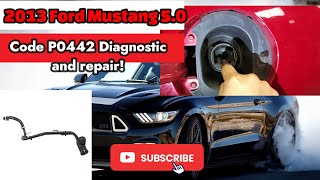
Typical fix: The entire fuel filler neck assembly must be replaced. This involves removing the rear driver's side wheel and fender liner to access the part. On some cars, the muffler may also need to be removed 🎬 Watch: Step-by-step guide to replacing the fuel filler neck assembly. for clearance.
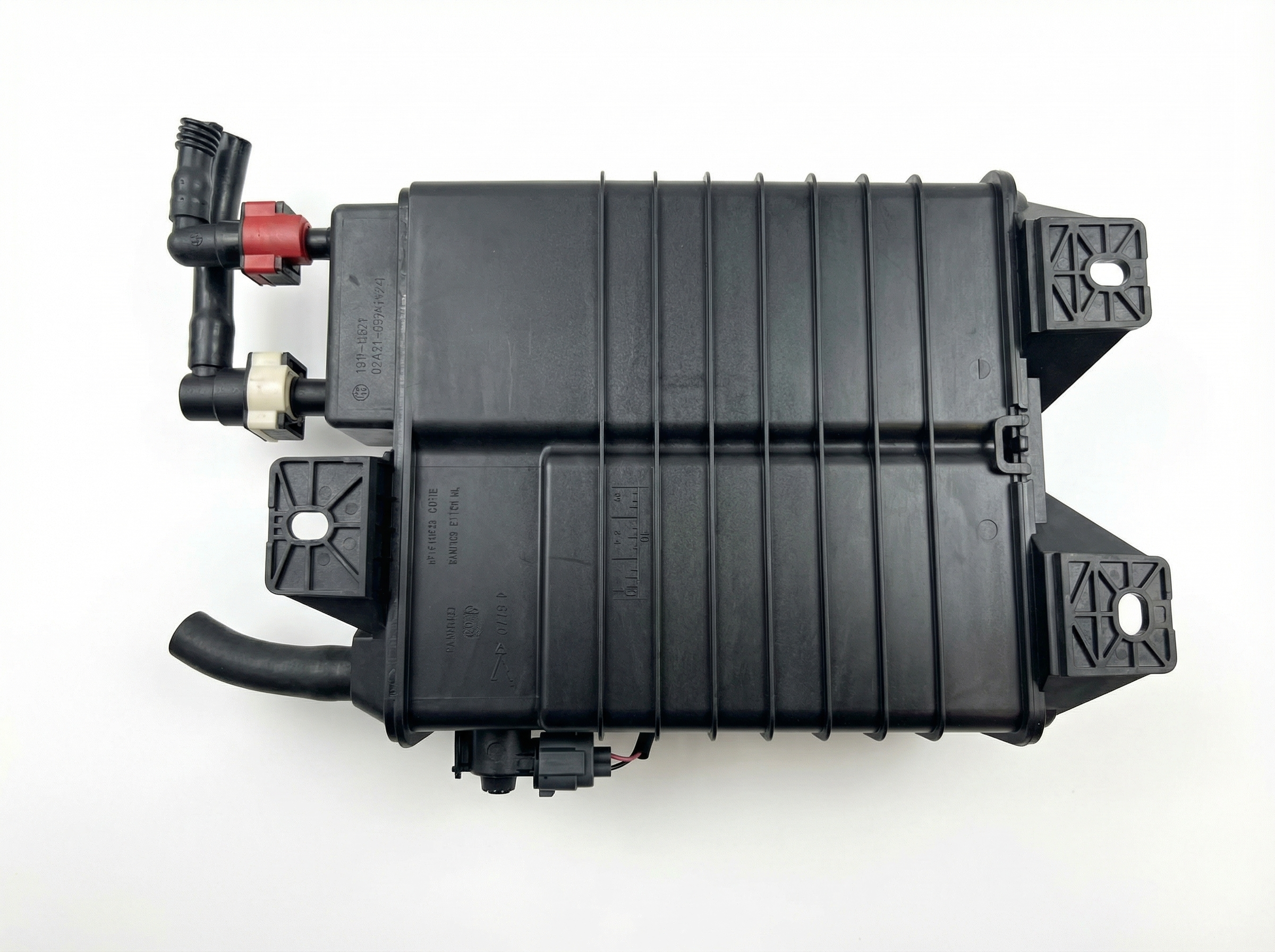
Est. part cost: $100-$160 - Failed Canister Purge Valve (Vapor Management Valve) 🟡 Medium Probability → Shop Vapor Canister This solenoid, which meters fuel vapors into the intake manifold, cycles constantly and can fail by getting stuck open or closed. On the 4.6L V8 (2005-2010), it's on the driver's side inner fender well. On the 5.0L V8 (2011-2014), it's on the front of the engine, under the engine cover.
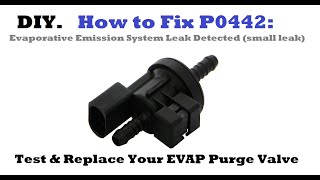
How to confirm: With the engine off, disconnect the valve and try to blow through it; it should be closed and block air. With the engine running, disconnect the hose leading from the canister and feel for vacuum; there should be none at idle. A professional can command it open and closed with a scan tool.
Typical fix: Replace the canister purge valve. It is usually an easy-to-access part. The common Motorcraft part number is CX-2349. 🎬 Watch: A quick walkthrough on replacing the EVAP purge valve.
Est. part cost: $30-$60 - Cracked or Disconnected EVAP Hoses 🟡 Medium Probability Rubber hoses become brittle with age and heat cycles. Hoses near the charcoal canister (under the car, near the tank) or exhaust components are particularly vulnerable. A manufacturer service bulletin for other Ford models, TSB 25-2308, notes that P0442 can be caused by a chaffing or rubbing condition between the fuel vapor canister line and the air vent hose.
How to confirm: Visually inspect all accessible EVAP lines for obvious cracks, melting, or disconnections. A smoke test will quickly reveal the location of a hose leak.
Typical fix: Replace the damaged section of hose. Use appropriate fuel-vapor-rated hose for the repair.
Est. part cost: $10-$25
Rare But Worth Checking
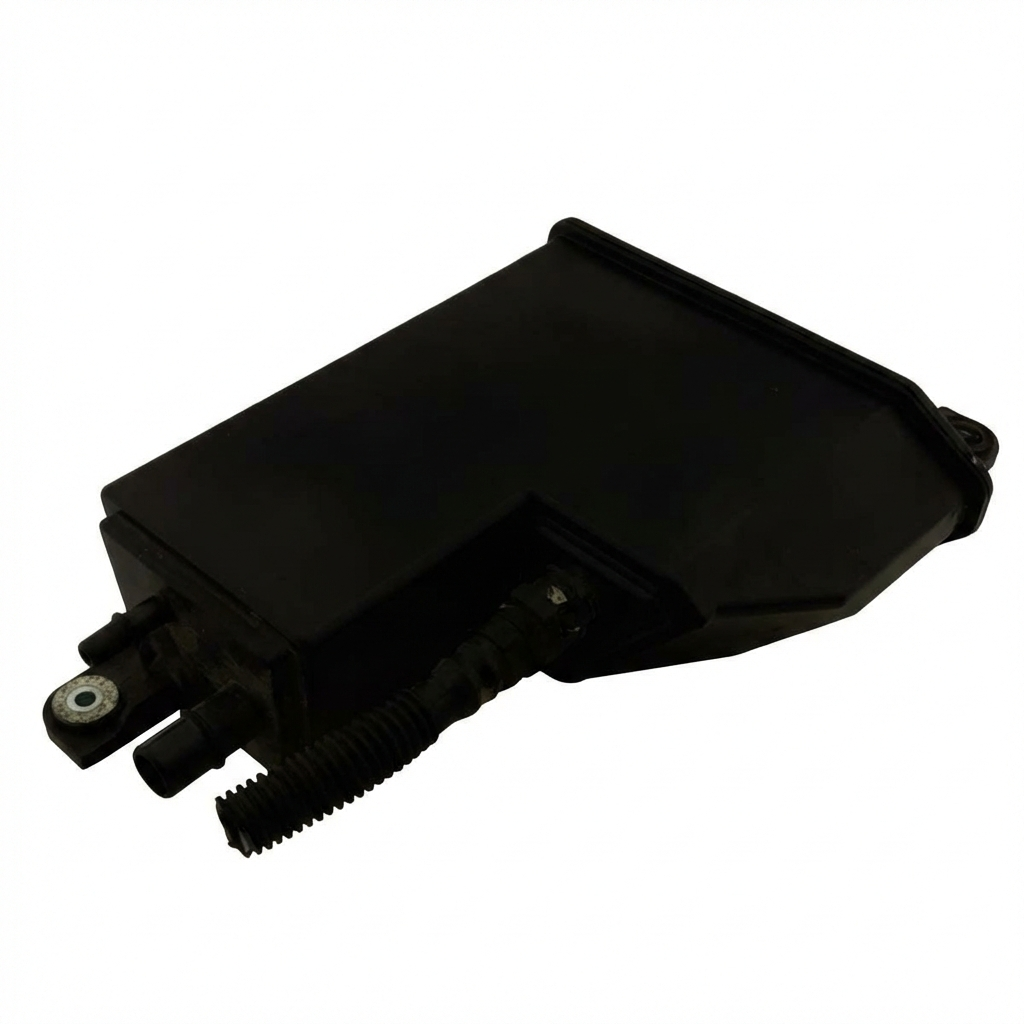
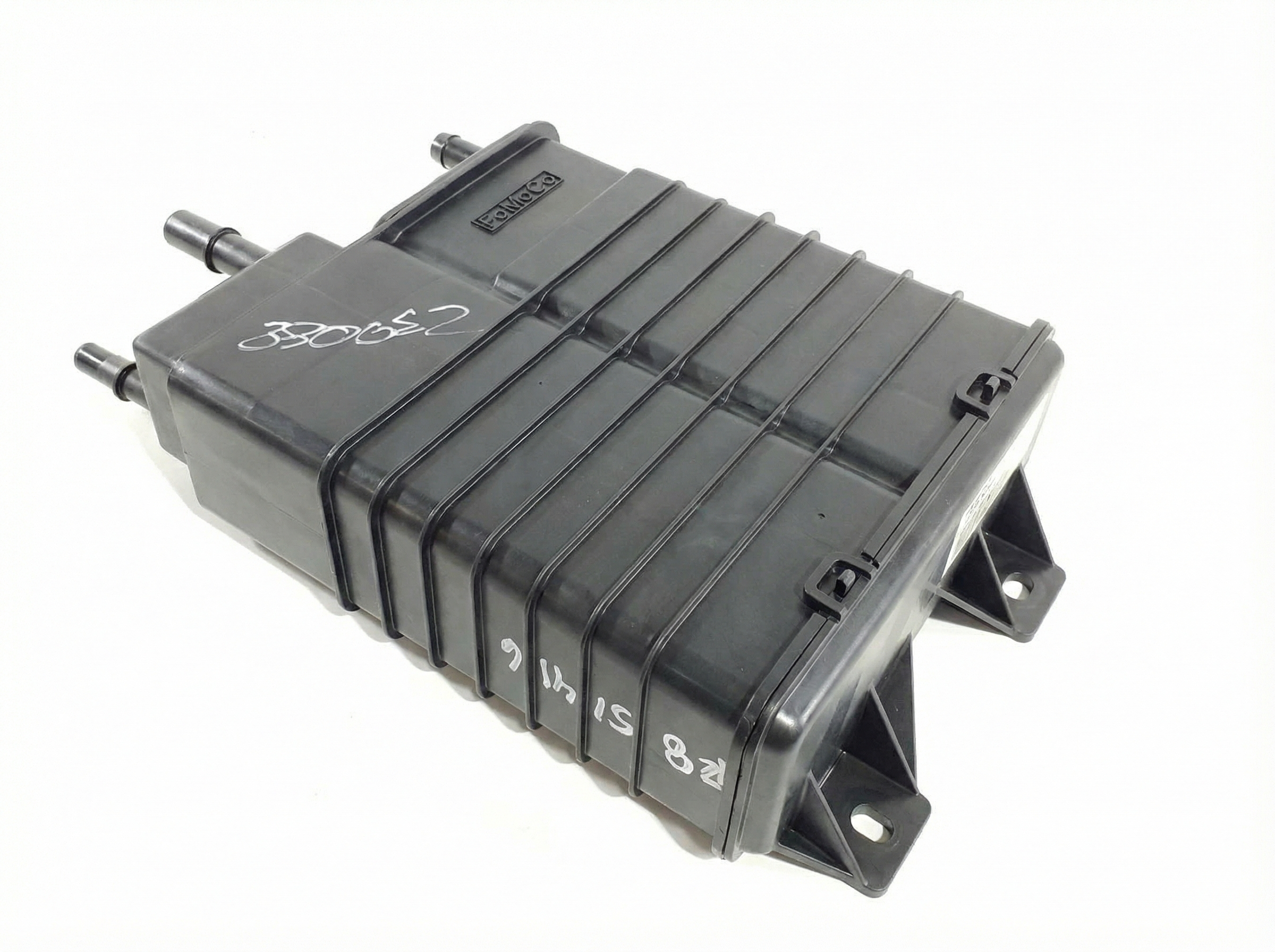
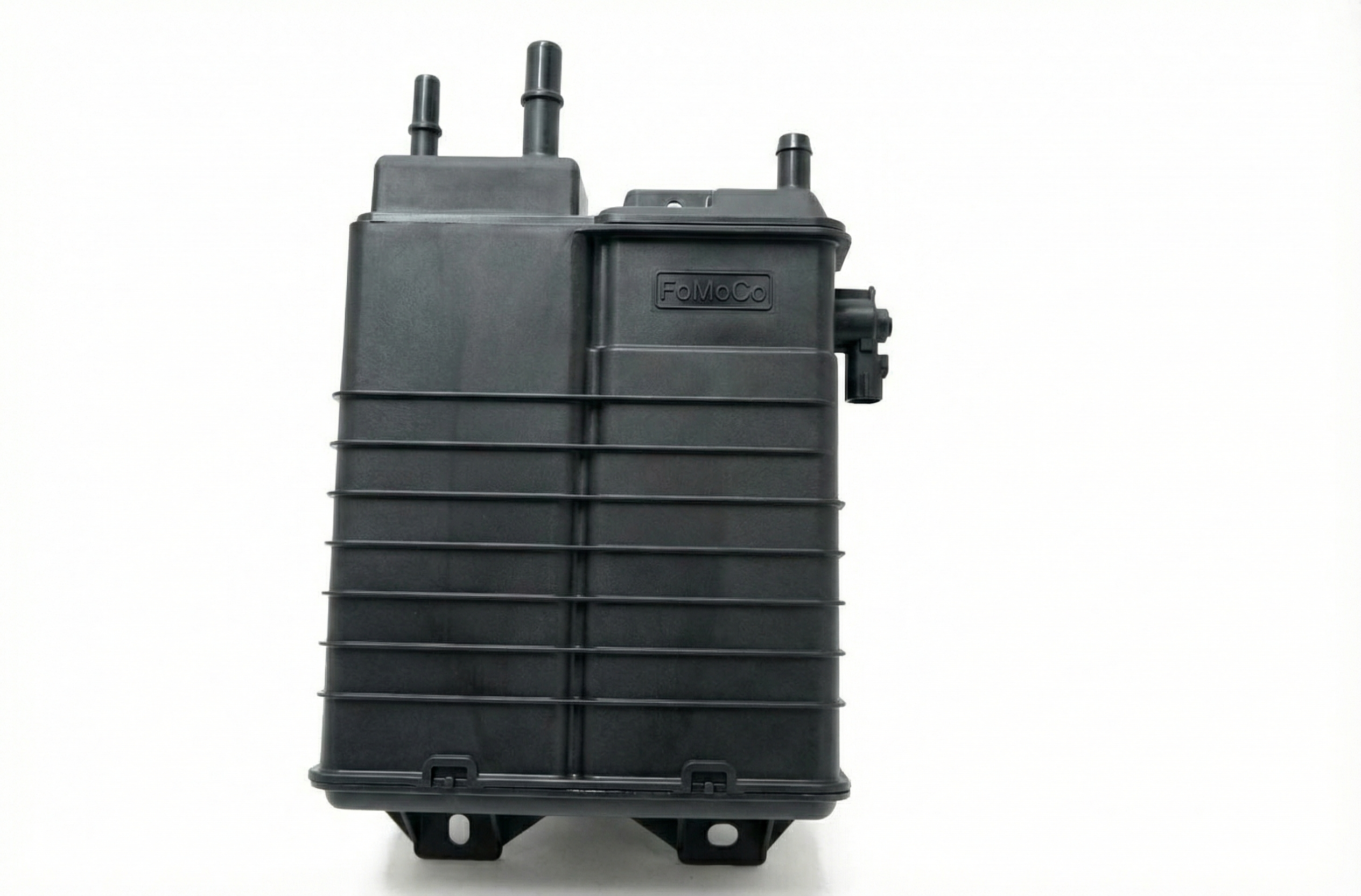
- Leaking Charcoal Canister: → Shop Vapor Canister While the canister itself can crack from road debris or age, it's more common for the hose fittings on the canister to become loose or for the vent solenoid attached to it to fail. Bulletin #SSM 49313 mentions that damage to the carbon canister, sometimes occurring during vehicle transportation, can trigger P0442.
- Leaking Fuel Tank Gasket: → Shop Fuel Tank The gasket that seals the fuel pump assembly to the top of the gas tank can degrade and leak, which would be noticeable by a strong fuel smell after filling up. A user on StangNet noted the grommet where the filler neck enters the tank is also a potential leak point.
Diagnosis Steps

- Check the Gas Cap (2005-2009): Ensure the cap is tight. Inspect the seal for cracks. If in doubt, replace it with an OEM cap (Motorcraft FC-1055). Clear the code and drive for a few days.
- Inspect the Capless Filler (2010-2014): Open the fuel door and inspect the opening for debris or damage. Use the emergency funnel from the trunk to work the internal flap back and forth, sometimes with a spray of WD-40, to ensure it seats correctly. If this doesn't work, a smoke test is the next step.
- Visual Inspection: Check the engine bay for the canister purge valve and its connecting hoses. Look for anything obviously cracked or disconnected. The location varies by engine.
- Underbody Inspection: Visually inspect the EVAP hoses and the charcoal canister near the fuel tank for damage or cracks. Pay special attention to hoses near the exhaust and fittings on the canister itself. NHTSA ODI #10351913 describes a case where a mechanic performed a smoke test and found a severed fuel line on top of the tank causing the P0442 code.
- Smoke Test: If the leak isn't obvious, a smoke test is the most effective next step. This involves injecting pressurized smoke into the EVAP system via the purge valve line or a special 🎬 See how a professional smoke test identifies small EVAP leaks. adapter. The leak will be revealed by the escaping smoke. This is the best way to find cracked hoses, a leaking filler neck, or a faulty canister.
- Test Solenoids: A mechanic can use a bi-directional scan tool to command the purge and vent solenoids to open and close, confirming their operation and checking if they seal properly.
Parts You'll Likely Need
- Fuel Tank Filler Neck
(OEM #AR3Z-9034-F (supersedes AR3Z-9034-A, B, C, D, E))— For 2010-2014 models, the internal seal of the capless system is a very common failure point causing a P0442 code.
Trusted brands: Motorcraft, Spectra Premium, ECCPP
OEM price range: $160-$230
Aftermarket price range: $80-$120 - Fuel Cap
(OEM #FC-1055)— For 2005-2009 models, a worn out or loose gas cap is the number one cause of a small EVAP leak.
Trusted brands: Motorcraft, Stant
OEM price range: $25-$35
Aftermarket price range: $10-$20 - Canister Purge Valve / Vapor Management Valve
(OEM #CX-2349 (Motorcraft))— This is a common failure point across all years. It's an electronic solenoid that can fail mechanically, getting stuck open and causing a leak.
Trusted brands: Motorcraft, Bosch, Dorman
OEM price range: $40-$60
Aftermarket price range: $25-$45
Related Codes That Often Appear With This One
- P0456 — P0456 indicates a 'very small' EVAP leak. These codes are closely related and can sometimes be triggered interchangeably depending on the exact test conditions and leak size. They are often seen together when the fuel filler neck is failing.
- P0455 — P0455 indicates a 'large' EVAP leak. If you see P0442 and P0455 together, it might suggest a component that has failed completely, like a hose that has become disconnected or a purge valve stuck wide open.
Technical Service Bulletins (TSBs) & Recalls
- While no TSB is issued specifically for code P0442, Ford TSB 11-5-4 addresses service procedures for the capless fuel system, which is the primary cause of this code on 2010-2014 models. The existence of a TSB for the component highlights its known issues.
- Manufacturer Bulletin #SSM 49313 notes that P0442 and related EVAP codes may be due to damage to the carbon canister.
- Manufacturer Bulletin #TSB 25-2308 indicates that an illuminated MIL with code P0442 may be caused by a chaffing or rubbing condition between the fuel vapor canister line and the air vent hose.
Platform-Specific Known Issues
- 2010-2014 Capless Filler Neck Failure: The 'Easy Fuel' system is notorious for this code. Owners report that cleaning the inlet and exercising the flap with the emergency funnel can be a temporary fix, but replacement is often necessary. A Reddit user on r/AskAMechanic noted, 'I started with trying to clean the fuel filler inlet but ended up replacing the fuel filler neck as that seemed to be the most common cause of the p0442 code.'
- DIY Filler Neck Replacement Video: A detailed YouTube video by user 'P0442 Fix on 2013 Mustang GT' shows the entire process of replacing the fuel filler neck, confirming that the rear wheel, fender liner, and often the muffler must be removed for access. The owner confirmed the new part fixed his P0442 code and allowed him to pass emissions.
Mechanic-Grade Diagnostic Values
- EVAP Canister Vent Valve Solenoid Resistance — expected: 20 - 50 Ohms. Failure: A reading of 0 Ohms (short circuit) or infinite/OL (open circuit) indicates a failed solenoid coil.
- Canister Purge Valve Mechanical Leak Test — expected: No vacuum should be felt.. Failure: If any vacuum is felt on your fingertip, the valve is mechanically stuck open and must be replaced.
Scan Tool Commands That Help
- Ford IDS (or equivalent professional scan tool): EVAP System Leak Test — This is a comprehensive, automated test routine that commands the various solenoids and monitors the Fuel Tank Pressure (FTP) sensor to check the integrity of the entire system. It can often pinpoint the size of a leak (large, small, very small) and confirm a repair without multiple drive cycles.
- Bi-directional Scan Tool: Canister Vent (CV) Solenoid - ON/OFF — This command is essential for performing a smoke test. The vent valve is normally open, so it must be commanded closed ('ON' or 'Not Venting') to seal the EVAP system, allowing the smoke machine to build pressure and reveal external leaks.
Real Owner Repair Stories
- S197Forum.com user 'Pizzle fo shizzle' (2008 Ford Mustang V6) — P0442 check engine light and difficulty filling the fuel tank (pump kept shutting off).
❌ Tried (didn't work) Checking gas cap tightness., Inspecting underhood vacuum lines.
✅ What actually fixed it The user found that the passenger side EVAP vent hose from the tank had melted because it was resting on the exhaust pipe. They bent the exhaust hanger slightly for clearance and replaced the melted section of hose, which resolved both the P0442 code and the fuel filling issue. - YouTube user 'P0442 Fix on 2013 Mustang GT' (2013 Ford Mustang GT) — P0442 code, causing a failed emissions test.
❌ Tried (didn't work) Not specified, but the user went straight for the common failure point.
✅ What actually fixed it The owner replaced the entire fuel filler neck assembly. The video documents the repair process, and the owner confirmed that replacing this part resolved the P0442 code. - NHTSA ODI #11540072 — An owner reported that the check engine light came on due to code P0442, which was caused by a faulty purge valve.
- NHTSA ODI #10852382 — An owner reported that the check engine light came on with code P0442 and a scent of gas was present; even after changing the fuel cap, the issue remained.
"I Checked Everything" — The Actual Cause
- A common scenario where a smoke test shows no leaks is when the Canister Purge Valve (on the engine) is failing by being stuck open internally. A smoke test is typically performed with the engine off and the purge line disconnected to inject smoke, so it cannot detect this specific failure. The leak occurs when the engine is running, as the stuck-open valve creates a vacuum leak from the EVAP system directly into the intake manifold. This is confirmed by testing the valve directly for vacuum at its inlet port with the engine running and the valve electrically disconnected.
Model Year Variations Within This Range
- 2011-2014: The EVAP vapor canister is different for Coupe and Convertible models. They are not interchangeable due to differences in chassis and underbody packaging. Ordering a replacement part requires verifying the vehicle's body style to ensure fitment.
Diagnostic Flowchart
Real Owner Stories
Aggregated from forums and TSBs cited above. Mileages and costs reflect what owners reported in those sources.
2013 Ford Mustang GT
Symptoms: Check engine light with P0442, unable to pass emissions.
What fixed it: Replaced the fuel filler neck.
Cost: $200
Source hint: YouTube comment by 'Big Dad's Moto' on video 'P0442 Fix on 2013 Mustang GT with Fuel Filler Neck Replacement.'
2013 Ford Mustang
Symptoms: Check engine light with code P0442, evap small leak.
What fixed it: A smoke test revealed a leak from the fuel filler neck seal. The entire fuel filler neck had to be replaced to fix the worn-out rubber seal.
Source hint: YouTube comment by 'JVFIX LLC'
2010-2014 Ford Mustang
Symptoms: P0442 code triggered by the capless fuel filler system.
What fixed it: Started with trying to clean the fuel filler inlet but ended up replacing the fuel filler neck as that seemed to be the most common cause.
Source hint: Reddit r/AskAMechanic
2014 Ford Mustang
Symptoms: CEL / Fuel Filler issue.
What fixed it: Diagnosed the issue by starting with the purge valve and ending with a smoke test to definitively locate the leak.
Source hint: The Mustang Source forum thread titled 'CEL / Fuel Filler issue'
Related OBD-II Codes
Frequently Asked Questions
Does the capless fuel filler on my 2010-2014 Mustang have a known issue or TSB for code P0442?
I have a 2005-2009 Mustang. What is the best replacement gas cap to fix P0442?
Why do I get a 'Check Fuel Inlet' message on my dashboard along with P0442?
Where is the canister purge valve located on my Mustang?
Can I fix the capless filler neck on my 2010-2014 Mustang without replacing it?
How hard is it to replace the fuel filler neck to fix this code?
Model Year Variations Within This Range
- 2011-2014: The EVAP vapor canister is different for Coupe and Convertible models. They are not interchangeable due to differences in chassis and underbody packaging. Ordering a replacement part requires verifying the vehicle's body style to ensure fitment.
Helpful Videos
Used OEM Parts in Stock
New Aftermarket Parts Available


The information in this article is provided for general reference and educational purposes only. Vehicle specifications, procedures, and part compatibility can vary by production date, trim level, and region. Always consult your vehicle's factory service manual and verify part numbers before purchasing or performing repairs. Safety-critical components such as airbags, seat belts, and braking systems should be installed by a qualified professional.
- Ford Mustang:
- 🧭 Diagnostic Flowchart
- 🎬 Helpful Videos
- 🛍️ Shop This Part
- What's Unique About the 2005-2014 Ford Mustang
- Symptoms You May Notice
- Most Likely Causes
- Rare But Worth Checking
- Diagnosis Steps
- Parts You'll Likely Need
- Related Codes That Often Appear With This One
- Technical Service Bulletins (TSBs) & Recalls
- Platform-Specific Known Issues
- Mechanic-Grade Diagnostic Values
- Scan Tool Commands That Help
- Real Owner Repair Stories
- "I Checked Everything" — The Actual Cause
- Model Year Variations Within This Range
- Real Owner Stories
- 2013 Ford Mustang GT
- 2013 Ford Mustang
- 2010-2014 Ford Mustang
- 2014 Ford Mustang
- Related OBD-II Codes
- Frequently Asked Questions
- Model Year Variations Within This Range
- 🎟️ Get 5% Off