

P0442 on 2015-2022 GMC Acadia: EVAP Small Leak Causes and Fixes
P0442 on a 2015-2022 Acadia indicates a small EVAP leak, most often caused by a loose or faulty gas cap. If a new cap doesn't fix it, the purge valve is the next likely culprit, especially if accompanied by code P0496. A new gas cap costs about $15-$30, while a purge valve is around $25-$70.
- P0442 signifies a small, non-critical leak in the emissions system; your Acadia is safe to drive.
- Always start with the simplest and most common fix: check that your gas cap is tight. If the seal is old or cracked, replace it.
- If the gas cap isn't the issue, the EVAP purge valve (on the engine) or vent valve (near the gas tank) are the next most likely culprits.
- Finding the exact source of a small leak can be difficult. A smoke test performed by a mechanic is the fastest and most accurate diagnostic method.
- Do not replace expensive parts like the charcoal canister unless a smoke test has confirmed it is the source of the leak.
What's Unique About the 2015-2022 Gmc ACADIA

The 2015-2022 year range covers two distinct generations of the Acadia (1st-gen ending in 2016, 2nd-gen starting in 2017), which may have different EVAP component designs and part numbers. General Motors has issued multiple Technical Service Bulletins (TSBs) for this issue, including #PIE0528, #PIT4943D, and #21-NA-124. TSB #21-NA-124 specifically provides a diagnostic hierarchy for both P0442 and P0455, advising technicians to first check all EVAP line connections for proper seating, then inspect lines for damage, then test the vent valve, and finally test the purge valve, indicating the source can be elusive and requires a methodical approach over simple parts swapping.
Diagnostic Flowchart

Tap your situation to follow the diagnostic path that matches what you're seeing on this vehicle.
Generation note: This range covers the end of the first generation (2015-2016, Lambda platform) and the majority of the second generation (2017-2022, C1XX platform). While the principle of the EVAP system is the same, specific part locations and part numbers differ significantly. For example, the 1st-gen purge valve is typically ACDelco #12690512, while the 🎬 Watch: How to replace the purge valve on 2016 models. 2nd-gen (3.6L V6) uses a different design like ACDelco #12630282. The vent solenoids also differ between generations. The 2017 model year is a split, with the first-generation body style sold as the 'Acadia Limited'.
Symptoms You May Notice
- Check Engine Light is on.
- A faint fuel smell may be present, though this is less common than with larger leaks.
- Difficulty starting the vehicle immediately after refueling, sometimes accompanied by a rough idle for a short period. This symptom strongly points towards a faulty purge valve stuck open.
- Remote start may be disabled by the system when a check engine light is active.
- Replacing the O2 sensors. Oxygen sensors are not part of the EVAP system and will not cause a P0442 code.
- Replacing the charcoal canister when only a valve or hose is bad. The canister itself is often durable; the valves attached to it are more likely to fail. A smoke test is crucial to avoid replacing expensive parts unnecessarily.
Most Likely Causes

- Loose or Faulty Gas Cap 🔴 High Probability → Shop Fuel Tank Cap This is the most common cause for P0442 on any vehicle. The rubber seal on the cap can crack, harden, or get dirty over time, preventing a proper seal. Later models may have a capless fuel filler which can also fail to seal due to debris or a weak spring.
How to confirm: Inspect the gas cap's rubber O-ring for cracks or damage. Ensure it is tightened until it clicks at least once. For capless systems, inspect the flap for debris or damage and try cleaning it.
Typical fix: Tighten or replace the gas cap.
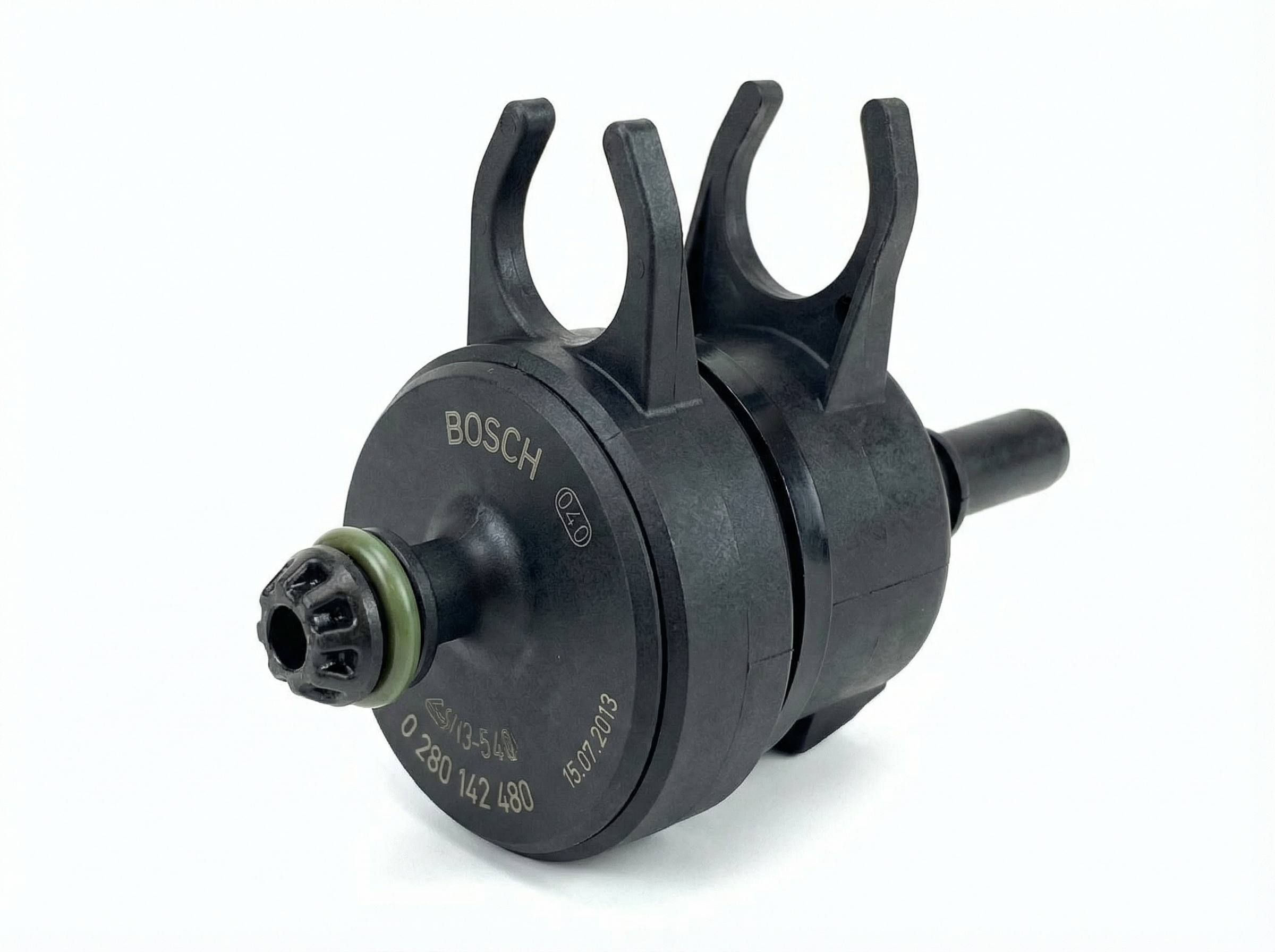
Est. part cost: $15-$30 - Failed EVAP Purge Solenoid/Valve 🔴 High Probability → Shop Vapor Canister The purge valve is an electromechanical part that cycles frequently and is a very common failure point on GM vehicles, including the Acadia and its platform mates. It often fails by sticking open, creating a constant small leak path that triggers P0442 and, frequently, P0496 (EVAP Flow During a Non-Purge Condition). GM issued Special Coverage 18029 for this part on some 2015 models.
How to confirm: With the engine off, the valve should be closed. You can remove the valve and try to blow through it; if air passes, it has failed. A mechanic can command it with a scan tool and check for vacuum; if vacuum is present at the valve when commanded closed with the engine running, it is leaking.
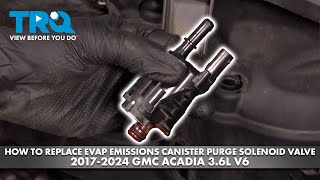
Typical fix: Replace the purge solenoid valve. On most Acadias, it is located on top of the engine and is relatively easy to access with a 10mm socket. 🎬 See this walkthrough for replacing the 2017-2022 purge valve.
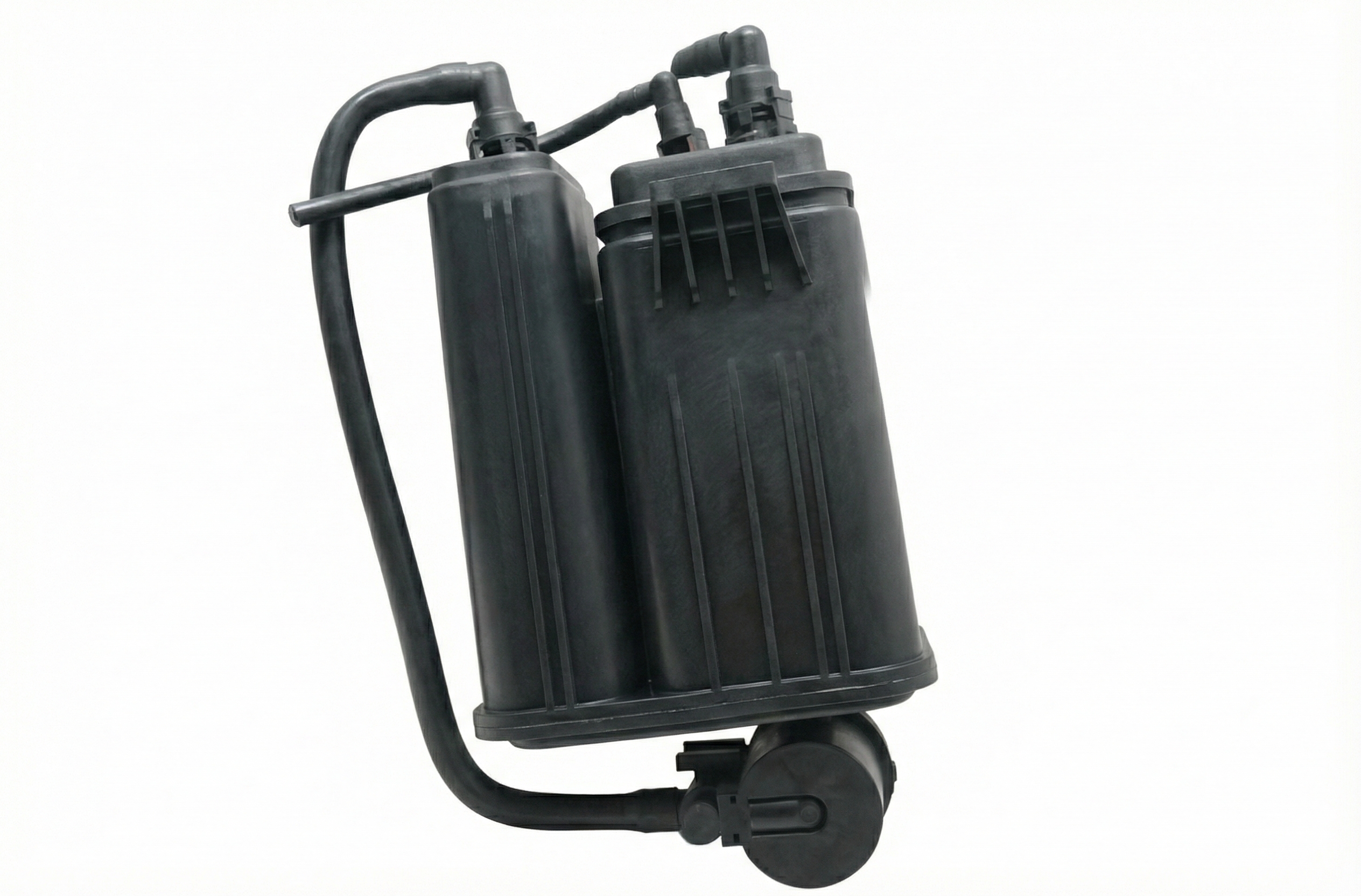
Est. part cost: $25-$70 - Failed EVAP Vent Solenoid/Valve 🟡 Medium Probability → Shop Vapor Canister Located near the charcoal canister by the fuel tank, this valve is exposed to road debris and moisture, which can cause it to fail or get stuck. GM TSB #21-NA-124 points to this as a potential cause after checking lines and connections. On second-generation Acadias (2017+), the vent solenoid is located under the vehicle, roughly below the driver's seat.
How to confirm: The valve is normally open and closes when the system runs a self-test. A scan tool can command it closed for testing. A smoke test is the most reliable way to confirm a leak at the vent valve; with the valve commanded shut, smoke should not escape.
Typical fix: Replace the vent solenoid. This part is located underneath the vehicle near the gas tank and is often a twist-and-lock fit into the charcoal canister.
Est. part cost: $30-$130 - Cracked or Disconnected EVAP Hoses ⚪ Low Probability Plastic and rubber hoses become brittle over time due to heat and age, developing small cracks that are difficult to see. TSB #21-NA-124 recommends inspecting all line connections first, as improper seating is a possible cause.
How to confirm: A thorough visual inspection of all EVAP lines from the engine bay to the fuel tank is the first step. The most definitive method is using a smoke machine, which will make even tiny leaks visible.
Typical fix: Replace the cracked section of hose or the entire line assembly.
Est. part cost: $10-$50
Rare But Worth Checking
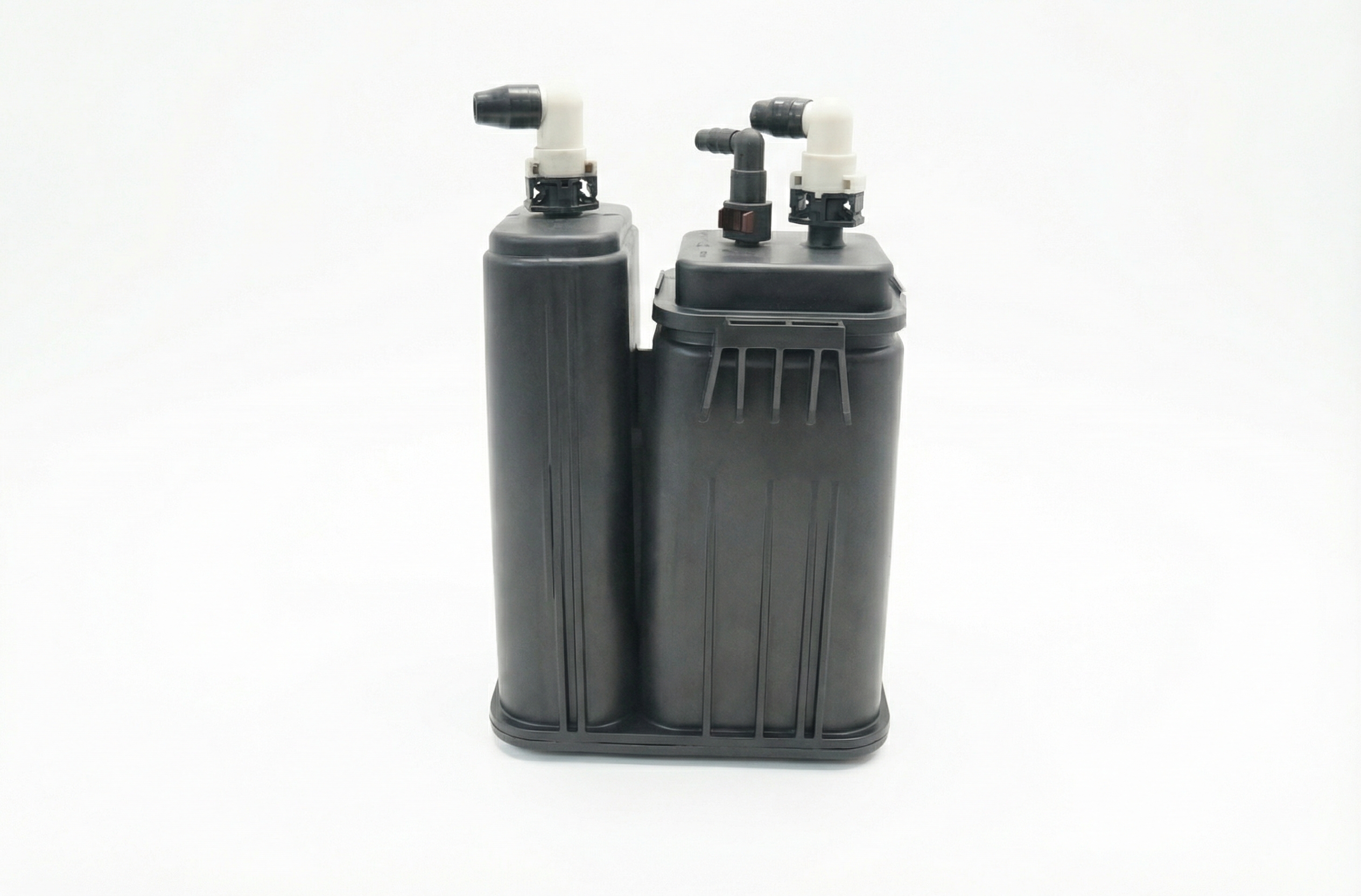
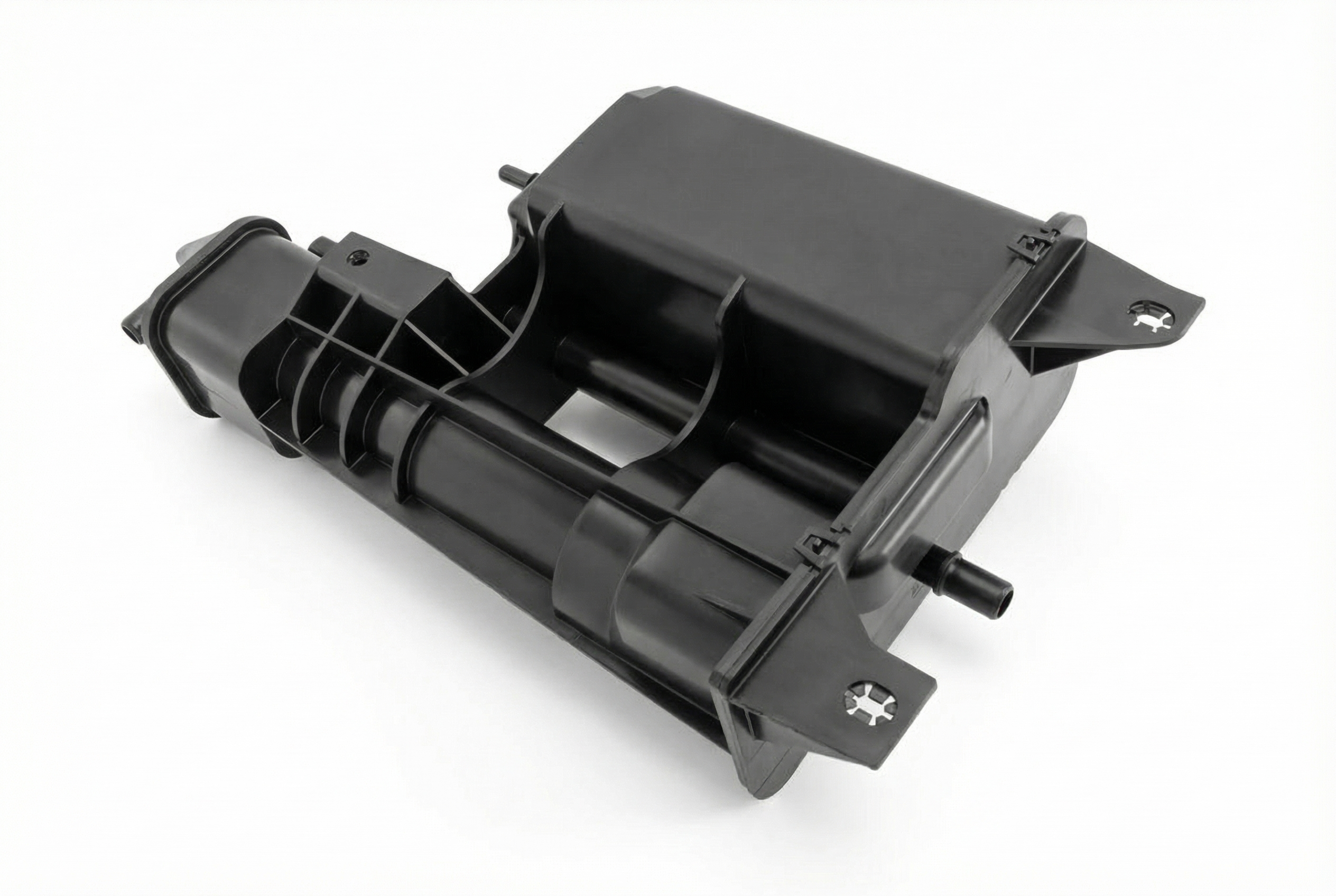
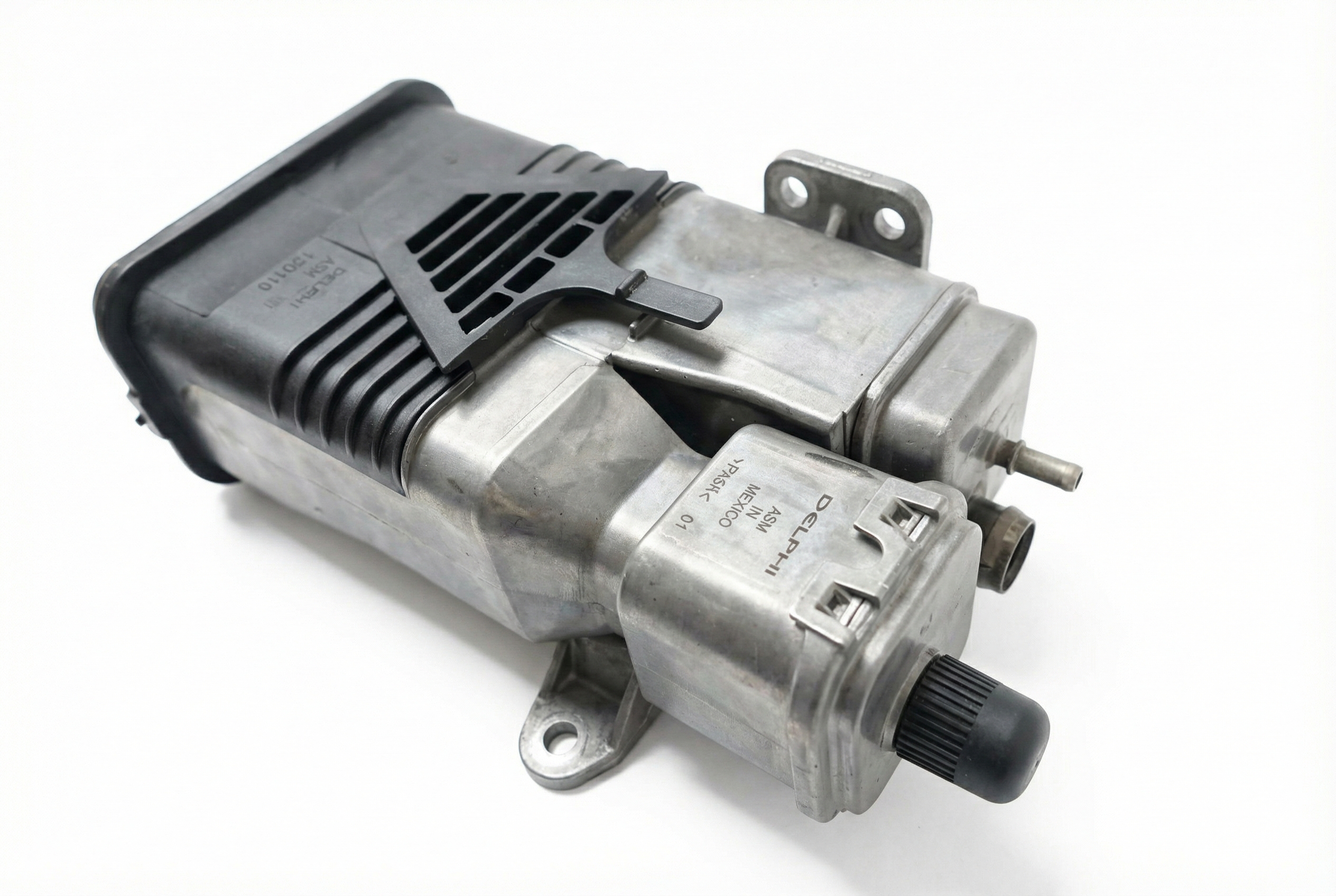
- Leaking Charcoal Canister: → Shop Vapor Canister While less common, the plastic body of the canister can develop hairline cracks. Overfilling the fuel tank can also saturate the canister with raw fuel, damaging the charcoal media and causing EVAP system faults. TSB #PIE0528 was issued to investigate canister performance issues on 2019 models, indicating it's a known area of concern for GM.
- Faulty Fuel Tank Pressure Sensor: → Shop Fuel Tank Rarely, the sensor that measures pressure in the system can provide false readings to the ECM, making it think there is a leak when there isn't one. This is usually a last resort after all other components have been tested. On these vehicles, the sensor may be located on top of the fuel tank or integrated with the fuel pump module, making replacement labor-intensive.
- Corroded or Damaged Fuel Filler Neck: → Shop Fuel Filler Neck The metal pipe leading to the gas tank can rust and develop small holes, creating an EVAP leak. This is more common in regions that use road salt. A visual inspection may reveal wetness, rust stains, or fuel smell around the filler neck area, especially after refueling.
Diagnosis Steps

- Check the Gas Cap: Remove, inspect the seal for cracks or damage, and reinstall it, ensuring you hear it click several times. If the seal is damaged, replace it with an OEM or equivalent cap. Clear the code and drive for a few days to see if it returns.
- Visual Inspection (per TSB #21-NA-124): Carefully inspect all visible EVAP hoses and connections in the engine bay and under the vehicle. Pay close attention to where lines connect to the purge valve, canister, and tank, ensuring they are fully seated.
- Test the Purge Valve: This is the most likely culprit after the gas cap. Locate the purge valve on the engine. With the engine running, disconnect the EVAP line from the valve and feel for suction with your finger. There should be NO suction at idle. If there is, the valve is stuck open and must be replaced.
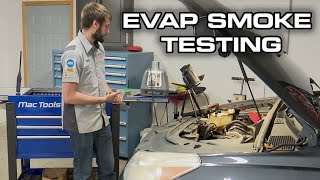
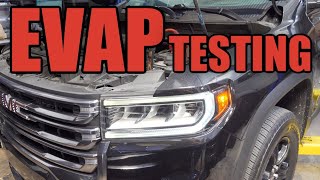
- Perform a Smoke Test: This is the most effective overall step. A smoke machine forces low-pressure, visible smoke into the EVAP system's service port. Smoke will exit from the location of the leak, whether it's a hose, valve, canister, or gas cap seal. This is the professional method recommended in TSB #PIT4943D. 🎬 Watch: How to perform a professional EVAP smoke test.
- Test the Vent Valve (per TSB #21-NA-124): During the smoke test, use a bidirectional scan tool to command the vent valve closed. If smoke billows out from the vent valve area (near the canister), the valve is not sealing correctly and needs replacement.
- Inspect Charcoal Canister and Filler Neck: If the smoke test reveals smoke coming from the body of the canister itself or from the fuel filler neck, that component is cracked/corroded and must be replaced.
Parts You'll Likely Need
- Gas Cap — This is the most frequent and simplest fix. The seal wears out over time, causing the small leak detected by the system.
Trusted brands: ACDelco, Stant
OEM price range: $20-$35
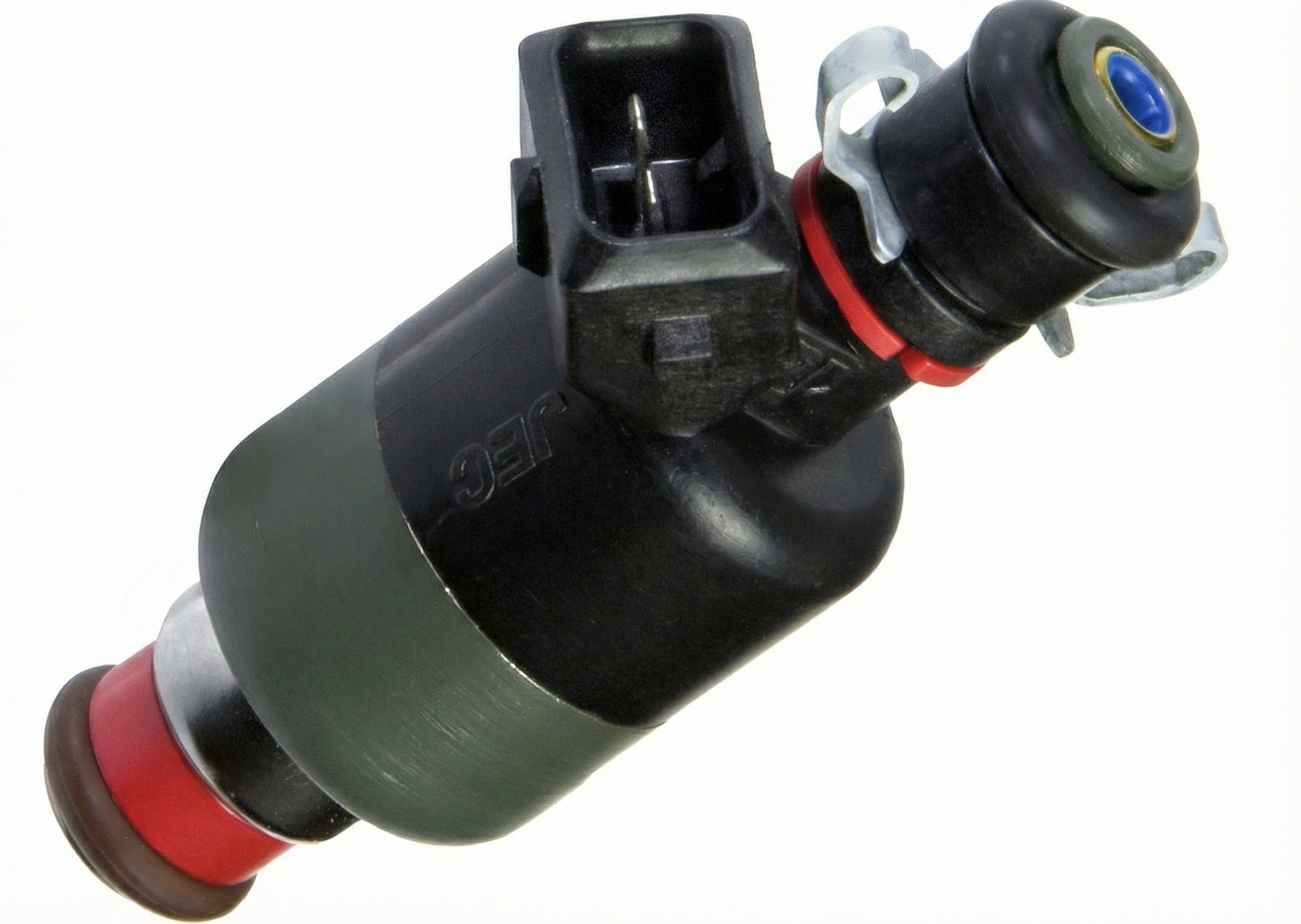
Aftermarket price range: $15-$25 - Vapor Canister Purge Valve / Solenoid
(OEM #ACDelco 12690512 (for 2015-2016 3.6L); ACDelco 12630282 (for 2017-2023 3.6L))— This valve cycles constantly and is a very common failure point, often sticking open. It is the most likely cause if code P0496 is also present.
Trusted brands: ACDelco, Bosch, Standard Motor Products
OEM price range: $40-$75
Aftermarket price range: $25-$50 - Vapor Canister Vent Valve / Solenoid — Exposed to the elements under the vehicle, this valve can fail due to corrosion or getting stuck with debris. It's commanded closed by the ECM to seal the system for leak testing.
Trusted brands: ACDelco, Dorman, TRQ
OEM price range: $50-$130
Aftermarket price range: $30-$80
Related Codes That Often Appear With This One
- P0455 — A small leak (P0442) can worsen over time and be detected as a large leak (P0455). Multiple TSBs, including #PIE0528 and #21-NA-124, list these codes together as they often share the same root causes.
- P0496 — This code indicates 'EVAP Flow During a Non-Purge Condition', which almost always points directly to a purge valve that is stuck open. A stuck-open purge valve will also be seen by the system as a leak, triggering P0442. Seeing both codes together makes the purge valve the primary suspect.
- P0446 / P0449 — These codes point to electrical circuit issues with the EVAP vent valve. A valve that cannot be commanded closed due to an electrical fault will cause the system leak test to fail, often setting a P0442 as well. TSB #PIE0528 lists these codes together.
Technical Service Bulletins (TSBs) & Recalls
- PIE0528: Engineering bulletin requesting information on EVAP canister performance issues causing P0442, P0455, P0446, P0449 on 2019 models.
- PIT4943D: Directs technicians to use an Evaporative Emissions System Tester for diagnosing P0442.
- 21-NA-124: Provides diagnostic tips for finding leaks causing P0442 and P0455.
Platform-Specific Known Issues
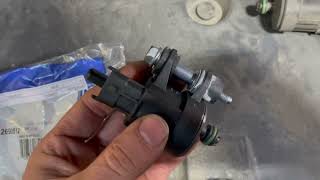
- Owner Experience: 2015 Acadia Hard Start After Fueling: A YouTube video documents a 2015 GMC Acadia owner experiencing a P0442 code along with the classic symptom of the engine struggling to start after filling the gas tank. The owner diagnoses the issue by removing the purge valve and blowing through it, confirming it was stuck open. Replacing the valve (ACDelco part) resolved the issue.
- Professional Diagnosis: 2016 Acadia with P0442 and P0496: A diagnostic video on a 2016 GMC Acadia shows a technician using a professional scan tool to identify both P0442 and P0496 codes. Using the scan tool's bidirectional controls and a vacuum gauge, he confirms the purge valve is leaking vacuum when it should be closed, definitively identifying it as the faulty component.
- Owner Review Confirms Fix: An owner of a 2015 GMC Acadia left a review for the ACDelco purge valve (part #12690512), stating it fixed their issue perfectly and they could instantly feel a difference in the vehicle's performance.
Mechanic-Grade Diagnostic Values
- Fuel Tank Pressure (FTP) Sensor Voltage — expected: Signal voltage should vary between approximately 0.1V (high pressure) and 4.9V (low pressure/vacuum). A common reading with the gas cap off (atmospheric pressure) is between 1.3V and 1.7V.. Failure: A voltage that is stuck low (e.g., 0.1-0.2V) or high, and does not change when the gas cap is removed, points to a faulty sensor or a wiring issue.
Scan Tool Commands That Help
- GDS2 (GM Dealer Scanner): Purge/Seal — This function, found under Output Controls, commands the vent valve to close (Seal) and then allows the technician to manually command the purge valve ON and OFF to check for system integrity and valve function while monitoring the FTP sensor.
- GDS2 (GM Dealer Scanner): EVAP Service Bay Test — This is an automated test that runs the vehicle's onboard EVAP leak detection monitor. It seals the system and uses engine vacuum or natural vacuum changes to check for leaks, providing a pass/fail result. It's used to verify a repair is successful without waiting for a full drive cycle.
Wiring & Ground Locations
- G102 — On the right inner fender panel in the engine compartment.. This is a primary engine compartment ground. A poor connection here could potentially affect the operation of engine-mounted components like the EVAP Purge Solenoid.
- G301 — Behind the left kick panel, near the floor.. This is a major interior/body ground point. While less likely to directly cause an EVAP code, it provides ground for various control modules that interact with the EVAP system.
- Purge Solenoid Connector — On the EVAP purge solenoid, top of the engine.. This is a 2-pin connector. One pin receives 12V ignition power (often a Pink wire), and the other is a control wire (often Brown/White) that the ECM pulses to ground to activate the solenoid. Checking for 12V here is a key diagnostic step.
- Vent Solenoid Connector — On the EVAP vent solenoid, near the charcoal canister under the vehicle.. This is a 2-pin connector. Similar to the purge valve, it receives 12V power and a ground control signal from the ECM. Corrosion on these terminals is common due to its exposed location.
Real Owner Repair Stories
- YouTube video by a mechanic (2013 GM Large SUV (similar platform to Acadia)) — P0442 (Small EVAP Leak)
❌ Tried (didn't work) Initial visual inspection did not reveal the issue.
✅ What actually fixed it A smoke test revealed two separate leaks. The first was from cracks in the body of the EVAP vent valve solenoid itself. The second, and more notable cause, was the fuel filler neck, which had rusted and rotted out in a section, causing a small leak. Replacing both the vent valve and the filler neck resolved the code.
"I Checked Everything" — The Actual Cause
- In some cases, a vehicle can pass a smoke test but still have a recurring P0442. This can happen if the Fuel Tank Pressure (FTP) sensor is faulty. The sensor may be providing incorrect data to the ECM, making the computer believe there is a leak when the system is actually sealed. If a smoke test shows no leaks and all valves test good, testing the FTP sensor's voltage output against known specifications is the next logical step.
OEM Part Supersession History
12610560→12690512— Standard part lifecycle update by GM.12690512→12737252— Standard part lifecycle update by GM.
Heads up: Part 12690512 is listed as superseded by 12737252, indicating a newer revision is available. Both should be compatible with the specified 1st generation vehicles.
Model Year Variations Within This Range

- 2017: The 2017 model year was a transition. GMC sold both the new, smaller second-generation Acadia (C1XX platform) and the older, larger first-generation body style, which was rebadged as the 'Acadia Limited'. The 'Limited' model uses the same parts as the 2015-2016 models (e.g., purge valve 12690512), while the all-new 2017 model uses different second-generation parts.
Helpful Videos
We Have This Part in Stock

The information in this article is provided for general reference and educational purposes only. Vehicle specifications, procedures, and part compatibility can vary by production date, trim level, and region. Always consult your vehicle's factory service manual and verify part numbers before purchasing or performing repairs. Safety-critical components such as airbags, seat belts, and braking systems should be installed by a qualified professional.
- Gmc ACADIA:
- 🧭 Diagnostic Flowchart
- 🎬 Helpful Videos
- 🛍️ Shop This Part
- What's Unique About the 2015-2022 Gmc ACADIA
- Symptoms You May Notice
- Most Likely Causes
- Rare But Worth Checking
- Diagnosis Steps
- Parts You'll Likely Need
- Related Codes That Often Appear With This One
- Technical Service Bulletins (TSBs) & Recalls
- Platform-Specific Known Issues
- Mechanic-Grade Diagnostic Values
- Scan Tool Commands That Help
- Wiring & Ground Locations
- Real Owner Repair Stories
- "I Checked Everything" — The Actual Cause
- OEM Part Supersession History
- Model Year Variations Within This Range
- 🎟️ Get 5% Off