

P0442 on 2004-2011 GMC Canyon: EVAP Small Leak Causes and Fixes
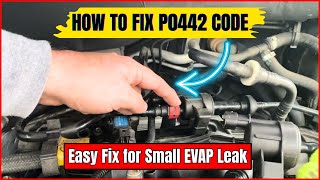
The P0442 code on a 2004-2011 GMC Canyon indicates a small leak in the evaporative emissions (EVAP) system. The most common fix is replacing a worn-out gas cap. If that doesn't work, the next most likely culprits are the EVAP vent solenoid or purge valve. A particularly common failure point on these trucks, especially in rust-prone areas, is a cracked and rusted fuel line nipple on top of the fuel pump module. A new gas cap costs $15-$35, while solenoids can range from $30 to $150.
- P0442 means your truck has a small fuel vapor leak. It's not dangerous to drive with, but it will cause you to fail an emissions test.
- Always start with the simplest fix: check that your gas cap is tight. If it's old, replace it. This solves the problem a significant amount of the time.
- If the gas cap isn't the issue, the EVAP vent solenoid (near the spare tire) or the purge valve (in the engine bay) are the next most likely culprits.
- The most accurate way to find the leak is with a smoke test, which can be done at a repair shop or with a DIY kit.
- On these specific trucks, be aware that rust on top of the fuel tank can cause this leak, which may be harder to find than a simple bad valve or hose.
What's Unique About the 2004-2011 Gmc CANYON
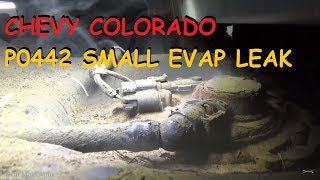
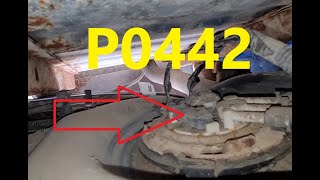
For the first-generation GMC Canyon and its platform mates (Chevy Colorado, Hummer H3), the EVAP system components are known to be common failure points, especially in regions with harsh weather or road salt. A particularly notorious issue on these trucks is rust forming on the metal fuel line nipples on top of the fuel pump module. These nipples can crack or rust through, creating a small leak that is very difficult to spot without a smoke test, which will show smoke seeping from the top of the fuel tank. 🎬 Watch: Finding a small EVAP leak on a Colorado. Additionally, the EVAP vent solenoid, located near the charcoal canister by the spare tire, is a frequent cause of this code due to getting stuck or failing electronically from exposure to the elements.
Diagnostic Flowchart
Tap your situation to follow the diagnostic path that matches what you're seeing on this vehicle.
Symptoms You May Notice
- Check Engine Light is on
- A faint smell of gasoline, especially when parked in an enclosed space like a garage.
- Slightly reduced fuel economy
- Difficulty starting immediately after refueling (less common, but possible if the purge valve is stuck open).
- Gas pump nozzle clicks off repeatedly when trying to fill the tank (can indicate a blocked vent valve or canister).
- Replacing the O2 sensors. P0442 is strictly an EVAP system code and is not related to the oxygen sensors.
- Replacing the fuel injectors. While a bad purge valve can affect the air-fuel mixture slightly, the root cause is in the EVAP system, not the injectors.
- Assuming the first part replaced (e.g., purge valve) is the only fault. A user on Reddit reported a recurring P0442 after replacing the purge valve, highlighting that the code can have multiple causes or be misdiagnosed initially.
Most Likely Causes
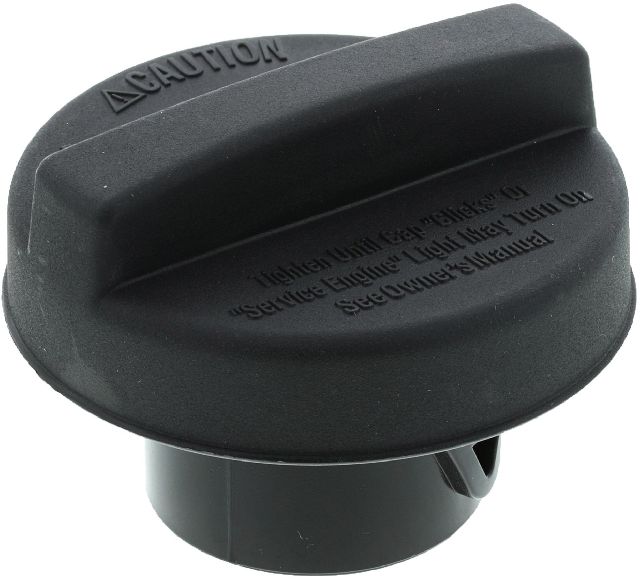
- Loose or Faulty Gas Cap 🔴 High Probability → Shop Fuel Tank Cap The gas cap is a frequently used part, and its rubber O-ring seal can crack, stiffen, and degrade over time from use and exposure to fuel vapors. This is the most common cause for a P0442 code.
How to confirm: First, ensure the cap is tightened until it clicks multiple times. Inspect the rubber seal on the cap for any visible cracks, stiffness, or damage. Also, check the fuel filler neck's sealing surface for rust or debris that could prevent a proper seal.
Typical fix: Replace the gas cap with a new, OEM-quality part (like ACDelco) to ensure a proper seal. Aftermarket caps can sometimes fail to seal correctly.
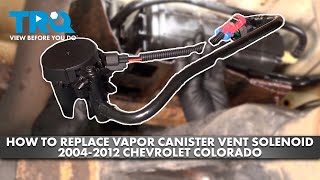
Est. part cost: $15-$35 - Failed EVAP Vent Solenoid/Valve 🟡 Medium Probability → Shop Vapor Canister Located near the rear of the truck by the spare tire, the vent solenoid is exposed to road debris, moisture, and salt, which can cause it to fail electronically or get stuck open, creating a leak. It's a very common failure point on this platform, with the plastic housing often cracking open from freezing moisture.
How to confirm: A smoke test is the most effective method. Smoke is introduced into the EVAP system, and if it exits from the vent solenoid when the valve should be commanded closed, the part is faulty. You can also test the solenoid with a multimeter for proper resistance or use a scan tool to command it closed and see if it holds a vacuum. A stuck-open vent valve can also cause the fuel pump to click off when refueling.
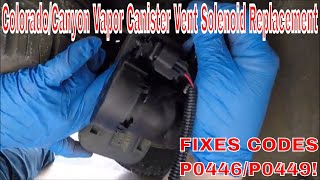
Typical fix: Replace the EVAP vent solenoid. It is typically located near the charcoal canister under the truck bed. Some replacement parts may require a jumper wire harness adapter.
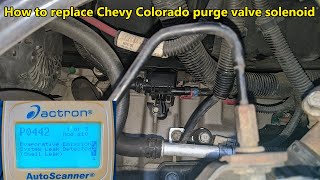
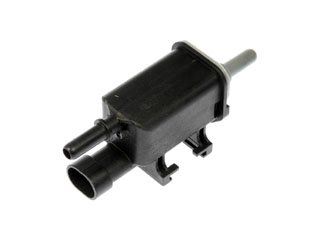
Est. part cost: $30-$150 - Failed EVAP Purge Valve/Solenoid 🟡 Medium Probability → Shop Vapor Canister This valve is located in the engine bay and can get stuck open or closed over time due to carbon buildup or electronic failure, causing a leak in the system.
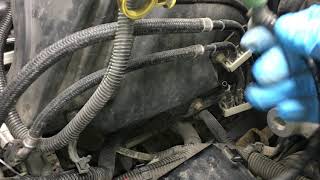
How to confirm: With the engine off, disconnect the hose from the engine side and try to blow through the valve; if air passes through, it's stuck open and needs replacement. A scan tool can also be used to command the valve and check its operation. On the Canyon/Colorado, it is often located under the intake manifold.
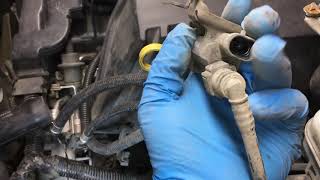
Typical fix: Replace the purge valve. On the Canyon, it's often located on the side of the engine block, sometimes tucked under the intake manifold, and may require removing other components for access.
Est. part cost: $25-$75 - Cracked or Disconnected EVAP Hoses ⚪ Low Probability The plastic and rubber hoses in the EVAP system can become brittle and crack over time due to heat cycles and age, especially the small rubber elbows and connectors.
How to confirm: Perform a thorough visual inspection of all EVAP lines running from the gas tank to the charcoal canister and up to the engine. A smoke test will quickly reveal any small cracks or pinhole leaks in the hoses that are invisible to the naked eye.
Typical fix: Replace the damaged section of the hose. Ensure all connections are secure.
Est. part cost: $10-$50
Rare But Worth Checking
- Rusted Fuel Pump Module/Sending Unit: → Shop Fuel Pump On trucks used in the salt belt, the metal nipples on top of the fuel pump module where the EVAP lines connect can rust through and crack, creating a significant leak that often still registers as a P0442. This is a well-documented failure point found via smoke test, where smoke will pour from the top of the fuel tank. Repair requires dropping the fuel tank and replacing the entire fuel pump module.
- Cracked Charcoal Canister: → Shop Vapor Canister While not common, the plastic housing of the charcoal canister can be damaged by road debris or impact, causing a leak. A visual inspection or smoke test will confirm this.
Diagnosis Steps
- Check the Gas Cap: Remove the gas cap, inspect the seal for cracks or damage, and clean the filler neck sealing surface. Retighten the cap until it clicks at least three times. Clear the code and drive for a few days to see if it returns.
- Visual Inspection: Carefully inspect all visible EVAP hoses and lines for obvious cracks, disconnections, or damage. Pay close attention to the lines near the engine and around the charcoal canister.
- Perform a Smoke Test: This is the most effective way to find a small leak. Connect a smoke machine to the EVAP service port (often a green cap in the engine bay). Command the vent solenoid to close using a capable scan tool. Watch for smoke coming from the gas cap, vent solenoid, purge valve, hoses, or the top of the fuel tank. Wiggling components during the test can help reveal intermittent leaks.
- Test the Purge Valve: Locate the purge valve in the engine bay (under the intake manifold on many models). Disconnect it and try to blow air through it. If air passes, it is stuck open and must be replaced. Alternatively, use a handheld vacuum pump on the intake port; it should hold vacuum if it's working correctly.
- Test the Vent Solenoid: Locate the vent solenoid near the charcoal canister. Use a scan tool to command it closed and check if it seals. If a smoke test shows smoke exiting the vent, it has failed.
- Inspect Fuel Tank Area: If no leaks are found elsewhere, lower the spare tire and carefully inspect the top of the fuel tank and the fuel pump module for rust or cracks, as this is a known issue on these trucks. A smoke test is the best way to confirm a leak in this area.
Parts You'll Likely Need
- Fuel Tank Cap
(OEM #19432733)— This is the most common cause. The seal wears out over time, causing a small leak. Using an OEM cap is highly recommended as some aftermarket caps do not seal properly.
Trusted brands: ACDelco (OEM), Stant, Gates
OEM price range: $25-$35
Aftermarket price range: $15-$25 - EVAP Vapor Canister Vent Solenoid
(OEM #20907779)— This part is exposed to the elements and is a frequent failure point, getting stuck open and causing a leak. It can also cause issues with refueling. Note: Some replacements may require an adapter harness, ACDelco P/N 19257603.
Trusted brands: ACDelco (OEM), Dorman (P/N: 911-070), Standard Motor Products
OEM price range: $100-$150
Aftermarket price range: $30-$90 - EVAP Vapor Canister Purge Valve
(OEM #12690512)— This valve can get stuck open, allowing un-metered vacuum into the EVAP system and causing a leak code. It's a common failure item, though less so than the gas cap or vent solenoid.
Trusted brands: ACDelco (OEM), Dorman (P/N: 911-032), GM Genuine Parts
OEM price range: $40-$75
Aftermarket price range: $25-$50
Related Codes That Often Appear With This One
- P0455 — This code indicates a large EVAP leak. If a component fails significantly (like the rusted fuel pump nipple or a hose completely disconnecting), you may see both P0442 and P0455.
- P0449 — This code specifically points to a fault in the EVAP vent solenoid valve control circuit. It often appears alongside P0442 if the vent solenoid is the source of the leak and has an electrical fault.
Technical Service Bulletins (TSBs) & Recalls
- 21-NA-124: Provides diagnostic tips for finding the source of EVAP leaks causing P0442 or P0455, emphasizing checking connections and testing valves in a specific order: lines, vent valve, then purge valve.
- PIT4943D: Directs technicians to a May 2013 Techlink article on using an EVAP system tester (smoke machine) to diagnose difficult-to-find P0442 leaks, outlining a detailed procedure for pressurizing and monitoring the system.
Platform-Specific Known Issues
- Rust on the fuel pump module causing a leak from the top of the fuel tank is a known issue, particularly in northern climates. A video from South Main Auto on a 2008
Mechanic-Grade Diagnostic Values
- EVAP Canister Purge Valve Resistance — expected: 30 to 38 ohms. Failure: A reading outside this range indicates a faulty valve coil.
- EVAP Canister Vent Solenoid Resistance — expected: 48 to 65 ohms. Failure: A reading outside this range suggests a failed solenoid coil.
- EVAP Vent Solenoid Connector Voltage — expected: One wire should have 12V (power feed), the other is the ground-side control from the ECM.. Failure: Reading 12V on both the power and control wires with the key on suggests an open circuit in the control wire going back to the ECM.
Hidden / Shadow Codes Worth Checking
- EVAP Vent Solenoid Circuit Status: → Shop Vapor Canister This is not a DTC, but a data PID viewable on a professional scan tool (like a Tech2). It shows the ECM's real-time analysis of the circuit. It will display states like 'OK', 'Open', or 'Short to Ground', providing a much more specific diagnosis than the P0442 code alone. (see via Viewable in the EVAP data list on a GM Tech2 or equivalent professional scan tool.)
Scan Tool Commands That Help
- GM Tech2 / GDS2 or equivalent: Activation Test or Output Control for the EVAP Vent Solenoid — This is a critical step during a smoke test. The vent solenoid is normally open, so you must use this command to close it ('Not Venting' status) to seal the system and allow it to build pressure to find leaks.
- GM Tech2 / GDS2 or equivalent: EVAP Service Bay Test — This is an automated test sequence run by the ECM on command. It will automatically seal the system and perform a pressure/vacuum test to verify the integrity of the repair without needing to complete a full drive cycle.
Wiring & Ground Locations
- G105 (or SP-105) — On the driver's side of the engine bay, near the battery and underhood fuse block.. This is a major ground point for many components, including the fuel pump and fuel-level sender. Poor contact here due to corrosion is a known issue on Colorados/Canyons and can cause a variety of seemingly unrelated electrical problems that could affect fuel system sensor readings.
- G106 (or SP-106) — On the passenger's side of the engine bay, behind the engine airbox.. This ground serves the EBCM, HVAC module, and Data Link Connector. While less directly related to the EVAP system, ensuring all major grounds are clean is a key step in diagnosing any electrical fault on this platform.
- Vent Solenoid Connector — At the EVAP vent solenoid, near the charcoal canister by the spare tire.. The wires leading to this connector are prone to breaking inside the insulation due to corrosion and stress, especially on trucks in rust-belt regions. The connection may look fine, but an open circuit can exist, which can be found by wiggling the wires while checking for voltage.
Real Owner Repair Stories
- YouTube channel 'Cars, Crafts, & Drafts' (2005 Chevy Silverado (similar GM platform and EVAP components)) — Persistent P0442 code.
❌ Tried (didn't work) The owner replaced the EVAP purge valve, but the code remained.
✅ What actually fixed it The owner discovered the brand new, aftermarket replacement purge valve was also faulty out of the box. He tested it with a handheld vacuum pump and found it would not hold a vacuum. After testing several more new valves from Amazon, he found one that held vacuum properly, installed it, and the code was resolved. This highlights the importance of testing new parts before assuming they are good.
"I Checked Everything" — The Actual Cause
- If a comprehensive smoke test shows no leaks, and both the purge and vent valves test good, the Fuel Tank Pressure (FTP) sensor itself may be faulty. The sensor may be sending incorrect data to the computer, causing the ECM to believe there is a leak when the system is actually sealed. A diagnostic step is to check the FTP sensor reading on a scan tool with the gas cap removed; it should read at or near zero pressure. If it shows a pressure or vacuum with the system open to the atmosphere, the sensor is likely bad.
OEM Part Supersession History
10386359, 25948082→20907779— Updated design for the EVAP Vapor Canister Vent Solenoid assembly.
Heads up: When replacing the older part numbers with 20907779, a separate adapter harness (ACDelco P/N 19257603) is often required because the electrical connector was changed.
Model Year Variations Within This Range
- 2004-2012: The electrical connector on the EVAP Vent Solenoid was updated during the production run. As a result, when replacing an original solenoid with the current OEM part (20907779), an adapter harness is frequently required to connect the new part to the old vehicle harness.
Helpful Videos
Used OEM Parts in Stock

New Aftermarket Parts Available


The information in this article is provided for general reference and educational purposes only. Vehicle specifications, procedures, and part compatibility can vary by production date, trim level, and region. Always consult your vehicle's factory service manual and verify part numbers before purchasing or performing repairs. Safety-critical components such as airbags, seat belts, and braking systems should be installed by a qualified professional.
- Gmc CANYON:
- 🧭 Diagnostic Flowchart
- 🎬 Helpful Videos
- 🛍️ Shop This Part
- What's Unique About the 2004-2011 Gmc CANYON
- Symptoms You May Notice
- Most Likely Causes
- Rare But Worth Checking
- Diagnosis Steps
- Parts You'll Likely Need
- Related Codes That Often Appear With This One
- Technical Service Bulletins (TSBs) & Recalls
- Platform-Specific Known Issues
- Mechanic-Grade Diagnostic Values
- Hidden / Shadow Codes Worth Checking
- Scan Tool Commands That Help
- Wiring & Ground Locations
- Real Owner Repair Stories
- "I Checked Everything" — The Actual Cause
- OEM Part Supersession History
- Model Year Variations Within This Range
- 🎟️ Get 5% Off