

P0442 on 2004-2005 GMC Envoy XUV: Causes and Fixes for a Small EVAP Leak
This code means a small leak has been detected in your fuel vapor system. The most likely fix is replacing a worn-out gas cap for about $20. However, these vehicles are known for cracked and rusted fuel filler necks, which is another very common cause that is more involved to repair. If the gas cap doesn't fix it, suspect the filler neck or the EVAP vent solenoid near the fuel tank.
- P0442 is a small leak in the fuel vapor system; it is safe to drive but will cause you to fail an emissions test.
- Always start by inspecting and, if necessary, replacing the gas cap. This is the most common and cheapest fix.
- Be aware that 2004-2005 Envoy XUVs are known to have issues with cracked or rusted fuel filler necks, which is a very common cause for this specific code.
- If the gas cap doesn't solve the problem, a smoke test is the most reliable way to find the leak's true source.
- Other likely culprits are the EVAP vent solenoid (by the tank) and the purge solenoid (on the engine).
What's Unique About the 2004-2005 Gmc ENVOY XUV
While many vehicles get a P0442 code from a simple loose gas cap, the GMC Envoy and its GMT360 platform mates (like the Chevrolet Trailblazer) have a well-documented weakness. Owner complaints filed with the NHTSA and numerous forum discussions specifically mention a tendency for the fuel tank filler neck to rust and crack, causing this exact code. This issue is so prevalent that a Technical Service Bulletin (05-06-04-014A) was issued to address it. The rust creates pinholes in the metal tube, preventing the system from holding pressure. Therefore, while you should always check the gas cap first, the filler neck should be a primary suspect if the cap isn't the problem.
Diagnostic Flowchart
Tap your situation to follow the diagnostic path that matches what you're seeing on this vehicle.
Symptoms You May Notice
- Check Engine Light is on
- A faint smell of gasoline, especially around the rear of the vehicle near the gas cap or filler neck.
- Difficulty or long crank time when starting the engine immediately after refueling (this often points specifically to a faulty purge valve stuck open).
- Replacing the O2 sensors. Oxygen sensors are not related to the EVAP system.
- Replacing the fuel pump. Unless the top of the fuel pump module is rusted and leaking, the pump itself does not cause a P0442 code.
Most Likely Causes
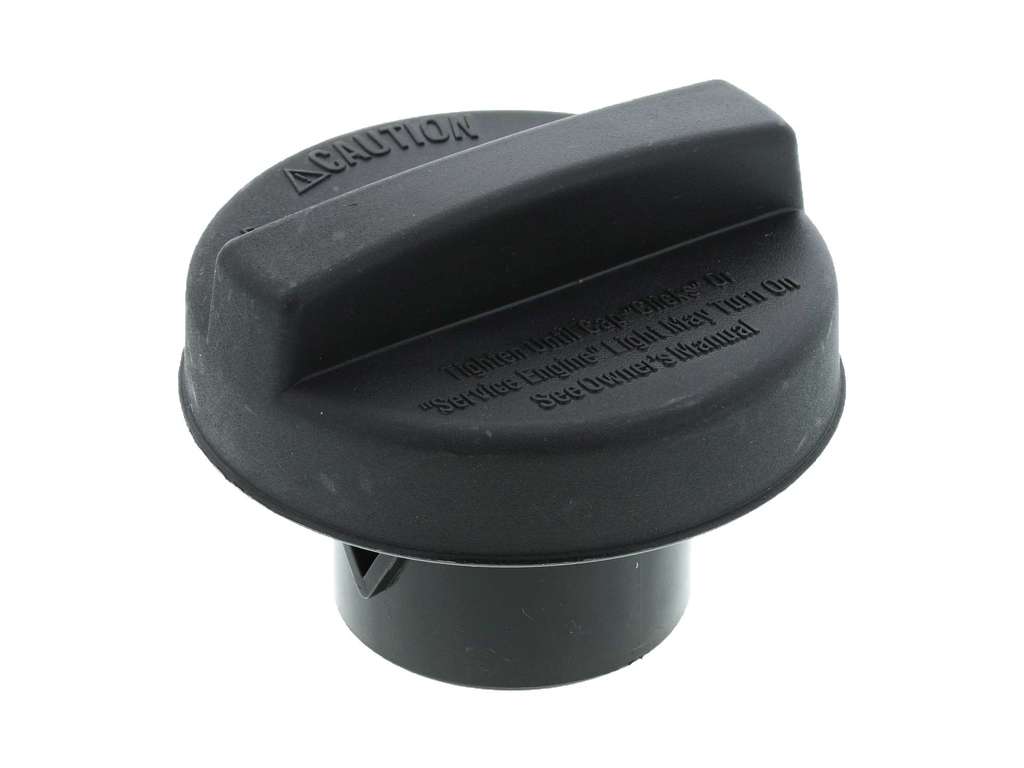
- Loose or Faulty Gas Cap 🔴 High Probability → Shop Fuel Tank Cap The gas cap is used frequently and its rubber O-ring seal degrades over time from exposure to fuel vapors, leading to an improper seal. Many owners and mechanics strongly recommend using an OEM ACDelco cap, as aftermarket caps are a frequent source of recurring EVAP codes.
How to confirm: First, ensure the cap is tightened until it clicks multiple times. Remove the cap and visually inspect the rubber seal for cracks, stiffness, or damage. Check the filler neck's rim for rust or debris that could prevent a good seal.
Typical fix: Replace the gas cap. It is highly recommended to use an OEM-spec cap (like ACDelco) as some aftermarket caps may not seal correctly, leading to the code returning.
Est. part cost: $15-$35 - Cracked or Rusted Fuel Tank Filler Neck 🔴 High Probability → Shop Fuel Tank This is a known, widespread issue for the GMT360 platform, as cited in NHTSA owner complaints (ODI #10444004) and countless forum threads. The metal neck is highly susceptible to corrosion, especially in regions that use road salt, which causes small cracks and pinholes that allow fuel vapor to escape.
How to confirm: A visual inspection will likely reveal significant rust, flaking, or visible cracks on the neck. The most definitive method is a smoke test, where a mechanic injects smoke into the EVAP system; smoke will be seen escaping from the crack in the neck.
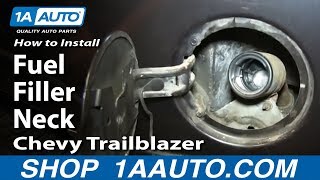
Typical fix: The filler neck must be replaced. This involves removing the rear driver's side wheel and wheel well liner for access. 🎬 Watch: Step-by-step guide to replacing the fuel tank filler neck. It's also recommended to replace the large rubber hose connecting the neck to the tank at the same time, as it can be brittle.
Est. part cost: $70-$150 for an aftermarket part (e.g., Dorman 577-379, Spectra Premium FN727). - Faulty EVAP Vent Solenoid 🟡 Medium Probability → Shop Vapor Canister Located near the charcoal canister by the fuel tank and spare tire, this valve is exposed to road debris, moisture, and salt, which can cause it to fail, get clogged with dirt, or get stuck open, creating a leak.
How to confirm: The valve is normally open and should close when 12v is applied (this can be commanded with a bi-directional scan tool or tested on a bench). A smoke test will show smoke exiting the valve's vent port if it's stuck open when it should be commanded closed.
Typical fix: Replace the vent solenoid. It is typically mounted on a bracket near the charcoal canister and is accessible without lifting the vehicle, though removing the spare tire provides more room.
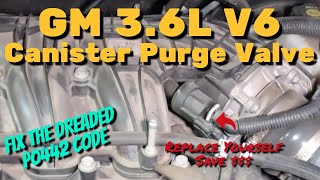
Est. part cost: $30-$60 - Faulty EVAP Purge Solenoid/Valve 🟡 Medium Probability → Shop Vapor Canister This valve, located on the driver's side of the engine, can get stuck partially open, allowing un-metered vacuum into the EVAP system and causing a leak code.
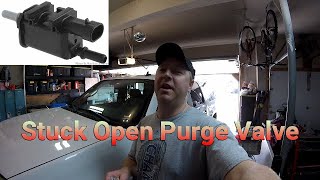
How to confirm: A strong symptom is a long crank or rough idle immediately after refueling. To test, disconnect the valve and attempt to blow through it; it should be normally closed, so no air should pass. A hand vacuum pump can also be used; connect it to the intake side and it should hold vacuum when not energized. If it leaks down, it's faulty.
Typical fix: Replace the purge solenoid. It is easily accessible on the side of the engine intake manifold. 🎬 See how to replace the EVAP purge valve yourself.
Est. part cost: $25-$50 - Cracked or Disconnected EVAP Hoses ⚪ Low Probability Over time, rubber and plastic hoses can become brittle and crack, especially at connection points to other components like the purge valve or canister.
How to confirm: A thorough visual inspection may find an obvious issue, but a smoke test is the most reliable way to find small cracks in hoses that are not easily visible.
Typical fix: Replace the damaged section of hose and any broken clips.
Est. part cost: $10-$40
Rare But Worth Checking
- Cracked Fuel Tank at Filler Neck Inlet: → Shop Fuel Tank As seen in NHTSA complaints for similar models, the plastic of the fuel tank itself can crack where the filler neck hose attaches. This is a serious issue that often requires either a specialized repair of the plastic tank or a full tank replacement.
- Cracked Charcoal Canister: → Shop Vapor Canister The plastic housing of the charcoal canister can be damaged by road debris or age, causing a leak. This is usually found during a smoke test.
- Leaking Fuel Pump Module Seal: → Shop Fuel Pump The seal/o-ring for the fuel pump module at the top of the gas tank can degrade or the metal locking ring can rust, causing a leak that can trigger a P0442. This is often accompanied by a strong fuel smell after filling the tank.
Diagnosis Steps
- Inspect and Tighten Gas Cap: Ensure the gas cap is on securely and clicks several times. Remove it and inspect the rubber seal for any cracks or signs of wear. If the seal is compromised, replace the cap with an OEM part.
- Clear Code and Drive: After checking the cap, clear the code with an OBD-II scanner and drive the vehicle for a few days to allow the EVAP system's self-test monitor to run. If the light stays off, the cap was the issue.
- Visual Inspection: If the light returns, perform a detailed visual inspection. Look for obvious cracks or heavy rust on the fuel filler neck. Check for brittle or disconnected hoses around the purge valve (on the engine) and the vent valve/charcoal canister (near the fuel tank).
- Test the Purge Valve: A key symptom of a bad purge valve is a long crank after refueling. To test, remove the valve. It should be normally closed. Use a hand vacuum pump on the port that goes to the intake manifold; it must hold vacuum. If it doesn't, it's faulty and needs replacement.
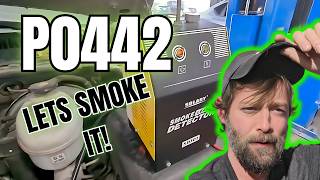
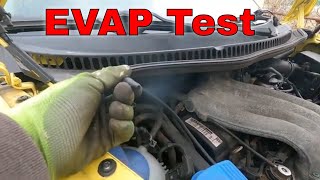
- Perform a Smoke Test: This is the most effective way to find the leak. A smoke machine is connected to the EVAP service port. The system is sealed (by commanding the vent valve closed with a scan tool) and filled with low-pressure smoke. The leak will be visible where smoke escapes. 🎬 Watch: How to use a smoke machine to find leaks. Pay extremely close attention to the fuel filler neck, vent valve, all hose connections, and the top of the fuel tank.
- Inspect Components Identified by Smoke Test: Once the smoke reveals the leak's location, inspect that component (e.g., vent valve, hose, filler neck) for failure and replace as needed.
Parts You'll Likely Need
- Fuel Tank Cap
(OEM #19436184)— This is the most common and easiest cause of a P0442 code. The seal wears out over time, preventing the system from holding pressure. Using an OEM cap is highly recommended.
Trusted brands: ACDelco (OEM), Gates, Stant
OEM price range: $20-$35
Aftermarket price range: $15-$25 - Fuel Tank Filler Neck — A known major weak point on this platform. It rusts and develops small cracks, causing a vapor leak that sets the P0442 code.
Trusted brands: Dorman (P/N: 577-379 for 02-04), Spectra Premium (P/N: FN727 for 02-04), SKP
OEM price range: $120-$200
Aftermarket price range: $70-$150 - EVAP Vent Solenoid
(OEM #214-2149)— Its location under the vehicle makes it prone to damage from road debris and corrosion, causing it to stick open or fail electrically.
Related Codes That Often Appear With This One
- P0455 — P0455 indicates a large EVAP leak. If a small leak (P0442) worsens, or if the cause is significant (like a very rusty filler neck), it can trigger a P0455. They often share the same root causes.
- P0440 — P0440 is a general EVAP system malfunction code. It can appear alongside P0442 if the system detects a general fault in addition to the small leak.
- P0449 — P0449 specifically points to a fault in the EVAP vent solenoid valve control circuit. If the solenoid is electrically failing, you may see this code along with a leak code like P0442.
Technical Service Bulletins (TSBs) & Recalls
- TSB #05-06-04-014A: Mentioned in an NHTSA complaint, this bulletin provides diagnostic aids for codes P0440, P0455, and P0442, and specifically addresses issues with cracks in the gas tank filler neck on 2002-2004 models.
- TSB #21-NA-124: Provides updated diagnostic tips for testing EVAP leaks related to DTCs P0442 and/or P0455.
- TSB #PIT4943D: Directs technicians to review a specific Techlink article about using an evaporative emissions system tester for diagnosing P0442.
Platform-Specific Known Issues
- Real Owner Repair: Rusted Filler Neck on Platform-Mate: On YouTube, the channel 'Qualite Tech' documented a P0442 repair on a 2004 Chevrolet Trailblazer. After a new gas cap failed to fix the issue, a smoke test was performed. The test clearly showed smoke billowing from the heavily rusted fuel filler neck. The video shows the process of removing the rear wheel and liner to access and replace the entire filler neck assembly, which ultimately solved the P0442 code. This is a real-world confirmation of the platform's most notorious P0442 cause.
Mechanic-Grade Diagnostic Values
- EVAP Canister Purge Solenoid Coil Resistance — expected: 15 to 30 Ohms. Failure: A reading significantly outside this range (open circuit or short) indicates a failed solenoid coil.
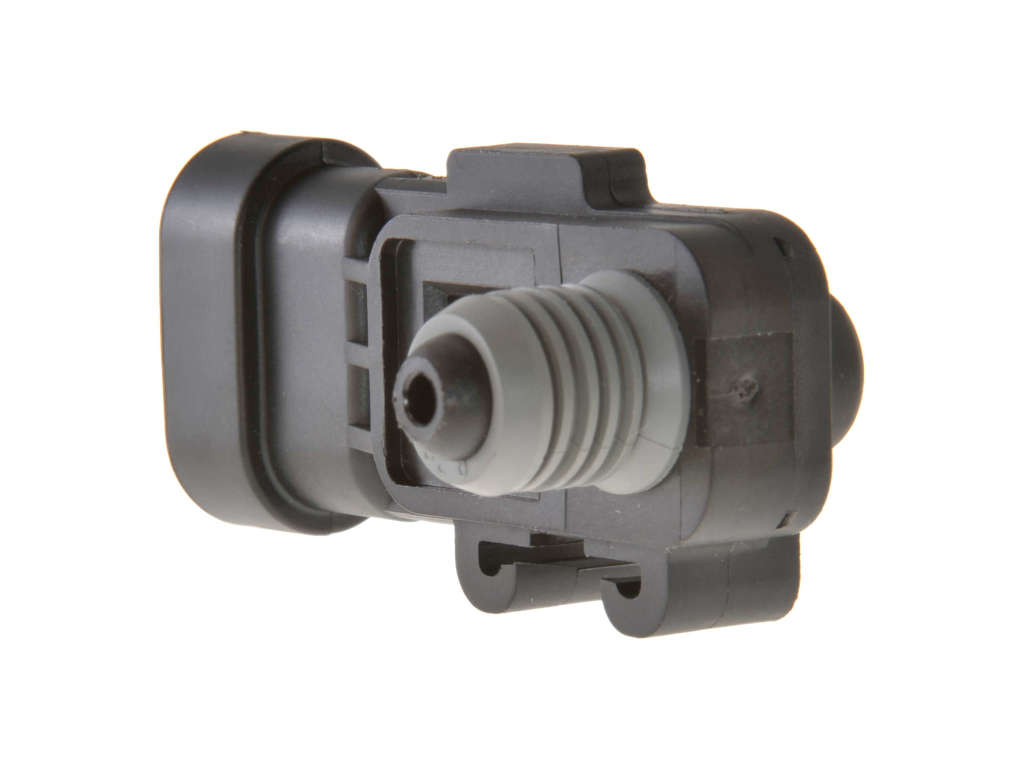
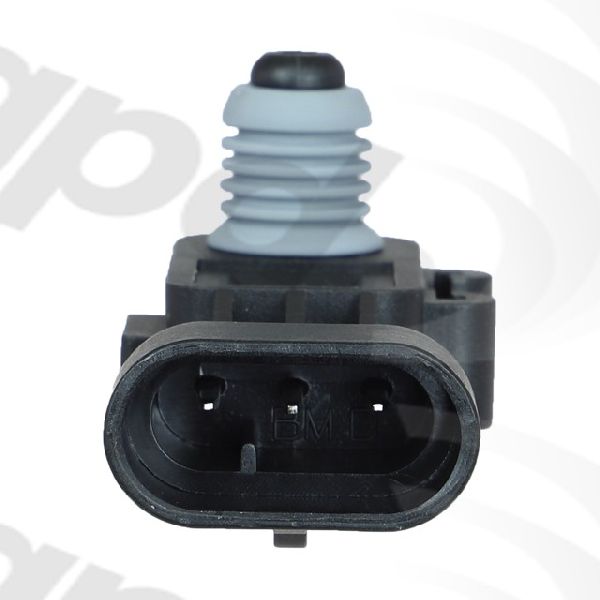
- Fuel Tank Pressure (FTP) Sensor Signal Voltage (Key On, Engine Off) — expected: Approximately 1.3V to 1.7V at normal atmospheric pressure.. Failure: A voltage that is stuck high (e.g., 5V) or low (e.g., 0.2V) regardless of pressure, or a reading that doesn't change when vacuum/pressure is applied, indicates a faulty sensor. Note that some scan tools may show an offset value different from a direct multimeter reading at the signal wire.
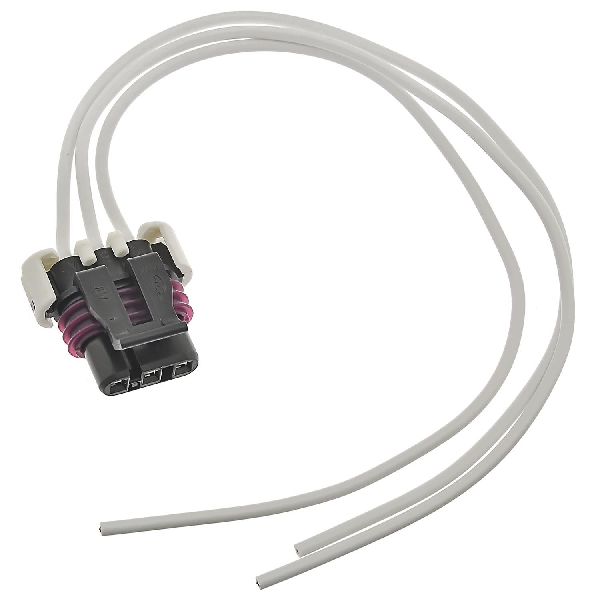
- FTP Sensor Connector Voltages — expected: Tan wire: 5V reference. Gray wire: Ground (near 0V). Dark Green wire: Signal voltage (approx 1.5V at atmospheric pressure).. Failure: Missing 5V reference or ground indicates a wiring or PCM issue, not a sensor failure.
Scan Tool Commands That Help
- GM Tech 2 / GDS2: EVAP Service Bay Test — This function allows a technician to command the vehicle's onboard EVAP leak test to run in the service bay, without needing to perform a full, lengthy drive cycle. It seals the system and monitors for pressure decay to confirm if a leak is present.
- Bi-directional Scan Tool: EVAP Vent Solenoid ON/OFF (or CLOSE/OPEN) — This is used to manually close the normally-open vent valve to seal the EVAP system. This is a required step before performing a smoke test to ensure the smoke is contained within the system.
- Bi-directional Scan Tool: EVAP Purge Solenoid Duty Cycle Control — Allows the technician to command the purge valve open by a certain percentage to verify its operation. While commanding it open, a technician can check for vacuum at the valve or listen for a clicking sound.
Wiring & Ground Locations
- G305 — On the outside of the left (driver's side) frame rail, near the fuel tank.. This is a primary ground point for rear-mounted components of the EVAP system, including the EVAP Vent Solenoid. Corrosion or a loose connection at this ground can cause erratic operation of the vent solenoid, leading to leak codes.
- G107 — On the lower left (driver's side) of the engine block.. This ground is used by several engine components, including the circuit for the EVAP Purge Solenoid. A poor connection here could contribute to electrical faults for the purge solenoid.
- FTP Sensor Connector — On top of the fuel pump module, accessible by lowering the spare tire and sometimes a heat shield.. Knowing the wire colors is critical for testing. Tan is 5V Reference, Gray is Ground, and Dark Green is the Signal wire that sends pressure data to the PCM.
Real Owner Repair Stories
- CarCareKiosk User Comment (General GMT360 Platform) — Recurring P0442 code after trying other fixes.
❌ Tried (didn't work) Replacing various EVAP system parts.
✅ What actually fixed it The owner discovered the code would only appear after overfilling the fuel tank. By stopping fueling immediately after the first click of the pump nozzle and not topping off, the code never returned. This suggests overfilling can saturate the charcoal canister or force fuel into vapor lines, causing a temporary condition the system interprets as a leak.
"I Checked Everything" — The Actual Cause
- A smoke test can pass with no visible leaks, yet the P0442 code persists. A common cause for this scenario is a faulty Fuel Tank Pressure (FTP) sensor. The sensor may send incorrect voltage data to the computer, making the computer believe there is a leak when the system is actually sealed. For example, a sensor might be stuck reading a slight vacuum or pressure, which deviates from the expected value during the EVAP monitor test, triggering the code without a physical leak being present.
OEM Part Supersession History
15131043, 88983256, and others→Aftermarket: Dorman 577-379, Spectra Premium FN727— These are common aftermarket replacements for the OEM fuel filler neck which is prone to rusting.
Heads up: These parts are generally listed for 2002-2004 models. Always verify fitment for a 2005 model, as minor changes can occur, although none are widely documented for the EVAP system on the XUV.Unknown→ACDelco 13502903 / GM Genuine Parts 13502903— This is the current OEM replacement Fuel Tank Pressure sensor.
Model Year Variations Within This Range
- 2004-2005: The Envoy XUV was only produced for these two model years. The primary powertrain difference was the addition of Displacement on Demand (an early form of AFM) to the optional 5.3L V8 engine in 2005. However, the fundamental design of the EVAP system, including the components known to cause P0442 (filler neck, solenoids, gas cap), remained consistent across both years.
Helpful Videos
We Have This Part in Stock


The information in this article is provided for general reference and educational purposes only. Vehicle specifications, procedures, and part compatibility can vary by production date, trim level, and region. Always consult your vehicle's factory service manual and verify part numbers before purchasing or performing repairs. Safety-critical components such as airbags, seat belts, and braking systems should be installed by a qualified professional.
- Gmc ENVOY XUV:
- 🧭 Diagnostic Flowchart
- 🎬 Helpful Videos
- 🛍️ Shop This Part
- What's Unique About the 2004-2005 Gmc ENVOY XUV
- Symptoms You May Notice
- Most Likely Causes
- Rare But Worth Checking
- Diagnosis Steps
- Parts You'll Likely Need
- Related Codes That Often Appear With This One
- Technical Service Bulletins (TSBs) & Recalls
- Platform-Specific Known Issues
- Mechanic-Grade Diagnostic Values
- Scan Tool Commands That Help
- Wiring & Ground Locations
- Real Owner Repair Stories
- "I Checked Everything" — The Actual Cause
- OEM Part Supersession History
- Model Year Variations Within This Range
- 🎟️ Get 5% Off