

P0442 on 2001-2004 GMC Jimmy: EVAP Small Leak Causes and Fixes
For a 2001-2004 GMC Jimmy, code P0442 most often points to a loose or faulty gas cap (ACDelco GT231), a bad EVAP vent solenoid (ACDelco 214-2149 or 25950499), or a rotted fuel filler neck (Spectra Premium FN726). Start by checking the gas cap; if that's not the issue, expect to spend $25-$60 on a new vent solenoid or more for a filler neck replacement, a very common failure on this platform.
- P0442 means your Jimmy has a small leak in the emissions system; it's not a critical engine problem.
- Always start with the simplest fix: check that your gas cap is tight and the seal is intact. A new gas cap is a cheap and common solution.
- If the gas cap isn't the problem, the most likely culprits are the EVAP vent solenoid near the gas tank or a rusted fuel filler neck.
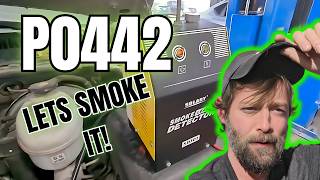
- A smoke test is the most reliable way to find the exact source of a small leak if it's not obvious from a visual inspection.
What's Unique About the 2001-2004 Gmc JIMMY
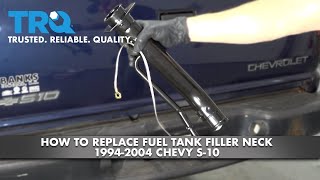
On the S-10 platform, which the GMC Jimmy is built on, rust is a significant factor, especially in the 'rust belt' states. The fuel filler neck is made of metal and is notoriously prone to rusting through, creating a classic P0442 small leak that can be difficult to spot without a smoke test or visual inspection from underneath. Forum discussions on BlazerForum.com frequently cite the filler neck as the culprit after users have already replaced the gas cap. This issue is so common that aftermarket companies like Spectra Premium and Dorman offer direct replacements. 🎬 Watch: Step-by-step guide to replacing a rusted fuel filler neck. While EVAP components like solenoids fail on all cars, the filler neck rust issue is a particularly common problem for this generation of Jimmy and its siblings, the Chevrolet Blazer and Oldsmobile Bravada.
Diagnostic Flowchart
Tap your situation to follow the diagnostic path that matches what you're seeing on this vehicle.
Symptoms You May Notice
- Check Engine Light is on.
- A faint smell of gasoline, especially around the rear of the vehicle or near the gas cap.
- Difficulty starting the vehicle immediately after refueling (less common, but possible if the purge valve is stuck open, flooding the engine with vapors).
- Gas pump nozzle clicks off repeatedly when trying to refuel, even if the tank isn't full (can be a symptom of a stuck-closed vent valve).
- Replacing the O2 sensors. O2 sensors are not related to the EVAP system and will not fix a P0442 code.
- Replacing the fuel pump. While the fuel tank pressure sensor or the module's top plate may be the cause, the pump itself is not a cause for this code unless the module's seal or top is leaking.
Most Likely Causes
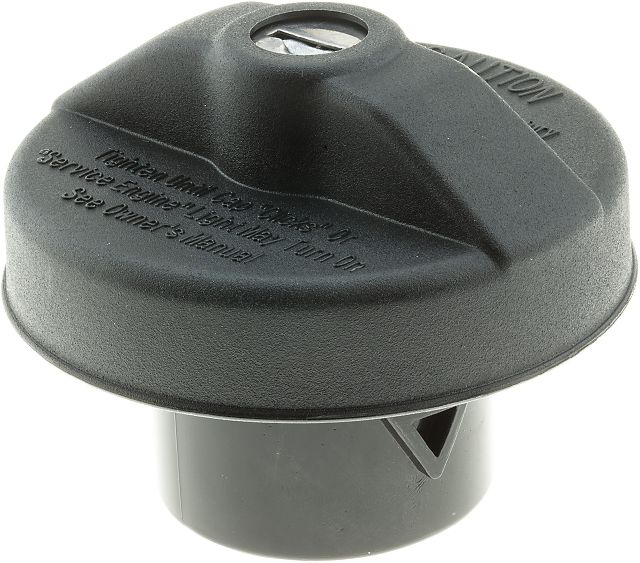
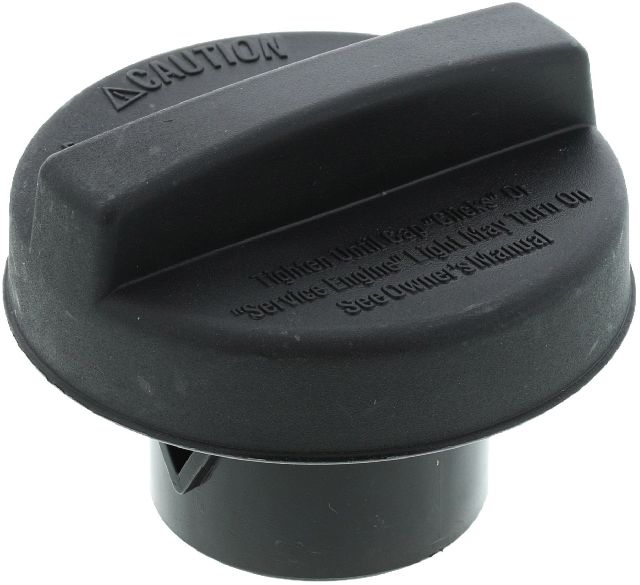
- Loose or Faulty Gas Cap 🔴 High Probability → Shop Fuel Tank Cap The gas cap seal is a simple rubber O-ring that degrades over time from exposure to fuel vapors and the elements. It's the most frequently handled part of the system and often the first to fail. Using a non-OEM cap can also cause sealing issues.
How to confirm: Inspect the gas cap's rubber seal for cracks, stiffness, or damage. Ensure the cap clicks several times when tightened. Check the metal lip of the filler neck for rust or debris that could prevent a good seal. A smoke test may show smoke escaping from the cap area, even with a new cap, if the filler neck itself is the problem.
Typical fix: Clean the filler neck sealing surface with a wire brush and replace the gas cap. It's highly recommended to use an OEM ACDelco cap (Part No. 15763227 / GT231) to ensure a proper seal.
Est. part cost: $15-$30 - Rusted or Cracked Fuel Filler Neck 🔴 High Probability → Shop Fuel Filler Neck The metal filler neck on these trucks is highly susceptible to rust, especially in regions that use road salt. Tiny pinholes can form, causing a small EVAP leak that is a hallmark issue for this platform.
How to confirm: A visual inspection from underneath the truck may reveal rust, flaking, or wetness around the filler neck. A smoke test is the most definitive way to confirm a leak in this area; smoke will be seen escaping directly from the rusted section of the pipe.
Typical fix: The fuel filler neck must be replaced. This involves lowering the spare tire for access and potentially lowering the fuel tank slightly. Aftermarket parts from Spectra Premium (e.g., FN726) or Dorman are widely available.
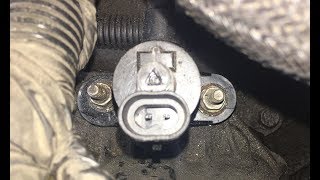
Est. part cost: $70-$200 - Failed EVAP Vent Solenoid 🟡 Medium Probability → Shop Vapor Canister The vent solenoid is located near the charcoal canister at the rear of the vehicle (often above the spare tire), exposing it to road grime, salt, and moisture. It can get stuck open or fail to close during the EVAP test, creating a leak path.
How to confirm: The valve is normally open. You can remove it and try to blow through it. Then, apply 12V power to its terminals; it should click shut and block airflow. If it doesn't close or is stuck open without power, it's faulty. A scan tool can also command it closed during a smoke test to verify the leak stops.
Typical fix: Replace the EVAP vent solenoid. It's typically mounted on or near the charcoal canister. ACDelco part 214-2149 is listed for 2003-2005 models, while 25950499 is also common for this range.
Est. part cost: $25-$60 - Failed EVAP Purge Solenoid/Valve ⚪ Low Probability → Shop Vapor Canister Located in the engine bay, this valve controls the flow of stored vapors to the engine. It can fail by not closing completely, creating a small, constant vacuum leak into the EVAP system.
How to confirm: The purge valve is normally closed. Disconnect it and try to blow air or pull a vacuum through it with the engine off. If air passes through, it's leaking internally and needs to be replaced. A symptom can be a rough idle or difficulty starting after refueling.
Typical fix: Replace the purge solenoid. It's usually mounted on the intake manifold and is easy to access, held by a single bolt. The OEM part is ACDelco 214-641.
Est. part cost: $20-$50 - Cracked or Disconnected EVAP Hoses ⚪ Low Probability The plastic and rubber lines that make up the EVAP system can become brittle and crack with age and exposure to heat cycles. A common area to check is the rubber hose connecting the filler neck to the tank.
How to confirm: Visually inspect all accessible EVAP lines running from the gas tank to the charcoal canister and up to the engine bay. A smoke test is the most effective method for finding small cracks that are not visible.
Typical fix: Replace the cracked section of hose or the entire line if necessary.
Est. part cost: $5-$30
Rare But Worth Checking
- Cracked Charcoal Canister: → Shop Vapor Canister The plastic housing of the charcoal canister itself can develop cracks from age or impact from road debris, creating a leak. This is usually found during a smoke test.
- Leaking Fuel Tank Pressure Sensor: → Shop Fuel Tank The sensor that monitors system pressure (often located on top of the fuel pump module) can develop a leak through its own housing or seal, though this is uncommon.
- Rusted Fuel Pump Module/Sending Unit Top: → Shop Fuel Pump On rust-belt vehicles, the metal top of the fuel pump sending unit can rust through, creating a small fuel and vapor leak on top of the gas tank. This can be hard to find without a smoke test and dropping the tank, but is a known failure point on this platform.
Diagnosis Steps
- Read the code with an OBD-II scanner to confirm P0442 is present.
- Inspect the gas cap. Remove it, check the seal for cracks, and ensure the filler neck surface is clean and free of rust. Tighten the cap until it clicks at least three times. An OEM cap is recommended.
- Clear the code and drive for a few days. If the code does not return, the gas cap was the issue.
- If the code returns, perform a thorough visual inspection of all visible EVAP hoses and components under the hood and near the gas tank. Pay special attention to the fuel filler neck for signs of heavy rust or flaking.
- Locate the EVAP purge solenoid on the engine's intake manifold. With the engine off, disconnect the hoses and try to blow through it. If air passes, it is faulty and needs replacement.
- If the purge valve is good, the next step is a smoke test. This involves injecting smoke into the EVAP service port and looking for where it escapes. This is the most effective way to find small leaks.
- During the smoke test, command the vent solenoid closed with a capable scan tool. If you don't have one, be aware that smoke will normally exit the vent solenoid, so you may need to temporarily plug it to test the rest of the system.
- Pay close attention to the fuel filler neck, EVAP vent solenoid (near the canister, above the spare tire), the charcoal canister itself, and the top of the fuel tank around the fuel pump module during the smoke test.
- Once the leaking component is identified, replace it, clear the code, and perform a full drive cycle to allow the EVAP monitor to run and confirm the repair.
Parts You'll Likely Need
- Gas Cap
(OEM #15763227)— This is the most common failure point due to frequent use and seal degradation. Using a quality OEM cap is crucial for a proper seal.
Trusted brands: ACDelco (GT231), Stant
OEM price range: $20-$35
Aftermarket price range: $10-$20 - Fuel Filler Neck — A very common point for rust-through holes on this platform, leading directly to an EVAP leak. Often the true cause after a gas cap replacement fails to fix the code.
Trusted brands: Spectra Premium (FN726), Dorman
OEM price range: $150-$250
Aftermarket price range: $70-$150 - EVAP Vent Solenoid
(OEM #25950499)— Located in a vulnerable area near the spare tire, this valve gets stuck or fails from exposure to road grime and moisture. It's a common failure that prevents the system from sealing for its self-test.
Trusted brands: ACDelco (214-2149, 25950499), Dorman (911-033), Standard Motor Products (CP422)
OEM price range: $40-$60
Aftermarket price range: $25-$45
Related Codes That Often Appear With This One
- P0455 — This code indicates a large EVAP leak. If a component fails significantly (like a completely broken hose or a vent valve stuck wide open), it may trigger both P0442 and P0455.
- P0440 — This is a general EVAP system malfunction code. It can sometimes appear alongside P0442 if the computer detects a general fault in addition to the small leak.
Technical Service Bulletins (TSBs) & Recalls
- TSB #21-NA-124 (Dec 14, 2022): Provides diagnostic tips for EVAP leaks causing P0442 and/or P0455.
- TSB #PIT4943D (Dec 09, 2015): Directs technicians to a Techlink article on using an EVAP system tester for P0442 diagnostics.
Platform-Specific Known Issues
- The metal fuel filler neck is a well-documented weak point for rust, often causing P0442 before any fuel leak is noticeable.
- GM issued Technical Service Bulletin #21-NA-124 providing diagnostic tips for finding EVAP leaks related to P0442 and P0455. [TSB #21-NA-124]
- An older TSB, #PIT4943D, also points technicians toward specific diagnostic procedures for code P0442 on these vehicles. [TSB #PIT4943D]
Mechanic-Grade Diagnostic Values
- Fuel Tank Pressure (FTP) Sensor Voltage — expected: Approximately 1.5V at atmospheric pressure (gas cap off). Voltage should decrease as vacuum is applied and increase as pressure is applied.. Failure: Voltage that is stuck high (e.g., 5V) or low (e.g., 0V), or does not change when pressure/vacuum is applied to the tank.
- EVAP Vent/Purge Solenoid Coil Resistance — expected: While specific OEM values are not published, a functional solenoid coil will show some resistance (typically between 15-40 ohms).. Failure: A reading of 0 ohms (short circuit) or infinite/OL (open circuit) indicates a failed solenoid coil.
Scan Tool Commands That Help
- GM Tech2: EVAP System Test — This is a guided diagnostic function that automatically commands the purge and vent solenoids to seal the system and monitors the FTP sensor to determine if a leak is present. It's the factory-level way to initiate the same test the PCM runs.
- GM Tech2: EVAP Vent Solenoid Control — During a smoke test, this command allows the technician to manually close the normally-open vent valve. This seals the system at the canister, allowing the rest of the lines, tank, and filler neck to be checked for leaks. If smoke pours out of the vent with the valve commanded closed, the valve itself is faulty.
- GM Tech2: EVAP Purge Solenoid Control — Allows the technician to command the normally-closed purge valve open. This is useful for checking if the valve is physically stuck. With the engine off, commanding it open should create an audible click and allow air to pass through it.
Wiring & Ground Locations
- G113 — On the driver's side, behind the front part of the frame area where the radiator is, near the EVAP canister and washer fluid filler neck.. A poor ground here can affect the operation of front-end components, including potentially the EVAP purge solenoid or its related circuits, leading to erratic behavior.
- G401 / G402 — Rear of the vehicle, typically on the frame rail or near the rear lights/tailgate area.. The EVAP vent solenoid and fuel pump module (which includes the FTP sensor) are located at the rear of the vehicle. A corroded or loose rear ground is a common cause of intermittent or failed operation for these critical EVAP components.
- Splice Pack 203 (SP203) — Located on the left side of the dash, serves as a common ground point for multiple instrument panel components.. While not directly powering EVAP components, this ground is critical for the Body Control Module (BCM) and Instrument Panel Cluster (IPC). A fault here could lead to incorrect readings or communication issues from the modules that interpret and display EVAP system data.
- Powertrain Control Module (PCM) — Located on the passenger side fender under the hood.. This is the brain of the operation. All EVAP sensor data goes to the PCM, and all commands (purge, vent) come from it. Knowing its location is key to checking for power, ground, and signal wires at the source.
Real Owner Repair Stories
- BlazerForum.com user post (2001 Chevrolet Blazer (similar platform)) — Persistent P0442 code, faint fuel smell.
❌ Tried (didn't work) Replaced gas cap with OEM part, Replaced EVAP vent solenoid, Replaced EVAP purge solenoid, Smoke test showed no obvious leaks around filler neck or lines
✅ What actually fixed it The owner dropped the fuel tank for inspection and found the metal top plate of the fuel pump sending unit had rusted through, creating a small leak on top of the tank that was not visible from underneath and was difficult to pinpoint with a smoke test without flooding the area with smoke. Replacing the entire fuel pump module assembly resolved the code.
"I Checked Everything" — The Actual Cause
- In cases on the S-10 platform where a smoke test passes, the Fuel Tank Pressure (FTP) sensor itself can be the culprit. If the sensor's diaphragm develops a small leak or it provides an inaccurate reading to the PCM, the computer may falsely believe there is a system leak when there isn't one. The PCM relies entirely on the FTP sensor's data to run the EVAP monitor test.
OEM Part Supersession History
Unknown→ACDelco 214-2149, 25950499— These are the common replacement part numbers for the EVAP Vent Solenoid for this vehicle range.
Heads up: While both 214-2149 and 25950499 are often listed, there can be slight differences in the included hoses or brackets. It is crucial to match the new part visually to the old one or use a VIN-specific catalog. Some kits are designed as retrofits to move the vent's filter to a less exposed location.
Helpful Videos

![How to Fix P0442 Engine Code in 7 Minutes [6 DIY Methods / Under $3.67]](https://img.youtube.com/vi/KISPTedKJmQ/mqdefault.jpg)
We Have This Part in Stock


The information in this article is provided for general reference and educational purposes only. Vehicle specifications, procedures, and part compatibility can vary by production date, trim level, and region. Always consult your vehicle's factory service manual and verify part numbers before purchasing or performing repairs. Safety-critical components such as airbags, seat belts, and braking systems should be installed by a qualified professional.
- Gmc JIMMY:
- 🧭 Diagnostic Flowchart
- 🎬 Helpful Videos
- 🛍️ Shop This Part
- What's Unique About the 2001-2004 Gmc JIMMY
- Symptoms You May Notice
- Most Likely Causes
- Rare But Worth Checking
- Diagnosis Steps
- Parts You'll Likely Need
- Related Codes That Often Appear With This One
- Technical Service Bulletins (TSBs) & Recalls
- Platform-Specific Known Issues
- Mechanic-Grade Diagnostic Values
- Scan Tool Commands That Help
- Wiring & Ground Locations
- Real Owner Repair Stories
- "I Checked Everything" — The Actual Cause
- OEM Part Supersession History
- 🎟️ Get 5% Off