

P0442 on 2005-2009 GMC Savana: EVAP Small Leak Causes and Fixes
For a 2005-2009 GMC Savana, a P0442 code is most often caused by a loose or faulty gas cap. If that's not the issue, the next most likely culprits are the EVAP vent or purge solenoids, which are common failure points on these vans. A new gas cap costs about $15-$30, while solenoids are typically $30-$80 each. Rust on the fuel filler neck is also a known issue leading to this code.
- Always check the gas cap first for a P0442 code. Ensure it's tight and the seal is intact before attempting any other repairs.
- The most common parts to fail after the gas cap are the EVAP vent solenoid (near the fuel tank) and the EVAP purge valve (in the engine bay).
- A smoke test is the most reliable and efficient way to find the source of a small EVAP leak.
- This code will not leave you stranded, but it will prevent your vehicle from passing an emissions inspection.
What's Unique About the 2005-2009 Gmc SAVANA
On this generation of GMC Savana and its twin, the Chevrolet Express, the EVAP system components are common GM parts shared across many trucks and vans, making them widely available. However, due to the van's long body-on-frame construction, rust on the fuel filler neck and deterioration of the extensive rubber/plastic EVAP lines running along the frame are frequent causes of this code. The provided NHTSA technical service bulletins (TSBs) emphasize the need for a methodical diagnostic procedure, like a smoke test, rather than just replacing parts. TSB #PIT4943D specifically details a process of using a scan tool to monitor pressure changes before and after isolating components like the purge solenoid, indicating that intermittent solenoid failures are common enough to warrant a specific test sequence.
Diagnostic Flowchart
Tap your situation to follow the diagnostic path that matches what you're seeing on this vehicle.
Symptoms You May Notice
- Check Engine Light is on
- A faint smell of fuel, particularly around the rear of the vehicle or near the gas cap.
- Possible difficulty starting or a rough idle if the purge valve is stuck open, allowing un-metered fuel vapors into the intake manifold at the wrong time.
- When refueling, the gas pump nozzle may click off repeatedly before the tank is full. This can happen if the EVAP vent path is blocked, which can be related to a faulty vent solenoid or canister.
- Replacing the O2 sensors, as they have no direct connection to the EVAP system's integrity test.
- Replacing the charcoal canister when the actual problem is a much cheaper vent or purge valve. The canister itself rarely fails unless physically damaged.
- Immediately replacing parts without performing a smoke test, which can lead to replacing multiple good parts before finding the actual leak.
Most Likely Causes
- Loose or Faulty Gas Cap 🔴 High Probability → Shop Fuel Tank Cap This is the most common cause for any vehicle with a P0442 code. The cap's rubber O-ring seal can crack and degrade over time, or the cap may not have been tightened properly.
How to confirm: Ensure the gas cap is tightened until it clicks at least three times. Inspect the rubber seal on the cap for cracks, stiffness, or tears. If the seal is damaged or the cap is a non-OEM part that doesn't fit well, it should be replaced.
Typical fix: Replace the gas cap with a new OEM-equivalent part (ACDelco is the GM original brand). It is often recommended to use an OEM cap as some aftermarket ones may not seal correctly.
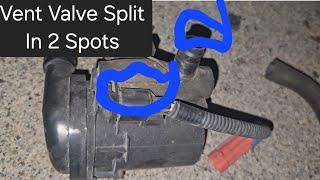
Est. part cost: $15-$30 - Failed EVAP Vent Solenoid 🟡 Medium Probability → Shop Vapor Canister This valve is located under the van near the charcoal canister, mounted to the frame rail, exposing it to road salt, debris, and moisture which leads to corrosion and failure. It can get stuck open or closed, or the seals can fail, causing a leak.
How to confirm: A smoke test is the most reliable method; smoke will exit the valve when it's commanded closed. It can also be tested with a bi-directional scan tool to command it closed and check if the system holds pressure. If P0449 is also present, this part is almost certainly the culprit.
Typical fix: Replace the EVAP vent solenoid. On the Savana, it is typically located under the vehicle on the driver's side frame rail, often between the door and the fuel tank.
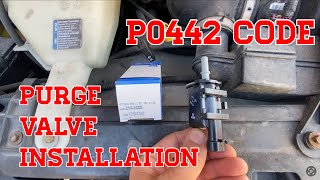
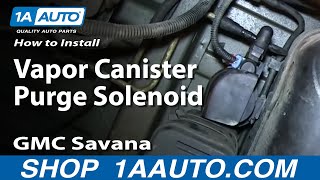
Est. part cost: $30-$80 - Failed EVAP Purge Solenoid/Valve 🟡 Medium Probability → Shop Vapor Canister This valve is located in the engine bay and can fail by getting stuck open, closed, or developing a leak from its housing. On the Savana vans, accessing it often requires removing the engine cover 🎬 See this walkthrough for replacing the purge solenoid ('doghouse') inside the cabin.
How to confirm: With the engine off, remove the valve and try to blow through it; it should be closed and not allow air to pass. A hand-held vacuum pump can also be used to see if it holds vacuum. A smoke test will also reveal a leak from the valve body or its connections.
Typical fix: Replace the purge solenoid. On the 2009 Express/Savana, it is located behind the alternator, requiring access from inside the van by removing the engine cover.
Est. part cost: $25-$75 - Rusted or Damaged Fuel Filler Neck 🟡 Medium Probability → Shop Fuel Filler Neck In areas where road salt is used (the 'Salt Belt'), the metal filler neck is highly susceptible to rust. This can create a poor sealing surface for the gas cap or develop pinhole leaks in the neck itself, triggering a P0442.
How to confirm: Visually inspect the lip of the filler neck where the gas cap seal makes contact. Clean off any rust or debris and check for pitting. A smoke test is very effective, as smoke will be seen billowing from the rusted area of the neck.
Typical fix: Use a wire brush to clean the sealing surface. If it's only minor surface rust, applying silicone paste can help create a better seal. If the neck is badly corroded or has holes, the entire filler neck must be replaced.
Est. part cost: $70-$150 - Cracked or Disconnected EVAP Hoses ⚪ Low Probability The rubber and plastic hoses become brittle with age and heat cycles, leading to cracks, especially at connection points and bends along the long frame of the van.
How to confirm: Visually inspect all accessible EVAP lines from the engine bay to the fuel tank. A smoke test is the most effective way to find a cracked hose, as smoke will visibly escape from the crack.
Typical fix: Replace the damaged section of hose or the entire line assembly if needed.
Est. part cost: $10-$50
Rare But Worth Checking
- Cracked EVAP Charcoal Canister: → Shop Vapor Canister While not a common failure for a small leak, the plastic housing of the canister can develop cracks from age or impact from road debris, leading to a P0442 code. This is usually found during a smoke test after other common components have been ruled out.
- Leaking Fuel Tank Pressure Sensor (FTPS): → Shop Fuel Tank The sensor itself or its seal on the fuel tank/fuel pump module can fail, creating a small leak. This is less common than valve or hose failures but should be checked during a smoke test if other components seem fine.
Diagnosis Steps
- Check the gas cap. Remove it, inspect the seal for cracks, and reinstall it, making sure it clicks several times. Clear the code and drive for a few days to see if it returns. Consider an OEM replacement if the cap is old.
- If the code returns, perform a thorough visual inspection of all accessible EVAP hoses and lines between the engine, charcoal canister, and fuel tank. Look for obvious cracks, damage, or loose connections.
- Inspect the fuel filler neck for rust or damage where the gas cap seals. Clean the surface with a wire brush.
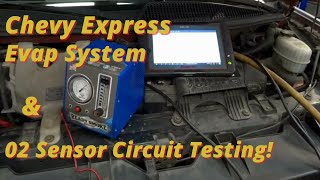
- The most effective next step is to perform a smoke test. A smoke machine injects low-pressure smoke into the EVAP service port. On many GM trucks/vans, this port is under the hood with a green cap. Watch for smoke escaping from any component, which will pinpoint the exact location of the leak. 🎬 Watch: Common leak areas to check on GM trucks and vans
- During the smoke test, pay close attention to the EVAP vent solenoid (under the van on the frame rail) and purge solenoid (in the engine bay, possibly under the doghouse cover), as they are common leak points.
- If no leaks are found with smoke, use a scan tool to follow the diagnostic procedure in TSB #PIT4943D. This involves closing the EVAP system and monitoring the fuel tank pressure (FTP) sensor to see if it holds a vacuum, which can identify an intermittent leak from a solenoid.
- If all components test good and no leaks are found, the FTP sensor itself could be faulty, though this is rare.
Parts You'll Likely Need
- Gas Cap — This is the most frequent and simplest fix. The seal wears out over time. Using an OEM cap is highly recommended as aftermarket caps can cause sealing issues.
Trusted brands: ACDelco
OEM price range: $20-$35
Aftermarket price range: $15-$25 - Vapor Canister Vent Solenoid
(OEM #25932571)— A very common failure point on GM trucks and vans due to its exposed location under the vehicle. It gets stuck open, causing a persistent small leak. This part number may be superseded by others like 10382105.
Trusted brands: ACDelco, Dorman
OEM price range: $40-$60
Aftermarket price range: $25-$45 - Vapor Canister Purge Valve/Solenoid
(OEM #12597567)— Located in the engine bay, this valve can get stuck or develop a housing crack. It's a common failure item across many GM vehicles from this era.
Trusted brands: ACDelco, Dorman
OEM price range: $25-$75
Aftermarket price range: $20-$50
Related Codes That Often Appear With This One
- P0455 — This indicates a large EVAP leak. If a component fails significantly (e.g., a hose comes completely disconnected or a valve is stuck wide open), you may see both codes as the system tries to diagnose the fault.
- P0449 — This code specifically points to a fault in the EVAP vent solenoid valve control circuit. If you see P0442 and P0449 together, the vent solenoid or its wiring is almost certainly the problem.
Technical Service Bulletins (TSBs) & Recalls
- TSB #21-NA-124: Provides general diagnostic tips for finding EVAP leaks related to codes P0442 and P0455, advising a chronological check of lines, connections, the vent valve, and then the purge valve.
- TSB #PIT4943D: Outlines a specific diagnostic procedure for P0442 when a leak is not obvious. It instructs technicians to use a scan tool to monitor the fuel tank pressure sensor after closing the system to detect intermittent leaks from the purge solenoid.
Platform-Specific Known Issues
- Rusted Fuel Filler Neck: → Shop Fuel Filler Neck A common issue on Savana and Express vans used in regions with road salt is the fuel filler neck rusting out. This creates a leak either at the gas cap seal or through pinholes in the neck itself, which is a very common cause for a P0442 code that mechanics check for.
- Vent Solenoid Location and Failure: The EVAP vent solenoid is mounted on the frame rail, making it highly vulnerable to water and salt spray, leading to frequent failures. A 1A Auto video specifically shows its location and replacement on a 2005 Savana.
- Purge Solenoid Access: → Shop Vapor Canister Unlike in many trucks where the purge solenoid is easily accessible on top of the engine, on the Savana/Express vans, it is often tucked behind the alternator. This requires removing the interior engine cover ('doghouse') for access, making the repair more labor-intensive.
Mechanic-Grade Diagnostic Values
- Fuel Tank Pressure (FTP) Sensor Voltage — expected: ~1.5 Volts with the gas cap off or system vented (at atmospheric pressure).. Failure: A reading significantly different from 1.5V with the system open indicates a faulty sensor. During a scan tool 'Purge/Seal' test, if the voltage drops (indicating vacuum) and then rapidly returns to 1.5V after sealing, a leak is present.
Scan Tool Commands That Help
- Tech 2 / GDS2 or equivalent professional scanner: EVAP Service Bay Test — To run a full, automated, computer-controlled test of the entire EVAP system's integrity while the vehicle is stationary. The tool commands the valves and monitors the pressure sensor to simulate a drive cycle test.
- Tech 2 / GDS2 or equivalent professional scanner: EVAP Purge/Seal — To manually control the EVAP purge and vent solenoids while watching live data from the FTP sensor. This is used to isolate a leak, test individual solenoid function, and verify a repair has actually fixed the leak before completing a full drive cycle.
- Tech 2 / GDS2 or equivalent professional scanner: Vent Solenoid Activation — To command the vent solenoid closed ('Not Venting') before performing a smoke test. This seals the system without having to physically clamp the vent hose, and simultaneously tests the electronic function of the vent solenoid.
Wiring & Ground Locations
- G303 / G305 — G303 is on the left (driver's side) B-pillar behind the trim. G305 is under the vehicle on the frame, to the rear of the left B-pillar.. The EVAP vent solenoid and canister are located on the frame rail under the vehicle. A poor ground at one of these nearby locations can cause intermittent operation of the vent solenoid, leading to a P0449 circuit code or contributing to a P0442 leak code if the valve doesn't seal properly.
- GM Ground Numbering — Vehicle-wide. GM grounds are numbered by location: G1xx (engine bay/front), G2xx (front cabin), G3xx (mid-cabin/underbody), G4xx (rear). Knowing this helps locate relevant grounds for the EVAP system, which has components in the engine bay (G1xx) and under the body (G3xx).
Real Owner Repair Stories
- YouTube channel 'GoTech' (2011 Chevrolet Express Van (G-Series)) — EVAP code, previous shop had replaced the purge solenoid.
❌ Tried (didn't work) A previous repair replaced the purge solenoid, but the leak remained.
✅ What actually fixed it The diagnostic showed a continued leak using the 'EVAP Purge/Seal' scan tool test. The technician suspected the O-ring on the fuel pump module was the actual cause of the persistent leak, which is a common issue after a fuel pump replacement and can be missed by a standard smoke test.
"I Checked Everything" — The Actual Cause
- In one documented case on a similar GM truck, a smoke test revealed no external leaks from hoses, the canister, or the gas cap. The vent valve was commanded closed and tested good. The actual cause was a faulty EVAP purge valve in the engine bay that was not fully closing, allowing a small amount of vapor to leak internally into the intake manifold. This type of internal leak is not always found with a smoke test alone and is often diagnosed by testing the valve with a hand-held vacuum pump after other tests fail.
OEM Part Supersession History
10382105, 15750484, 22728634→25932571 (ACDelco 214-2149)— Standard part consolidation and potential design improvements for the EVAP Vent Solenoid.12570469, 12597341, 12597566, 12606684→12597567, which is now superseded by 12735397— Long history of revisions for the EVAP Purge Solenoid, likely for improved durability and reliability across many GM platforms.
Model Year Variations Within This Range
- 2005-2009: The fundamental EVAP system design and common failure points are highly consistent across this year range for the Savana/Express platform. The primary part numbers for the purge and vent solenoids apply broadly, though minor routing or connector differences may exist depending on the specific engine (4.3L, 4.8L, 5.3L, 6.0L) installed.
Helpful Videos
Used OEM Parts in Stock
New Aftermarket Parts Available


The information in this article is provided for general reference and educational purposes only. Vehicle specifications, procedures, and part compatibility can vary by production date, trim level, and region. Always consult your vehicle's factory service manual and verify part numbers before purchasing or performing repairs. Safety-critical components such as airbags, seat belts, and braking systems should be installed by a qualified professional.
- Gmc SAVANA:
- 🧭 Diagnostic Flowchart
- 🎬 Helpful Videos
- 🛍️ Shop This Part
- What's Unique About the 2005-2009 Gmc SAVANA
- Symptoms You May Notice
- Most Likely Causes
- Rare But Worth Checking
- Diagnosis Steps
- Parts You'll Likely Need
- Related Codes That Often Appear With This One
- Technical Service Bulletins (TSBs) & Recalls
- Platform-Specific Known Issues
- Mechanic-Grade Diagnostic Values
- Scan Tool Commands That Help
- Wiring & Ground Locations
- Real Owner Repair Stories
- "I Checked Everything" — The Actual Cause
- OEM Part Supersession History
- Model Year Variations Within This Range
- 🎟️ Get 5% Off