

P0442 on 2015-2019 GMC Savana: EVAP Small Leak Causes and Fixes
The P0442 code on a 2015-2019 GMC Savana indicates a small leak in the evaporative emissions (EVAP) system. The most common causes are a loose or faulty gas cap, a failing canister purge valve, or a bad vent valve. A new gas cap is the cheapest first step, while valve replacements typically cost between $25 and $75 for the part. A smoke test is the most reliable way to find the leak's source.
- P0442 on your GMC Savana means there's a small leak in the fuel vapor system.
- Always start by checking the gas cap. A loose or worn-out cap is the most frequent and cheapest fix.
- The next most likely culprits are the EVAP purge valve (in the engine bay) and the EVAP vent valve (under the van near the tank).
- While you can drive with this code, you won't pass an emissions test until it's fixed.
- If a simple inspection doesn't reveal the leak, a professional smoke test is the most accurate way to find it.
What's Unique About the 2015-2019 Gmc SAVANA
On these full-size vans, the EVAP system components, particularly the vent valve and charcoal canister, are located underneath the vehicle near the fuel tank and are exposed to road debris, dirt, and moisture. This exposure can lead to premature failure of the vent valve, which can get clogged with dirt and get stuck open, or cracks in the system's hoses. General Motors has issued technical service bulletins (TSBs) that provide specific diagnostic steps for finding these leaks, highlighting the need for a systematic approach rather than just replacing parts.
Diagnostic Flowchart
Tap your situation to follow the diagnostic path that matches what you're seeing on this vehicle.
Symptoms You May Notice
- Check Engine Light is on
- A faint smell of gasoline, particularly around the rear of the vehicle.
- Difficulty starting the vehicle immediately after refueling (if the purge valve is stuck open).
- Difficulty filling the fuel tank (pump nozzle clicks off repeatedly) if the vent path is blocked.
- Replacing the charcoal canister when only a valve has failed. The canister itself is often durable; the valves attached to it are more common failure points.
- Replacing the O2 sensors. EVAP codes are related to the fuel vapor system, not the exhaust gas measurement system.
Most Likely Causes
- Loose or Faulty Gas Cap 🔴 High Probability → Shop Fuel Tank Cap The gas cap is the most frequent cause of a P0442 code. Its seal can wear out, crack, or be damaged over time. It's also common for it to simply not be tightened correctly.
How to confirm: Inspect the gas cap for any cracks, especially on the rubber O-ring or seal. Ensure it clicks several times when tightened. If the seal is hard, cracked, or missing, it needs replacement. Using a non-OEM cap can also cause sealing issues.
Typical fix: Replace the gas cap. It is highly recommended to use an OEM (ACDelco) or high-quality aftermarket cap, as some cheaper caps may not seal properly. Clear the code and drive for a few days to see if it returns.
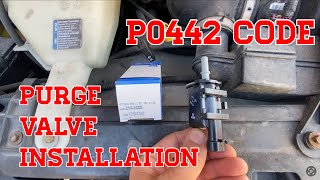
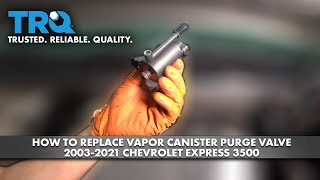
Est. part cost: $15-$30 - EVAP Canister Purge Valve Failure 🟡 Medium Probability → Shop Vapor Canister The purge valve, located in the engine bay on top of the intake manifold, can get stuck open. This creates a constant vacuum leak in the EVAP system, which the computer detects during its self-test. Access on the Savana/Express may require removing the interior engine cover ('dog house').
How to confirm: With the engine off, remove the purge valve and try to blow through it. It should be normally closed, meaning no air should pass through. If you can blow through it, it has failed and is stuck open.
Typical fix: Replace the canister purge valve. This is typically a simple repair involving one bolt and two hose connections.
Est. part cost: $25-$60 - EVAP Canister Vent Valve/Solenoid Failure 🟡 Medium Probability → Shop Vapor Canister Located near the charcoal canister under the vehicle, this valve is highly exposed to dirt, road salt, and moisture. Debris can enter the valve and cause it to stick open, preventing the system from sealing for its leak test.
How to confirm: The valve should be open when unpowered. A scan tool can command it closed to test for leaks. A common failure mode is getting stuck open, which will cause a P0442. A smoke test is the most effective way to confirm a leak at the vent valve.
Typical fix: Replace the vent valve solenoid. Accessing it may require safely raising the vehicle and possibly lowering the spare tire.
Est. part cost: $30-$75 - Cracked or Disconnected EVAP Hoses ⚪ Low Probability The plastic and rubber hoses that make up the EVAP system can become brittle with age and heat, leading to small cracks or loose connections. The connections at the purge and vent valves are common places to check.
How to confirm: A visual inspection may reveal obvious cracks, but small leaks often require a smoke test. A mechanic introduces smoke into the EVAP system and looks for where it escapes.
Typical fix: Replace the damaged section of hose or the entire hose assembly. Ensure all connections are secure.
Est. part cost: $10-$50
Rare But Worth Checking
- Cracked Charcoal Canister: → Shop Vapor Canister The plastic housing of the charcoal canister can be damaged by road debris, causing a leak. This is less common than valve failures but should be inspected, especially if there is evidence of impact underneath the vehicle.
- Leaking Fuel Tank Pressure Sensor: → Shop Fuel Tank The sensor that monitors pressure in the system can develop a leak at its seal, though this is uncommon. It's usually located on the fuel tank or fuel pump module. A faulty sensor may also cause the computer to incorrectly report a leak.
Diagnosis Steps
- Check the Gas Cap: Remove, inspect the seal for cracks or damage, and retighten it until it clicks at least three times. Clear the code and drive for a few days to see if it returns. Consider replacing it with an OEM cap as a cheap first step.
- Visual Inspection: Carefully inspect all accessible EVAP hoses in the engine bay and under the vehicle leading to the charcoal canister. Look for any obvious cracks, splits, or loose connections, especially at the valve connection points.
- Test the Purge Valve: Locate the purge valve on the engine. Disconnect it and attempt to blow through it. If air passes, the valve is stuck open and must be replaced.
- Inspect the Vent Valve: Locate the vent valve near the charcoal canister under the van. Check its electrical connection and look for any physical damage, heavy corrosion, or signs of dirt clogging the mechanism.
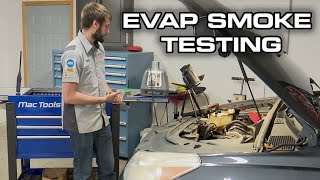
- Perform a Smoke Test: If the leak source is still not found, the most reliable method is a smoke test. This involves injecting pressurized smoke into the EVAP system's service port, typically found near the purge valve in the engine bay. The normally-open vent valve must be commanded closed with a scan tool or temporarily plugged to seal the system for the test. Smoke will exit from the location of the leak, making it easy to spot.
Parts You'll Likely Need
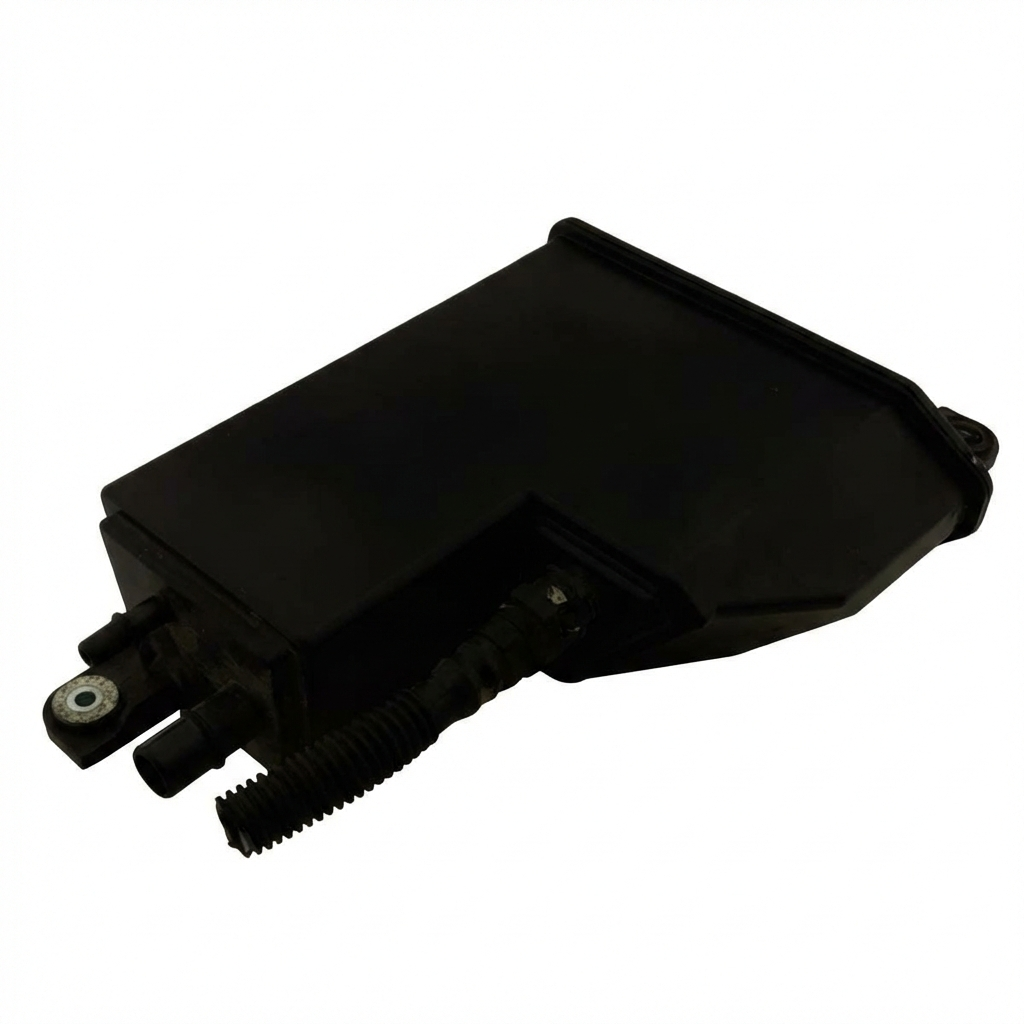
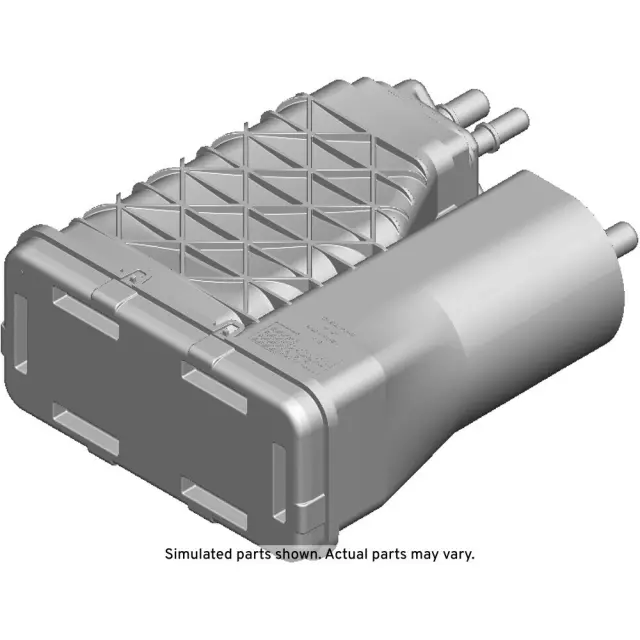
- Vapor Canister Purge Valve
(OEM #12690512)— This valve frequently gets stuck open, causing a constant small leak. It's a very common failure point on many GM vehicles.
Trusted brands: ACDelco, Bosch
OEM price range: $35-$60
Aftermarket price range: $25-$45 - Vapor Canister Vent Valve/Solenoid
(OEM #214-2149)— Its location under the vehicle makes it susceptible to dirt and moisture, causing it to stick open and fail to seal the system for the leak test.
Trusted brands: ACDelco, Dorman
OEM price range: $40-$75
Aftermarket price range: $30-$50 - Fuel Cap
(OEM #ACDelco GT295)— The seal on the gas cap is the simplest and most common point of failure in the EVAP system. Always check this first. Using a non-OEM cap is a common cause of failure.
Trusted brands: ACDelco, Gates
OEM price range: $20-$30
Aftermarket price range: $15-$25
Related Codes That Often Appear With This One
- P0455 — This code indicates a large EVAP leak. If a component fails intermittently or a small crack grows larger, you might see both codes at different times. A TSB from GM mentions diagnosing P0442 and P0455 together.
- P0496 — This code indicates 'EVAP Flow During a Non-Purge Condition,' which almost always points to a purge valve that is stuck open. If the purge valve is the cause of the P0442, you may also see a P0496.
- P0449 — This code specifically points to an electrical malfunction in the vent valve solenoid control circuit. While a P0442 is for a physical leak, a vent valve that is stuck open (a physical leak) can be a root cause. If you see P0449, the problem is almost certainly the vent valve or its wiring; if you only see P0442, the vent valve is still a possibility, but it's a mechanical failure rather than electrical.
Technical Service Bulletins (TSBs) & Recalls
- 21-NA-124: Diagnostic Tip for Malfunction Indicator Lamp (MIL) Illuminated - DTC P0442 and/or P0455 Set.
- PIT4943D: Service Engine Soon Malfunction Indicator Lamp with Diagnostic Trouble Code P0442.
Platform-Specific Known Issues
- GM issued Technical Service Bulletin #21-NA-124 which provides a specific diagnostic order for P0442/P0455: 1) Investigate all EVAP lines for proper installation and damage. 2) Investigate the vent valve for a stuck-open malfunction. 3) Investigate the purge valve.
- Another TSB, #PIT4943D, directs technicians to use the specific 'Evaporative Emissions System Tester' tool, indicating that a smoke machine is the proper way to diagnose these leaks accurately.
Mechanic-Grade Diagnostic Values
- Fuel Tank Pressure (FTP) Sensor Voltage — expected: ~1.5 Volts (with key on, engine off, and system at atmospheric pressure, e.g., gas cap off). Failure: A voltage that is significantly different from 1.5V at atmospheric pressure, or a voltage that does not change when vacuum is applied to the system during a test, can indicate a faulty sensor.
Scan Tool Commands That Help
- GDS2 / Tech2 (or advanced aftermarket scanner): EVAP Vent Solenoid - Close — This command is essential for performing a smoke test. The vent valve is normally open, so it must be commanded shut to seal the EVAP system and allow it to be pressurized with smoke to find leaks.
- GDS2 / Tech2 (or advanced aftermarket scanner): EVAP Purge Solenoid - Open % — Used to functionally test the purge valve and check if the system can pull a vacuum. By commanding the purge valve open while the vent is closed and the engine is running, a technician can watch the FTP sensor voltage to see if a vacuum builds, confirming flow from the engine intake.
- GDS2 / Tech2 (or advanced aftermarket scanner): EVAP Service Bay Test — This is an automated function that runs the onboard EVAP leak test on demand. It allows a technician to verify a repair in the shop without having to perform a full drive cycle, by commanding the valves and monitoring the pressure sensor to confirm the system seals correctly.
Real Owner Repair Stories
- GM Forum user (GM Vehicle (Buick)) — Persistent P0442 check engine light and a gasoline smell in the trunk area.
❌ Tried (didn't work) Replaced vapor canister purge valve, Replaced canister vent solenoid
✅ What actually fixed it The final fix was replacing the fuel tank pressure sensor and the fuel pump 'sending unit' gasket. The gas smell was the clue that the leak was at the top of the tank, and the gasket had failed. - KIT'S Auto and Truck Repair on YouTube (Chevrolet Express Van) — P0442 (EVAP small leak) and P2270 (O2 sensor stuck lean).
❌ Tried (didn't work) A smoke test of the EVAP system showed no visible leaks.
✅ What actually fixed it Despite the clean smoke test, the mechanic replaced the gas cap as a low-cost, high-probability item. This, combined with replacing the faulty O2 sensor, resolved all codes.
"I Checked Everything" — The Actual Cause
- A faulty Fuel Tank Pressure (FTP) sensor can send incorrect voltage readings to the computer, causing it to believe there is a leak when the system is perfectly sealed. A smoke test will show no leaks because there are none to find; the failure is electrical, not physical.
- In one documented case on a Chevy Express, a smoke test revealed no leaks, yet replacing the gas cap was part of the final repair that cleared the P0442 code, suggesting the cap seal was failing under conditions not replicated by the static test.
OEM Part Supersession History
Various Vent Valve Solenoids→Vent Valve Solenoid with Relocation Kit— On many GM trucks and vans, the original vent valve location is low on the chassis, making it highly susceptible to dirt, water, and road debris ingestion, which causes the valve to fail.
Heads up: GM issued TSBs for other models like the Silverado (02-06-04-037J) recommending the installation of a relocation kit that moves the filter/intake for the vent valve to a higher, more protected location (like the fuel filler neck area). While not specific to the Savana in the search results, this is a well-known fix for recurring vent valve failures on similar GM platforms and is a valuable upgrade.
Model Year Variations Within This Range
- 2015-2019: No significant variations in the EVAP system design, primary causes, or diagnostic procedures were identified within this model year range for the GMC Savana. The platform remained largely consistent.
Helpful Videos
![How to Fix P0442 Engine Code in 7 Minutes [6 DIY Methods / Under $3.67]](https://img.youtube.com/vi/KISPTedKJmQ/mqdefault.jpg)
Used OEM Parts in Stock
New Aftermarket Parts Available


The information in this article is provided for general reference and educational purposes only. Vehicle specifications, procedures, and part compatibility can vary by production date, trim level, and region. Always consult your vehicle's factory service manual and verify part numbers before purchasing or performing repairs. Safety-critical components such as airbags, seat belts, and braking systems should be installed by a qualified professional.
- Gmc SAVANA:
- 🧭 Diagnostic Flowchart
- 🎬 Helpful Videos
- 🛍️ Shop This Part
- What's Unique About the 2015-2019 Gmc SAVANA
- Symptoms You May Notice
- Most Likely Causes
- Rare But Worth Checking
- Diagnosis Steps
- Parts You'll Likely Need
- Related Codes That Often Appear With This One
- Technical Service Bulletins (TSBs) & Recalls
- Platform-Specific Known Issues
- Mechanic-Grade Diagnostic Values
- Scan Tool Commands That Help
- Real Owner Repair Stories
- "I Checked Everything" — The Actual Cause
- OEM Part Supersession History
- Model Year Variations Within This Range
- 🎟️ Get 5% Off