

P0442 on 2008-2015 GMC Sierra 1500: Causes and Fixes for Small EVAP Leaks
P0442 on a 2008-2015 Sierra most often means a faulty gas cap, a bad EVAP vent solenoid near the tank, or a failed EVAP purge valve on the engine. Start by checking the gas cap. If that's not it, the vent or purge solenoids are the next likely culprits, costing between $25 and $80 for the part. A smoke test is the best way to find the exact leak source.
- P0442 indicates a small leak in your truck's emissions system. It is safe to drive but will cause you to fail an emissions test.
- Always start with the easiest and cheapest fix: check that your gas cap is tight and its seal is not cracked. An OEM replacement is recommended.
- The most common parts to fail on this truck are the EVAP vent solenoid (under the truck by the tank) and the EVAP purge valve (in the engine bay).
- While you can replace parts based on probability, the most accurate way to find the leak is to have a mechanic perform a smoke test.
- This code is often seen with P0455 (large leak) and P0449 (vent valve circuit fault), which can help narrow down the diagnosis.
What's Unique About the 2008-2015 Gmc SIERRA 1500

On this generation of GMC Sierra, the EVAP vent solenoid is a notoriously common failure point. It is often located near the spare tire, where it is exposed to road debris, dirt, and moisture, causing it to fail or get stuck. This is so common that GM released updated parts that relocate the filter to a cleaner, higher location, like near the transmission or fuel filler neck, to prevent premature failure. Several Technical Service Bulletins (TSBs) have been issued to help technicians diagnose EVAP leaks related to this and other components. [Bulletin #21-NA-124, Bulletin #15-06-04-002]
Diagnostic Flowchart

Tap your situation to follow the diagnostic path that matches what you're seeing on this vehicle.
Generation note: This year range covers two generations of the GMC Sierra 1500: the second generation (GMT900, 2008-2013) and the beginning of the third generation (K2XX, 2014-2015). While the causes for P0442 are largely the same, the specific part numbers and locations for components like the vent and purge solenoids can differ. Always verify parts using your truck's VIN before purchasing.
Symptoms You May Notice

- Check Engine Light is on.
- A noticeable fuel odor, particularly after filling the tank or while idling. [Bulletin #15-NA-019, 18]
- Difficulty filling the fuel tank (the pump may shut off repeatedly). [Bulletin #15-06-04-002]
- A hissing sound when removing the gas cap.
- Difficulty starting the engine immediately after refueling. This strongly points to a purge valve that is stuck open.
- Rough idle or slight decrease in fuel economy.
- Replacing the purge valve when the vent valve is the actual problem, or vice-versa. Without a proper smoke test, replacing these components is often a guess.
- Replacing the gas cap with a cheap aftermarket version that doesn't seal properly, leading to the code returning.
Most Likely Causes

- Loose or Faulty Gas Cap 🔴 High Probability → Shop Fuel Tank Cap The gas cap is the most frequently handled part of the EVAP system, and its seal can wear out or crack over time. It's also easy to forget to tighten it until it clicks. Using a cheap, non-OEM gas cap is a known cause of the code returning after a replacement.
How to confirm: Inspect the gas cap for any visible cracks on the seal. Ensure it is tightened until it clicks at least once. If the seal is worn or damaged, replace the cap.
Typical fix: Replace the gas cap. It's highly recommended to use an OEM part (like ACDelco GT330) to ensure a proper seal.
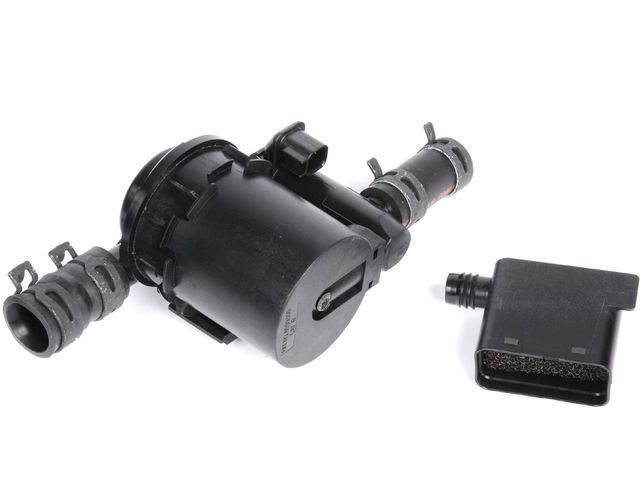
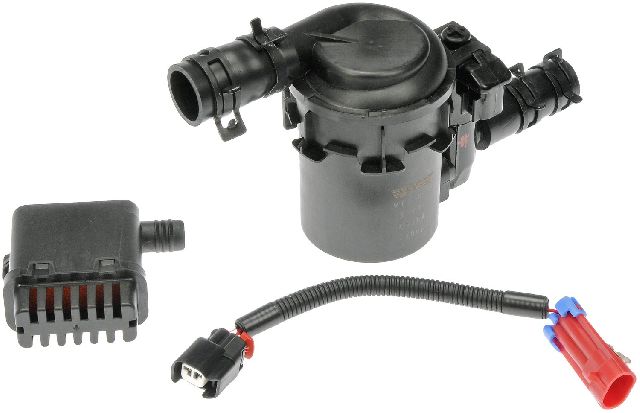
Est. part cost: $15-$40 - EVAP Vent Solenoid Failure 🔴 High Probability → Shop Vapor Canister The vent solenoid is often mounted on or near the charcoal canister under the truck by the spare tire, making it highly susceptible to dirt, water, and corrosion, which can cause it to stick open or closed.
How to confirm: The solenoid can be tested with a capable scan tool that can command it to open and close. A definitive diagnosis often requires a smoke test to see if the valve is leaking when it should be closed. Visually inspect the solenoid and its filter for dirt or clogging.
Typical fix: Replace the EVAP vent solenoid. Many owners opt for an updated kit (like ACDelco 214-2082) that relocates the air filter to a less exposed area to prevent repeat failures. 🎬 See this walkthrough for replacing the vent solenoid.
Est. part cost: $30-$80 - EVAP Purge Valve/Solenoid Failure 🟡 Medium Probability → Shop Vapor Canister This valve is located in the engine bay and can get stuck open or fail to seal properly over time, creating a constant small leak. A key symptom is difficulty starting after filling the gas tank.
How to confirm: With the engine off, disconnect the vapor line from the purge valve. Try to blow through it; if air passes, the valve is stuck open and needs to be replaced. You can also test it with a hand-held vacuum pump; it should hold a vacuum without leaking down.
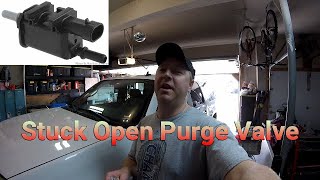
Typical fix: Replace the purge valve/solenoid. This is usually mounted directly on the intake manifold and is a very common DIY repair that takes only a few minutes. 🎬 Watch: How to replace the purge valve on your truck.
Est. part cost: $25-$60 - Cracked or Disconnected EVAP Hoses 🟡 Medium Probability The plastic and rubber lines that make up the EVAP system can become brittle with age and exposure to heat and elements, leading to small cracks, especially at connection points and elbows.
How to confirm: A thorough visual inspection of all accessible EVAP lines from the engine bay to the fuel tank may reveal obvious cracks. A smoke test is the most effective way to find small, hard-to-see leaks in the lines.
Typical fix: Replace the cracked section of the hose or the entire line assembly if necessary. In one documented case, an owner found the leak at a metal hose clip on the frame rail and was able to fix it with sealant.
Est. part cost: $10-$50
Rare But Worth Checking
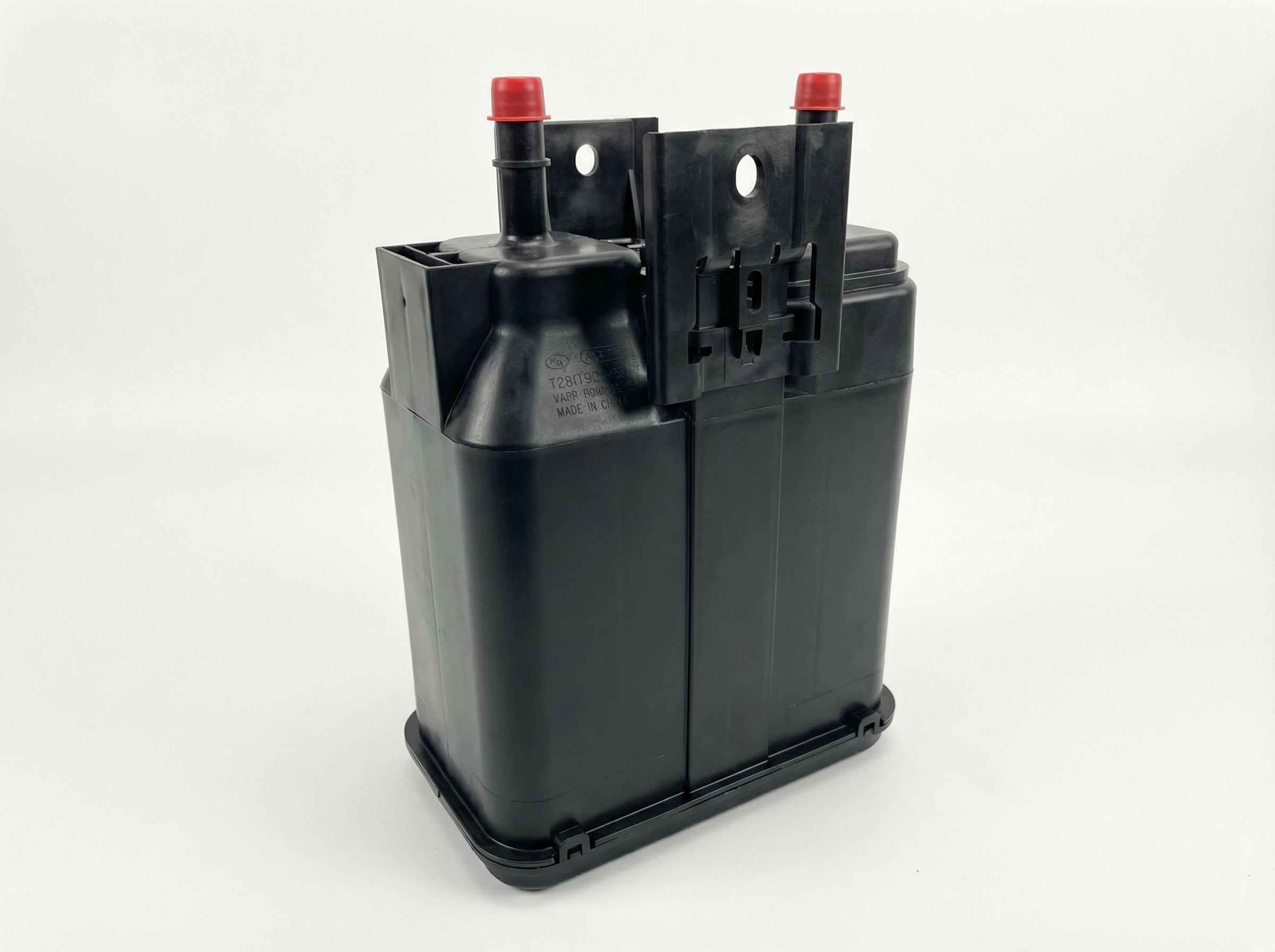
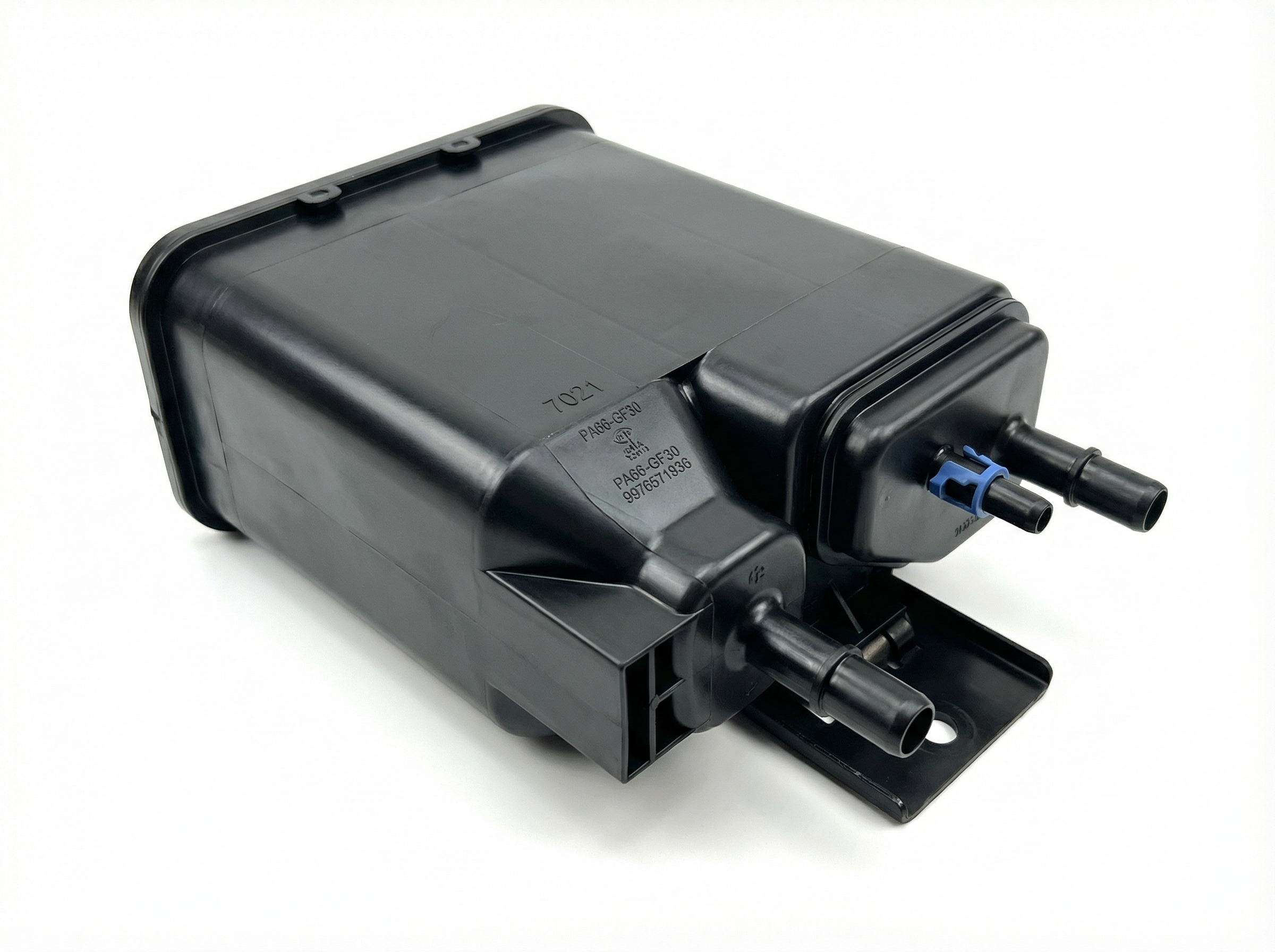
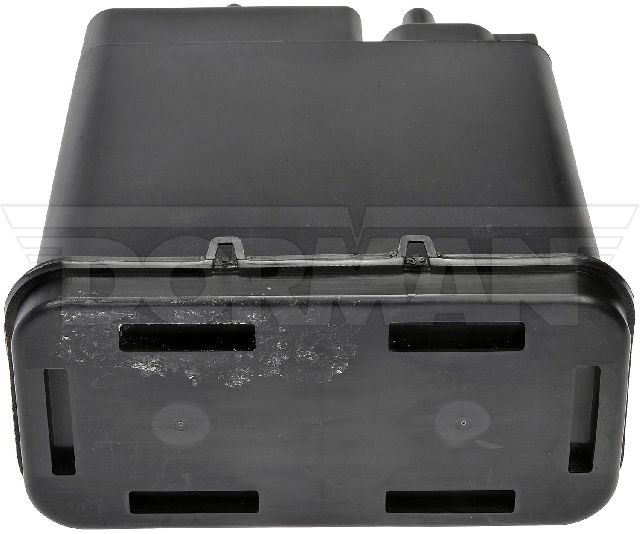
- Cracked Charcoal Canister: → Shop Vapor Canister The canister itself can develop hairline cracks from road debris impact or age, creating a leak. This is less common than solenoid failure but should be checked during a smoke test.
- Leaking Fuel Tank Pressure Sensor: → Shop Fuel Tank The sensor that monitors system pressure can fail, but more rarely, the seal where it mounts to the fuel tank or fuel pump module can leak. This is usually found with a smoke test.
- Fractured Fuel Tank Filler Vent Hose: → Shop Fuel Tank TSB #15-NA-019 specifically points out that the connector on the filler vent hose can fracture, causing a fuel odor and setting P0442 or P0455. The fix is to replace the vent hose assembly (Part No. 22802073 for 2013-2015 models).
- Leaking Oil Fill Neck O-Ring: In one owner's experience with a 2013 model, a smoke test revealed a leak from the O-ring of the oil fill neck on the valve cover, which is connected to the EVAP system on some engine variants. Replacing the O-ring resolved the P0442 code.
Diagnosis Steps
- Read the code with an OBD-II scanner and check for any other related codes.
- Inspect the gas cap. Ensure it's tight and the rubber seal is not cracked, brittle, or missing. If in doubt, it's an inexpensive first part to replace with a quality OEM cap.
- Perform a thorough visual inspection of all visible EVAP hoses and lines running from the engine bay to the fuel tank. Look for obvious cracks, breaks, or loose connections, paying close attention to rubber elbows and plastic clips.
- Locate the EVAP purge valve in the engine bay. With the engine off, disconnect it and try to blow through it. If air passes, it's faulty and needs replacement. For a more precise test, use a hand vacuum pump to see if it holds vacuum.
- Locate the EVAP vent solenoid near the charcoal canister (usually by the spare tire). Check its wiring for damage. A scan tool can be used to command the valve closed.
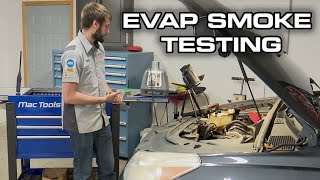
- The most definitive diagnostic step is to perform a smoke test. An automotive smoke machine injects low-pressure smoke into the EVAP service port. Smoke will escape from the location of the leak, making it easy to pinpoint whether it's a hose, solenoid, canister, or gas cap seal.
Parts You'll Likely Need
- EVAP Vent Valve Solenoid
(OEM #ACDelco 214-2149 (check VIN, may vary))— This is one of the most common failure points on this platform due to its exposed location under the truck, leading to corrosion and sticking.
Trusted brands: ACDelco, Dorman (e.g., 911-030), Standard Motor Products
OEM price range: $40-$80
Aftermarket price range: $25-$60 - EVAP Canister Purge Valve Solenoid
(OEM #ACDelco 12690512 (supercedes 12608378))— Located in the engine bay, this valve can get stuck open, causing a persistent small leak that triggers P0442 and often leads to hard starts after refueling.
Trusted brands: ACDelco, Bosch (e.g., 0280142481)
OEM price range: $30-$60
Aftermarket price range: $20-$45 - Fuel Cap
(OEM #ACDelco GT330)— A worn or improperly tightened gas cap is the simplest and a very common cause for a P0442 code. Aftermarket caps are a frequent source of repeat failures.
Trusted brands: ACDelco
OEM price range: $20-$40
Aftermarket price range: $15-$25
Related Codes That Often Appear With This One
- P0455 — This code indicates a large EVAP leak. Both P0442 and P0455 can be triggered by the same faulty component, like a very loose gas cap or a stuck-open vent valve. TSBs #21-NA-124 and #15-NA-019 mention them together.
- P0449 — This code points specifically to a fault in the EVAP vent solenoid circuit. If you see P0449 with P0442, the vent solenoid or its wiring is almost certainly the culprit.
- P0446 — This indicates a restriction in the EVAP vent system. It can appear with P0442 if the vent solenoid is clogged or stuck, which also aligns with the symptom of difficulty filling the fuel tank.
Technical Service Bulletins (TSBs) & Recalls
- PIT4943D: Recommends technicians use an Evaporative Emissions System Tester for diagnosis of P0442.
- 21-NA-124: Provides diagnostic tips for testing EVAP leaks causing P0442 and/or P0455.
- 15-NA-019: Connects fuel odor and P0442/P0455 codes to a potentially fractured fuel tank filler vent hose.
- 15-06-04-002: Addresses P0442 when accompanied by difficulty filling the fuel tank.
Platform-Specific Known Issues
- TSB #15-NA-019: Addresses customer complaints of a fuel odor during filling or at idle, which may be caused by a fractured fuel tank filler vent hose connector, leading to P0442 or P0455. The fix requires replacing the vent hose assembly (Part No. 22802073 for 2013-2015 Crew/Double Cab
Mechanic-Grade Diagnostic Values
- EVAP Vent Solenoid Coil Resistance — expected: 20 to 30 Ohms. Failure: Infinite resistance (open circuit) or near-zero resistance (short circuit) indicates the solenoid has failed.
- EVAP Purge Solenoid Coil Resistance — expected: 12 to 130 Ohms (Varies by manufacturer). Failure: A reading outside the manufacturer's specified range indicates a faulty coil.
- Fuel Tank Pressure (FTP) Sensor Voltage (Key On, Engine Off, Gas Cap Off) — expected: Approximately 1.5V (acceptable range is typically 1.3V - 1.7V). Failure: A reading stuck high (near 5V) or low (near 0.3V) suggests a faulty sensor or wiring issue.
Scan Tool Commands That Help
- Tech 2 / GDS2: EVAP Service Bay Test — This function allows a technician to command the ECM to run the entire EVAP leak test sequence while the vehicle is stationary in the service bay. It manually closes the vent valve and opens the purge valve to create a vacuum, then monitors the system for pressure loss, confirming if a leak is present without needing to perform a full drive cycle.
- Tech 2 / GDS2 / Capable Scan Tool: Vent Valve Control — This is a bidirectional command used during a smoke test. The vent valve is normally open. This command forces it closed, sealing the EVAP system so the smoke machine can pressurize it. If smoke immediately exits the vent valve filter, the valve is not closing and is faulty.
Wiring & Ground Locations
- G300 — On the back of the first frame outrigger behind the left front tire, directly below the driver's door hinge area.. This is a major ground point for engine control devices. While not directly for the rear-mounted vent solenoid, a poor ground here can cause various erratic electrical issues with the ECM, potentially affecting how it interprets data from EVAP sensors.
- Vent Solenoid Connector — Under the truck, typically on the driver's side frame rail, connected to the EVAP vent solenoid near the charcoal canister.. This is the primary point for electrical testing of the vent solenoid. For 2014+ models, Pin 2 (often Red/Green wire) is the 12V+ supply, and Pin 1 (often White wire) is the control wire that the ECM/FPCM grounds to activate the solenoid. Damage or corrosion here is common.
Real Owner Repair Stories
- Reddit user in r/Silverado (2008 Silverado) — Persistent P0442 code.
❌ Tried (didn't work) Replaced fuel pump (due to a separate rusted, leaking fuel line), Replaced EVAP canister, Replaced gas cap, Replaced purge valve
✅ What actually fixed it The user reported replacing nearly every component of the EVAP system and still having the code, with no visible leaks on the filler neck. The final resolution was not posted, highlighting that even after replacing all common parts, the issue can persist, often due to an unseen hairline crack in a line or a faulty, unfindable seal. - Reddit user in r/MechanicAdvice (2009 Sierra 1500 5.3L with 160k miles) — P0442 code that has been an issue for years.
❌ Tried (didn't work) Multiple mechanics have looked at it, Dealership performed a smoke test and found no leaks, Replaced gas cap multiple times
✅ What actually fixed it The issue was never solved. The owner and mechanics were unable to find the cause, and the owner resorted to simply clearing the code when it appeared. This story exemplifies how difficult a small, intermittent leak can be to diagnose, even for professionals.
"I Checked Everything" — The Actual Cause
- In a documented case on a YouTube comment for an '07 Silverado, an owner reported chasing a P0442 code for a long time. They had replaced the purge valve, vent solenoid, and gas cap multiple times. A smoke test was performed and showed no leaks. The persistent code, despite a clean smoke test, pointed towards a potential intermittent failure of a component (like a vent or purge valve not sealing correctly under specific temperature or vacuum conditions) or a faulty Fuel Tank Pressure Sensor providing incorrect readings to the ECM, making the computer believe there is a leak when there isn't one.
OEM Part Supersession History
12608378, 12610560, 12661763→ACDelco 12690512— Standard part evolution and consolidation by the manufacturer for various GM models.
Heads up: While 12690512 is the common replacement purge valve for this era, always confirm the correct part number for your specific vehicle's VIN, as variations exist.
Model Year Variations Within This Range
- 2014-2015 (K2XX generation): The EVAP vent solenoid was moved from on top of the gas tank (on some older GMT900 models) to a more accessible, but still exposed, location on the driver's side frame rail near the charcoal canister. The purge valve location and removal procedure also differs slightly on the newer 5.3L engine compared to the GMT900 version.
Helpful Videos
Used OEM Parts in Stock

New Aftermarket Parts Available


The information in this article is provided for general reference and educational purposes only. Vehicle specifications, procedures, and part compatibility can vary by production date, trim level, and region. Always consult your vehicle's factory service manual and verify part numbers before purchasing or performing repairs. Safety-critical components such as airbags, seat belts, and braking systems should be installed by a qualified professional.
- Gmc SIERRA 1500:
- 🧭 Diagnostic Flowchart
- 🎬 Helpful Videos
- 🛍️ Shop This Part
- What's Unique About the 2008-2015 Gmc SIERRA 1500
- Symptoms You May Notice
- Most Likely Causes
- Rare But Worth Checking
- Diagnosis Steps
- Parts You'll Likely Need
- Related Codes That Often Appear With This One
- Technical Service Bulletins (TSBs) & Recalls
- Platform-Specific Known Issues
- Mechanic-Grade Diagnostic Values
- Scan Tool Commands That Help
- Wiring & Ground Locations
- Real Owner Repair Stories
- "I Checked Everything" — The Actual Cause
- OEM Part Supersession History
- Model Year Variations Within This Range
- 🎟️ Get 5% Off