

P0442 on 2000-2007 GMC Yukon: EVAP Small Leak Causes and Fixes
On a 2000-2007 GMC Yukon, code P0442 is most often caused by a loose or bad gas cap, a faulty EVAP purge valve on the engine, or a bad EVAP vent valve near the fuel tank. Start by checking the gas cap; if that's not the issue, the purge valve is a likely and affordable DIY replacement. If you have trouble refueling, suspect the vent valve near the spare tire.
- Start with the simplest fix: check that your gas cap is tight. If it's old, replace it with a quality part.
- If the gas cap isn't the issue, the EVAP purge valve on the engine is the next most likely culprit and is an easy DIY replacement.
- If you have trouble filling your gas tank, the problem is almost certainly the EVAP vent valve located near the fuel tank.
- For leaks that are hard to find, a smoke test is the most effective diagnostic tool and is what a professional shop will use.
What's Unique About the 2000-2007 Gmc YUKON
On this generation of GMC Yukon (GMT800 and early GMT900), the EVAP system components, particularly the vent and purge valves, are known weak points. The vent valve, located near the spare tire, is highly susceptible to contamination from road dirt and debris, causing it to stick open. GM even issued a TSB (02-06-04-037) to address this by relocating the vent's air filter to a cleaner location. The purge valve on the engine intake is also a frequent failure item. These two parts account for a vast majority of P0442 codes on these trucks after the gas cap has been ruled out.
Diagnostic Flowchart
Tap your situation to follow the diagnostic path that matches what you're seeing on this vehicle.
Generation note: This range covers two generations: the GMT800 (2000-2006) and the first year of the GMT900 (2007). While the EVAP system's principle is the same, the exact location and part design for components like the purge and vent valves may differ slightly. However, the common causes and diagnostic approaches are virtually identical for both generations. The vent valve filter relocation TSB applies to the entire 1999-2007 'Classic' model range.
Symptoms You May Notice
- Check Engine Light is on.
- A faint fuel smell may be present around the vehicle, particularly near the rear driver's side.
- Difficulty refueling (gas pump nozzle clicks off before the tank is full), which strongly points to a faulty or clogged vent valve.
- Slightly rough idle, extended crank time, or difficulty starting immediately after filling the gas tank, which can indicate a leaking purge valve that is allowing un-metered fuel vapors into the intake manifold at the wrong time.
- Replacing the charcoal canister when the actual problem is a much cheaper vent or purge valve. GM specifically advises against this in TSB 02-06-04-037F unless the canister fails a leak test.
- Replacing O2 sensors, which are unrelated to the EVAP system.
- Assuming the code means a major fuel system problem without first checking the gas cap.
- Repeatedly replacing parts without performing a smoke test to find the actual source of the leak, leading to frustration and unnecessary expense.
Most Likely Causes
- Loose or Faulty Gas Cap 🔴 High Probability → Shop Fuel Tank Cap The rubber O-ring seal on the gas cap degrades over time, losing its ability to create a perfect seal. It's also common for the cap to simply not be tightened enough after refueling. Aftermarket caps are also a frequent source of issues if they don't meet OEM specifications.
How to confirm: Ensure the cap is tightened until it clicks at least three times. Inspect the rubber seal for cracks, stiffness, or damage. If the seal looks worn, it's best to replace it.
Typical fix: Tighten or replace the gas cap. It is highly recommended to use an OEM (ACDelco GT232, GT264) or high-quality aftermarket cap, as cheap alternatives may not seal properly.
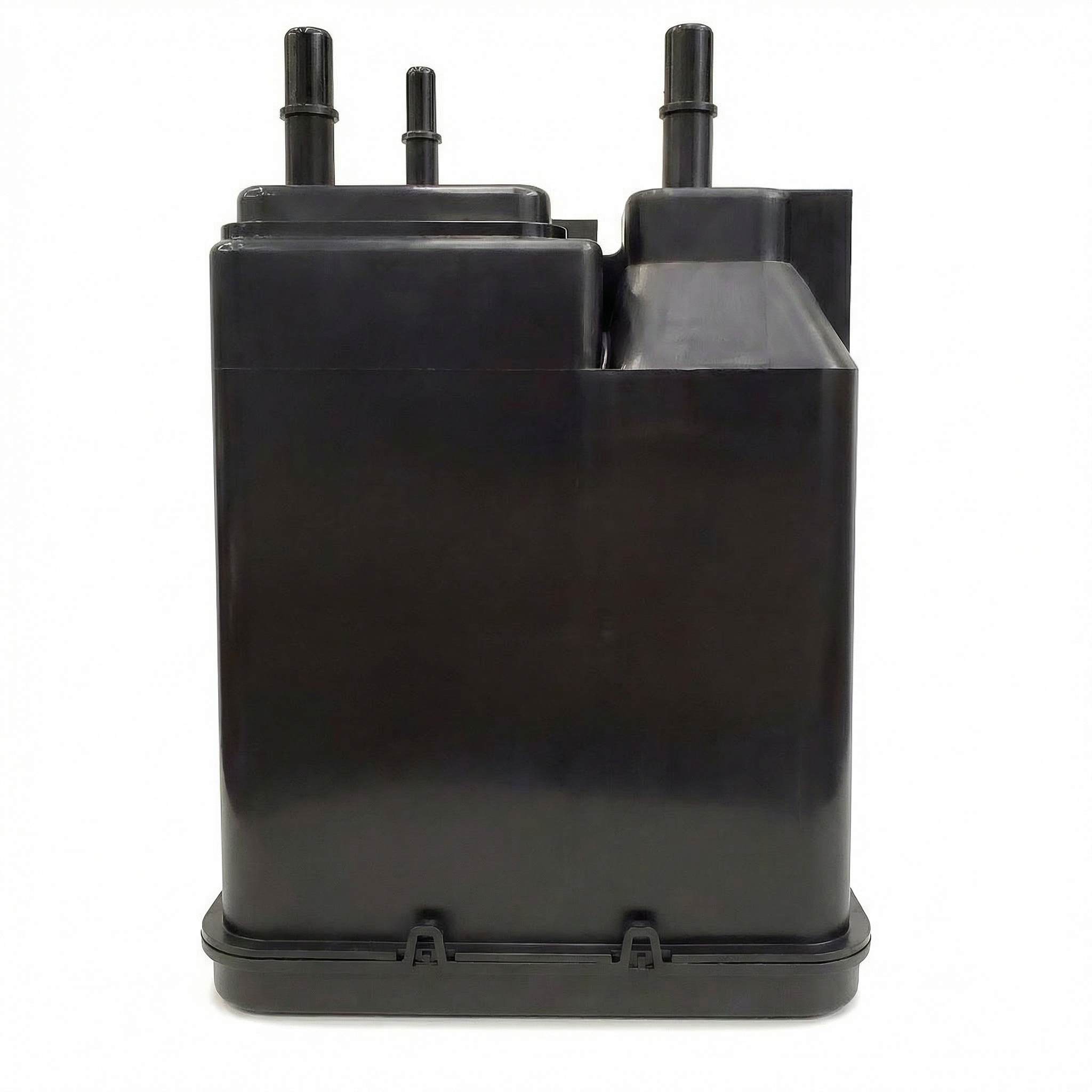
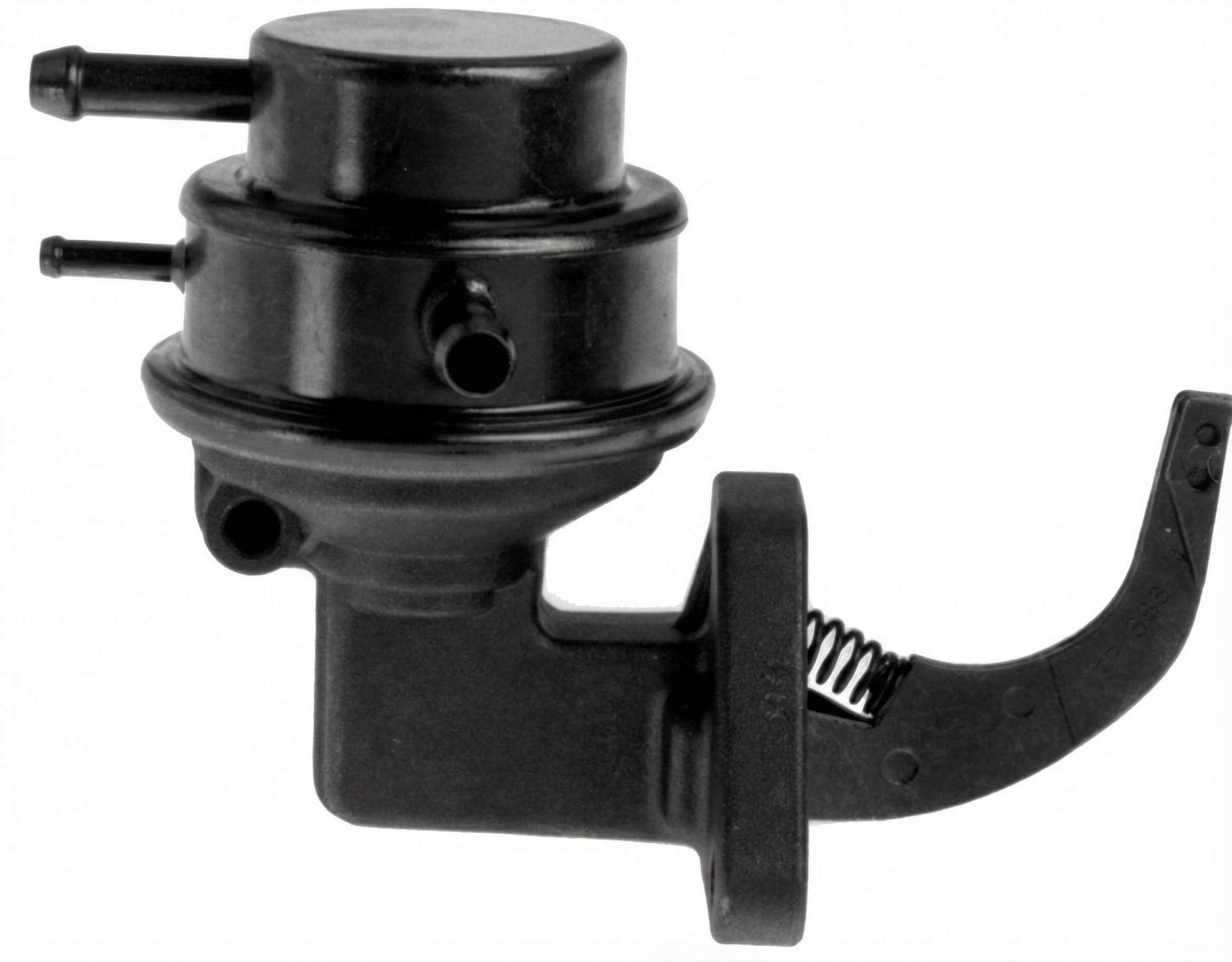
Est. part cost: $10-$35 - Failed EVAP Purge Valve (Solenoid) 🔴 High Probability → Shop Vapor Canister This valve cycles constantly during vehicle operation and is a common failure point. It can get stuck partially open, creating a small, persistent leak that the computer detects.
How to confirm: The valve is located on top of the engine intake manifold, often under a plastic cover. When the engine is off, the valve should be closed. You can remove it and try to blow through it; if any air passes, it's faulty. A hand vacuum pump can also be used; the valve should hold vacuum when not electrically energized.
Typical fix: Replacement of the purge valve. This is typically a simple repair requiring minimal tools, often just a single bolt and disconnecting the hoses and electrical connector.
Est. part cost: $20-$50 - Failed EVAP Vent Valve (Solenoid) 🟡 Medium Probability → Shop Vapor Canister Vent Valve Located near the charcoal canister by the fuel tank/spare tire, this valve is exposed to road dirt and grime, which can clog it and prevent it from closing fully during the EVAP system test. This is a very well-documented issue on GMT800 trucks.
How to confirm: This is often the cause if you have trouble filling the fuel tank. A smoke test is the best way to confirm a leak at the vent valve. The valve can also be removed and tested with a 12V power source to see if it actuates correctly. When de-energized, it should be open; when 12V is applied, it should click closed.
Typical fix: Replace the vent valve solenoid. Accessing it requires lowering the spare tire. 🎬 See this walkthrough for replacing the vent valve solenoid. Many owners opt for the updated kit (ACDelco 214-2149 or Dorman 911-239) which includes a filter that can be relocated to a cleaner area like the transmission housing, per TSB 02-06-04-037.
Est. part cost: $30-$80 - Cracked or Disconnected EVAP Hoses ⚪ Low Probability The plastic and rubber lines in the EVAP system become brittle with age and heat cycles, leading to small cracks, especially at connection points or where they are routed over chassis components. A broken nipple on the purge valve connection is a common user-reported failure.
How to confirm: A visual inspection may reveal obvious cracks or damage. However, small leaks are best found using a professional smoke test, which forces smoke through the system to reveal the exact leak location.
Typical fix: Replace the specific section of cracked hose or re-secure the connection. In some cases, a broken nipple may require replacing the component it's attached to.
Est. part cost: $10-$100
Rare But Worth Checking
- Cracked Charcoal Canister: → Shop Vapor Canister The plastic housing of the canister itself can develop hairline cracks over time. This is usually found with a smoke test after other common components have been checked. In some cases, the canister can become saturated with fuel if the tank is habitually overfilled, which can also cause issues.
- Rusted Fuel Filler Neck: → Shop Fuel Filler Neck The metal pipe leading from the gas cap to the tank can rust and develop small pinhole leaks, which will trigger a P0442 code. This is more common in regions that use road salt. A smoke test is the most effective way to identify a leak in this area.
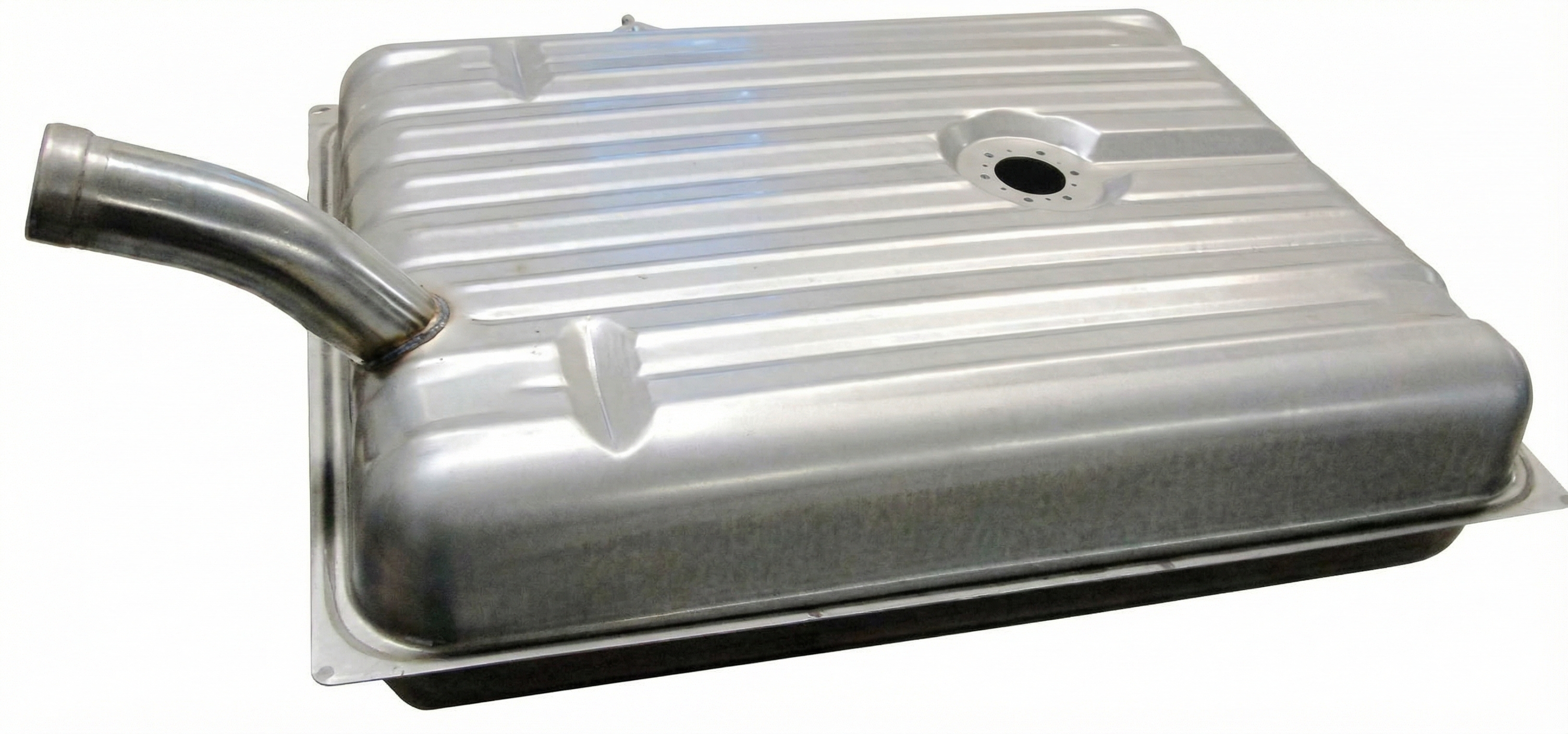
- Leaking Fuel Tank Pressure (FTP) Sensor or Gasket: → Shop Fuel Tank The sensor itself rarely fails in a way that causes a leak, but the gasket or seal where it mounts to the fuel tank or fuel pump module can degrade and leak. Some owners have traced persistent P0442 codes to a faulty seal on the fuel pump assembly itself.
Diagnosis Steps
- Inspect the gas cap. Remove it, check the seal for cracks, and retighten it until it clicks several times. Clear the code and drive for a few days.
- If the code returns, perform a thorough visual inspection of the EVAP purge valve and hoses on top of the engine for any obvious cracks or damage.
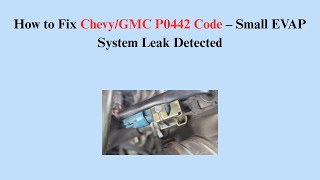
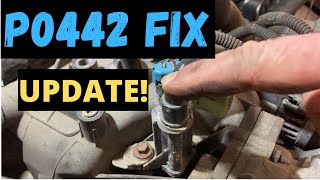
- Test the purge valve. With the engine off, disconnect the hoses and try to blow through it. If air passes, the valve is bad and must be replaced. A hand vacuum pump can also be used to confirm it holds vacuum. 🎬 Watch: A quick guide on how to test the purge valve.
- Inspect the EVAP system components under the vehicle, near the fuel tank and spare tire. Look for the vent valve and charcoal canister, checking for cracked hoses or loose connections. Pay close attention to dirt and debris around the vent valve.
- If you experience issues with refueling, the vent valve is the primary suspect.
- If the leak source is not obvious, the most reliable method is to have a smoke test performed. This test will quickly and accurately pinpoint the exact location of the small leak, saving you from replacing unnecessary parts. 🎬 Watch: A breakdown of common P0442 causes and fixes.
Parts You'll Likely Need
- Fuel Cap
(OEM #ACDelco GT232 / GT264 (verify by VIN))— This is the most frequent cause of P0442. The seal wears out or the cap isn't tightened properly.
Trusted brands: ACDelco, Stant
OEM price range: $20-$35
Aftermarket price range: $10-$20 - EVAP Vapor Canister Purge Valve / Solenoid
(OEM #ACDelco 214-1680 (Supersedes 12597567))— A very common failure item on these trucks. It gets stuck open, creating a constant small leak. It's located on the engine and is easy to replace.
Trusted brands: ACDelco, Dorman (911-032), Bosch, SKP
OEM price range: $30-$50
Aftermarket price range: $20-$40 - EVAP Vent Valve / Solenoid
(OEM #ACDelco 214-2149 (Kit with filter relocation: GM 19207762))— This valve, located near the tank, often gets clogged with dirt, preventing it from sealing. It's a common cause, especially if refueling issues are present. The relocation kit is highly recommended.
Trusted brands: ACDelco, Dorman (911-239)
OEM price range: $40-$80
Aftermarket price range: $30-$60
Related Codes That Often Appear With This One
- P0455 — This indicates a 'Large EVAP Leak'. If a component fails significantly (e.g., a hose disconnects completely or the vent valve is stuck wide open), you may see this code instead of, or along with, P0442.
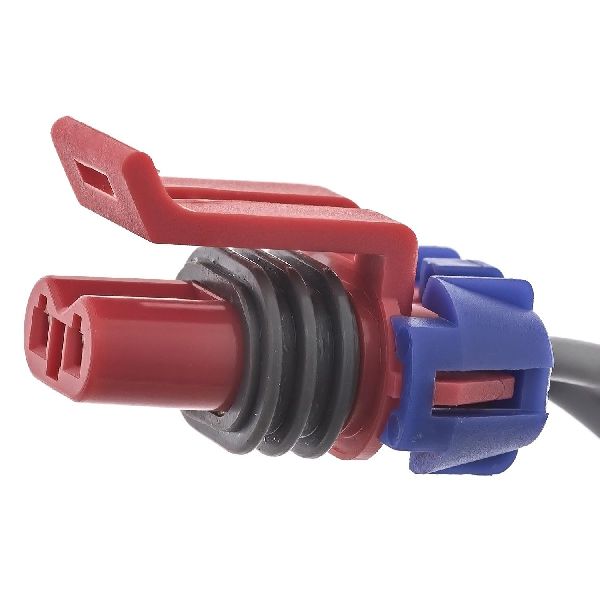
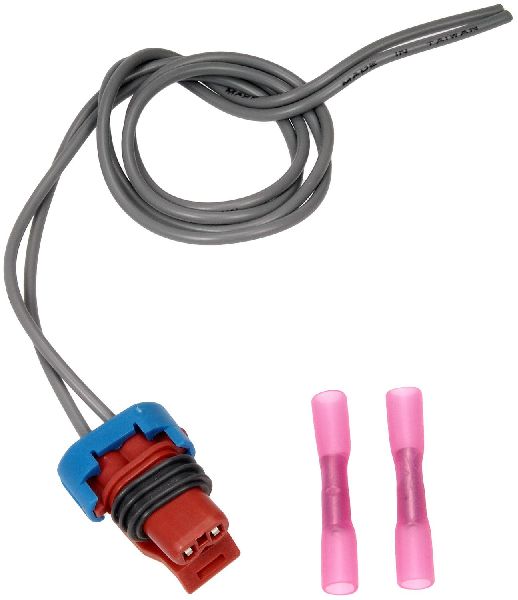
- P0449 — This code specifically points to a fault in the EVAP Vent Valve Solenoid Control Circuit. If you see P0442 and P0449 together, it's almost certain the vent valve or its wiring/connector is the problem.
- P0496 — This code indicates 'EVAP Flow During a Non-Purge Condition', which almost always points to a purge valve that is stuck open. It's very common to see this code alongside P0442 if the purge valve is the culprit.
Technical Service Bulletins (TSBs) & Recalls
- Provides diagnostic tips and procedures for testing the EVAP system for leaks related to DTCs P0442 and P0455.
- Directs technicians to a Techlink article from May 2013 on using the evaporative emissions system tester for diagnosing P0442.
- Although this TSB is officially for code P0446 (vent restriction), it is highly relevant to P0442. It addresses the common problem of dirt and dust clogging the EVAP vent valve. The official fix is to replace the vent valve with an updated kit (P/N 19207762 for 1999-2007 Classic models) that includes a remote filter box, which is routed to a cleaner location, often near the transmission bell housing, to prevent future contamination.
Platform-Specific Known Issues
- The EVAP vent solenoid is highly prone to failure from dirt and dust ingestion due to its location near the rear axle. GM issued TSB 02-06-04-037 which recommends replacing the original valve with a kit that allows the air intake filter to be relocated to a cleaner, higher location, such as up near the transmission bell housing or fuel filler neck.
- Forum users report that even after replacing common parts, a smoke test is often necessary to find the true culprit, which can sometimes be a cracked hose on top of the fuel tank that is not visible from below.
- Some owners have chased this code for years, replacing every component, only to find the leak was from the fuel pump module gasket on top of the tank, which can be an expensive and labor-intensive repair.
Helpful Videos
Used OEM Parts in Stock
New Aftermarket Parts Available


The information in this article is provided for general reference and educational purposes only. Vehicle specifications, procedures, and part compatibility can vary by production date, trim level, and region. Always consult your vehicle's factory service manual and verify part numbers before purchasing or performing repairs. Safety-critical components such as airbags, seat belts, and braking systems should be installed by a qualified professional.
- Gmc YUKON:
- 🧭 Diagnostic Flowchart
- 🎬 Helpful Videos
- 🛍️ Shop This Part
- What's Unique About the 2000-2007 Gmc YUKON
- Symptoms You May Notice
- Most Likely Causes
- Rare But Worth Checking
- Diagnosis Steps
- Parts You'll Likely Need
- Related Codes That Often Appear With This One
- Technical Service Bulletins (TSBs) & Recalls
- Platform-Specific Known Issues
- 🎟️ Get 5% Off