

P0442 on 2000-2004 GMC Yukon Denali: Causes and Fixes for Small EVAP Leaks
On a 2000-2004 GMC Yukon Denali, code P0442 is most often caused by a loose or worn-out gas cap. If that's not the issue, the next most likely culprits are a faulty EVAP vent solenoid or purge valve. A new OEM gas cap is about $20-$30, while solenoids range from $25 to $70. The vent solenoid is a notoriously common failure and is often replaced with a relocation kit to prevent future issues.
- P0442 means your truck has a small leak in the fuel vapor recovery system.
- Always start with the simplest fix: check that your gas cap is tight and its seal is not cracked. This resolves the issue a surprising amount of the time.
- If the gas cap isn't the problem, the next most likely culprits are the EVAP vent solenoid (under the truck) or the purge solenoid (on the engine).
- The 2000 model (GMT400) and 2001-2004 models (GMT800) may have these parts in different locations.
- While you can drive with this code, you won't be able to pass an emissions test until the leak is fixed.
What's Unique About the 2000-2004 Gmc YUKON DENALI
The 2000-2004 year range for the Yukon Denali spans two vehicle generations: the GMT400 platform (2000 model year) and the GMT800 platform (2001-2004). While the core components of the EVAP system are similar, their locations can differ. On the more common GMT800 models, the vent solenoid is a very frequent failure point, notoriously located under the truck near the spare tire where it is exposed to road debris and moisture. This led GM to issue updated parts that relocate the valve to a more protected area. On the older GMT400 platform, components may be located in different areas, such as near the radiator or along the frame rail. Regardless of the generation, these trucks are known for EVAP components that fail due to age, dirt, and debris exposure.
Diagnostic Flowchart
Tap your situation to follow the diagnostic path that matches what you're seeing on this vehicle.
Generation note: The specified year range covers two distinct generations. The 2000 model is the last year of the first-generation Yukon Denali (GMT400 platform). The 2001-2004 models are the second generation (GMT800 platform). While the causes are similar (gas cap, vent/purge valves), the physical location and part numbers for EVAP components can vary between these two platforms. The vent solenoid is a particularly common failure on the GMT800 trucks.
Symptoms You May Notice
- Check Engine Light is on
- A faint smell of gasoline, particularly around the rear of the vehicle or after filling up.
- Potentially a rough idle if the purge valve is stuck open, creating a vacuum leak.
- Difficulty starting the engine immediately after refueling (if the purge valve is stuck open).
- A "Tighten Gas Cap" message on the driver information center, even if the cap is tight.
- Replacing the charcoal canister when only the vent solenoid attached to it has failed.
- Replacing O2 sensors, as they are not related to the EVAP system.
- Assuming a major component has failed before checking for simple, inexpensive issues like a loose or non-OEM gas cap.
- Repeatedly replacing the purge valve when the vent valve is the actual culprit.
Most Likely Causes
- Loose or Faulty Gas Cap 🔴 High Probability → Shop Fuel Tank Cap The gas cap seal is a simple rubber O-ring that degrades, cracks, and hardens over time, preventing a proper seal. Aftermarket caps are also a frequent cause of issues if they don't meet OEM specifications.
How to confirm: First, ensure the cap is tightened until it clicks several times. Inspect the rubber seal on the cap for any cracks, stiffness, or damage. Also, check the metal filler neck for rust or debris that could prevent a good seal.
Typical fix: Replace the gas cap. It is highly recommended to use an OEM ACDelco cap (Part No. GT299 or similar) as cheaper versions are notorious for not sealing correctly and causing the code to return.
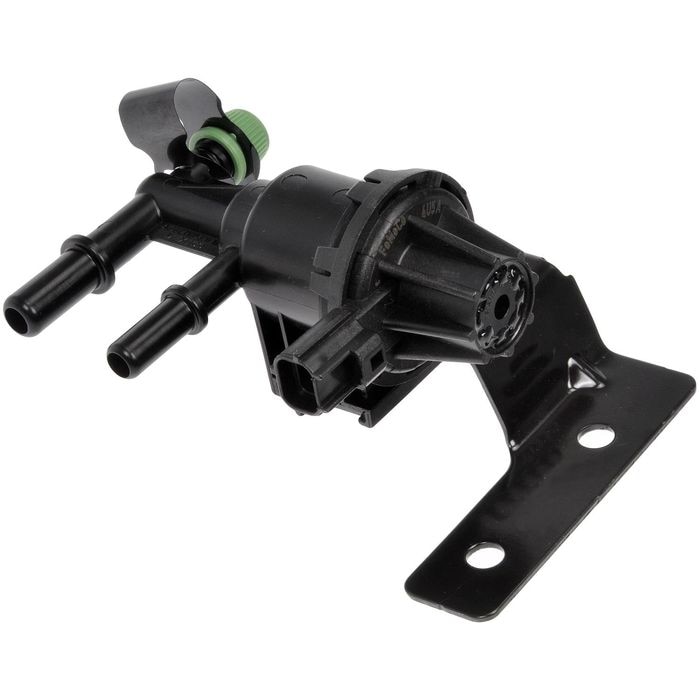
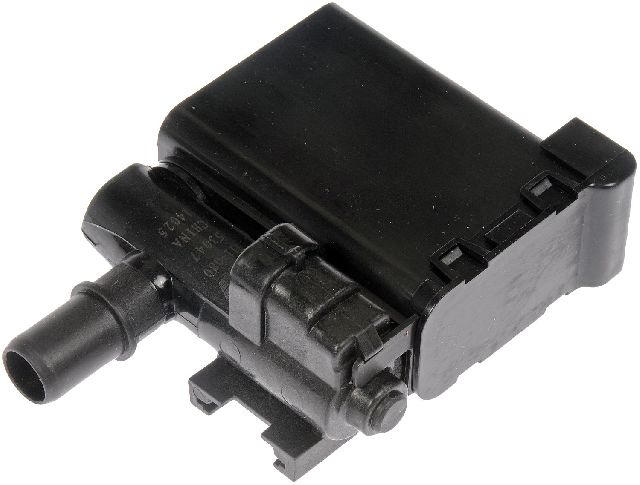
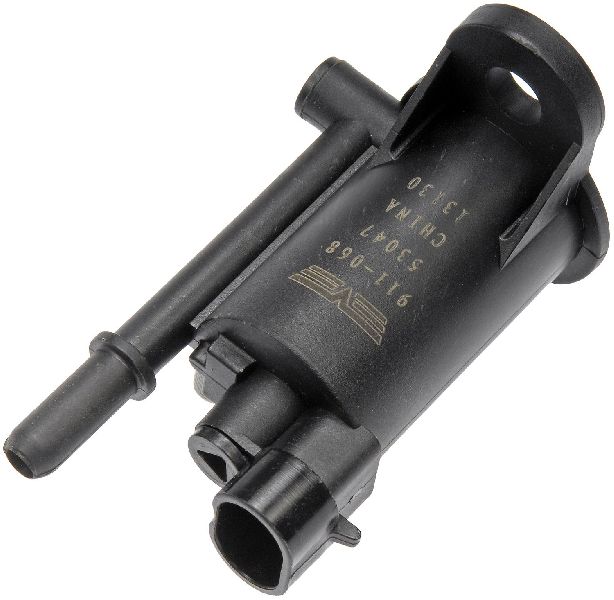
Est. part cost: $20-$35 - Faulty EVAP Vent Solenoid/Valve 🔴 High Probability → Shop Vapor Canister Located under the truck near the charcoal canister, this valve is extremely vulnerable to road dirt, water, and debris. The solenoid can fail electrically, get clogged with dust, or get stuck open from debris, causing a leak. This is arguably the most common cause after the gas cap on GMT800 trucks.
How to confirm: The valve is normally open. A scan tool can command it closed to test the seal during a smoke test. A DIY method is to remove the valve and try to blow through it; air should pass freely. Apply 12V power to the terminals; it should click shut and block airflow. If it doesn't, or if it's physically cracked, it has failed.
Typical fix: Replace the EVAP vent solenoid. The recommended OEM replacement is often a kit (ACDelco 214-2149 / GM 25932571) that relocates the valve and filter to a higher, more protected location above the frame rail or crossmember to prevent repeat failures.
Est. part cost: $40-$70 - Faulty EVAP Purge Solenoid/Valve 🟡 Medium Probability → Shop Vapor Canister This valve is located on the engine's intake manifold and is subjected to constant heat cycles, which can cause the plastic housing to crack or the internal diaphragm to fail and leak.
How to confirm: The purge valve is normally closed. Disconnect the vapor line from the valve and apply vacuum with a hand pump; it should hold vacuum. If it doesn't, it's leaking internally. You can also remove it and try to blow through it; no air should pass when unpowered. A failing purge valve can sometimes cause a rough idle.
Typical fix: Replace the purge solenoid. This is typically an easy 10-minute repair on top of the engine. 🎬 See this walkthrough for replacing both the vent and purge valves. The common OEM part is ACDelco 214-1680 (GM 12581282).
Est. part cost: $25-$50 - Cracked or Disconnected EVAP Hoses ⚪ Low Probability Over many years, the rubber and plastic lines that make up the EVAP system can become brittle, dry-rot, and crack, especially at connection points, elbows, and areas exposed to the elements under the truck.
How to confirm: Visually inspect all accessible EVAP lines running from the gas tank to the charcoal canister and up to the engine. Look for any obvious cracks or loose fittings. The most effective method is to use a smoke machine, which fills the system with visible smoke, making even the smallest leaks easy to spot. 🎬 Watch: How to find a small EVAP leak using a smoke machine.
Typical fix: Replace the cracked section of hose or reconnect any loose fittings. Small rubber connectors can be replaced individually.
Est. part cost: $10-$40
Rare But Worth Checking
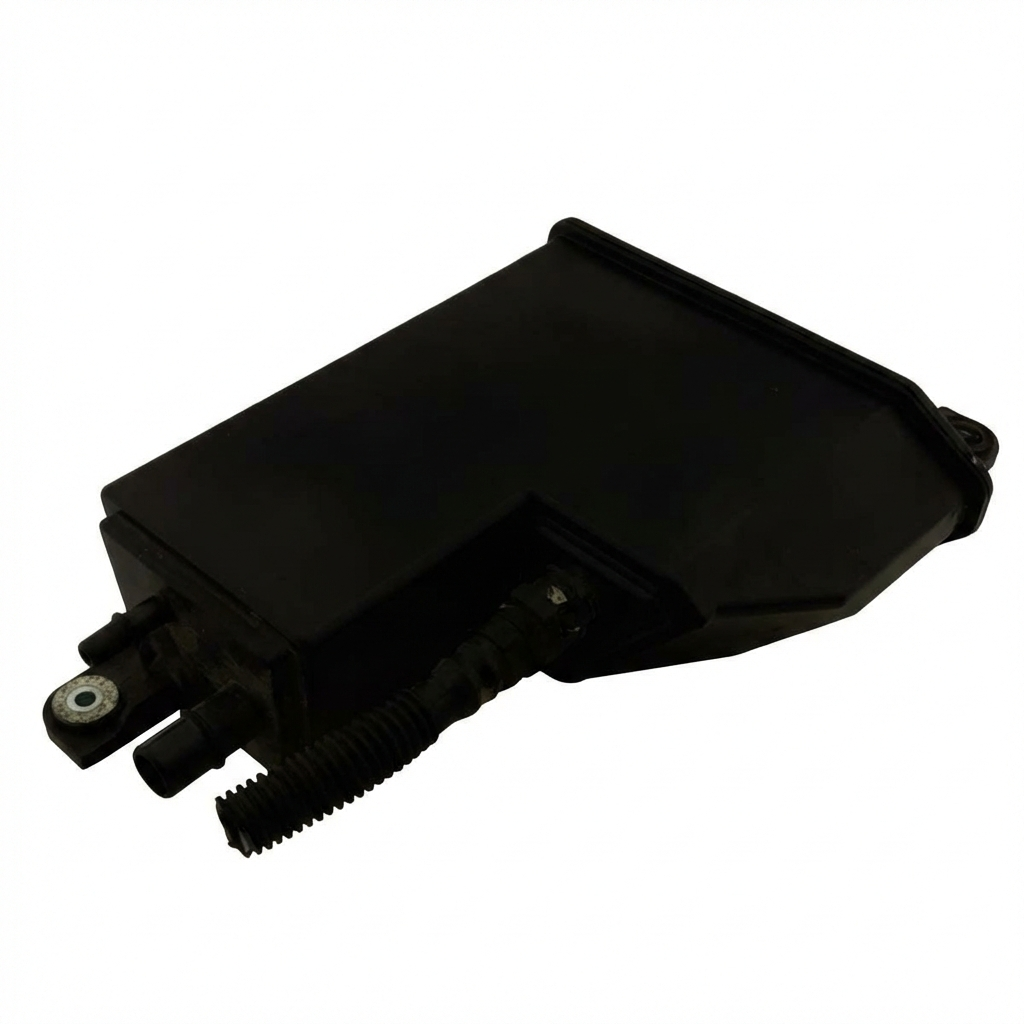
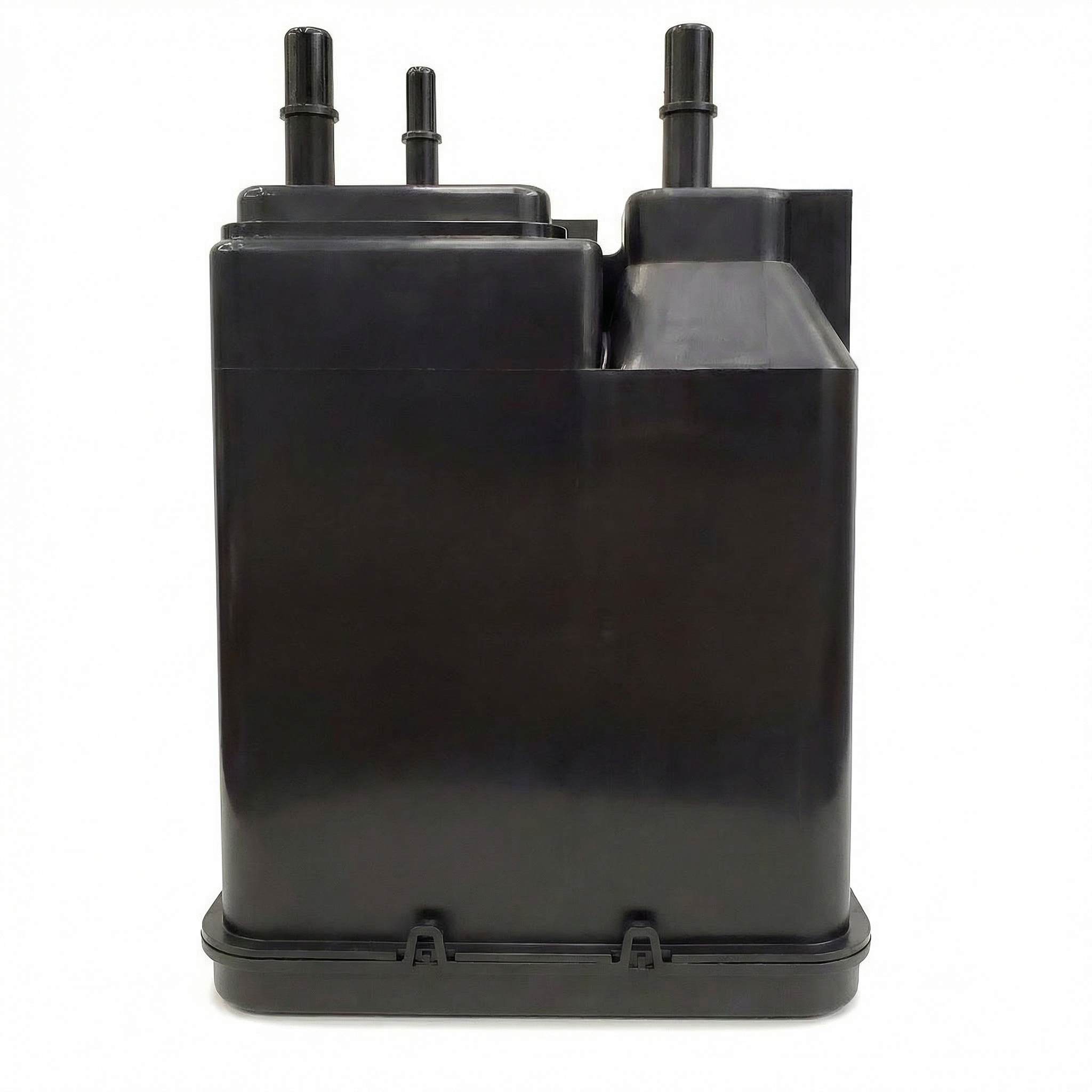
- Cracked Charcoal Canister: → Shop Vapor Canister The plastic body of the canister itself can develop cracks from age or impact from road debris. This is best found with a smoke test, as the crack can be hard to see.
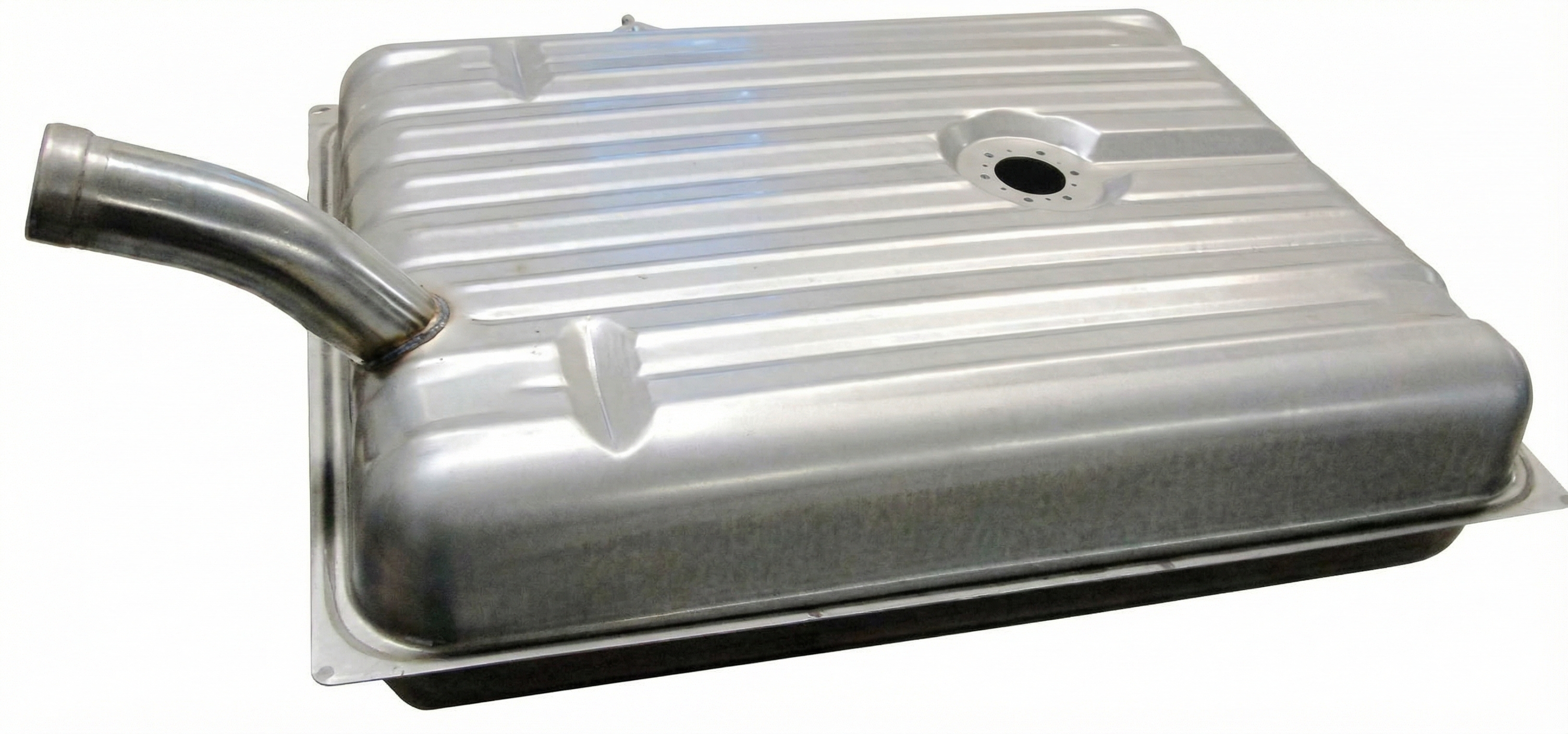
- Leaking Fuel Tank Pressure Sensor: → Shop Fuel Tank The sensor, typically located on top of the fuel pump module inside the tank, has a seal that can fail, creating a small leak. This is less common than valve failures but can happen and is difficult to diagnose without dropping the fuel tank or performing a smoke test.
- Leaking Fuel Filler Neck: → Shop Fuel Filler Neck The metal pipe where you insert the gas nozzle can rust and develop pinholes over time, especially in regions that use road salt (the 'Rust Belt'). This will cause a leak that is detectable by the EVAP system and may also be noticeable by a fuel smell or wetness around the neck after refueling.
Diagnosis Steps
- Retrieve the code with an OBD-II scanner to confirm P0442 is present.
- Inspect the gas cap. Remove it, check the seal for cracks or damage, and inspect the filler neck for rust. Reinstall it, ensuring it clicks multiple times. Clear the code and drive for a few days to see if it returns.
- If the code returns, perform a visual inspection of all accessible EVAP hoses and lines, especially around the charcoal canister and engine bay. Look for obvious cracks or disconnections.
- Locate the EVAP purge solenoid on the engine intake. With the engine off, disconnect the line running to the canister and see if you can blow through the valve. You should not be able to. If you can, it's stuck open and needs replacement (ACDelco 214-1680).
- Locate the EVAP vent solenoid near the charcoal canister (typically by the spare tire on 2001-2004 models). Inspect it for cracks. Test its function by applying 12V power; it should click closed. If it fails the test, replace it, preferably with the relocation kit (ACDelco 214-2149).
- If the cause is still not apparent, the most effective next step is a professional smoke test, following the procedure outlined in GM's TSBs. A machine injects smoke into the EVAP service port, and any leak will be revealed by escaping smoke.
- If no external leaks are found, the issue may be an intermittent valve, a hairline crack in the charcoal canister, or a faulty fuel tank pressure sensor.
Parts You'll Likely Need
- Fuel Cap
(OEM #ACDelco GT299)— This is the most frequent cause. The seal wears out, causing a leak. It's the cheapest and easiest part to replace first. Using an OEM cap is critical.
Trusted brands: ACDelco (highly recommended), Stant
OEM price range: $20-$35
Aftermarket price range: $15-$25 - EVAP Vent Solenoid Valve (with Relocation Kit)
(OEM #ACDelco 214-2149)— This is the second most common failure, especially on GMT800 models, due to its vulnerable location. The relocation kit included with this part number moves the valve to a more protected area.
Trusted brands: ACDelco (highly recommended), Dorman 911-021
OEM price range: $40-$70
Aftermarket price range: $30-$50 - EVAP Canister Purge Solenoid Valve
(OEM #ACDelco 214-646 / GM 1997279)— Located on the engine, this valve fails from heat and age, often getting stuck open or closed. It's a common cause for P0442 and other EVAP codes like P0496.
Trusted brands: ACDelco, Dorman
OEM price range: $25-$50
Aftermarket price range: $20-$40
Related Codes That Often Appear With This One
- P0455 — P0455 indicates a large EVAP leak. If a component fails significantly (e.g., a hose comes completely off or a valve sticks wide open), it may trigger both the small and large leak codes. TSB #21-NA-124 specifically addresses diagnosing both P0442 and P0455 together.
- P0449 — P0449 specifically points to a fault in the EVAP vent solenoid valve electrical circuit. If you have P0442 and P0449 together, it's almost certain the vent solenoid or its wiring/connector is the problem.
- P0446 — This code indicates a problem with the EVAP Vent Control System. While P0449 points to an electrical circuit issue, P0446 points to a restriction or blockage in the vent system, often caused by the same faulty vent solenoid getting clogged with dirt.
Technical Service Bulletins (TSBs) & Recalls
- TSB #21-NA-124 (May 2021): Provides diagnostic tips for P0442 and P0455, advising a chronological investigation starting with EVAP lines, then the vent valve, and finally the purge valve. It emphasizes checking for properly seated connections.
- TSB #PIT4943D (Dec 2015): Addresses hard-to-find P0442 leaks. It instructs technicians to use the specific GM-approved smoke machine (EEST GE 41413-A) and follow a detailed procedure to avoid misdiagnosis from aftermarket tools or temperature variations.
Platform-Specific Known Issues
- The Infamous Vent Solenoid Location: On GMT800 models (2001-2004), the original vent solenoid is mounted low near the spare tire, making it a magnet for dust and water. Many owners report having to replace this part multiple times until installing the official GM relocation kit (ACDelco 214-2149), which moves the valve to a cleaner location.
- Frustration with Aftermarket Gas Caps: → Shop Fuel Tank Cap Numerous owner accounts on forums express frustration with P0442 returning shortly after installing a cheap, aftermarket gas cap. The consensus is to spend the extra money on a genuine ACDelco cap to ensure a proper seal.
- Hard-to-Trace Leaks: Some owners, like the one in the 'P0442 Mystery' forum thread, chase the code for years. They replace every common component, perform multiple smoke tests, and still have the code return under very specific conditions (like fuel level or vehicle angle), suggesting intermittent valve failures or hairline cracks that only open under specific pressures.
Mechanic-Grade Diagnostic Values
- EVAP Canister Vent Solenoid Resistance — expected: 48 to 65 Ohms. Failure: A reading outside this range indicates a faulty solenoid coil.
- EVAP Canister Purge Valve Resistance — expected: 30 to 38 Ohms. Failure: Readings outside this range suggest the purge valve's coil is bad. This should be tested when the engine is cool.
- Fuel Tank Pressure (FTP) Sensor Voltage (Atmospheric Pressure) — expected: ~1.5 Volts. Failure: With the gas cap off (or the system otherwise open to atmosphere), a voltage significantly different from 1.5V (e.g., 0.9V or 2.8V) indicates a faulty or miscalibrated sensor.
Scan Tool Commands That Help
- Tech2 / High-End OBD2 Scanner: EVAP Service Bay Test — This is a comprehensive, automated test that commands the vent and purge solenoids to seal the system, create a vacuum, and monitor for decay. It's used to verify if a leak exists without a smoke machine and to confirm a repair has been successful. The test requires specific conditions, such as fuel level between 15-85%.
- Tech2 / High-End OBD2 Scanner: EVAP Purge/Seal — This function allows for manual control of the EVAP system components. A technician can command the vent solenoid closed to seal the system and then command the purge solenoid to open, drawing a vacuum. By sealing the system and watching the FTP sensor data, you can manually check for leak-down (a drop in vacuum).
- Tech2 / High-End OBD2 Scanner: Vent Solenoid ON/OFF Command — This is a direct bidirectional control to test the vent solenoid's function. By commanding it closed (to a 'Not Venting' state), you can seal the system for a smoke test or check if the solenoid is responding to the command at all.
Wiring & Ground Locations
- G201A — Located on the left side kick panel, inside the cabin.. This is a primary ground point for the Body Control Module (BCM) and data line systems. While not directly for an EVAP component, a poor ground here can cause a variety of strange electrical issues and communication errors between modules, potentially affecting how the PCM interprets sensor data.
- Purge Solenoid Connector — On the driver's side of the intake manifold, just behind the alternator on V8 models.. This is the electrical connection for the purge solenoid. The pins should be checked for 12V power and a ground signal from the PCM. Corrosion or damage here will cause a purge circuit fault.
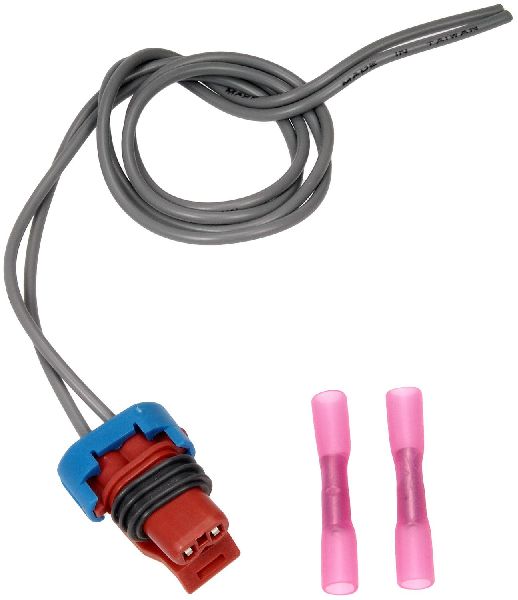
- Vent Solenoid Connector — Above the rear differential, near the spare tire, on GMT800 models.. This connector is highly exposed to the elements. The wiring and connector pins should be inspected for corrosion, moisture intrusion, or physical damage, which are common failure points.
Real Owner Repair Stories
- Tahoe Yukon Forum (2005 Tahoe (GMT800 platform, similar to Yukon)) — Persistent EVAP codes. The user was trying to pass an emissions test.
❌ Tried (didn't work) The user performed a smoke test which passed, indicating no external leaks., The user tested the purge and vent solenoids and they appeared to be functioning.
✅ What actually fixed it The Fuel Tank Pressure (FTP) sensor was faulty. Even though it was responding to pressure changes, its baseline reading at atmospheric pressure was 0.9V instead of the correct ~1.5V. Replacing the FTP sensor, which required partially dropping the fuel tank, corrected the voltage reading and allowed the vehicle to pass the EVAP Service Bay Test. - YouTube - GMC Yukon Denali Vent Valve & Purge Valve Replace (2005 GMC Yukon Denali 6.0L) — Check Engine Light with codes P0449 and P0455.
❌ Tried (didn't work) The owner went straight to component testing.
✅ What actually fixed it The EVAP vent solenoid was found to be completely clogged with dirt and dust, preventing it from operating. The purge valve was also replaced as a preventative measure. The video clearly shows a large amount of debris falling out of the old vent valve upon removal.
"I Checked Everything" — The Actual Cause
- In one documented case on a similar GMT800 platform vehicle, the system passed a smoke test, yet the EVAP code persisted. The root cause was a faulty Fuel Tank Pressure (FTP) sensor that was providing an incorrect baseline voltage reading (0.9V instead of 1.5V). The PCM interpreted this incorrect data as a leak, even though the system was physically sealed. The fix required replacing the sensor on top of the fuel tank.
OEM Part Supersession History
Multiple, including 10357992, 15138619, 19152349→GM 19207763, then GM 25932571 (ACDelco 214-2149)— The original vent solenoid design was prone to failure from its exposed location under the truck. The superseding parts, particularly the 214-2149 kit, include a new valve and a hose to relocate the filter/inlet to a more protected area, preventing dirt and water intrusion.
Model Year Variations Within This Range
- 2000 (GMT400): The 2000 model year is the last of the first generation. While using similar EVAP principles, the physical location of components like the charcoal canister and vent valve may differ from the 2001-2004 GMT800 models. Owners of 2000 models should be careful to verify part locations, as most online guides focus on the more common GMT800 platform.
- 2001-2004 (GMT800): On these models, the EVAP vent solenoid is consistently located above the rear axle/differential, near the spare tire, making it a very common failure point due to exposure. The purge solenoid is located on the driver's side of the intake manifold.
Helpful Videos
Used OEM Parts in Stock
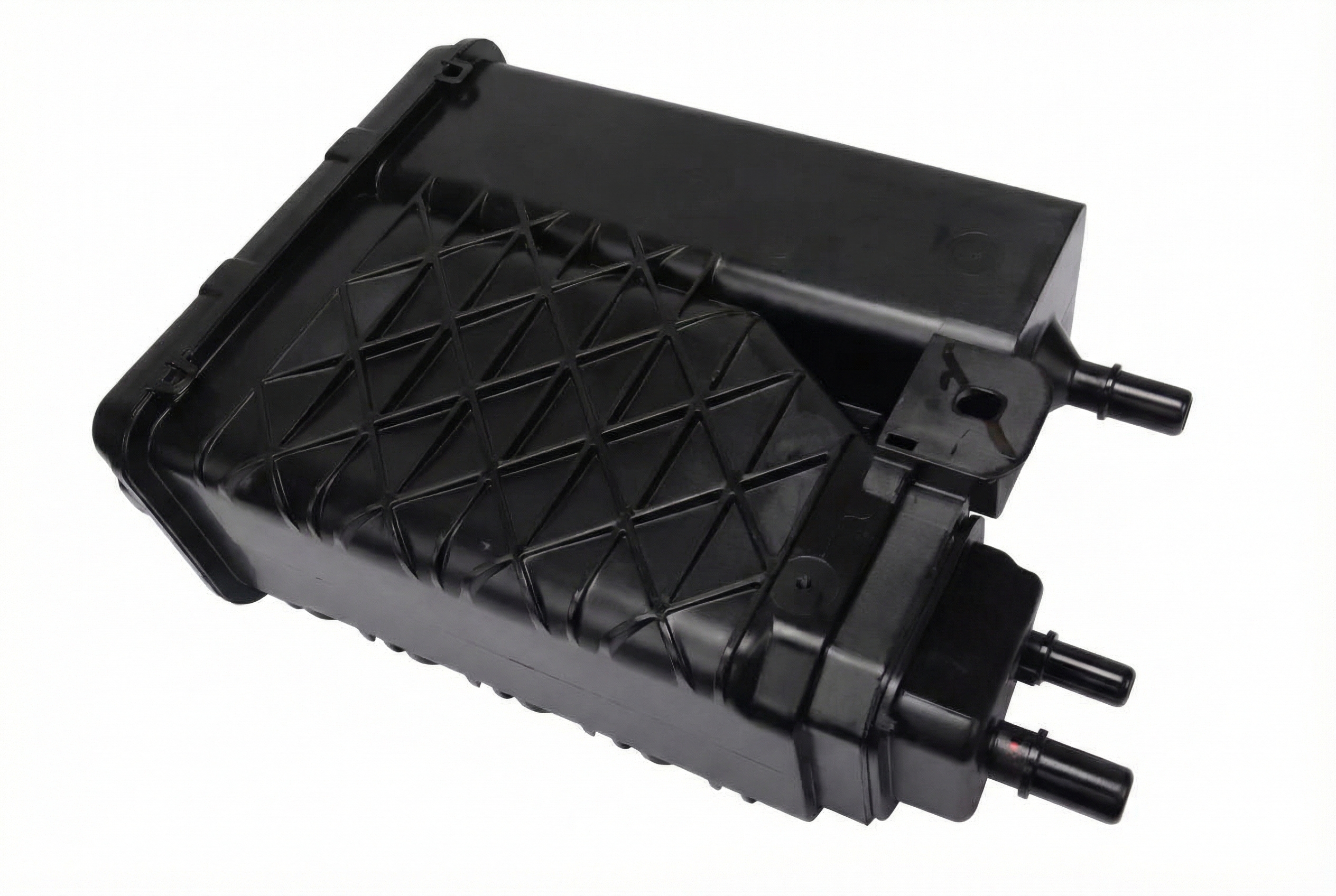
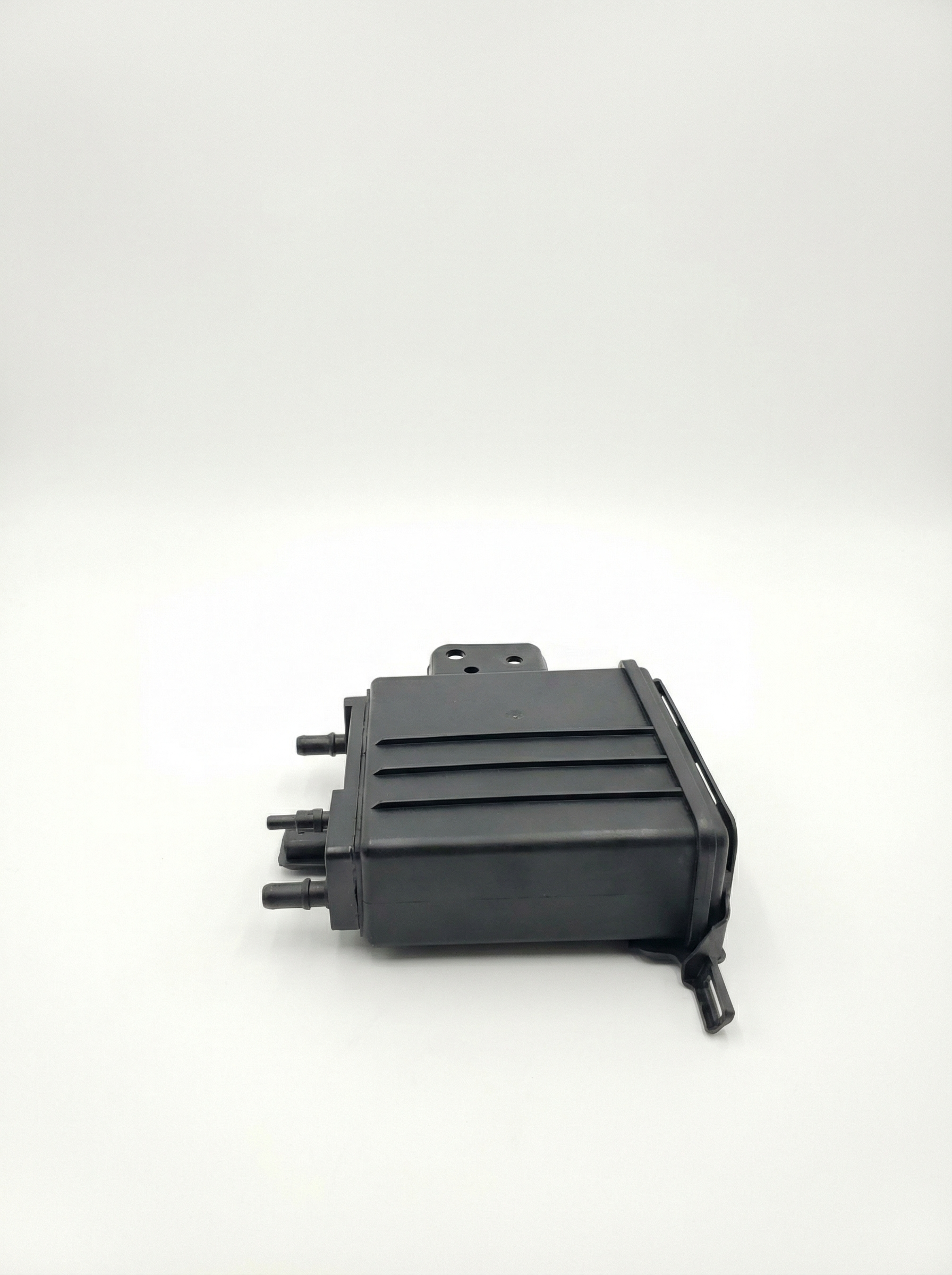
New Aftermarket Parts Available

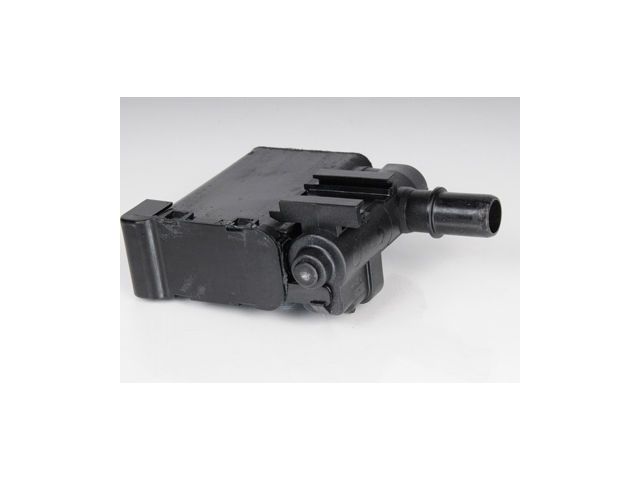
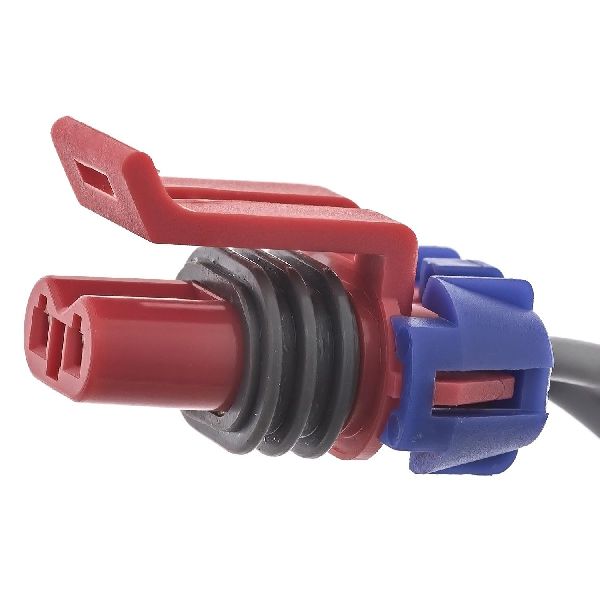

The information in this article is provided for general reference and educational purposes only. Vehicle specifications, procedures, and part compatibility can vary by production date, trim level, and region. Always consult your vehicle's factory service manual and verify part numbers before purchasing or performing repairs. Safety-critical components such as airbags, seat belts, and braking systems should be installed by a qualified professional.
- Gmc YUKON DENALI:
- 🧭 Diagnostic Flowchart
- 🎬 Helpful Videos
- 🛍️ Shop This Part
- What's Unique About the 2000-2004 Gmc YUKON DENALI
- Symptoms You May Notice
- Most Likely Causes
- Rare But Worth Checking
- Diagnosis Steps
- Parts You'll Likely Need
- Related Codes That Often Appear With This One
- Technical Service Bulletins (TSBs) & Recalls
- Platform-Specific Known Issues
- Mechanic-Grade Diagnostic Values
- Scan Tool Commands That Help
- Wiring & Ground Locations
- Real Owner Repair Stories
- "I Checked Everything" — The Actual Cause
- OEM Part Supersession History
- Model Year Variations Within This Range
- 🎟️ Get 5% Off