

P0442 on 2006-2011 Hyundai Accent: EVAP Small Leak Causes and Fixes
On a 2006-2011 Accent, P0442 is most often caused by a loose or worn-out gas cap. Always check that it's tight and the seal is good before trying anything else. A new OEM gas cap is about $15-$30. If that doesn't fix it, the next most likely culprits are a faulty canister close valve (CCV) or purge valve (PCSV). A key symptom of a bad purge valve is a long crank time after refueling.
- Start with the simplest fix: check, tighten, or replace your gas cap. This resolves the P0442 code more than 50% of the time.
- Before buying any parts, clean the metal lip of the fuel filler neck where the gas cap seals. Rust or dirt here is a common, and free, fix.
- If the gas cap isn't the issue, a professional smoke test is the fastest way to accurately find the leak, saving you from replacing parts that aren't broken.
- If you experience hard starting right after getting gas, the purge control valve in the engine bay is the most likely suspect.
- You can continue to drive the car with this code, but it will not pass an emissions inspection until it is resolved.
What's Unique About the 2006-2011 Hyundai Accent
While a loose gas cap is the top suspect for P0442 on any car, the third-generation (MC) Accent is also prone to issues seen in other Hyundais of this era. Rust forming on the fuel filler neck can prevent the gas cap from sealing properly, a problem often found in regions that use road salt. Specifically, the tack welds holding a smaller breather tube to the main filler pipe can corrode and create a leak. Additionally, EVAP system valves, particularly the canister close valve located at the rear of the vehicle, are common failure points due to their exposure to road grime and moisture.
Symptoms You May Notice
- Check Engine Light is on
- A faint fuel smell, particularly around the rear of the car or near the gas cap area.
- A noticeable gasoline smell from the filler neck area after refueling, which could indicate a rusted filler neck.
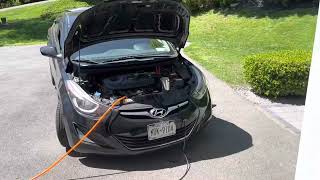
- Difficulty starting the engine immediately after refueling (long crank time). This strongly points towards a stuck-open purge valve flooding the engine with vapor. 🎬 Watch: Troubleshooting a hard start after refueling.
- Replacing the oxygen (O2) sensors. O2 sensors are not related to the EVAP system.
- Replacing the purge valve or close valve without confirming the failure with a smoke test or other diagnostic check, when the actual problem is just a bad gas cap.
Most Likely Causes
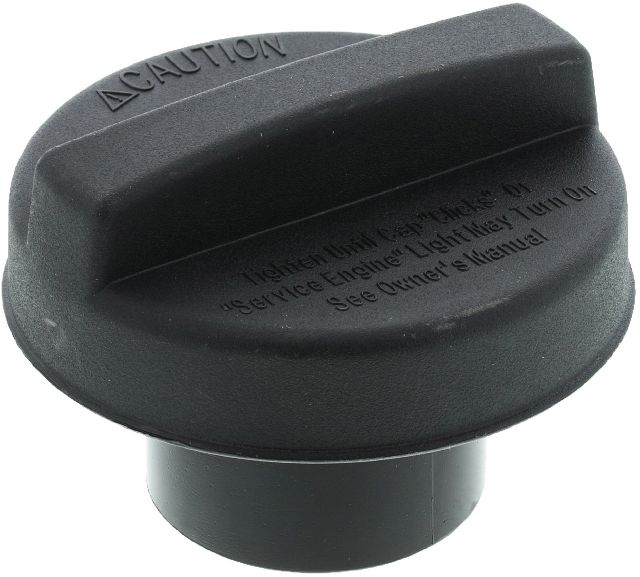
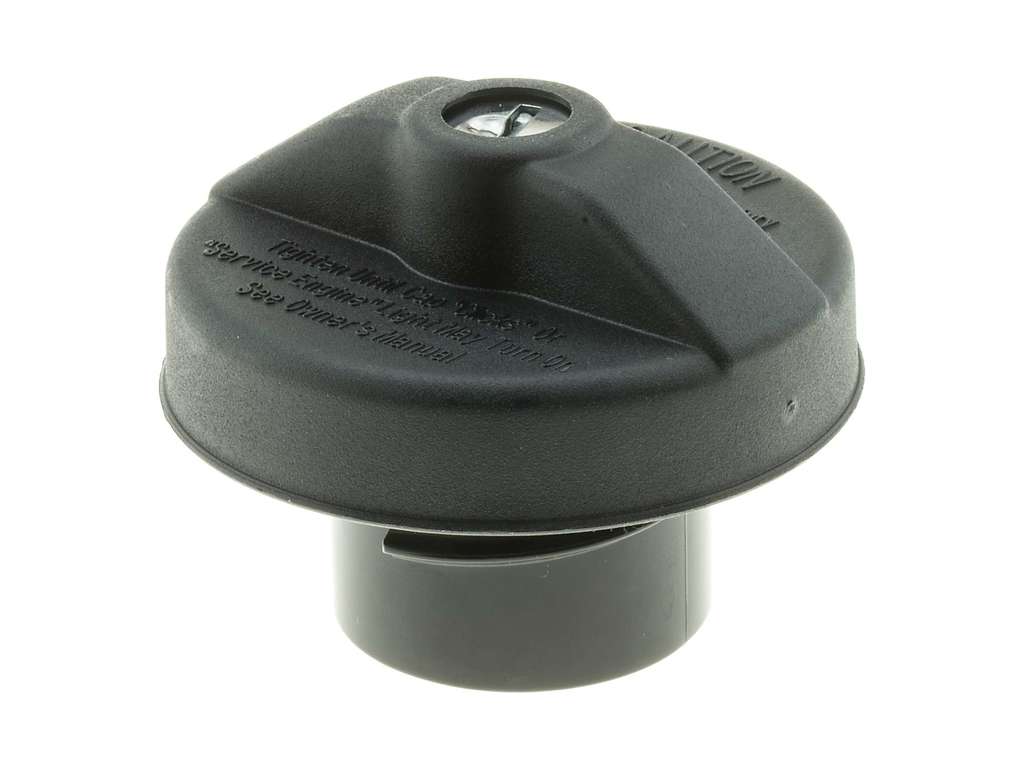
- Loose or Faulty Gas Cap 🔴 High Probability → Shop Fuel Tank Cap This is the most common cause for P0442 on all vehicles, including the Accent. The rubber O-ring seal on the cap degrades over time, becoming hard and cracked.
How to confirm: Ensure the cap is tightened until it clicks at least once. Remove the cap and inspect the rubber seal for cracks, stiffness, or dirt. If it looks worn, it's best to replace it. Using a non-OEM cap is a frequent source of this code; an OEM cap is recommended.
Typical fix: Replace the gas cap with a new OEM or high-quality aftermarket part.
Est. part cost: $15-$30 - Rusted or Dirty Fuel Filler Neck 🟡 Medium Probability → Shop Fuel Filler Neck In areas with road salt or high humidity, the metal lip of the fuel filler neck can develop rust or accumulate grime, preventing the gas cap from creating a perfect seal. A specific failure point on these cars is the corrosion of tack welds holding a smaller vapor line to the main neck, causing a fuel and vapor leak.
How to confirm: With the gas cap removed, visually inspect and feel the top edge of the filler neck where the cap's seal makes contact. Look for rust pits, bubbling paint, or dirt. Also inspect the full length of the neck for rust, especially where smaller tubes are attached. A leak here may also be noticeable by a fuel smell or wetness after filling the tank.
Typical fix: Thoroughly clean the filler neck lip with a cloth and a mild solvent. If rust is present, use a light abrasive like a Scotch-Brite pad or wire brush to smooth the surface. If the neck is severely corroded or leaking from the body, it must be replaced.
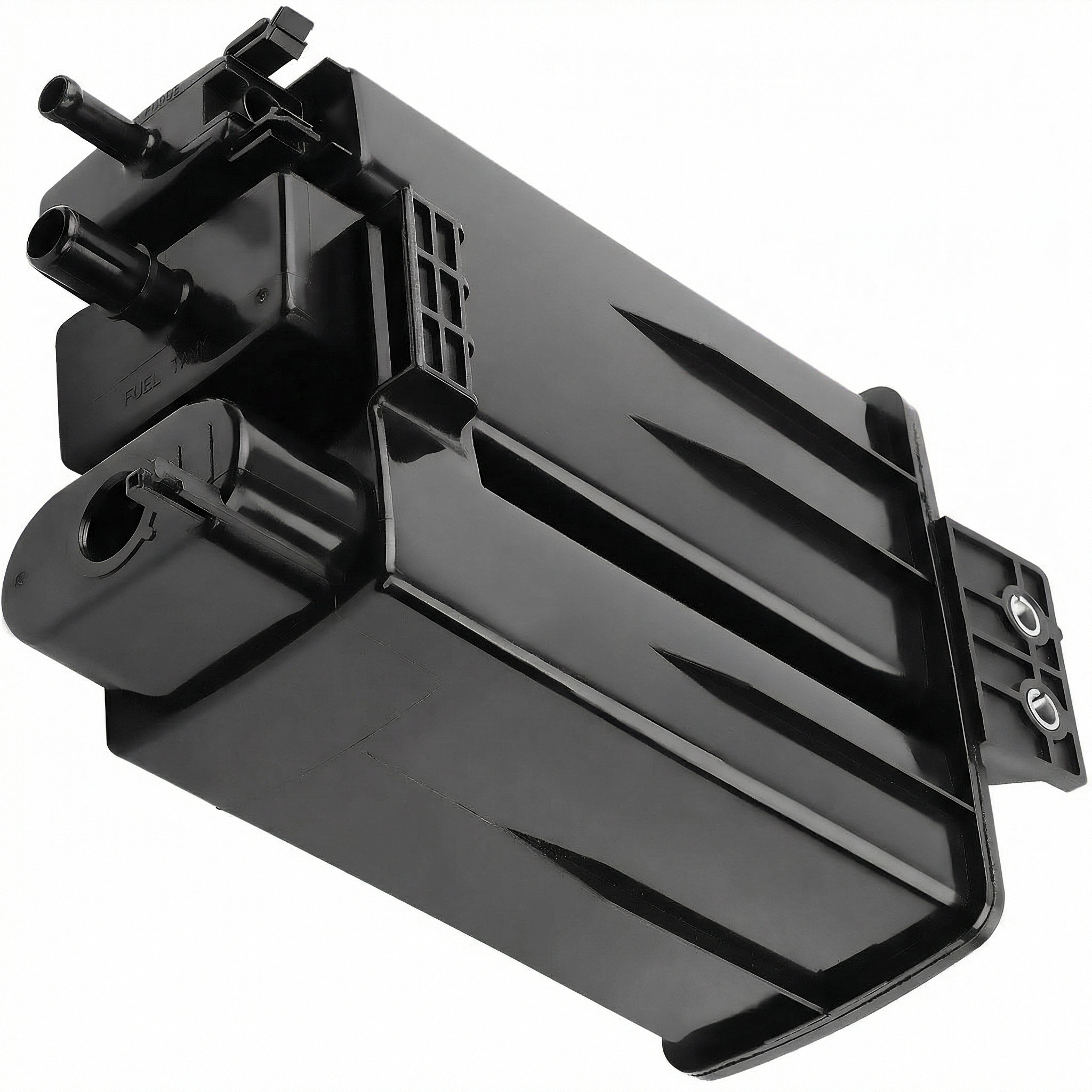
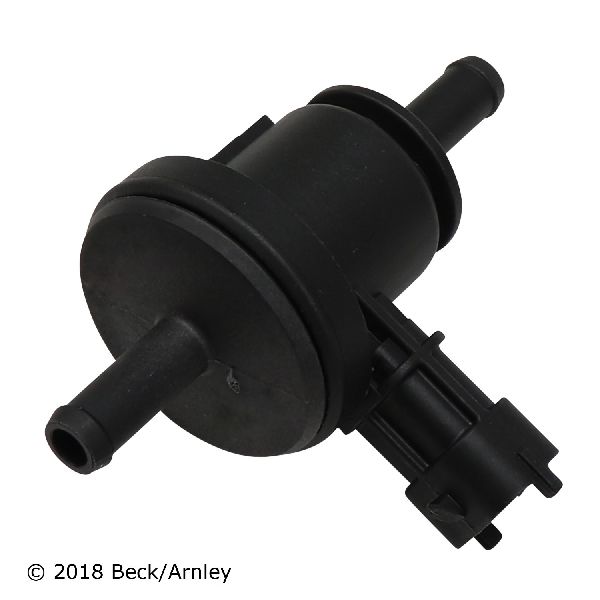
Est. part cost: $0 (for cleaning) - $190 (for a new filler neck) - Faulty Canister Close Valve (CCV) 🟡 Medium Probability → Shop Vapor Canister Also known as the vent solenoid, this valve is located near the charcoal canister at the rear of the car. Its exposed location makes it vulnerable to dirt, moisture, and road salt, causing it to stick open or fail to seal.
How to confirm: The valve should be normally open. A definitive diagnosis usually requires a professional smoke test, which will show smoke exiting the valve when it should be commanded closed by a scan tool. It can also be removed and tested by applying 12V to see if the solenoid actuates, though it may still leak internally even if it clicks.
Typical fix: Replace the canister close valve. It is typically mounted on or near the charcoal canister, located near the rear axle.
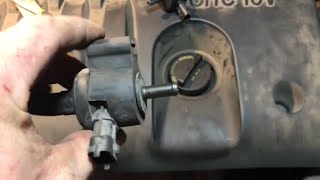
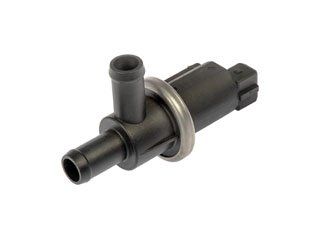
Est. part cost: $70-$120 - Faulty Purge Control Solenoid Valve (PCSV) Low-medium Probability → Shop Vapor Canister Purge Solenoid This valve is located in the engine bay and meters fuel vapor into the engine. It can get stuck open or closed, or develop a leak. A stuck-open valve is a very common failure mode.
How to confirm: The valve should be normally closed when the engine is off. A classic symptom of it being stuck open is a long crank time after refueling. To test, disconnect the electrical connector and the hoses. Try to blow through it. If any air passes, the valve is stuck open and is faulty. You can also test for a clicking sound by applying 12V power, but a click doesn't guarantee it's sealing properly.
Typical fix: Replace the purge control solenoid valve.
Est. part cost: $60-$90 - Cracked or Disconnected EVAP Hoses ⚪ Low Probability Over time, the rubber and plastic hoses that make up the EVAP system can become brittle, crack, or get disconnected, causing a small leak. This is more common on older, higher-mileage vehicles.
How to confirm: Perform a careful visual inspection of all hoses running from the engine bay to the fuel tank. However, small cracks can be nearly impossible to see. A smoke test is the most reliable way to find a leak in a hose.
Typical fix: Replace the cracked section of hose or the entire hose assembly.
Est. part cost: $10-$50
Rare But Worth Checking
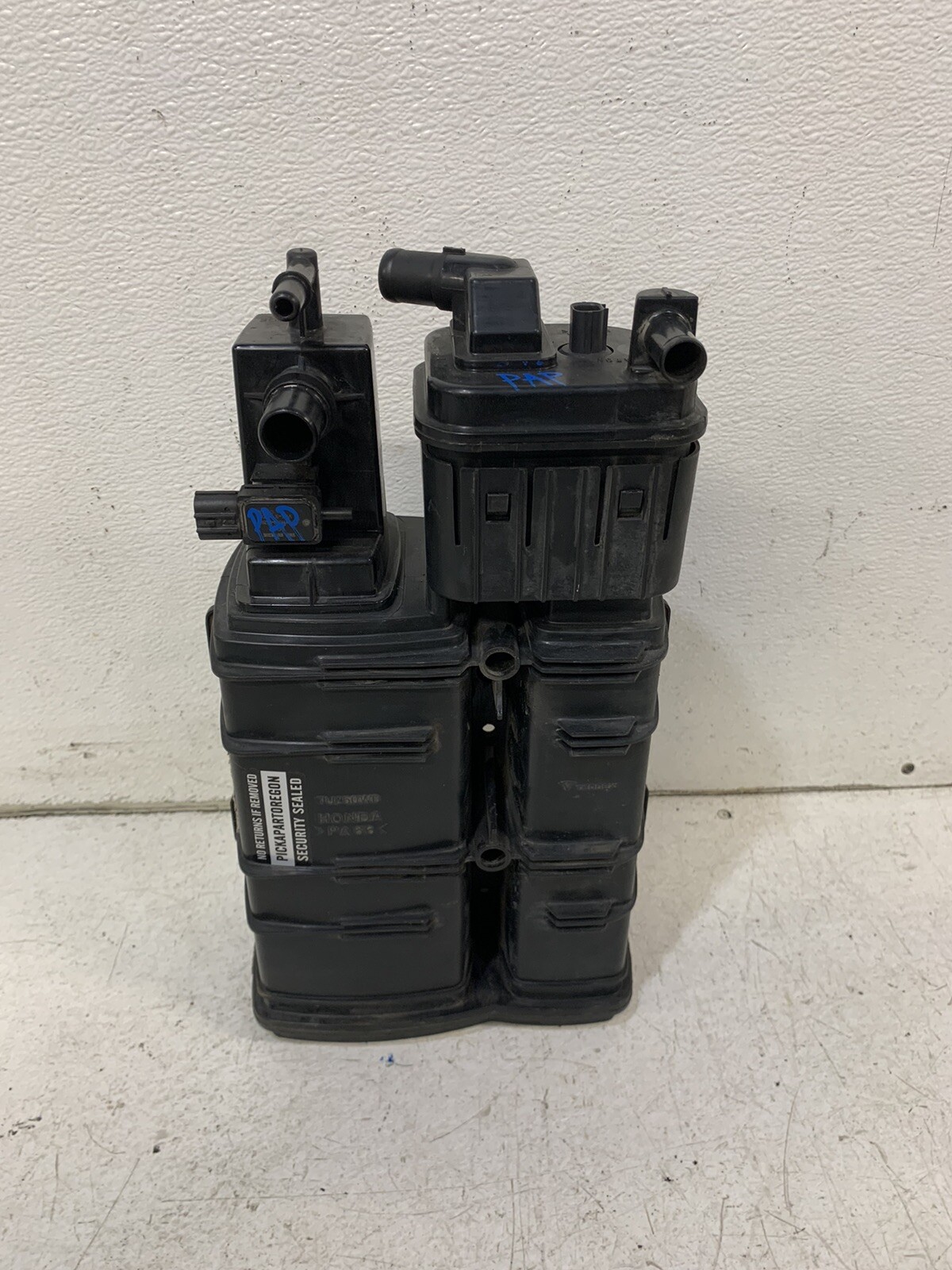
- Cracked Charcoal Canister: → Shop Vapor Canister The plastic housing of the charcoal canister can develop cracks from age or impact from road debris. This is less common than a valve failure but will be easily found during a smoke test if no other leaks are present.
Diagnosis Steps
- Read the code: Use an OBD-II scanner to confirm P0442 is the only code present. If other EVAP codes like P0449 or P0452 are present, they may point to a specific component failure.
- Inspect the Gas Cap: Remove the gas cap. Check for a 'click' when tightening it. Inspect the rubber seal for any cracks, tears, or signs of being flattened or hardened. An OEM cap is strongly recommended.
- Clean the Fuel Filler Neck: Inspect the lip of the filler neck for rust or debris. Clean it with a cloth to ensure a good sealing surface.
- Clear the Code and Drive: After checking the cap and neck, clear the code with your scanner and drive the vehicle for a few days (a full drive cycle) to see if the light returns.
- Test the Purge Valve (PCSV): If the code returns, locate the purge valve in the engine bay. A strong sign of failure is difficulty starting after getting gas. With the engine off, disconnect the valve and check if you can blow air through it. If you can, it's faulty and needs replacement.
- Visual Inspection: If the simple checks don't reveal the issue, visually inspect all accessible EVAP hoses and connections in the engine bay and under the car for obvious cracks or loose fittings.
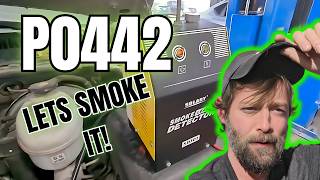
- Perform a Smoke Test: If the issue is still not found, a smoke test is the most effective next step. This involves pumping low-pressure smoke into the EVAP system's service port. The leak will be revealed by smoke exiting the faulty component (e.g., canister close valve, a cracked hose, the fuel filler neck, or the charcoal canister itself). 🎬 Watch: How to perform a professional EVAP smoke test.
Parts You'll Likely Need
- Gas Cap
(OEM #31010-3L600)— This is the most frequent cause of a P0442 code due to the seal wearing out over time. Aftermarket caps are a known source of issues.
Trusted brands: Hyundai (OEM), Stant, Gates
OEM price range: $25-$40
Aftermarket price range: $15-$30 - Canister Close Valve (Vent Valve)
(OEM #31430-29200 (replaces 31430-29100))— This valve is a common failure point on Hyundai vehicles of this era, often getting stuck due to its location near the rear wheel.
Trusted brands: Hyundai (OEM), Standard Motor Products, Dorman
OEM price range: $100-$130
Aftermarket price range: $60-$90 - Purge Control Solenoid Valve
(OEM #28910-26900)— This valve in the engine bay can get stuck open, causing a constant small leak. A key symptom is difficulty starting after refueling.
Trusted brands: Hyundai (OEM), Dorman, Bosch
OEM price range: $70-$90
Aftermarket price range: $50-$75
Platform-Specific Known Issues
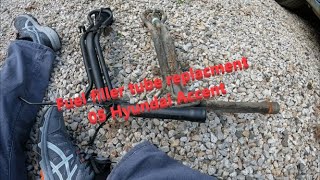
- Fuel Filler Neck Corrosion: → Shop Fuel Filler Neck Owners in the salt belt have documented the fuel filler neck rusting through, not just on the sealing lip but also on the smaller vapor lines attached to it. A YouTube video by 'Homeowner Repair' shows a 2005 Accent (same generation) with a corroded tack weld on a breather tube causing a fuel leak during fill-ups and a P0442 code.
Technical Service Bulletins (TSBs) & Recalls
- TSB Bulletin #5NPY6N5B02: Notes that some Hyundai vehicles may have a condition where the fuel filler cap seal may not provide proper sealing, triggering a Check Engine Light with DTC P0442 or P0456.
- TSB Bulletin #21-01-035H: Documents that certain Hyundai models may experience EVAP leakage related DTCs P0442, P0455, or P0456, particularly in coastal areas.
- TSB Bulletin #5NP-Z2J3V-04: States that some vehicles may experience a check engine warning light with stored codes P0442, P0455, or P0456.
Mechanic-Grade Diagnostic Values
- Purge Control Solenoid Valve (PCSV) Coil Resistance — expected: 16.0 Ohms at 20°C (68°F). Failure: A reading significantly higher or lower than 16.0 Ohms, or an open circuit (infinite resistance), indicates a failed coil.
- Fuel Tank Pressure (FTP) Sensor Signal Voltage — expected: Approximately 2.5V with key on, engine off, and the gas cap removed (atmospheric pressure).. Failure: Voltage stuck at 0V or 5V, or a reading that doesn't change when vacuum is applied to the system, points to a faulty sensor or wiring issue.
- Fuel Pressure at Idle — expected: 350 kPa (3.5 kg/sq.cm, 49.8 psi). Failure: While not a direct EVAP test, incorrect fuel pressure can sometimes lead to related symptoms. This value is for the overall fuel system health.
Scan Tool Commands That Help
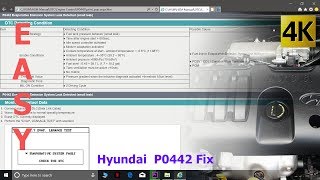
- Hyundai GDS (Global Diagnostic System) or equivalent professional scan tool: EVAP System Leak Test — This is a guided, automated test that commands the Canister Close Valve and Purge Valve to seal the system, then monitors the Fuel Tank Pressure sensor to check for a pressure drop, confirming a leak without a smoke machine.
- Hyundai GDS (Global Diagnostic System) or equivalent professional scan tool: Purge Control Solenoid Valve (PCSV) Actuation — To manually command the PCSV open and closed while monitoring engine RPM or vacuum to see if the valve is responding. This helps confirm if the valve is stuck or if the control circuit is faulty.
- Hyundai GDS (Global Diagnostic System) or equivalent professional scan tool: Canister Close Valve (CCV) Actuation — To command the CCV (normally open) to the closed position. This is essential during a smoke test to seal the vent side of the system. If smoke exits the CCV while it is commanded closed, the valve is faulty.
Wiring & Ground Locations
- G08 — For the 4-door model, located behind the right rear seat. For the 3-door model, it is near the right C-pillar.. This is a primary ground point for rear-body components. A corroded or loose G08 ground could potentially affect the operation of the Canister Close Valve or Fuel Tank Pressure Sensor, which are located near the fuel tank.
- ECM (Engine Control Module) — Located in the engine compartment on the left rear side.. The ECM controls all EVAP solenoids and monitors the pressure sensor. All wiring for the PCSV, CCV, and FTP sensor ultimately terminates here.
- Purge Control Solenoid Valve (PCSV) Location — At the right rear of the engine.. Knowing the physical location is key to testing the component and its connector for power, ground, and signal.
- Fuel Tank Pressure Sensor (FTPS) Location — Under the vehicle, near the fuel tank, often mounted on the fuel pump assembly accessible from under the rear seat.. This sensor provides the feedback the ECM uses to detect the small leak. A faulty sensor or bad wiring can mimic a leak. Access is typically under the rear seat cushion.
Real Owner Repair Stories
- YouTube video by 'Repairs and Stuff' (2009 Hyundai Accent) — Check Engine Light with code P0442.
❌ Tried (didn't work) Initial diagnosis pointed towards common causes like the gas cap, but the user proceeded with further testing based on the service manual.
✅ What actually fixed it The problem was traced to a faulty Canister Close Valve (CCV). Replacing the CCV resolved the P0442 code. - NHTSA ODI #11170436: An owner reported that their check engine light came on with code P0442 shortly after purchase; despite changing the gas cap twice and the purge valve, four mechanics were unable to find the issue.
- NHTSA ODI #11570498: A driver noted that common codes including P0401 and P0442 were identified during a reading at an auto parts store.
"I Checked Everything" — The Actual Cause
- In some cases, a P0442 can be triggered by a faulty Fuel Tank Pressure (FTP) sensor that is not reading correctly but hasn't failed completely to set its own specific code (like P0452 or P0453). The ECM interprets the sensor's incorrect, but stable, reading during the EVAP monitor test as a system leak. The smoke test would show no leaks, but testing the sensor's voltage output would reveal it's not responding correctly to pressure changes.
OEM Part Supersession History
31430-29100→31430-29200— Standard part update and consolidation across multiple Hyundai models.
Heads up: The new part number (31430-29200) is a direct replacement for the old one and is fully compatible.28910-22040→28910-26900— Part evolution and consolidation for use across multiple Hyundai/Kia platforms. The 28910-26900 is the correct part for the 2006-2011 Accent.
Heads up: The Dorman aftermarket equivalent is 911-808. Part number 911-800 is often confused but is for different applications and will not fit.
Diagnostic Flowchart
Other Known Issues on This Vehicle
Issues unrelated to this code that are worth knowing about as an owner of this generation:
- Timing Belt Failure 🔴 High — The 1.6L is an interference engine. The belt has a recommended replacement interval of every 60,000 miles. Failure before this interval is not uncommon, and if it breaks while driving, it will cause catastrophic engine damage (bent valves, damaged pistons).
- Automatic Transmission Problems 🟠 Medium — Owners report issues including hard shifting, delayed engagement from Park to Drive, and transmission slippage, particularly as the vehicle ages past 100,000 km. The 2009 and 2011 models are noted as having a higher number of complaints in this area.
- Peeling Exterior Paint (Especially White) 🟡 Low — While more prominent on slightly later models which had warranty extensions, paint peeling and clear coat failure are known issues on Hyundai vehicles of this era. The paint can bubble and flake off in large sections, often on the roof and hood. (Ref: While TSB 22-BD-010H was for later models, it documents the known issue of white paint peeling on Hyundai vehicles.)
- Faulty Stop Lamp Switch 🟠 Medium — A widespread issue leading to multiple recalls. A failing switch can cause the brake lights to not illuminate, remain stuck on, prevent the shifter from moving out of Park, and disable cruise control. (Ref: Multiple recalls, including NHTSA Campaign ID: 09V122000)
- Premature Shock Absorber Failure 🟠 Medium — Factory shock absorbers are a known weak point, with owners reporting leaks and failure as early as 40,000-50,000 km, leading to a bouncy ride and noise.
Used vs. New Parts: Buying Guide for This Vehicle
When a used part is the smart pick: A used Fuel Filler Neck from a donor vehicle located in a dry, salt-free climate can be a cost-effective solution if yours is rusted. It is a simple metal and rubber tube, so as long as it's visually inspected for rust and cracks, it's a low-risk used part.
Donor-vehicle mileage cap: roughly under 100000 miles for the part to have meaningful remaining life.
What to inspect on the donor part:
- For a Fuel Filler Neck, check for any signs of rust, especially around the sealing lip and where smaller vapor lines are welded on.
- Ensure there are no cracks in any rubber hose sections attached to the neck.
- Confirm the donor vehicle is from a region that does not use road salt.
OEM-only on this vehicle (don't cheap out):
- Gas Cap: Aftermarket gas caps are a very common cause of P0442 codes because their seals may not meet the exact pressure specifications required by the Hyundai EVAP system. It is strongly recommended to use an OEM Hyundai cap (31010-3L600) to avoid repeat issues.
Aftermarket brands forum-validated for this vehicle:
- Standard Motor Products (SMP): Widely regarded as a high-quality aftermarket manufacturer for electronic components like purge and vent valves.
- Bosch: A reputable OEM supplier that also offers aftermarket parts, their version of the PCSV (28910-26900) is a reliable choice.
Brands owners have reported issues with on this vehicle:
- Dorman: Quality can be hit-or-miss. While some Dorman parts are innovative redesigns, for standard replacement electronics like EVAP valves, owner forums frequently report mixed results, with some parts failing prematurely. It may work, but carries a higher risk than OEM or a premium brand like SMP.
Real Owner Stories
Aggregated from forums and TSBs cited above. Mileages and costs reflect what owners reported in those sources.
2009 Hyundai Accent 1.6L
Symptoms: Check engine light for a small EVAP leak.
What fixed it: Replacement of the canister close valve (vent solenoid) located near the charcoal canister.
Source hint: YouTube video by user 'Repairs and Stuff' titled 'Hyundai P0442 Evaporative System Small Leak fix'
2005 Hyundai Accent 1.6L
Symptoms: Fuel leak during fill-ups and a P0442 code.
What fixed it: Addressed a corroded tack weld on a breather tube attached to the fuel filler neck.
Source hint: YouTube video by 'Homeowner Repair' showing a 2005 Accent with a corroded tack weld
Related OBD-II Codes
Frequently Asked Questions
Why does my 2006-2011 Hyundai Accent have trouble starting only after I fill up the gas tank?
I live in a snowy climate; could road salt be causing my P0442 code?
Should I buy a generic gas cap from the auto parts store to fix this?
Is there a specific part on the fuel filler neck that fails on the 2005-2011 models?
Does the Kia Rio share these same EVAP issues?
Can I test the Purge Control Solenoid Valve (PCSV) myself?
Helpful Videos
Used OEM Parts in Stock

New Aftermarket Parts Available


The information in this article is provided for general reference and educational purposes only. Vehicle specifications, procedures, and part compatibility can vary by production date, trim level, and region. Always consult your vehicle's factory service manual and verify part numbers before purchasing or performing repairs. Safety-critical components such as airbags, seat belts, and braking systems should be installed by a qualified professional.
- Hyundai Accent:
- 🧭 Diagnostic Flowchart
- 🎬 Helpful Videos
- 🛍️ Shop This Part
- What's Unique About the 2006-2011 Hyundai Accent
- Symptoms You May Notice
- Most Likely Causes
- Rare But Worth Checking
- Diagnosis Steps
- Parts You'll Likely Need
- Platform-Specific Known Issues
- Technical Service Bulletins (TSBs) & Recalls
- Mechanic-Grade Diagnostic Values
- Scan Tool Commands That Help
- Wiring & Ground Locations
- Real Owner Repair Stories
- "I Checked Everything" — The Actual Cause
- OEM Part Supersession History
- Other Known Issues on This Vehicle
- Used vs. New Parts: Buying Guide for This Vehicle
- Real Owner Stories
- 2009 Hyundai Accent 1.6L
- 2005 Hyundai Accent 1.6L
- Related OBD-II Codes
- Frequently Asked Questions
- 🎟️ Get 5% Off