

P0442 on 2012-2016 Hyundai Veloster: EVAP Small Leak Causes and Fixes
For a P0442 code on a 2012-2016 Hyundai Veloster, the most common causes are a loose gas cap, a failing canister purge solenoid valve, or a cracked charcoal canister. Always check the gas cap first, as it's a free fix. If that doesn't solve it, the purge valve is the next likely culprit, costing around $30-$60 for the part. A cracked charcoal canister is also a very frequent failure point on these cars, especially in regions with road salt.
- P0442 means your Veloster has a small leak in the fuel vapor system.
- Always start by checking the gas cap. It's the most common cause and a free fix.
- If the gas cap is fine, the canister purge solenoid valve is the next most likely part to fail and is a relatively easy and inexpensive DIY replacement.
- The issue is officially recognized by Hyundai in a TSB, so it's a known problem for this vehicle.
- For persistent leaks, a professional smoke test is the best way to find the exact source without guessing.
What's Unique About the 2012-2016 Hyundai VELOSTER
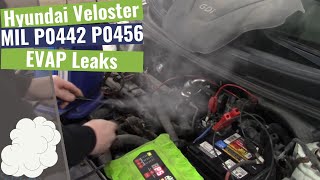
The first-generation Hyundai Veloster (2012-2016) shares its EVAP system components with many other Hyundai models of the era, making parts common and well-documented. While the purge valve and gas cap are common failures on many cars, the Veloster is particularly susceptible to a cracked charcoal canister. This happens because the metal inserts for the mounting bolts corrode and expand, cracking the plastic housing of the canister itself. This issue is so common that Hyundai issued a Technical Service Bulletin (TSB 17-FL-002) extending the warranty on this part for certain vehicles. A professional diagnostic video on a 2013 Veloster shows a smoke test pinpointing this exact failure mode.
🎬 Watch: Professional diagnostic video showing a Veloster smoke test.Diagnostic Flowchart
Tap your situation to follow the diagnostic path that matches what you're seeing on this vehicle.
Symptoms You May Notice
- Check Engine Light is on
- A faint smell of fuel, particularly outside the vehicle
- Slightly reduced fuel economy
- Difficulty starting the car immediately after refueling (if the purge valve is stuck open)
- Gas pump nozzle clicks off repeatedly when trying to refuel (can indicate a blocked canister or vent valve)
- Replacing the oxygen sensor, as it has no relation to the EVAP system.
- Replacing the fuel injectors without proper diagnosis.
- Repeatedly replacing the gas cap with aftermarket parts without checking the filler neck sealing surface or performing a smoke test.
Most Likely Causes
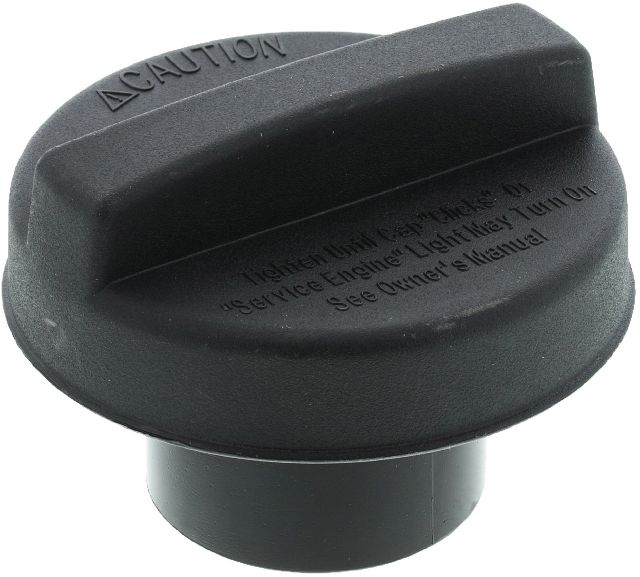
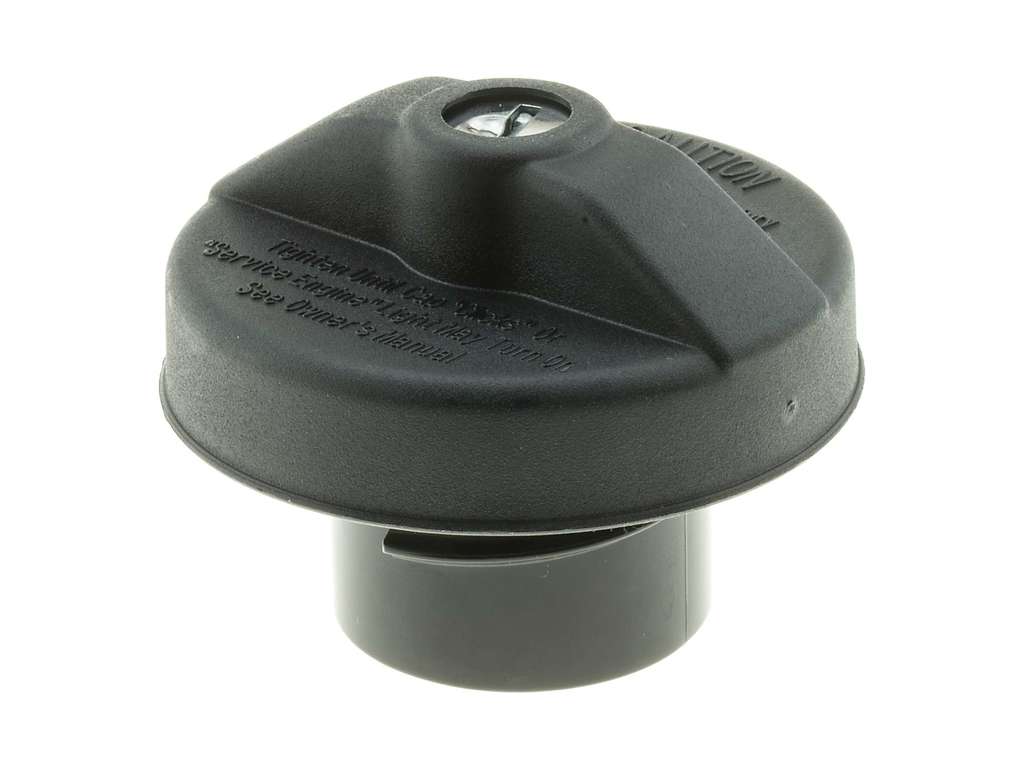
- Loose or Faulty Gas Cap 🔴 High Probability → Shop Fuel Tank Cap The rubber O-ring on the gas cap can dry out, crack, or become dirty over time, preventing a proper seal. This is the most common cause for any EVAP leak code. Additionally, the fuel filler neck itself can develop rust or corrosion on the sealing surface, which will prevent even a brand new cap from sealing properly.
How to confirm: First, ensure the cap is tightened until it clicks several times. Inspect the rubber seal for any visible cracks, stiffness, or contamination. Crucially, inspect and clean the metal lip of the fuel filler neck where the cap seals. If a new cap doesn't fix the issue, a smoke test is needed.
Typical fix: Tighten the cap. If the seal is damaged, replace the gas cap. It is highly recommended to use an OEM part to ensure a perfect seal, as aftermarket caps can be problematic. If the filler neck is rusted, it can be cleaned with a wire brush, but if it's severely damaged, it may need replacement.
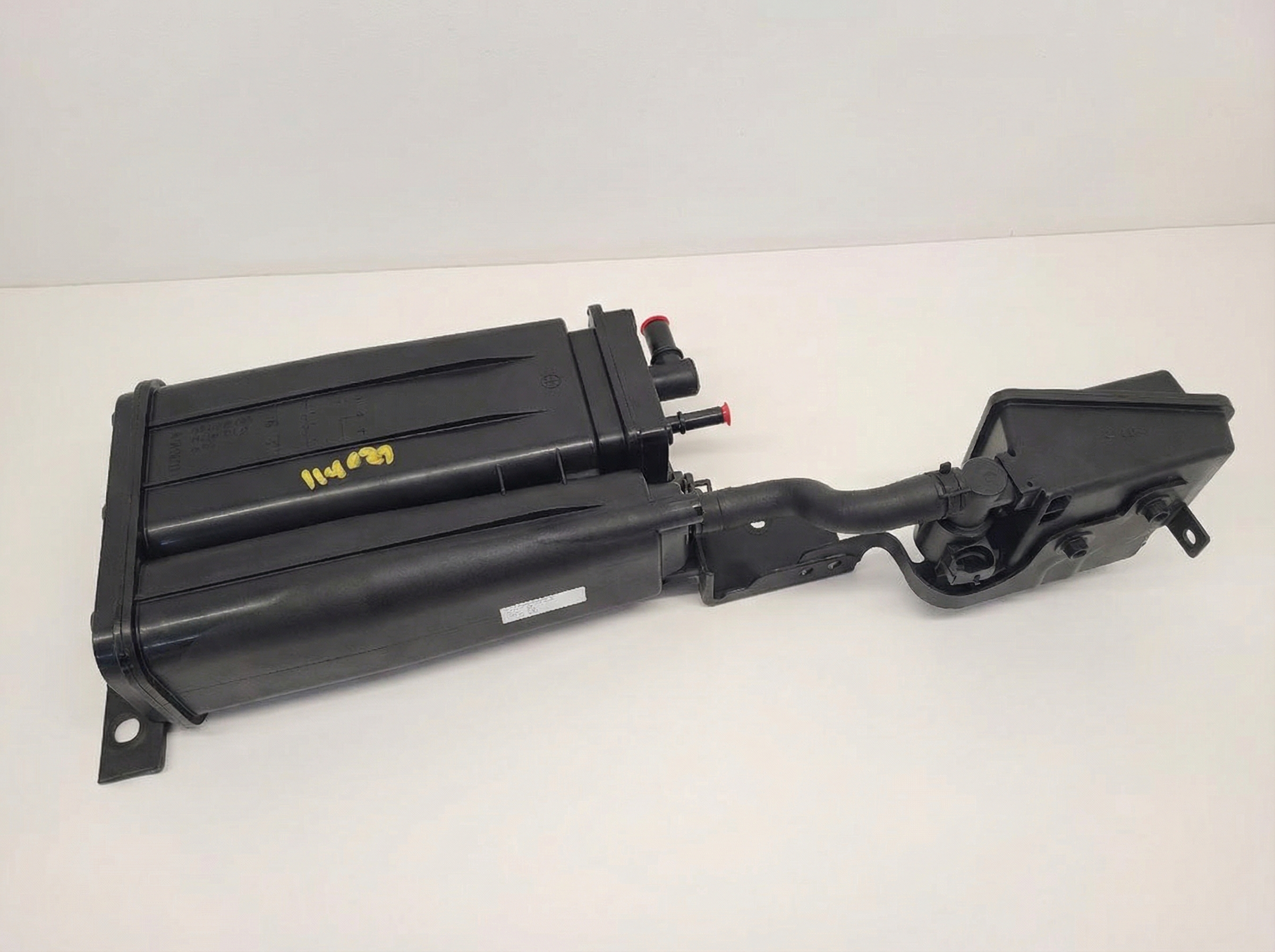
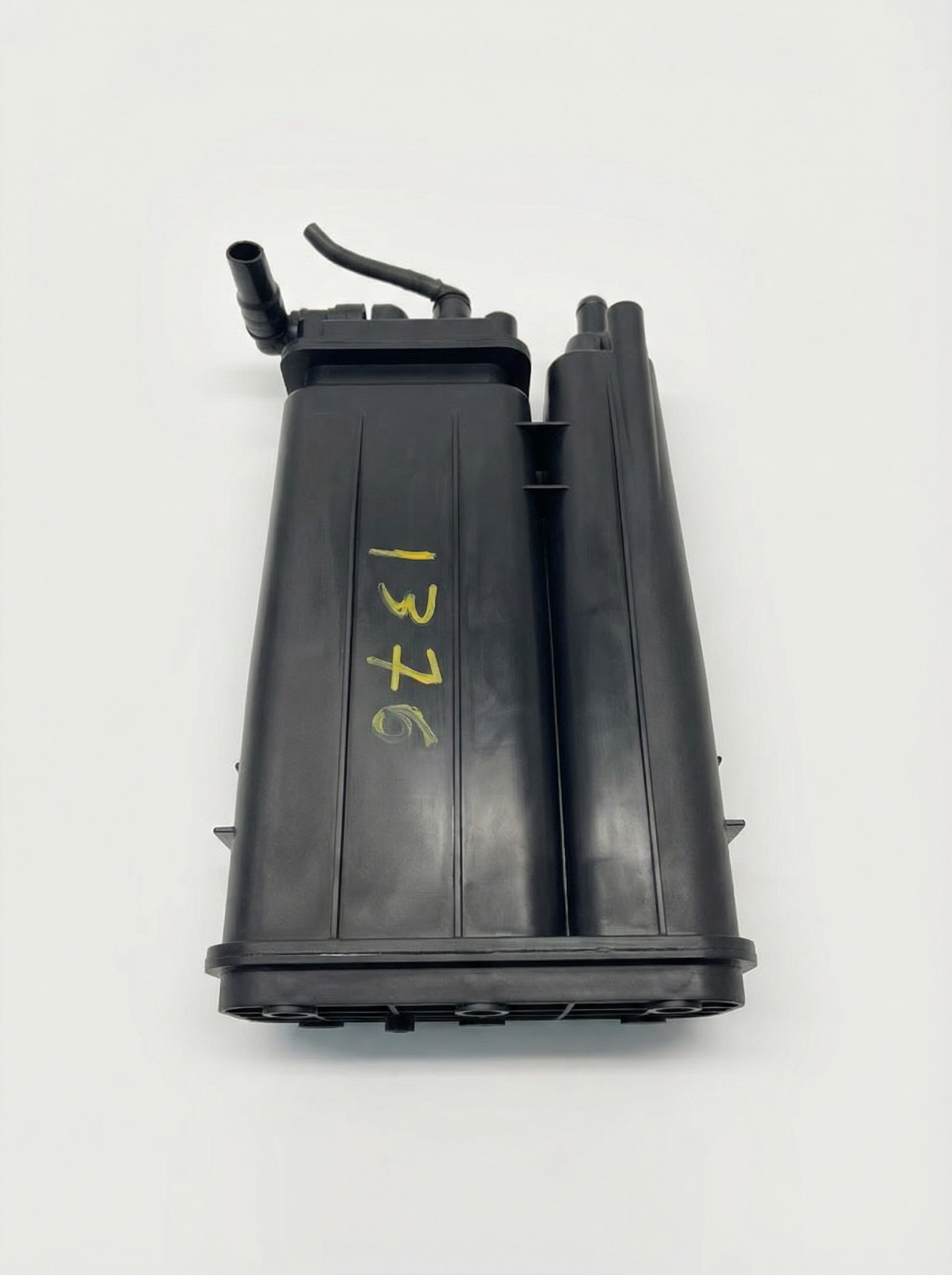
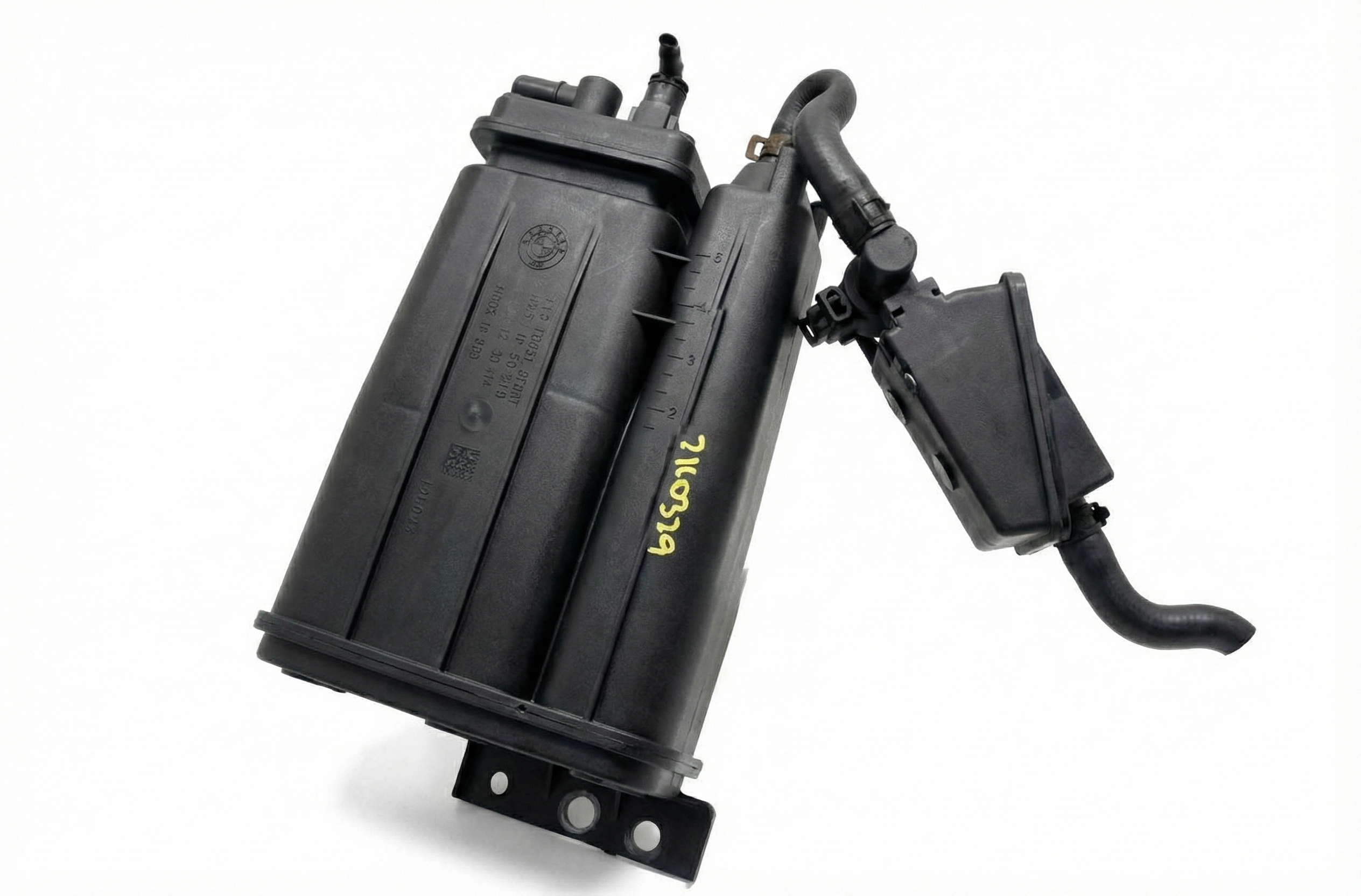
Est. part cost: $15-$35 - Cracked Charcoal Canister 🔴 High Probability → Shop Vapor Canister This is a very common failure on first-generation Velosters, particularly in regions where road salt is used. The metal sleeves for the mounting bolts rust and expand ('rust jacking'), which puts pressure on the plastic housing of the canister and causes it to crack, creating a leak. Hyundai acknowledged this with TSB 17-FL-002, which extended the warranty on the canister for some vehicles.
How to confirm: A visual inspection under the rear of the car may reveal cracks and rust stains around the canister's mounting bolts. The definitive way to confirm is with a smoke test, which will show smoke billowing from the cracked area of the canister housing.
Typical fix: The charcoal canister must be replaced. The part is located under the rear of the vehicle and is held in by several bolts and has three hose connections. Applying anti-seize to the new canister's bolt sleeves may help prevent a recurrence.
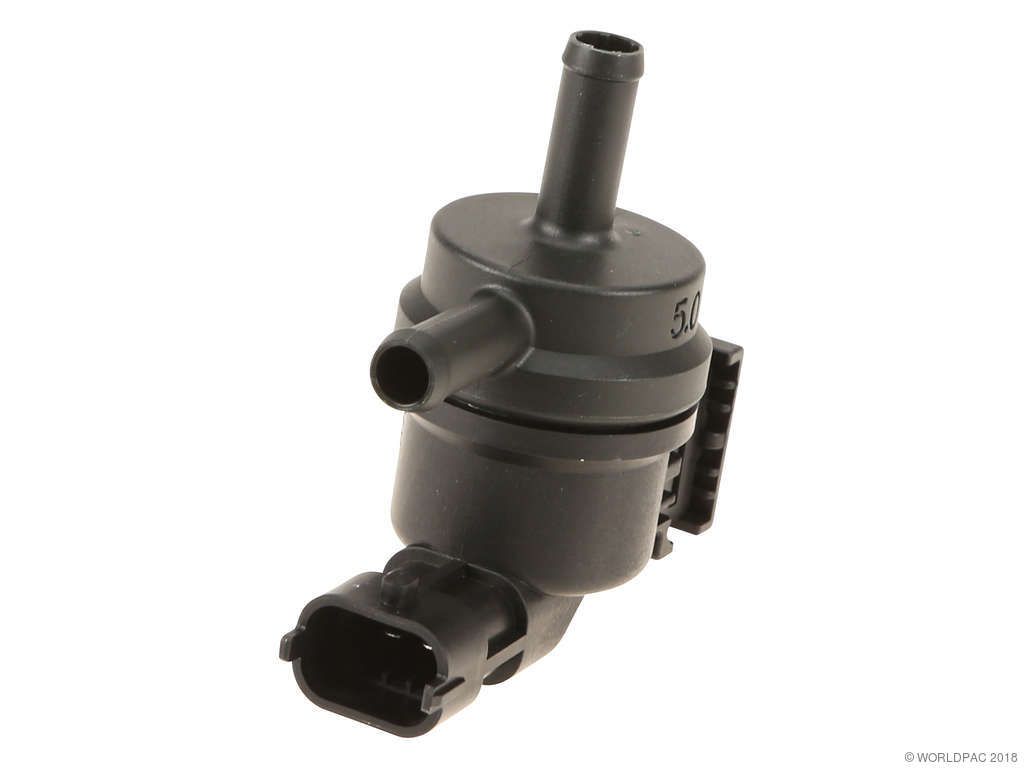
Est. part cost: $150-$250 - Faulty Canister Purge Solenoid Valve (PCSV) 🟡 Medium Probability → Shop Vapor Canister This valve is a common failure point on many Hyundai vehicles. It can get stuck open or closed, or develop an internal leak, triggering the P0442 code. A stuck-open valve is often accompanied by difficulty starting after refueling.
How to confirm: The valve is located on top of the engine near the intake manifold. A simple test is to disconnect it and try to blow through it; it should be closed (no air passes) when not energized. If you can blow through it, it's stuck open and needs replacement.
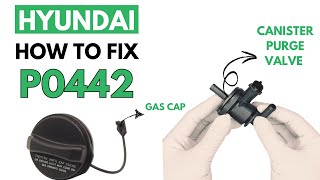
Typical fix: Replacement is straightforward. Disconnect the electrical connector and two hoses, unclip it from its bracket, and install the new one. This is a 10-15 minute job for a DIYer. 🎬 See how to fix this code with two simple DIY methods.
Est. part cost: $30-$60 - Cracked or Leaking EVAP Hoses ⚪ Low Probability Rubber hoses can become brittle and crack with age and exposure to heat and elements. This can happen anywhere between the fuel tank, charcoal canister, and purge valve.
How to confirm: A visual inspection may reveal obvious cracks, but small leaks are hard to see. The most effective method is a smoke test, where a mechanic injects low-pressure smoke into the EVAP system to see where it escapes.
Typical fix: Replace the specific section of cracked hose.
Est. part cost: $10-$50
Rare But Worth Checking
- Faulty Canister Close Valve (CCV) / Vent Valve: → Shop Vapor Canister This valve, located near the charcoal canister, is normally open and closes when the system runs a self-test. If it fails to seal properly during the test, it can cause a leak code. It is less common to fail than the purge valve but is a known possibility.
- Rusted or Cracked Fuel Filler Neck: → Shop Fuel Filler Neck Beyond just the sealing surface, the entire fuel filler neck assembly can rust through or crack, especially the rubber hose portion connecting to the tank. This will cause a significant EVAP leak and often a fuel smell. A smoke test will show smoke coming from the filler neck area, not the gas cap itself.
Diagnosis Steps
- Read the code with an OBD-II scanner to confirm P0442 is present.
- Inspect the gas cap. Remove it, check the seal for cracks or damage. Crucially, inspect the fuel filler neck for rust or debris on the sealing surface and clean it. Reinstall the cap, making sure it clicks multiple times.
- Clear the code with the scanner and drive the vehicle for a few days. If the light returns, proceed to the next step. Consider buying an OEM gas cap if you are still unsure.
- If the light returns, locate the canister purge solenoid valve on the engine. With the engine off, disconnect the hoses and try to blow through the valve. If air passes, the valve is faulty and must be replaced. Also, note if you have long crank times after refueling, which strongly points to this valve.
- Visually inspect the charcoal canister under the rear of the vehicle. Look for rust stains and cracks around the mounting bolt locations.
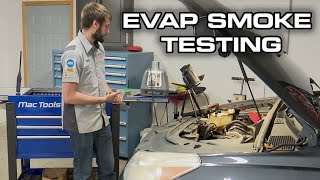
- If no obvious issues are found, a professional smoke test is the most reliable way forward. This will pressurize the system with visible smoke, making even the smallest leaks easy to pinpoint. 🎬 Watch: How to perform an EVAP smoke test to find leaks. This is the definitive test for cracked canisters, vent valves, and hard-to-see hoses.
Parts You'll Likely Need
- Gas Cap
(OEM #31010-3L600)— The seal is a common wear item and the number one cause of small EVAP leaks. Using an OEM cap is highly recommended for proper sealing.
Trusted brands: Hyundai (OEM)
OEM price range: $25-$40
Aftermarket price range: $15-$25 - Canister Purge Solenoid Valve
(OEM #28910-3L000 or 28910-3C200)— This is a very common failure point on Hyundai vehicles that causes EVAP codes. It gets stuck open or closed. Verify part number with VIN.
Trusted brands: Hyundai (OEM), Bosch
OEM price range: $45-$60
Aftermarket price range: $30-$50 - Charcoal Canister
(OEM #Varies by year/trim, e.g., 31420-2V500)— A very common failure on the Veloster due to cracks forming near the mounting bolts from rust. This is a more probable cause than on many other vehicles.
Trusted brands: Hyundai (OEM)
OEM price range: $150-$250
Aftermarket price range: $100-$180 - Canister Close Valve (Vent Valve)
(OEM #31430-1Y000)— Less common than the purge valve, but this valve can fail to seal during the EVAP test, causing a leak code. It is located near the charcoal canister.
Trusted brands: Hyundai (OEM)
OEM price range: $100-$150
Aftermarket price range: $70-$120
Related Codes That Often Appear With This One
- P0456 — P0456 indicates a 'very small leak'. It's common to see this code alongside or interchangeably with P0442, as the leak size is on the borderline. The official Hyundai TSB lists them together. The South Main Auto diagnostic video showed both codes present for a cracked canister.
- P0455 — P0455 indicates a 'large leak'. If a small leak worsens, or if the gas cap is left off entirely, this code may appear. A Reddit user reported seeing P0455, then P0442 after replacing the cap.
- P0441 — P0441 indicates 'Incorrect Purge Flow'. This code often points directly to a malfunctioning canister purge solenoid valve, which is also a primary cause of P0442.
Technical Service Bulletins (TSBs) & Recalls
- Bulletin #5NP-Z2J3V-04: Notes that some Veloster vehicles may experience a Check Engine Light with DTCs P0442, P0455, or P0456 stored.
- Bulletin #17-FL-002: Discussed in owner forums, this TSB reportedly extends the warranty for the charcoal canister due to a known issue where it cracks near the mounting points, causing EVAP leaks.
Platform-Specific Known Issues
- A Hyundai Technical Service Bulletin (TSB #5NP-Z2J3V-04) explicitly acknowledges that the 2012 Veloster may trigger a P0442, P0455, or P0456 code, confirming it as a known issue.
- An owner of a 2013 Veloster filed a complaint with the NHTSA in 2024 (ODI #11570498) mentioning the recurring appearance of the P0442 code, indicating real-world instances of this issue.
- Hyundai TSB 17-FL-002 provides a warranty extension for the charcoal canister on some 2012-2018 models due to its tendency to crack, which directly causes EVAP leak codes like P0442. Owners should check with a dealer for eligibility.
Mechanic-Grade Diagnostic Values
- Purge Control Solenoid Valve (PCSV) Coil Resistance — expected: 22.0 ~ 26.0 Ω at 20°C (68°F). Failure: A reading outside this range indicates a faulty coil in the solenoid.
- Canister Close Valve (CCV) Coil Resistance — expected: 19.5 ~ 22.5 Ω at 20°C (68°F). Failure: A resistance measurement outside of this specification suggests the valve's solenoid is failing.
- Fuel Tank Pressure Sensor (FTPS) Output Voltage — expected: Approximately 2.5V at atmospheric pressure (0 kPa). The voltage should decrease to ~0.5V with vacuum applied (-6.67 kPa) and increase to ~4.5V with pressure applied (+6.67 kPa).. Failure: Voltage that is stuck, does not change with pressure, or is significantly different from 2.5V with the gas cap off points to a faulty sensor.
Scan Tool Commands That Help
- Advanced OBD-II Scanner (e.g., Autel, Launch): Canister Shut Off Valve / EVAP Leak Test — This bidirectional command is used to manually close the canister close valve (vent valve), sealing the EVAP system. This allows a technician to perform a pressure or vacuum decay test, or to inject smoke to find a leak without smoke escaping through the normally-open vent.
Wiring & Ground Locations
- Purge Control Solenoid Valve (PCSV) — On the engine, typically near the rear of the intake manifold.. This is a key actuator in the EVAP system. Testing for power and ground at its 2-pin connector is a critical diagnostic step.
- Canister Close Valve (CCV) — Under the rear of the vehicle, located on or next to the charcoal canister, behind the fuel tank.. The CCV must receive a signal to close during the EVAP self-test. Checking for voltage at its connector during a scan tool actuation test confirms the wiring and ECM driver are functional.
- GGGG02 / GGT02 — A ground point located on the left front of the engine compartment.. The Engine Control Module (ECM) and its related sensors and actuators rely on clean, solid ground connections. A corroded or loose ground at this location can cause erratic behavior in the EVAP system components, potentially leading to false codes.
- Fuel Tank Pressure Sensor (FTPS) — On the fuel tank, accessible from under the rear seat cushion.. This sensor provides the pressure/vacuum readings the ECM uses to detect leaks. Probing its connector pins is necessary to verify its voltage output against specifications.
Real Owner Repair Stories
- YouTube channel 'The Flat Rate Mechanic' (2009 Hyundai Elantra (similar EVAP system design)) — Check Engine Light with code P0442.
❌ Tried (didn't work) A full smoke test of the EVAP system, which showed no visible leaks., Testing the purge valve., Testing the vent valve.
✅ What actually fixed it The technician found significant rust buildup on the fuel filler neck's sealing surface. Cleaning this rust off with a Scotch-Brite pad and applying silicone paste allowed the existing, new-looking gas cap to seal properly, resolving the leak. - YouTube channel 'South Main Auto Repair' (2013 Hyundai Veloster) — Check Engine Light with codes P0456 (very small leak) and P0442 (small leak).
❌ Tried (didn't work) Initial diagnosis focused on using a scan tool to command the vent valve closed and check fuel tank pressure.
✅ What actually fixed it A smoke test was performed. After initially suspecting the gas cap area, the technician traced the smoke to a crack in the plastic housing of the charcoal canister, a known failure point on this model. The canister required replacement.
"I Checked Everything" — The Actual Cause
- In one documented case on a similar Hyundai model, a P0442 code was present even after a smoke test revealed no leaks in any hoses, valves, or the canister. The root cause was found to be a corroded fuel filler neck. Rust buildup on the metal sealing surface prevented the gas cap's O-ring from creating a perfect seal, causing a leak too small to be easily found with smoke but large enough for the pressure sensor to detect over time. The fix was to thoroughly clean the filler neck surface with an abrasive pad.
Helpful Videos
![How to Fix HYUNDAI P0442 Engine Code in 3 Minutes [2 DIY Methods / Only $4.67]](https://img.youtube.com/vi/wM4_uK7G1tA/mqdefault.jpg)
Used OEM Parts in Stock
New Aftermarket Parts Available


The information in this article is provided for general reference and educational purposes only. Vehicle specifications, procedures, and part compatibility can vary by production date, trim level, and region. Always consult your vehicle's factory service manual and verify part numbers before purchasing or performing repairs. Safety-critical components such as airbags, seat belts, and braking systems should be installed by a qualified professional.
- Hyundai VELOSTER:
- 🧭 Diagnostic Flowchart
- 🎬 Helpful Videos
- 🛍️ Shop This Part
- What's Unique About the 2012-2016 Hyundai VELOSTER
- Symptoms You May Notice
- Most Likely Causes
- Rare But Worth Checking
- Diagnosis Steps
- Parts You'll Likely Need
- Related Codes That Often Appear With This One
- Technical Service Bulletins (TSBs) & Recalls
- Platform-Specific Known Issues
- Mechanic-Grade Diagnostic Values
- Scan Tool Commands That Help
- Wiring & Ground Locations
- Real Owner Repair Stories
- "I Checked Everything" — The Actual Cause
- 🎟️ Get 5% Off