

P0442 on 2008-2012 Infiniti EX35: EVAP Small Leak Causes and Fixes
For a P0442 code on a 2008-2012 Infiniti EX35, the most likely cause is a loose or faulty gas cap. Before buying any parts, tighten the cap until it clicks several times, clear the code, and drive for a few days. If it returns, a new OEM gas cap is an inexpensive first step, costing around $25-$50. If that doesn't work, the next most common culprit is the EVAP vent control valve at the rear of the vehicle.
- Always check the gas cap first for code P0442. Ensure it's tight and the seal is intact before attempting any other repairs.
- If a new gas cap doesn't solve the issue, the most likely culprit on an EX35 is the EVAP canister vent control valve located at the rear of the car.
- A smoke test is the most effective way to find the exact source of a small EVAP leak if it's not the gas cap.
- This code does not affect vehicle safety or performance, but it will cause an automatic failure on an emissions test.
What's Unique About the 2008-2012 Infiniti EX35
On this generation of Infiniti vehicles using the FM platform (including the EX35, G35/G37, and FX35), the EVAP system components, particularly the vent control valve and the gas cap, are well-documented points of failure. Infiniti issued technical service bulletins specifically pointing to a loose fuel filler cap as a primary cause for this code on 2007-2011 models. [TSB #ITB09012F] The EVAP canister and its associated vent control valve are located at the rear of the vehicle, just ahead of the rear bumper on the driver's side. This location exposes them to road salt, water, and debris, which leads to corrosion of the valve and its protective shield, often causing the valve to stick open or the shield's mounting bolts to rust and break during service.
Diagnostic Flowchart
Tap your situation to follow the diagnostic path that matches what you're seeing on this vehicle.
Symptoms You May Notice
- Check Engine Light is on
- A faint smell of fuel, particularly around the rear of the vehicle or after refueling (less common)
- Difficulty starting the car immediately after filling the gas tank (a rare symptom, more often associated with a stuck-open purge valve)
- Replacing the O2 sensors, as they have no connection to the EVAP system.
- Replacing the entire charcoal canister when only the much cheaper and separately available vent control valve attached to it has failed.
Most Likely Causes
- Loose or Faulty Gas Cap 🔴 High Probability → Shop Fuel Tank Cap Infiniti TSB #ITB09012F directly identifies a loose fuel filler cap as a likely cause for this code. The cap's rubber O-ring seal can crack and degrade over time, preventing a proper seal. This is the most common and cheapest fix, confirmed by many owners.
How to confirm: Ensure the gas cap is tightened until it clicks multiple times. Inspect the cap's rubber seal for cracks, stiffness, or contamination. If the code returns after tightening and clearing, replacing the cap with a new OEM part is a simple and effective diagnostic step. Aftermarket caps are known to cause sealing issues.
Typical fix: Tighten or replace the fuel filler cap.
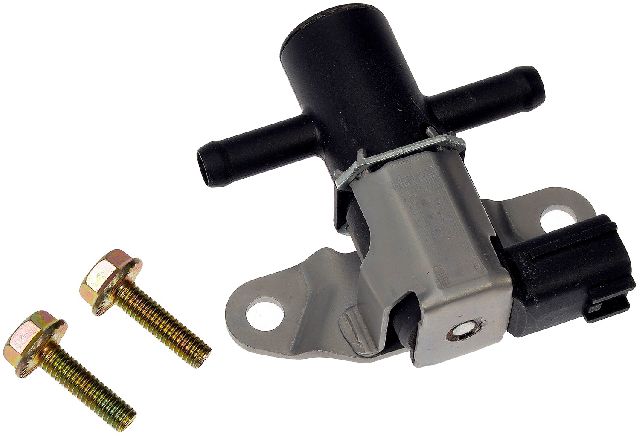
Est. part cost: $25-$50 - EVAP Canister Vent Control Valve Failure 🟡 Medium Probability → Shop Vapor Canister Vent Valve This valve is located by the rear driver's side wheel, mounted to the charcoal canister, where it's exposed to the elements. It is prone to corrosion and failure, where it gets stuck open, causing a persistent leak. It's a very common failure point on many Nissan and Infiniti models sharing this platform.
How to confirm: During a smoke test, smoke will be seen exiting the valve's vent port if it's stuck open. The valve can be tested with a capable scan tool to command it closed. It can also be removed and tested by applying 12V power; a healthy valve will click and close. Visual inspection may reveal cracks or heavy corrosion.
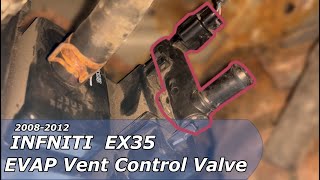
Typical fix: Replace the EVAP canister vent control valve. 🎬 Watch this step-by-step guide on replacing the vent control valve. This often involves dropping the charcoal canister for access, and the bolts for the protective shield are frequently rusted and may break.
Est. part cost: $60-$110 - Cracked or Disconnected EVAP Hoses 🟡 Medium Probability The rubber and plastic hoses in the EVAP system become brittle with age and exposure to engine heat and road conditions. Small cracks can develop, especially at connection points to the purge valve, canister, and fuel tank.
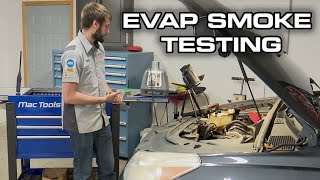
How to confirm: A visual inspection of all accessible EVAP lines is the first step. The most definitive method is to use a smoke machine, which fills the EVAP system with a visible vapor to pinpoint the exact location of the leak. 🎬 See how to perform a professional smoke test for leaks. Pay close attention to the lines around the purge valve in the engine bay and the canister area at the rear.
Typical fix: Replace the cracked or damaged hose section.
Est. part cost: $10-$40 - Faulty EVAP Canister Purge Volume Control Solenoid Valve ⚪ Low Probability → Shop Vapor Canister This valve is located in the engine bay and controls the flow of fuel vapors to the engine. While less common to fail than the rear vent valve, it can get stuck partially open, causing a small leak.
How to confirm: Listen for a constant clicking or buzzing sound from the valve with the engine running. A capable scan tool can command the valve to open and close to test its function. It can also be removed and tested for leaks by attempting to blow through it; it should be closed (no air passes) when not energized.
Typical fix: Replace the purge solenoid valve.
Est. part cost: $60-$150
Rare But Worth Checking
- Cracked Charcoal Canister: → Shop Vapor Canister The plastic housing of the charcoal canister can develop hairline cracks from age or impact from road debris, causing a leak. This is usually found during a smoke test after all other components have been checked.
- Leaking Fuel Tank Filler Neck: → Shop Fuel Tank The metal pipe leading to the gas tank can rust and develop small pinholes, especially in regions that use road salt. This will cause a leak that is often found via a smoke test where smoke will appear around the filler neck area.
- Faulty Fuel Tank Pressure Sensor: → Shop Fuel Tank Though uncommon, the sensor that measures pressure within the fuel tank can fail and give an incorrect reading, leading the ECU to believe there is a leak when there isn't one. This usually triggers other codes as well.
Diagnosis Steps
- Read the code with an OBD-II scanner to confirm P0442 is the primary code.
- Inspect the gas cap. Remove it, 🎬 Watch these quick DIY methods to fix a P0442 code. check the rubber O-ring for cracks or damage, and clean the mating surface on the filler neck. Retighten the cap until it clicks at least three times. Clear the code and drive for a few days to see if it returns.
- If the code returns, replace the gas cap with a new OEM part. Aftermarket caps are a frequent source of EVAP codes. Clear the code and re-evaluate.
- Perform a thorough visual inspection of all visible EVAP hoses and lines running from the engine bay to the fuel tank area. Look for any obvious cracks, rot, or loose connections.
- If no visible issues are found, a smoke test is the most effective next step. The EVAP service port on these vehicles is typically a green-capped Schrader valve located in the engine bay, near the purge solenoid on the intake manifold.
- Before injecting smoke, the EVAP Canister Vent Control Valve (at the rear of the car) must be commanded closed using a bidirectional scan tool. If you don't have a scan tool, you can remove the valve and temporarily plug its port on the canister to seal the system for the test.
- Inject smoke and look for leaks. Common areas include the purge valve, the vent valve itself (indicating it's not closing properly), the charcoal canister body, and any hose connections.
- If a valve is suspected, test it electrically. Use a multimeter to check for proper resistance and use a scan tool or direct 12V source to confirm the solenoid actuates with an audible click.
- Once the leak is found and repaired, clear the code and perform a complete EVAP drive cycle (typically involves driving with the fuel tank between 1/4 and 3/4 full) to confirm the fix.
Parts You'll Likely Need
- Fuel Filler Cap
(OEM #17251-1JA0A (supersedes 17251-1AM0A))— This is the most common cause, as identified by an Infiniti TSB and numerous owner forums. The seal wears out over time. [TSB #ITB09012F, 9]
Trusted brands: Infiniti (OEM), Stant, Gates
OEM price range: $30-$45
Aftermarket price range: $15-$30 - EVAP Canister Vent Control Valve
(OEM #14935-JF00E (supersedes 14935-JF00B, 14935-JF00C))— This valve is exposed to the elements at the rear of the vehicle and frequently fails by getting stuck open, causing a persistent small leak. It's a very common repair on this platform.
Trusted brands: Infiniti (OEM), Dorman, Bosch
OEM price range: $80-$110
Aftermarket price range: $40-$70 - EVAP Canister Purge Volume Control Solenoid Valve
(OEM #14930-JK20B)— Located in the engine bay, this valve can fail and stick open, though it is less common than the vent valve.
Trusted brands: Infiniti (OEM), Hitachi, Duralast
OEM price range: $150-$200
Aftermarket price range: $60-$120
Related Codes That Often Appear With This One
- P0456 — P0456 indicates a 'very small leak,' while P0442 indicates a 'small leak.' They are closely related and can be triggered by the same faults, such as a deteriorating gas cap seal. The code that appears may depend on the severity of the leak at the time of the test.
- P0455 — P0455 indicates a 'large leak.' If a small leak (P0442) worsens over time, it can eventually trigger a large leak code. It can also appear if the gas cap is left off completely or the vent valve is stuck wide open.
Technical Service Bulletins (TSBs) & Recalls
- ITB09012F: Notes that a loose fuel filler cap is a likely cause for P0442, P0455, and P0456 on 2007-2011 Infiniti vehicles. Recommends checking the cap first.
- ITB13-044J: General information bulletin for EVAP leak codes P0442, P0455, and P0456 on 2012 and newer models, outlining diagnostic strategies.
Platform-Specific Known Issues
- Rusted EVAP Canister Shield Bolts: → Shop Vapor Canister Corrosion of the metal shield protecting the EVAP canister is very common. The 10mm bolts holding it may rust and break during removal, complicating the replacement of the vent control valve or canister.
Mechanic-Grade Diagnostic Values
- Fuel Tank Pressure (FTP) Sensor Voltage — expected: Approximately 1.3V - 1.7V with the gas cap off (atmospheric pressure). Normal operating range is 0.5V - 4.5V.. Failure: A voltage reading stuck near 0V or 5V, or a reading that doesn't change when the gas cap is removed.
- EVAP Canister Purge Volume Control Solenoid Resistance — expected: Typically between 15 and 30 Ohms across the two terminals.. Failure: A reading of infinite resistance (open circuit) or very low resistance (short circuit) indicates a failed solenoid coil.
Scan Tool Commands That Help
- Infiniti CONSULT-III plus (or capable bidirectional scanner): EVAP System Test / Active Test — This function is critical before performing a smoke test. Use it to command the EVAP Canister Vent Control Valve to the 'Closed' position, which seals the system. The system is normally open to the atmosphere, and without closing this valve, a smoke test is invalid.
- Infiniti CONSULT-III plus: Leak Detection Test (Pressure Monitor) — After a repair, this function can be used to verify the fix without a smoke machine. After closing the vent valve, a special tool (J-42909) is used to apply slight pressure, and the technician monitors the fuel tank pressure sensor reading via the scan tool's graph for at least 10 minutes to see if it holds steady.
Wiring & Ground Locations
- EVAP Canister Vent Control Valve Connector — At the EVAP canister, under the right rear of the vehicle.. This 2-pin connector provides power and ground to the valve. One pin receives 12V+ with the ignition ON, and the other is the control wire that the ECM grounds to close the valve. Wires can break internally near the connector due to stress and exposure, which will not be visible but will cause a failure to actuate.
- EVAP Canister Purge Volume Control Solenoid Valve — Located at the top rear of the engine, on the back of the upper intake plenum.. This valve can leak internally, allowing un-metered vacuum into the EVAP system when it should be closed. This can cause a P0442 that is difficult to find with a smoke test, as the leak is not external.
- EVAP Service Port — A green-capped Schrader valve in the engine bay, typically located on a hard line near the Purge Solenoid Valve.. This is the dedicated connection point for introducing smoke from a smoke machine to test the entire EVAP system for leaks.
Real Owner Repair Stories
- YouTube user '2008-2012 INFINITI EX35' (2008-2012 Infiniti EX35) — Check Engine Light with P0455 (Large Leak, but same component failure as P0442).
❌ Tried (didn't work) Not specified, went straight for the common failure part.
✅ What actually fixed it The EVAP Canister Vent Control Valve was replaced. The video highlights that the 10mm bolts for the protective shield were extremely rusted and broke off during removal, a very common issue for technicians working on this. After replacing the valve and clearing the codes, the light stayed off after a 50-100 mile drive cycle. - 2CarPros Forum User (2000-2005 Mitsubishi Eclipse (Note: Different vehicle, but identical failure pattern applicable to many cars in salt-belt regions)) — P0442 code and a visible fuel leak around the filler neck area only when pumping gas.
❌ Tried (didn't work) Initial diagnosis was uncertain.
✅ What actually fixed it The fuel filler neck was found to be completely rusted out on the bottom. Replacing the entire metal filler neck assembly resolved both the fuel leak and the P0442 code.
"I Checked Everything" — The Actual Cause
- In some cases, a smoke test will show no external leaks, yet the P0442 code persists. A common cause for this is an internally leaking EVAP Canister Purge Volume Control Solenoid Valve (in the engine bay). The valve fails to seal completely, allowing engine vacuum to constantly pull on the EVAP system when it shouldn't. This is detected by the Fuel Tank Pressure sensor as a leak, but since the leak is internal to the engine, no smoke will be visible externally.
- Another possibility is a faulty Fuel Tank Pressure (FTP) sensor itself. If the sensor is providing an incorrect voltage reading to the ECU, the computer may interpret this as a leak even when the system is perfectly sealed.
When the Usual Fixes Don't Work
- While the gas cap and rear vent control valve are the most frequent culprits for P0442, they are not the only causes. There are documented cases where both of these common parts were checked or replaced, and the code returned. In one such scenario, a smoke test of the entire system revealed no external leaks. The actual cause was a faulty EVAP purge solenoid valve in the engine bay that was leaking internally, allowing engine vacuum to bleed into the system. This highlights the importance of not stopping diagnosis after checking only the most common failures.
OEM Part Supersession History
14935-AM60A, 14935-AM60B, 14935-JF00B, 14935-JF00C, 14935-JF00E→14935-JF02C— Likely design revisions to improve durability and prevent sticking, which was a common failure mode.
Heads up: All previous versions are replaced by the latest part number (14935-JF02C). Using an older stock number is not recommended.14950-CG200→14950-CG20B— Minor revision to the EVAP canister assembly.
Helpful Videos
![How to Fix P0442 Engine Code in 7 Minutes [6 DIY Methods / Under $3.67]](https://img.youtube.com/vi/KISPTedKJmQ/mqdefault.jpg)
![How to Fix P0442 Engine Code in 3 Minutes [2 DIY Methods / Only $4.67]](https://img.youtube.com/vi/73AR8Tl6YZU/mqdefault.jpg)
Used OEM Parts in Stock
New Aftermarket Parts Available


The information in this article is provided for general reference and educational purposes only. Vehicle specifications, procedures, and part compatibility can vary by production date, trim level, and region. Always consult your vehicle's factory service manual and verify part numbers before purchasing or performing repairs. Safety-critical components such as airbags, seat belts, and braking systems should be installed by a qualified professional.
- Infiniti EX35:
- 🧭 Diagnostic Flowchart
- 🎬 Helpful Videos
- 🛍️ Shop This Part
- What's Unique About the 2008-2012 Infiniti EX35
- Symptoms You May Notice
- Most Likely Causes
- Rare But Worth Checking
- Diagnosis Steps
- Parts You'll Likely Need
- Related Codes That Often Appear With This One
- Technical Service Bulletins (TSBs) & Recalls
- Platform-Specific Known Issues
- Mechanic-Grade Diagnostic Values
- Scan Tool Commands That Help
- Wiring & Ground Locations
- Real Owner Repair Stories
- "I Checked Everything" — The Actual Cause
- When the Usual Fixes Don't Work
- OEM Part Supersession History
- 🎟️ Get 5% Off