

P0442 on 2007-2012 Infiniti FX35: EVAP Small Leak Causes and Fixes
For a P0442 code on a 2007-2012 Infiniti FX35, the most likely cause is a loose or faulty gas cap. If that's not it, the EVAP canister vent control valve is the next most common failure. Many owners on forums report that using an OEM gas cap is critical, as aftermarket versions can fail to seal properly. A new OEM gas cap (Part No. 17251-79960) costs $25-$40, while a vent valve can be $70-$150.
- Always check the gas cap first. Ensure it is tight and the seal is not cracked or worn. This is the cheapest and most common fix.
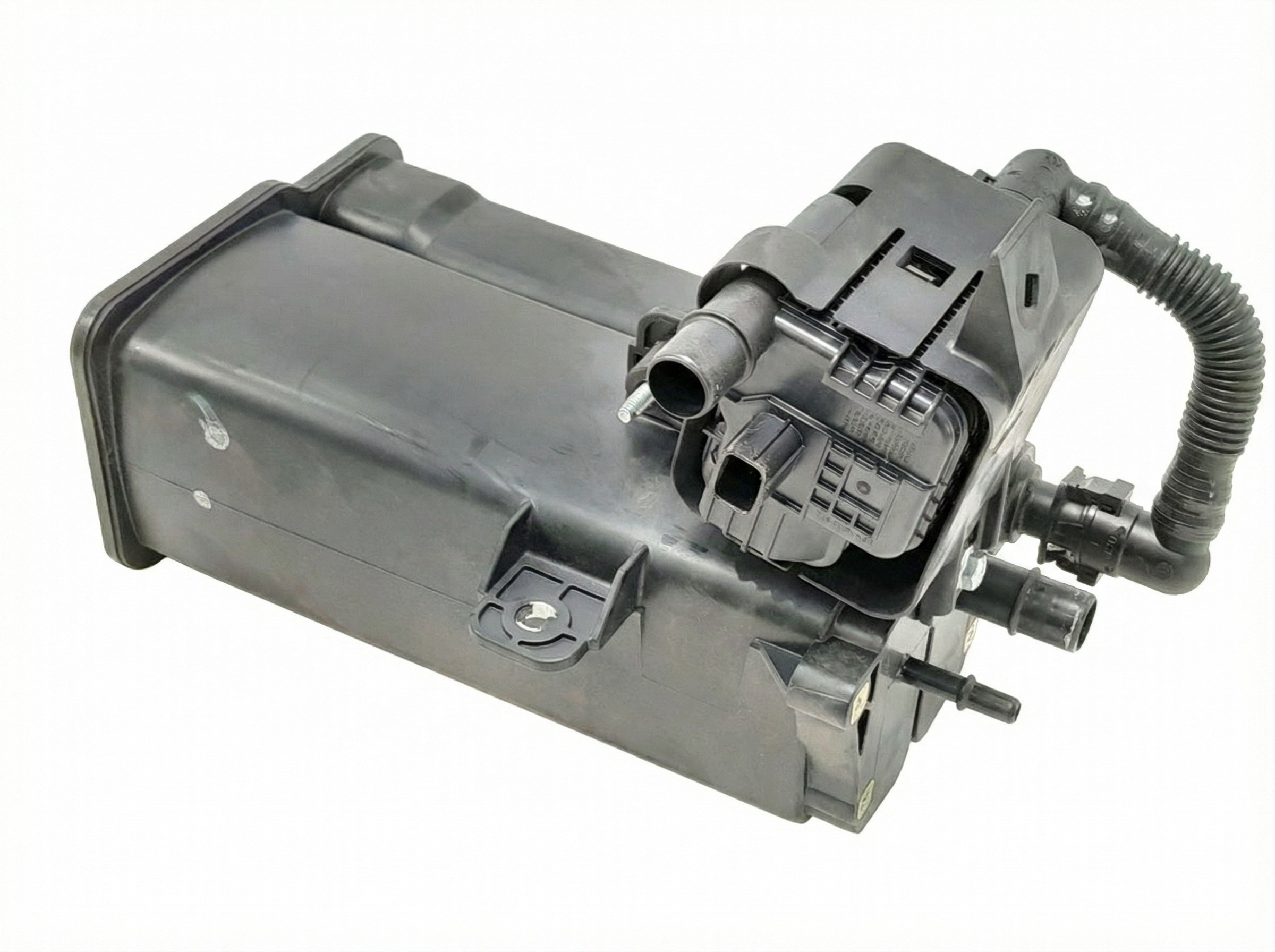
- The second most likely culprit is the EVAP canister vent control valve, located at the rear of the vehicle by the charcoal canister.
- Do not immediately replace the purge valve in the engine bay; it is a less common failure point for this code on this vehicle.
- If the gas cap doesn't solve the issue, a smoke test is the most efficient way to find the leak, saving time and money on guessing.
- This code will not affect how your car drives, but it will prevent it from passing an emissions inspection.
What's Unique About the 2007-2012 Infiniti FX35
The 2007-2012 FX35 spans two generations, the S50 (2007-2008) and S51 (2009-2012), which use different V6 engines (VQ35DE and VQ35HR, respectively). However, the EVAP system design and common failure points are very similar across both. Infiniti and its parent company Nissan have issued multiple Technical Service Bulletins (TSBs) highlighting that a loose fuel fill cap is a primary cause for this code on their vehicles. Beyond the cap, the EVAP canister vent control valve, located under the vehicle near the rear passenger-side wheel well, is a notoriously common failure point. Its exposure to road debris, salt, and moisture causes the internal solenoid to corrode and either stick open or fail to close, creating a leak path that the system detects during its self-test.
Diagnostic Flowchart
Tap your situation to follow the diagnostic path that matches what you're seeing on this vehicle.
Generation note: This range covers two generations: the first-generation S50 (2007-2008 with the VQ35DE engine) and the second-generation S51 (2009-2012 with the VQ35HR engine). While the fundamental causes of P0442 are the same, the exact location and part numbers for components like the EVAP vent control valve may differ slightly. For example, the vent valve for the S50 is often listed as a different part than for the S51.
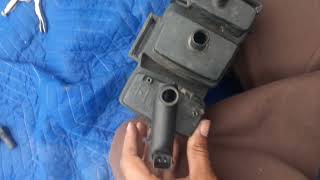
🎬 Watch: How to replace the vent valve on S50 models.Symptoms You May Notice
- Check Engine Light is on
- A faint fuel smell may be present in some cases.
- A "LOOSE FUEL CAP" warning message may appear on the instrument cluster of 2012 models.
- In rare cases, if the vent valve is stuck closed, you may experience the fuel pump nozzle clicking off repeatedly when trying to fill the gas tank.
- Difficulty starting the engine after refueling, which may feel like the engine is flooded, can occur if the purge valve is stuck open.
- Replacing the EVAP purge valve in the engine bay when the more common failure is the vent control valve at the rear of the vehicle.
- Using a cheap, aftermarket gas cap which fails to create a proper seal, leading to a persistent P0442 code and unnecessary further diagnosis.
Most Likely Causes
- Loose or Faulty Fuel Cap 🔴 High Probability → Shop Fuel Tank Cap Infiniti TSBs #ITB09012F and #ITB13-044J directly name a loose fuel cap as a likely cause for P0442. The rubber O-ring on the cap can crack and degrade over time, preventing a proper seal. Forum users across multiple Infiniti platforms strongly recommend using an OEM cap, as aftermarket versions are frequently reported to cause EVAP codes.
How to confirm: First, ensure the cap is tightened until it clicks multiple times. Inspect the rubber seal on the cap for any cracks, stiffness, or damage. A state inspection station can often test the cap's seal. If you hear a 'whoosh' of pressure when opening the cap, the system was likely sealed and the cap may not be the issue.
Typical fix: Tighten the cap correctly. If the seal is damaged or the cap is old, replace it with a new, high-quality OEM Infiniti cap (Part No. 17251-79960). Many owners have fixed the code simply by replacing a non-OEM cap with a genuine one.
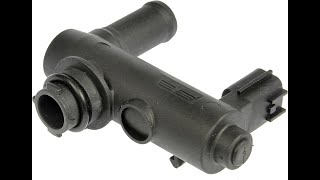
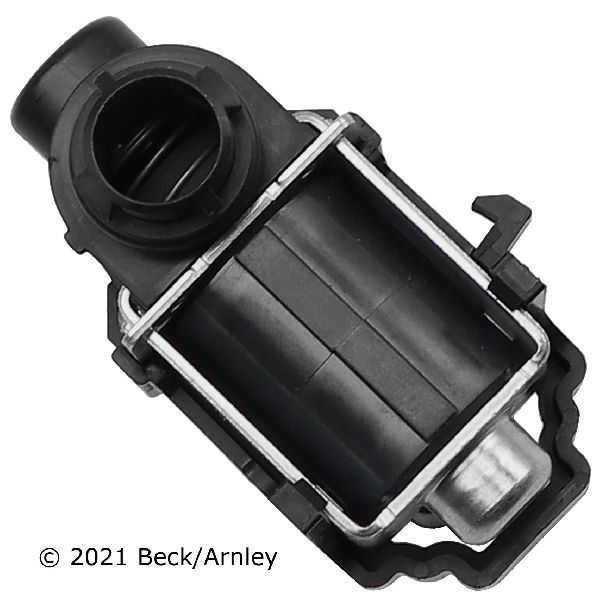
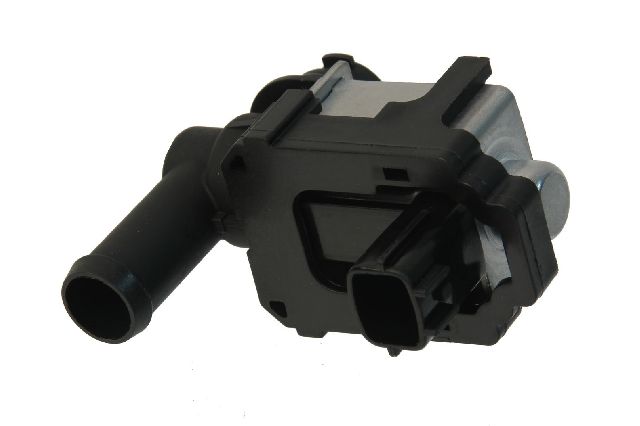
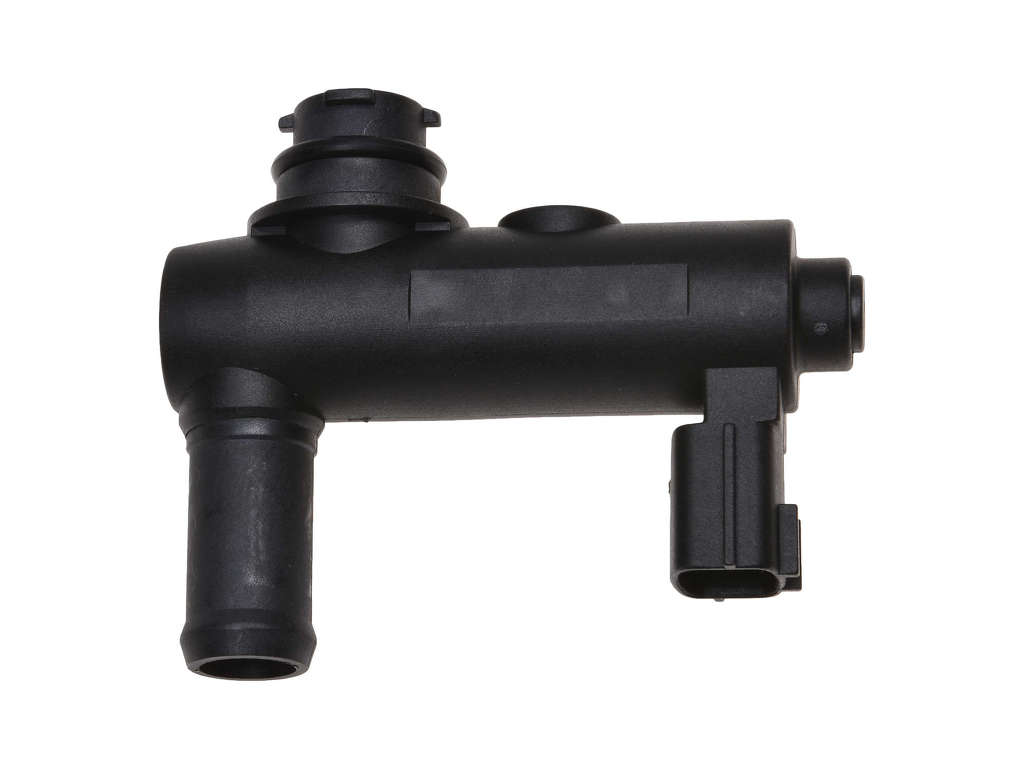
Est. part cost: $25-$40 (OEM) - EVAP Canister Vent Control Valve/Solenoid 🔴 High Probability → Shop Vapor Canister Vent Valve This valve is located under the vehicle near the EVAP canister, exposing it to dirt, moisture, and road salt, which can cause it to fail or get stuck open. It's a very common failure point on many Nissan and Infiniti models of this era. A NICOclub forum member with a similar platform confirmed their P0442 was caused by a vent valve that was leaking and would intermittently stick closed.
How to confirm: A smoke test is the most reliable method; smoke will be seen exiting the valve if it's stuck open. For a DIY test, you can remove the valve, apply 12V power to its terminals, and listen for a click. When not energized, the valve should be open; when energized, it should close and you should not be able to blow air through it. The resistance across the pins should be between 20 and 50 ohms.
Typical fix: Replace the EVAP canister vent control valve. This part is typically attached to the EVAP canister itself, located behind a shield in the rear passenger-side wheel well area. 🎬 See this walkthrough for replacing the S51 vent control valve.
Est. part cost: $70-$150 - Cracked or Disconnected EVAP Hoses 🟡 Medium Probability The rubber hoses in the EVAP system can become brittle and crack with age and exposure to engine heat cycles, creating small leaks. This is especially true for the hoses connected directly to the purge and vent valves.
How to confirm: Visually inspect all accessible EVAP lines, from the engine bay to the canister in the rear, for any signs of cracking, disconnection, or deterioration. A smoke test is the definitive way to reveal leaks from hoses or their connections.
Typical fix: Replace the cracked section of hose. Ensure all connections are secure with clamps.
Est. part cost: $10-$50 - EVAP Purge Volume Control Solenoid/Valve ⚪ Low Probability → Shop Vapor Canister This valve, located in the engine bay, can fail but is less common than the vent valve for causing a P0442. If it sticks open, it can cause a leak code and may also lead to difficulty starting the car after refueling.
How to confirm: With the engine off, remove the hose leading from the canister and try to blow through the valve; it should be closed. With the engine running (after it's warm), you can disconnect the inlet hose and feel for suction, which indicates it's opening correctly. A scan tool can also command it to cycle, and you should hear a clicking sound.
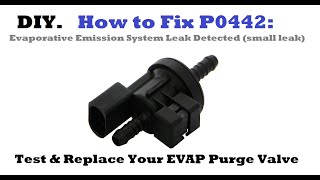
Typical fix: Replace the purge valve. OEM part numbers include 14935-JF00A or 14935-JF00B for the S51 generation. 🎬 Watch: How to test and replace the EVAP purge valve.
Est. part cost: $65-$90 (OEM)
Rare But Worth Checking
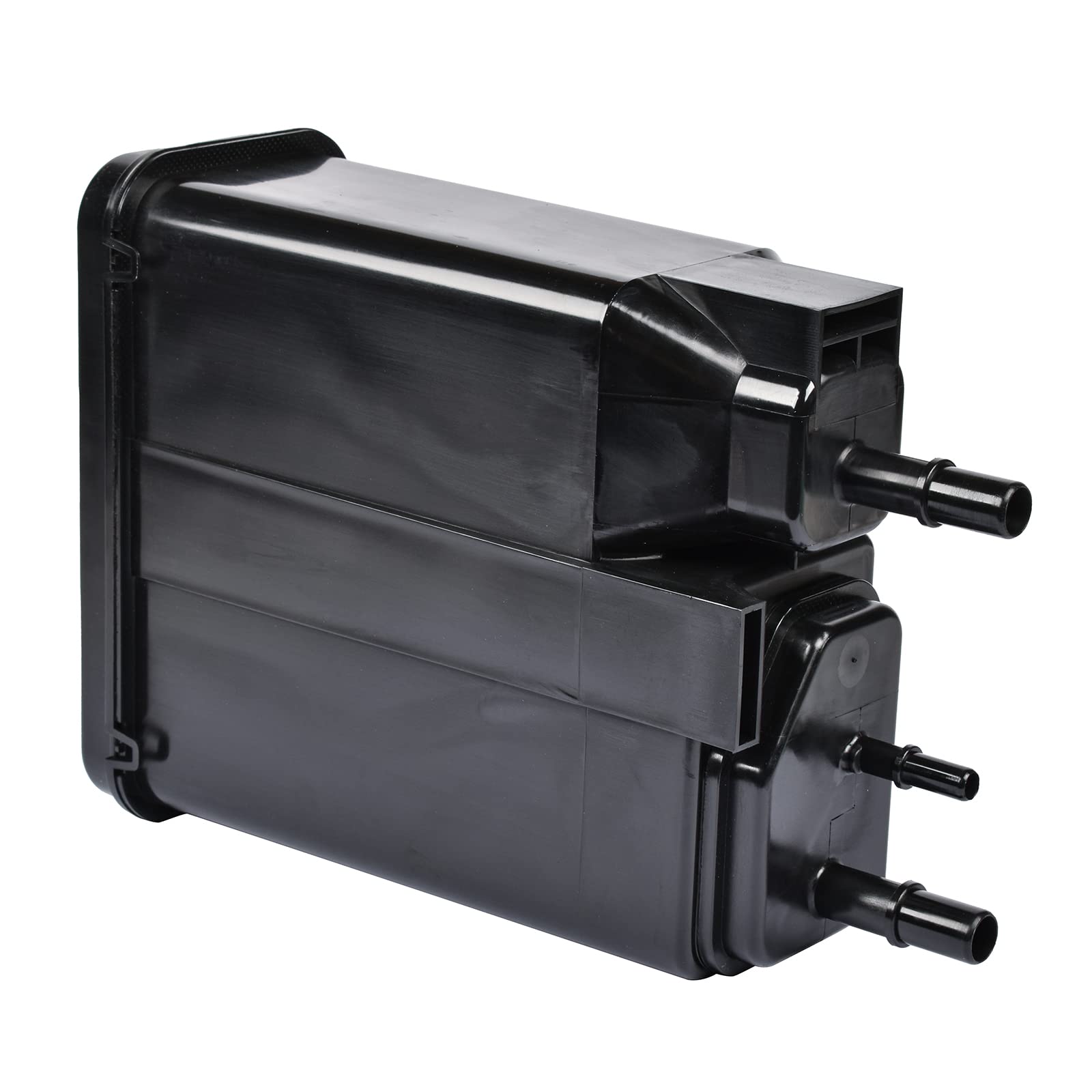
- Cracked EVAP Charcoal Canister: → Shop Vapor Canister The plastic housing of the canister can develop cracks from age or physical impact, creating a leak. This is often accompanied by difficulty filling the fuel tank or a strong fuel odor. A user on InfinitiScene forums reported needing a new canister to resolve their EVAP leak codes.
- Leaking Fuel Filler Neck: → Shop Fuel Filler Neck The metal tube leading to the gas tank can rust and develop pinhole leaks, especially in regions that use road salt. This is best found with a smoke test. A forum user noted that while possible, a leak from a rubber hose is more likely than the metal neck itself unless significant rust is present.
- Faulty Fuel Tank Pressure Sensor: → Shop Fuel Tank A malfunctioning sensor can incorrectly report a leak to the ECM, triggering the code even if no leak exists. This is an uncommon failure but can happen if the sensor no longer reads pressure changes correctly.
Diagnosis Steps
- Read the code with an OBD-II scanner and check for any other related codes.
- Inspect the gas cap. Remove it, check the seal for cracks or damage, and retighten it until it clicks several times. Clear the code and drive for a few days to see if it returns. If the cap is not OEM, consider replacing it with a genuine Infiniti cap as the first step.
- If the code returns, perform a thorough visual inspection of all accessible EVAP hoses and lines between the engine and the fuel tank area. Look for obvious cracks, damage, or loose connections.
- If visual inspection reveals nothing, the most effective next step is to have a professional perform a smoke test. This involves injecting pressurized smoke into the EVAP system via the service port to pinpoint the exact location of the leak.
- Based on the smoke test results, test the specific component identified as leaking. For the vent valve, apply 12V power to check for solenoid operation (a clicking sound). For the purge valve, check if it holds vacuum when closed.
- Replace the faulty component, clear the code, and perform a complete drive cycle to allow the EVAP monitor to run and confirm the repair.
Parts You'll Likely Need
- Fuel Cap
(OEM #17251-79960)— This is the most common cause, as confirmed by Infiniti TSBs and countless owner experiences. The seal wears out, and aftermarket caps are notorious for not sealing correctly.
Trusted brands: Infiniti OE
OEM price range: $25-$40
Aftermarket price range: $10-$20 - EVAP Canister Vent Control Valve
(OEM #14935-AM60B (S50); 14935-JF00A / 14935-JF01C (S51))— A very frequent failure point on this platform due to its location under the car, which exposes it to the elements, causing it to stick open or for the solenoid to fail.
Trusted brands: Bosch, Dorman (911-503 for S50, 911-504 for S51), Hitachi
OEM price range: $120-$180
Aftermarket price range: $70-$150
Related Codes That Often Appear With This One
- P0455 — Indicates a large EVAP leak. It can appear with P0442 if the leak size is intermittent or on the border between small and large. The same faulty component, like a vent valve stuck wide open or a very loose gas cap, can cause either code.
- P0456 — Indicates a very small EVAP leak. This code often has the same causes as P0442, and which code appears can depend on the sensitivity of the system test and the exact size of the leak.
Technical Service Bulletins (TSBs) & Recalls
- ITB13-044J: EVAP LEAK DTC P0442, P0455, P0456 INFORMATION
- ITB09012F: SERVICE INFORMATION for EVAP leak DTCs (P0442, P0455, P0456) possibly caused by a loose fuel fill cap.
- ITB13-044h: ALL MODEL YEAR 2012 AND NEWER INFINITI VEHICLES; EVAP LEAK DTC P0442, P0455, P0456 INFORMATION
Platform-Specific Known Issues
- Infiniti Technical Service Bulletin ITB09012F explicitly states that for a P0442 code on 2007-2011 models, a loose fuel fill cap may be the cause.
- TSBs ITB13-044J and ITB13-044h reiterate the importance of checking for a loose fuel cap for P0442 on 2012 and newer models, which have a dedicated 'Loose Fuel Cap' warning light. The TSB warns technicians that test-driving is not part of the diagnostic procedure and to follow the specific flowchart provided.
- The location of the vent control valve, tucked behind a shield near the rear passenger wheel, makes it susceptible to corrosion from road salt and moisture, leading to a high failure rate in certain climates.
Mechanic-Grade Diagnostic Values
- EVAP Canister Vent Control Valve Solenoid Resistance — expected: 20 - 50 Ohms. Failure: A reading significantly outside this range indicates a faulty solenoid coil.
- EVAP Purge Volume Control Solenoid Function — expected: No suction at the canister-side port with the engine cold. Slight suction should be felt after the engine warms up for 5-10 minutes.. Failure: Suction present when cold, or no suction when warm, indicates a stuck valve.
Hidden / Shadow Codes Worth Checking
- P1440 - P1448: These are Infiniti-specific codes that can point to more specific failures within the EVAP system, such as the vent control valve, purge volume control valve, or system purge flow, which can help narrow down the cause of a general P0442. (see via A professional-grade scanner or the dealer's CONSULT-II/III tool may be required to view these manufacturer-specific codes.)
Scan Tool Commands That Help
- Infiniti CONSULT-II / CONSULT-III plus: EVAP System Active Test (Vent Control Valve CLOSE) — This command is essential when performing a smoke or pressure test. The vent valve is normally open, so this function must be used to command it closed, sealing the EVAP system to check for leaks.
- Advanced OBD-II Scanner: EVAP Purge Valve Activation Test — This allows the technician to command the purge valve to open and close, while listening for an audible click to confirm the solenoid is activating. This can be used in conjunction with a vacuum gauge to confirm it's sealing properly.
Wiring & Ground Locations
- Fuse #10 (15A) in IPDM E/R — Intelligent Power Distribution Module Engine Room (IPDM E/R), located in the engine compartment.. This fuse supplies power to both the EVAP Canister Vent Control Valve and the EVAP Canister Purge Volume Control Solenoid Valve on the 2009 FX35. If this fuse is blown, neither valve will operate correctly, which could lead to EVAP codes.
- EVAP Canister Vent Control Valve (B253) — Under the right rear of the vehicle, attached to the charcoal canister assembly.. This is the physical location of the most common component to fail besides the gas cap. Knowing its location is critical for inspection and replacement.
- EVAP Canister Purge Volume Control Solenoid Valve Connector — In the engine bay, connected to harness connector E46 at the left rear of the engine compartment for the 2009 FX35.. This is the connector to check for power, ground, and signal from the ECM when diagnosing the purge valve circuit.
Real Owner Repair Stories
- YouTube user Nix Fix (General, applicable to P0442) — P0442 code plus a long crank/hard start immediately after refueling.
❌ Tried (didn't work) The valve passed a simple 12V click test, which would lead many to believe it was functioning correctly.
✅ What actually fixed it The purge valve was stuck partially open, even when de-energized. It should be normally closed. The user confirmed this by being able to blow air through it when it should have been sealed. Replacing the purge valve fixed the issue. - Infiniti Scene forum user 'ThE Fx 45 BeAsT' (Infiniti FX45 (similar EVAP system)) — Persistent P0442 code.
❌ Tried (didn't work) Replaced the EVAP purge valve.
✅ What actually fixed it The user's issue was not resolved in the thread, but their experience serves as a counterpoint, confirming that replacing the purge valve did NOT fix their P0442, pointing to other causes like the vent valve or gas cap as more likely. - YouTube user Phillip Talks (2009 Infiniti FX35) — Service Engine Soon light with codes P0447 (Vent Control Circuit Open) and P0455 (Large Leak).
❌ Tried (didn't work) Initial diagnosis pointed towards either the purge or vent valve.
✅ What actually fixed it The owner replaced the EVAP canister vent control valve located under the car on the rear passenger side. After replacement and clearing the codes, the Service Engine Soon light went out and did not return after a test drive.
"I Checked Everything" — The Actual Cause
- In some cases, a smoke test may not reveal a leak, but the system is still failing. A common cause for this is a faulty EVAP purge valve that is leaking internally into the intake manifold. The smoke simply gets drawn into the engine and burned instead of showing an external leak. This is often accompanied by hard starting after refueling.
- A technician reported a rare case on another vehicle where a smoke test was clean until the electrical connector on an EVAP component was disconnected; smoke then poured out of the connector itself, indicating an internal seal failure in the component. This is a valuable edge-case check if a standard smoke test reveals nothing.
When the Usual Fixes Don't Work
- While the EVAP vent control valve is a very common failure, it is not always the cause. One owner on an Infiniti forum replaced the purge valve in the engine bay to no effect, indicating their P0442 was caused by a different component, likely the gas cap or the rear vent valve. This reinforces the diagnostic step of starting with the simplest and most common fixes (gas cap) before replacing more expensive parts.
OEM Part Supersession History
14935-AM600, 14935-AM60A→14935-AM60B— Updated design for the EVAP Canister Vent Control Valve.
Heads up: This part is for the first generation FX35 and is not interchangeable with the second generation.14935-JF00A, 14935-JF00B, 14935-JF00E→14935-JF01C, which is then superseded by 14935-JF02C— Multiple revisions for the EVAP Canister Vent/Purge Control Valve.
Heads up: There is confusion in parts catalogs, with this number sometimes listed for the purge valve and sometimes the vent valve. It is critical to verify the correct part for the specific location (engine bay vs. rear canister) before ordering.
Model Year Variations Within This Range
- 2007-2008 (S50 Generation): Uses the VQ35DE engine and the EVAP Vent Control Valve part number family is 14935-AM60x.
- 2009-2012 (S51 Generation): Uses the VQ35HR engine and the EVAP Vent Control Valve part number family is 14935-JF0xx.
- 2012: 2012 and newer Infiniti models feature a specific warning message on the instrument cluster to alert the driver of a loose fuel filler cap, which is not present on 2007-2011 models.
Helpful Videos
Used OEM Parts in Stock
New Aftermarket Parts Available


The information in this article is provided for general reference and educational purposes only. Vehicle specifications, procedures, and part compatibility can vary by production date, trim level, and region. Always consult your vehicle's factory service manual and verify part numbers before purchasing or performing repairs. Safety-critical components such as airbags, seat belts, and braking systems should be installed by a qualified professional.
- Infiniti FX35:
- 🧭 Diagnostic Flowchart
- 🎬 Helpful Videos
- 🛍️ Shop This Part
- What's Unique About the 2007-2012 Infiniti FX35
- Symptoms You May Notice
- Most Likely Causes
- Rare But Worth Checking
- Diagnosis Steps
- Parts You'll Likely Need
- Related Codes That Often Appear With This One
- Technical Service Bulletins (TSBs) & Recalls
- Platform-Specific Known Issues
- Mechanic-Grade Diagnostic Values
- Hidden / Shadow Codes Worth Checking
- Scan Tool Commands That Help
- Wiring & Ground Locations
- Real Owner Repair Stories
- "I Checked Everything" — The Actual Cause
- When the Usual Fixes Don't Work
- OEM Part Supersession History
- Model Year Variations Within This Range
- 🎟️ Get 5% Off