

P0442 on 2012-2013 Infiniti M56: EVAP Small Leak Causes and Fixes
For a 2012-2013 Infiniti M56, the P0442 code almost always points to a loose or faulty gas cap. Before suspecting other parts, ensure the cap is tight and the seal is intact. A new OEM gas cap is an inexpensive first step. If the cap is not the issue, the next most likely culprit is the EVAP vent control valve or its O-ring, located on the charcoal canister at the rear of the vehicle. A smoke test is the best way to confirm before replacing parts.
- P0442 indicates a small leak in the fuel vapor (EVAP) system.
- Always check the gas cap first. Ensure it is tightened until it clicks. A worn-out cap seal is the most frequent cause.
- You can continue driving the car, but it will not pass an emissions inspection until the code is resolved.
- If a new gas cap does not fix the issue, the next most likely causes are the EVAP purge valve (on the engine) or the vent control valve (on the rear canister).
- For leaks that are difficult to find visually, a professional smoke test is the most reliable and cost-effective diagnostic method to avoid replacing incorrect parts.
What's Unique About the 2012-2013 Infiniti M56
For all 2012 and newer models, Infiniti implemented a "Loose Fuel Filler Cap" warning on the dashboard to specifically address this common issue. The manufacturer also released several Technical Service Bulletins (TSBs) that provide a detailed diagnostic flowchart for EVAP leak codes like P0442, P0455, and P0456, emphasizing that a loose cap is a primary cause. The TSBs also note that any EVAP parts replaced under warranty are subject to inspection, and dealers may be charged back if the returned part is found to be functional, highlighting how frequently components are replaced unnecessarily when the gas cap is the true culprit.
Diagnostic Flowchart
Tap your situation to follow the diagnostic path that matches what you're seeing on this vehicle.
Symptoms You May Notice
- Check Engine Light is on
- A "Loose Fuel Cap" warning message may appear on the instrument cluster
- A faint smell of gasoline, particularly around the rear of the vehicle (in rare cases)
- Replacing the charcoal canister when the leak is actually the vent control valve O-ring attached to it.
- Replacing oxygen sensors or other unrelated emissions components before properly diagnosing the EVAP system with a smoke test.
- Replacing the purge valve in the engine bay when the leak is more commonly at the rear of the vehicle (gas cap or vent control valve).
Most Likely Causes
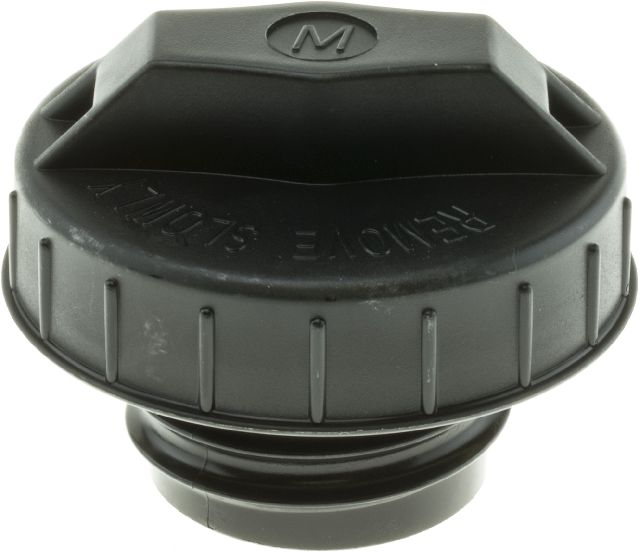
- Loose or Faulty Fuel Cap 🔴 High Probability → Shop Fuel Tank Cap Infiniti TSBs ITB13-044J and ITB13-044g specifically identify a loose or improperly installed fuel cap as a primary cause for P0442 on all 2012 and newer models. The rubber O-ring on the cap can also crack, harden, or wear out over time, preventing a proper seal. Using a non-OEM cap can also cause sealing issues.
How to confirm: Ensure the gas cap is tightened until it clicks multiple times. Clear the code and drive for a few days. If the light returns, visually inspect the cap's rubber seal for any signs of damage or wear. Also inspect the fuel filler neck for rust or debris that could prevent a good seal.
Typical fix: Replace the fuel cap with a new OEM part. If the filler neck is rusted, it may need to be sanded smooth to allow the new cap to seal properly.
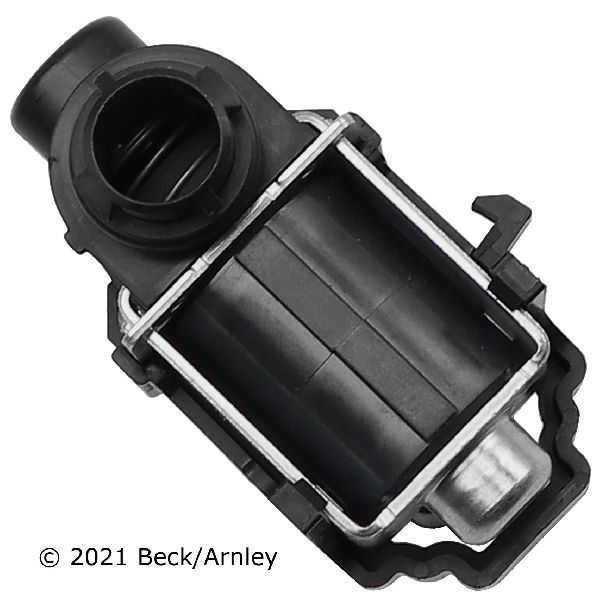
Est. part cost: $35-$50 - Faulty EVAP Vent Control Valve (or its O-Ring) 🟡 Medium Probability → Shop Vapor Canister Vent Valve This valve is located at the rear of the car on the charcoal canister. It's normally open to allow fresh air in and closes during system tests. It can fail to close, or its O-ring seal can degrade, causing a leak. This is a documented issue on many Nissan and Infiniti platforms, with some TSBs (like ITB17-042 for code P0456) specifically identifying the O-ring as the failure point. A later TSB revision notes that Infiniti no longer services the O-ring separately, requiring replacement of the entire valve.
How to confirm: The valve can be tested with a scan tool to command it closed. The most definitive method is a smoke test, which will show smoke escaping from the valve if it's leaking or not sealing correctly. You can also apply 12v power to the valve's terminals; you should hear a click, and it should seal (i.e., you should not be able to blow through it).
Typical fix: Replace the vent control valve and its O-ring. It is critical to clean the mounting surfaces on the canister before installing the new valve.
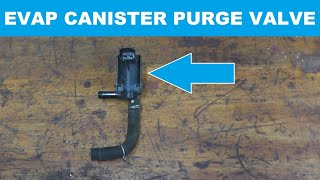
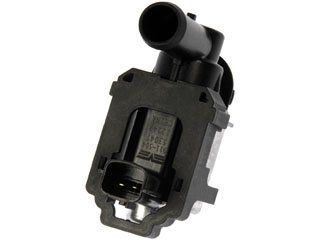
Est. part cost: $70-$120 - Faulty EVAP Canister Purge Volume Control Solenoid/Valve 🟡 Medium Probability → Shop Vapor Canister This solenoid, typically located on the engine, controls the flow of vapors to the engine. It is normally closed. It can become stuck slightly open over time, creating a constant small leak path that is detected during the system's self-test.
How to confirm: With the engine off, disconnect the vapor line from the purge valve that leads back to the canister. Try to blow through the valve. If any air passes through, it is stuck open and needs replacement. A scan tool can also be used to command the valve on and off to listen for a clicking sound.
Typical fix: Replace the purge valve assembly. Replacement for the M56 is estimated to cost between $250 and $273 at a shop.
Est. part cost: $60-$160 - Cracked or Disconnected EVAP Hose ⚪ Low Probability Rubber hoses can become brittle and crack with age and exposure to heat and elements. A small crack in any of the lines running from the fuel tank to the engine can trigger this code.
How to confirm: A thorough visual inspection of all accessible EVAP lines is the first step. The most reliable method is to have a smoke test performed, which forces smoke through the system and makes even tiny leaks visible.
Typical fix: Replace the cracked section of hose or re-secure the connection.
Est. part cost: $10-$30
Rare But Worth Checking
- Cracked EVAP Charcoal Canister: → Shop Vapor Canister The plastic housing of the canister itself can develop hairline cracks. This is often found only with a smoke test after all other common components have been checked. One owner of a high-mileage G37 (175k miles) reported that only a full canister replacement solved their P0442 code. 🎬 Watch: How to inspect and replace a cracked charcoal canister.
- Leaking Fuel Tank or Filler Neck: → Shop Fuel Tank Rust or physical damage can cause a small leak in the fuel tank or the pipe leading to it. This is less common, but should be considered if a fuel smell is present. An owner of a related QX56 reported that after replacing other parts, the final fix was sanding rust off the fuel filler neck to allow the gas cap to create a proper seal.
Diagnosis Steps
- Read the code with an OBD-II scanner to confirm P0442 is present.
- Inspect the gas cap. Remove it, check the seal for cracks or damage, and reinstall it, ensuring it clicks several times. Clear the code and drive for a few days to see if it returns. Per TSB ITB13-044J, a test drive is not required for the code to set or clear and is considered a waste of time for diagnosis.
- If the code returns, perform a thorough visual inspection of all visible EVAP hoses and lines between the engine bay and the fuel tank area for obvious cracks, disconnections, or damage.
- Locate the EVAP canister purge valve in the engine bay. Test its function by listening for a click when commanded by a scan tool, or by removing it and checking if it's stuck open by trying to blow through it (it should be closed with no power). 🎬 Watch: A quick test to see if your purge valve is stuck.
- If the above steps do not reveal the issue, the most effective next step is to perform a smoke test. This involves injecting pressurized smoke into the EVAP system and watching for where it escapes. 🎬 See how to find a small leak using a smoke test. This will pinpoint the exact location of the small leak, whether it's a hose, valve, seal, or the canister itself.
Parts You'll Likely Need
- Fuel Filler Cap (Gas Cap)
(OEM #17251-4BA0B (supersedes 17251-1NM0F))— This is the most common cause of P0442 on this vehicle, as cited by Infiniti TSBs. The seal wears out over time, preventing the system from holding pressure. Part number 17251-4BA0B is a consolidated part that fits many Infiniti models from 2010-2020+.
Trusted brands: Infiniti (OEM)
OEM price range: $35-$50
Aftermarket price range: $15-$30 - EVAP Canister Purge Valve
(OEM #14930-JK20E (supersedes 14930-JK20A/B))— This valve controls vapor flow and can get stuck, causing a leak path. It's a common failure point in many EVAP systems. The part has gone through multiple revisions; ensure you get the correct one for your VIN.
Trusted brands: Hitachi, Bosch, Dorman
OEM price range: $150-$200
Aftermarket price range: $50-$100 - EVAP Vent Control Valve
(OEM #14935-JF00E (Likely, shared with G37/Q70))— Located on the charcoal canister, this valve or its seal can fail, creating a leak at the rear of the vehicle. This is a known issue on many Nissan and Infiniti platforms and is the second most likely cause after the gas cap.
Trusted brands: Dorman (911-504), APA/URO Parts, SKP
OEM price range: $90-$150
Aftermarket price range: $60-$90
Related Codes That Often Appear With This One
- P0456 — This code indicates a 'very small leak.' The same failing part, like a gas cap seal or vent valve O-ring, can trigger either P0442 or P0456 depending on the exact size of the leak detected during the test cycle.
- P0455 — This code indicates a 'gross leak.' It can be triggered by the same components as P0442, but signifies a much larger leak, such as a completely missing gas cap or a disconnected hose.
Technical Service Bulletins (TSBs) & Recalls
- ITB13-044J: EVAP LEAK DTC P0442, P0455, P0456 INFORMATION
- ITB13-044g: ALL MODEL YEAR 2012 AND NEWER INFINITI VEHICLES; EVAP LEAK DTC P0442, P0455, P0456 INFORMATION
Platform-Specific Known Issues
- Infiniti has issued multiple versions of Technical Service Bulletin ITB13-044 (e.g., ITB13-044g, ITB13-044J) specifically for 2012 and newer vehicles with EVAP codes P0442, P0455, and P0456. These bulletins provide a specific diagnostic flowchart for technicians and highlight the loose fuel cap as a very common cause.
- The TSBs explicitly state that a test drive is not part of the diagnostic procedure for these codes and that doing so 'will only waste time'.
Mechanic-Grade Diagnostic Values
- EVAP Canister Purge Volume Control Solenoid Valve Resistance — expected: Approximately 29-30 Ohms. Failure: A reading significantly outside this range, or an open/short circuit, indicates a failed coil.
- EVAP Vent Control Valve Solenoid Resistance — expected: 20 - 50 Ohms. Failure: A reading of 0 Ohms (short circuit) or infinite/OL (open circuit) indicates a failed solenoid coil, requiring valve replacement.
- EVAP Control System Pressure Sensor Voltage — expected: Approximately 1.3V - 1.7V with the gas cap off (atmospheric pressure). The ideal value is around 1.5V.. Failure: A voltage reading that is stuck high (e.g., 5V) or low (e.g., 0.3V) can indicate a faulty sensor or a wiring issue.
Hidden / Shadow Codes Worth Checking
- Mode 6, TID $02: This is not a formal trouble code, but a monitor ID within the OBD-II system that shows the raw test value from the last EVAP system leak check. A value that is close to the failure limit can indicate a borderline leak before a code like P0442 is officially set. (see via Requires an advanced OBD-II scan tool with Mode 6 data display capabilities, such as the dealer's CONSULT tool or high-end aftermarket scanners.)
Scan Tool Commands That Help
- Infiniti CONSULT-III plus: EVAP System Leak Check (Active Test) — This function is used to verify a repair without waiting for a full drive cycle. The tool commands the vent valve to close, sealing the system, and allows the technician to monitor the system's ability to hold pressure directly on the scan tool.
- Infiniti CONSULT-III plus: Close Vent Control Valve — This specific command is used during a smoke test. By manually forcing the vent valve closed, the technician can introduce smoke and ensure the entire system is sealed for an accurate test, preventing smoke from escaping through its normal vent path.
Wiring & Ground Locations
- EVAP Control System Pressure Sensor — Under the right rear of the vehicle.. This sensor monitors the pressure/vacuum in the EVAP system during self-tests. A faulty sensor or bad wiring/ground connection can provide incorrect data to the ECM, leading to a false P0442 code. Its location under the vehicle makes it susceptible to corrosion and physical damage.
- EVAP Canister Vent Solenoid Connector — On the EVAP canister vent valve, located on the charcoal canister assembly under the rear of the vehicle.. Corrosion or damage to this connector can prevent the vent valve from closing properly during the EVAP self-test, directly causing a leak code like P0442.
- EVAP Canister Purge Valve Connector — On the purge valve, located in the engine bay, typically on or near the intake manifold.. Damage or a poor connection at this connector can prevent the purge valve from operating correctly, potentially leaving it stuck slightly open and causing a leak.
OEM Part Supersession History
17251-1NM0F→17251-4BA0B— Standard part evolution and consolidation across multiple models.
Heads up: The new part number 17251-4BA0B is a consolidated part fitting many Infiniti models from 2010-2020+. It has superseded at least 12 older part numbers.14935-JF00A / 14935-JF00B→14935-JF00E (and others)— Revisions to the EVAP Canister Purge Valve design.
Heads up: The purge valve for the M56/Q70 platform has gone through multiple revisions (A, B, C, D, E). While they may look similar, using the correct revision specified for the vehicle's VIN is important for proper function.16618-JF00A (Vent Valve O-Ring)→Entire Vent Valve Assembly— Infiniti no longer services the O-ring separately.
Heads up: According to TSB ITB17-042D issued in March 2021, if the vent valve O-ring is found to be the cause of the leak, the official repair is to replace the entire vent valve assembly, not just the O-ring.
Helpful Videos
Used OEM Parts in Stock


New Aftermarket Parts Available


The information in this article is provided for general reference and educational purposes only. Vehicle specifications, procedures, and part compatibility can vary by production date, trim level, and region. Always consult your vehicle's factory service manual and verify part numbers before purchasing or performing repairs. Safety-critical components such as airbags, seat belts, and braking systems should be installed by a qualified professional.
- Infiniti M56:
- 🧭 Diagnostic Flowchart
- 🎬 Helpful Videos
- 🛍️ Shop This Part
- What's Unique About the 2012-2013 Infiniti M56
- Symptoms You May Notice
- Most Likely Causes
- Rare But Worth Checking
- Diagnosis Steps
- Parts You'll Likely Need
- Related Codes That Often Appear With This One
- Technical Service Bulletins (TSBs) & Recalls
- Platform-Specific Known Issues
- Mechanic-Grade Diagnostic Values
- Hidden / Shadow Codes Worth Checking
- Scan Tool Commands That Help
- Wiring & Ground Locations
- OEM Part Supersession History
- 🎟️ Get 5% Off