

P0442 on 2014-2015 Infiniti Q60: EVAP Small Leak Causes and Fixes
For a 2014-2015 Infiniti Q60, code P0442 is most often caused by a loose or faulty gas cap. Before buying parts, tighten the cap until it clicks. If the light returns, a new OEM gas cap is the next logical step, costing around $30-$40. If that doesn't resolve it, the next most common culprit is the EVAP canister vent control valve located at the rear of the car.
- Always check the gas cap first for code P0442. Ensure it is tight and the seal is intact. This is the most common and cheapest fix.
- Do not replace any parts without confirming the leak. A professional smoke test is the best way to accurately locate the source of the small leak, saving you from replacing good parts.
- If you replace the gas cap, use a genuine OEM Infiniti part. Aftermarket caps are a frequent cause of EVAP codes.
- The most likely failed components after the gas cap are the EVAP vent control valve (under the car) and the purge solenoid (in the engine bay).
- This code will not prevent you from driving the car, but it will cause an automatic failure on an emissions test.
What's Unique About the 2014-2015 Infiniti Q60
The 2014-2015 Infiniti Q60 is part of the V36 generation, which is mechanically very similar to the G37 it replaced. For these vehicles, as with most Nissan and Infiniti models of this era, the EVAP system components, particularly the vent control valve and purge solenoid, are known weak points. Infiniti has issued several general technical service bulletins for all its 2012 and newer models regarding EVAP leak codes, underscoring that the gas cap is a primary and frequent cause. Owner forums for the G37/Q60 platform confirm that the rear-mounted EVAP canister vent control valve is a more frequent failure point than the engine bay-mounted purge solenoid due to its exposure to road debris and moisture.
Diagnostic Flowchart
Tap your situation to follow the diagnostic path that matches what you're seeing on this vehicle.
Symptoms You May Notice
- Check Engine Light is on
- A faint smell of fuel, particularly around the gas cap area or rear of the vehicle.
- A "LOOSE FUEL CAP" warning message may appear on the instrument cluster, as noted in Infiniti TSBs.
- Replacing the charcoal canister when only the vent valve is bad. The vent valve is often sold separately and is the more common failure point.
- Replacing the engine-bay-mounted purge valve when the more common failure on this platform is the rear-mounted vent control valve.
- Replacing purge or vent valves without performing a smoke test. A simple cracked hose could be the actual problem.
Most Likely Causes
- Loose or Faulty Gas Cap 🔴 High Probability → Shop Fuel Tank Cap The rubber O-ring on the gas cap degrades over time, losing its ability to create a perfect seal. It's also common for the cap to simply not be tightened enough after refueling. Infiniti TSBs ITB13-044J and ITB13-044g explicitly list this as the first item to check and instruct technicians that test drives are a waste of time for this code.
How to confirm: Ensure the gas cap is tightened until it clicks several times. Inspect the rubber seal for cracks, stiffness, or damage. Clean any rust or debris from the fuel filler neck where the cap seals. An OEM cap is strongly recommended as aftermarket versions are known to cause issues.
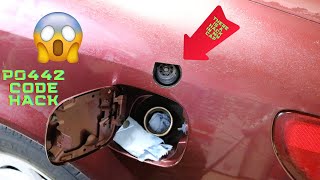
Typical fix: Tighten the cap and clear the code. If it returns, replace the gas cap with a new OEM part. 🎬 Watch: Step-by-step guide to fixing the gas cap seal.
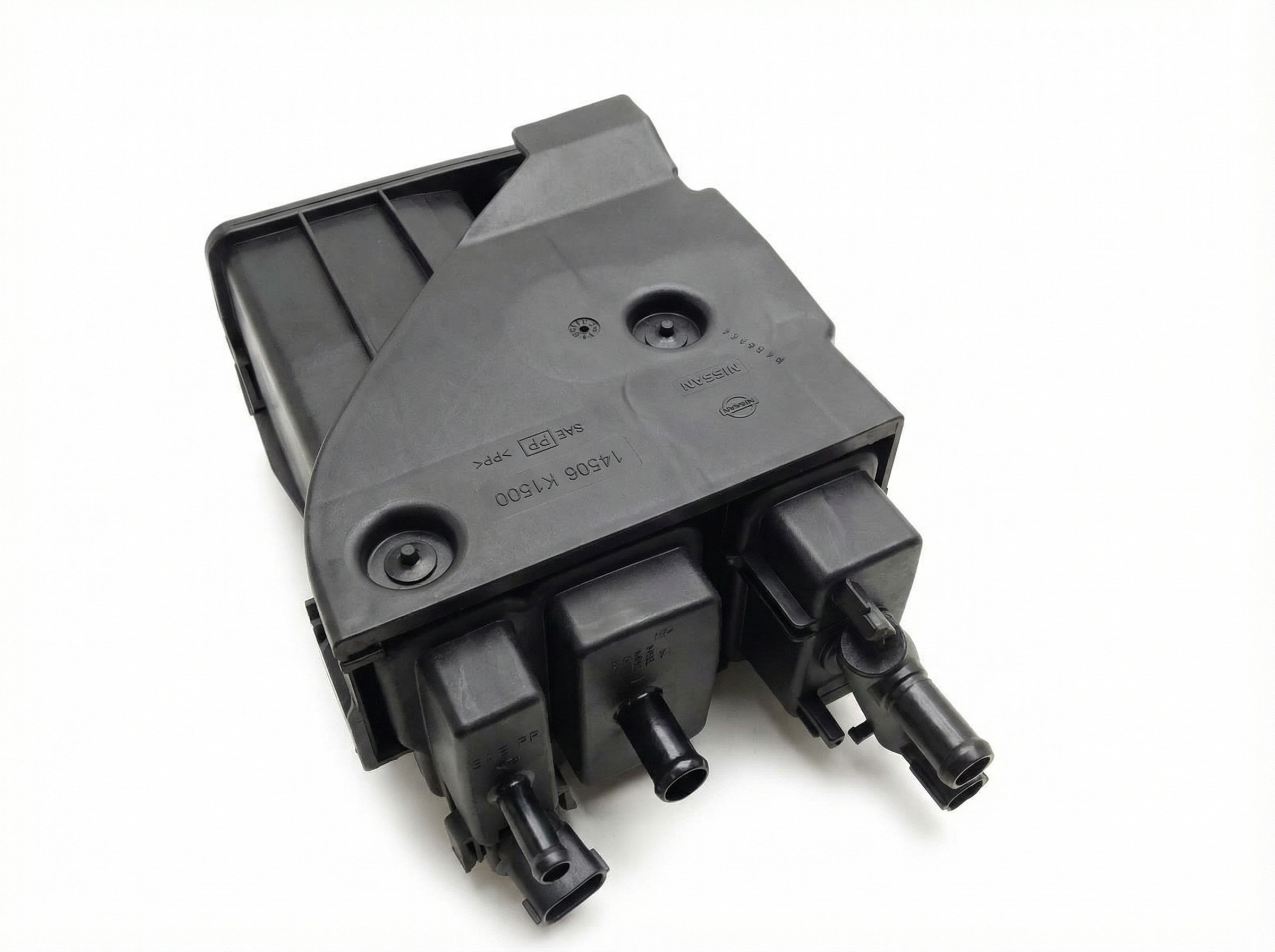
Est. part cost: $25-$40 - EVAP Canister Vent Control Valve 🟡 Medium Probability → Shop Vapor Canister Vent Valve This valve is located under the car near the charcoal canister and is exposed to road debris and moisture, causing it to fail. The internal solenoid can get stuck open or closed, creating a leak in the system. This is a very common failure point on the V36 platform (G37/Q60).
How to confirm: A mechanic can command the valve to open and close with a scan tool to listen for a click. It can also be removed and tested by applying 12V power to see if it actuates. The ultimate confirmation is a smoke test, which will show smoke exiting the valve when it is commanded closed.
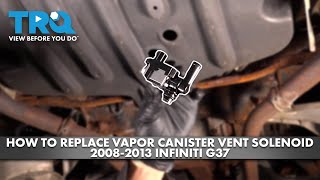
Typical fix: Replace the EVAP canister vent control valve. 🎬 See this walkthrough for replacing the rear vent solenoid. It is typically mounted on the EVAP canister itself.
Est. part cost: $35-$115 - EVAP Canister Purge Volume Control Solenoid Valve 🟡 Medium Probability → Shop Vapor Canister This valve, located in the engine bay, controls the flow of fuel vapors to the engine. It can fail internally and not seal properly, creating a leak path into the intake manifold.
How to confirm: Remove the valve and try to blow through it; if any air passes, it is faulty. A smoke test may not show this leak externally, as the leak is internal to the intake manifold. A technician can use a scan tool to command it closed and check if the system holds a vacuum.
Typical fix: Replace the purge valve.
Est. part cost: $45-$140 - Cracked or Disconnected EVAP Hoses ⚪ Low Probability The rubber and plastic lines that make up the EVAP system can become brittle with age and exposure to engine heat, leading to small cracks.
How to confirm: A visual inspection may reveal obvious cracks or loose connections, particularly on the lines connected to the purge solenoid in the engine bay. A professional smoke test is the most effective way to find small hose leaks.
Typical fix: Replace the specific section of cracked hose.
Est. part cost: $10-$50
Rare But Worth Checking
- Cracked Charcoal Canister: → Shop Vapor Canister The plastic body of the canister itself can develop hairline cracks from age or road debris impact. This is usually the last thing to check and is found with a smoke test when all other components pass.
- Leaking Fuel Filler Neck: → Shop Fuel Filler Neck Rust and corrosion can form on the metal filler neck, preventing even a new gas cap from sealing properly. This is more common in regions that use road salt and is a known issue on the G37/Q60 platform, often requiring the rust to be sanded off or the entire filler neck to be replaced.
Diagnosis Steps
- Inspect the gas cap. Remove it, check the seal for cracks or damage, and reinstall it, ensuring it clicks several times. Clear the code and drive for a few days to see if it returns.
- If the code returns, replace the gas cap with a genuine OEM part as a low-cost, high-probability fix. Aftermarket caps are a frequent source of problems.
- Visually inspect all accessible EVAP hoses in the engine bay and under the vehicle for obvious cracks, disconnections, or damage. Pay attention to the lines around the purge solenoid and the vent valve.
- If no obvious issues are found, the most effective next step is to have a professional smoke test performed. This involves filling the EVAP system with a harmless, visible smoke under low pressure to pinpoint the exact location of the leak.
- During the smoke test, pay close attention to the EVAP vent control valve (on the canister at the rear), the purge solenoid (in the engine bay), and all hose connection points.
- If a valve is suspected, it can be commanded on/off with a capable scan tool or bench-tested with a 12V power source to confirm mechanical operation.
Parts You'll Likely Need
- Fuel Filler Cap
(OEM #17251-1LA0A)— This is the most common cause of P0442. The seal wears out over time. Using an OEM cap is highly recommended as aftermarket caps are known to cause sealing issues.
Trusted brands: Infiniti (OEM)
OEM price range: $28-$40
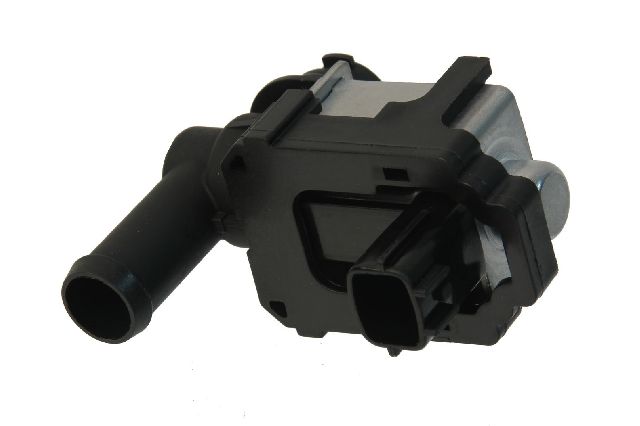
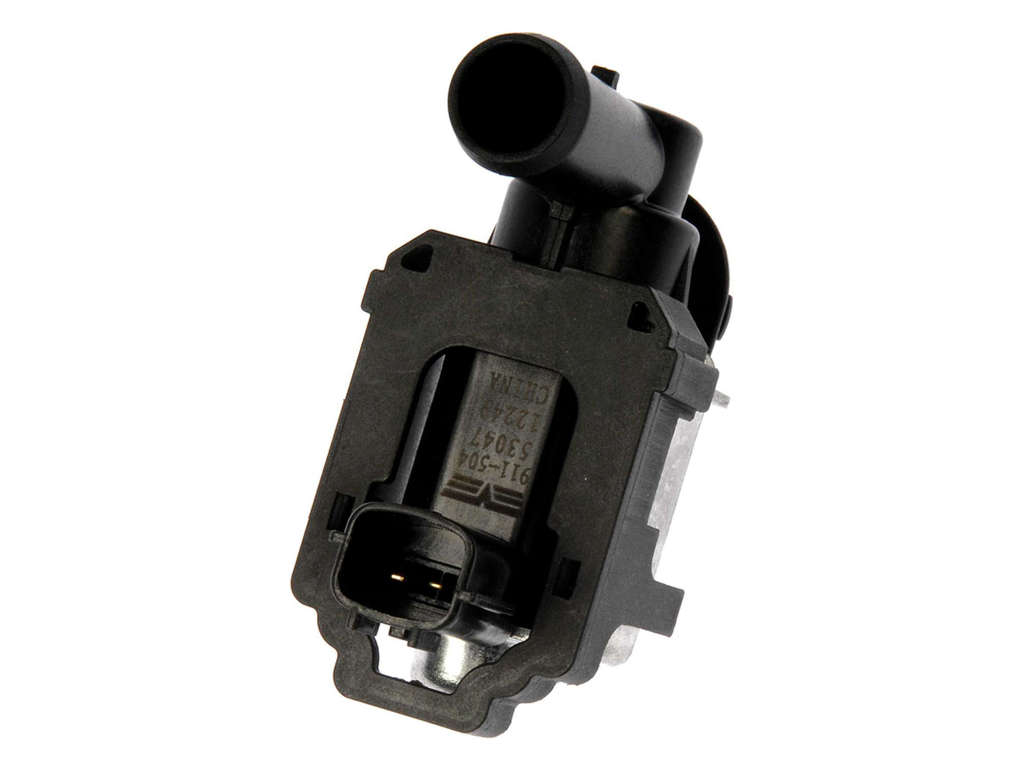
Aftermarket price range: $15-$25 - EVAP Canister Vent Control Valve
(OEM #14935-JF00E (supersedes 14935-JF00A, B, C, D))— This valve is a frequent failure point due to its location under the vehicle, where it's exposed to the elements. It gets stuck, causing a leak. This is a well-documented issue on the G37/Q60 platform.
Trusted brands: Dorman (911-504), Standard Motor Products (CVS67), Bosch, Hitachi, Infiniti (OEM)
OEM price range: $70-$120
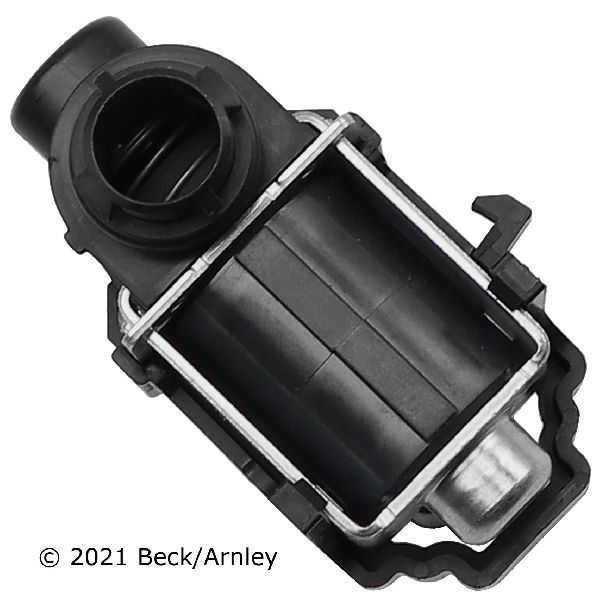
Aftermarket price range: $35-$80 - EVAP Canister Purge Volume Control Valve
(OEM #14930-JK20E (supersedes 14930-JK20A, B, C))— This valve, located in the engine bay, can fail to seal completely, causing a persistent small leak that is difficult to find without a smoke test or direct testing of the valve.
Trusted brands: Beck/Arnley, Hitachi, Infiniti (OEM)
OEM price range: $130-$200
Aftermarket price range: $40-$100
Related Codes That Often Appear With This One
- P0455 — This indicates a large EVAP leak. It can appear with P0442 if the leak is intermittent or on the borderline between small and large. The same components are responsible for both codes, and Infiniti groups them in the same diagnostic TSBs.
- P0456 — This indicates a very small EVAP leak. It is very closely related to P0442 and points to the same set of potential failures. The TSBs from Infiniti group these codes together for diagnosis.
Technical Service Bulletins (TSBs) & Recalls
- ITB13-044J - EVAP LEAK DTC P0442, P0455, P0456 INFORMATION (Amended Feb 2022). Confirms these codes are related and often start with a loose fuel filler cap. It explicitly states that test drives are not part of the diagnosis and are a waste of time.
- ITB13-044g - ALL MODEL YEAR 2012 AND NEWER INFINITI VEHICLES; EVAP LEAK DTC P0442, P0455, P0456 INFORMATION (Amended Jan 2019). Predecessor to the 'J' bulletin with similar diagnostic guidance.
- ITB17-042c - INFINITI; DTC P0456 CAUSED BY EVAP LEAK AT VENT CONTROL VALVE O-RING (Amended Sep 2020). While for P0456, it identifies a critical, often-missed failure point relevant to P0442: the O-ring seal for the vent control valve. It instructs technicians to replace only the O-ring, not the entire valve assembly, if the leak is found there.
Platform-Specific Known Issues
- Owner Experience: Chasing P0442 on a G37: A common story on forums like MyG37.com involves an owner first replacing the gas cap, which doesn't solve the problem. They then have a smoke test performed, which reveals a leak at the EVAP canister vent control valve at the rear of the car. After replacing this valve (Part #14935-JF00E), the code is permanently resolved. This highlights the high failure rate of the vent valve on this platform.
- Internal Purge Valve Leak: → Shop Vapor Canister In some cases, a smoke test will show no external leaks, yet the P0442 code persists. This can be caused by an internally leaking EVAP purge valve in the engine bay. It allows a small amount of vacuum to leak from the intake manifold into the EVAP system when it should be sealed, which the pressure sensor interprets as a leak to the atmosphere. Confirming this requires testing the valve directly.
Mechanic-Grade Diagnostic Values
- EVAP Canister Purge Volume Control Solenoid Valve Resistance — expected: Approximately 15 to 30 Ohms between the two terminals.. Failure: A reading far outside this range (e.g., open circuit or zero resistance) indicates a faulty internal coil.
- EVAP Canister Vent Control Valve Resistance — expected: Approximately 20 to 50 Ohms between the two terminals.. Failure: A reading outside this range indicates a bad solenoid coil. However, a good resistance reading does not rule out a mechanical issue (stuck valve).
- Fuel Tank Differential Pressure Sensor Voltage — expected: 1.0 - 4.0 Volts during the EVAP system self-test.. Failure: Voltage outside this range during the test can indicate a sensor fault, although this often sets a different DTC.
- EVAP Canister Vent Control Valve Power Supply — expected: One wire should have constant 12V with the ignition ON.. Failure: No voltage indicates a wiring or fuse issue upstream of the valve. The ECM/computer controls the valve by switching the ground circuit.
Scan Tool Commands That Help
- Infiniti CONSULT-III / CONSULT-III plus: Active Test: 'VENT CONTROL/V' — This bidirectional command allows a technician to manually close the normally-open vent valve. This is essential for sealing the EVAP system to perform a smoke or pressure test. The technician can listen for a 'click' to confirm the solenoid is actuating.
- Infiniti CONSULT-III / CONSULT-III plus: Active Test: 'PURG VOL CONT/V' — This command allows for manual adjustment of the purge valve opening percentage. It's used to verify if the valve is responding to commands and to check for vacuum flow when it's supposed to be open.
- Infiniti CONSULT-III / CONSULT-III plus: DTC WORK SUPPORT: 'PURG FLOW P0441' — While named for P0441, this is a guided diagnostic test within the CONSULT software that runs the engine under specific conditions to test the EVAP system's purge flow, which can help diagnose related codes like P0442.
Wiring & Ground Locations
- EVAP System Components (Rear) — The EVAP canister, EVAP canister vent control valve, and EVAP control system pressure sensor are all located together at the rear of the vehicle, typically above the rear subframe near the fuel tank.. This area is exposed to road debris and moisture, making the vent control valve and its connector susceptible to damage and corrosion, which can cause leaks or electrical faults.
- EVAP Canister Purge Volume Control Solenoid Valve — Located in the engine bay, typically on the rear of the upper intake plenum.. This valve can leak internally into the intake manifold. Its location in the hot engine bay can contribute to the degradation of connected vacuum hoses over time.
Real Owner Repair Stories
- G35Driver Forum (Infiniti G35 (mechanically similar to Q60)) — Check Engine Light with code P0442.
❌ Tried (didn't work) The owner's wife took the car to the dealer, who temporarily fixed it once by removing rust, but the light came back on.
✅ What actually fixed it The root cause was identified by the dealer as rust forming on the fuel filler neck where the gas cap seals. The temporary fix was to sand or grind the rust off and apply Vaseline or grease. Forum members confirmed this is a known issue, especially in salt-belt regions. The permanent, but expensive, fix is the replacement of the entire fuel filler neck assembly.
"I Checked Everything" — The Actual Cause
- An internally leaking EVAP Canister Purge Volume Control Solenoid Valve. A standard smoke test pressurizes the system from a service port and looks for external leaks. If the purge valve is not sealing properly, it will leak vacuum from the intake manifold *into* the EVAP system when the engine is running, which the pressure sensor detects as a leak to the atmosphere. This leak is internal to the engine and will not be found by an external smoke test. Confirmation requires removing the valve and attempting to blow through it (it should be sealed when de-energized) or using a scan tool to monitor system pressure while commanding the valve closed.
OEM Part Supersession History
14935-JF00A / B / C / D→14935-JF00E (and later 14935-JF02C)— This is the EVAP Canister Vent Control Valve. The long history of part number changes indicates ongoing design revisions by Nissan/Infiniti to improve reliability and prevent the common failure of the solenoid sticking.
Heads up: While older versions may physically fit, it is highly recommended to use the latest available part number to benefit from the most recent design improvements and durability fixes.14930-JK20A / B / C→14930-JK20E— This is the EVAP Canister Purge Volume Control Solenoid Valve. Revisions were likely made to improve sealing and prevent internal leaks.
Model Year Variations Within This Range
- 2014-2015: There are no significant known variations in the EVAP system for the 2014-2015 Infiniti Q60. This model is a direct carryover of the V36 G37 Coupe, and parts and diagnostic procedures are identical to the 2008-2013 G37.
Helpful Videos

Used OEM Parts in Stock
New Aftermarket Parts Available


The information in this article is provided for general reference and educational purposes only. Vehicle specifications, procedures, and part compatibility can vary by production date, trim level, and region. Always consult your vehicle's factory service manual and verify part numbers before purchasing or performing repairs. Safety-critical components such as airbags, seat belts, and braking systems should be installed by a qualified professional.
- Infiniti Q60:
- 🧭 Diagnostic Flowchart
- 🎬 Helpful Videos
- 🛍️ Shop This Part
- What's Unique About the 2014-2015 Infiniti Q60
- Symptoms You May Notice
- Most Likely Causes
- Rare But Worth Checking
- Diagnosis Steps
- Parts You'll Likely Need
- Related Codes That Often Appear With This One
- Technical Service Bulletins (TSBs) & Recalls
- Platform-Specific Known Issues
- Mechanic-Grade Diagnostic Values
- Scan Tool Commands That Help
- Wiring & Ground Locations
- Real Owner Repair Stories
- "I Checked Everything" — The Actual Cause
- OEM Part Supersession History
- Model Year Variations Within This Range
- 🎟️ Get 5% Off