

P0442 on 2010-2015 Jaguar XJ: EVAP Small Leak Causes and Fixes
P0442 on a 2010-2015 Jaguar XJ indicates a small leak in the evaporative emissions (EVAP) system. The most common and cheapest fix is replacing the gas cap. If that doesn't work, the next likely culprits are a faulty purge valve or cracked EVAP hoses. A Jaguar-specific issue involves water getting into the DMTL pump, which also triggers this code.
- P0442 means your Jaguar has a small leak in the emissions system designed to capture fuel vapors.
- Always start with the simplest fix: check that your gas cap is tight. If that doesn't work, replace it with a genuine OEM cap.
- If a new gas cap doesn't solve the problem, the next most likely causes are a bad purge valve or a cracked EVAP hose.
- A smoke test is the most reliable professional method to find the exact location of a leak if it's not obvious.
- You can continue to drive the car with this code, but you will not pass an emissions inspection until it is fixed.
What's Unique About the 2010-2015 Jaguar XJ
For the 2010-2015 Jaguar XJ (X351 generation), the P0442 code is a straightforward EVAP leak code without any unusual manufacturer-specific interpretation. However, this platform has a unique vulnerability detailed in Jaguar TSB #JTB00436NAS2. It states that P0442 can be caused by water and ice from road spray getting trapped in the Diagnostic Module Tank Leakage (DMTL) pump filter, requiring a specific service procedure to fix. Owner experiences also suggest that beyond the universal loose gas cap issue, these vehicles can be prone to issues with the canister purge valve and brittle plastic fittings or O-rings in the EVAP lines, which can crack over time.
Diagnostic Flowchart
Tap your situation to follow the diagnostic path that matches what you're seeing on this vehicle.
Symptoms You May Notice
- Check Engine Light is on.
- A faint smell of fuel, particularly around the gas cap area or outside the vehicle.
- The "Check Gas Cap" or "Check fuel cap filler" message may appear on the dashboard.
- Replacing oxygen sensors or catalytic converters. P0442 is strictly an EVAP system code and is not directly related to the exhaust system.
Most Likely Causes
- Loose, Faulty, or Improperly Sealing Gas Cap 🔴 High Probability → Shop Fuel Tank Cap This is the most common cause for a P0442 on any vehicle. The rubber seal on the cap can dry out, crack, or get dirty over time, preventing a proper seal. On JLR vehicles, the metal filler neck can also recede into its rubber housing, preventing even a new cap from sealing correctly.
How to confirm: First, ensure the cap is tightened until it clicks. Clean the cap's seal and the filler neck. Inspect the filler neck to ensure it protrudes enough to make contact with the cap's seal. If the light returns, replacing the cap is the easiest next step. Using a genuine Jaguar cap is recommended as some aftermarket caps may not seal correctly.
Typical fix: Replace the gas cap or adjust the filler neck.
Est. part cost: $50-$60 - Faulty Canister Purge Valve 🟡 Medium Probability → Shop Vapor Canister The purge valve (or purge solenoid) can get stuck open or closed, causing a leak in the system when it's tested. Forum discussions among Jaguar owners frequently point to this part as a solution for P0442. In one documented case for an X351, replacing the purge valve was the final fix after a new gas cap 🎬 Watch: Step-by-step guide to replacing the Jaguar purge valve. and leak detection pump failed to resolve the issue.
How to confirm: The valve can be tested with a handheld vacuum pump to see if it holds vacuum when unpowered. You can also apply 12V to see if it clicks open and closed; if you can blow through it when it's supposed to be closed, it has failed. A professional smoke test is the most definitive way to confirm a leak at the valve.
Typical fix: Replace the canister purge valve.
Est. part cost: $100-$280 - Cracked or Disconnected EVAP Hoses, Lines, or O-Rings 🟡 Medium Probability Over time, the plastic and rubber hoses in the EVAP system can become brittle and crack. Owners have specifically found leaks at O-rings where fittings enter the charcoal canister and at failed plastic quick-connect fittings on top of the fuel tank.
How to confirm: A visual inspection may reveal obvious cracks or loose connections. The most effective method is a smoke test, which involves injecting smoke into the EVAP system and looking for where it escapes. This is especially useful for finding tiny leaks in hidden hoses or at connection points.
Typical fix: Replace the cracked hose, fitting, or O-ring. Sometimes this requires dropping the fuel tank for access.
Est. part cost: $10-$100
Rare But Worth Checking
- Faulty DMTL Pump due to Water/Ice Ingress: → Shop Evaporative Emissions System Leak Detection Pump Jaguar TSB JTB00436NAS2 specifically identifies that P0442 can be caused by water spray from the tires entering the Diagnostic Module Tank Leakage (DMTL) pump filter, causing it to freeze or malfunction. The fix involves installing a new pump and a protective foam shield.
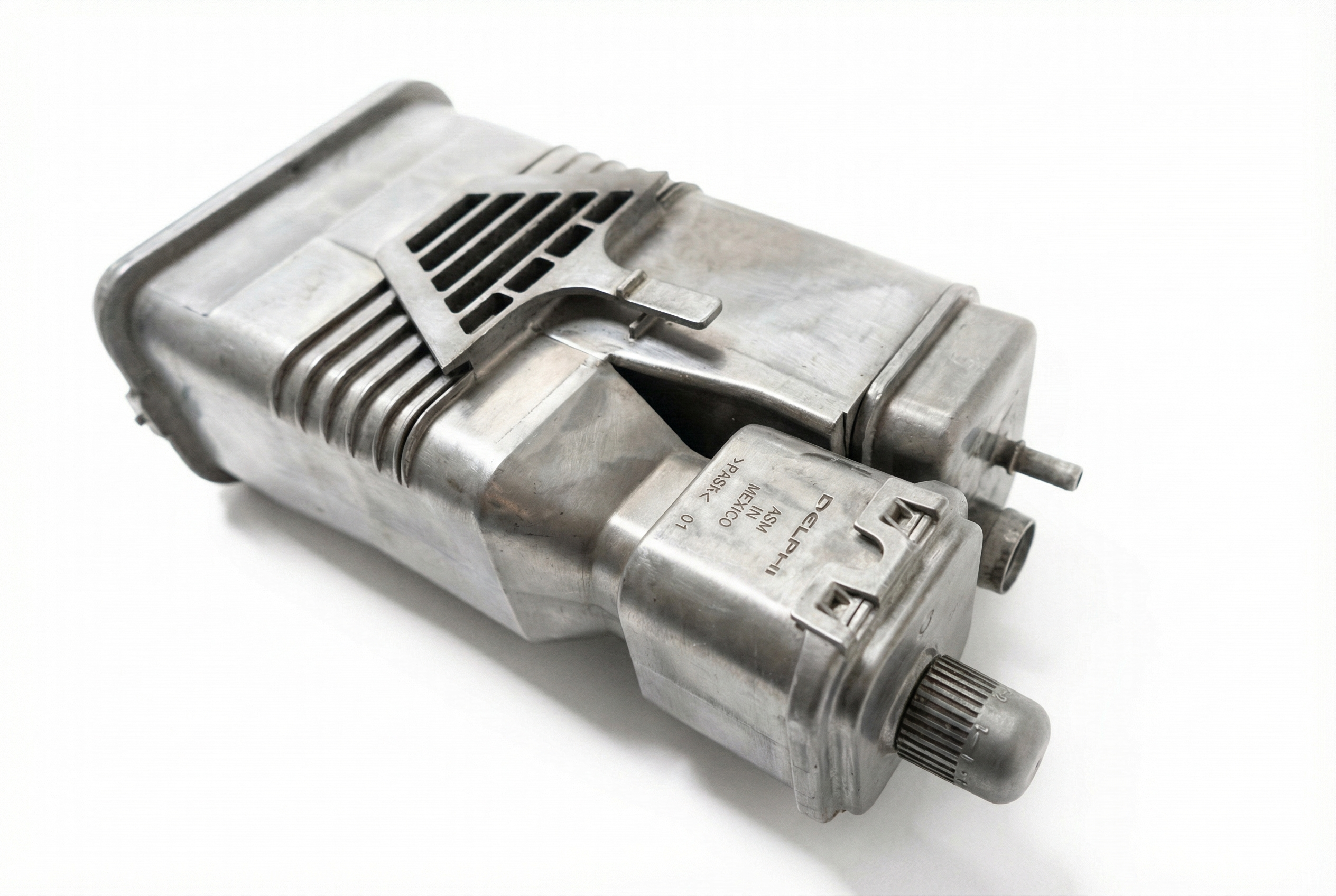
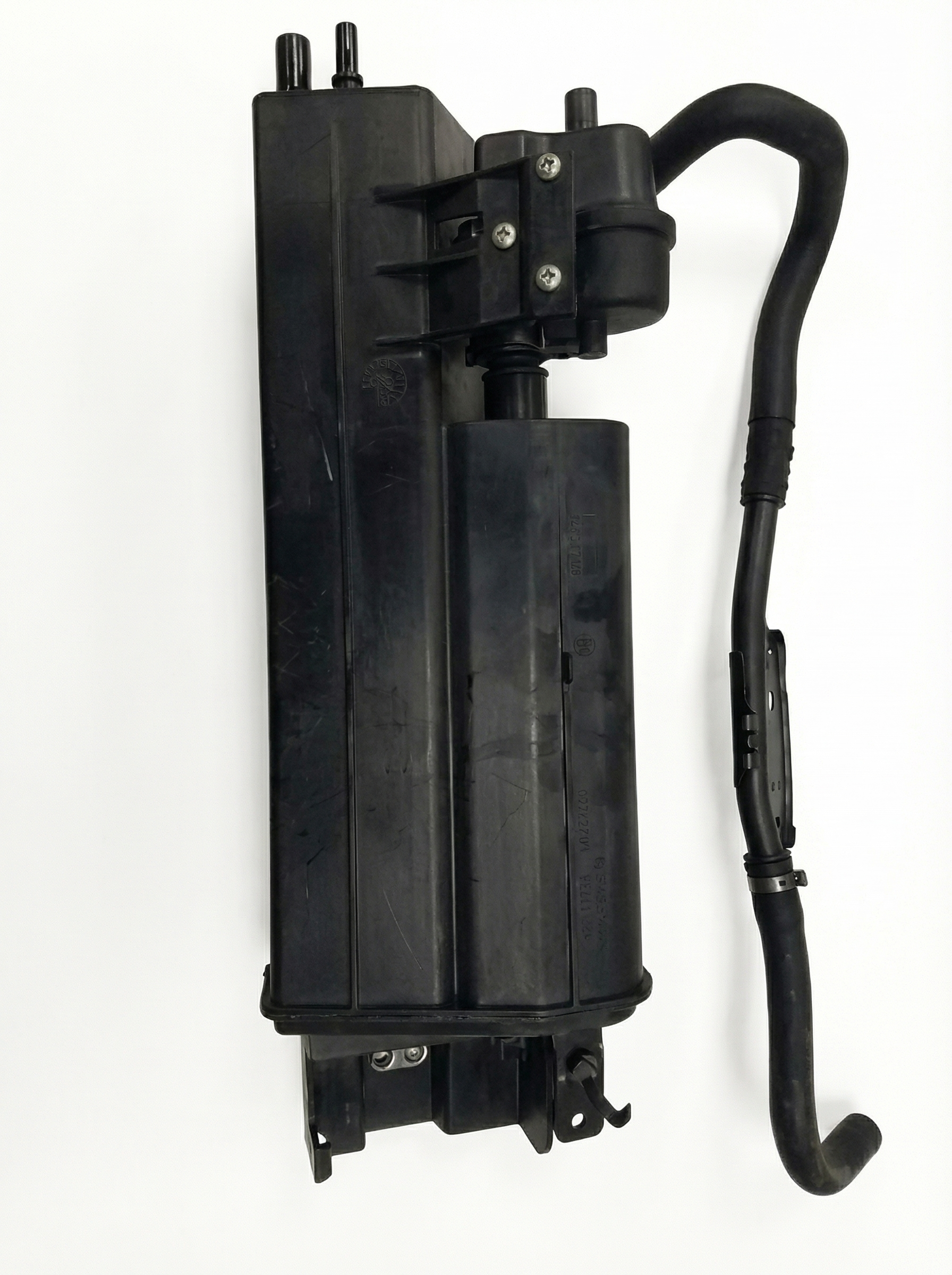
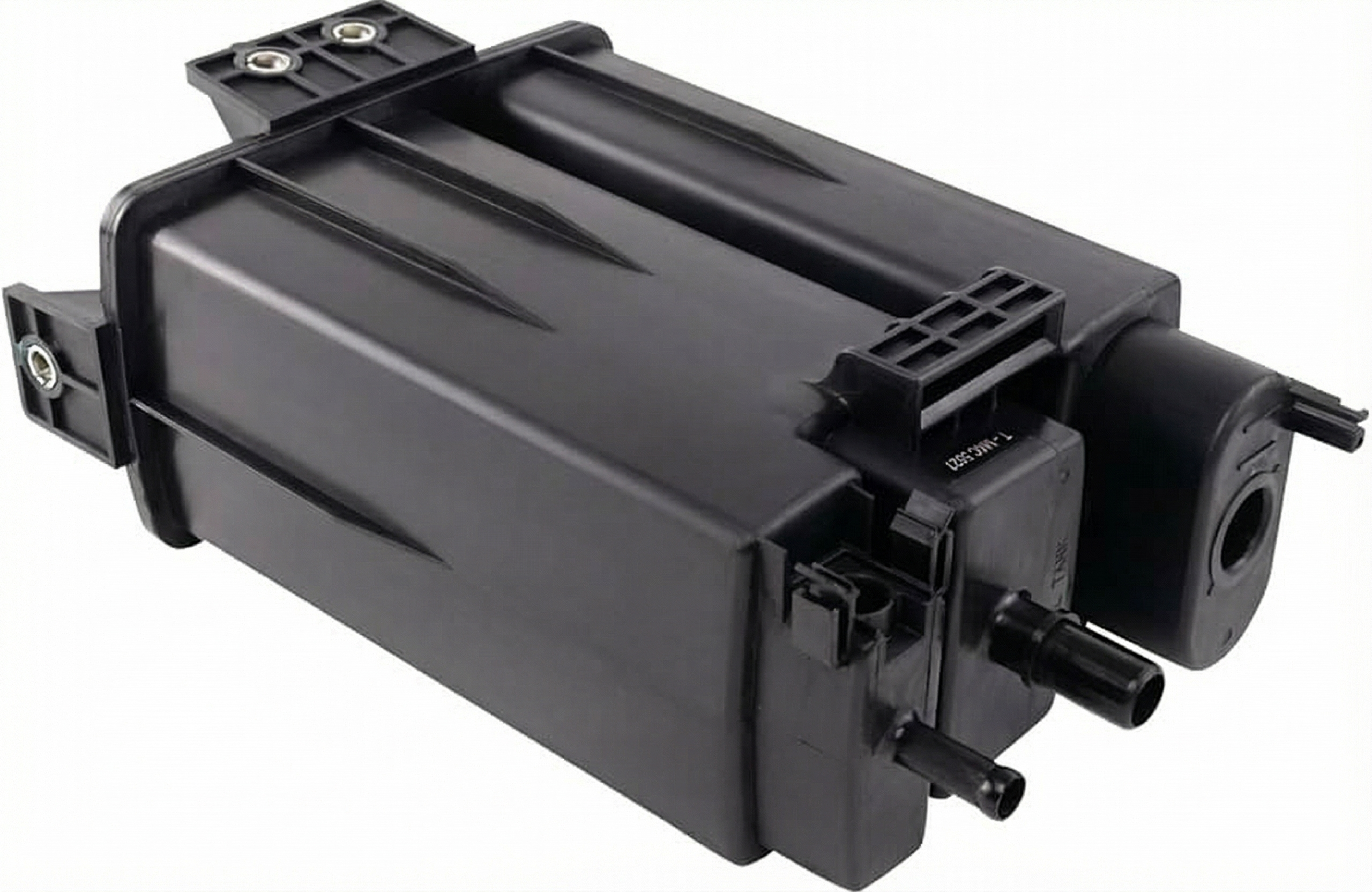
- Leaking Charcoal Canister: → Shop Vapor Canister The plastic body of the charcoal canister itself can develop cracks, leading to a leak. This is less common than a hose or valve failure but has been reported by owners.
- Faulty Fuel Tank Filler Neck: → Shop Fuel Tank In some cases, the metal filler neck that the gas cap seals against can become corroded or get pushed back into its housing, preventing the cap from sealing properly. This can be caused by aggressively inserting the fuel nozzle during fill-ups.
- Faulty Vent Valve/Solenoid: Similar to the purge valve, the vent valve (often located near the charcoal canister) can fail, but it is a less frequent cause for a small leak code compared to the purge valve or gas cap.
Diagnosis Steps
- Check the Gas Cap: Remove, inspect the seal for cracks or debris, and reinstall it, ensuring it clicks several times. Also, inspect the filler neck for corrosion or to see if it has been pushed in.
- Visual Inspection: Carefully inspect all accessible EVAP hoses and lines in the engine bay and under the car near the fuel tank for any obvious cracks, damage, or loose connections. Pay attention to O-rings and quick-connect fittings.
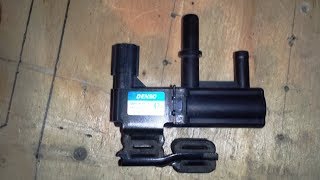
- Consider Purge Valve: The purge valve is often accessible in the engine bay. You can listen for a clicking sound when the engine is running. A stuck valve may be silent or click erratically. It can be removed and tested to see if it holds vacuum.
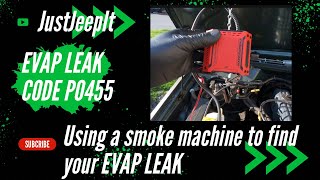
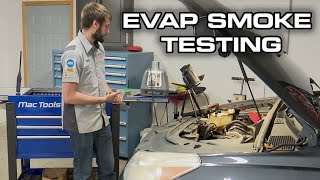
- Perform a Smoke Test: This is the most definitive way to find a leak. A smoke machine is connected to the EVAP system service port. Smoke is forced through the lines, and any leak will be visible as a stream of smoke. 🎬 Watch: How to perform a professional EVAP smoke test. This can pinpoint leaks in hoses, the charcoal canister, or valve seals that are impossible to see otherwise.
- Check for TSBs: Specifically review TSB JTB00436NAS2. If you live in a wet or cold climate, the issue may be water ingress into the DMTL pump, which a smoke test might not immediately reveal.
- Test Components: If a smoke test is inconclusive, individual components like the purge and vent solenoids can be removed and tested with a power source and vacuum pump to ensure they are functioning correctly.
Parts You'll Likely Need
- Fuel Filler Cap
(OEM #VIN-dependent, consult dealer)— This is the most frequent cause of a P0442 code due to its seal wearing out. It's the first and cheapest part to replace. Ensure you get a genuine OEM cap as aftermarket versions may not seal correctly.
Trusted brands: Jaguar (OEM)
OEM price range: $50-$60
Aftermarket price range: $20-$40 - Canister Purge Valve / Solenoid
(OEM #AJ814246 (supersedes AJ811695))— This valve is a common failure point on many JLR vehicles. It can get stuck open or fail electronically, causing a leak.
Trusted brands: Jaguar (OEM), Bosch
OEM price range: $250-$280
Aftermarket price range: $100-$180 - EVAP System Hoses / O-Rings — The plastic and rubber components become brittle with age and heat cycles, leading to small cracks often found with a smoke test. This can include small O-rings at connection points.
OEM price range: $50-$150
Aftermarket price range: $20-$80 - Charcoal Canister
(OEM #C2D40532)— Less common, but the canister itself can crack or the fittings on it can leak. This part is shared with other Jaguar models like the XF and XK.
Trusted brands: Jaguar (OEM)
OEM price range: $450-$550
Aftermarket price range: $200-$350
Related Codes That Often Appear With This One
- P0456 — P0456 indicates a 'very small leak' while P0442 indicates a 'small leak'. They often appear together or interchangeably depending on the severity of the leak at the time of the test. A failing component might initially trigger P0456 and then worsen to P0442.
- P0455 — P0455 indicates a 'gross leak'. A component that is beginning to fail might first cause a small leak (P0442) and later develop into a large leak (P0455).
Technical Service Bulletins (TSBs) & Recalls
- JTB00436NAS2: Mentions that DTC P0442-00 may be stored in the Engine Control Module (ECM). The cause may be water/ice from road spray becoming trapped in the DMTL pump filter.
Platform-Specific Known Issues
- TSB JTB00436NAS2: DMTL Pump Water Ingress: → Shop Evaporative Emissions System Leak Detection Pump The official Jaguar Technical Service Bulletin #JTB00436NAS2 identifies a specific failure mode for the 2010-2015 XJ. Water and ice from road spray can enter the Diagnostic Module Tank Leakage (DMTL) pump filter, causing a malfunction that logs P0442 and other EVAP codes. The official fix involves replacing the DMTL pump (part of the canister assembly C2D40532) and installing a new protective foam shield (C2D49253) and cable tie to prevent recurrence.
- Recessed Fuel Filler Neck: → Shop Fuel Filler Neck A problem noted on JLR vehicles is the fuel filler neck receding into its rubber surround. This prevents the gas cap from making a proper seal against the metal neck, creating a leak even with a brand new cap. A visual inspection is needed to ensure the neck is protruding sufficiently.
Mechanic-Grade Diagnostic Values
- Canister Purge Valve Drive Circuit Resistance — expected: Less than 5 ohms. Failure: A resistance greater than 5 ohms indicates high resistance in the circuit between the ECM and the purge valve.
Hidden / Shadow Codes Worth Checking
- P0442-00: This is the manufacturer-specific version of the code, as seen in TSB JTB00436NAS2. The '-00' suffix is used by Jaguar's diagnostic system and typically indicates a general or non-specific fault within the defined P-code, in this case, a small EVAP leak. (see via Dealer-level diagnostic tools like Jaguar SDD (Symptom Driven Diagnostics) or advanced professional scan tools.)
Scan Tool Commands That Help
- Jaguar SDD or equivalent professional scan tool: EVAP System Test / Purge Valve Actuation — This bidirectional command allows a technician to manually open and close the purge and vent valves to check their function without the engine running. It is critical for isolating a faulty valve and is often used in conjunction with a smoke machine.
- Jaguar SDD or equivalent professional scan tool: Clear DTCs and run Evaporative System Monitor Drive Cycle — After a repair is completed, simply clearing the code is not enough. The vehicle must complete a specific drive cycle to run its internal EVAP monitor test to confirm the leak is fixed. A scan tool can initiate and monitor the status of this test.
Wiring & Ground Locations
- EC63, Pin 2 (UY) — This is the electrical connector for the canister purge valve. The wire is color-coded UY (Blue/Yellow).. This is the specific pin at the purge valve connector used for testing the drive circuit's resistance back to the ECM.
- PI01, Pin 66 (UY) — This is the electrical connector for the Engine Control Module (ECM).. This is the specific pin at the ECM connector that controls the purge valve. A resistance test is performed between this pin and the corresponding pin at the valve's connector (EC63) to check for wiring faults.
- PI080 / PI082 — These are ground points located at the right front and left front of the engine compartment, respectively.. While not directly cited as a cause for P0442, a poor ground connection for the ECM or related sensors can cause a variety of erroneous codes. Verifying major ground points in the engine bay is a good practice during complex electrical diagnosis.
Real Owner Repair Stories
- Jag-lovers Forums user 'dtrain911' (Jaguar XJ (X351)) — Check engine light with P0442 code.
❌ Tried (didn't work) Replacing the gas cap., Replacing the leak detection pump.
✅ What actually fixed it Replacing the canister purge valve ultimately resolved the code and turned off the check engine light. - Jaguar Forums user 'chtp66' (Jaguar S-Type (similar EVAP system design)) — P0442 and P0456 codes.
❌ Tried (didn't work) Replacing the gas cap ($35 from dealer).
✅ What actually fixed it Replacing the purge valve canister ($105 from dealer) completely resolved the issue. The old valve was making a continuous clicking sound every two minutes at idle. - Jaguar Forums user 'abq-george' (Jaguar XJ8 (X308)) — P0442 after fixing a P0455 by cleaning the canister control valve.
❌ Tried (didn't work) Cleaning the canister control valve (this fixed a P0455 but P0442 remained).
✅ What actually fixed it A smoke test revealed a leak where a fitting enters the charcoal canister. Replacing the O-rings on the fitting with new ones from a hardware store fixed the leak and the code.
"I Checked Everything" — The Actual Cause
- In one case involving an X351 with a P0442, the owner performed a smoke test and saw smoke emerging from behind the engine near the firewall. However, the actual cause was a faulty purge valve. After replacing the purge valve, the code cleared. The owner theorized that the faulty (stuck closed) valve caused the low pressure from the smoke machine to build up and escape from a different, weaker point in the system, leading to a misleading result.
OEM Part Supersession History
AJ811695→AJ814246— Standard part revision by the manufacturer.
Heads up: AJ814246 is the correct replacement for the purge valve on supercharged 3.0L and 5.0L engines in this vehicle range.C2C26576, C2C35068, C2C39518→C2D40532— Consolidation of previous part numbers into a single revised assembly for the charcoal canister.
Heads up: C2D40532 is the current part number for the charcoal canister. For 3.0L models, it is specified for vehicles from VIN G49701 onwards.
Model Year Variations Within This Range
- 2010-2015: The charcoal canister, part number C2D40532, is specified for 3.0L models from VIN G49701 onwards, suggesting a potential mid-cycle change in the EVAP system hardware for at least that engine variant.
Helpful Videos
Used OEM Parts in Stock
New Aftermarket Parts Available


The information in this article is provided for general reference and educational purposes only. Vehicle specifications, procedures, and part compatibility can vary by production date, trim level, and region. Always consult your vehicle's factory service manual and verify part numbers before purchasing or performing repairs. Safety-critical components such as airbags, seat belts, and braking systems should be installed by a qualified professional.
- Jaguar XJ:
- 🧭 Diagnostic Flowchart
- 🎬 Helpful Videos
- 🛍️ Shop This Part
- What's Unique About the 2010-2015 Jaguar XJ
- Symptoms You May Notice
- Most Likely Causes
- Rare But Worth Checking
- Diagnosis Steps
- Parts You'll Likely Need
- Related Codes That Often Appear With This One
- Technical Service Bulletins (TSBs) & Recalls
- Platform-Specific Known Issues
- Mechanic-Grade Diagnostic Values
- Hidden / Shadow Codes Worth Checking
- Scan Tool Commands That Help
- Wiring & Ground Locations
- Real Owner Repair Stories
- "I Checked Everything" — The Actual Cause
- OEM Part Supersession History
- Model Year Variations Within This Range
- 🎟️ Get 5% Off