

P0442 on 2014-2023 Jeep Cherokee: Causes and Fixes for Small EVAP Leaks
For a 2014-2023 Jeep Cherokee, the P0442 code almost always points to a loose or faulty gas cap. Before buying any parts, check that the cap is tight and the seal is clean. If that doesn't work, a new OEM Mopar gas cap (Part No. 52030377AB) is the next step and often solves the problem for under $35. If the code persists, suspect a cracked EVAP hose near the engine or a faulty purge valve before moving to more complex diagnostics like a smoke test.
- Always start with the gas cap. Check that it's tight. If the code returns, replace it with an OEM Mopar cap.
- P0442 is not an urgent threat to your vehicle's mechanical health, but it will cause you to fail an emissions test.
- If a new gas cap doesn't fix the issue, visually inspect all EVAP hoses for cracks, especially in the engine bay.
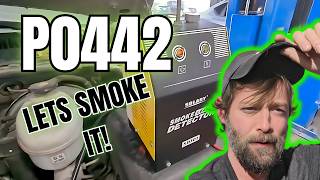
- For leaks that aren't obvious, a smoke test is the most efficient and accurate way to find the source of the problem, saving you from replacing unnecessary parts.
What's Unique About the 2014-2023 Jeep Cherokee
The Jeep Cherokee (KL) uses a modern EVAP system that is sensitive to very small leaks. While the components are fairly standard, owner experiences suggest that the system is particularly sensitive to non-OEM gas caps. Many owners report that only a genuine Mopar gas cap will properly seal and resolve the code after the original has worn out. Additionally, brittle plastic hoses in the engine bay are a common failure point over time due to heat and environmental exposure, a frequent topic in owner forums. The KL Cherokee shares its platform and 2.4L engine with vehicles like the Chrysler 200 and Dodge Dart, which are also known to experience P0442 and P0441 codes due to similar EVAP component failures.
Generation note: The 2014-2023 Jeep Cherokee covers a single generation, known as the KL. A significant facelift occurred in 2019, but the core EVAP system components and common failure points for this code remain consistent across the entire year range.
Symptoms You May Notice
- Check Engine Light is on
- A faint fuel smell, especially when parked in an enclosed space like a garage (less common for a small leak).
- Failing a state emissions inspection. 🎬 Watch: A quick overview of P0442 causes and symptoms.
- A 'gas cap loose' message on the instrument cluster, for some models.
- Replacing the charcoal canister when only a small, inexpensive hose connected to it is cracked.
- Immediately replacing the purge valve without first checking the gas cap, which is the most common and cheapest fix.
- Replacing parts randomly without performing a smoke test, which is the most reliable way to pinpoint the physical location of a small leak.
Most Likely Causes
- Loose, Worn, or Incorrect Gas Cap 🔴 High Probability → Shop Fuel Tank Cap The gas cap seal is a rubber component that degrades over time from fuel vapor exposure. Aftermarket caps often do not meet the precise sealing requirements of the Jeep EVAP system, leading to persistent codes.
How to confirm: Ensure the cap is tightened until it clicks multiple times. Inspect the rubber O-ring on the cap for cracks, stiffness, or dirt. Check the fuel filler neck for rust or debris that could prevent a good seal.
Typical fix: First, try cleaning and retightening the cap. If the code returns, replace the gas cap with a new OEM Mopar part (P/N: 52030377AB). This is the most common and successful first step.
Est. part cost: $15-$35 - Cracked or Disconnected EVAP Hose 🟡 Medium Probability Plastic and rubber hoses in the engine bay and under the vehicle become brittle with age and heat cycles, leading to small cracks, particularly at elbow joints and connection points.
How to confirm: Visually inspect all accessible EVAP lines, especially any rubber elbows or connectors near the engine's purge valve and around the charcoal canister. A definitive diagnosis requires a smoke test to see where smoke escapes from the system.
Typical fix: Replace the cracked section of hose. In many cases, a generic fuel-rated rubber hose of the correct diameter can be used to splice the line. Some owners have fixed leaks with sealant or electrical tape as a temporary measure.
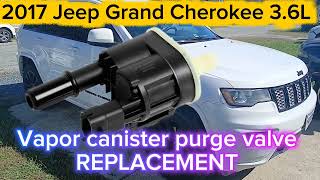
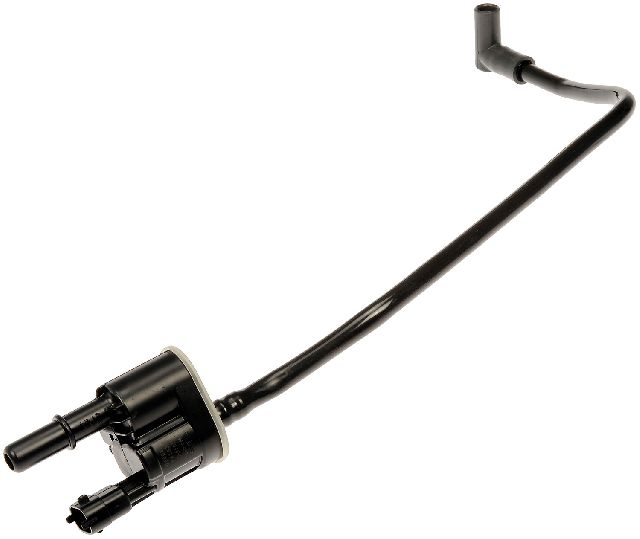
Est. part cost: $5-$50 - Faulty EVAP Purge Valve/Solenoid 🟡 Medium Probability → Shop Vapor Canister The purge valve is an electronic solenoid that cycles frequently during vehicle operation and can wear out, either sticking open or not sealing completely, creating a leak path.
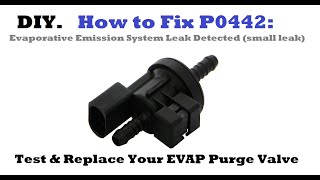
How to confirm: With the engine off, the valve should be closed. You can attempt to blow through it; if air passes, it's faulty. A scan tool can also be used to command the valve open and closed to listen for a clicking sound, indicating electrical function. 🎬 See how to test and replace the EVAP purge valve. A hard start after refueling is a strong symptom of a stuck-open purge valve.
Typical fix: Replace the purge valve assembly. It is typically located on or near the intake manifold in the engine bay.
Est. part cost: $25-$75 - Faulty EVAP Vent Solenoid or ESIM Switch ⚪ Low Probability → Shop Vapor Canister The vent solenoid or ESIM (Evaporative System Integrity Monitor), located near the charcoal canister, is exposed to road debris and moisture. This can cause it to fail, or its seals can leak. The KL Cherokee platform uses an ESIM.
How to confirm: This component can be difficult to access without lifting the vehicle. A smoke test is the most effective way to confirm a leak at the ESIM or vent valve. A scan tool may also be able to command the valve to check for function.
Typical fix: Replace the ESIM assembly, which often twists into the charcoal canister.
Est. part cost: $40-$100
Rare But Worth Checking
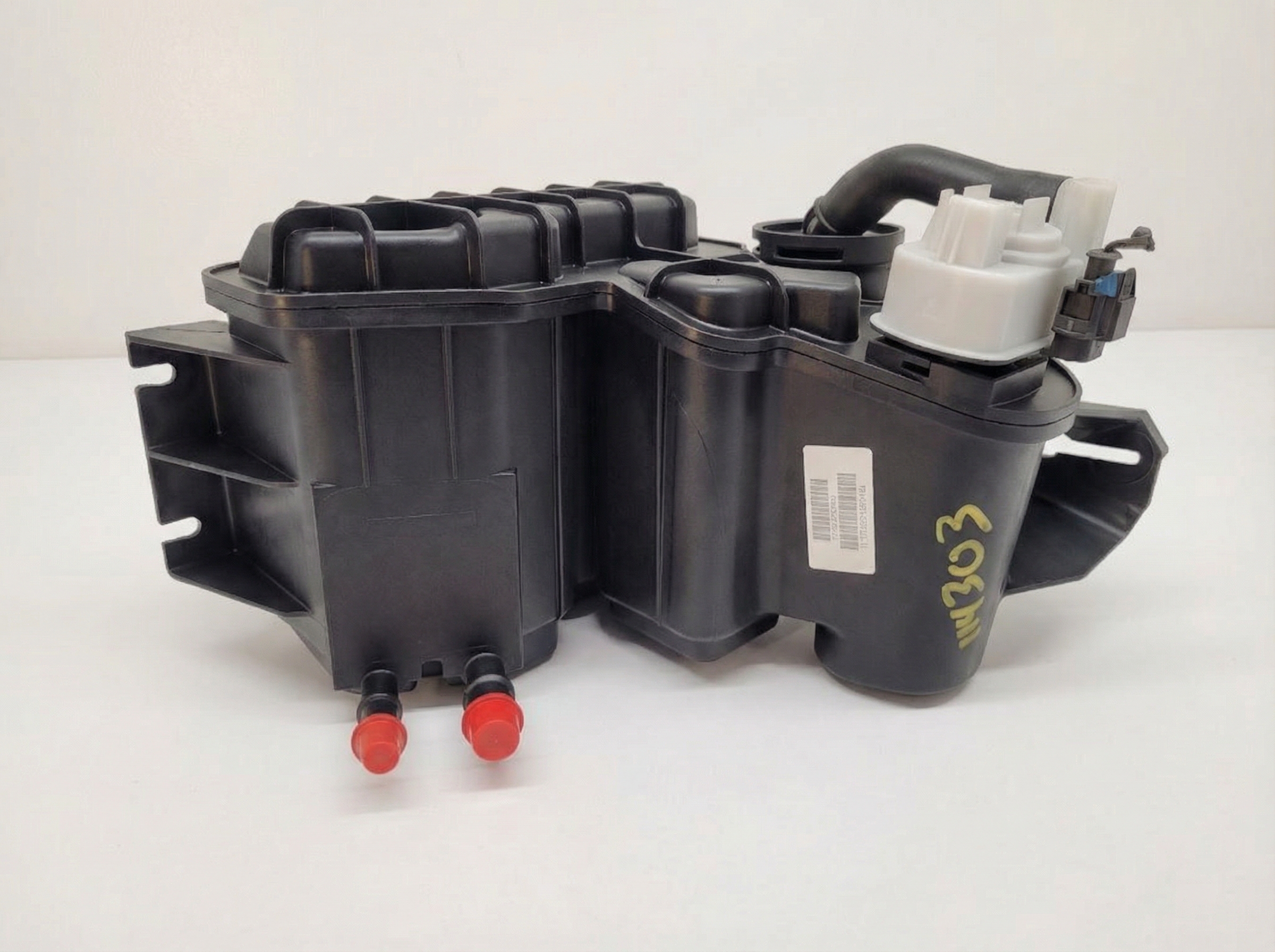
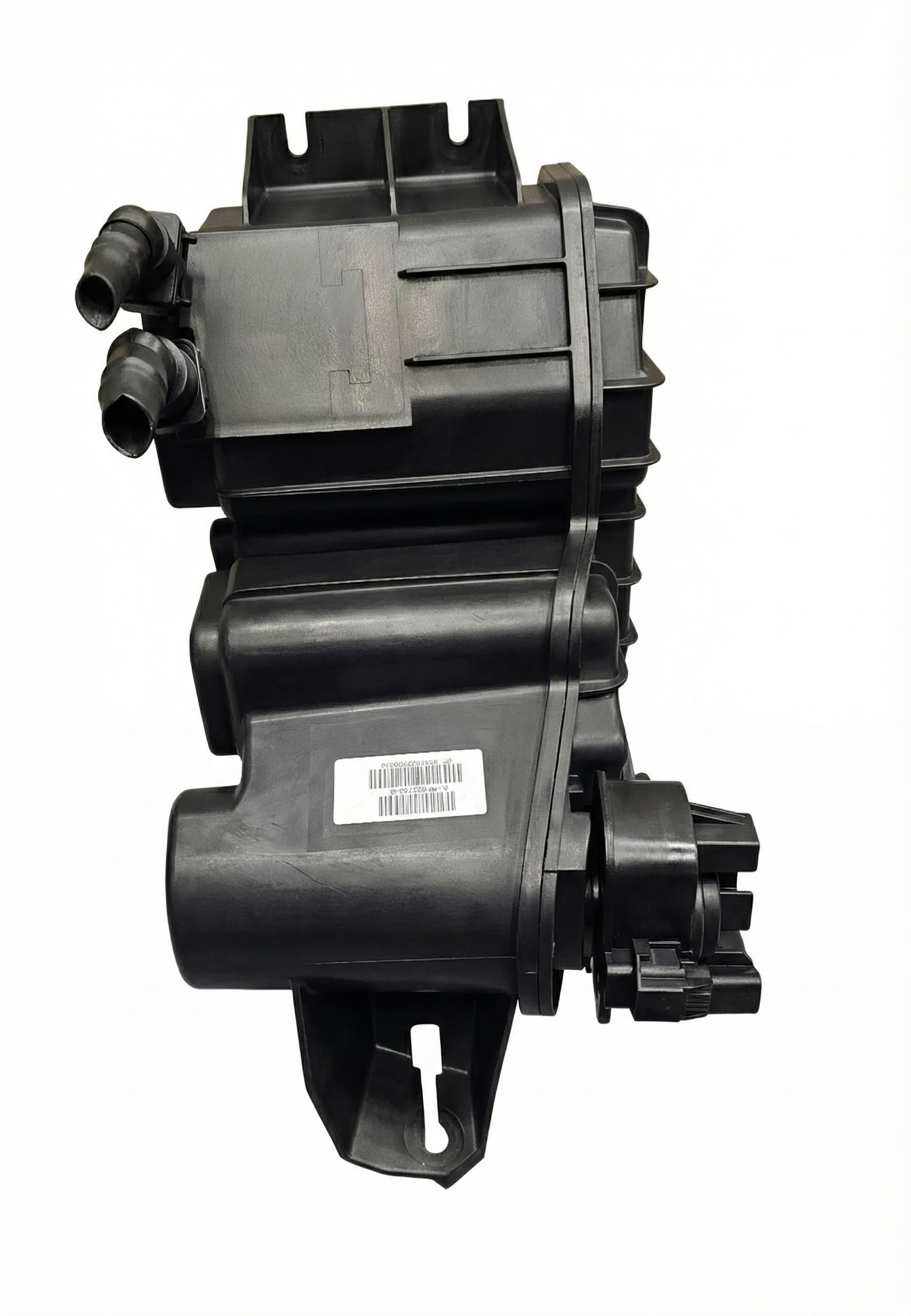
- Cracked Charcoal Canister: → Shop Vapor Canister The plastic housing of the canister itself can develop hairline cracks from age or impact from road debris, creating a small leak that is usually only found with a smoke test.
- Leaking Fuel Tank Filler Neck: → Shop Fuel Tank Corrosion on the metal filler neck where the gas cap seals can create an uneven surface, preventing a proper seal even with a new cap. This is more common in regions that use road salt.
Diagnosis Steps
- Read the code: Use an OBD-II scanner to confirm P0442 is the active code.
- Inspect the Gas Cap: Remove the gas cap. Check for any visible cracks on the seal. Ensure it's an OEM or high-quality aftermarket cap. Clean the cap seal and the filler neck rim. Reinstall the cap, ensuring it clicks several times.
- Clear the Code and Drive: Clear the code with the scanner and drive the vehicle for a few days. The EVAP monitor runs under specific conditions (related to fuel level and temperature), so it may take time for the light to return if the problem isn't fixed.
- Visual Inspection: If the light returns, visually inspect all accessible EVAP hoses in the engine bay and around the charcoal canister (located near the fuel tank) for obvious cracks, rot, or loose connections. Pay close attention to rubber elbows.
- Test the Purge Valve: Locate the purge valve in the engine bay. With the engine off, disconnect the hose from one side and try to blow through it. If air passes, the valve is stuck open and needs replacement.
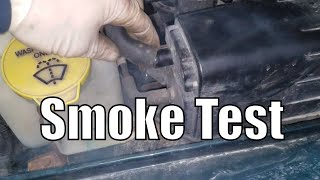
- Perform a Smoke Test: If the leak source is not obvious, the most effective diagnostic step is to have a smoke test performed. A machine injects vaporized mineral oil (smoke) into the EVAP system under low pressure. The leak will be revealed wherever smoke is seen escaping.
Parts You'll Likely Need
- Fuel Cap
(OEM #52030377AB)— This is the most frequent cause of P0442. The seal wears out over time, and aftermarket caps often fail to seal correctly. Using an OEM Mopar cap is highly recommended.
Trusted brands: Mopar
OEM price range: $20-$35
Aftermarket price range: $10-$25 - EVAP Purge Valve / Solenoid
(OEM #04891731AA (for 2.4L/3.2L, verify by VIN))— This valve is constantly working and can get stuck open or closed, a common failure point for EVAP systems.
Trusted brands: Mopar, Bosch, Delphi
OEM price range: $50-$90
Aftermarket price range: $25-$60 - EVAP System Hoses — Rubber and plastic lines become brittle and crack from engine heat and age, creating small leaks.
OEM price range: $20-$100 (for pre-formed sections)
Aftermarket price range: $5-$20 (for bulk hose)
Related Codes That Often Appear With This One
- P0456 — P0456 indicates a 'Very Small Leak,' while P0442 indicates a 'Small Leak.' They point to the same type of problem, just a different leak size threshold. Environmental factors or the specific test conditions can cause the PCM to report one code over the other.
- P0455 — This code indicates a 'Large Leak.' If a component fails catastrophically (e.g., a hose completely disconnects), you might see this code instead of, or in addition to, P0442.
- P0441 — This code indicates 'EVAP Purge System Performance' issue, often related to incorrect flow. It can sometimes appear alongside P0442 if the purge valve is malfunctioning, causing both a leak and a flow problem. This is noted on platform mates like the Dodge Dart and Chrysler 200.
Platform-Specific Known Issues
- Owners on jeepcherokeeclub.com frequently report that only the Mopar OEM gas cap (52030377AB) will solve a recurring P0442 after the original wears out, with many aftermarket caps failing to provide a proper seal.
- Corrosion on the fuel filler neck is a known issue in rust-belt states, preventing even a new gas cap from sealing correctly and requiring the filler neck surface to be cleaned or the neck itself replaced.
Scan Tool Commands That Help
- wiTECH (or advanced aftermarket): EVAP System Test / Canister Vent Valve Command — During a smoke test, the canister vent valve (ESIM) must be commanded closed to seal the system. This allows the smoke to build pressure and reveal leaks. The scan tool is used to send this command.
- wiTECH (or advanced aftermarket): Purge Valve Duty Cycle / Actuation — To test if the purge valve is sealing correctly. With the smoke machine connected to the engine side of the valve, you can command the valve's duty cycle from off to on while watching for smoke. No smoke should pass when it is commanded closed (0% duty cycle).
- wiTECH: Small Leak Verification Test (SLVT) — This is a mandatory dealer-level test to confirm a P0456 (and by extension, a P0442) leak is present before and after a repair. It runs a specific diagnostic routine that is more reliable than a simple drive cycle for confirming the fix.
Real Owner Repair Stories
- Joy of Wrenching YouTube Channel (2017 Dodge Durango 3.6L (platform mate to Grand Cherokee, similar EVAP layout)) — Check Engine Light with code P0456 (very small leak, often diagnosed with P0442).
❌ Tried (didn't work) Checking the capless fuel filler.
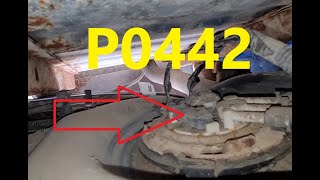
✅ What actually fixed it A visual inspection under the engine cover revealed a cracked plastic EVAP line going to the purge valve that a previous person had attempted to fix with a zip tie. Replacing the pre-formed hose assembly (Mopar part shown in video) resolved the leak. - Online Auto Repair Videos YouTube Channel (2018 Jeep (model not specified, but similar EVAP components)) — Recurring small EVAP leak code.
❌ Tried (didn't work) Previously replaced the ESIM switch (leak detection pump) for a prior leak.
✅ What actually fixed it A second smoke test revealed a new leak at a cracked plastic joint on the EVAP line near the purge valve under the engine cover. The repair shown was a temporary fix using electrical tape, with the recommendation to replace the faulty line section.
"I Checked Everything" — The Actual Cause
- On Chrysler/Jeep products, it is a known pattern for the EVAP system to pass a smoke test but still set a P0442 or P0456 code. This often occurs when the Evaporative System Integrity Module (ESIM), also called a leak detection pump, fails electronically or internally. It may not leak smoke externally, but it fails to operate correctly during the PCM's self-test, causing the test to fail and a code to be set.
OEM Part Supersession History
04891731AA→04891738AD— Part has been updated by the manufacturer. The new part is the current service replacement.
Diagnostic Flowchart
Other Known Issues on This Vehicle
Issues unrelated to this code that are worth knowing about as an owner of this generation:
- ZF 9-Speed (948TE) Automatic Transmission Problems 🔴 High — Very common, especially in 2014-2016 models. Complaints include harsh/erratic shifting, lurching, and sudden shifts to neutral. (Ref: Multiple software update TSBs and recalls (e.g., NHTSA recall V69 for 2014 models) have been issued to address these drivability issues.)
- Excessive Oil Consumption (2.4L Tigershark Engine) 🔴 High — Widespread issue where the engine may consume a quart of oil in as little as 1,000 miles, potentially leading to engine stalling and failure if the oil level becomes critically low. (Ref: Subject of class-action lawsuits and covered by TSB 09-018-24 and warranty extensions (XB1/W80) which outline an oil consumption test and potential engine replacement.)
- Power Transfer Unit (PTU) and Rear Drivetrain Module (RDM) Failures 🟠 Medium — Affects 4x4 models. Failures can cause grinding/whining noises, a 'Service 4WD' light, and loss of four-wheel-drive capability. Onset can vary widely by mileage. (Ref: Several TSBs exist for diagnosing noises and leaks related to the PTU and RDM.)
- Electronic Parking Brake Malfunctions 🟡 Low — Owners report the parking brake failing to engage or disengage, or a 'Service Parking Brake' message appearing on the dash. Often related to software or the actuator module. (Ref: Software updates have been released to address some of these concerns.)
- Oil Leaks from Engine/Transmission 🟠 Medium — Common sources for oil leaks include the oil filter housing adapter (often plastic and prone to cracking), valve cover gasket, and transmission cooler lines.
Used vs. New Parts: Buying Guide for This Vehicle
When a used part is the smart pick: For purely mechanical and non-electronic parts like the fuel filler neck or a charcoal canister body (if inspected for cracks), a used part from a low-mileage, non-corroded donor vehicle can be a cost-effective option.
Donor-vehicle mileage cap: roughly under 80000 miles for the part to have meaningful remaining life.
What to inspect on the donor part:
- For filler necks, ensure the sealing surface where the gas cap sits is free of rust, pitting, or damage.
- For charcoal canisters, inspect the plastic body thoroughly for any hairline cracks or signs of impact.
- Check that all hose connection nipples are intact and not brittle or cracked.
- Avoid parts from vehicles located in the rust belt if possible.
OEM-only on this vehicle (don't cheap out):
- Fuel Cap: Owner consensus is extremely high that only OEM Mopar caps provide a reliable, long-term seal on this platform.
- EVAP Purge Valve / Solenoid: While some aftermarket brands are reputable, the OEM part is recommended for fit and electronic compatibility to avoid repeat failures.
- ESIM / Leak Detection Pump: Given its electronic nature and high failure rate, an OEM or a top-tier aftermarket replacement (like Dorman) is recommended over a used part.
Aftermarket brands forum-validated for this vehicle:
- Bosch (for Purge Valve)
- Delphi (for Purge Valve)
- Dorman (for ESIM)
Brands owners have reported issues with on this vehicle:
- Unbranded or 'white-box' fuel caps and electronic solenoids from online marketplaces are frequently reported to fail quickly or not work out of the box.
Real Owner Stories
Aggregated from forums and TSBs cited above. Mileages and costs reflect what owners reported in those sources.
2014-2023 Jeep Cherokee
Symptoms: Recurring P0442 code after replacing the original gas cap with an off-the-shelf version.
What fixed it: Replacing the aftermarket cap with a new OEM Mopar part (P/N: 52030377AB).
Source hint: jeepcherokeeclub.com: Multiple threads emphasize the necessity of
2014-2023 Jeep Cherokee
Symptoms: Check Engine Light with code P0442; visual inspection showed dry-rotted lines.
What fixed it: Replacing cracked and dry-rotted EVAP hoses, specifically rubber elbows and connectors.
Source hint: Jeep Cherokee Forum (cherokeeforum.com): Corroborated that cracked and dry-rotted EVAP hoses are a common cause of P0442
2014-2023 Jeep Cherokee
Symptoms: An owner reported that the engine light comes on with code P0442 but may go off after a day or two, creating a frustrating and potentially dangerous driving situation (NHTSA ODI #10761885).
What fixed it: While the specific fix wasn't noted, the owner mentioned having the throttle body cleaned twice in addition to the recurring EVAP code.
2014-2023 Jeep Cherokee
Symptoms: A consumer complaint noted that OBD error codes for emission control systems, specifically P0441 and P0442, can be inaccurate and lead to unneeded repairs (NHTSA ODI #10357094).
What fixed it: The report highlights the risk of costly replacement of sensors and computers without cause due to inaccurate diagnosis.
Documented NHTSA Reports
NHTSA ODI #10520663 describes a situation where an owner spent over $3,500 on repairs, including replacing an EVAP purge solenoid, yet the vehicle continued to stall with codes P0442, P0455, and P0351 still present.
Related OBD-II Codes
Frequently Asked Questions
Which gas cap should I buy for my Jeep Cherokee to fix a P0442 code?
My Cherokee has a 'gas cap loose' message and a P0442 code; what should I check first?
Is there a specific component near the charcoal canister on the KL Cherokee that causes this leak?
Could my Cherokee's hard starting after refueling be related to P0442?
Are there any engine-specific issues for the 2.4L Tigershark that I should be aware of while fixing EVAP codes?
Helpful Videos

![How to Fix P0442 Engine Code in 3 Minutes [2 DIY Methods / Only $4.67]](https://img.youtube.com/vi/73AR8Tl6YZU/mqdefault.jpg)

Used OEM Parts in Stock

New Aftermarket Parts Available


The information in this article is provided for general reference and educational purposes only. Vehicle specifications, procedures, and part compatibility can vary by production date, trim level, and region. Always consult your vehicle's factory service manual and verify part numbers before purchasing or performing repairs. Safety-critical components such as airbags, seat belts, and braking systems should be installed by a qualified professional.
- Jeep Cherokee:
- 🧭 Diagnostic Flowchart
- 🎬 Helpful Videos
- 🛍️ Shop This Part
- What's Unique About the 2014-2023 Jeep Cherokee
- Symptoms You May Notice
- Most Likely Causes
- Rare But Worth Checking
- Diagnosis Steps
- Parts You'll Likely Need
- Related Codes That Often Appear With This One
- Platform-Specific Known Issues
- Scan Tool Commands That Help
- Real Owner Repair Stories
- "I Checked Everything" — The Actual Cause
- OEM Part Supersession History
- Other Known Issues on This Vehicle
- Used vs. New Parts: Buying Guide for This Vehicle
- Real Owner Stories
- 2014-2023 Jeep Cherokee
- 2014-2023 Jeep Cherokee
- 2014-2023 Jeep Cherokee
- 2014-2023 Jeep Cherokee
- Documented NHTSA Reports
- Related OBD-II Codes
- Frequently Asked Questions
- 🎟️ Get 5% Off