

P0442 on 2016-2017 Kia Optima Hybrid: EVAP Small Leak Causes and Fixes
P0442 on your Optima Hybrid indicates a small leak in the fuel vapor system. The most common fix is tightening or replacing the gas cap with an OEM part. If the light stays on, the canister purge valve is the next likely culprit, a known issue on many Kia/Hyundai models. For vehicles in 'salt belt' states, underbody corrosion on the canister or filler neck is also a strong possibility.
- Always start with the simplest solution: check that your gas cap is tight. If the seal looks worn, replace it with an OEM part.
- If the gas cap isn't the issue, the canister purge valve (PCSV) is the next most likely and affordable part to replace, and it's a known weak point on Kias.
- For vehicles in northern or 'salt belt' states, pay close attention to underbody components like the fuel filler neck and charcoal canister for rust-induced leaks.
- For hard-to-find leaks, a professional smoke test is the most reliable diagnostic method and can save you from replacing unnecessary parts.
What's Unique About the 2016-2017 Kia OPTIMA HYBRID
While the general causes for a P0442 code are universal, the 2016-2017 Kia Optima Hybrid has specific issues documented by the manufacturer. Technical Service Bulletins (TSBs) point to a higher-than-normal likelihood of leaks from a damaged fuel pump seal (TSB #PS567_R2) and corrosion-related failures on vehicles operated in 'salt belt' states (TSB #TSB-SC135R1). These official documents suggest that mechanics should pay special attention to these areas during diagnosis. This platform is also shared with the Hyundai Sonata Hybrid, which experiences identical P0442 issues and causes.
Diagnostic Flowchart
Tap your situation to follow the diagnostic path that matches what you're seeing on this vehicle.
Symptoms You May Notice
- Check Engine Light is on
- A faint smell of fuel, especially around the rear of the vehicle or after refueling.
- Potentially failing a state emissions inspection
- Difficulty starting the car immediately after refueling (a classic sign of a stuck-open purge valve).
- Replacing the oxygen sensor. This code is strictly related to the fuel vapor (EVAP) system and has no connection to the oxygen sensors.
- Using a cheap, aftermarket gas cap. Many owners report that non-OEM gas caps do not seal properly and can cause the P0442 code to persist or return.
- Assuming a recent fuel pump repair is the source of the leak. In one documented case, an owner chased a leak they thought was from a new fuel pump seal, but a smoke test revealed the actual cause was a failed canister vent valve.
Most Likely Causes
- Loose, Worn, or Incorrect Gas Cap 🔴 High Probability → Shop Fuel Tank Cap This is the most common cause for P0442 on any vehicle. The cap's rubber seal can degrade over time, or the cap may not have been tightened properly after refueling. Many owners and mechanics strongly recommend using an OEM cap, as aftermarket versions are a frequent source of repeat failures.
How to confirm: Ensure the gas cap clicks at least once when tightened. Inspect the rubber O-ring for cracks, stiffness, or debris. After tightening or replacing, the code must be cleared with a scanner; it may take several drive cycles for the light to turn off on its own.
Typical fix: Tighten or replace the gas cap. It is highly recommended to use a Genuine Kia OEM cap (Part No. 31010-3L600) as aftermarket caps can fail to seal correctly.
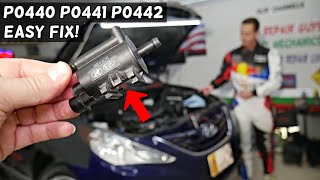
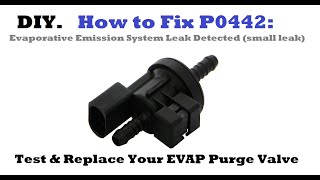
Est. part cost: $20-$35 - Faulty Canister Purge Valve (PCSV) 🔴 High Probability → Shop Vapor Canister The purge valve is a very common failure point on many Kia and Hyundai models, often getting stuck partially open, which creates a leak in the system. This can also cause a P0441 'Incorrect Purge Flow' code.
How to confirm: The valve is located in the engine bay, typically on or near the intake manifold. A simple test is to remove it and try to blow through it; when unpowered, it should be closed and not allow air to pass. If you can blow through it, it's faulty and needs replacement. Another symptom of a stuck-open purge valve is difficulty starting the car right after getting gas.
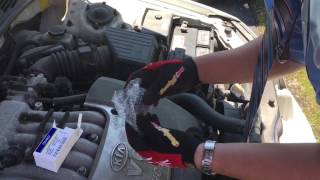
Typical fix: Replace the canister purge valve. This is typically a straightforward job requiring basic tools to disconnect two hoses and an electrical connector. 🎬 Watch: Step-by-step guide to replacing the Optima purge valve.
Est. part cost: $40-$80 - Cracked or Disconnected EVAP Hoses 🟡 Medium Probability Rubber hoses can become brittle and crack over time due to heat and age. This is especially true for lines in the engine bay or under the car exposed to the elements.
How to confirm: Visually inspect all accessible EVAP hoses for cracks, especially at connection points. A Hyundai owner with a similar engine found a cracked hose where the purge line connects to the intake plenum. The most reliable method is to have a smoke test performed, which will force smoke through the system and make any leaks visible.
Typical fix: Replace the cracked section of hose or reconnect a loose line.
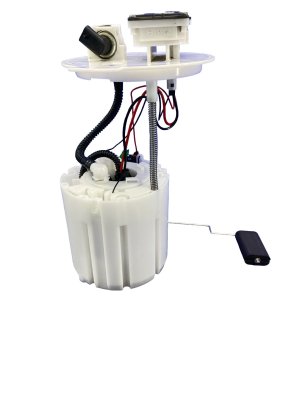
Est. part cost: $5-$50 - Damaged Fuel Pump Seal ⚪ Low Probability → Shop Fuel Pump Kia issued a specific TSB (#PS567_R2) for this model, indicating that a damaged fuel pump seal can be a direct cause of P0442. This is more specific than a general wear item. The seal is located under the rear seat on top of the fuel tank.
How to confirm: This is difficult to confirm without a smoke test. If a smoke test indicates a leak from the top of the fuel tank area, this seal is a likely suspect. An owner replacing the fuel pump must be careful to clean the sealing surface and reinstall the O-ring properly to avoid creating a new leak.
Typical fix: The fuel pump must be accessed (usually under the rear seat) and the seal replaced.
Est. part cost: $20-$40 - Corrosion-Related Leak (Salt Belt Vehicles) ⚪ Low Probability TSB #TSB-SC135R1 specifically calls out vehicles from salt-belt states as being prone to EVAP leaks. Road salt accelerates corrosion on underbody components like the charcoal canister, canister vent valve, and fuel filler neck, causing cracks or pinhole leaks.
How to confirm: A thorough underbody inspection is required, looking for heavy rust or cracks on the charcoal canister, its valves, and the fuel filler pipe. A smoke test is highly effective here, as the leak may be in a hard-to-see area.
Typical fix: Replace the corroded component, which could be the charcoal canister, vent valve, or fuel filler neck.
Est. part cost: $100-$400
Rare But Worth Checking
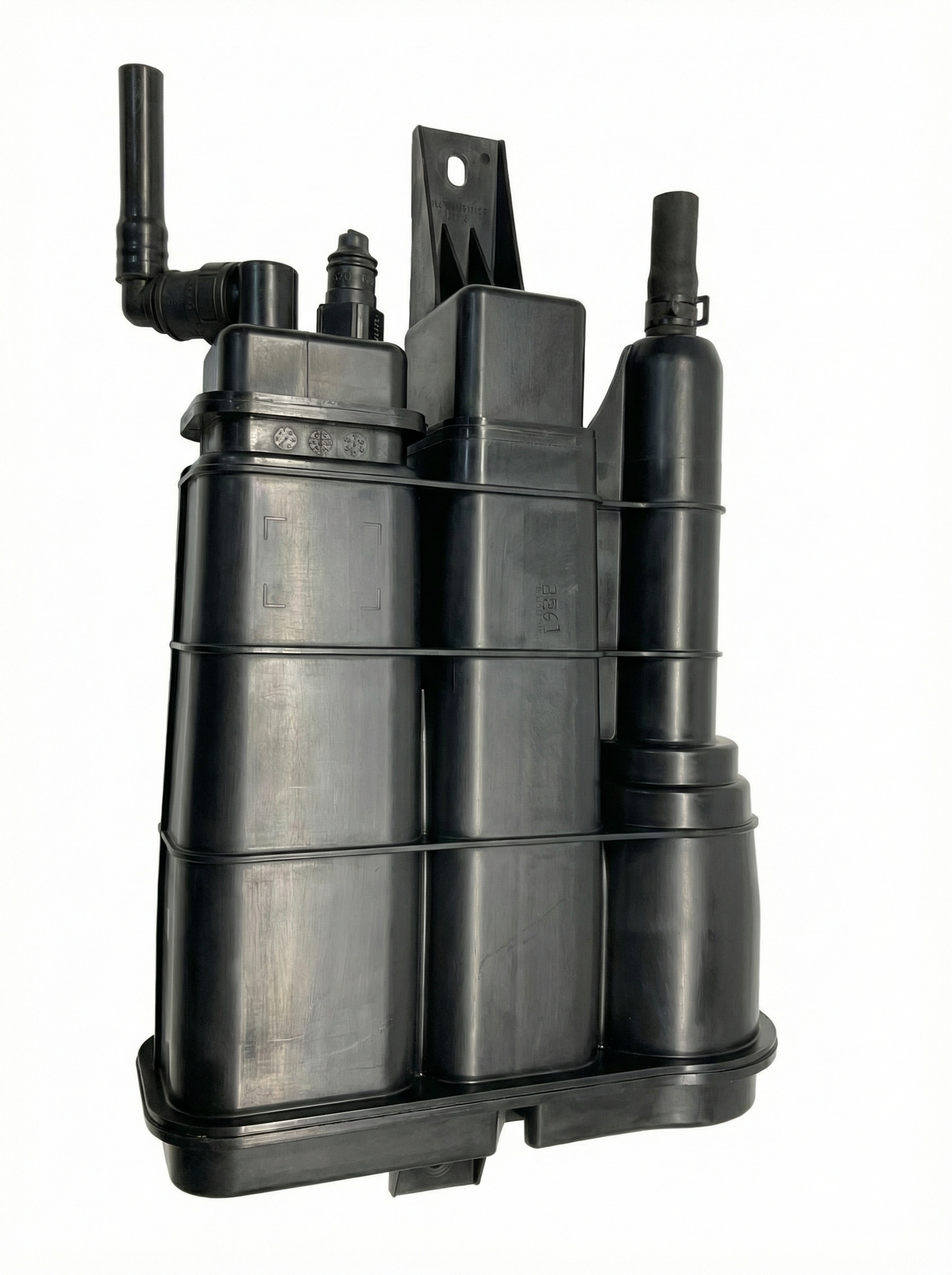
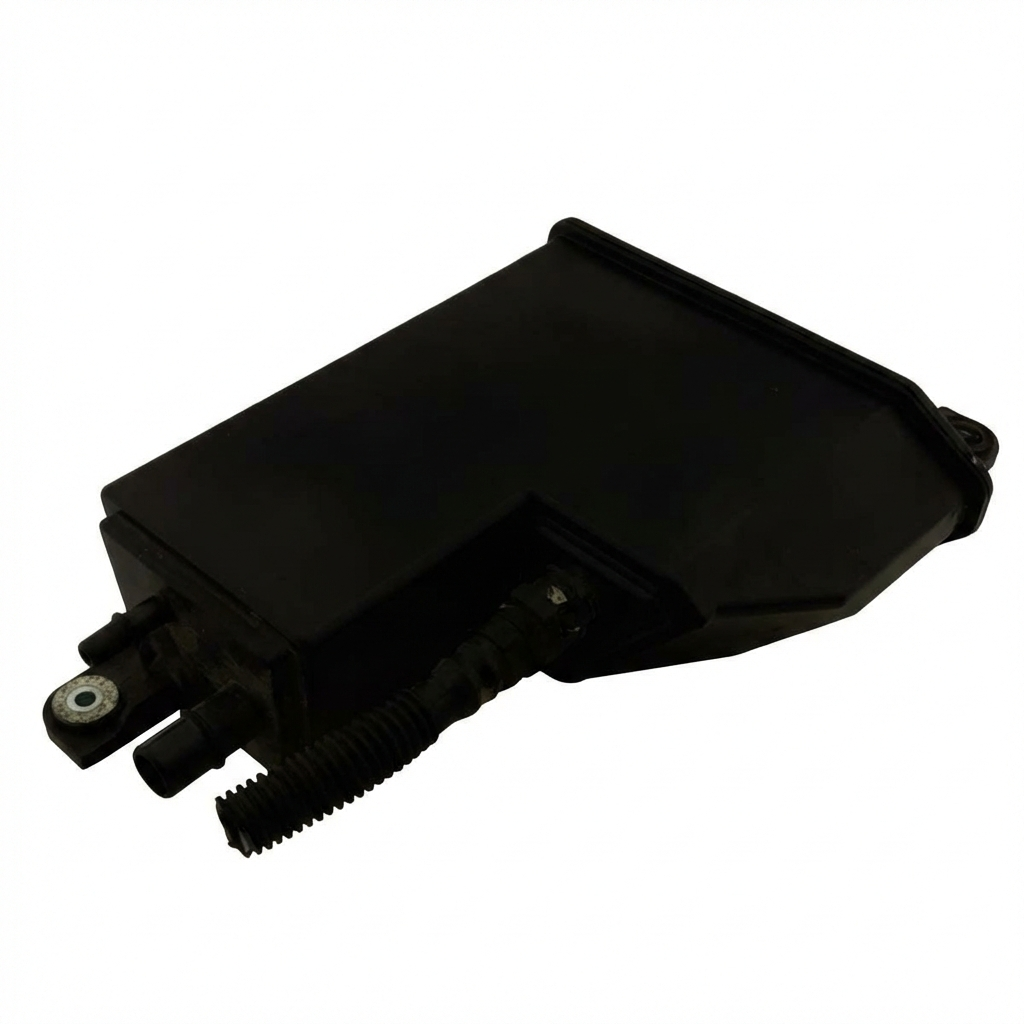
- Cracked Charcoal Canister: → Shop Vapor Canister The canister itself can develop cracks from physical impact or, as noted in TSBs, from corroded mounting brackets putting stress on the plastic housing.
- Faulty Canister Vent Valve (CVV): → Shop Vapor Canister Also called a Canister Close Valve (CCV), this is located under the car near the charcoal canister. It's exposed to road debris and salt, and can get stuck open due to dirt or corrosion, creating a leak. A smoke test can confirm if it's failing to seal.
Diagnosis Steps
- Check the gas cap. Remove it, inspect the seal for damage, and retighten it until it clicks. Clear the code with a scan tool and drive for a few days to see if it returns.
- If the code returns, perform a detailed visual inspection of the EVAP hoses in the engine bay and under the car for any obvious cracks, disconnections, or signs of wear.
- Test the Canister Purge Valve (PCSV). Locate it in the engine bay, disconnect it, and check if it's stuck open by attempting to blow air through it. It should be sealed when off. Also listen for a rough idle or starting issues after refueling, which are strong indicators of a bad PCSV.
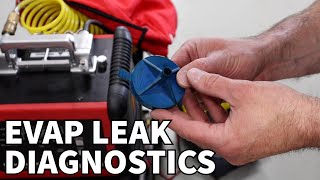
- If the above steps do not reveal the issue, the most effective next step is a professional smoke test. A mechanic will inject vaporized smoke into the EVAP system, and the smoke will exit from the location of the leak, making it easy to spot. This is the most reliable way 🎬 Watch: How a smoke machine identifies hidden EVAP leaks. to find difficult leaks in hoses, valves, or seals.
- Based on the smoke test results, replace the identified faulty component, whether it's a hose, valve, seal, or the canister itself.
Parts You'll Likely Need
- Fuel Tank Filler Cap
(OEM #31010-3L600)— This is the most common cause of a P0442 code and the easiest and cheapest part to replace first. Using an OEM cap is strongly recommended.
Trusted brands: Genuine Kia
OEM price range: $20-$35
Aftermarket price range: $15-$25 - Canister Purge Valve (PCSV)
(OEM #28910-2E600)— A very common failure point on Kia/Hyundai vehicles that causes a small leak when it sticks open. This part number is confirmed to fit the 2016-2017 Optima Hybrid.
Trusted brands: Genuine Kia, Dorman, Standard Motor Products (SMP)
OEM price range: $40-$60
Aftermarket price range: $30-$50 - Fuel Pump Gasket / Seal
(OEM #31115-C1000)— Specifically cited in TSB #PS567_R2 as a potential cause for P0442 on this vehicle. The original part number in pass 1 (22442-2GGB0) appears to be for a valve cover gasket, not the fuel pump seal. 31115-C1000 is the correct seal for the fuel pump assembly.
Trusted brands: Genuine Kia
OEM price range: $20-$40
Aftermarket price range: $15-$30
Related Codes That Often Appear With This One
- P0456 — Indicates a 'very small' EVAP leak. This code is a close relative of P0442 and points to the same set of potential problems, just a smaller detected leak size. A problem might start as a P0456 and worsen to a P0442 over time.
- P0455 — Indicates a 'large' EVAP leak. If you see this with P0442, it might suggest an intermittent or worsening problem, like a purge valve that is sticking badly or a gas cap left loose.
- P0441 — Indicates 'Incorrect Purge Flow'. This code often points directly to a faulty canister purge valve, which can also cause a P0442 if it's stuck partially open.
Technical Service Bulletins (TSBs) & Recalls
- PS567_R2: PITSTOP: DTC P0456/P0442 WITH FUEL PUMP SEAL DAMAGE
- PS469: PITSTOP: MANUAL EVAPORATIVE EMISSIONS TEST FOR HARD TO FIND/SMALL LEAKS
- TSB-SC135R1: EVAP SYSTEM LEAK DTC P0442 OR P0455 IN SALT BELT STATES
Platform-Specific Known Issues
- A Technical Service Bulletin (TSB #PS567_R2) was issued for potential fuel pump seal damage causing a P0442 or P0456 code.
- Vehicles originally sold or currently registered in 'salt belt' states may be prone to corrosion-related EVAP leaks from the charcoal canister or fuel filler neck, as noted in TSB #TSB-SC135R1.
- The Canister Purge Valve (PCSV), part number 28910-2E600, is a very common failure item on this and related Kia/Hyundai models, often causing P0442 and/or P0441.
Mechanic-Grade Diagnostic Values
- Fuel Tank Pressure Sensor (FTPS) Signal Voltage, KOEO, Gas Cap OFF — expected: ~2.5V (Atmospheric Pressure). Failure: Voltage is significantly out of range. If voltage is absent, check for 5V reference and ground at the sensor.
- Fuel Tank Pressure Sensor (FTPS) Signal Voltage during manual purge test — expected: Greater than 1.5V. Failure: Voltage drops below 1.5V, indicating a restriction in the EVAP system (e.g., blocked canister, hose, or valve).
Scan Tool Commands That Help
- Kia GDS or equivalent professional scan tool: EVAP System Functional Test / Output Control: Canister Close Valve (CCV) or Vent Solenoid — This command is essential before performing a smoke test. It manually closes the normally-open vent valve, sealing the EVAP system so that it can be pressurized with smoke to find leaks.
Wiring & Ground Locations
- Canister Purge Solenoid Valve (PCSV) — In the engine bay, mounted on or near the intake manifold, easily visible after removing the engine cover.. This is a primary failure component. Knowing its location is key for visual inspection, testing, and replacement. It uses a 2-wire electrical connector.
- SENSOR 2 Fuse — In the engine compartment fuse box.. On some Kia models, a 10-amp fuse labeled 'SENSOR 2' provides power to the EVAP canister close/vent valve solenoid. A blown fuse will prevent the valve from closing during a system self-test, which can trigger a leak code.
Real Owner Repair Stories
- YouTube channel 'Fix It All' (2008 Hyundai Sonata (similar platform)) — P0442 code appeared immediately after replacing the fuel pump and filter assembly.
❌ Tried (didn't work) Multiple inspections of the new fuel pump seal, assuming the leak was caused by the recent repair.
✅ What actually fixed it A professional smoke test revealed the leak was not from the fuel pump area, but from the canister vent valve located near the rear wheel well. Replacing the canister vent valve resolved the P0442 code. - Hyundai Forums user 'Plague Boy' (2002 Hyundai Sonata 2.7L) — P0442 code
❌ Tried (didn't work) Replacing the gas cap with an aftermarket one., Replacing the gas cap again with a genuine Hyundai OEM one.
✅ What actually fixed it The owner visually spotted a cracked hose where the pipe for the purge valve connects to the intake plenum. Replacing the cracked hose fixed the code.
"I Checked Everything" — The Actual Cause
- A common misdiagnosis occurs when a P0442 code appears after a fuel pump replacement. The owner may spend significant time re-checking their work at the fuel pump seal, assuming they created the leak. However, in a documented case on a similar platform, a smoke test proved this assumption wrong and correctly identified the true culprit as a completely separate, and common, failure of the canister vent valve. This highlights the value of a smoke test to prevent chasing the wrong problem.
Helpful Videos
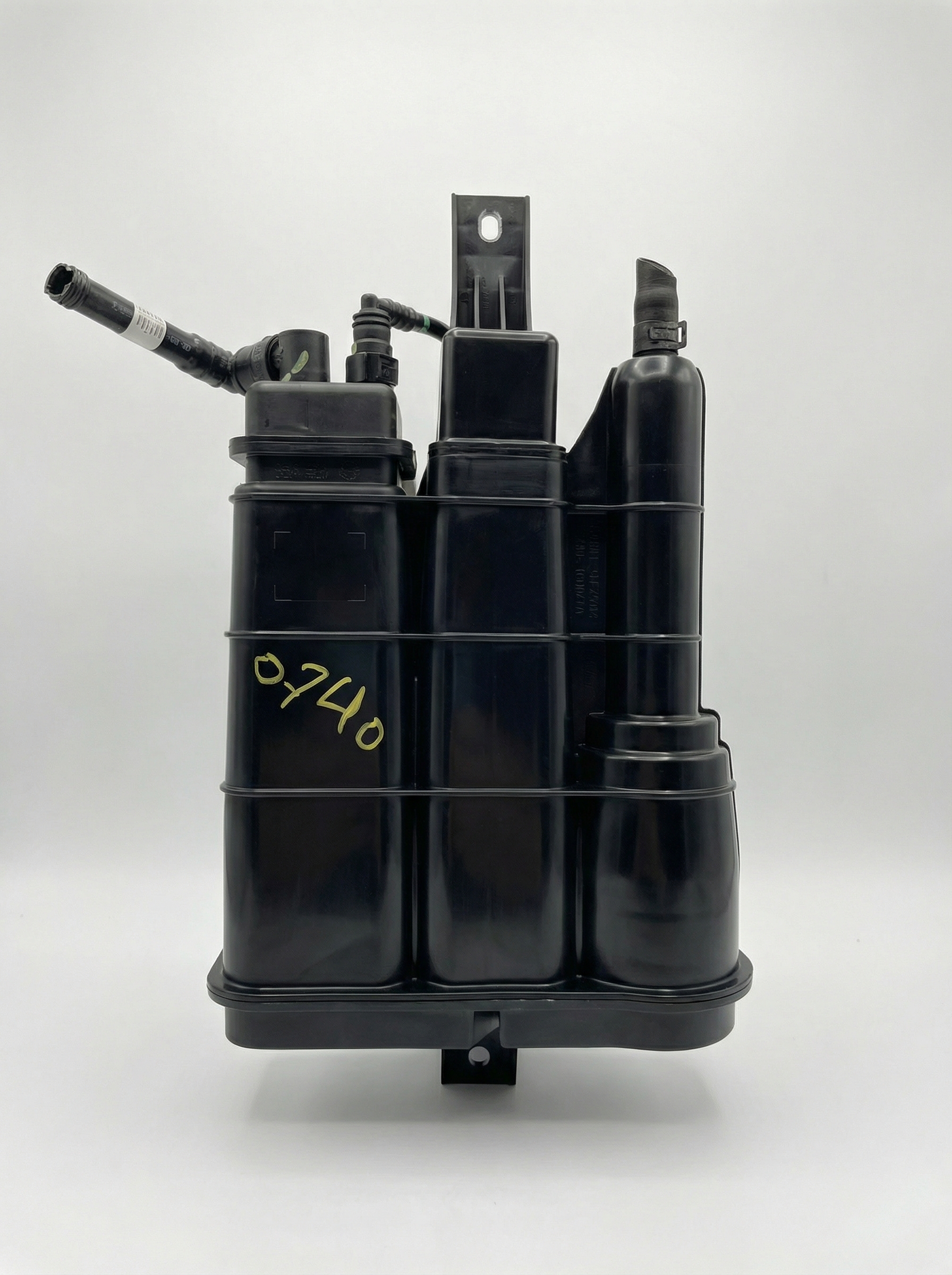
Used OEM Parts in Stock
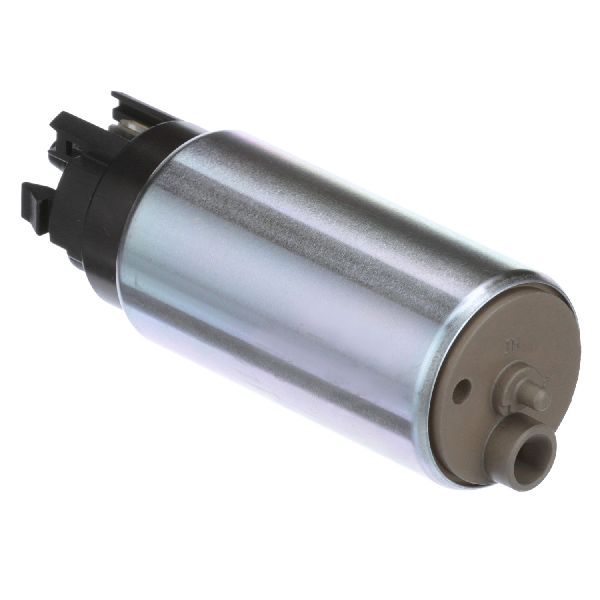
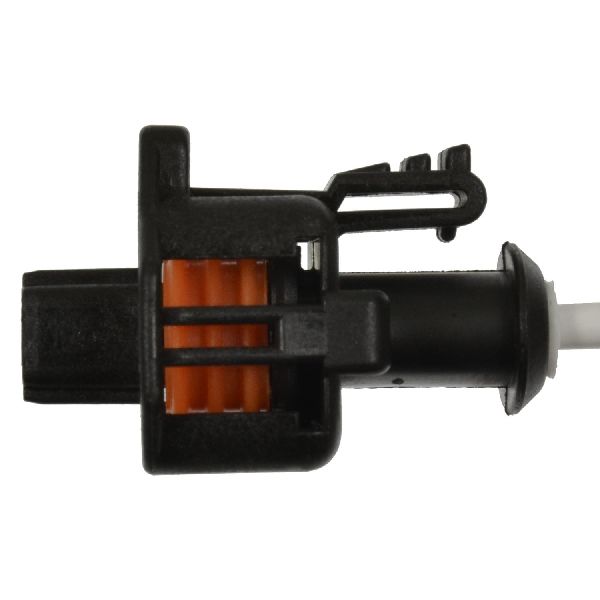
New Aftermarket Parts Available


The information in this article is provided for general reference and educational purposes only. Vehicle specifications, procedures, and part compatibility can vary by production date, trim level, and region. Always consult your vehicle's factory service manual and verify part numbers before purchasing or performing repairs. Safety-critical components such as airbags, seat belts, and braking systems should be installed by a qualified professional.
- Kia OPTIMA HYBRID:
- 🧭 Diagnostic Flowchart
- 🎬 Helpful Videos
- 🛍️ Shop This Part
- What's Unique About the 2016-2017 Kia OPTIMA HYBRID
- Symptoms You May Notice
- Most Likely Causes
- Rare But Worth Checking
- Diagnosis Steps
- Parts You'll Likely Need
- Related Codes That Often Appear With This One
- Technical Service Bulletins (TSBs) & Recalls
- Platform-Specific Known Issues
- Mechanic-Grade Diagnostic Values
- Scan Tool Commands That Help
- Wiring & Ground Locations
- Real Owner Repair Stories
- "I Checked Everything" — The Actual Cause
- 🎟️ Get 5% Off