

P0442 on 2013-2015 Land Rover Range Rover: EVAP Small Leak Causes and Fixes
For a 2013-2015 Range Rover, a P0442 code is most often caused by a faulty purge valve (especially on 2013-2014 models) or a leaking fuel filler neck (common on 2015 models). Always check the gas cap first, but expect to investigate these specific parts if the cap isn't the issue. The Range Rover Sport (L494) on the same platform shares these exact problems and solutions.
- For a P0442 code on a 2013-2015 Range Rover, the cause is very likely vehicle-specific.
- Always start by checking the gas cap; it's the easiest and cheapest fix.
- If the gas cap is fine, suspect the purge valve, especially on 2013-2014 models (per TSB SSM71658).
- On a 2015 model, the fuel filler neck is a known issue and a highly probable cause (per TSB SSM72183).
- A smoke test is the most reliable way to confirm the exact location of the leak if it's not one of the common components.
What's Unique About the 2013-2015 Land Rover RANGE ROVER
On this specific generation of Range Rover (L405) and its platform-mate the Range Rover Sport (L494), the P0442 code is strongly linked to two distinct, well-documented issues. A Land Rover Technical Service Bulletin (SSM71658) for 2013 models and up points directly to the purge valve as a likely culprit for this and other EVAP codes across all gasoline engines. Another TSB for the 2015 model year (SSM72183) identifies a newly designed fuel filler neck and cap as a common source of the leak on North American models. This makes diagnosis more targeted than on vehicles where the cause is less specific.
Diagnostic Flowchart
Tap your situation to follow the diagnostic path that matches what you're seeing on this vehicle.
Symptoms You May Notice
- Check Engine Light is on
- A 'Check Fuel Filler Cap' message may appear on the dashboard.
- A faint fuel smell may be noticeable, though this is not always present.
- Rough starting or stalling immediately after refueling. 🎬 Watch: A quick breakdown of P0442 causes, symptoms, and fixes. This can happen if a stuck-open purge valve allows fuel vapors to flood the intake manifold.
- Replacing the Leak Detection (DMTL) pump before confirming it's the source of the leak. As noted in forum discussions, the purge valve is often the actual culprit even when symptoms seem to point elsewhere.
- Assuming a smoke test that finds no leaks means there are no leaks. A faulty purge valve can hold pressure during a test but leak intermittently during operation, leading to a recurring P0442 code. 🎬 See how to find a small leak that smoke tests miss.
Most Likely Causes
- Loose or Faulty Gas Cap 🔴 High Probability → Shop Fuel Tank Cap This is the most common cause for a P0442 on any vehicle. The seal can wear out or the cap may not have been tightened properly after refueling. On some Land Rovers, owners have noted that the filler neck itself can recede slightly into its housing, preventing even a good cap from sealing properly.
How to confirm: Ensure the gas cap clicks at least three times when tightened. Inspect the rubber O-ring for cracks or wear. Check that the metal filler pipe protrudes enough to make solid contact with the cap's seal. If the cap looks old or damaged, replacement is a cheap and easy first step.
Typical fix: Tighten or replace the gas cap with an OEM part.
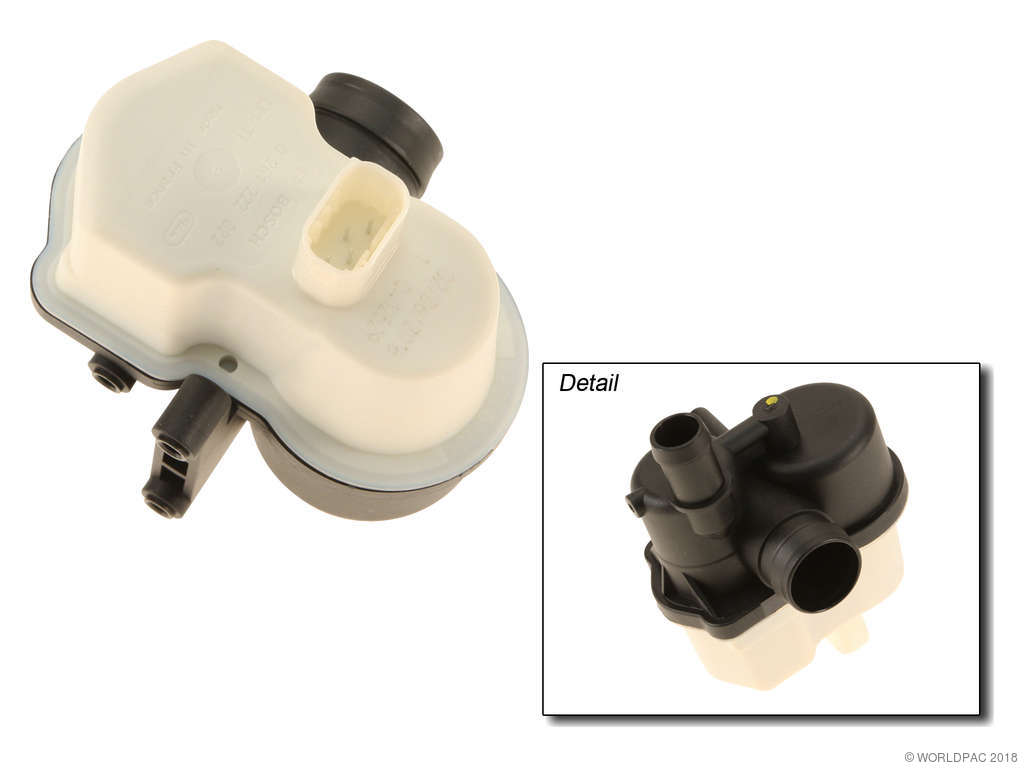
Est. part cost: $25-$60 - Faulty Purge Valve 🔴 High Probability → Shop Vapor Canister A manufacturer TSB (SSM71658) specifically identifies the purge valve as a potential cause for P0442 on 2013+ models with gasoline engines. Forum discussions confirm this is a common failure point across the 2013-2015 range, often causing a persistent leak that even a smoke test might miss if the valve is tested while closed. The valve can get stuck open or fail to seal completely, causing a constant small leak.
How to confirm: With the engine off, disconnect the purge valve and try to blow through it. It should be closed and not allow air to pass. A scan tool can also be used to command the valve open and closed to check its function. A common symptom of a stuck-open purge valve is difficulty starting the engine right after filling the gas tank.
Typical fix: Replace the purge valve.
Est. part cost: $200-$260 - Leaking Fuel Filler Neck 🔴 High Probability → Shop Fuel Filler Neck A manufacturer TSB (SSM72183) explicitly states that a new fuel filler neck design introduced in the 2015 model year for North American vehicles can cause P0442. Cracks can develop in the pipe, or the assembly can be damaged, leading to a leak. One owner reported a dealer quoting $1,500 for this repair after a related fuel system recall.
How to confirm: A visual inspection may reveal cracks, but the most definitive method is a smoke test. A technician will pump smoke into the EVAP system, and the smoke will visibly escape from the leak source. The leak is often found where the neck assembly connects to the body or the tank.
Typical fix: Replace the fuel filler neck assembly.
Est. part cost: $150-$350 - Cracked or Disconnected EVAP Hoses 🟡 Medium Probability Rubber and plastic hoses become brittle over time with exposure to heat and the elements, leading to small cracks. This is a common issue on all vehicles as they age.
How to confirm: Visually inspect all accessible EVAP lines running from the engine bay to the fuel tank. A smoke test is the most effective way to find a leak in a hose that is not easily visible.
Typical fix: Replace the damaged section of hose.
Est. part cost: $20-$100
Rare But Worth Checking
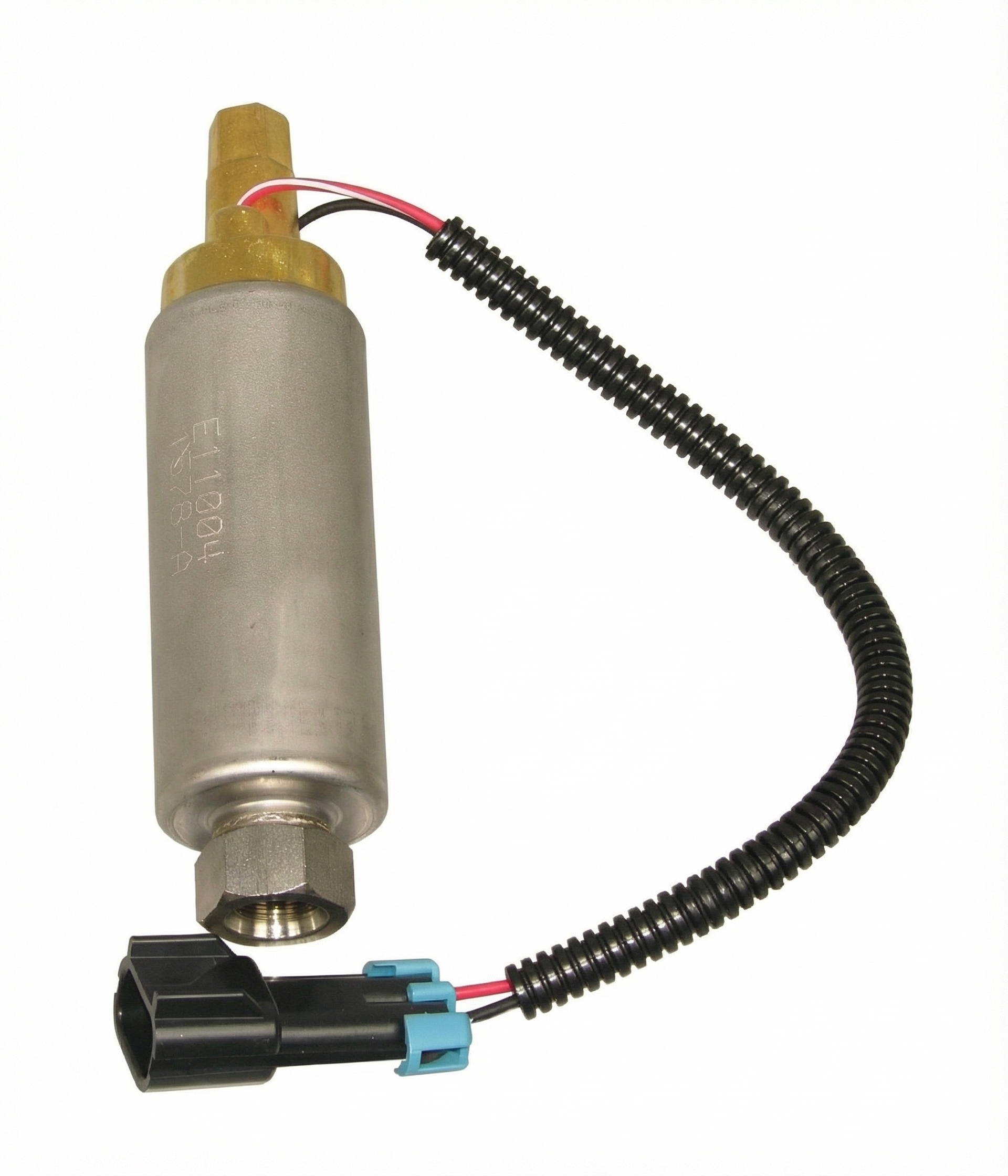
- Faulty Leak Detection Pump (DMTL): → Shop Evaporative Emissions System Leak Detection Pump The DMTL pump is what pressurizes the system to test for leaks. While it can fail, it's less common than the purge valve or filler neck. A forum user on landroverforums.com reported replacing this part without solving the P0442 code, which was later fixed by a new purge valve, highlighting it as a common misdiagnosis.
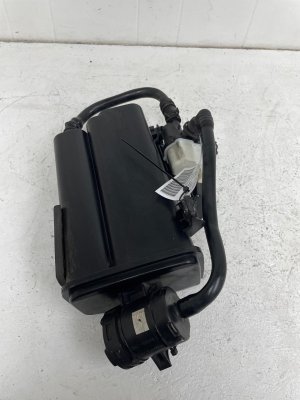
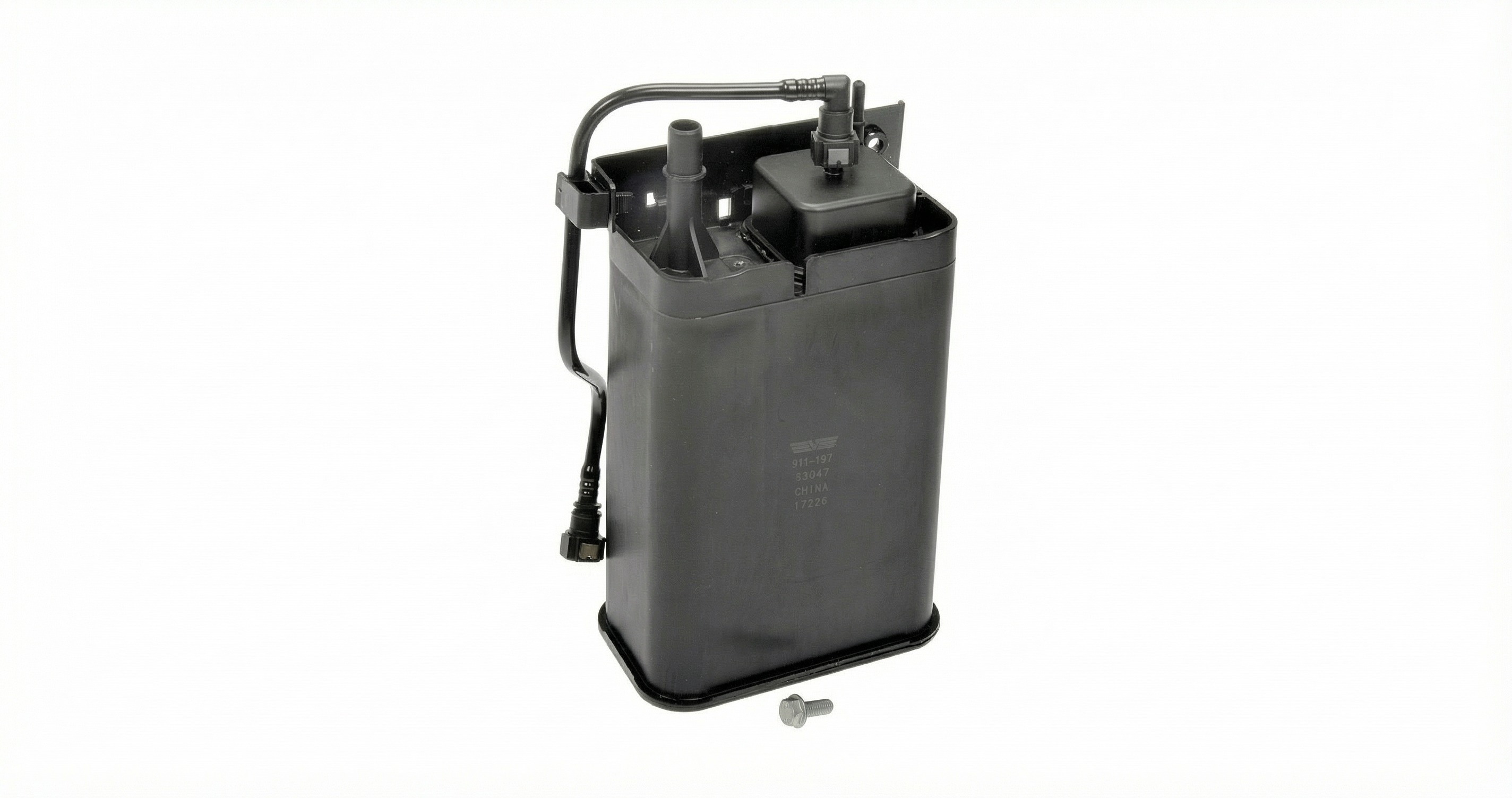
- Leaking Charcoal Canister: → Shop Vapor Canister The canister itself can develop cracks, or the seals where hoses connect can fail. This is usually found with a smoke test after other, more common causes have been ruled out. One Reddit user mentioned a hot pipe melting a hole in the canister tubing on their LR4.
Diagnosis Steps
- Check the gas cap. Remove it, inspect the seal for damage, and retighten it until it clicks several times. Clear the code and drive for a few days to see if it returns.
- If the light returns, perform a thorough visual inspection of all accessible EVAP hoses and lines in the engine bay and under the vehicle for obvious cracks or disconnections.
- Test the purge valve. It is located on the driver's side of the engine. Disconnect it and check if it's sealed when not powered by attempting to blow through it. If air passes through, it has failed and needs replacement. Also, consider if you've had trouble starting after refueling, as this points strongly to the purge valve.
- If the previous steps do not reveal the issue, the most effective next step is a professional smoke test. This test will fill the EVAP system with a harmless, visible smoke, making it easy to spot leaks from the fuel filler neck, charcoal canister, or hidden hoses. Ensure the test is performed correctly by sealing the system.
- Based on the smoke test results and vehicle-specific TSBs (SSM71658 for the purge valve, SSM72183 for the 2015 filler neck), replace the leaking or faulty component.
Parts You'll Likely Need
- Vapor Canister Purge Valve
(OEM #LR172648)— This is a very common failure point identified in TSB SSM71658 and confirmed by numerous owner experiences. It gets stuck, causing a persistent small leak and sometimes rough starts after refueling. The part number LR172648 supersedes the older number LR010749.
Trusted brands: Genuine Land Rover, Bosch, URO Parts
OEM price range: $200-$260
Aftermarket price range: $85-$150. - Fuel Filler Neck
(OEM #LR095804)— Specifically cited in TSB SSM72183 as a cause for P0442 on 2015 models due to a design change. It can crack and leak. This part number supersedes LR062455, LR087265, and LR093763.
Trusted brands: Genuine Land Rover
OEM price range: $250-$350.
Aftermarket price range: $150-$250 - Fuel Cap — A worn or loose gas cap is the simplest and most common cause of any EVAP leak code. It's always the first part to check.
Trusted brands: Genuine Land Rover, MotoRad
OEM price range: $40-$60
Aftermarket price range: $15-$30
Related Codes That Often Appear With This One
- P0456 — This code indicates a 'very small leak', which is closely related to the 'small leak' of P0442. They often point to the same set of failing components, like the purge valve, as noted in TSB SSM71658.
- P0496 — This code indicates 'EVAP System High Purge Flow'. If the purge valve is stuck open, it can cause both an incorrect high flow reading and a small leak, triggering both codes. TSB SSM71658 also lists this as a potential code related to a faulty purge valve.
Technical Service Bulletins (TSBs) & Recalls
- SSM72183: Mentions the fuel filler neck and cap design on 2015 models as a cause for EVAP leak codes like P0442.
- SSM71658: Suggests the purge valve as a potential concern for P0442 on 2013+ models with gasoline engines.
Platform-Specific Known Issues
- TSB SSM72183: For 2015 Range Rover (L405) and Range Rover Sport (L494) models in North America, Land Rover identified that a new fuel filler neck and cap design could lead to a P0442 code. The fix is replacing the fuel filler neck assembly.
- TSB SSM71658: For 2013+ Range Rover (L405) and Range Rover Sport (L494) with gasoline engines, this bulletin points to a faulty purge valve as a potential cause for P0442 and other related EVAP codes like P0456 (very small leak) and P0496 (high purge flow).
Mechanic-Grade Diagnostic Values
- Vapor Canister Purge Valve Solenoid Resistance — expected: 20-60 Ohms between the two pins on the valve.. Failure: A reading significantly outside this range, such as an open circuit (infinite resistance) or a short (near zero), indicates a failed solenoid coil.
- Purge Valve Connector Voltage (Key On) — expected: Battery voltage (approx. 12V) on one of the two pins in the harness connector.. Failure: No voltage indicates a problem in the power supply circuit, such as a blown fuse or broken wire.
Hidden / Shadow Codes Worth Checking
- P0442-00: This is a more detailed version of the P0442 code. The '-00' is a sub-type or status byte indicating 'No sub type information'. Its presence confirms the fault was logged by a more advanced diagnostic system. (see via JLR-specific diagnostic tools like SDD/Pathfinder or high-end aftermarket scanners (e.g., GAP IIDTool) can read these 7-digit codes. Generic OBD-II readers typically only show the 5-digit 'P0442'.)
Scan Tool Commands That Help
- JLR SDD / Pathfinder: Purge Valve Self Test — This routine, found in the manufacturer's diagnostic software, actively tests the purge valve's function and can help clean the valve or confirm its failure.
- JLR SDD / Pathfinder: Evaporative System Diagnostic Check — This is a comprehensive, guided diagnostic routine to systematically check the entire EVAP system for leaks or faults.
- Advanced OBD-II Scanner (with bidirectional control): EVAP Vent Valve/Solenoid Control — To perform a smoke test, the EVAP system must be sealed. This command allows the technician to manually close the vent valve (which is normally open), sealing the system so it can be filled with smoke to find leaks.
Wiring & Ground Locations
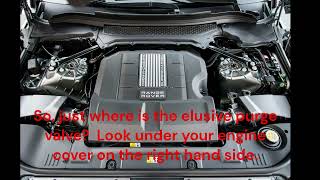
- Purge Valve Location — On both the 3.0L V6 and 5.0L V8 engines, the purge valve is notoriously difficult to access. It is located at the very back of the engine, near the firewall, on the right side (US passenger side), below the main engine harness connectors.. Technicians and DIYers often struggle to locate this valve. Knowing its precise location is critical for testing and replacement, which often requires lying over the top of the engine and working by feel.
- EVAP System Ground Points — Specific ground points (e.g., G2D233 in the left kick panel) are detailed in the official Land Rover L405 workshop manual. The exact ground used by the purge valve circuit must be referenced from the correct model year wiring diagram.. A corroded or loose ground connection for the EVAP system components can cause intermittent or false codes.
Real Owner Repair Stories
- rangerovers.net forum member (Range Rover L405 (year not specified, but same generation)) — P0442 code and associated check engine light.
❌ Tried (didn't work) Initial diagnosis at the dealer.
✅ What actually fixed it The dealer replaced both the PCV valve and the EVAP purge valve. The owner confirmed the final fix was the EVAP purge valve after a $1200 service visit. - landroverforums.com member (2012 LR4 (L319 chassis, but uses the same 5.0L engine and similar EVAP components)) — P0442 code, 'check gas cap' message, and difficulty starting immediately after refueling.
❌ Tried (didn't work) Replacing the gas cap, Replacing the DMTL pump, Performing a smoke test (no leaks found), Removing and resealing the gas tank
✅ What actually fixed it The user did not post the final resolution, but the combination of a passed smoke test and hard starting after refueling are classic symptoms of a faulty, internally leaking purge valve, which was the next logical step in their diagnosis.
"I Checked Everything" — The Actual Cause
- A standard smoke test may pass (show no leaks) even if the purge valve is faulty. This happens when the valve is not leaking externally but is failing to seal internally. When the engine is running, it creates a vacuum that pulls un-metered fuel vapor through the faulty valve into the intake manifold, which the ECU detects as a leak. The definitive test for this condition is to disconnect the purge valve electrically, start the engine, and check for any vacuum at the valve's inlet port (the side coming from the charcoal canister). If any vacuum is felt, the valve is leaking internally and must be replaced.
When the Usual Fixes Don't Work
- Owners should be wary of replacing multiple components before properly diagnosing the purge valve. In one documented case, an owner replaced the gas cap and DMTL pump, and a shop performed a smoke test and resealed the fuel tank, all without resolving the P0442 code. The subsequent symptom of hard starting after refueling strongly implicated the purge valve as the true culprit, demonstrating that the most common fixes are not always correct and can lead to expensive, unnecessary repairs.
OEM Part Supersession History
LR010749→LR172648— Updated design for improved reliability and performance. This is the most common part to fail for P0442 on these engines.
Heads up: The parts are interchangeable. Other equivalent part numbers include AJ811695.LR062455, LR087265, LR093763→LR095804— Design revision related to the issue identified in TSB SSM72183 for 2015 models.
Heads up: The official part description notes that the fuel filler neck assembly 'cannot be reused/reinstalled' once removed.
Model Year Variations Within This Range
- 2015 NAS Only: A new fuel filler neck and cap design was introduced, which was identified in TSB SSM72183 as a primary cause for P0442 codes on 2015 North American Specification (NAS) vehicles.
Helpful Videos
Used OEM Parts in Stock
New Aftermarket Parts Available


The information in this article is provided for general reference and educational purposes only. Vehicle specifications, procedures, and part compatibility can vary by production date, trim level, and region. Always consult your vehicle's factory service manual and verify part numbers before purchasing or performing repairs. Safety-critical components such as airbags, seat belts, and braking systems should be installed by a qualified professional.
- Land Rover RANGE ROVER:
- 🧭 Diagnostic Flowchart
- 🎬 Helpful Videos
- 🛍️ Shop This Part
- What's Unique About the 2013-2015 Land Rover RANGE ROVER
- Symptoms You May Notice
- Most Likely Causes
- Rare But Worth Checking
- Diagnosis Steps
- Parts You'll Likely Need
- Related Codes That Often Appear With This One
- Technical Service Bulletins (TSBs) & Recalls
- Platform-Specific Known Issues
- Mechanic-Grade Diagnostic Values
- Hidden / Shadow Codes Worth Checking
- Scan Tool Commands That Help
- Wiring & Ground Locations
- Real Owner Repair Stories
- "I Checked Everything" — The Actual Cause
- When the Usual Fixes Don't Work
- OEM Part Supersession History
- Model Year Variations Within This Range
- 🎟️ Get 5% Off