

P0442 on 2003-2009 Mercedes-Benz E-Class: EVAP Small Leak Causes and Fixes
For a 2003-2009 E-Class, the P0442 code is most often caused by a worn-out gas cap seal. A new OEM-quality cap is an inexpensive first step, costing around $20-$40. If that doesn't work, the next likely culprits are the charcoal canister shut-off valve O-ring or the purge valve. A smoke test is the most effective way to pinpoint the exact source of the leak.
- Always start with the simplest fix: check that your gas cap is tight. If the Check Engine Light returns, replace the gas cap with a quality part.
- If a new gas cap doesn't solve the issue, the next most likely causes are a faulty EVAP purge valve or a deteriorated O-ring on the charcoal canister shut-off valve.
- A professional smoke test is the fastest and most accurate way to find the leak without guessing or replacing unnecessary parts.
- This code does not indicate a serious mechanical problem, and the vehicle is safe to drive, but you will not pass an emissions inspection until it is resolved.
What's Unique About the 2003-2009 Mercedes-Benz E-Class
On the W211 generation E-Class, while the common causes like the gas cap are still prevalent, owners frequently report issues with specific rubber components that are prone to drying out and cracking. This includes the O-ring on the charcoal canister shut-off valve and the EVAP purge valve itself. Additionally, Mercedes-Benz extended the warranty to 15 years for certain fuel tank components on these models due to leak issues, which can sometimes be related to EVAP codes. The charcoal canister shut-off valve is a particularly well-documented failure point in owner forums.
Generation note: The 2003-2009 model years cover the entire W211 generation of the Mercedes-Benz E-Class. The causes and fixes are generally consistent across this generation.
Symptoms You May Notice
- Check Engine Light is on.
- A faint smell of fuel, particularly around the rear of the car or after refueling.
- Loss of the 'whoosh' sound when opening the gas cap, indicating the system is not holding pressure.
- Difficulty starting the car after refueling, which can point to a stuck-open purge valve flooding the engine with vapors.
- Replacing the charcoal canister when only the shut-off valve O-ring is bad. The O-ring is a very cheap part, while the canister is much more expensive.
- Replacing parts without performing a smoke test. A smoke test is the most definitive way to locate the source of a small leak and avoid replacing unnecessary components. 🎬 Watch: A helpful overview of P0442 causes and common fixes.
Most Likely Causes
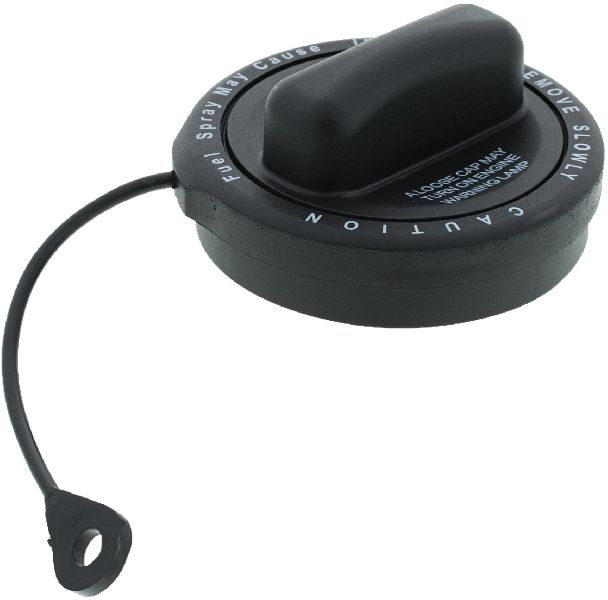
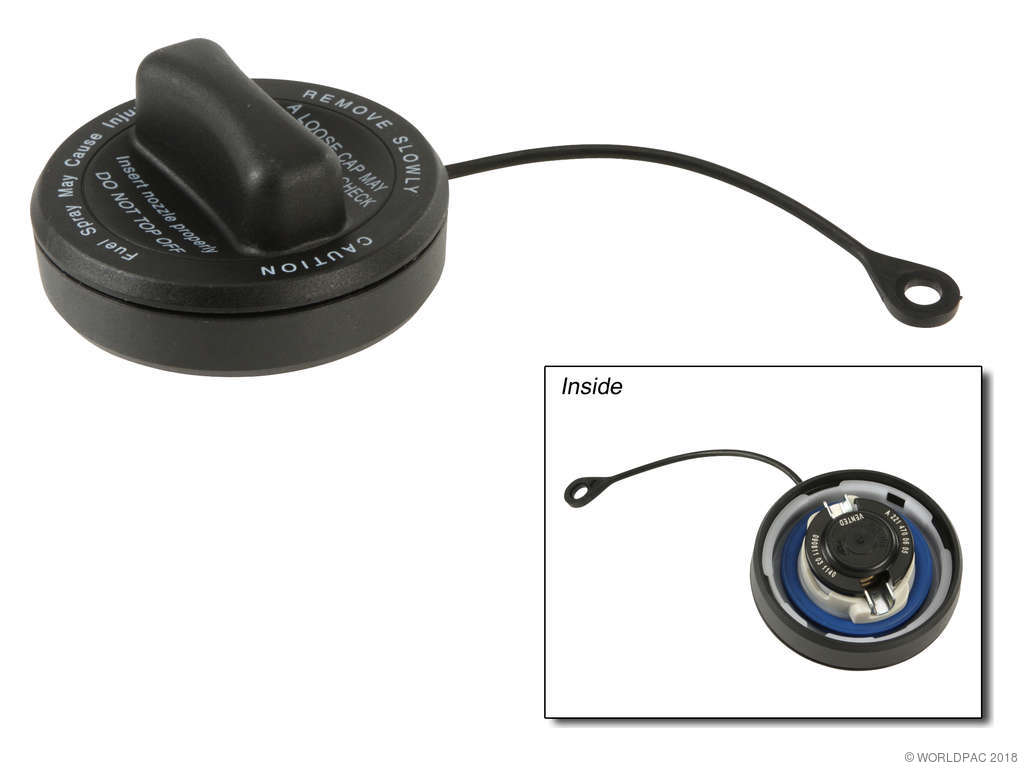
- Loose or Faulty Gas Cap 🔴 High Probability → Shop Fuel Tank Cap The rubber gasket on the gas cap is a common failure point on all vehicles. It can dry out, crack, or become hard over time, preventing a proper seal. This is the most common cause for a P0442 code.
How to confirm: First, ensure the cap is tightened until it clicks. Inspect the rubber O-ring on the cap for any visible cracks, stiffness, or damage. If the seal looks worn, it's best to replace it.
Typical fix: Replace the gas cap. It is highly recommended to use an OEM or high-quality OEM-equivalent part, as some aftermarket caps may not seal correctly. An OEM part number is A2214700705.
Est. part cost: $20-$40 - Faulty Charcoal Canister Shut-Off Valve or O-Ring 🟡 Medium Probability → Shop Vapor Canister Forum users on MBWorld have specifically identified the O-ring on the shut-off valve (located on the charcoal canister) as a common failure point that deteriorates and causes a small leak. In some cases, the valve itself fails.
How to confirm: This usually requires a smoke test to pinpoint the leak at the canister. A technician can introduce smoke into the EVAP system and watch for it to exit from the valve area. Visually inspecting the O-ring after removing the valve may also reveal cracks or damage. A DIY test involves removing the valve and applying vacuum to see if it holds.
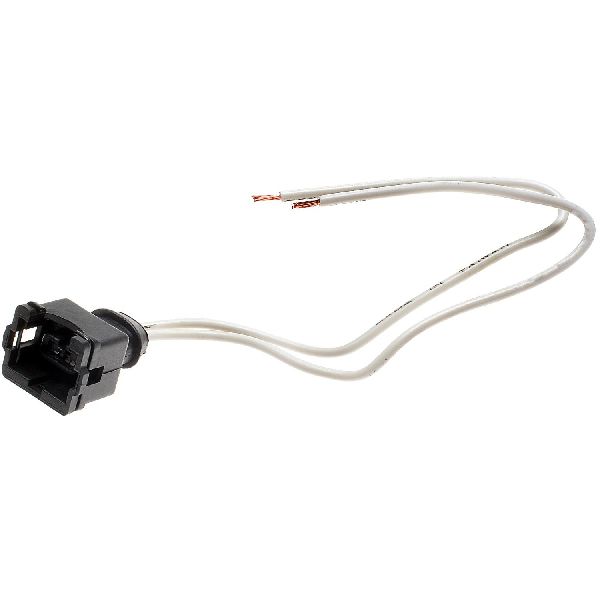
Typical fix: The charcoal canister is located in the rear passenger-side wheel well. The shut-off valve can be removed from the canister by twisting it. The small rubber O-ring can be replaced. If the valve is faulty, it will need replacement. Some aftermarket valves may require a pigtail harness adapter (Part No. A2114400334). 🎬 Watch: How to fix the W211 charcoal canister shut-off valve.
Est. part cost: $5-$15 for the O-ring, $40-$80 for the valve. - Faulty EVAP Purge Valve 🟡 Medium Probability → Shop Vapor Canister The purge valve (or purge solenoid) can get stuck slightly open, creating a small, constant leak. This is a common failure item across many Mercedes-Benz models.
How to confirm: With the engine off, the valve should be closed. You can test this by removing the valve and trying to blow through it; if air passes, it's faulty. A vacuum pump can also be used to see if it holds vacuum. A symptom of a stuck-open purge valve is difficulty starting after refueling.
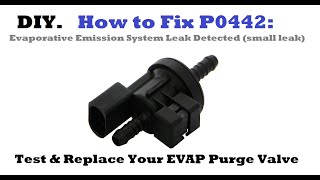
Typical fix: The purge valve is typically located in the engine bay, behind the driver's side headlight. It is replaced by disconnecting the electrical connector and two hoses, then swapping in the new unit. Bosch is the OEM supplier 🎬 See this walkthrough on testing and replacing the purge valve. for this part.
Est. part cost: $50-$100 - Cracked or Disconnected EVAP Hoses ⚪ Low Probability Rubber and plastic hoses become brittle with age and exposure to heat cycles, leading to small cracks.
How to confirm: A visual inspection may reveal obvious cracks, especially at connection points. However, the most effective method is a smoke test, which will make even tiny leaks visible.
Typical fix: Replace the specific section of cracked hose. In some cases, a broken clamp may be the issue.
Est. part cost: $10-$50
Rare But Worth Checking
- Leaking Fuel Filler Neck: → Shop Fuel Filler Neck Rust or corrosion around the area where the gas cap seals can create an imperfect surface, causing a small leak. This is more common in regions that use road salt. Some owners have had to replace the entire filler neck to resolve the issue.
- Cracked Charcoal Canister: → Shop Vapor Canister While the canister itself is durable, physical damage from road debris can cause it to crack and leak.
- Leaking Fuel Tank/Sender Gasket: → Shop Fuel Tank Mercedes-Benz issued a warranty extension for fuel tank components on the 2003-2009 E-Class for fuel leaks and smells, which can sometimes manifest as an EVAP code. This covers the fuel tank, filter/sender, pump, and gaskets for 15 years with unlimited mileage.
Diagnosis Steps
- Read the code with an OBD-II scanner to confirm P0442 is present.
- Inspect the gas cap. Ensure it is tight (clicks multiple times). Remove it and check the rubber seal for any cracks, hardening, or damage. If in doubt, replace it with an OEM part.
- Clear the code and drive the vehicle for a few days to see if the light returns. Many EVAP monitors require specific drive cycle conditions to run their test.
- If the light returns, perform a visual inspection of all accessible EVAP hoses in the engine bay and around the charcoal canister (located in the rear passenger wheel well area) for obvious cracks or loose connections.
- If no visual faults are found, the most effective next step is to have the system professionally smoke tested. This involves injecting a harmless, visible smoke into the EVAP system to quickly and accurately locate the source of the leak.
- Based on the smoke test, inspect the most likely culprits: the purge valve, the charcoal canister shut-off valve O-ring, and the fuel filler neck.
- Test the purge valve for proper operation by checking if it's sealed when de-energized. A stuck-open valve will often cause long cranks after refueling.
Parts You'll Likely Need
- Fuel Filler Cap (Gas Cap)
(OEM #A2214700705)— This is the most common and easiest fix. The rubber seal wears out over time, causing a leak.
Trusted brands: Mercedes-Benz (OEM), Blau, CRP
OEM price range: $30-$40
Aftermarket price range: $15-$25 - EVAP System Purge Valve
(OEM #0004708893 (Bosch P/N: 0280142431))— A common failure where the valve sticks partially open, creating a small leak.
Trusted brands: Bosch (OEM), Pierburg
OEM price range: $70-$100
Aftermarket price range: $40-$70 - Charcoal Canister Shut-Off Valve O-Ring
(OEM #A0199970248)— A specific, well-documented failure point on this platform where the small O-ring deteriorates, causing a leak at the canister.
Trusted brands: Mercedes-Benz (OEM)
OEM price range: $5-$15
Aftermarket price range: $2-$8
Related Codes That Often Appear With This One
- P0456 — P0456 indicates a 'very small leak,' while P0442 indicates a 'small leak.' They point to the same type of problem, just differing in the leak size detected by the ECU. Sometimes a leak can be on the borderline between the two thresholds.
- P0455 — This code indicates a 'gross leak,' such as the gas cap being left off entirely. If a component fails catastrophically (like a hose completely disconnecting), you might see this code instead of or along with P0442.
Technical Service Bulletins (TSBs) & Recalls
- LI47.20-P-060921: While not for P0442 specifically, this TSB addresses fuel odor from the fuel filter/sender unit, which is covered under the 15-year warranty extension and could be a related leak source.
Platform-Specific Known Issues
- Mercedes-Benz extended the warranty on fuel tank components to 15 years/unlimited mileage for 2003-2009 E-Class models due to issues with fuel leaks and odors from the top of the tank. This covers the fuel tank, fuel filter/sender, fuel pump, and related gaskets. While not always triggering a P0442, a leak in this area could be related and should be checked by a dealer if a fuel smell is present.
Mechanic-Grade Diagnostic Values
- EVAP Purge Valve (Y58/1) or Shut-Off Valve (Y58/4) Coil Resistance — expected: 20-30 Ohms. Failure: A reading significantly outside this range, or an open/short circuit (OL/0 Ohms), indicates a faulty solenoid coil.
- Voltage at EVAP Shut-Off Valve (Y58/4) Connector — expected: Approximately 12V (battery voltage) with the ignition on.. Failure: No voltage suggests a wiring issue, blown fuse, or problem with the supplying control module (SAM).
Hidden / Shadow Codes Worth Checking
- Y58/4 (Activated charcoal canister shut-off valve): This is not a P-code, but a component identifier used in Mercedes-Benz diagnostic software (XENTRY/DAS). A fault report might read 'Y58/4... mechanical defect' or similar, pointing directly to the shut-off valve, rather than just a generic leak code. (see via Mercedes-Benz STAR/XENTRY/DAS diagnostic system or a high-end professional scanner with Mercedes-specific software (e.g., Autel).)
Scan Tool Commands That Help
- Mercedes-Benz XENTRY/STAR Diagnosis: Actuation of component Y58/4 (Charcoal canister shut-off valve) — This command is used to manually close the vent valve to seal the EVAP system for a smoke test. It confirms if the valve is responding to commands and is essential for accurate leak testing.
- Mercedes-Benz XENTRY/STAR Diagnosis: Actuation of component Y58/1 (Purge control valve) — Allows the technician to cycle the purge valve on and off to listen for the characteristic 'click', confirming the solenoid is mechanically functioning. It can also be used to check if the valve is sealing properly when commanded closed.
- Mercedes-Benz XENTRY/STAR Diagnosis: Fuel tank leak test — This is an automated test that seals the system and uses the fuel tank pressure sensor to measure pressure decay over time. It provides a quantitative measurement (e.g., hPa loss over 120 seconds) to determine if a leak exists and its approximate size, which can be more precise than a smoke test for very small leaks.
Wiring & Ground Locations
- W7 — Right wheelhouse / trunk area.. This is a primary ground point for components located in the rear of the vehicle. The charcoal canister and shut-off valve (Y58/4) are in the right-rear wheel well, and a poor ground at W7 could potentially cause erratic operation of the valve, although this is uncommon.
- Purge Valve (Y58/1) Location — In the engine bay, typically located directly behind the driver's side (left-hand drive) headlight assembly.. Knowing the physical location is critical for testing and replacement. The rubber hoses connected to it are also known to degrade over time and may require new clamps.
- Shut-Off Valve (Y58/4) Location — Mounted directly on the charcoal canister, which is located behind the fender liner of the rear passenger-side (right-hand drive) wheel well.. This is a primary suspect for P0442. Access requires removing the rear wheel and fender liner.
Real Owner Repair Stories
- DCF Garage on YouTube (2003 Mercedes-Benz E320 (W211)) — Check Engine Light with a Mercedes-specific code for 'Y58-4 activated charcoal canister shut off valve mechanical defect'.
❌ Tried (didn't work) The owner tested the purge valve in the engine bay and confirmed it was pulsing/clicking, suggesting it was working correctly.
✅ What actually fixed it Replacing the charcoal canister shut-off valve (Y58/4) located in the rear passenger wheel well. The owner used a non-OEM valve which required a pigtail harness adapter (Part No. A2114400334). After replacing the valve and running an actuation test with a scan tool, the code was cleared and did not return. - MBWorld.org Forum Thread (Mercedes C240 (W203, but same EVAP components)) — P0442 code, no 'whoosh' sound when opening gas cap.
❌ Tried (didn't work) Cleaning the gas cap seal., Replacing the gas cap with a new one.
✅ What actually fixed it The issue was traced via smoke test to a cracked O-ring on the charcoal canister shut-off valve. The user replaced only the small O-ring (updated part number cited in thread) to fix the leak and resolve the code.
"I Checked Everything" — The Actual Cause
- A smoke test may not reveal a leak if the technician fails to properly command the canister vent/shut-off valve (Y58/4) closed using a scan tool. If the valve remains in its normally open state, smoke will simply exit through the vent, appearing as if there is a massive leak or preventing the system from pressurizing enough to show smaller leaks elsewhere.
- Some capless fuel filler neck designs (not standard on the W211 but a general diagnostic trap) have an internal check valve. If a smoke test is performed from the engine bay service port, this valve can prevent smoke from reaching the filler neck and gas cap area, leading to a missed diagnosis of a bad cap or filler neck seal. The best practice is to verify smoke is present at the filler neck opening during the test.
OEM Part Supersession History
000-470-15-93, 000-470-20-93, 000-470-35-93→000-470-88-93— Standard part evolution and consolidation for the EVAP Purge Valve.
Heads up: The newest part number, 000-470-88-93, is the correct service replacement for a wide range of models including the W211 E-Class and is backward compatible.
Model Year Variations Within This Range
- 2003-2009: While the EVAP system function is consistent, the W211 generation used different engines, primarily the M112/M113 V6/V8 (pre-facelift, ~2003-2006) and the M272/M273 V6/V8 (facelift, ~2007-2009). While the core EVAP components like the purge valve and shut-off valve are functionally identical and often share part numbers, their exact position and the routing of vacuum lines in the engine bay may have slight variations. However, the diagnostic approach for P0442 remains the same.
Diagnostic Flowchart
Other Known Issues on This Vehicle
Issues unrelated to this code that are worth knowing about as an owner of this generation:
- M272/M273 Engine Balance Shaft/Idler Gear Wear 🔴 High — Affects early production V6 (M272) and V8 (M273) engines, typically from 2004-2008. Failure can occur between 60k-100k miles. Repair is very expensive as it requires engine removal. (Ref: Subject of a class-action lawsuit and internal service bulletins, but no formal recall.)
- Sensotronic Brake Control (SBC) Pump Failure 🔴 High — The SBC pump has a pre-programmed service life based on brake actuations. Failure results in a red 'Visit Workshop' warning and reduced braking power. Affects 2003-2006 models. (Ref: Mercedes extended the warranty on the SBC unit to 25 years, unlimited mileage.)
- Airmatic Suspension Leaks and Failures 🟠 Medium — Common failure points include leaking air springs (especially rear), failing compressors, and valve blocks. Symptoms include a sagging corner of the car overnight or a 'Visit Workshop' message. Failures often occur around 100k-125k miles.
- Valeo Radiator Glycol Contamination 🔴 High — Affects early models (approx. 2003-2004) equipped with Valeo radiators. A faulty seal allows engine coolant (glycol) to mix with the automatic transmission fluid, destroying the transmission. Symptoms include shuddering and jerky shifts.
- Fuel Tank/Sender Unit Leaks 🟠 Medium → Shop Fuel Tank — Cracks can develop on the top of the fuel tank or at the sender unit seals, causing a strong fuel smell, especially after filling the tank. (Ref: Mercedes extended the warranty to 15 years/unlimited mileage to cover this repair.)
Used vs. New Parts: Buying Guide for This Vehicle
When a used part is the smart pick: For this repair, a used charcoal canister is a very sensible choice. The canister itself is a simple, non-moving part that rarely fails unless physically cracked. A used unit from a low-mileage, non-accident donor car can save significant money over a new one.
Donor-vehicle mileage cap: roughly under 100000 miles for the part to have meaningful remaining life.
What to inspect on the donor part:
- For a charcoal canister: Inspect for any cracks, broken hose nipples, or signs of physical impact.
- For any valve or sensor: Ask for the donor vehicle's mileage. Avoid parts from very high-mileage cars as the internal seals and solenoids have a finite life.
- Ensure electrical connectors are not cracked, corroded, or broken.
OEM-only on this vehicle (don't cheap out):
- Gas Cap: While aftermarket is available, the seal quality is critical. Many forum users report chasing leaks for weeks only to find their new aftermarket cap was the problem. An OEM or OEM-supplier (like Blau) cap is strongly recommended to ensure a perfect seal.
Aftermarket brands forum-validated for this vehicle:
- Bosch: Bosch is the Original Equipment Manufacturer (OEM) for the purge valve. Buying a Bosch-branded part is equivalent to getting the dealer part without the Mercedes-Benz box.
- Pierburg: A well-regarded OEM supplier for many European vehicle components, including fuel and emissions parts.
Brands owners have reported issues with on this vehicle:
- Unbranded / 'White-box' parts: While tempting due to low cost, unbranded solenoids and valves from online marketplaces often have high failure rates, incorrect electrical resistance, or use materials that degrade quickly, leading to the code returning.
Real Owner Stories
Aggregated from forums and TSBs cited above. Mileages and costs reflect what owners reported in those sources.
2007 Mercedes-Benz E350
Symptoms: Small EVAP leak detected; owner began diagnostic process starting with the gas cap.
What fixed it: Diagnostic process documented starting with gas cap inspection and moving through the EVAP system.
Source hint: MBWorld.org thread titled '2007 E350-P0442 Small EVAP Leak'
Mercedes-Benz C-Class W203 (Platform Mate)
Symptoms: Check Engine Light with code P0442.
What fixed it: Replacement of a faulty charcoal canister shut-off valve O-ring.
Cost: $5-$15
Source hint: MBWorld.org thread titled 'Check Engine Light Code P0442'
Related OBD-II Codes
Frequently Asked Questions
Is the fuel smell in my 2005 E-Class covered under a special warranty?
I have a P0442 and difficulty starting my E350 after getting gas. What is the likely cause?
Where is the charcoal canister shut-off valve located on the W211 E-Class?
Does TSB LI47.20-P-060921 apply to my P0442 code?
Can I use any gas cap to fix a P0442 on my Mercedes?
Do I need a special adapter for a new shut-off valve?
Helpful Videos
We Have This Part in Stock


The information in this article is provided for general reference and educational purposes only. Vehicle specifications, procedures, and part compatibility can vary by production date, trim level, and region. Always consult your vehicle's factory service manual and verify part numbers before purchasing or performing repairs. Safety-critical components such as airbags, seat belts, and braking systems should be installed by a qualified professional.
- Mercedes-Benz E-Class:
- 🧭 Diagnostic Flowchart
- 🎬 Helpful Videos
- 🛍️ Shop This Part
- What's Unique About the 2003-2009 Mercedes-Benz E-Class
- Symptoms You May Notice
- Most Likely Causes
- Rare But Worth Checking
- Diagnosis Steps
- Parts You'll Likely Need
- Related Codes That Often Appear With This One
- Technical Service Bulletins (TSBs) & Recalls
- Platform-Specific Known Issues
- Mechanic-Grade Diagnostic Values
- Hidden / Shadow Codes Worth Checking
- Scan Tool Commands That Help
- Wiring & Ground Locations
- Real Owner Repair Stories
- "I Checked Everything" — The Actual Cause
- OEM Part Supersession History
- Model Year Variations Within This Range
- Other Known Issues on This Vehicle
- Used vs. New Parts: Buying Guide for This Vehicle
- Real Owner Stories
- 2007 Mercedes-Benz E350
- Mercedes-Benz C-Class W203 (Platform Mate)
- Related OBD-II Codes
- Frequently Asked Questions
- 🎟️ Get 5% Off