

P0442 on 2012-2015 Mercedes-Benz ML-Class: Causes and Fixes for a Small EVAP Leak
For a 2012-2015 ML-Class, code P0442 is most often caused by a worn or loose gas cap. If a new OEM gas cap (~$40-$60) doesn't fix it, the next most likely culprit is the vapor canister purge valve located in the engine bay. Many owners report solving the code simply by re-tightening the cap until it clicks multiple times.
- Start with the simplest fix: check that your gas cap is tight. If the light returns, buy a new OEM gas cap.
- If a new gas cap doesn't solve the issue, the vapor canister purge valve in the engine bay is the next most likely culprit and is a relatively easy and inexpensive part to replace.
- This code does not affect drivability and is safe to drive with, but it will cause an automatic failure on an emissions test.
- Avoid replacing more expensive parts like the charcoal canister until the gas cap and purge valve have been definitively ruled out.
What's Unique About the 2012-2015 Mercedes-Benz ML-Class
On the W166 ML-Class, the diagnostic path for P0442 is fairly standard, with no major platform-specific deviations. However, owner experiences on forums like MBWorld.org frequently point to two main components in a specific order: the gas cap and the engine-bay-mounted purge valve. While other EVAP components can fail, these two parts represent the vast majority of fixes for this code on this particular vehicle, making diagnosis more straightforward than on some other platforms.
Symptoms You May Notice
- Check Engine Light is illuminated.
- A faint fuel odor may be noticeable. If the purge valve in the engine bay is leaking, the smell might be present at the front of the vehicle and could be drawn into the cabin through the fresh air intake, especially when stopped with the A/C on. If the leak is at the rear (e.g., charcoal canister or fuel tank seals), the odor will be more apparent around the back of the car.
- Replacing the charcoal canister before confirming the gas cap and purge valve are functioning correctly. The canister is more expensive, harder to access, and less likely to be the cause of a small leak code.
- Immediately assuming a complex leak exists before properly checking that the gas cap was tightened sufficiently.
Most Likely Causes
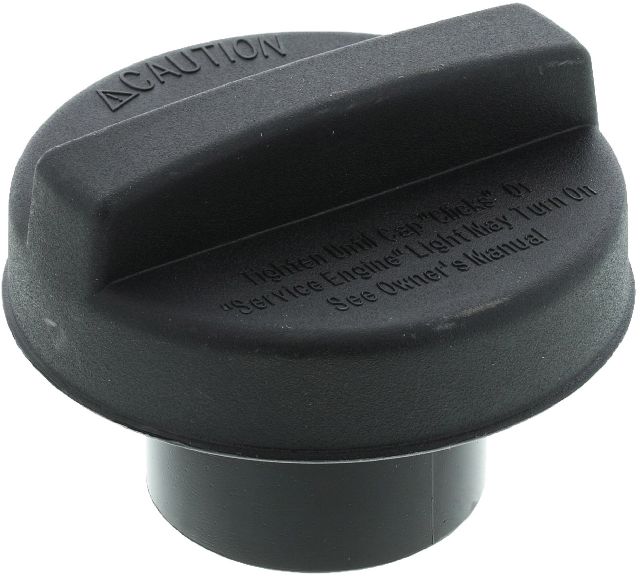
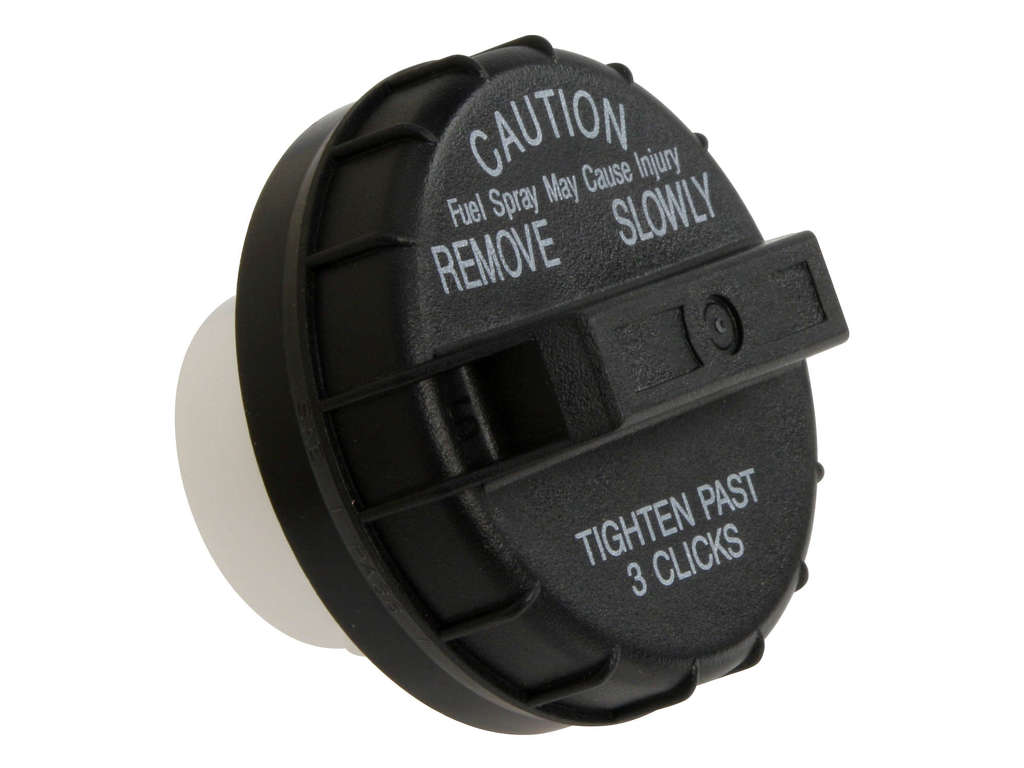
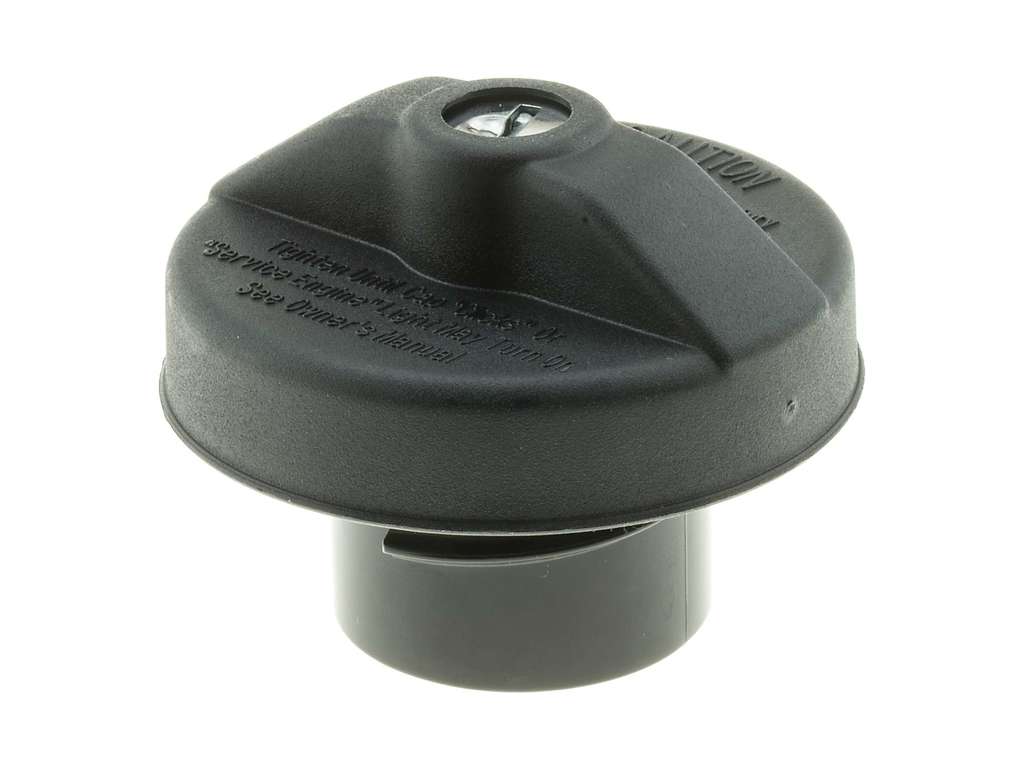
- Loose, Worn, or Incorrect Gas Cap 🔴 High Probability → Shop Fuel Tank Cap The gas cap seal is a simple rubber O-ring that degrades over time with exposure to fuel vapors and weather, losing its ability to create a perfect seal. This is the most common cause for a P0442 code.
How to confirm: First, ensure the cap is tightened until it clicks several times; some owners have resolved the code simply by discovering it was loose. Inspect the rubber O-ring on the cap for cracks, brittleness, or flattening. An aftermarket cap that doesn't meet OEM specifications is a frequent cause of this code.
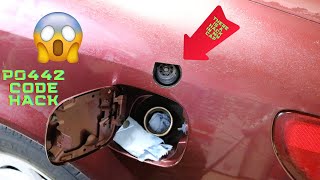
Typical fix: Replace the gas cap with a new, OEM (Original Equipment Manufacturer) part. 🎬 Watch: A step-by-step guide to fixing the code with a gas cap. After replacement, the code may need to be cleared with a scan tool, or it may clear on its own after several drive cycles once the onboard diagnostic monitor runs and passes.
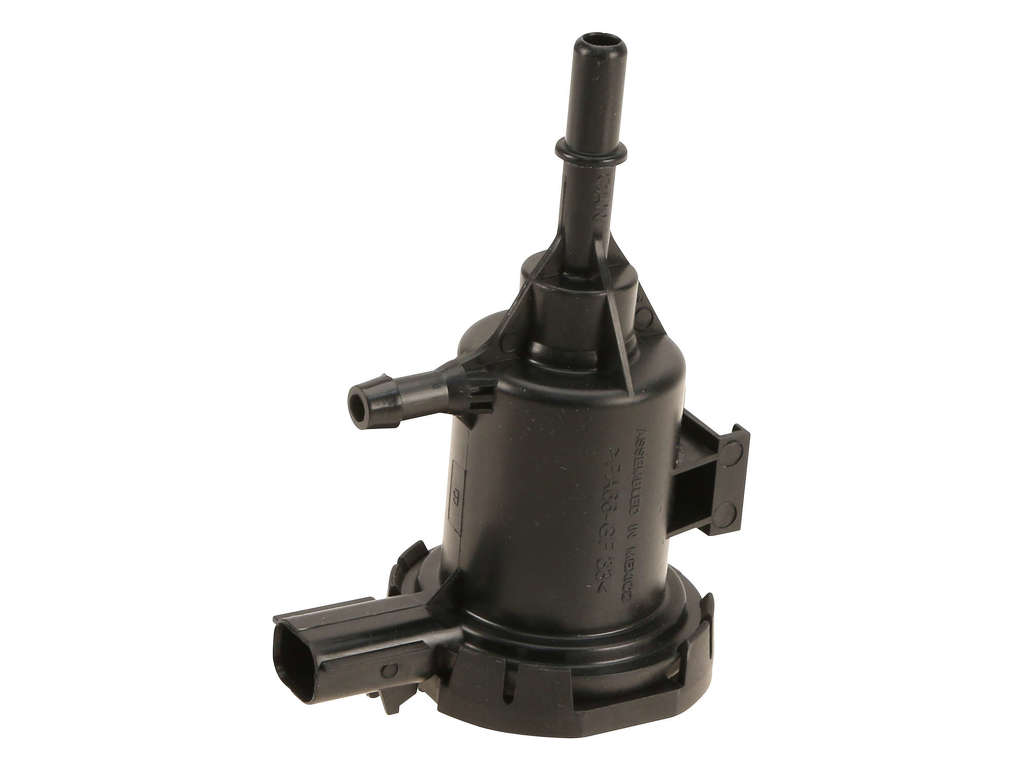
Est. part cost: $40-$60 - Faulty Vapor Canister Purge Valve 🟡 Medium Probability → Shop Vapor Canister This electromechanical valve, located in the engine bay, cycles frequently as it purges fuel vapors into the intake manifold. Over time, it can fail by getting stuck partially open, creating a small, constant leak in the EVAP system.
How to confirm: The purge valve is located on the driver's side of the engine bay, near the coolant expansion tank. A common symptom of it leaking is a fuel odor near the front of the vehicle. A simple DIY check is to remove the valve (when the engine is off and cool) and try to blow through it; when unpowered, it should be completely sealed and allow no air to pass. A mechanic can also command it open and closed with a scan tool while monitoring system pressure.
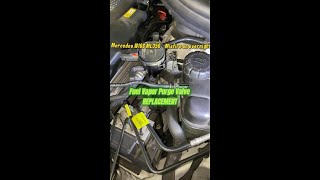
Typical fix: Replace the vapor canister purge valve. This is a straightforward replacement involving disconnecting one electrical connector and two hoses. 🎬 See this walkthrough for replacing the purge valve on a W166.
Est. part cost: $50-$90 - Cracked or Disconnected EVAP Hoses ⚪ Low Probability Rubber and plastic hoses, particularly the connections at the purge valve in the hot engine bay or lines running to the charcoal canister, can become brittle and crack over time. One forum user found a breather line had worn through from rubbing against a bracket.
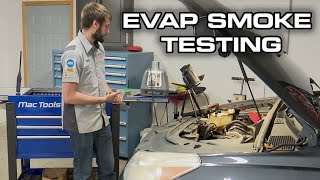
How to confirm: Visually inspect all accessible EVAP lines, starting with the ones connected to the purge valve. Look for any obvious cracks, perishing rubber, or loose connections. A professional smoke test is the definitive way to find a leak in a hose that isn't easily visible. This involves injecting pressurized smoke into the EVAP system and looking for where it escapes. 🎬 Watch: How to perform a professional EVAP smoke test for leaks.
Typical fix: Replace the damaged section of hose or the entire hose assembly. Ensure connections are secure with clamps.
Est. part cost: $15-$50
Rare But Worth Checking
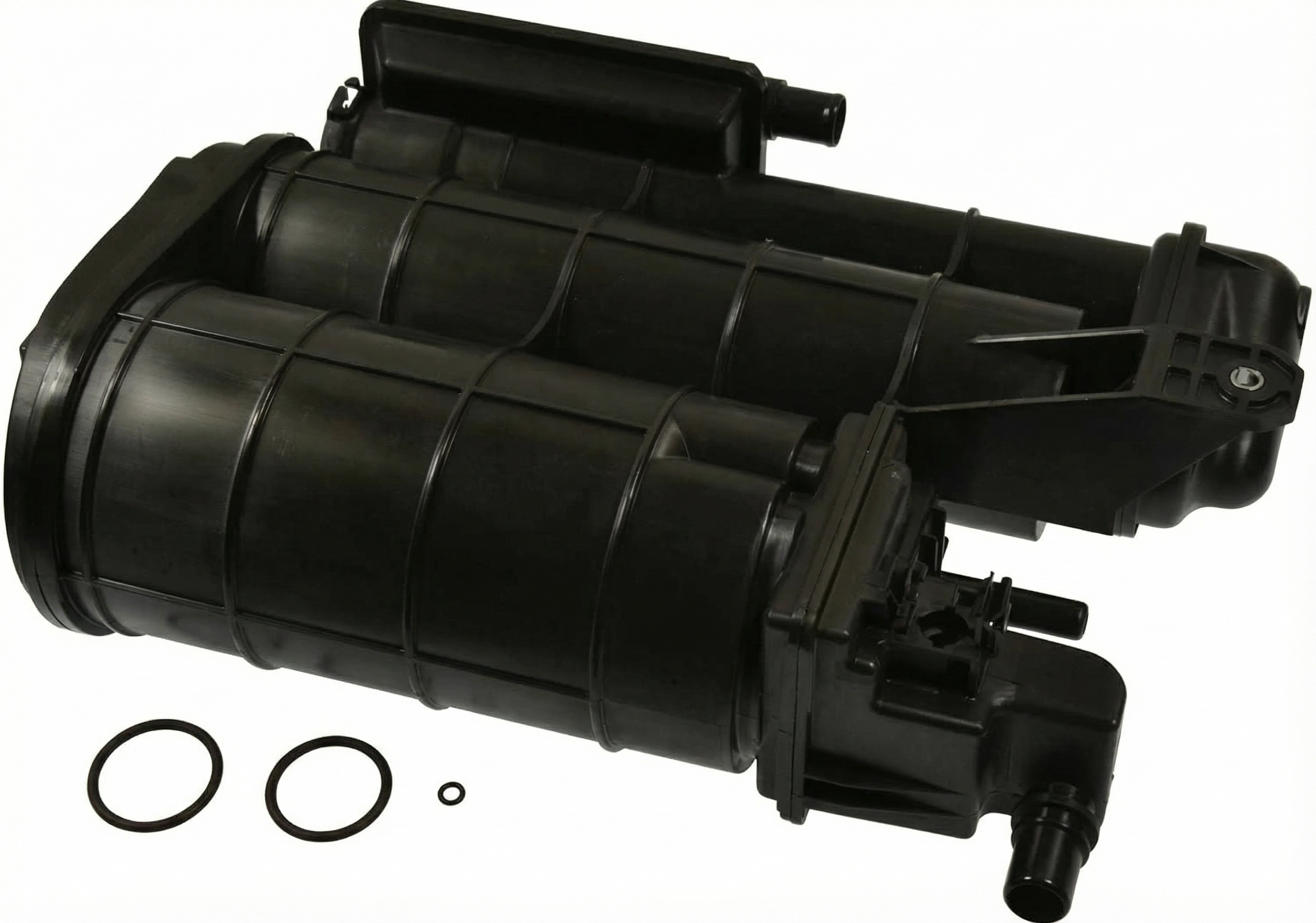
- Faulty Charcoal Canister or Vent Valve: → Shop Vapor Canister The charcoal canister, located in the right-rear wheel well area, can develop cracks, or its associated vent valve can fail. This is less common for a P0442 small leak code and is more often associated with larger leak codes (P0455) or vent circuit codes. However, it is still a possibility if the other causes have been ruled out. In some cases, the charcoal media can break down and contaminate the system, requiring replacement of the canister and purge valve.
Diagnosis Steps
- Read the code with an OBD-II scanner to confirm P0442 is present. Note if P0456 is also present.
- Inspect the gas cap. Remove it, check the seal for damage, and clean the sealing surface on the filler neck. Reinstall it and ensure it clicks at least three times.
- Clear the code with a scanner. Drive the vehicle for several days to allow the EVAP monitor to run. If the code does not return, the issue was a loose cap.
- If the code returns, replace the gas cap with a new OEM part. Do not use a cheap aftermarket cap. Clear the code and drive again.
- If the code persists, locate the purge valve in the engine bay (driver's side, near coolant tank). Visually inspect the valve and its connected rubber hoses for cracks or loose fittings. A fuel smell in this area is a strong indicator of a leaking valve.
- Test the purge valve. With the engine off, disconnect the valve and try to blow through it. If air passes, it has failed and needs replacement.
- If the gas cap and purge valve are confirmed to be good, the next step is a professional smoke test. This involves injecting pressurized smoke into the EVAP system to definitively find the source of the leak, which could be a cracked hose, a faulty charcoal canister, or a bad vent valve.
Parts You'll Likely Need
- Fuel Tank Cap
(OEM #1664706000)— This is the most common failure point. The rubber seal degrades over time, causing a small leak that the system detects. An owner on MBWorld.org fixed their P0442/P0456 codes just by cleaning the original cap's gasket and filler neck.
Trusted brands: Genuine Mercedes-Benz
OEM price range: $40-$60
Aftermarket price range: $15-$30 - Vapor Canister Purge Valve
(OEM #0014760532)— The second most common failure. It gets stuck slightly open, causing a persistent small leak. An owner on MBWorld confirmed this part number for a 2015 ML350. Part may have been superseded from 000-476-06-00.
Trusted brands: Bosch (OEM supplier, part number 0 280 142 431), Genuine Mercedes-Benz
OEM price range: $70-$110
Aftermarket price range: $40-$70 - Charcoal Canister
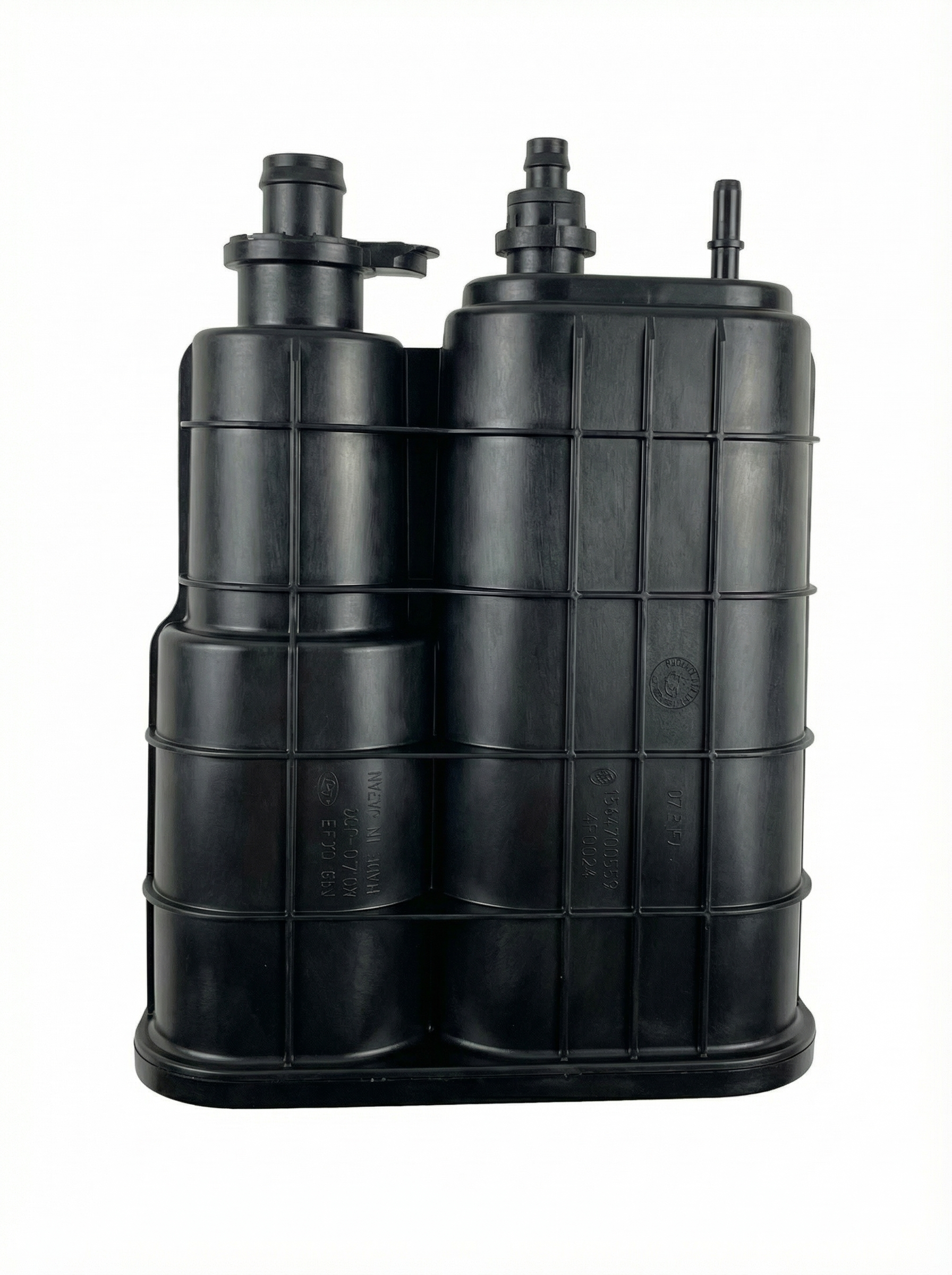
(OEM #1664700359)— A less common cause for P0442, but a possibility if other components check out. Failure is often caused by over-filling the fuel tank, which can saturate the canister with liquid fuel. Replacement is a DIY-possible job located in the right-rear wheel well.
Trusted brands: Genuine Mercedes-Benz
OEM price range: $200-$300
Aftermarket price range: $120-$200
Related Codes That Often Appear With This One
- P0456 — P0456 indicates a 'very small leak'. It is very common to see P0442 and P0456 together, as the leak size detected by the system can hover between the 'small' and 'very small' thresholds. Many owner reports mention both codes appearing simultaneously.
Technical Service Bulletins (TSBs) & Recalls
- LI47.30-P-072421: While for a different model (GLB), this TSB from 2021 addresses P0442 and P0456 codes. It instructs technicians to check for loose charcoal dust from a deteriorating canister, which can cause the purge valve to not seal properly. If charcoal dust is found, both the canister and purge valve must be replaced. This provides a potential, though less c
Platform-Specific Known Issues
- Owner Experience: Gas Cap Solves P0442 and P0456: → Shop Fuel Tank Cap A user on MBWorld.org with a 2013 ML350 reported codes P0442 and P0456. After another user's advice, they found the gas cap was very loose. After properly tightening it several clicks and clearing the codes, the Check Engine Light did not return.
- Owner Experience: Fuel Smell Points to Purge Valve: → Shop Vapor Canister On a 2013 ML350 with P0442 and P0456, the owner's wife reported smelling gasoline at a stoplight with the A/C on. Another forum member noted that a leaking purge valve is close to the cabin air inlet, making this a plausible symptom. The original poster later reported the light went out after cleaning and re-seating the gas cap, but the purge valve was the next logical step.
- Owner Experience: New Gas Cap Fix: → Shop Fuel Tank Cap A 2015 ML350 owner with a P0442 code first cleaned the gas cap, but the code remained. They then ordered and installed a new OEM gas cap. After a day of driving, the ECM recognized the fix and the Check Engine Light turned off on its own without needing to be manually cleared.
Mechanic-Grade Diagnostic Values
- Fuel Tank Pressure (FTP) Sensor Voltage — expected: Approx. 0.5V to 4.5V. The voltage changes in response to pressure/vacuum in the tank.. Failure: A sensor that is stuck at a specific voltage or provides erratic readings, even when a manual pressure gauge shows the pressure is changing, is likely faulty and can falsely trigger a leak code.
- Purge Valve (Unpowered State) — expected: Completely closed, holding vacuum.. Failure: If you can blow air through the valve when it is disconnected from power, it is stuck open and has failed.
Scan Tool Commands That Help
- Mercedes-Benz XENTRY/DAS: Guided Test: 'Leak test of fuel tank system' — This is the primary professional diagnostic step after basic checks. The software automates the test by closing the vent valve, actuating the purge valve to create a vacuum, and monitoring the fuel tank pressure sensor for decay. It provides a pass/fail result and can help differentiate between small and large leaks.
- High-end bidirectional scanner: EVAP Vent Valve Actuation — During a smoke test, the EVAP system vent valve (which is normally open) must be commanded closed to seal the system. This allows the smoke to build pressure and reveal leaks. If this command is not sent, smoke will simply exit through the vent.
Wiring & Ground Locations
- Purge Valve Connector — On the purge valve itself, located in the driver's side of the engine bay near the coolant expansion tank.. The purge valve is a 2-pin connector. Typically, Pin 1 receives 12V+ from a fuse in the front SAM (Signal Acquisition Module), and Pin 2 is the ground-side control wire to the main engine computer (ECU). Damage to this connector or its wiring from engine heat can cause the valve to function intermittently or not at all, leading to EVAP codes.
- W166 Ground Points — Main ECU grounds are often located in the passenger footwell area.. While a bad ECU ground would likely cause multiple, more severe issues than just a P0442, poor grounding can lead to erratic sensor readings. If all other EVAP components test good, verifying the ECU grounds is a last-resort diagnostic step.
Real Owner Repair Stories
- MBWorld.org Forum User (2012 Mercedes-Benz C250 (similar EVAP system design)) — Persistent P0442 and P0456 codes.
❌ Tried (didn't work) Replaced gas cap, Replaced purge valve, Performed smoke test which showed no leaks
✅ What actually fixed it The fuel filler neck was replaced. The sealing surface where the gas cap o-ring sits had developed microscopic cracks/pitting, preventing a perfect seal even with a new cap. The leak was too small or located in a way that the smoke test did not reveal it. - MBWorld.org Forum User (2005 C230 (older model but relevant failure)) — P0442 code
❌ Tried (didn't work) Initial diagnosis pointed towards common EVAP components.
✅ What actually fixed it A deteriorated O-ring on the charcoal canister shutoff valve. The user removed the canister, found it would not hold a vacuum, and disassembled the shutoff valve to find the failed O-ring, which was a sub-$5 part.
"I Checked Everything" — The Actual Cause
- A common scenario for an unresolved P0442 after a 'clean' smoke test is a defect in the fuel filler neck's sealing surface. A smoke test adapter seals inside the neck, potentially bypassing the very surface where the gas cap makes its seal. If the neck is corroded, pitted, or has hairline cracks right at the sealing lip, it can cause a leak with the gas cap that is not present with the smoke machine adapter installed. The fix is to replace the entire fuel filler neck assembly.
OEM Part Supersession History
000-470-88-93 (example of an older common PN)→0014760532 (and other subsequent numbers)— Parts are frequently updated by Mercedes-Benz to improve reliability or change suppliers. The purge valve design has been revised multiple times.
Heads up: While physical fitment may be similar, using an outdated part number can lead to incorrect performance. It is critical to use a VIN to source the latest correct part number from a Mercedes-Benz dealer to ensure compatibility.
Diagnostic Flowchart
Other Known Issues on This Vehicle
Issues unrelated to this code that are worth knowing about as an owner of this generation:
- OM642 (Diesel) Oil Cooler Seal Leak 🔴 High — Commonly occurs after 60,000 miles. A significant oil leak appears at the rear of the engine, often mistaken for a rear main seal leak.
- Airmatic Suspension Failure 🟠 Medium — Air springs (struts) can develop leaks, and compressors can fail, typically after 60,000-100,000 miles, causing the vehicle to sag and ride harshly.
- M276 (V6 Gas) Timing Chain Tensioner Rattle 🟠 Medium — Primarily affects earlier engines (pre-2014). A metallic rattle for a few seconds on a cold start indicates failing secondary timing chain tensioners due to insufficient oil flow. (Ref: Mercedes-Benz issued a TSB to install new check valves to remedy the oil pressure issue.)
- M276 (V6 Gas) Upper Timing Cover Oil Leaks 🟡 Low — Oil can leak from the seals of the upper front timing covers, often dripping onto the alternator.
- AdBlue/DPF System Failures (Diesel Models) 🟠 Medium — Failures of NOx sensors, AdBlue heaters, or a clogged DPF are common, especially on vehicles used for frequent short trips. This can lead to check engine lights and limp mode.
Used vs. New Parts: Buying Guide for This Vehicle
When a used part is the smart pick: For this code, a used Fuel Filler Neck is a reasonable choice. It is a static part that typically fails from a material defect rather than wear. A used part from a low-mileage, non-corrosion-area vehicle can be a cost-effective solution if inspected carefully.
Donor-vehicle mileage cap: roughly under 80000 miles for the part to have meaningful remaining life.
What to inspect on the donor part:
- For a Fuel Filler Neck: Inspect the gas cap sealing surface meticulously for any signs of rust, pitting, or cracks. Ensure the plastic is not discolored or brittle.
- For a Charcoal Canister: Avoid if possible. If you must, ensure there are no physical cracks, and shake it to listen for loose charcoal bits. It should not smell strongly of raw fuel, which indicates saturation.
OEM-only on this vehicle (don't cheap out):
- Gas Cap: Always buy a new OEM gas cap. The cost is low, and aftermarket caps are a very common cause of P0442 codes due to improper sealing specifications.
- Vapor Canister Purge Valve: Strongly recommend new OEM (Bosch) or Genuine Mercedes-Benz. This is an electromechanical part with a finite lifespan. A used valve has unknown life remaining and is not worth the labor to install it twice.
Aftermarket brands forum-validated for this vehicle:
- Bosch: Bosch is the original equipment manufacturer (OEM) for many Mercedes-Benz electronic components, including the purge valve (part number 0 280 142 431 is a common equivalent). Buying the Bosch-branded part is often identical to the Genuine Mercedes part without the dealership markup.
Brands owners have reported issues with on this vehicle:
- Unbranded/generic gas caps from online marketplaces.
- No-name purge valves that are significantly cheaper than the Bosch equivalent.
Real Owner Stories
Aggregated from forums and TSBs cited above. Mileages and costs reflect what owners reported in those sources.
2013 ML350 4Matic
Symptoms: Check engine light on with trouble codes P0442 and P0456.
What fixed it: The owner found the gas cap was not tightened enough and resolved the issue by tightening it several clicks and clearing the codes.
Source hint: MBWorld.org W166 M-Class Forum - Thread '2013 ML350 4Matic check engine light on-trouble codes P0442 + P0456....'
2013 ML350
Symptoms: Check Engine Light (P0442/P0456) and the owner's wife reported smelling gasoline at a stoplight with the A/C on.
What fixed it: The light went out after cleaning and re-seating the gas cap, though a leaking purge valve was identified as the likely source of the odor.
Source hint: MBWorld.org W166 M-Class Forum - Thread 'P0442 Evaporative Emissions Control System Leak Detected (small leak)'
2015 ML350
Symptoms: P0442 code present. Cleaning the original gas cap did not resolve the issue.
What fixed it: Installed a new OEM gas cap. After one day of driving, the ECM recognized the repair and the Check Engine Light turned off automatically.
Source hint: MBWorld.org W166 M-Class Forum - Thread 'P0442 evap system small leak on 2015 ML 350'
Related OBD-II Codes
Frequently Asked Questions
Where is the purge valve located on my 2012-2015 ML-Class?
Does TSB LI47.30-P-072421 apply to my ML-Class P0442 code?
Can I use an aftermarket gas cap to fix the P0442 code on my ML350?
Why do I smell gasoline inside my ML-Class when I'm stopped at a light with the A/C on?
Will the Check Engine Light go away on its own after I replace the gas cap?
How can I tell if my ML-Class purge valve is actually leaking?
Helpful Videos


Used OEM Parts in Stock
New Aftermarket Parts Available


The information in this article is provided for general reference and educational purposes only. Vehicle specifications, procedures, and part compatibility can vary by production date, trim level, and region. Always consult your vehicle's factory service manual and verify part numbers before purchasing or performing repairs. Safety-critical components such as airbags, seat belts, and braking systems should be installed by a qualified professional.
- Mercedes-Benz ML-Class:
- 🧭 Diagnostic Flowchart
- 🎬 Helpful Videos
- 🛍️ Shop This Part
- What's Unique About the 2012-2015 Mercedes-Benz ML-Class
- Symptoms You May Notice
- Most Likely Causes
- Rare But Worth Checking
- Diagnosis Steps
- Parts You'll Likely Need
- Related Codes That Often Appear With This One
- Technical Service Bulletins (TSBs) & Recalls
- Platform-Specific Known Issues
- Mechanic-Grade Diagnostic Values
- Scan Tool Commands That Help
- Wiring & Ground Locations
- Real Owner Repair Stories
- "I Checked Everything" — The Actual Cause
- OEM Part Supersession History
- Other Known Issues on This Vehicle
- Used vs. New Parts: Buying Guide for This Vehicle
- Real Owner Stories
- 2013 ML350 4Matic
- 2013 ML350
- 2015 ML350
- Related OBD-II Codes
- Frequently Asked Questions
- 🎟️ Get 5% Off