

P0442 on 2007-2017 Mercedes-Benz S-Class: EVAP Small Leak Causes and Fixes
For a P0442 code on a Mercedes S-Class, the simplest and most common fix is ensuring the gas cap is tight or replacing its seal. If that doesn't work, the next most likely causes are a faulty charcoal canister (behind the rear passenger wheel) or a failing purge valve in the engine bay. A smoke test is the best way to find the exact leak source to avoid replacing expensive parts unnecessarily.
- Always check the gas cap first for code P0442; it's the easiest and most frequent fix.
- The 2007-2013 (W221) and 2014-2017 (W222) S-Class use different EVAP parts; verify your part numbers with your VIN.
- A professional smoke test is the most reliable method to pinpoint the exact source of a small EVAP leak, saving you from replacing unnecessary parts.
- The charcoal canister, located behind the rear passenger wheel well, is a common failure point, often caused by repeatedly topping off the fuel tank.
- You can continue driving with a P0442 code, but you will not pass an emissions inspection until the leak is resolved.
What's Unique About the 2007-2017 Mercedes-Benz S-Class
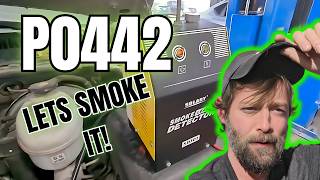
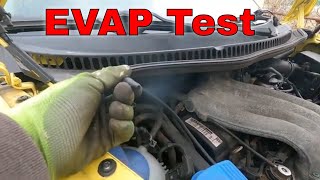
On the S-Class, the P0442 code doesn't point to one single, universally known flaw. However, the vehicle's complexity means a smoke test is highly recommended to avoid replacing incorrect parts. 🎬 Watch: How to use a smoke machine to find leaks. The EVAP system components, particularly the charcoal canister and purge valves, are different between the W221 (2007-2013) and W222 (2014-2017) generations, making it crucial to source the correct parts for your specific model year. While the gas cap is a common culprit on any car, owners have also traced these leaks to less obvious places like the charcoal canister shut-off valve, the fuel filler neck itself, or even fuel tank seals under the rear seat.
Generation note: This guide covers two generations of the S-Class, which use different EVAP system parts: - W221 (2007-2013): Uses charcoal canister part number 2214700659 and specific purge valves for its engine family. The fuel cap is often part number A2214700705. - W222 (2014-2017): Uses a different charcoal canister (part number 2224700059) and updated purge valves. The fuel cap is often part number 2224700205. Always verify part numbers with your vehicle's VIN before ordering.
Symptoms You May Notice
- Check Engine Light is on
- A faint smell of gasoline, possibly noticeable around the rear passenger-side wheel well (where the charcoal canister is located) or after opening a door in an enclosed garage.
- Difficulty refueling (gas pump nozzle clicks off prematurely), though this is more common with larger leaks or canister issues.
- A long crank time after refueling, which can happen if the purge valve is stuck open, flooding the engine with fuel vapors.
- Immediately replacing the charcoal canister or purge valve without performing a smoke test. The leak could be a much cheaper and simpler fix, like the gas cap, a small hose, or just an O-ring.
Most Likely Causes
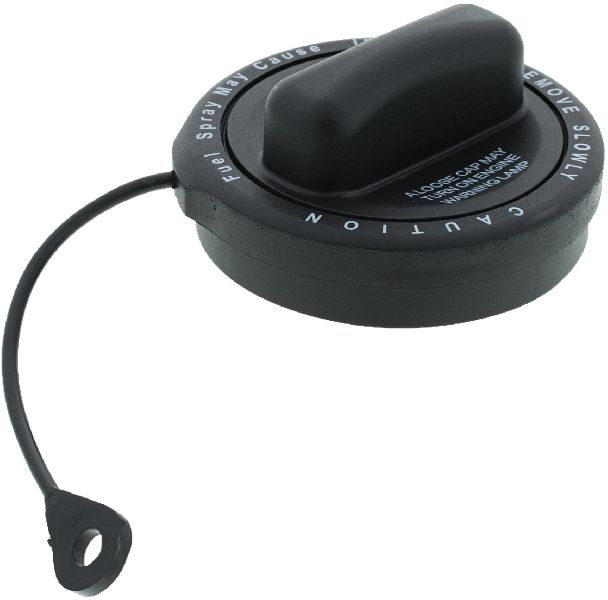
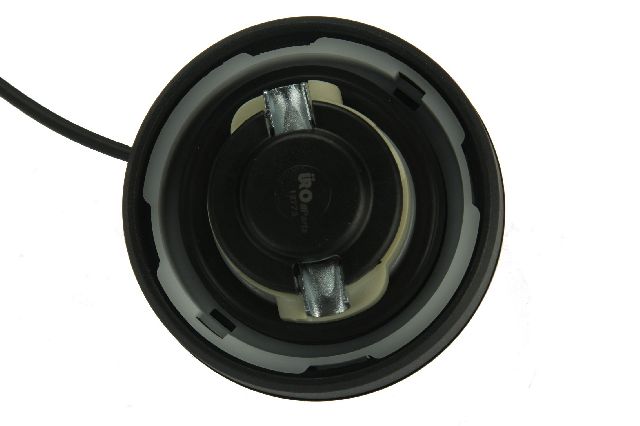
- Loose or Worn Fuel Cap 🔴 High Probability → Shop Fuel Tank Cap This is the most common cause for P0442 on virtually all vehicles. The rubber O-ring on the cap can dry out, crack, or get dirty, preventing a proper seal.
How to confirm: Check that the cap is tightened until it clicks several times. Remove the cap and inspect the rubber seal for any cracks, stiffness, or debris. The absence of a 'whoosh' sound when opening the tank can indicate a loss of pressure. Many owners report this simple fix resolves the code.
Typical fix: First, try cleaning the cap's seal and the filler neck. If the seal is damaged or the code returns, replace the fuel cap with a new OEM part. Aftermarket caps can sometimes cause sealing issues.
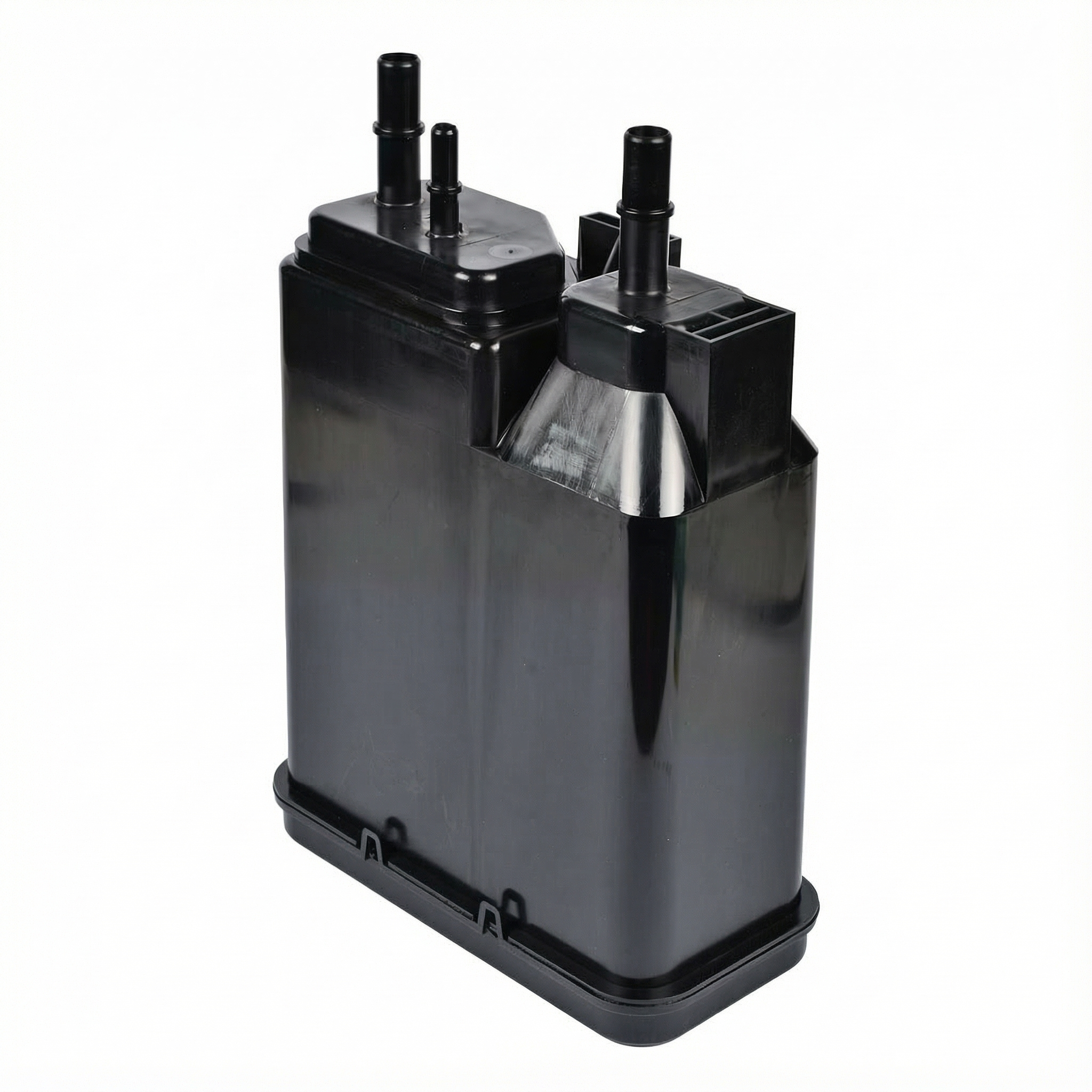
Est. part cost: $30-$80 - Failing Charcoal Canister or Shut-Off Valve 🟡 Medium Probability → Shop Vapor Canister The canister, located in the rear passenger-side wheel well, is exposed to road debris. The plastic housing can develop small cracks over time. Overfilling the fuel tank is a primary cause of failure, as it saturates the charcoal with liquid fuel. The integrated shut-off valve or its O-ring can also fail.
How to confirm: A professional smoke test is the best method. Smoke is injected into the EVAP system, and if it's seen escaping from the canister or its valves, the part has failed. One owner on MBWorld found a hissing sound and a deteriorated O-ring on the shutoff valve after removing the canister.
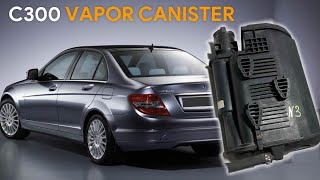
Typical fix: The charcoal canister assembly must be replaced. A user on MBWorld provided a DIY summary: remove the rear passenger wheel and liner, disconnect hoses and the electrical plug, and unclip the canister from its bracket. 🎬 Watch this walkthrough on replacing the charcoal canister assembly.
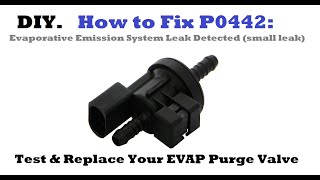
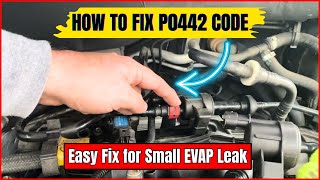
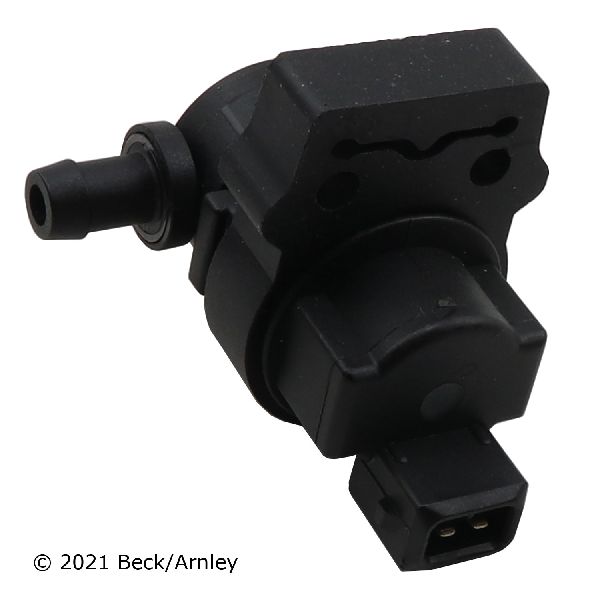
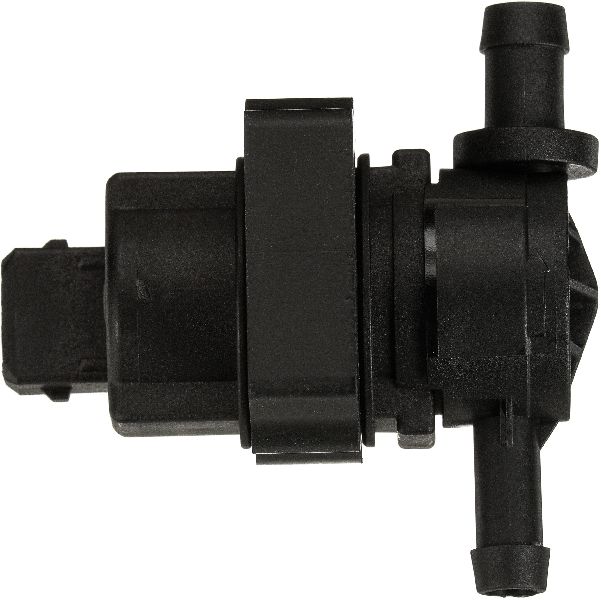
Est. part cost: $350-$600 - Failing EVAP Purge Valve 🟡 Medium Probability → Shop Vapor Canister The purge valve (or solenoid), often a Bosch part, is located in the engine bay and controls the flow of stored vapors to the engine. It can get stuck slightly open, creating a small, persistent leak.
How to confirm: With the engine off, the valve should be closed. You can test it by removing it and trying to blow through it; if air passes, it's stuck open. A professional scan tool can also actuate the valve to test its function.
Typical fix: Replacement of the purge valve. This is typically an easy-to-access part in the engine compartment, held by a bracket and connected by two hoses and an electrical plug.
Est. part cost: $50-$150 - Cracked or Disconnected EVAP Hoses ⚪ Low Probability Rubber and plastic hoses become brittle with age and heat cycles. A small crack can develop, especially at connection points to the purge valve or charcoal canister.
How to confirm: A visual inspection of all accessible EVAP lines is the first step. However, a smoke test is the most reliable way to find a small hose leak, as the smoke will visibly escape from any crack or loose connection.
Typical fix: Replace the cracked section of hose or the entire hose assembly. Ensure new clamps are used for a secure connection.
Est. part cost: $20-$100
Rare But Worth Checking
- Leaking Fuel Pump or Level Sender Seals: → Shop Fuel Pump On some Mercedes platforms, a small EVAP leak code can be caused by deteriorated rubber seals for the fuel pump and/or fuel level sender units, which are located on top of the fuel tank and accessed by removing the rear seat cushion. While not a primary suspect for the S-Class, it is a known failure pattern. A smoke test that shows smoke emerging from under the rear seat area is a strong indicator of this problem.
- Cracked Fuel Filler Neck: → Shop Fuel Filler Neck The entire fuel filler neck assembly, which is made of plastic, can develop hairline cracks over time, creating an EVAP leak. This is often difficult to see without a smoke test. One owner on an MBWorld forum, after replacing the gas cap and purge valve to no avail, ultimately fixed their P0442 code by replacing the entire fuel filler neck assembly.
Diagnosis Steps
- Check the Gas Cap: Ensure it is tight and clicks multiple times. Remove it and inspect the rubber seal for cracks or damage. If in doubt, an OEM replacement is a low-cost first step.
- Visual Inspection: Visually inspect the EVAP purge valve and any accessible hoses in the engine bay for obvious cracks or loose connections.
- Perform a Smoke Test: This is the most effective way to find a small leak. A mechanic will use a smoke machine to fill the EVAP system with a visible vapor. The leak will be wherever the smoke escapes. Pay close attention to the charcoal canister area (behind the rear passenger wheel well), the fuel filler neck, all hose connections, and the top of the fuel tank.
- Test Components: Based on the smoke test results, test the specific component. If the purge valve is suspected, it can be tested for being stuck open. If the canister area is leaking, inspect the shut-off valve and its O-ring before condemning the entire unit.
- Clear Codes and Drive: After performing a repair, clear the trouble codes with an OBD-II scanner and perform a complete drive cycle to allow the EVAP monitor to run. This will confirm the fix was successful.
Parts You'll Likely Need
- Fuel Cap (W221, 2007-2013)
(OEM #A2214700705)— The seal on the fuel cap is the most common failure point for small EVAP leaks on any vehicle.
Trusted brands: Genuine Mercedes-Benz
OEM price range: $40-$80
Aftermarket price range: $20-$40 - Fuel Cap (W222, 2014-2017)
(OEM #2224700205)— The seal on the fuel cap is the most common failure point for small EVAP leaks on any vehicle.
Trusted brands: Genuine Mercedes-Benz
OEM price range: $40-$80
Aftermarket price range: $20-$40 - Charcoal Canister (W221, 2007-2013)
(OEM #2214700659)— Located in the wheel well, this canister can crack or its internal valves can fail, causing a leak. Overfilling the fuel tank is a common reason for its failure.
Trusted brands: Genuine Mercedes-Benz, Bosch
OEM price range: $400-$550
Aftermarket price range: $250-$400 - Charcoal Canister (W222, 2014-2017)
(OEM #2224700059)— This canister can crack or its internal valves can fail. Overfilling the fuel tank is a common reason for its failure.
Trusted brands: Genuine Mercedes-Benz, Bosch
OEM price range: $450-$600
Aftermarket price range: $300-$450 - EVAP Purge Valve — This solenoid controls vapor flow to the engine and can stick open, creating a leak. It's a common failure
Related Codes That Often Appear With This One
- P0456 — P0456 indicates a 'very small leak,' while P0442 indicates a 'small leak.' They point to the same type of problem, just a different leak size threshold. It's common to see both codes appear together as the system tries to classify the leak size.
- P0455 — This code indicates a 'gross leak.' If a component fails catastrophically (e.g., a hose completely disconnects), you may see a P0455 along with the P0442 as the system registers leaks of different sizes during its test cycles.
Platform-Specific Known Issues
- The $3 O-Ring Fix: In a detailed thread on MBWorld, a user with a P0442 code performed a smoke test and found no external leaks. Upon removing the charcoal canister, they discovered it would not hold a vacuum. The cause was not the canister itself, but a single, deteriorated O-ring on the canister's shutoff valve. Replacing this O-ring (costing just $3.25) solved the problem, avoiding the cost of a full canister replacement.
Mechanic-Grade Diagnostic Values
- EVAP Purge Valve (Solenoid) Function — expected: When 12V is applied to the valve's terminals, an audible 'click' should be heard, indicating the solenoid is actuating.. Failure: No 'click' indicates a dead solenoid. If the valve allows air/vacuum to pass when de-energized (normally closed), it is stuck open and has failed.
- EVAP Purge Valve (Solenoid) Resistance — expected: The resistance value should be compared to the specification in the Mercedes-Benz service manual for the specific part number.. Failure: A resistance reading that is significantly out of the specified range indicates a damaged internal electrical circuit.
- EVAP Purge Valve Voltage (while running) — expected: Because the valve is pulse-width modulated, a multimeter will show an average voltage, not a steady 12V. On a W220, a reading of ~7V was observed, indicating a duty cycle over 50%.. Failure: A reading of 0V or a steady 12V could indicate a wiring problem or a failed driver in the ECU.
Scan Tool Commands That Help
- Mercedes Xentry/DAS: Fuel Tank System Leakage Test — This is the dealer-level guided test to command the EVAP system's valves (purge and vent) to seal the system and then monitor the fuel tank pressure sensor to verify it can hold pressure. It's the most precise way to confirm a leak exists before starting a smoke test.
- High-End Bidirectional Scanner (e.g., Autel): EVAP System Test / Purge Solenoid Activation — Used to manually command the purge and vent solenoids to close, sealing the system for a smoke test. It can also be used to cycle the purge valve to check for mechanical sticking or to confirm it's receiving a signal from the ECU.
Wiring & Ground Locations
- Fuel Tank Pressure Sensor (B4/3) — On US-market vehicles, this sensor is typically located on top of the fuel tank, accessible from under the rear seat. It may be part of the fuel pump assembly or on a connection near the filler neck.. A faulty pressure sensor can give false readings, making the ECU believe there is a leak when there isn't. However, forum discussions indicate this sensor is often not present on European-spec W221 models, which can lead to confusion if a scanner reports a fault with it.
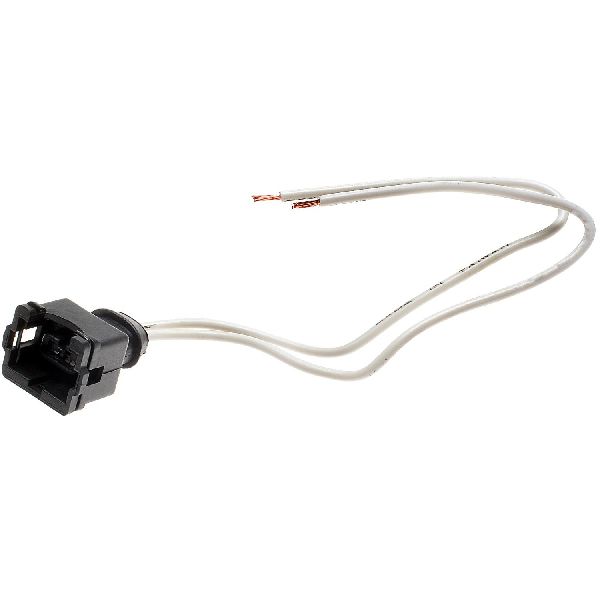
- Charcoal Canister Shut-off Valve Connector — Located on the charcoal canister assembly, which is behind the passenger-side rear wheel well liner.. This electrical connector powers the valve that seals the canister. Corrosion or a poor connection here can prevent the valve from closing, creating a leak path that will trigger a P0442. Some replacement canisters require a wiring harness adapter.
Real Owner Repair Stories
- MBWorld forum user (Mercedes-Benz C-Class (W203), but a directly analogous repair to the S-Class) — Check Engine Light with P0442 code. No 'whoosh' sound when opening gas cap.
❌ Tried (didn't work) Cleaning the gas cap seal, Replacing the gas cap with a new one
✅ What actually fixed it After performing a vacuum test on the charcoal canister and finding it wouldn't hold vacuum, the owner removed the canister shut-off valve. They discovered a deteriorated O-ring on the valve, replaced it for a few dollars, and resolved the leak. - MBWorld forum user (2005 Mercedes-Benz C230) — P0442 code
❌ Tried (didn't work) Initial diagnosis pointed to common EVAP components.
✅ What actually fixed it The final cause was determined to be a leaking fuel filler neck. The repair was quoted at $850 by a dealer, as it was not covered by the extended warranty.
OEM Part Supersession History
2214700359→2214700659 (A2214700659)— Updated part design for the W221/C216 chassis charcoal canister.
Heads up: When replacing the original canister (2214700359) with the updated part (2214700659), an adapter for the wiring harness, part number 2114400134, may be required.
Model Year Variations Within This Range
- 2007-2013 (W221): European-spec W221 models may not be equipped with the B4/3 Fuel Tank Pressure sensor that is present on US-market vehicles. This can cause confusion during diagnosis if a scan tool designed for the US market reports a fault related to this non-existent sensor.
Diagnostic Flowchart
Other Known Issues on This Vehicle
Issues unrelated to this code that are worth knowing about as an owner of this generation:
- W221 AIRMATIC Suspension Failure 🔴 High — Very common. Air struts develop leaks and compressors wear out, often after 60,000-80,000 miles. Leads to sagging suspension and a "Vehicle Too Low" warning.
- W221 M272/M273 Engine Balance Shaft/Idler Gear Wear 🔴 High — Affects V6 (M272) and V8 (M273) engines built approximately before 2009. A soft metal sprocket wears prematurely, causing timing correlation codes (P0016, P0017) and requiring an engine-out repair. (Ref: A class-action lawsuit was settled regarding this issue.)
- W221 7G-Tronic (722.9) Transmission Conductor Plate Failure 🟠 Medium — Common failure item causing erratic shifting, getting stuck in gear, or limp mode. The electronic plate inside the transmission fails, often requiring replacement of the entire valve body assembly.
- W222 M278 Engine Cylinder Wall Scoring 🔴 High — Less common than W221 issues but documented on early M278 V8 biturbo engines. Can lead to oil consumption and eventually engine failure.
- W222 Electrical and Infotainment Glitches 🟡 Low — Owners report various issues with the COMAND system, touchpad, and other electronic modules, often resolved with software updates or minor component replacement.
Used vs. New Parts: Buying Guide for This Vehicle
When a used part is the smart pick: For this repair, used parts are generally not recommended for core components. A used fuel filler neck or mounting brackets for the canister could be acceptable if they are in excellent physical condition with no signs of rust or cracking. However, the primary failure items (seals, valves, canister) should be purchased new.
Donor-vehicle mileage cap: roughly under 60000 miles for the part to have meaningful remaining life.
What to inspect on the donor part:
- For a filler neck, inspect for any hairline cracks, especially around the gas cap sealing area and mounting tabs.
- For hoses, ensure they are still pliable and not brittle or swollen.
- Avoid any parts from vehicles in regions with heavy road salt usage, as corrosion is a major factor in EVAP component failure.
OEM-only on this vehicle (don't cheap out):
- Fuel Cap: Aftermarket caps are a frequent source of new, different EVAP leaks. It is strongly recommended to use a Genuine Mercedes-Benz cap to ensure a perfect seal.
- Charcoal Canister: While OEM suppliers like Bosch are excellent, the Genuine Mercedes part is the safest bet to ensure compatibility, especially concerning potential wiring adapter needs.
Aftermarket brands forum-validated for this vehicle:
- Bosch: Bosch is a primary OEM supplier for many Mercedes-Benz fuel and emissions components, including purge valves and potentially the charcoal canister itself.
Brands owners have reported issues with on this vehicle:
- Unbranded/white-box fuel caps from online marketplaces are a common cause of persistent P0442 codes.
Real Owner Stories
Aggregated from forums and TSBs cited above. Mileages and costs reflect what owners reported in those sources.
2015 S550 — 50000 miles
Symptoms: P0442 code & P0456 code; owner noted it is an evap code stating there is a small leak.
What fixed it: The owner sought to identify the small leak, often associated with the gas cap or charcoal canister system.
Source hint: MBWorld.org Forums quote in owner_reports
Mercedes-Benz S-Class (W221)
Symptoms: The vehicle threw a P0442 code. A smoke test showed no external leaks, but the charcoal canister would not hold a vacuum.
What fixed it: Replacing a single, deteriorated O-ring on the canister's shutoff valve.
Cost: $3-$4
Source hint: MBWorld thread 'The $3 O-Ring Fix' cited in vehicle_specific_issues
Mercedes-Benz S-Class (W221)
Symptoms: P0442 code; owner discovered a hissing sound coming from the canister area.
What fixed it: Identified a deteriorated O-ring on the shutoff valve after removing the charcoal canister assembly.
Source hint: MBWorld.org forum thread 'replacing-charcoal-canister.html'
Related OBD-II Codes
Frequently Asked Questions
I smell gasoline near the rear passenger-side wheel well of my S-Class; is this related to P0442?
Where is the charcoal canister located on the W221 S-Class if I want to inspect it for leaks?
My S550 takes a long time to start only after I fill up the gas tank. Is this the purge valve?
Can I use an aftermarket gas cap to fix the P0442 code on my Mercedes?
Is there a cheaper alternative to replacing the entire charcoal canister assembly?
Does the S-Class Coupe (C216/C217) share this EVAP system issue?
Helpful Videos

Used OEM Parts in Stock
New Aftermarket Parts Available


The information in this article is provided for general reference and educational purposes only. Vehicle specifications, procedures, and part compatibility can vary by production date, trim level, and region. Always consult your vehicle's factory service manual and verify part numbers before purchasing or performing repairs. Safety-critical components such as airbags, seat belts, and braking systems should be installed by a qualified professional.
- Mercedes-Benz S-Class:
- 🧭 Diagnostic Flowchart
- 🎬 Helpful Videos
- 🛍️ Shop This Part
- What's Unique About the 2007-2017 Mercedes-Benz S-Class
- Symptoms You May Notice
- Most Likely Causes
- Rare But Worth Checking
- Diagnosis Steps
- Parts You'll Likely Need
- Related Codes That Often Appear With This One
- Platform-Specific Known Issues
- Mechanic-Grade Diagnostic Values
- Scan Tool Commands That Help
- Wiring & Ground Locations
- Real Owner Repair Stories
- OEM Part Supersession History
- Model Year Variations Within This Range
- Other Known Issues on This Vehicle
- Used vs. New Parts: Buying Guide for This Vehicle
- Real Owner Stories
- 2015 S550 — 50000 miles
- Mercedes-Benz S-Class (W221)
- Mercedes-Benz S-Class (W221)
- Related OBD-II Codes
- Frequently Asked Questions
- 🎟️ Get 5% Off