

P0442 on 1995-1999 Mitsubishi Eclipse: EVAP Small Leak Causes and Fixes
On a 1995-1999 Eclipse, P0442 almost always means you have a small leak in the evaporative emissions system. The most common and easiest fix is replacing a worn-out gas cap, which costs about $10-$25. If that doesn't work, suspect cracked vacuum hoses or a faulty valve. A smoke test is the best way to pinpoint the exact source of the leak.
- Start with the simplest fix: tighten and inspect your gas cap. A new, quality cap costs under $25 and solves the problem most of the time.
- P0442 will not affect how your car drives, but it will cause you to fail an emissions test.
- Be prepared for a hunt: EVAP parts on your 2G Eclipse might not be where a standard manual says they are. Check under the battery, behind the front bumpers, and near the gas tank to find your components.
- Don't replace expensive parts blindly. A smoke test is the most reliable way to find the exact source of a small leak, saving you time and money.
What's Unique About the 1995-1999 Mitsubishi Eclipse
The 1995-1999 (2G) Eclipse, and its Diamond-Star Motors (DSM) siblings the Eagle Talon and Plymouth Laser, are known for having inconsistent EVAP component locations. Unlike many cars where a part is always in the same place, the location of the charcoal canister and purge solenoid on a 2G DSM can vary depending on the model year, engine (4G63T or 420A), drivetrain (FWD or AWD), and even the presence of ABS. Forum users on DSMTuners report finding canisters under the battery tray, behind the driver's side front bumper, near the rear fuel tank, and even integrated into the fuel tank on later models like the 1999 GST. This guide will help you identify your specific configuration. The non-turbo models (RS, GS) use a Chrysler 420A engine, while turbo models (GST, GSX) use the Mitsubishi 4G63T, and their EVAP layouts differ.
Symptoms You May Notice
- Check Engine Light is on.
- A faint smell of gasoline, especially around the rear of the car or after refueling.
- No noticeable impact on drivability or performance.
- Difficulty filling the fuel tank if the vent valve or a hose is blocked.
- Replacing the oxygen sensor. O2 sensors are not related to the EVAP system.
- Replacing the catalytic converter. This is a very expensive part that has no connection to a P0442 code.
- Immediately replacing solenoids and canisters without performing a smoke test. The leak is often a simple hose or gas cap, which are much cheaper to fix.
Most Likely Causes
- Loose or Worn Gas Cap 🔴 High Probability → Shop Fuel Tank Cap The rubber seal on the gas cap is a common wear item. After 20+ years, the original seal is often cracked, hardened, or deformed, preventing a proper seal. This is the most cited cause in forum discussions for this code. 🎬 Watch: Common P0442 leak locations and easy fixes
How to confirm: First, ensure the cap is tight (at least three clicks). If the light returns, visually inspect the rubber gasket on the cap for cracks, stiffness, or tearing. Also, inspect the fuel filler neck for rust or debris that could prevent a good seal. A rusty filler neck is a known issue on these cars, especially in areas with road salt.
Typical fix: Replace the gas cap. It is highly recommended to use an OEM or high-quality aftermarket cap (e.g., Stant, Gates), as cheap, universal caps sometimes don't seal correctly and can cause the code to return. In a similar Mitsubishi case, NHTSA ODI #10286733 notes that a dealer diagnosed a P0442 small EVAP leak and resolved it by replacing the gas cap.
Est. part cost: $10-$25 - Cracked or Disconnected EVAP Hoses 🟡 Medium Probability The vacuum lines used in the EVAP system become brittle and crack due to age and exposure to engine heat and the elements. This is very common on vehicles of this vintage. Owners on DSMTuners frequently find rotted hoses near the charcoal canister and fuel tank.
How to confirm: Visually inspect all accessible rubber and plastic lines associated with the EVAP system. Look for obvious cracks, especially at connection points to solenoids and the charcoal canister. A smoke test is the most effective way to find a small leak that isn't visually obvious. This involves injecting smoke into the EVAP service port and looking for where it escapes. Some owners suggest spraying brake cleaner on suspect hoses with the engine running and listening for a change in engine speed, but this is less precise.
Typical fix: Replace the cracked section of hose. It's often possible to buy vacuum hose by the foot and cut it to length. For complex, pre-formed hoses that are no longer available, some owners create new ones using fuel-vapor-safe tubing and barbed fittings.
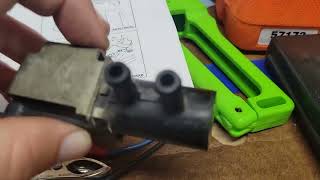
Est. part cost: $5-$20 - Faulty EVAP Purge Solenoid ⚪ Low Probability → Shop Vapor Canister This solenoid controls the flow of fuel vapors from the canister to the engine. It can fail by getting stuck open or closed, or by developing a leak in its body or seals.
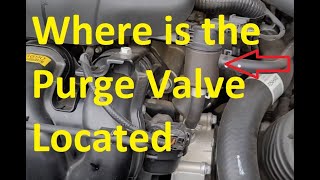
How to confirm: With the engine off, try to blow through the solenoid; it should be closed. You can also apply 12V to its terminals to see if it clicks open. A smoke test will reveal if the valve body itself is leaking. The location varies: on 4G63T models, it's often on the driver's side of the intake manifold. On 420A models (97-99), it's commonly found behind the passenger-side front bumper. 🎬 Watch this guide to help you locate the purge valve
Typical fix: Replace the purge solenoid. If removing the solenoid, be prepared for brittle plastic and electrical connectors.
Est. part cost: $40-$90 - Faulty EVAP Vent Solenoid / Leaky Charcoal Canister ⚪ Low Probability → Shop Vapor Canister The vent solenoid allows fresh air into the canister. It can get stuck or its seals can fail. The plastic charcoal canister itself can develop cracks over time, and the attached lines are prone to rust and rot.
How to confirm: A smoke test is the best method. The vent solenoid is normally open and must be commanded closed with a capable scan tool to properly test the rest of the system. Smoke exiting the vent solenoid when it should be closed indicates a failure. Smoke from the canister body indicates a crack. The canister location is notoriously inconsistent; it may be under the battery, behind a front bumper, or near the rear fuel tank. One owner of a '99 GST found the canister integrated into the fuel tank, accessible via a panel under the back seat.
Typical fix: Replace the faulty vent solenoid or the entire charcoal canister assembly. Many owners in the DSM community opt to delete the charcoal canister and associated lines for a cleaner engine bay, but this is for off-road use only and requires software (like ECMLink) to disable the resulting check engine light codes (P0443, P0403).
Est. part cost: $50-$150
Rare But Worth Checking
- Cracked Fuel Filler Neck: → Shop Fuel Filler Neck Rust can cause pinhole leaks in the metal tube that connects the gas cap to the fuel tank. This is a known issue on 2G DSMs, especially in regions that use road salt. A visual inspection and smoke test are needed to confirm. One owner on DSMTuners reported this as the source of their EVAP leak. Additionally, a report for a similar Mitsubishi vehicle in NHTSA ODI #11246155 confirms that a defective fuel filler neck can be the direct cause of code P0442.
Diagnosis Steps
- Check the Gas Cap: Tighten your gas cap until it clicks several times. Clear the code with a scanner. If it comes back, inspect the cap's rubber seal for cracks or damage. If it looks worn, replace it with a quality OEM or aftermarket part. This is the most common fix.
- Visual Inspection: Look over the engine bay and under the car for any obvious cracked, disconnected, or brittle vacuum hoses, particularly around the intake manifold and leading to the charcoal canister. Pay close attention to the fuel filler neck area for signs of heavy rust or rot.
- Locate Your EVAP Components: This is the tricky part on a 2G Eclipse. Check for the charcoal canister first. Possible locations are: under the battery tray (common on GST/GSX), behind the driver's side front bumper, or near the fuel tank in the rear (common on FWD models). The vent solenoid will be attached to or near the canister. The purge solenoid is typically on the intake manifold (4G63T) or behind the front bumper (420A). Consult DSMTuners forums for pictures of your specific year/model if you are unsure.
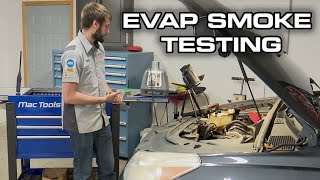
- Perform a Smoke Test: This is the most definitive way to find the leak. Connect a smoke machine to the EVAP service port. 🎬 See how to perform a professional EVAP smoke test Command the vent solenoid closed with a capable scan tool. Watch for smoke escaping from any hose, seal, valve, the canister itself, the fuel filler neck, or the gas cap.
- Test Solenoids: If no leak is found, test the purge and vent solenoids individually. Check for correct resistance and operation (clicking) when 12V is applied. Check for internal leaks by attempting to blow through them when de-energized (purge should be closed, vent should be open).
- Inspect Fuel Tank and Filler Neck: If no other leaks are found, carefully inspect the metal fuel filler neck for rust and pinholes. Also check the seals around the fuel pump module and other components on the top of the tank.
Parts You'll Likely Need
- Gas Cap
(OEM #MB675081 (example, verify with dealer))— This is the most frequent cause of a P0442 code due to the rubber seal wearing out over time.
Trusted brands: Stant, Gates, Motorad, Duralast
OEM price range: $25-$40
Aftermarket price range: $10-$25 - EVAP Purge Solenoid
(OEM #MR323897 (FWD Turbo), MR323106 (AWD Turbo) - Note: These numbers are for specific applications, always verify by VIN.)— This valve controls vapor flow and can get stuck open or closed, or develop internal leaks. It's a common failure point after the gas cap is ruled out.
Related Codes That Often Appear With This One
- P0455 — Indicates a large EVAP leak. If you see both, it could mean an intermittent, significant leak (like a cap left off and then put back on) or a failure in the pressure sensor circuit. One owner reported getting a P0455 from a rusted-through fuel filler pipe.
- P0441 — Indicates incorrect purge flow. This often points more directly to a faulty purge solenoid rather than a random leak.
- P0443 — Indicates an electrical fault in the purge control valve circuit. If you have recently worked on the EVAP system, check the electrical connector to the purge solenoid. This code will also appear if you remove the solenoid without disabling it in the ECU.
Platform-Specific Known Issues
- Component Location Inconsistency: As noted, the location of the charcoal canister and purge/vent solenoids is not standardized on 1995-1999 models. Owners must physically locate the components on their specific car rather than relying on a single diagram. Forum discussions on DSMTuners are the best resource for this.
- Rusted Fuel Filler Neck: The metal pipe leading to the gas tank is prone to rusting through, causing a significant EVAP leak (often P0455, but can be P0442). This is more common in salt-belt states.
- Charcoal Canister Deletion Mod: A common modification in the DSM community is to remove the charcoal canister and related lines to clean up the engine bay. This requires capping vacuum ports and disabling the relevant codes in the ECU with a tool like ECMLink to avoid a persistent Check Engine Light.
Mechanic-Grade Diagnostic Values
- EVAP Purge Solenoid Coil Resistance — expected: 22 - 26 Ω at 20°C (68°F). Failure: A reading outside this range indicates a faulty solenoid coil.
- EVAP Vent Solenoid Coil Resistance — expected: 20 - 40 Ω (typical for many solenoids, manufacturer spec is best). Failure: An open circuit (infinite resistance) or a direct short (zero resistance) indicates a failed coil.
- EVAP Purge Solenoid Functional Test (Bench Test) — expected: With no voltage applied, the valve should be closed and hold a vacuum. When 12V is applied, the valve should click open and the vacuum should be released.. Failure: If vacuum leaks down when the valve is supposed to be closed, or if it doesn't open with voltage, it is faulty.
Scan Tool Commands That Help
- Mitsubishi M.U.T.-II or M.U.T.-III: Evap Leak Mon. (System Test) — This is the factory-level bidirectional test to command the EVAP system to perform a self-test. The scan tool closes the vent solenoid and runs the monitor, reporting a pass or fail status, which is crucial for confirming a leak exists before manual searching.
- Advanced OBD-II Scanner (e.g., Autel, Snap-on): EVAP Vent Valve ON/OFF (Actuation Test) — This command is essential for performing a smoke test. The vent valve is normally open, so it must be commanded closed to seal the system and allow it to be filled with smoke to find the leak's source.
Wiring & Ground Locations
- Engine to Chassis Grounds — Key grounds are located from the negative battery terminal to the transmission housing (often on a starter mounting bolt) and from the battery to the firewall/chassis on the passenger side strut tower area.. A poor ground connection for the ECU or its sensors can cause erratic behavior and false codes. While not a direct cause of a physical leak, ensuring these main grounds are clean and tight is a critical first step in any electrical diagnosis.
- ECU Ground — A critical ground connection for the ECU is located under the center console, near the firewall, below the HVAC stack.. This specific ground is for the ECU itself. Corrosion at this point has been documented by owners to cause a wide range of issues, including incorrect sensor readings and improper component operation, which could potentially mimic EVAP system faults.
- EVAP Purge Solenoid Connector (4G63T) — On the intake manifold. One pin will receive 12V+ with the ignition on, and the other pin is the ground signal wire that goes to the ECU.. When diagnosing an electrical issue with the purge solenoid (like a P0443), you must test for 12V power at the connector and check the integrity of the ground wire back to the ECU.
Real Owner Repair Stories
- 2CarPros Forum User (2000-2005 Mitsubishi Eclipse (3G, but issue is identical and common on 2G)) — Persistent P0442 code for years, plus a visible fuel leak when refueling.
❌ Tried (didn't work) Replacing gas cap with aftermarket part., Replacing gas cap with an OEM part.
✅ What actually fixed it The metal fuel filler neck was completely rusted out at the bottom. Replacing the entire fuel filler neck assembly (OEM Part MR573836 for the 3G) resolved both the fuel leak and the P0442 code. - DSMTuners Forum User (1997 Mitsubishi Eclipse Spyder GST) — Persistent P0442 code that prevented passing emissions testing.
❌ Tried (didn't work) Initial diagnosis and leak tests by a shop found no leaks.
✅ What actually fixed it The leak was finally traced to a fuel return line from the gas tank, accessible by removing the rear seat. Replacing this difficult-to-access hose resolved the code.
Model Year Variations Within This Range
- 1995-1999 (420A engine models): Non-turbo models equipped with the Chrysler 420A engine often use a Leak Detection Pump (LDP) as part of their EVAP system. This is different from the system on the Mitsubishi 4G63T engine, which typically relies on a fuel tank pressure sensor to infer leaks based on vacuum decay. This changes the diagnostic procedure, as the LDP itself can be a point of failure.
Diagnostic Flowchart
Other Known Issues on This Vehicle
Issues unrelated to this code that are worth knowing about as an owner of this generation:
- Crankwalk (4G63T Engine) 🔴 High — Most prevalent in 1995-1997 7-bolt engines. It refers to excessive crankshaft thrust bearing wear, causing the crankshaft to move laterally ('walk'). Symptoms include a sticky clutch pedal, difficulty shifting, and a ticking noise from the pulley side of the engine when the clutch is depressed. Can lead to catastrophic engine failure. (Ref: No official recall, but Mitsubishi did introduce a redesigned split thrust bearing in later model years (late '97-'99) to mitigate the issue.)
- Automatic Transmission Failure 🟠 Medium — The automatic transmissions, particularly in earlier 2G models, are a known weak point. A common failure is a broken wave cushion spring, which sends metal particles throughout the transmission, causing significant damage. Many owners report failure even at low mileage.
- Interior Component Brittleness 🟡 Low — Very common across all 2G DSMs. After 20+ years, interior plastics become extremely brittle. Door panels, dashboards, and various trim pieces are known to crack or break easily. Door handles are particularly fragile.
- Failing Clear Coat / Paint 🟡 Low — Widespread on original paint jobs. The factory clear coat is known to peel, flake, and fail, especially on horizontal surfaces like the roof, hood, and spoiler. This is a cosmetic issue but very common.
Used vs. New Parts: Buying Guide for This Vehicle
When a used part is the smart pick: For larger, non-wear plastic components like the charcoal canister, a used part from a junkyard can be a cost-effective option, provided it is inspected for cracks. Metal components like the fuel filler neck can also be sourced used, but ONLY if the donor car is from a dry, salt-free climate to avoid inheriting a rust problem.
Donor-vehicle mileage cap: roughly under 120000 miles for the part to have meaningful remaining life.
What to inspect on the donor part:
- For charcoal canisters: Inspect the plastic body thoroughly for any hairline cracks, especially around the hose nipples and mounting tabs.
- For fuel filler necks: Check for any signs of rust, flaking paint, or pitting on the metal tube, especially at the bottom bend and where it connects to the tank hose.
- For solenoids: Ask if the part was tested. If not, it's a gamble, as they can fail electrically or mechanically without visible signs.
OEM-only on this vehicle (don't cheap out):
- Gas Cap: Forum users consistently report that cheap, aftermarket gas caps fail to seal properly and cause the P0442 code to return. It is strongly recommended to use an OEM or a high-quality, vehicle-specific aftermarket cap from brands like Stant or Gates.
Aftermarket brands forum-validated for this vehicle:
- Stant (Gas Caps)
- Gates (Gas Caps, Hoses)
Brands owners have reported issues with on this vehicle:
- Generic, unbranded 'universal' gas caps.
Real Owner Stories
Aggregated from forums and TSBs cited above. Mileages and costs reflect what owners reported in those sources.
1999 Mitsubishi Eclipse GST
Symptoms: Owner was searching for the charcoal canister to diagnose an EVAP issue.
What fixed it: Found the canister was integrated into the fuel tank, accessible via a panel under the back seat.
Source hint: DSMTuners thread titled 'Where is my charcoal canister? Is there one?'
1995-1999 Mitsubishi Eclipse
Symptoms: Small EVAP leak code P0442; owner found rotted hoses.
What fixed it: Replaced cracked and brittle vacuum lines near the charcoal canister and fuel tank with fuel-vapor-safe tubing.
Source hint: DSMTuners thread titled 'EVAP emissions leak'
Documented NHTSA Reports
Mitsubishi Owner Complaint
Symptoms: A check engine light for code P0442 was found during a diagnostic test.
What fixed it: According to NHTSA ODI #10286733, the dealer performed a test and found the small EVAP leak code, which was resolved by replacing the gas cap.
Mitsubishi Owner Complaint
Symptoms: Persistent P0442 code indicating a small leak in the EVAP system.
What fixed it: NHTSA ODI #11246155 describes a case where a defective fuel filler neck was the cause of the P0442 code, requiring replacement of the assembly.
Related OBD-II Codes
Frequently Asked Questions
Where is the charcoal canister located on my 2G Eclipse? I can't find it.
Can I use a universal gas cap from a local parts store to fix P0442?
Why is my Eclipse having trouble at the gas pump along with this code?
Is there a common physical part that fails due to road salt on these cars?
I see people 'deleting' their EVAP system on DSMTuners; will this clear the code?
Where is the purge solenoid located on a 420A engine vs a 4G63T?
Helpful Videos

We Have This Part in Stock


The information in this article is provided for general reference and educational purposes only. Vehicle specifications, procedures, and part compatibility can vary by production date, trim level, and region. Always consult your vehicle's factory service manual and verify part numbers before purchasing or performing repairs. Safety-critical components such as airbags, seat belts, and braking systems should be installed by a qualified professional.
- Mitsubishi Eclipse:
- 🧭 Diagnostic Flowchart
- 🎬 Helpful Videos
- 🛍️ Shop This Part
- What's Unique About the 1995-1999 Mitsubishi Eclipse
- Symptoms You May Notice
- Most Likely Causes
- Rare But Worth Checking
- Diagnosis Steps
- Parts You'll Likely Need
- Related Codes That Often Appear With This One
- Platform-Specific Known Issues
- Mechanic-Grade Diagnostic Values
- Scan Tool Commands That Help
- Wiring & Ground Locations
- Real Owner Repair Stories
- Model Year Variations Within This Range
- Other Known Issues on This Vehicle
- Used vs. New Parts: Buying Guide for This Vehicle
- Real Owner Stories
- 1999 Mitsubishi Eclipse GST
- 1995-1999 Mitsubishi Eclipse
- Documented NHTSA Reports
- Mitsubishi Owner Complaint
- Mitsubishi Owner Complaint
- Related OBD-II Codes
- Frequently Asked Questions
- 🎟️ Get 5% Off