

P0442 on 1999-2003 Mitsubishi Galant: EVAP Small Leak Causes and Fixes
This code means a small leak has been detected in your Galant's evaporative emissions (EVAP) system. The most common causes are a loose gas cap, a rusted fuel filler neck, or a faulty EVAP vent valve located near the rear driver's side wheel. Start by checking the gas cap, then perform a detailed visual inspection of the filler neck for rust, which is a very common failure on these cars.
- P0442 on a 1999-2003 Galant is a minor issue but will cause you to fail an emissions test.
- Always start with the simplest fix: check that your gas cap is tight and its seal is intact.
- The most likely vehicle-specific cause is a rusted-out fuel filler neck. Inspect it carefully for any signs of corrosion or leaks.
- If the gas cap and filler neck are fine, the next most probable cause is a faulty EVAP vent valve located near the rear driver's side wheel.
- A smoke test is the fastest and most reliable professional method to find the exact location of the leak.
What's Unique About the 1999-2003 Mitsubishi Galant
For the eighth-generation Mitsubishi Galant, the EVAP system components are exposed to the elements, making them prone to rust and damage, especially in regions that use road salt. The fuel filler neck is a particularly common point for rust-through leaks, a well-documented issue on these models and their platform mates. Additionally, the EVAP canister and its associated vent valve are located under the car near the rear driver's side wheel, where they are susceptible to corrosion and physical damage from road debris.
Symptoms You May Notice
- Check Engine Light is on
- A faint fuel smell, especially when parked in an enclosed space like a garage
- Difficulty filling the fuel tank (gas pump nozzle clicks off prematurely), which can happen if the vent valve is stuck closed or clogged
- A rough running engine or difficulty starting immediately after refueling, which can indicate a purge valve that is stuck open.
- Replacing the purge valve in the engine bay when the leak is actually from a rusted filler neck or a faulty vent valve at the rear of the vehicle.
- Replacing the gas cap without inspecting the sealing surface on the filler neck for rust, which can prevent even a new cap from sealing.
Most Likely Causes
- Loose or Faulty Gas Cap 🔴 High Probability → Shop Fuel Tank Cap This is the most common cause for a P0442 on any vehicle due to user error or a worn-out seal. The rubber gasket can crack or harden over time, preventing a proper seal.
How to confirm: Ensure the gas cap is tightened until it clicks multiple times. Inspect the rubber seal on the cap for cracks, stiffness, or damage. If the seal is compromised, the cap cannot hold a vacuum. Check the filler neck's sealing surface for rust or debris.
Typical fix: First, try tightening the cap. If the code returns, replace the gas cap with a new, quality OEM or equivalent part. This is an inexpensive first step before moving to more complex diagnostics.
Est. part cost: $15-$40 - Rusted or Cracked Fuel Filler Neck 🔴 High Probability → Shop Fuel Filler Neck The metal filler neck on the Galant and its platform mates (like the Eclipse) is notoriously prone to rusting, especially in the salt belt. This corrosion creates small holes that cause a leak, often triggering a P0442 code. The high availability of aftermarket replacements from brands like Dorman, Liland, and Spectra Premium indicates this is a very common failure.
How to confirm: Visually inspect the entire length of the fuel filler neck (the pipe leading from the gas cap to the tank). Look for signs of rust, flaking metal, or wet spots from fuel. A forum user on EvolutionM.net with a similar Mitsubishi noted this was the cause of their EVAP code after 15 winters in a salt state. A smoke test is the most effective way to confirm a leak in this area.
Typical fix: The rusted filler neck must be replaced. This involves removing the rear wheel and inner fender liner to access the part. 🎬 Watch this walkthrough on how to replace a rusted filler neck An owner of a 2001 Eclipse, a platform mate, documented replacing a completely rusted-out neck to fix their P0442 code.
Est. part cost: $100-$190 - Faulty EVAP Canister Vent Valve/Solenoid 🟡 Medium Probability → Shop Vapor Canister The vent valve is located under the car near the charcoal canister, exposing it to moisture and road salt, which can cause it to fail, get stuck, or its wiring to break. This valve must close and seal perfectly for the EVAP test to run; if it leaks internally or fails to close, it will cause a P0442 code.
How to confirm: The valve is located near the EVAP canister behind the rear driver's-side wheel. Inspect the valve and its electrical connector for corrosion or damage. A professional can command the valve to close with a capable scan tool and perform a smoke test to see if it's leaking.
Typical fix: Replace the EVAP canister vent valve. The OEM part number for the related vent control solenoid is cited as MR404963.
Est. part cost: $40-$90 - Cracked or Disconnected EVAP Hoses 🟡 Medium Probability The rubber and plastic hoses in the EVAP system become brittle with age and exposure to heat and cold cycles. Small cracks, especially at connection points or rubber elbows, are common leak sources.
How to confirm: Visually inspect all accessible EVAP hoses, from the engine bay (near the purge solenoid) to the rear of the car (around the canister and tank). Pay close attention to bends and connection points. Bending the hoses may reveal hidden cracks. A smoke test will quickly reveal leaks from cracked hoses.
Typical fix: Replace the damaged section of hose. Ensure clamps are secure.
Est. part cost: $10-$30 - Leaking EVAP Purge Valve/Solenoid ⚪ Low Probability → Shop Vapor Canister The purge valve, located in the engine bay, can fail by sticking slightly open, creating a constant small leak.
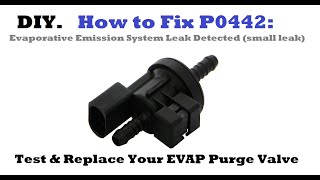
How to confirm: The purge valve should be normally closed when the engine is off. A key symptom of a stuck-open purge valve is a long crank or difficulty starting the car immediately after refueling, as fuel vapors flood the intake. To test, remove the valve and try to blow through it; no air should pass. 🎬 Watch: How to test and replace the EVAP purge valve You can also apply 12V power to see if the solenoid clicks open and closed.
Typical fix: Replace the purge valve. Aftermarket options are available from brands like Standard Motor Products.
Est. part cost: $30-$80
Rare But Worth Checking
- Cracked EVAP Charcoal Canister: → Shop Vapor Canister While less common than valve or hose failures, the plastic body of the canister itself can develop cracks from age or impact, causing a leak. This is usually found during a smoke test.
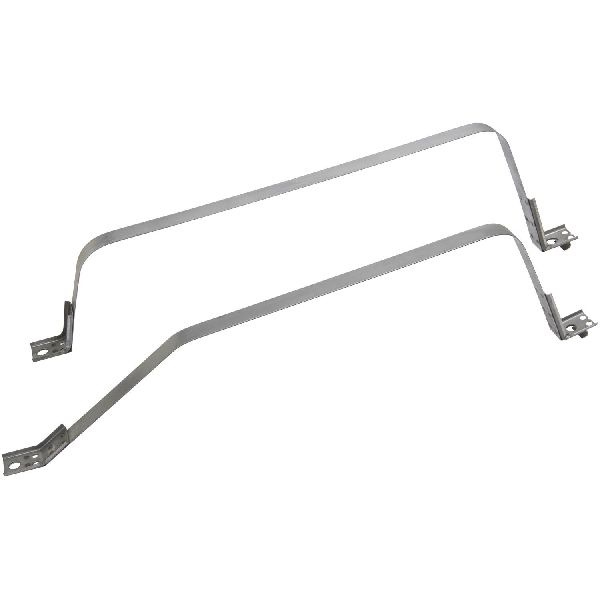
- Leaking Fuel Tank or Sending Unit Gasket: → Shop Fuel Tank Similar to the filler neck, the top of the fuel tank where the fuel pump/sending unit is mounted can rust, causing the gasket to lose its seal. This is a more serious issue and a significant leak source, though it may also trigger a large leak code (P0455).
Diagnosis Steps
- Check the Gas Cap: Remove the gas cap, inspect the seal for damage, and reinstall it, ensuring it clicks at least once. Also, inspect the lip of the fuel filler neck for rust or debris that could prevent a seal. Clear the code and drive for a few days to see if it returns.
- Visual Inspection: If the code returns, perform a thorough visual inspection of the EVAP system. Start with the fuel filler neck, looking for any signs of rust or moisture. Then, safely raise the vehicle and inspect the hoses, charcoal canister, and vent valve located near the rear driver's side wheel. Also check the purge solenoid and its hoses in the engine bay.
- Perform a Smoke Test: This is the most effective way to find the source of the leak. A smoke machine forces low-pressure smoke into the EVAP system via the service port. Smoke will exit from any cracks or bad seals, pinpointing the leak's location. 🎬 See a professional smoke test to find small EVAP leaks This is the standard professional method for finding small EVAP leaks.
- Test Valves: If no leak is obvious, the purge and vent valves should be tested. The purge valve (in the engine bay) can be checked to see if it's stuck open by attempting to blow through it when de-energized. The vent valve (at the rear) can be commanded closed with a capable scan tool to verify it seals properly during a smoke test.
- Repair and Verify: Once the leak is found and the faulty part is replaced, clear the code. Perform a complete drive cycle to allow the car's computer to re-run the EVAP monitor and confirm the fix.
Parts You'll Likely Need
- Gas Cap — This is the most frequent and simple fix for a P0442 code. The seal wears out over time, preventing the system from holding pressure.
Trusted brands: Stant, Gates, Mitsubishi OEM
OEM price range: $25-$40
Aftermarket price range: $15-$25 - Fuel Tank Filler Neck
(OEM #MR573836 (cross-reference))— A very common failure point on this generation of Galant due to rust creating small holes that cause EVAP leaks. Many owners in salt-belt states report this as the definitive fix for a persistent P0442.
Trusted brands: Liland, Dorman, Spectra Premium
OEM price range: $190-$250
Aftermarket price range: $100-$150
Related Codes That Often Appear With This One
- P0455 — Indicates a large EVAP leak. If a small leak (P0442) gets worse, or if the cause is a significant crack, it may eventually trigger a P0455.
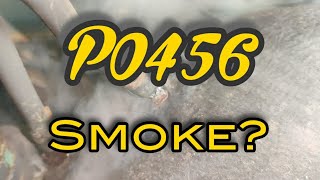
- P0456 — Indicates a very small EVAP leak. This is a similar code, and the causes and diagnostic procedures are nearly identical. The size of the detected leak is the only difference.
- P0446 — Indicates a fault in the EVAP vent control circuit. A problem with the vent valve or its wiring can sometimes trigger both a leak code (like P0442) and a circuit code.
Platform-Specific Known Issues
- The fuel filler neck on 1999-2000 models is particularly susceptible to rusting through, making it a top suspect for a P0442 code.
- Wiring to the EVAP vent solenoid can become brittle and break where it enters the frame rail, which can cause related EVAP codes like P0446.
Mechanic-Grade Diagnostic Values
- EVAP Canister Vent Valve/Solenoid Coil Resistance — expected: 17 - 21 ohms. Failure: A reading significantly higher (open circuit) or lower (shorted circuit) than the expected range.
- EVAP Purge Solenoid Resistance — expected: 22 - 26 Ω at 20°C (68°F). Failure: Resistance is outside of the specified range.
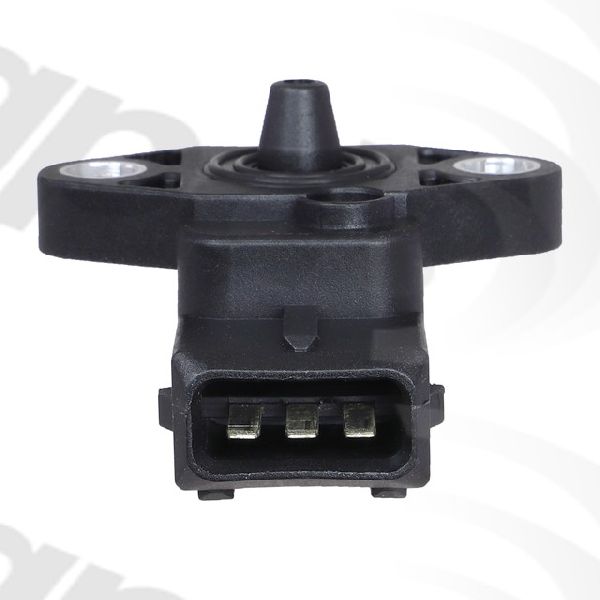
- Fuel Tank Differential Pressure Sensor - Reference Voltage — expected: 4.9 - 5.1 volts (at sensor connector terminal 3 to ground, key ON). Failure: Voltage outside this range indicates a problem with the ECM or wiring.
- Fuel Tank Differential Pressure Sensor - Ground Circuit — expected: 0.5 volts or less (at sensor connector terminal 2 to ground, key ON). Failure: Higher voltage indicates a poor ground connection.
- Fuel Tank Differential Pressure Sensor - Signal Voltage (Scan Tool) — expected: 1,500 - 3,500 millivolts (1.5 - 3.5V) with system at atmospheric pressure. Failure: Voltage outside this range with the system open can indicate a faulty sensor.
Scan Tool Commands That Help
- Mitsubishi M.U.T.-III (or equivalent advanced scan tool): Actuator Test: Evaporative Emission Ventilation Solenoid — This command allows a technician to manually energize (close) the normally open vent valve. This is critical for sealing the EVAP system to perform a smoke test or a vacuum decay test to find leaks.
- Mitsubishi M.U.T.-III (or equivalent advanced scan tool): Work Support: EVAP SYSTEM CLOSE — This is a guided function on the factory scan tool that walks a technician through the process of sealing the EVAP system for pressure testing with a hand pump, confirming the function of valves and the integrity of the system.
- Mitsubishi M.U.T.-III (or equivalent advanced scan tool): Data List Item 52: Fuel Tank Differential Pressure Sensor — To monitor the fuel tank pressure sensor's voltage output in real-time. This is used during smoke/pressure testing to see if the system is holding pressure or if the sensor is responding correctly to pressure changes.
Wiring & Ground Locations
- G102 — On the left front shock tower in the engine compartment.. This is a primary engine compartment ground. A poor connection here could potentially affect the operation of engine-bay-mounted EVAP components like the purge solenoid.
- G114 — Located on the left rear of the engine.. Another critical engine ground point that could influence sensor readings and solenoid operation if corroded or loose.
- Connector F-19 — The two-pin electrical connector at the EVAP vent control solenoid, near the charcoal canister at the rear of the car.. This is the main testing point for the vent solenoid. Terminal 2 should have battery voltage with the key on, and Terminal 1 is the control wire from the ECM.
- Joint Connector 1 — Located behind the left side of the dashboard.. This is a major junction for multiple circuits. While not a direct cause, issues here can create widespread electrical problems that might indirectly affect the EVAP system's power or sensor data.
Real Owner Repair Stories
- YouTube video by 'P0442 Where Leaks Happen & Easy Common Fixes' (Older car, likely a salt-belt vehicle based on corrosion shown.) — Check Engine Light with code P0442.
✅ What actually fixed it The video demonstrates that a common, and often overlooked, cause is rust on the fuel filler neck's sealing surface. Even with a good gas cap, the rust prevents a proper seal. The fix was to thoroughly clean the rust off the filler neck with a wire brush to create a smooth sealing surface.
Diagnostic Flowchart
Other Known Issues on This Vehicle
Issues unrelated to this code that are worth knowing about as an owner of this generation:
- Premature Automatic Transmission Failure 🔴 High — A widely reported issue for this generation, often manifesting as harsh shifting (flaring between 2-3), slipping, or complete failure. Can occur at various mileages.
- Peeling Clear Coat/Paint Failure 🟠 Medium — The clear coat on the paint, particularly on horizontal surfaces like the roof and hood, is known to degrade, cloud over, and peel due to UV exposure. This is a common cosmetic issue on older vehicles parked outdoors.
- Faulty Crankshaft Position Sensor 🟠 Medium — A failing crankshaft position sensor is a common cause of no-start or stalling conditions. It is a frequently reported problem by owners on repair sites.
- Failing Power Window Regulators/Motors 🟡 Low — This is the most-reported problem on RepairPal for the 2003 model year, with windows becoming stuck in the up or down position.
- Failed Idle Air Control (IAC) Valve 🟠 Medium — A faulty IAC valve can cause engine stalling, particularly at idle, and is a commonly reported repair for this Galant generation.
Used vs. New Parts: Buying Guide for This Vehicle
When a used part is the smart pick: A used fuel filler neck from a junkyard can be a cost-effective solution, provided it comes from a vehicle in a dry, rust-free climate. A charcoal canister assembly could also be sourced used, as they are generally robust unless physically cracked.
Donor-vehicle mileage cap: roughly under 150000 miles for the part to have meaningful remaining life.
What to inspect on the donor part:
- For a fuel filler neck, inspect for any signs of rust, especially on the sealing surface for the gas cap and along the entire pipe.
- For a charcoal canister, check the plastic housing for cracks or signs of impact. Ensure all hose nipples are intact and not brittle.
- Verify the donor vehicle is from a region that does not use road salt to minimize the risk of corrosion.
OEM-only on this vehicle (don't cheap out):
- Gas Cap - Aftermarket gas caps are a frequent source of EVAP codes. It is strongly recommended to use an OEM Mitsubishi cap to ensure a perfect seal.
Aftermarket brands forum-validated for this vehicle:
- Standard Motor Products (For solenoids and sensors)
- Dorman (For fuel filler neck)
- Spectra Premium (For fuel filler neck)
Brands owners have reported issues with on this vehicle:
- No-name or exceptionally cheap gas caps and electronic sensors found on marketplace sites.
Real Owner Stories
Aggregated from forums and TSBs cited above. Mileages and costs reflect what owners reported in those sources.
2003 Mitsubishi Evolution — ~150000 miles
Symptoms: EVAP leak code appearing after 15 winters in a salt state.
What fixed it: Replacement of the rusted fuel tank and filler neck.
Source hint: EvolutionM.net thread titled 'fuel-system-components-rusted-need-replacement.html'
2001 Mitsubishi Eclipse
Symptoms: P0442 code and a fuel leak around the fuel filler neck while pumping gas.
What fixed it: Replacing the completely rusted-out fuel filler neck (OEM part MR573836).
Source hint: 2carpros.com thread '2001-mitsubishi-eclipse-code-p0442-fuel-leak-around-fuel-filler-neck-while-pumping-gas'
2005 Mitsubishi Galant
Symptoms: P0442 code; owner had already checked the gas cap and hoses.
What fixed it: The source describes the diagnostic starting point of checking the gas cap and hoses for this model year.
Source hint: Reddit r/MechanicAdvice thread 'need_advice_on_fixing_a_2005_mitsubishi_galant/'
Documented NHTSA Reports
Mitsubishi Endeavor (Cross-Manufacturer Reference)
Symptoms: A small EVAP leak (code P0442) was detected during a dealership test.
What fixed it: According to NHTSA ODI #10286733, the dealer replaced the gas cap for $48.57 to address the small leak code.
Mitsubishi Endeavor (Cross-Manufacturer Reference)
Symptoms: The vehicle triggered code P0442 due to a failure in the fuel system.
What fixed it: NHTSA ODI #11246155 reports that a defective fuel filler neck was the cause of the P0442 code.
Related OBD-II Codes
Frequently Asked Questions
I have a 2001 Mitsubishi Galant and the gas pump keeps clicking off when I try to fill up. Is this related to my P0442 code?
My 2000 Galant has a P0442 code and I live in the 'salt belt.' What should I check first?
Is there a specific Mitsubishi part number for the vent solenoid if I need to replace it?
My car is hard to start only after I put gas in it. Could this be the P0442 leak?
Are there any other Mitsubishi models that have this same filler neck rust issue?
Where is the EVAP vent valve located on the 1999-2003 Galant?
Helpful Videos


We Have This Part in Stock

The information in this article is provided for general reference and educational purposes only. Vehicle specifications, procedures, and part compatibility can vary by production date, trim level, and region. Always consult your vehicle's factory service manual and verify part numbers before purchasing or performing repairs. Safety-critical components such as airbags, seat belts, and braking systems should be installed by a qualified professional.
- Mitsubishi Galant:
- 🧭 Diagnostic Flowchart
- 🎬 Helpful Videos
- 🛍️ Shop This Part
- What's Unique About the 1999-2003 Mitsubishi Galant
- Symptoms You May Notice
- Most Likely Causes
- Rare But Worth Checking
- Diagnosis Steps
- Parts You'll Likely Need
- Related Codes That Often Appear With This One
- Platform-Specific Known Issues
- Mechanic-Grade Diagnostic Values
- Scan Tool Commands That Help
- Wiring & Ground Locations
- Real Owner Repair Stories
- Other Known Issues on This Vehicle
- Used vs. New Parts: Buying Guide for This Vehicle
- Real Owner Stories
- 2003 Mitsubishi Evolution — ~150000 miles
- 2001 Mitsubishi Eclipse
- 2005 Mitsubishi Galant
- Documented NHTSA Reports
- Mitsubishi Endeavor (Cross-Manufacturer Reference)
- Mitsubishi Endeavor (Cross-Manufacturer Reference)
- Related OBD-II Codes
- Frequently Asked Questions
- 🎟️ Get 5% Off