

P0442 on 2007-2013 Mitsubishi Outlander: EVAP Small Leak Causes and Fixes
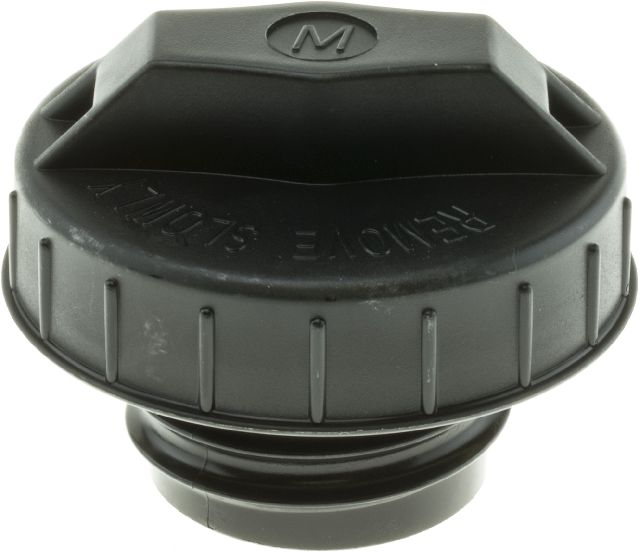
On a 2007-2013 Mitsubishi Outlander, code P0442 is most often caused by a loose or worn-out gas cap. Before trying anything else, tighten the cap until it clicks several times or replace it with a new OEM cap (Part No. 1711A015) for about $20-$40.
- P0442 means a small leak has been detected in the fuel vapor system.
- Always check the gas cap first. Make sure it's tight; if the code returns, replace it with an OEM cap.
- The vehicle is safe to drive with this code, but you will not pass an emissions test.
- If the gas cap isn't the fix, the next steps involve checking EVAP hoses and valves. A professional smoke test is the most efficient way to find the leak.
What's Unique About the 2007-2013 Mitsubishi Outlander
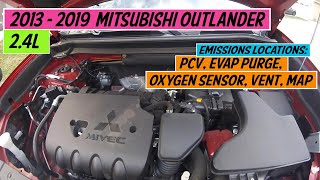
For the second-generation Outlander, the P0442 code is a straightforward EVAP leak code without many platform-specific quirks. The system is a fairly standard design for its era. 🎬 Watch: Locate the EVAP and emission components on your Mitsubishi. However, owners in regions with road salt should pay close attention to the metal and plastic lines above the fuel tank and near the rear subframe, as corrosion can cause small, hard-to-find leaks. The fuel filler neck is a particularly common point for rust perforation that can cause this code. The diagnostic procedure is standard, starting with the gas cap and often requiring a smoke test to locate the source of the small leak.
Symptoms You May Notice
- Check Engine Light is on
- A faint smell of gasoline, particularly around the rear of the vehicle (less common with small leaks)
- Replacing the oxygen sensors. Oxygen sensors are not related to the EVAP system.
- Replacing the catalytic converter. This is an exhaust component and is unrelated to fuel vapor leaks.
Most Likely Causes
- Loose, Worn, or Incorrect Gas Cap 🔴 High Probability → Shop Fuel Tank Cap The gas cap is a frequently used part and its seal naturally degrades over time. Aftermarket caps may not seal correctly, and owners may forget to tighten it properly. This is the most common cause across all vehicles for this code.
How to confirm: First, ensure the current cap is tightened until it clicks at least three times. If the light returns, inspect the cap's rubber O-ring for cracks, stiffness, or damage. The easiest confirmation is to replace it with a new, known-good OEM cap (Mitsubishi P/N: 1711A015).
Typical fix: Replace the gas cap.
Est. part cost: $15-$40 - Leaking or Stuck-Open EVAP Purge Solenoid/Valve 🟡 Medium Probability → Shop Vapor Canister This valve is located in the engine bay and cycles frequently, leading to eventual wear and tear where it may not seal completely when commanded closed.
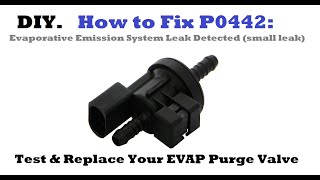
How to confirm: With the engine off, disconnect the valve and attempt to blow air through it. If air passes, the valve is stuck open and has failed. A professional 🎬 See how to test and replace the EVAP purge valve. would use a hand-held vacuum pump to test if it holds vacuum when unpowered. A scan tool can also command the valve to cycle while observing system pressure.
Typical fix: Replace the EVAP purge solenoid. (Common OEM P/N for 4-cyl is 8657A049).
Est. part cost: $50-$140 - Cracked or Rotted EVAP Hoses 🟡 Medium Probability Rubber and plastic hoses become brittle with age and exposure to heat and the elements. Small cracks can develop, especially at connection points, bends, or where they are secured by clips.
How to confirm: A visual inspection may reveal obvious cracks, but small leaks often require a smoke test. A mechanic will inject pressurized smoke into the EVAP system via the service port and look for where it escapes. Pay close attention to rubber elbows and connections.
Typical fix: Replace the specific section of damaged hose.
Est. part cost: $10-$50 - Leaking or Stuck EVAP Vent Solenoid/Valve ⚪ Low Probability → Shop Vapor Canister Located near the charcoal canister at the rear of the vehicle, this valve is exposed to road debris, salt, and moisture, which can cause it to fail, get stuck with dirt, or its seals to leak.
How to confirm: This valve is normally open and closes when the system runs its self-test. Confirmation usually requires a bi-directional scan tool (like the dealer's M.U.T.-III) to command the valve closed, then performing a smoke or vacuum test to see if it's sealing properly.
Typical fix: Replace the EVAP vent solenoid.
Est. part cost: $40-$100
Rare But Worth Checking
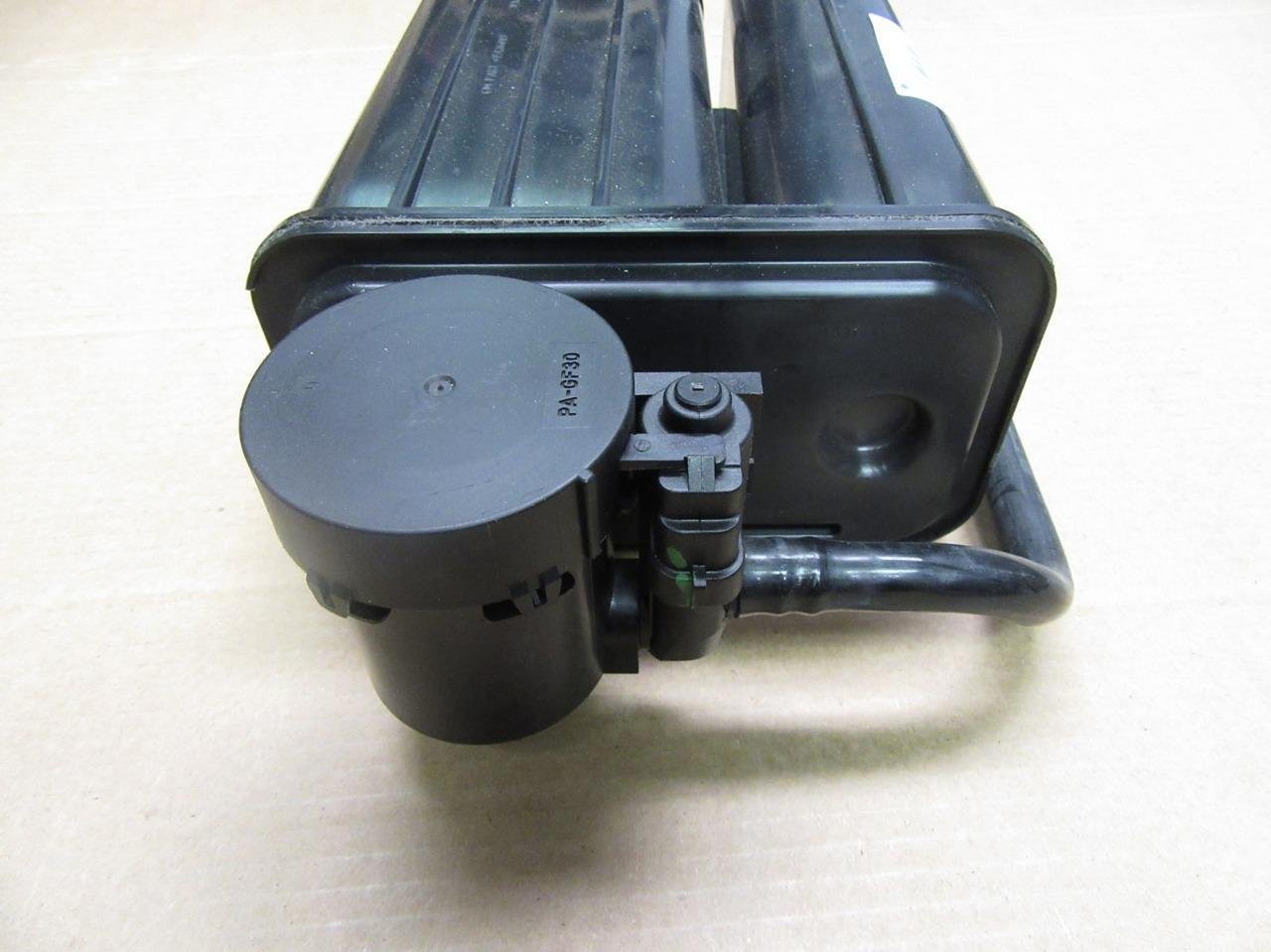
- Cracked EVAP Charcoal Canister: → Shop Vapor Canister The plastic housing of the canister itself can develop hairline cracks from age or impact from road debris, causing a leak.
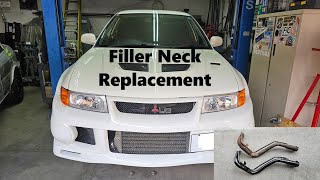
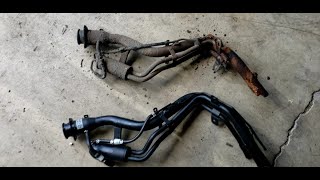
- Leaking Fuel Tank or Filler Neck: → Shop Fuel Tank While more common for gross leak codes (P0455), rust perforation on the filler neck or a crack in the fuel tank itself can cause a small leak. This is more likely in areas that use road salt. 🎬 Watch: How to replace a rusted fuel filler neck. A smoke test is the definitive way to find such a leak. A similar Mitsubishi model report, NHTSA ODI #11246155, confirms that a defective fuel filler neck can be the direct cause of code P0442.
Diagnosis Steps
- Read the code with an OBD-II scanner to confirm P0442 is present.
- Inspect the gas cap. Remove it, check the seal for damage, and retighten it, ensuring you hear several clicks. Clear the code and drive for a few days to see if it returns.
- If the code returns, replace the gas cap with a new OEM part (Mitsubishi P/N: 1711A015) as a low-cost, high-probability fix.
- If the new gas cap does not resolve the issue, perform a visual inspection of all accessible EVAP hoses in the engine bay and under the vehicle, looking for obvious cracks, disconnections, or damage. Flex the hoses to reveal hidden cracks.
- Locate the purge solenoid in the engine bay. With the engine off, remove it and try to blow through it. It should be closed and block airflow. If air passes, it's faulty.
- If no obvious faults are found, the most effective next step is a professional smoke test. This involves injecting low-pressure, UV-dyed smoke into the EVAP system's service port to pinpoint the exact location of the small leak.
- Based on the smoke test results, inspect the leaking component, which could be the vent valve, charcoal canister, a hose, or the fuel tank filler neck.
- Repair or replace the identified leaking component, clear the code, and perform a full EVAP drive cycle to confirm the fix.
Parts You'll Likely Need
- Fuel Cap
(OEM #1711A015)— This is the most frequent cause of a P0442 code due to its seal wearing out over time or improper tightening.
Trusted brands: Mitsubishi Genuine, Stant (10834), Gates (31832)
OEM price range: $25-$40
Aftermarket price range: $10-$25 - Vapor Canister Purge Solenoid
(OEM #8657A049 (common for 4-cyl))— This valve cycles frequently and can get stuck partially open, causing a constant small leak from the engine bay.
Trusted brands: Mitsubishi Genuine, Dorman (911-482), Standard Motor Products (CP588)
OEM price range: $100-$140
Aftermarket price range: $50-$90 - Vapor Canister Vent Valve/Solenoid — Located under the car near the charcoal canister, this valve can fail due to exposure to the elements, failing to seal when commanded closed during the EVAP test.
Trusted brands: Mitsubishi Genuine, Dorman
OEM price range: $60-$110
Aftermarket price range: $40-$80
Related Codes That Often Appear With This One
- P0456 — P0456 indicates a 'very small leak'. If the leak size is on the borderline between the two definitions, either code could potentially be triggered by the same fault.
- P0455 — P0455 indicates a 'gross leak'. While less common to see together, a component that is beginning to fail might first set a P0442 and later, as the leak worsens, set a P0455.
Mechanic-Grade Diagnostic Values
- EVAP Purge Solenoid Coil Resistance — expected: 22 - 26 Ω at 20°C (68°F). Failure: A reading significantly outside this range, or an open circuit (infinite resistance), indicates a failed solenoid coil.
- EVAP Vent Solenoid Coil Resistance — expected: Typically 20 - 50 Ω. Failure: A reading outside this range suggests a faulty coil. This is a general specification, as a Mitsubishi-specific value is not published.
- Fuel Tank Differential Pressure Sensor Voltage — expected: 1.0 - 4.0 Volts. Failure: Voltage outside this range during the EVAP monitor test can indicate a faulty sensor or wiring, preventing the test from running correctly.
Scan Tool Commands That Help
- Mitsubishi M.U.T.-III: System Test -> Evap Leak Mon. — This command initiates the complete, automated EVAP system self-test. The scan tool will display whether the test passed, failed, or was discontinued. This is the first step after checking the gas cap to confirm a persistent fault exists.
- Mitsubishi M.U.T.-III: Actuator Test -> Item 15: Evaporative Emission Ventilation Solenoid — This bidirectional command manually energizes the vent solenoid, which is normally open. While energized (closed), a technician can use a hand vacuum pump or smoke machine to verify if the valve is sealing properly.
Wiring & Ground Locations
- EVAP Purge Solenoid Connector — On the EVAP purge solenoid, located on the left side of the engine.. This is a 2-pin connector. One pin should have ~12V with the ignition on. The other pin is ground-side switched by the ECM. Poor connection or corrosion here can prevent the valve from operating, though this would typically set a circuit code (like P0443) rather than a leak code.
- G3 — On the left rear of the engine.. This is a primary engine ground point. A poor connection here could potentially affect the operation of engine-mounted sensors and solenoids related to the EVAP system.
- G15 — On the left side of the engine compartment.. This is a chassis ground point in the engine bay. The EVAP purge solenoid and its related wiring may rely on this ground path. Corrosion or a loose connection can cause intermittent electrical issues.
- EVAP Vent Solenoid — Under the left rear of the vehicle, typically attached to or near the charcoal canister.. Its location exposes it to road salt and debris, making its connector and wiring susceptible to corrosion and physical damage, which can cause it to fail to close during the EVAP test.
Real Owner Repair Stories
- 2CarPros Forum User (2000-2005 Mitsubishi Eclipse (Note: Different model, but highly relevant failure for rust-belt Outlanders)) — Persistent P0442 code and a visible fuel leak on the ground only when actively pumping gas.
❌ Tried (didn't work) Initial diagnosis could not pinpoint the leak.
✅ What actually fixed it The metal fuel filler neck was found to be completely rusted out on the bottom. Replacing the filler neck with an OEM part (P/N MR573836 for that model) resolved both the fuel leak and the P0442 code. - Mitsubishi Forum User (2003 Mitsubishi Outlander AWD (Note: First generation, but relevant for rust/corrosion issues)) — P0442 (small leak) check engine light.
❌ Tried (didn't work) Greasing the gas cap O-ring.
✅ What actually fixed it The user found multiple rusty EVAP lines and a major leak from a cracked plastic 'T' fitting located above the gas tank. Accessing this required cutting a hole in the floor pan between the fuel pump access panels. After repairing the lines and epoxying the 'T' fitting, the major leak was fixed, though the user was still waiting to see if the CEL would return and had ordered a new OEM gas cap as a final measure. This story highlights the hard-to-find lines above the tank as a potential culprit. - NHTSA ODI #10286733 (Mitsubishi Endeavor — cross-manufacturer reference) — An owner reported that after a test found code P0442 for a small EVAP leak, the dealer replaced the gas cap for $48.57 to resolve the issue.
Diagnostic Flowchart
Other Known Issues on This Vehicle
Issues unrelated to this code that are worth knowing about as an owner of this generation:
- CVT Transmission Failure/Issues 🔴 High — Common, especially on 4-cylinder models. Symptoms like whining, shuddering, hesitation, and overheating can appear. Proactive fluid changes every 30,000 miles are highly recommended to prolong life. (Ref: Multiple TSBs exist, such as one addressing shudder/surge conditions caused by hydraulic pressure circuit reactions.)
- ETACS (BCM) Failure 🟠 Medium — A notable number of owners report failures of the Electronic Time and Alarm Control System (the body control module), leading to erratic behavior of wipers, lights, power locks, and other electronics. Replacement is costly as it requires dealer programming.
- Prematurely Worn Lower Control Arm Bushings 🟡 Low — A very common wear item. Worn bushings cause squeaking or rattling noises from the front suspension when going over bumps and can lead to premature tire wear.
- Water Pump Failure (V6 Models) 🔴 High — On the 3.0L V6 engine, the water pump is driven by the timing belt. A pump failure can cause overheating and requires a significant labor investment for replacement, during which the timing belt should also be replaced.
- Ancillary Drive Belt Failure (4-Cylinder Models) 🔴 High — Affects 4B11 and 4B12 engines built between 2006 and 2011. The belt could wear unevenly and come off, causing a sudden loss of power steering and electrical power. (Ref: Recall issued for affected vehicles to replace the ancillary drive belt.)
- Corroding Front Wiper Link Ball Joint 🟠 Medium — Water can enter between the hood and windshield, corroding the wiper link ball joint. This can cause the wipers to fail, reducing visibility. (Ref: NHTSA Campaign Number: 16V821000. Dealers will replace a rubber boot on the ball joint to prevent water intrusion.)
Used vs. New Parts: Buying Guide for This Vehicle
When a used part is the smart pick: For this specific repair, using used parts is strongly discouraged. The common failure points are seals, rubber hoses, plastic components, and rusted metal parts. A used part from a salvage yard will have the same age-related degradation (brittle plastic/rubber) or environmental damage (rust) as the part that failed.
What to inspect on the donor part:
- Not applicable, as used parts are not recommended for this repair.
OEM-only on this vehicle (don't cheap out):
- Fuel Cap: Aftermarket gas caps are a very common cause of P0442 codes due to improper sealing. Always use a genuine Mitsubishi OEM cap (P/N 1711A015) to eliminate it as a variable.
- Fuel Filler Neck: For vehicles in rust-prone areas, the filler neck is a critical failure point. An OEM part is recommended to ensure proper fitment and material quality, as one owner noted the OEM part was metal while some aftermarket options were plastic.
Aftermarket brands forum-validated for this vehicle:
- Standard Motor Products (SMP): Generally considered a reliable aftermarket alternative for electronic components like purge or vent solenoids if an OEM part is unavailable or cost-prohibitive.
Brands owners have reported issues with on this vehicle:
- Dorman: While widely available, owner forums contain multiple reports of Dorman-branded EVAP components, particularly rubber hoses and plastic valves, failing prematurely (sometimes within months) compared to OEM or other premium aftermarket brands. Use with caution, especially for parts made of rubber or soft plastic.
Real Owner Stories
Aggregated from forums and TSBs cited above. Mileages and costs reflect what owners reported in those sources.
2007 Mitsubishi Outlander V6
Symptoms: The Check Engine Light (P0442) appeared once and then went away after a restart.
What fixed it: The gas cap was identified as the likely intermittent cause.
Source hint: mitsubishiforum.com thread titled 'P0442 CEL code'
2007 Mitsubishi Outlander
Symptoms: P0442 code present; vehicle located in a rust-belt state.
What fixed it: Repairing rusted EVAP lines located above the fuel tank.
Source hint: mitsubishiforum.com
Related OBD-II Codes
Frequently Asked Questions
What is the specific Mitsubishi part number for a replacement gas cap on my 2007-2013 Outlander?
Is there a recall for my 4-cylinder Outlander that might be related to engine power loss or belt issues?
My wipers are acting strange and my power locks are failing; is this related to the P0442 code?
I live in a snowy state; are there any specific EVAP components I should check for rust?
Can I use a standard OBD-II scanner to test the EVAP vent solenoid on my Outlander?
Is there a recall for the windshield wipers on the 2007-2013 Outlander?
Helpful Videos

Used OEM Parts in Stock
New Aftermarket Parts Available


The information in this article is provided for general reference and educational purposes only. Vehicle specifications, procedures, and part compatibility can vary by production date, trim level, and region. Always consult your vehicle's factory service manual and verify part numbers before purchasing or performing repairs. Safety-critical components such as airbags, seat belts, and braking systems should be installed by a qualified professional.
- Mitsubishi Outlander:
- 🧭 Diagnostic Flowchart
- 🎬 Helpful Videos
- 🛍️ Shop This Part
- What's Unique About the 2007-2013 Mitsubishi Outlander
- Symptoms You May Notice
- Most Likely Causes
- Rare But Worth Checking
- Diagnosis Steps
- Parts You'll Likely Need
- Related Codes That Often Appear With This One
- Mechanic-Grade Diagnostic Values
- Scan Tool Commands That Help
- Wiring & Ground Locations
- Real Owner Repair Stories
- Other Known Issues on This Vehicle
- Used vs. New Parts: Buying Guide for This Vehicle
- Real Owner Stories
- 2007 Mitsubishi Outlander V6
- 2007 Mitsubishi Outlander
- Related OBD-II Codes
- Frequently Asked Questions
- 🎟️ Get 5% Off