

P0442 on 2007-2014 Nissan Altima: EVAP Small Leak Causes and Fixes
For a 2007-2014 Nissan Altima, a P0442 code is most often caused by a loose or faulty gas cap. If that's not the issue, the next most common culprit is a failed EVAP canister vent control valve, located at the rear of the car near the fuel tank. A new OEM gas cap is about $25-$40, while a vent valve (OEM part # 14935-JF02C) can cost between $60 and $180. Always try an OEM gas cap first, as aftermarket caps are a known cause of this code.
- P0442 indicates a small leak in the emissions system, not a critical engine problem.
- Always start with the simplest fix: check that your gas cap is tight and its seal is in good condition. Using a genuine Nissan cap is recommended.
- On the 2007-2014 Altima, the second most likely cause is a faulty EVAP canister vent control valve located at the rear of the car.
- While you can visually inspect hoses, a smoke test is the fastest and most accurate way for a mechanic to find the exact source of the leak.
- Ignoring the code will cause a failed emissions test and prevents you from knowing if new, more serious problems arise.
What's Unique About the 2007-2014 Nissan ALTIMA
The 2007-2014 Altima, like many other Nissans of this era, is particularly prone to failure of the EVAP canister vent control valve. This valve, located at the rear of the vehicle, is exposed to road debris and moisture, which can cause it to stick open or fail, triggering a P0442 code. While the gas cap is always the first suspect, the vent valve is a very common second stop for Altima owners, a fact supported by numerous owner forum discussions and mechanic repair videos.
Diagnostic Flowchart
Tap your situation to follow the diagnostic path that matches what you're seeing on this vehicle.
Generation note: This year range covers two generations of the Nissan Altima: the fourth generation (L32, 2007-2012) and the fifth generation (L33, 2013-2014). While the body and interior were redesigned for 2013, the fundamental design of the EVAP system and its common failure points, like the gas cap and vent control valve, are very similar across both generations, as confirmed by shared part numbers and TSBs.
Symptoms You May Notice
- Check Engine Light is on
- A faint fuel smell, particularly when parked in an enclosed space like a garage.
- A 'Loose Fuel Cap' warning message on the dashboard (on some models).
- Difficulty starting the car immediately after refueling (long crank time), which can point to a purge valve stuck open.
- Replacing the purge valve in the engine bay when the more common failure is the vent control valve at the rear of the vehicle.
- Replacing other EVAP components before confirming the gas cap is an OEM-spec part and is sealing correctly. Many forum users report that aftermarket caps do not resolve the issue.
- Overlooking a rusted or dirty fuel filler neck sealing surface after replacing the gas cap.
Most Likely Causes
- Loose or Faulty Gas Cap 🔴 High Probability → Shop Fuel Tank Cap This is the most common cause for P0442 on any vehicle. The rubber seal on the cap can wear out, crack, or get dirty, preventing a proper seal. Nissan TSBs NTB13-097J and NTB09020F specifically call out a loose or faulty cap as a primary cause for this code.
How to confirm: First, ensure the cap is tightened until it clicks. If the code returns, inspect the cap's rubber O-ring for any cracks, stiffness, or damage. Also, inspect the sealing surface on the fuel filler neck for rust or debris, which can prevent a good seal. If it looks worn, it's suspect.
Typical fix: Replace the fuel filler cap. It is highly recommended to use an OEM (Original Equipment Manufacturer) cap from Nissan, as many owners in forums report that aftermarket caps fail to solve the problem.
Est. part cost: $25-$40 (OEM) - Faulty EVAP Canister Vent Control Valve 🔴 High Probability → Shop Vapor Canister Vent Valve This is a well-documented failure point on Nissans. The valve is located under the car near the EVAP canister (by the rear driver's side tire) and is susceptible to dirt, moisture, and corrosion, causing it to fail or stick open.
How to confirm: The valve can be tested with a scan tool that can command it to close. A more common DIY method is to remove it and apply 12V power to see if the solenoid clicks and the valve closes. When unpowered, you should be able to blow through it (normally open). A definitive diagnosis is a smoke test, which will show smoke leaking from the failed valve when it's commanded closed.
Typical fix: Replace the EVAP canister vent control valve and its O-ring. The valve twists into the EVAP canister. Some owners report the bolts holding the canister can seize with rust, making removal difficult.
Est. part cost: $60-$180 - Cracked or Disconnected EVAP Hose 🟡 Medium Probability Over time, the rubber and plastic hoses in the EVAP system can become brittle and crack, especially in the engine bay due to heat cycles or on the lines leading to the canister.
How to confirm: Visually inspect all accessible EVAP lines, from the engine bay (near the purge valve) to the canister at the rear. Squeezing the hoses can reveal hidden cracks. A smoke test is the most effective way to find a small hose leak.
Typical fix: Replace the damaged section of hose. This may involve a simple rubber connector or a specific pre-formed hose from the manufacturer.
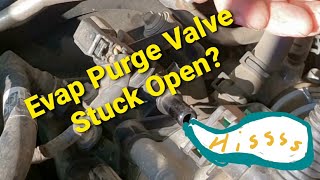
Est. part cost: $5-$50 - Faulty EVAP Purge Valve/Solenoid ⚪ Low Probability → Shop Vapor Canister The purge valve, located in the engine bay, can sometimes get stuck open, creating a constant small leak. While less common than the vent valve for this code, it's still a possibility.
How to confirm: With the engine off, remove the valve and try to blow through it; it should be closed and not allow air to pass. If air passes, it's faulty. You can also test it with a hand-held vacuum pump to see if it holds a vacuum when not energized.
Typical fix: Replace the purge valve assembly.
Est. part cost: $50-$175
Rare But Worth Checking
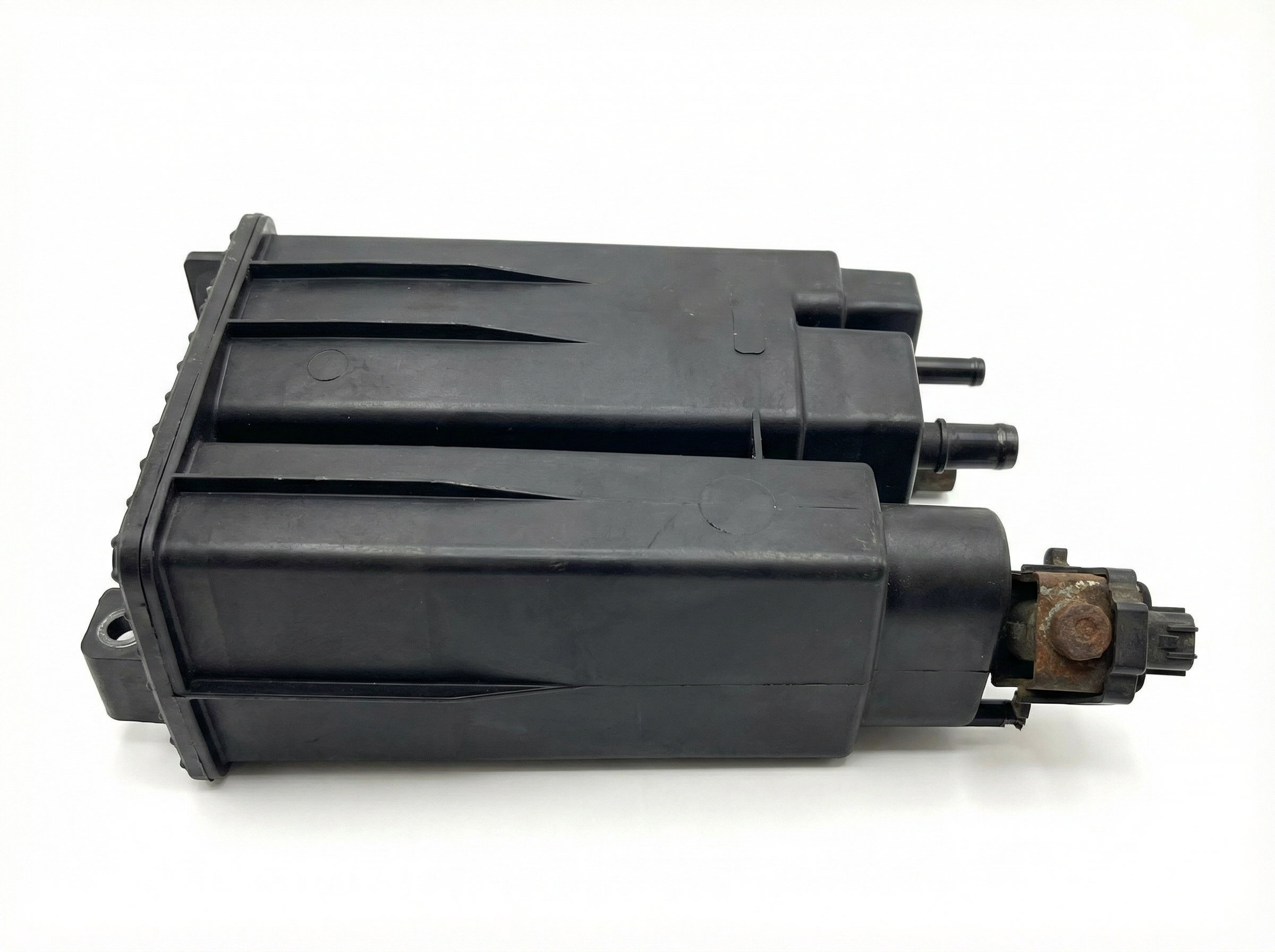
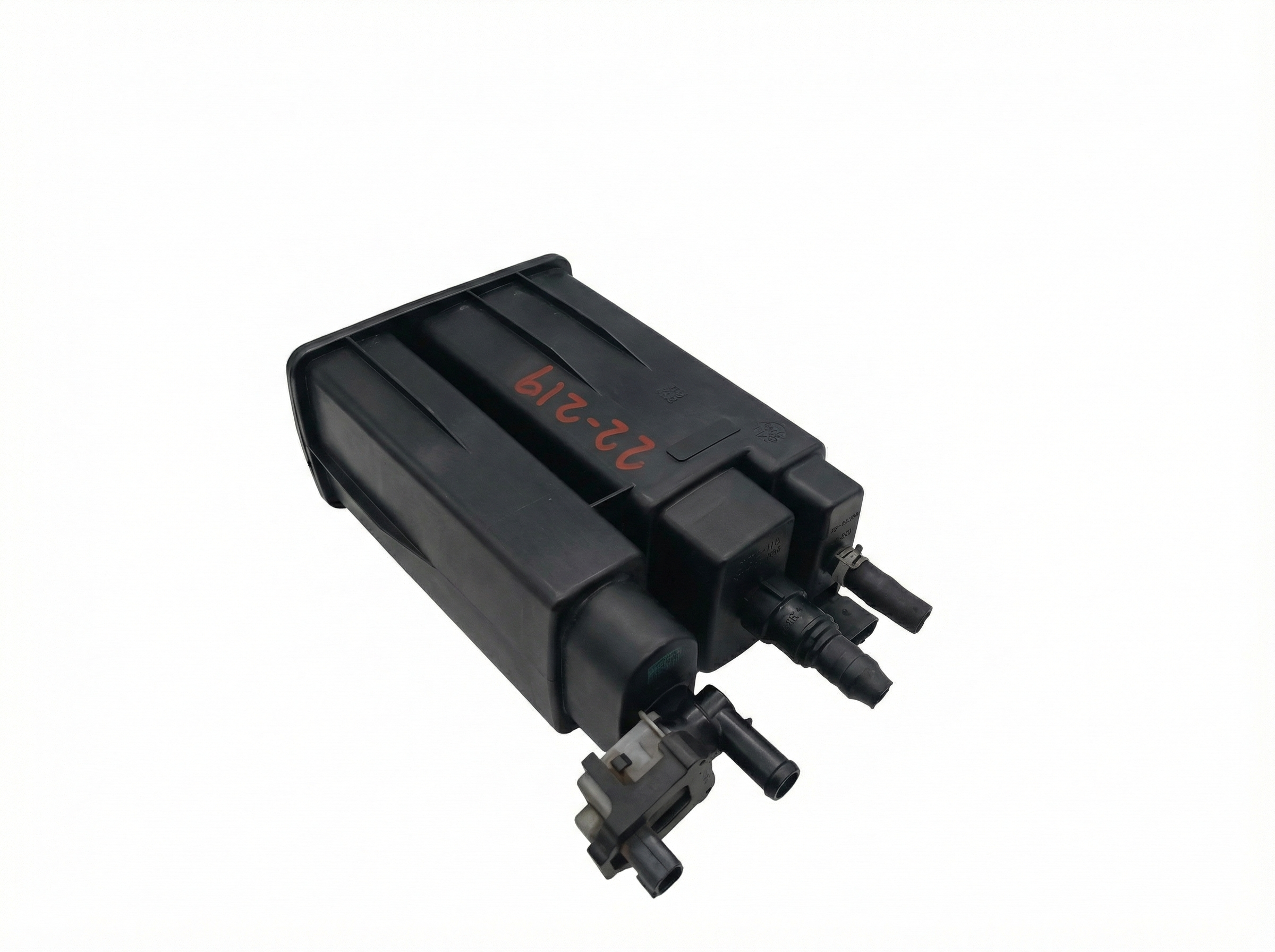
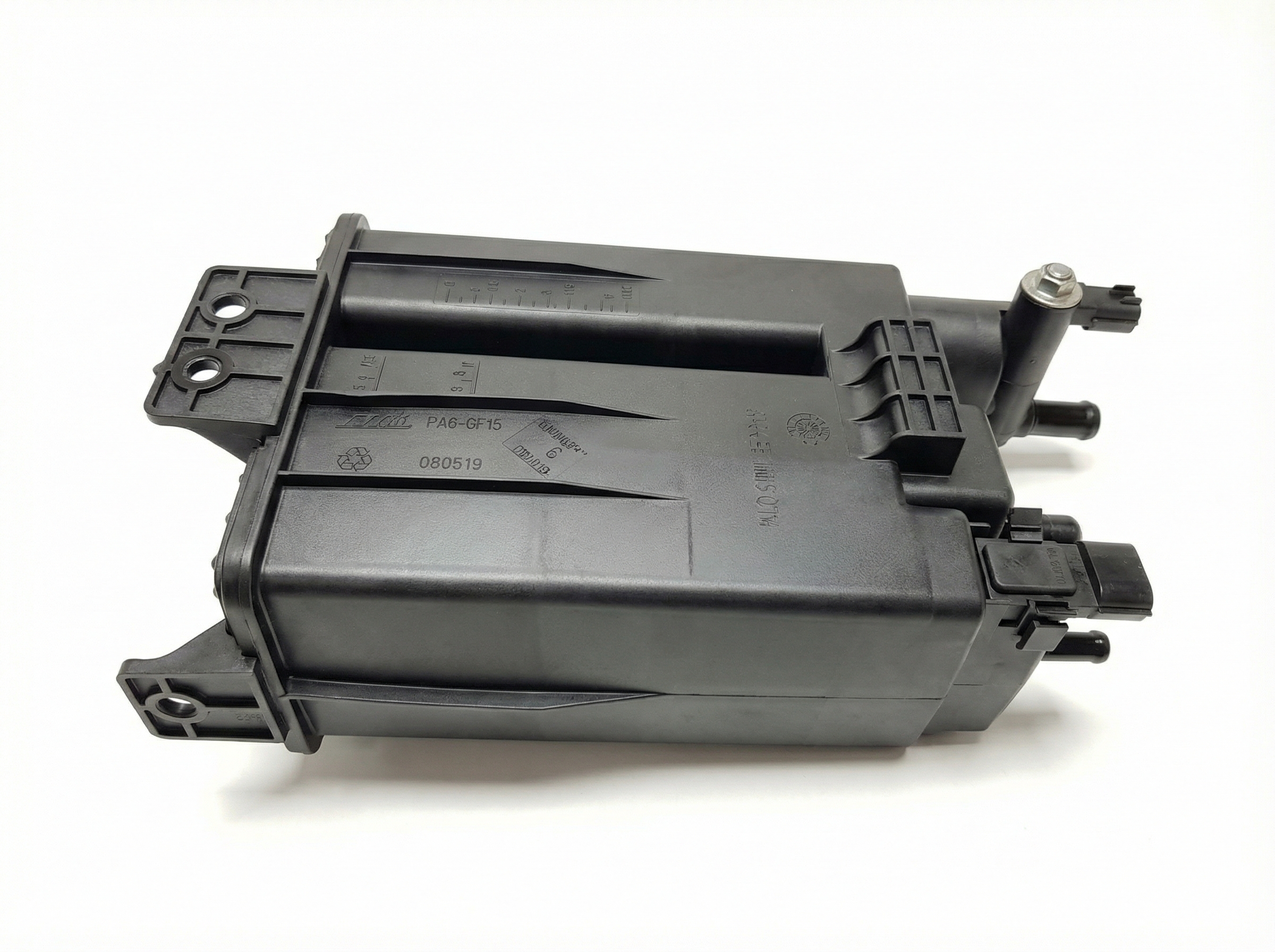
- Cracked EVAP Canister: → Shop Vapor Canister The charcoal canister itself can develop a hairline crack, often from road debris impact. This is usually only found with a smoke test after all other components have been checked.
- Leaking Fuel Tank or Filler Neck: → Shop Fuel Tank Rust and corrosion, particularly in regions that use road salt, can cause small perforations in the fuel tank or the filler neck where the gas cap seals. This is a more serious issue and would likely be discovered during a smoke test.
Diagnosis Steps
- Check the gas cap. Remove it, inspect the seal for damage, and retighten it until it clicks at least once. Also, clean and inspect the filler neck sealing surface for rust or dirt. Clear the code and drive for a few days to see if it returns. It may take several drive cycles for the light to turn off on its own.
- If the code returns, replace the gas cap with a new OEM part as a low-cost, high-probability fix.
- Visually inspect all visible EVAP hoses in the engine bay and under the car for obvious cracks, damage, or loose connections. Squeeze the hoses to check for brittleness.
- Locate the EVAP canister vent control valve at the rear of the car, near the driver's side rear tire. Inspect it and its electrical connector for damage or corrosion.
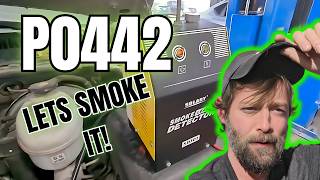
- The most definitive diagnostic step is to perform a smoke test. A smoke machine forces low-pressure, smoke-filled air into the EVAP system via a service port. The leak will be revealed by the visible smoke escaping from the faulty component (e.g., vent valve, hose, gas cap seal).
- If a smoke test is not available, you can test individual components. The vent valve (normally open) and purge valve (normally closed) can be removed and tested with a 12V power source and by attempting to blow air through them to confirm correct operation.
- Based on the smoke test results or component testing, replace the part that is leaking.
Parts You'll Likely Need
- Fuel Filler Cap
(OEM #17251-1VZ0A (example, verify by VIN))— This is the most frequent and cheapest potential fix for a P0442 code due to a worn or damaged seal. Nissan TSBs and owner forums consistently point to this as the first step.
Trusted brands: Nissan (OEM)
OEM price range: $25-$40
Aftermarket price range: $15-$30 - EVAP Canister Vent Control Valve
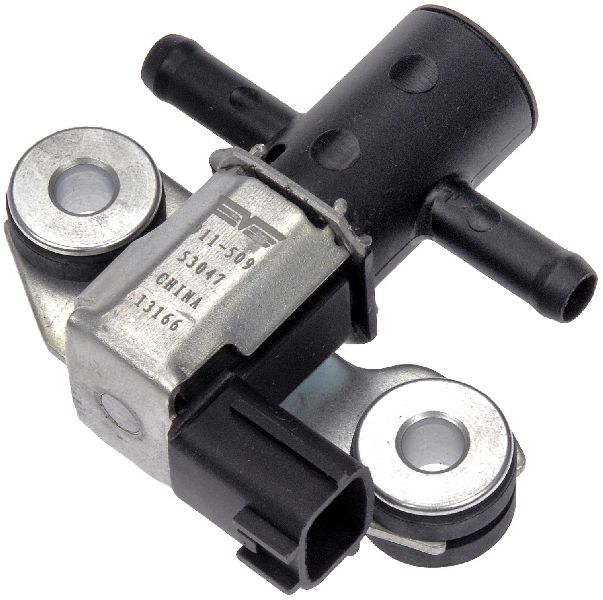
(OEM #14935-JF02C)— This is a very common failure point on 2007-2014 Altimas, often due to its exposed location under the vehicle. It gets stuck open, causing a small leak. This part number has superseded several previous versions (14935-JF00A, JF00B, etc.), indicating ongoing revisions by Nissan to improve reliability.
Trusted brands: Nissan (OEM), Dorman (e.g., 911-503), Hitachi
OEM price range: $100-$180
Aftermarket price range: $60-$120 - EVAP Canister Purge Valve
(OEM #14930-JA10D (example, verify by VIN))— Less common than the vent valve for a P0442, but this engine-bay-mounted valve can stick open and cause a leak. A symptom can be a long crank time after refueling.
Trusted brands: Nissan (OEM), Bosch
OEM price range: $160-$225
Aftermarket price range: $50-$100
Related Codes That Often Appear With This One
- P0456 — P0456 indicates a 'very small' EVAP leak. The underlying causes are identical to P0442, and sometimes the computer may set one code or the other depending on the exact test conditions. Nissan TSBs often group these codes together.
- P0455 — P0455 indicates a 'gross' or large EVAP leak. If a component like the vent valve is completely stuck open or the gas cap is left off entirely, you may see this code instead of, or along with, P0442.
Technical Service Bulletins (TSBs) & Recalls
- NTB13-097J: EVAP LEAK DTC P0442, P0455, P0456 INFORMATION
- NTB13-097g: EVAP LEAK DTC P0442, P0455, P0456 INFORMATION
- NTB09020F: SERVICE INFORMATION for EVAP DTCs P0442, P0455, P0456
- NTB13-097D: ALL MODEL YEAR 2012 AND NEWER NISSAN VEHICLES; EVAP LEAK DTC P0442, P0455, P0456 INFORMATION
Platform-Specific Known Issues
- Nissan Technical Service Bulletin NTB09020F specifically calls out that a loose fuel fill cap may be the cause for P0442 on 2007-2011 models.
- Nissan TSB NTB13-097J, which has been amended multiple times, provides the official dealer diagnostic procedure for EVAP leak codes P0442, P0455, and P0456 on 2012 and newer models, reinforcing that this is a known area of concern for the manufacturer.
Mechanic-Grade Diagnostic Values
- EVAP Canister Vent Control Valve Solenoid Resistance — expected: 20 - 50 ohms. Failure: An open circuit (infinite resistance) or a reading far outside the expected range indicates a bad solenoid coil.
- EVAP Canister Purge Valve Solenoid Resistance — expected: 30 - 38 ohms. Failure: A reading significantly lower (shorted) or higher (open) than the specified range indicates a faulty solenoid.
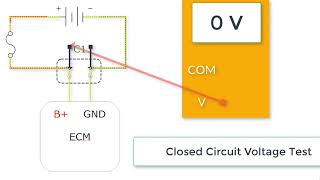
- EVAP Vent Control Valve Connector Voltage — expected: 12V on one pin with key on, engine off.. Failure: No voltage suggests a problem with the wiring or a fuse upstream of the valve.
- Fuel Tank Pressure (FTP) Sensor Voltage — expected: ~1.5V at atmospheric pressure (system open).. Failure: Voltage that is stuck high or low, or does not change when the system is sealed and vacuum is applied, points to a faulty sensor.
Scan Tool Commands That Help
- Nissan CONSULT-III plus: EVAP System Leak Check (Active Test) — This function commands the vent valve to close, sealing the system. It allows a technician to monitor the Fuel Tank Pressure sensor to see if the system holds a vacuum or to use a smoke machine to find the source of a leak without manually powering components.
- Professional Bidirectional Scan Tool: Vent Valve On/Off (Activation Test) — Used to functionally test the vent valve solenoid. A technician can command the valve closed and listen for an audible click. With the valve commanded closed, a smoke test will reveal leaks from any other part of the system; if smoke comes from the vent valve itself, the valve is faulty.
Wiring & Ground Locations
- ECM (Engine Control Module) — Located in the engine compartment, next to the battery for the 2007-2012 (L32) generation.. The ECM is the source of power and control for the EVAP purge and vent valves. Testing for continuity between the valve connectors and the ECM is a key step in diagnosing wiring faults.
- BCM (Body Control Module) — Located behind the instrument cluster for the 2007-2012 (L32) generation.. The BCM can be involved in the EVAP system monitoring, particularly regarding the 'Loose Fuel Cap' warning message on the dashboard.
- Ground E15 — Lower left side of the engine compartment on 2007 models.. A poor ground connection at this point can cause erratic behavior or failure of various engine management sensors and actuators, potentially including EVAP system components controlled by the ECM.
Real Owner Repair Stories
- NICOclub Forums (2013 Nissan Altima) — Check engine light with code P0442.
❌ Tried (didn't work) Replaced the gas cap., Replaced the EVAP purge valve (in the engine bay)., Performed a smoke test which did not reveal any leaks.
✅ What actually fixed it The problem was ultimately solved by replacing the EVAP canister vent control valve located at the rear of the vehicle. Even though the smoke test was clean, the valve was likely failing intermittently under specific test conditions run by the ECM.
"I Checked Everything" — The Actual Cause
- In some documented cases, a standard smoke test does not reveal a leak, yet the P0442 code persists. The final cause was determined to be an intermittently failing EVAP canister vent control valve. The valve would pass a static smoke test but would fail to seal correctly during the onboard diagnostic cycle, leading to the code. This highlights that a clean smoke test does not 100% rule out the vent valve as the culprit.
OEM Part Supersession History
14935-JF00A, 14935-JF00B, 14935-AM60A, 14935-AM60B→14935-JF02C— Nissan has updated the EVAP Canister Vent Control Valve multiple times to improve reliability and sealing performance, addressing the common failure that leads to P0442, P0455, and P0456 codes.
Heads up: While older versions may physically fit, the newest part number (14935-JF02C) is the recommended replacement for durability. Using superseded parts is not advised as they are prone to the original failure mode.
Model Year Variations Within This Range
- 2013-2014 (L33 Generation): The 2013 model year marked a major redesign. While the core EVAP components and failure points are similar to the prior generation, accessing them can be different. For example, replacing the charcoal canister on a 2013 Altima is estimated to take a professional technician around 3 hours, involving the removal of the rear subframe, indicating a more complex repair than on some earlier models.
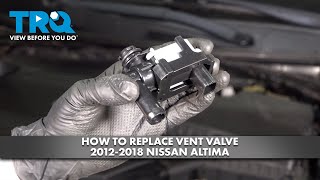
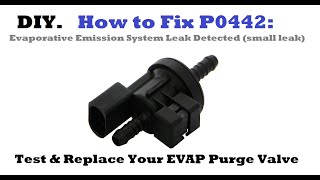
Helpful Videos

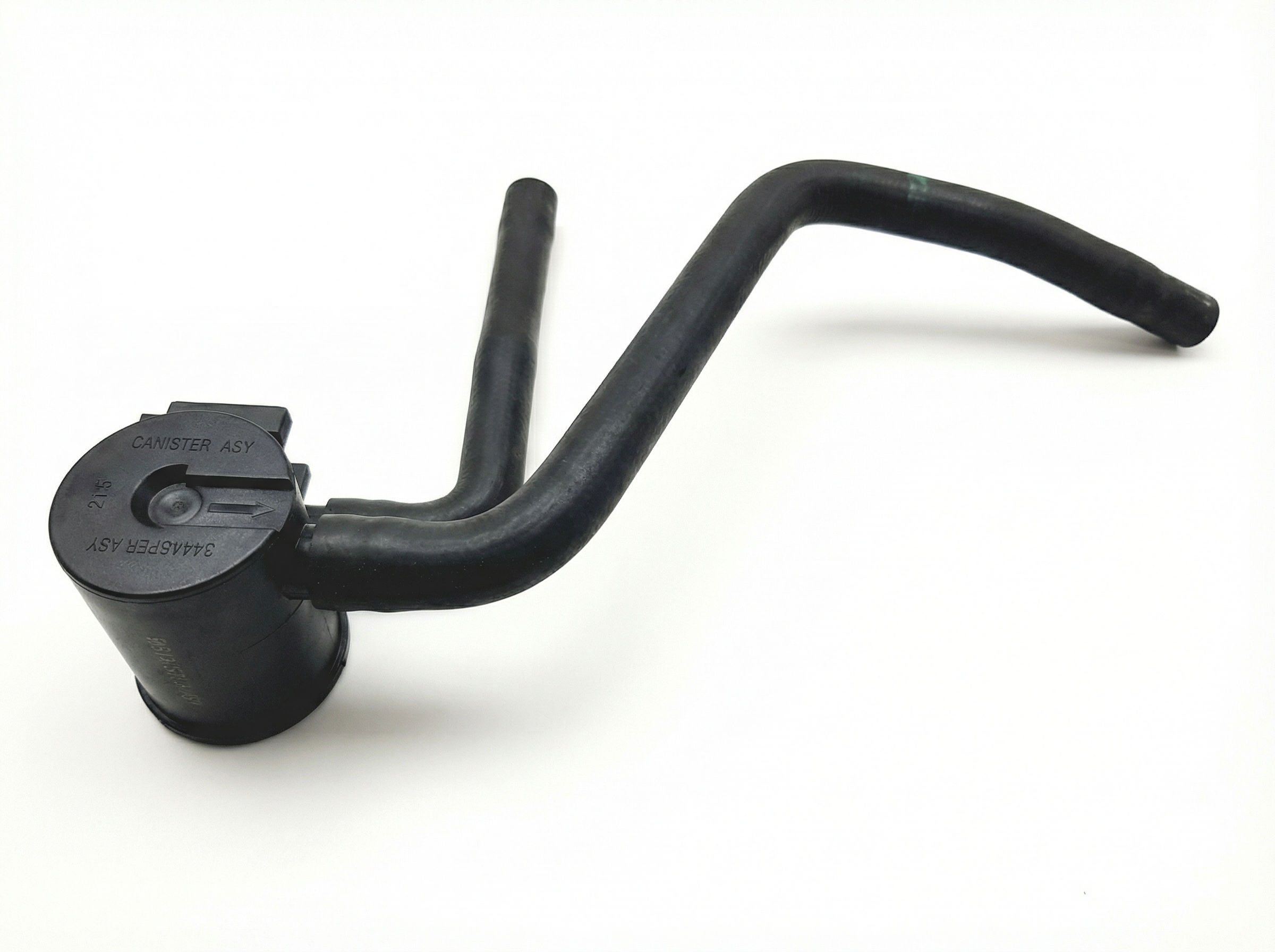
Used OEM Parts in Stock

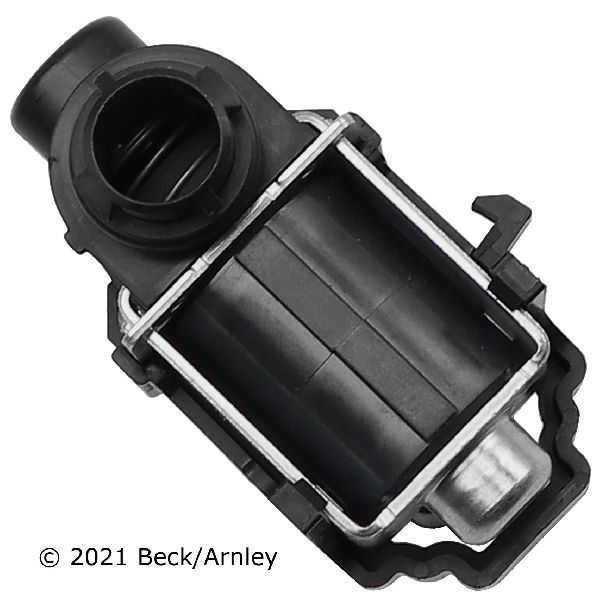
New Aftermarket Parts Available


The information in this article is provided for general reference and educational purposes only. Vehicle specifications, procedures, and part compatibility can vary by production date, trim level, and region. Always consult your vehicle's factory service manual and verify part numbers before purchasing or performing repairs. Safety-critical components such as airbags, seat belts, and braking systems should be installed by a qualified professional.
- Nissan ALTIMA:
- 🧭 Diagnostic Flowchart
- 🎬 Helpful Videos
- 🛍️ Shop This Part
- What's Unique About the 2007-2014 Nissan ALTIMA
- Symptoms You May Notice
- Most Likely Causes
- Rare But Worth Checking
- Diagnosis Steps
- Parts You'll Likely Need
- Related Codes That Often Appear With This One
- Technical Service Bulletins (TSBs) & Recalls
- Platform-Specific Known Issues
- Mechanic-Grade Diagnostic Values
- Scan Tool Commands That Help
- Wiring & Ground Locations
- Real Owner Repair Stories
- "I Checked Everything" — The Actual Cause
- OEM Part Supersession History
- Model Year Variations Within This Range
- 🎟️ Get 5% Off