

P0442 on 2008-2017 Opel Insignia: EVAP Small Leak Causes and Fixes
For a 2008-2017 Opel Insignia, the P0442 code is most often caused by a loose or faulty gas cap. Before buying any parts, tighten the cap until it clicks multiple times and clear the code. If it returns, a new OEM gas cap is an inexpensive first step. The next most common culprit is the EVAP purge valve located in the engine bay, which is a known failure point on this GM platform.
- P0442 means a small leak has been detected in the emissions system; your car is safe to drive, but the issue should be addressed to pass an emissions test.
- Always start with the simplest fix: check that your gas cap is tight. If the seal looks worn, replace it with an OEM part.
- If a new gas cap doesn't solve the issue, the EVAP purge valve is the next most likely culprit, especially if you have trouble starting the car after getting gas.
- A visual inspection of hoses can sometimes find the leak, but finding a small crack often requires a professional smoke test.
- Do not replace expensive parts like the charcoal canister or O2 sensors until a proper diagnosis confirms they are the source of the leak.
What's Unique About the 2008-2017 Opel Insignia
The Opel Insignia A (2008-2017) was developed under General Motors (GM) and is based on the Epsilon II platform. This means its EVAP system components, logic, and failure points are very similar to other GM vehicles of the era, such as the Buick Regal and some Chevrolet models. This shared architecture is beneficial, as common failure parts like the purge valve and vent solenoid are well-documented and widely available. While the P0442 code is generic, on this platform, the diagnostic path strongly points towards simple items like the gas cap and the engine-bay-mounted purge valve before more complex issues like cracked lines or canister problems.
Generation note: The 2008-2017 model years cover the entire first generation of the Opel Insignia, known as the Insignia A. This generation received a significant facelift in 2013, with updated styling and new engines. However, the underlying GM Epsilon II platform and the core EVAP system architecture remained consistent, making the information in this article relevant for both pre-facelift (2008-2013) and facelift (2013-2017) models.
Symptoms You May Notice
- Check Engine Light is on.
- A faint fuel smell may be noticeable, especially after parking in an enclosed space like a garage.
- In cases of a stuck-open purge valve, the engine may be difficult to start or run rough for a moment immediately after refueling.
- Slight decrease in fuel economy, though it may be too small to notice.
- Replacing the O2 sensors. O2 sensors measure oxygen in the exhaust and are not related to the EVAP system's integrity.
- Replacing the fuel injectors. While fuel-related, injectors are not part of the sealed EVAP system and will not cause a P0442 leak code.
- Immediately replacing the charcoal canister. The canister itself is a durable component; the purge and vent valves attached to it or the hoses connected to it are far more likely to fail.
Most Likely Causes
- Loose or Faulty Gas Cap 🔴 High Probability → Shop Fuel Tank Cap This is the most common cause for P0442 on all vehicles, including the Insignia. The rubber O-ring seal on the cap cracks, hardens, or gets dirty over time, preventing a proper seal. Aftermarket caps are also a frequent source of leaks if they don't meet OEM specifications.
How to confirm: First, ensure the cap is tightened until it clicks several times. Inspect the rubber seal for any visible cracks, stiffness, or damage. Also, check the fuel filler neck's metal sealing surface for rust, dirt, or debris that could prevent a good seal.
Typical fix: Tighten the cap. If the code returns after clearing, replace the gas cap. It is highly recommended to use a genuine OEM cap (GM/Opel) as some aftermarket caps are known to cause this code.
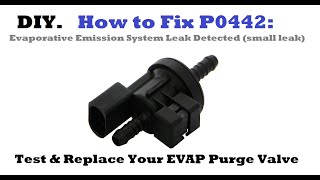
Est. part cost: $15-$40 - Faulty EVAP Canister Purge Valve (Solenoid) 🟡 Medium Probability → Shop Vapor Canister As a common failure part on GM platforms, this solenoid valve is frequently activated and can fail by sticking open or not sealing correctly when closed. A stuck-open valve allows un-metered vacuum into the EVAP system, which the ECM detects as a leak.
How to confirm: A simple test is to disconnect the electrical connector and the EVAP line from the tank side of the valve with the engine running. There should be no vacuum felt at the port; if there is, the valve is stuck open and faulty. Another test is to remove the valve and try to blow through it; it should be closed and not allow air to pass when de-energized. You can also apply a 12V source to its two pins to confirm it clicks open and closes when power is removed.
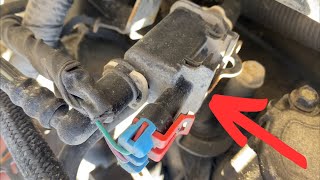
Typical fix: Replace the purge valve. It is typically located in the engine bay for easy access, connected by two hoses and an electrical connector. 🎬 Watch: How to test and replace the purge valve.
Est. part cost: $30-$80 - Cracked or Disconnected EVAP Hoses 🟡 Medium Probability The plastic and rubber hoses in the EVAP system can become brittle with age and exposure to engine heat, leading to small cracks, especially at connection points, elbows, and plastic T-fittings.
How to confirm: Perform a thorough visual inspection of all accessible EVAP lines running from the fuel tank, to the charcoal canister, and up to the purge valve in the engine bay. Pay close attention to rubber connectors. The most reliable method for finding a small, hard-to-see leak is to have a professional perform a smoke test. This test forces low-pressure smoke through the system to reveal the exact location of any leak. 🎬 See how a smoke test finds small EVAP leaks.
Typical fix: Replace the cracked section of hose or the damaged connector. This can range from a simple DIY fix to a more involved repair if the leak is in a hard-to-reach area.
Est. part cost: $10-$50 - Faulty EVAP Vent Valve/Solenoid ⚪ Low Probability → Shop Vapor Canister This valve, located near the charcoal canister at the rear of the car, is normally open to allow fresh air into the system. It can get stuck or fail to seal completely due to dirt, dust, or internal corrosion, especially on cars driven in dusty or wet climates.
How to confirm: This component is harder to access than the purge valve. It is normally open and should close when 12V is applied. Testing involves applying power and checking if it seals (e.g., by trying to blow through it). A scan tool can also command it closed to verify function during a smoke test.
Typical fix: Replace the vent valve assembly. Sometimes the valve and canister are sold as one unit.
Est. part cost: $40-$100
Rare But Worth Checking
- Cracked Charcoal Canister: → Shop Vapor Canister The plastic housing of the canister itself can develop hairline cracks from age or physical impact from road debris. This is uncommon but will be found during a smoke test after all other components have been checked.
- Leaking Fuel Tank or Filler Neck: → Shop Fuel Tank Rust or physical damage can cause a small leak in the fuel tank or the filler neck where the gas cap seals. This is a more serious and expensive repair, typically identified with a smoke test. A GM TSB for other models notes that corrosion on the filler neck sealing surface is a known cause for P0442.
- Faulty Fuel Tank Pressure (FTP) Sensor: → Shop Fuel Tank A faulty FTP sensor can incorrectly report pressure changes to the ECM, leading to a false P0442 code. However, this is rare and usually accompanied by other FTP-specific codes.
Diagnosis Steps
- Read the code with an OBD-II scanner to confirm P0442 is present. Note any other codes, as they can help pinpoint the issue (e.g., P0496 strongly suggests a bad purge valve).
- Inspect the gas cap. Remove it, check the seal for cracks or damage, and clean the sealing surface on the filler neck. Reinstall it, ensuring it clicks 3-5 times. Clear the code and drive for a few days to see if it returns.
- If the code returns, perform a visual inspection of all visible EVAP hoses and lines in the engine bay and under the car for obvious cracks, splits, or loose connections.
- Locate and test the EVAP purge valve in the engine bay. With the engine off and electrical connector unplugged, disconnect the hose from the canister side and check if it's drawing a vacuum with the engine running. It should not be. If you have a 12V source, you can bench test it to hear it click.
- If the above steps do not reveal the problem, the most effective next step is a professional smoke test. This involves injecting pressurized, UV-dyed smoke into the EVAP system to pinpoint the exact location of the small leak.
- Based on the smoke test results, replace the faulty component (e.g., vent valve, cracked hose, charcoal canister).
- After repair, clear the codes and perform a complete drive cycle to allow the vehicle's EVAP monitor to run and confirm the fix.
Parts You'll Likely Need
- Fuel Cap — This is the most frequent and simplest cause of a P0442 code due to its seal wearing out over time. It's the cheapest and easiest part to replace first.
Trusted brands: ACDelco, Genuine GM/Opel
OEM price range: $25-$40
Aftermarket price range: $15-$25
Related Codes That Often Appear With This One
- P0455 — Indicates a large EVAP leak. If you see both, it might point to a component that has failed completely, like a disconnected hose or a very bad valve, rather than a small crack.
- P0496 — Indicates 'EVAP Flow During a Non-Purge Condition'. This code almost always confirms a faulty purge valve that is stuck open, making it the prime suspect for the P0442 leak.
- P0441 — Indicates incorrect purge flow. This often points directly to a problem with the purge valve (stuck open or closed) or a blockage in the purge line, which can occur alongside a leak code.
- P0449 — This code specifically points to a fault in the EVAP Vent Valve/Solenoid circuit. If you see P0442 and P0449 together, the vent valve is the most likely culprit.
Technical Service Bulletins (TSBs) & Recalls
- While no TSB is specific to the Opel Insignia for P0442, GM TSB #02-06-04-037J for other models like the Chevy Silverado addresses P0442 caused by a faulty EVAP vent valve solenoid due to dirt or water intrusion, a relevant issue for the shared system design.
Mechanic-Grade Diagnostic Values
- EVAP Purge Valve Solenoid Resistance — expected: 15 - 30 Ohms. Failure: A reading of 0 Ohms (short) or infinite/OL (open circuit) indicates a failed solenoid coil.
- EVAP Vent Valve Solenoid Resistance — expected: 20 - 50 Ohms. Failure: A reading outside the expected range, especially an open circuit (OL), indicates the coil is bad and the valve needs replacement.
- Fuel Tank Pressure (FTP) Sensor Voltage — expected: Approximately 1.5V with the gas cap off (atmospheric pressure). The voltage should decrease as vacuum is applied.. Failure: A reading stuck high (e.g., 5V) or low (e.g., 0.3V) regardless of actual tank pressure points to a faulty sensor or wiring issue.
Scan Tool Commands That Help
- GDS2 / Tech2 (or equivalent professional scanner): EVAP Service Bay Test / Purge/Seal — This function allows a technician to command the entire EVAP system through a test sequence. It will command the vent valve closed and the purge valve open to draw a vacuum on the tank, then seal the system to monitor for a vacuum decay, which confirms or denies a leak without a smoke machine.
- GDS2 / Tech2 (or equivalent professional scanner): EVAP Purge Valve Control — Used to manually command the purge valve on and off (duty cycle percentage). A technician can command it closed (0%) and then open while monitoring fuel trims or O2 sensor data. A response (brief rich condition) confirms the valve is opening and vapor is flowing.
- GDS2 / Tech2 (or equivalent professional scanner): EVAP Vent Valve Control — This command forces the normally-open vent valve to close. It's essential for sealing the system during a smoke test to see if smoke escapes from the vent valve itself, proving it's not sealing correctly.
Wiring & Ground Locations
- Engine Compartment Fuse Box — Located in the front left of the engine compartment.. The fuse for the 'emission control system' is located here. A blown fuse would likely cause a circuit code (like P0443 or P0449) in addition to a leak code, but it's a primary check for any non-responsive EVAP solenoid.
- Purge Valve Connector — On the purge valve itself, located in the engine bay, typically near the intake manifold.. This 2-pin connector supplies power and ground control to the valve. One pin should have 12V with the key on, and the other is the ground control from the ECM. Checking for voltage here is a key step if the valve doesn't click when commanded.
Real Owner Repair Stories
- YouTube video by 'Repairs and Stuff' (Older GM vehicle, applicable to Insignia platform) — P0442 Check Engine Light.
❌ Tried (didn't work) Initial visual inspection showed no obvious issues.
✅ What actually fixed it The sealing surface of the fuel filler neck was rusted and corroded, preventing the gas cap from making a proper seal. The fix was to thoroughly clean the rust off the filler neck with a wire brush to create a smooth sealing surface. Applying a thin layer of silicone grease after cleaning also helped ensure a tight seal.
"I Checked Everything" — The Actual Cause
- In some cases, a smoke test may not reveal a leak, but the code persists. This can happen if the purge valve is mechanically sticking open intermittently. When the vehicle is off for the smoke test, the valve may be seated correctly, but during operation, engine vacuum can pull it slightly open, creating a leak path that the ECM detects during its self-test. This scenario is often accompanied by code P0496.
OEM Part Supersession History
12610560, 12661763, 12690512→12737252— These are common GM purge valve part numbers used across many vehicles, including those on the Epsilon II platform. The numbers have been superseded over time due to design revisions or supplier changes.
Heads up: While these parts are often interchangeable on GM vehicles of this era, always verify the correct part number for the specific Insignia engine and model year before purchasing.55573017→N/A - This is a widely referenced replacement number.— This part number is a common OEM and aftermarket replacement for the purge valve on many 1.4L GM engines, which are used in some Insignia models. It cross-references to multiple other numbers like 911-409 and CP781.
Diagnostic Flowchart
Other Known Issues on This Vehicle
Issues unrelated to this code that are worth knowing about as an owner of this generation:
- Oil Pickup Pipe Seal Failure (2.0 CDTI Diesel) 🔴 High — Very common on 2.0 CDTI engines, typically between 80,000-140,000 miles. The rubber seal hardens, causing a loss of oil pressure on startup, which can lead to catastrophic engine failure if ignored.
- Automatic Transmission Problems 🟠 Medium — Reported frequently on higher mileage vehicles (80,000+ km), symptoms include jerky shifting, hesitation, and sometimes complete failure.
- Dual-Mass Flywheel (DMF) Failure (Diesel Models) 🟠 Medium — Common on manual diesel variants, leading to clutch judder, vibration, and noise. It's a costly repair.
- Tailgate Wiring Harness Failure (Sports Tourer/Wagon) 🟡 Low → Shop Body Wiring Harness — The wires in the flexible conduit between the body and the tailgate can break from repeated opening and closing, causing failure of the lock, lights, or power liftgate functions.
- Turbocharger Failure 🟠 Medium — Can occur on both petrol and diesel turbo models, often due to oil contamination or bearing wear, leading to loss of power and smoke.
- Rear Toe Link Corrosion Recall 🔴 High — Affects models produced from 2007-2013. Corrosion can weaken or break the rear toe link, causing a loss of vehicle control. (Ref: Recall R/2022/329)
Used vs. New Parts: Buying Guide for This Vehicle
When a used part is the smart pick: For larger, non-electronic components like the charcoal canister housing or hard plastic EVAP lines, a used part from a low-mileage, accident-free donor car can be a cost-effective option. The canister itself rarely fails unless physically cracked.
Donor-vehicle mileage cap: roughly under 80000 miles for the part to have meaningful remaining life.
What to inspect on the donor part:
- Check for physical cracks or damage on the canister housing.
- Ensure all hose connection nipples are intact and not brittle.
- Avoid parts from vehicles with visible rust or from regions with heavy road salt use, as corrosion can affect attached valves.
OEM-only on this vehicle (don't cheap out):
- Fuel Cap: Aftermarket gas caps are a very common cause of P0442 codes. It is strongly recommended to use a genuine GM/Opel OEM cap to ensure a proper seal.
- Purge/Vent Solenoids: While some aftermarket brands are reliable, the cost difference is often minimal, and OEM valves (ACDelco/GM) are known to have the highest reliability and correct calibration for the ECM's tests.
Aftermarket brands forum-validated for this vehicle:
- ACDelco (often the OEM supplier)
- Bosch
Brands owners have reported issues with on this vehicle:
- No-name, unbranded parts from online marketplaces, especially for the gas cap and electronic solenoids.
Real Owner Stories
Aggregated from forums and TSBs cited above. Mileages and costs reflect what owners reported in those sources.
2011-2017 Chevrolet Malibu (Platform Mate)
Symptoms: The owner experienced a P0442 code indicating a small EVAP leak. They initially tried replacing the gas cap and the purge valve, but the light returned.
What fixed it: A professional smoke test was performed, which pinpointed the leak to the charcoal canister/vent valve area.
Source hint: Reddit r/cruze thread titled 'Just had smoke test for P0442 code now what/' (GM Epsilon II platform-mate discussion)
Related OBD-II Codes
Frequently Asked Questions
Does GM TSB #02-06-04-037J apply to my Opel Insignia if I have a P0442 code?
I have a 2.0 CDTI diesel Insignia; should I be worried about P0442?
Can I use an aftermarket gas cap to fix the P0442 leak on my Insignia?
Why does my Insignia struggle to start only after I fill it with petrol?
Is the EVAP vent valve the same as the purge valve on the Insignia?
Could the P0442 code be related to my Sports Tourer's tailgate issues?
Helpful Videos

The information in this article is provided for general reference and educational purposes only. Vehicle specifications, procedures, and part compatibility can vary by production date, trim level, and region. Always consult your vehicle's factory service manual and verify part numbers before purchasing or performing repairs. Safety-critical components such as airbags, seat belts, and braking systems should be installed by a qualified professional.
- Opel Insignia:
- 🧭 Diagnostic Flowchart
- 🎬 Helpful Videos
- What's Unique About the 2008-2017 Opel Insignia
- Symptoms You May Notice
- Most Likely Causes
- Rare But Worth Checking
- Diagnosis Steps
- Parts You'll Likely Need
- Related Codes That Often Appear With This One
- Technical Service Bulletins (TSBs) & Recalls
- Mechanic-Grade Diagnostic Values
- Scan Tool Commands That Help
- Wiring & Ground Locations
- Real Owner Repair Stories
- "I Checked Everything" — The Actual Cause
- OEM Part Supersession History
- Other Known Issues on This Vehicle
- Used vs. New Parts: Buying Guide for This Vehicle
- Real Owner Stories
- 2011-2017 Chevrolet Malibu (Platform Mate)
- Related OBD-II Codes
- Frequently Asked Questions
- 🎟️ Get 5% Off