

P0442 on 2000-2002 Pontiac Firebird: EVAP Small Leak Causes and Fixes
For a 2000-2002 Pontiac Firebird, a P0442 code almost always points to a loose or worn-out gas cap. If tightening or replacing the cap (~$15-$30) doesn't fix it, the next most likely causes are a faulty EVAP purge or vent solenoid. A rusted fuel filler neck is also a common, often-overlooked cause.
- P0442 indicates a small leak in the fuel vapor system.
- Always start by checking that the gas cap is tight; if that fails, replace it. This solves the problem in a majority of cases.
- If a new gas cap doesn't fix the code, the EVAP purge solenoid (on the engine) or vent solenoid (near the tank) are the next most likely culprits.
- Driving with this code is safe, but you will not pass an emissions inspection until it is resolved.
- For persistent leaks, a professional smoke test is the fastest way to find the exact source and avoid replacing unnecessary parts.
What's Unique About the 2000-2002 Pontiac FIREBIRD
The 2000-2002 Firebird belongs to the fourth-generation F-body platform. Like many vehicles from this era, its EVAP system components, made of plastic and rubber, are now over two decades old and prone to drying out and cracking. While the causes are typical for most GM vehicles, the age of these cars makes components like the gas cap seal, vent solenoid, and various vacuum hoses particularly susceptible to failure. The fuel filler neck is also known to rust, preventing a good seal with the cap.
Diagnostic Flowchart
Tap your situation to follow the diagnostic path that matches what you're seeing on this vehicle.
Symptoms You May Notice
- Check Engine Light is on.
- A faint fuel smell, especially when parked.
- Difficulty filling the fuel tank (the pump clicks off repeatedly) if the vent valve is clogged or stuck closed.
- Rough idle or difficulty starting immediately after refueling, which can point to a purge valve stuck open.
- Replacing the charcoal canister when the issue is just a simple hose or solenoid.
- Replacing O2 sensors, which are unrelated to the EVAP system.
- Assuming a new gas cap will fix a leak caused by a rusted filler neck.
Most Likely Causes
- Loose or Faulty Gas Cap 🔴 High Probability → Shop Fuel Tank Cap The rubber O-ring seal on the gas cap is the most common failure point. Over time it dries out, cracks, and loses its ability to hold a seal, which is essential for the EVAP system test.
How to confirm: First, ensure the cap is tightened until it clicks multiple times. Inspect the rubber seal for visible cracks, stiffness, or damage. Also, check the fuel filler neck for rust or debris that could prevent a good seal; use a wire brush or light-grit sandpaper to clean any corrosion.
Typical fix: Replace the gas cap with a new, quality OEM or equivalent part. Using a cheap aftermarket cap can sometimes fail to solve the problem.
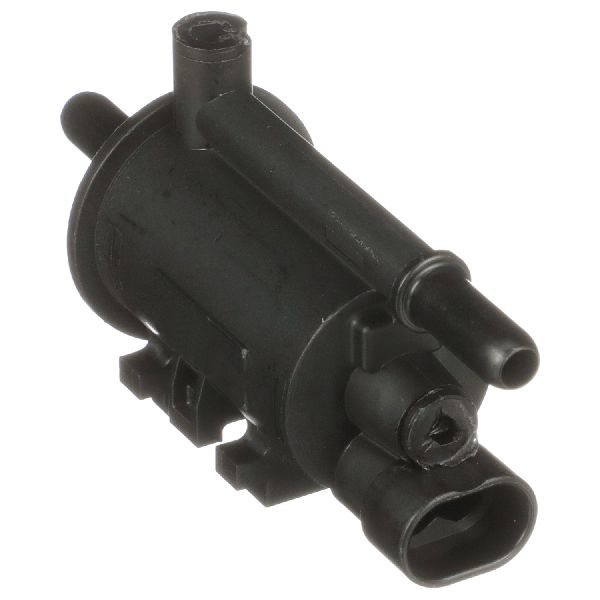
Est. part cost: $15-$35 - EVAP Purge Solenoid/Valve Failure 🟡 Medium Probability → Shop Vapor Canister The purge solenoid, located on the driver's side of the intake manifold, cycles frequently and can get stuck open or closed. When stuck open, it creates a constant vacuum leak that the system detects, often causing rough idle or starting issues after a fill-up.
How to confirm: With the engine off, disconnect the valve. Try to blow through it; if air passes, it's stuck open and faulty. You can also apply 12V power to the terminals; it should click open and closed. A hand vacuum pump can also be used: with the valve de-energized, it should hold vacuum.
Typical fix: Replace the purge solenoid. It is easily accessible on top of the engine, held by a single bolt. 🎬 See this quick walkthrough on replacing the EVAP purge solenoid.
Est. part cost: $25-$60 - EVAP Vent Solenoid/Valve Failure 🟡 Medium Probability → Shop Vapor Canister Located near the fuel tank and charcoal canister, this valve is exposed to road debris and moisture, which can cause it to fail or get stuck. Its job is to seal the system for the leak test, and if it can't close properly, it will cause a P0442.
How to confirm: The valve is normally open and should close when powered. Diagnosis often requires a bi-directional scan tool to command the valve closed, followed by a smoke test to see if it's leaking. A DIY test involves removing it and applying 12V to see if the valve actuates.
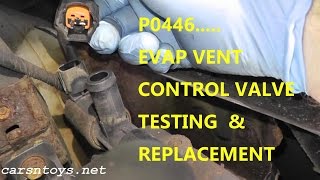
Typical fix: Replace the vent solenoid assembly. Accessing it requires safely lifting the rear of the vehicle 🎬 Watch: How to test and replace the canister vent control valve. as it's mounted near the gas tank.
Est. part cost: $40-$80 - Cracked or Disconnected EVAP Hoses ⚪ Low Probability After 20+ years, the rubber and plastic hoses throughout the EVAP system become brittle and can easily crack, especially at connection points and elbows.
How to confirm: A visual inspection may reveal obvious cracks or loose connections. However, small leaks are very difficult to find without a smoke test, which involves filling the system with low-pressure smoke to see where it escapes.
Typical fix: Replace the specific section of cracked hose or the faulty connector.
Est. part cost: $10-$50
Rare But Worth Checking
- Leaking Charcoal Canister: → Shop Vapor Canister The plastic housing of the charcoal canister itself can develop hairline cracks over time, leading to a small leak that is difficult to find without a smoke test.
- Faulty Fuel Tank Pressure Sensor: → Shop Fuel Tank This sensor, located on the fuel pump assembly inside the tank, can fail and incorrectly report a leak to the ECM. This is less common and usually accompanied by other codes.
- Rusted Fuel Filler Neck: → Shop Fuel Filler Neck In areas with heavy road salt use, the metal fuel filler neck can rust and pit where the gas cap seals. This creates a rough surface that prevents even a new gas cap from sealing properly, leading to a persistent P0442.
Diagnosis Steps
- Check the gas cap. Remove it, inspect the seal for cracks, and clean the sealing surface on the filler neck with a wire brush if any rust is present. Reinstall it, ensuring it clicks several times. Clear the code and drive for a few days to see if it returns.
- If the code returns, replace the gas cap with a new OEM-spec part like an ACDelco GT261 or GT330. This is an inexpensive and very common fix.
- Perform a thorough visual inspection of all accessible EVAP hoses and lines, particularly around the engine bay and near the charcoal canister in the rear. Look for any obvious cracks, breaks, or loose connections.
- Test the EVAP purge solenoid located on the engine's intake manifold. With the engine off, disconnect the line and try to blow through it. If air passes, it's stuck open and needs replacement.
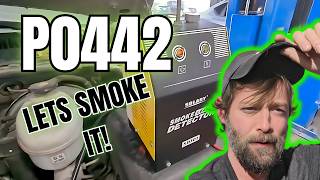
- If the previous steps do not resolve the issue, the most effective next step is a smoke test. A mechanic will use a smoke machine to fill the EVAP system with a visible vapor, making it easy to spot the exact source of the leak. 🎬 Watch: How to find a small EVAP leak using a smoke machine.
- Based on the smoke test, replace the leaking component, which could be the vent solenoid, a cracked hose, or the charcoal canister.
Parts You'll Likely Need
- Gas Cap
(OEM #ACDelco GT261 / GM 10372243 (Also cross-references to ACDelco GT330))— The seal is the most common failure point for this code due to age and wear.
Trusted brands: ACDelco, Stant, Gates
OEM price range: $20-$35
Aftermarket price range: $15-$25 - Vapor Canister Purge Valve / Solenoid
(OEM #ACDelco 214-641 / GM 12581282)— This valve cycles frequently and can get stuck, causing a leak. It's a common failure on GM vehicles from this period.
Trusted brands: ACDelco, Dorman, Standard Motor Products
OEM price range: $45-$60
Aftermarket price range: $25-$45 - Vapor Canister Vent Valve / Solenoid
(OEM #ACDelco 214-2081 / GM 19207762)— Located near the fuel tank, this valve can fail to seal due to dirt or internal wear, causing a leak during the self-test.
Trusted brands: ACDelco, Dorman
OEM price range: $60-$100
Aftermarket price range: $40-$80
Related Codes That Often Appear With This One
- P0455 — Indicates a large EVAP leak. A small leak (P0442) can worsen over time or be triggered by the same faulty component (like a stuck-open purge valve), eventually flagging as a large leak.
- P0440 — Indicates a general EVAP system malfunction. It can appear with P0442 if the computer has trouble running the leak detection test at all.
- P0446 — Indicates a fault in the EVAP vent system circuit or performance. If the vent solenoid is the cause of the P0442, it may also trigger a P0446.
Technical Service Bulletins (TSBs) & Recalls
- PIT4943D: Directs technicians to a specific article on using an EVAP system tester for diagnosing codes like P0442, reinforcing that specialized tools may be needed.
- 02-06-04-037J: While for trucks, this TSB is relevant as it discusses similar GM EVAP vent valve issues caused by dirt and debris, recommending relocation kits—a problem F-body cars can also experience due to the valve's location.
Platform-Specific Known Issues
- The provided Technical Service Bulletin (TSB) #PIT4943D indicates that GM has specific diagnostic procedures for this code, advising technicians to use an Evaporative Emissions System Tester, which suggests that finding the leak can sometimes require specialized tools beyond a simple visual inspection.
- The plastic fuel tank and metal filler neck combination on F-bodies can lead to issues where the filler neck rusts at the sealing point, making a P0442 code impossible to fix with just a new gas cap. The neck itself must be cleaned or replaced.
Mechanic-Grade Diagnostic Values
- EVAP Canister Purge Solenoid Coil Resistance — expected: ~30 Ohms. Failure: A reading that is significantly higher (open circuit) or lower (short circuit) indicates a faulty solenoid coil.
Scan Tool Commands That Help
- Tech 2 / Professional Scan Tool: EVAP System Test (Service Bay Test) — This is a guided test that commands the purge and vent solenoids to cycle, sealing the system and monitoring the fuel tank pressure sensor to verify if a leak is present without needing a smoke machine for initial confirmation.
- Tech 2 / Professional Scan Tool: EVAP Vent Valve Control — This bidirectional command is used to manually close the normally-open vent valve. This is essential before performing a smoke test to seal the system. If smoke immediately exits the vent, the valve is faulty.
- Tech 2 / Professional Scan Tool: EVAP Purge Valve Control — Allows the technician to command the normally-closed purge valve to open by a specific percentage. This helps test the valve's operation and can reveal if it is stuck.
Wiring & Ground Locations
- G101 — Left front shock tower.. Provides a ground path for various engine components; a poor ground here can cause erratic sensor readings.
- G106 — Top left of the radiator support.. This is a primary ground location for the forward lamp harness, which can include circuits related to engine controls.
- PCM Ground — The main engine-to-chassis ground is typically a strap from the back of the passenger side cylinder head to the firewall.. A poor main engine ground can cause a host of electrical issues, including incorrect readings from the PCM which runs the EVAP tests. A bad ground can cause the automatic shifter cable to overheat as it becomes the ground path.
- G200 — Left kick panel, inside the cabin.. This is a major interior ground point. The Body Control Module (BCM), which communicates with the PCM, is grounded nearby.
Real Owner Repair Stories
- 2CarPros Forum User (Vehicle with P0442 and fuel leak) — P0442 code present, and visible fuel leak around the filler neck area when pumping gas.
❌ Tried (didn't work) Not specified, but the user was seeking a diagnosis for the leak and code.
✅ What actually fixed it The fuel filler neck was completely rusted out on the bottom. Replacing the filler neck resolved both the fuel leak and the P0442 code.
"I Checked Everything" — The Actual Cause
- In some cases, a smoke test may not reveal a leak if the leak is at the O-ring seal of the fuel pump module on top of the plastic fuel tank. The pressure from the smoke test may be insufficient to expose the leak, or the location is difficult to see. The fix is to replace the fuel pump module gasket/O-ring.
OEM Part Supersession History
GM 12581282→ACDelco 214-641— Standard part lifecycle replacement. 214-641 is the GM Original Equipment service part number.
Heads up: This part fits a very wide range of GM vehicles from the era, including the 1998-2002 Firebird.
Model Year Variations Within This Range
- 1999-2002: Starting in 1999, GM switched the F-body platform (Camaro/Firebird) from a metal fuel tank to a plastic one. While the P0442 diagnosis is largely the same, this change eliminated the possibility of the tank itself rusting. However, it introduced the possibility of leaks at the fuel pump module's O-ring seal on top of the plastic tank, which can be difficult to detect.
Helpful Videos
We Have This Part in Stock


The information in this article is provided for general reference and educational purposes only. Vehicle specifications, procedures, and part compatibility can vary by production date, trim level, and region. Always consult your vehicle's factory service manual and verify part numbers before purchasing or performing repairs. Safety-critical components such as airbags, seat belts, and braking systems should be installed by a qualified professional.
- Pontiac FIREBIRD:
- 🧭 Diagnostic Flowchart
- 🎬 Helpful Videos
- 🛍️ Shop This Part
- What's Unique About the 2000-2002 Pontiac FIREBIRD
- Symptoms You May Notice
- Most Likely Causes
- Rare But Worth Checking
- Diagnosis Steps
- Parts You'll Likely Need
- Related Codes That Often Appear With This One
- Technical Service Bulletins (TSBs) & Recalls
- Platform-Specific Known Issues
- Mechanic-Grade Diagnostic Values
- Scan Tool Commands That Help
- Wiring & Ground Locations
- Real Owner Repair Stories
- "I Checked Everything" — The Actual Cause
- OEM Part Supersession History
- Model Year Variations Within This Range
- 🎟️ Get 5% Off