

P0442 on 2007-2010 Pontiac G5: EVAP Small Leak Causes and Fixes
For a 2007-2010 Pontiac G5, code P0442 is most often caused by a loose or worn-out gas cap. Owners and mechanics strongly recommend using a genuine GM/ACDelco replacement cap, as aftermarket caps can fail to seal properly. If a new OEM cap (~$15-$35) doesn't fix it, the next most likely causes are the EVAP purge solenoid on the engine (ACDelco #12597567) or the vent solenoid near the fuel tank (ACDelco #25932571).
- P0442 indicates a small leak in the fuel vapor (EVAP) system.
- Always start by checking that the gas cap is tight. If the light returns, replacing the gas cap is the most likely and cheapest fix.
- If the gas cap isn't the problem, the EVAP purge solenoid (in the engine bay) or the vent solenoid (near the gas tank) are the next most common culprits.
- The vehicle is safe to drive with this code, but it will not pass an emissions inspection until the leak is repaired.
- A smoke test is the most reliable professional method to find a persistent leak if the common causes are ruled out.
What's Unique About the 2007-2010 Pontiac G5
The Pontiac G5, built on the GM Delta platform, is a direct mechanical clone of the Chevrolet Cobalt. Therefore, any P0442 issue, cause, or fix documented for a 2005-2010 Chevy Cobalt applies directly to the G5. A Technical Service Bulletin (TSB #PIT4943D) was issued for these vehicles, indicating that technicians may need special guidance when diagnosing a P0442. The TSB details a specific diagnostic procedure using a smoke machine and scan tool to find leaks that aren't obvious, suggesting that finding the source can be tricky without the right tools and process.
Diagnostic Flowchart
Tap your situation to follow the diagnostic path that matches what you're seeing on this vehicle.
Symptoms You May Notice
- Check Engine Light is on
- A faint fuel smell near the vehicle
- Slight decrease in fuel economy
- "Check Gas Cap" message on the driver information center (DIC)
- Difficulty starting the engine immediately after refueling (points to a stuck-open purge solenoid)
- Replacing the O2 sensors
- Replacing the catalytic converter
- Using a cheap aftermarket gas cap which fails to seal properly, leading to a continued search for a non-existent leak.
Most Likely Causes
- Loose or Faulty Gas Cap 🔴 High Probability → Shop Fuel Tank Cap The gas cap is used frequently, and its rubber O-ring can crack, get dirty, or wear out over time, preventing a proper seal. This is the most common and easiest fix for a P0442 code. Forum users and mechanics repeatedly stress the importance of using a genuine GM/ACDelco cap, as aftermarket versions are known to cause persistent P0442 codes.
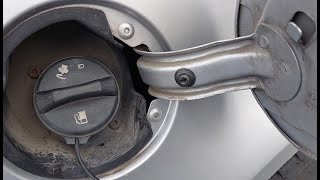
How to confirm: First, ensure the cap is tightened until it clicks several times. If the code returns, visually inspect the cap's rubber seal for any cracks or brittleness. A YouTube video for the sister-vehicle Chevy Cobalt shows how the tether can break and the cap can be replaced in minutes. 🎬 Watch: How to replace the gas cap on a Cobalt. Replacing the gas cap with a new OEM one is a cheap and effective diagnostic step.
Typical fix: Tighten the existing cap or replace it with a new OEM-spec cap (ACDelco GT291 / GM Part #15903488).
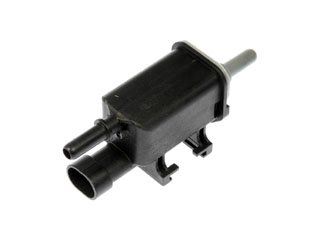
Est. part cost: $15-$35 - EVAP Purge Solenoid/Valve Failure 🟡 Medium Probability → Shop Vapor Canister This valve, located in the engine bay, can fail by getting stuck slightly open, allowing un-metered fuel vapor into the engine at the wrong time, which the system detects as a leak. A Reddit user with an '08 G5 diagnosed this exact issue by removing the valve and finding he could blow air through it even when it wasn't energized.
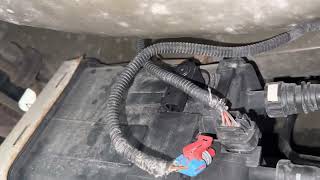
How to confirm: Disconnect the valve (located on top of the engine) and try to blow through it; if air passes, it's stuck open and needs replacement. This is a common failure that also frequently causes a P0496 code and hard starting after getting gas. Before replacing, check for chafed wires on the harness near the solenoid's metal bracket, a known issue covered by TSB #PIP4549A.
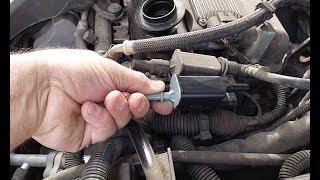
Typical fix: Replace the EVAP purge solenoid. This is often a 15-minute job with a single 8mm or 10mm bolt. 🎬 See this quick walkthrough for replacing the purge valve solenoid.
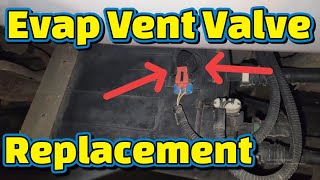
Est. part cost: $25-$60 - EVAP Vent Solenoid Failure 🟡 Medium Probability → Shop Vapor Canister Located near the fuel tank and exposed to the elements, this valve can get stuck or fail to seal due to dirt, corrosion, or internal failure, causing a small leak during the EVAP system test. GM issued service bulletins for other models with similar systems where a leaking vent solenoid was the primary cause of P0442.
How to confirm: The valve can be tested with a capable OBD-II scanner to command it open and closed. A smoke test is the most definitive way to confirm if the valve is leaking when it should be sealed. It is located near the charcoal canister, in front of the rear axle on the driver's side.
Typical fix: Replace the EVAP vent solenoid. The Dorman 911-140 and ACDelco 214-2149 are common replacement parts.
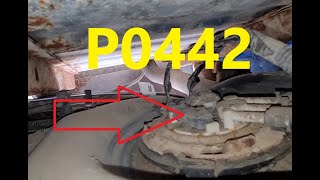
Est. part cost: $20-$80 - Cracked or Disconnected EVAP Hose ⚪ Low Probability The plastic and rubber hoses in the EVAP system can become brittle over time due to heat and age, leading to small cracks. On the Cobalt/G5 platform, a specific area of concern is where the lines run near the rear wheel, where a protective heat shield can trap moisture and rot the lines.
How to confirm: A visual inspection may reveal obvious cracks, but a smoke test is the most effective method to find small, hard-to-see leaks in the hose lines. A user on the Cobalt SS Network forum specifically mentioned to check the lines right before the back wheel where they bend up toward the tank.
Typical fix: Replace the cracked section of the hose or the entire line assembly.
Est. part cost: $10-$50
Rare But Worth Checking
- Leaking Charcoal Canister: → Shop Vapor Canister The plastic housing of the charcoal canister can develop hairline cracks over time, causing a leak. This is less common than solenoid failures but should be checked with a smoke test if other components are good.
- Cracked Fuel Filler Neck: → Shop Fuel Filler Neck In areas with high road salt usage (the rust belt), the metal fuel filler neck can corrode and develop small holes, leading to an EVAP leak. While surface rust is common, a perforation will cause a persistent P0442 code that other parts won't fix. A smoke test will show smoke escaping from the filler neck area.
Diagnosis Steps
- Read the code with an OBD-II scanner to confirm P0442 is present.
- Inspect the gas cap. Remove it, check the seal for cracks or damage, and clean the sealing surface on the filler neck. Reinstall the cap, ensuring it clicks several times.
- Clear the code and drive the vehicle for a few days. If the code does not return, the issue was a loose cap.
- If the code returns, replace the gas cap with a new OEM-spec part (e.g., ACDelco GT291). This is an inexpensive and high-probability fix that many owners confirm is necessary.
- If the code persists, visually inspect the EVAP purge solenoid in the engine bay. Check for chafed wires on the harness near the mounting bracket as per TSB #PIP4549A. Remove the valve and try blowing through it; if air passes, it's faulty.
- Visually inspect the EVAP vent solenoid and charcoal canister under the vehicle (near the fuel tank, in front of the rear axle) for damage or corrosion.
- Inspect the EVAP lines, especially near the rear driver's side wheel well, for rot or cracks as noted in forum discussions.
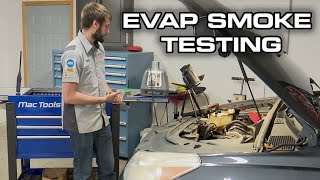
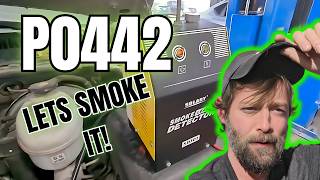
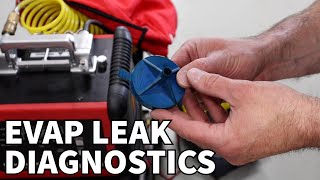
- The most effective next step is to perform a smoke test. This involves injecting smoke into the EVAP system to quickly and accurately locate the source of the small leak, whether it's a hose, solenoid, filler neck, or the canister itself. TSB PIT4943D provides a detailed 🎬 Watch: How to perform a smoke test to find leaks. procedure for this.
Parts You'll Likely Need
- Fuel Tank Cap
(OEM #15903488 (ACDelco GT291))— This is the most frequent cause of a P0442 code due to its seal wearing out. It's the first and cheapest part to replace. Owners strongly recommend OEM over aftermarket for a reliable seal.
Trusted brands: ACDelco (GM OEM), Stant (use with caution), Gates (use with caution)
OEM price range: $25-$35
Aftermarket price range: $15-$25 - Vapor Canister Purge Solenoid
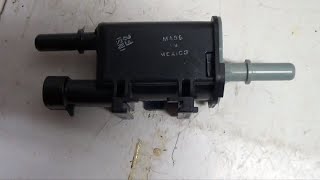
(OEM #12597567 (ACDelco 214-1680))— Located on the engine, this valve can get stuck open, causing a constant small leak. It's a common failure point and is extremely easy to replace on the G5, making it a popular DIY fix.
Trusted brands: ACDelco, Standard Motor Products (CP471), Dorman
OEM price range: $40-$60
Aftermarket price range: $25-$45 - Vapor Canister Vent Solenoid
(OEM #25932571 (ACDelco 214-2149))— This valve, located near the fuel tank, fails due to exposure to road debris and moisture, preventing it from sealing correctly during the EVAP test.
Trusted brands: ACDelco, Standard Motor Products (CVS38), Dorman (911-140)
OEM price range: $60-$100
Aftermarket price range: $20-$50
Related Codes That Often Appear With This One
- P0455 — This code indicates a large EVAP leak. A P0442 can turn into a P0455 if the small leak worsens over time, or if the gas cap is left off completely.
- P0449 — This code specifically points to a fault in the EVAP vent solenoid valve control circuit. It often appears with P0442 if the vent valve is the source of the leak.
- P0496 — This code means "EVAP Flow During a Non-Purge Condition" and almost always points to a purge solenoid that is stuck open. If it's stuck only slightly open, it may present as a P0442 small leak first.
Technical Service Bulletins (TSBs) & Recalls
- PIT4943D: A TSB providing information to technicians for diagnosing DTC P0442, directing them to review a Techlink article about using an EVAP system tester.
- PIP4549A: A TSB warning of potential for the engine wiring harness to chafe on the purge solenoid bracket, causing electrical issues that can be misdiagnosed as a bad solenoid.
Platform-Specific Known Issues
- TSB PIT4943D - Difficulty Diagnosing P0442: A Technical Service Bulletin (TSB #PIT4943D) was issued for the 2007-2010 Pontiac G5 regarding code P0442. It directs technicians to a specific, detailed procedure for using an Evaporative Emissions System Tester (smoke machine). It acknowledges that leaks can be hard to find and provides steps like commanding the vent solenoid closed with a scan tool to properly seal the system for the test.
Mechanic-Grade Diagnostic Values
- Fuel Tank Pressure (FTP) Sensor Voltage — expected: Approximately 1.45V - 1.50V with Key On, Engine Off (KOEO) and the gas cap removed.. Failure: Significant deviation from 1.5V at atmospheric pressure can indicate a faulty sensor. Specific codes P0452 (low voltage) or P0453 (high voltage) point directly to a sensor or circuit failure.
Hidden / Shadow Codes Worth Checking
- Mode $06, TID $26, CID $81 (Example): This data allows a technician to see the raw test results from the ECM's last EVAP system leak test. It shows the measured leak value compared to the minimum and maximum thresholds allowed. This can reveal if the system is borderline failing even before the P0442 code is set. (see via An advanced scan tool capable of displaying Mode $06 data. Note that specific Test IDs (TID) and Component IDs (CID) can vary by model year and exact software calibration.)
Scan Tool Commands That Help
- GM Tech2 / GDS2 or equivalent professional scanner: EVAP Service Bay Test — This is a bidirectional command that forces the EVAP system to run its self-test on demand in the repair shop, allowing a technician to monitor sensor data and confirm a leak is present without having to perform a full drive cycle.
- Professional scanner: EVAP Vent Valve Control (On/Off or Seal/Vent) — This command is essential for performing a smoke test. The vent valve is normally open, so it must be commanded closed with the scan tool to seal the EVAP system, allowing the smoke machine to build pressure and reveal leaks.
Wiring & Ground Locations
- G101 — In the left side of the engine compartment, under the coolant reservoir.. This is a primary engine bay ground. While not directly tied to the rear EVAP components, a poor ground here can cause a variety of ECM and sensor issues.
- G301 — Under the driver's seat.. A power distribution diagram for the 2008 G5 shows the EVAP Canister Vent Solenoid is powered by the 'CNSTR VENT' fuse and grounds at G301. Corrosion or a loose connection at this specific ground could directly cause a P0442 or P0449 code.
- Transmission Case Ground — A ground strap connects the main wiring harness to the transmission case.. This is a main powertrain ground. A loose or corroded connection here is a known issue on Cobalts/G5s that can cause numerous, hard-to-diagnose electrical problems.
"I Checked Everything" — The Actual Cause
- A known diagnostic challenge on GM vehicles is passing a smoke test but still having a P0442 code. The ECM tests the system using vacuum, while a smoke test uses slight pressure. A failing purge or vent valve can sometimes seal under pressure but leak under vacuum. A professional technique is to use the scan tool to rapidly cycle the purge and vent valves while the smoke machine is running to try and catch an intermittent seal failure.
When the Usual Fixes Don't Work
- While replacing the EVAP Vent Solenoid (part #25932571) is a common fix, there is evidence that this part has been redesigned and may not be the correct fit for all vehicles in this range, even if listed by parts catalogs. This contradicts the simple advice to just replace the part. The safest approach is to confirm the required part number with a dealer using the VIN to avoid purchasing an incompatible component.
OEM Part Supersession History
12597566, 12606684→12597567, which is now superseded by 12735397— Standard part evolution and consolidation.
Heads up: The listed part numbers are for the engine-mounted purge solenoid and are generally interchangeable for this platform.10382105, 15750484, 22728634→25932571— Part redesign.
Heads up: CRITICAL: A parts supplier explicitly warns that the redesigned part (25932571) may not be correct for all vehicles it was originally listed for. It is highly recommended to verify the correct vent solenoid part number with a GM dealer using the vehicle's VIN before ordering.
Model Year Variations Within This Range
- 2007-2010: The EVAP system, specifically the vapor canister and its associated valves, can be different depending on whether the vehicle was built to Federal (RPO code FE1) or California (RPO code NE1) emissions standards. The parts are not interchangeable. This is not a model-year difference but a critical variation to be aware of when ordering parts.
Helpful Videos
Used OEM Parts in Stock
New Aftermarket Parts Available


The information in this article is provided for general reference and educational purposes only. Vehicle specifications, procedures, and part compatibility can vary by production date, trim level, and region. Always consult your vehicle's factory service manual and verify part numbers before purchasing or performing repairs. Safety-critical components such as airbags, seat belts, and braking systems should be installed by a qualified professional.
- Pontiac G5:
- 🧭 Diagnostic Flowchart
- 🎬 Helpful Videos
- 🛍️ Shop This Part
- What's Unique About the 2007-2010 Pontiac G5
- Symptoms You May Notice
- Most Likely Causes
- Rare But Worth Checking
- Diagnosis Steps
- Parts You'll Likely Need
- Related Codes That Often Appear With This One
- Technical Service Bulletins (TSBs) & Recalls
- Platform-Specific Known Issues
- Mechanic-Grade Diagnostic Values
- Hidden / Shadow Codes Worth Checking
- Scan Tool Commands That Help
- Wiring & Ground Locations
- "I Checked Everything" — The Actual Cause
- When the Usual Fixes Don't Work
- OEM Part Supersession History
- Model Year Variations Within This Range
- 🎟️ Get 5% Off