

P0442 on 2005-2010 Pontiac Vibe: EVAP Small Leak Causes and Fixes
For a 2005-2010 Pontiac Vibe, a P0442 code is most often caused by a loose or faulty gas cap. Before buying any parts, tighten the cap until it clicks, clear the code, and drive for a few days. If it returns, a new OEM-spec gas cap is an inexpensive and likely fix. If the cap is not the issue, the purge valve, charcoal canister, or a cracked EVAP hose are the next most common culprits, with parts being identical to the Toyota Matrix.
- Always start with the simplest fix: check that your gas cap is tight and the seal is intact. A new OEM-spec gas cap is the most likely and cheapest repair.
- Remember the Pontiac Vibe is a Toyota Matrix. This is your biggest advantage for finding parts and repair information.
- If the gas cap doesn't fix it, the next most likely culprits are the purge valve in the engine bay or a cracked EVAP hose.
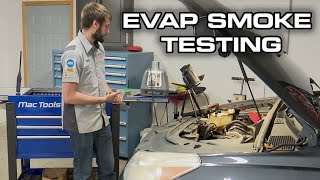
- A smoke test is the most definitive way to find a leak if it's not obvious. It can save you from replacing parts unnecessarily.
- Do not overfill your gas tank. Topping off after the pump clicks can flood the charcoal canister with liquid fuel, causing it to fail and trigger EVAP codes.
What's Unique About the 2005-2010 Pontiac VIBE
The Pontiac Vibe is mechanically identical to the Toyota Matrix. This is a critical fact for diagnosis and repair, as its engine and emissions components, including the entire EVAP system, are Toyota-designed. Therefore, common causes, parts, and repair procedures for a P0442 code on a Vibe will mirror those for a same-year Toyota Matrix or Corolla. Owners can often use Toyota-branded parts, which may be more readily available and sometimes cheaper than the GM-packaged equivalent.
Diagnostic Flowchart
Tap your situation to follow the diagnostic path that matches what you're seeing on this vehicle.
Generation note: This range covers the end of the first generation (2005-2008) and the entire second generation (2009-2010) of the Pontiac Vibe. While the underlying EVAP system function is the same, some components like the charcoal canister and filler neck may have different part numbers between generations. However, the common causes and diagnostic approach for P0442 are consistent across both. It's important to note that FWD and AWD models may use different charcoal canisters.
Symptoms You May Notice
- Check Engine Light is on.
- A faint smell of fuel, particularly around the rear of the car or near the gas cap.
- Failure to pass a state emissions inspection.
- Fuel pump nozzle clicks off repeatedly when trying to refuel. This is a classic sign of a saturated or failing charcoal canister that can't properly vent tank pressure.
- Replacing the oxygen (O2) sensors. O2 sensors are not part of the EVAP system and will not cause a P0442 code.
- Replacing the catalytic converter. While sometimes seen with other codes like P0420, a P0442 by itself is not related to the catalytic converter.
- Assuming Toyota TSB EG045-07 for a P0171 (System Too Lean) code is related. That TSB points to a faulty intake manifold gasket and causes different symptoms and codes, though it does affect the same 1ZZ-FE engine.
Most Likely Causes
- Loose or Faulty Gas Cap 🔴 High Probability → Shop Fuel Tank Cap This is the most common cause for a P0442 code on virtually all vehicles, including the Vibe/Matrix platform. The cap's rubber O-ring can dry out and crack over time, preventing a proper seal. Using a non-OEM cap can also cause sealing issues.
How to confirm: Ensure the cap is tightened until it clicks multiple times. Inspect the rubber seal for cracks, stiffness, or damage. If the seal is compromised or the cap doesn't click, it's faulty.
Typical fix: Replace the gas cap with a new, OEM-quality part. Aftermarket caps can sometimes fail to seal correctly. The GM OEM part number for 2006-2010 models is 88974427.
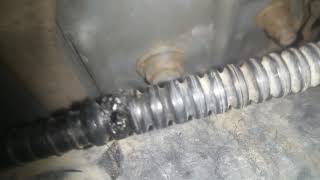
Est. part cost: $15-$40 - Cracked or Disconnected EVAP Hoses 🟡 Medium Probability The rubber and plastic hoses in the EVAP system become brittle with age and exposure to heat and cold cycles, leading to small cracks. A forum member reported that a dealer service for P0441/P0442/P0446 codes ultimately found a pinhole leak in a long, corrugated vapor hose running under the car.
How to confirm: Visually inspect all accessible EVAP lines running from the gas tank, to the charcoal canister (under the rear of the car, driver's side), and to the purge valve in the engine bay. A smoke test is the most effective way to find a leak that isn't visually obvious.
Typical fix: Replace the cracked section of hose. Small cracks can sometimes be sealed temporarily, but replacement is the correct long-term fix.
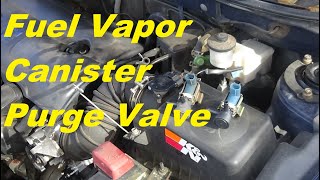
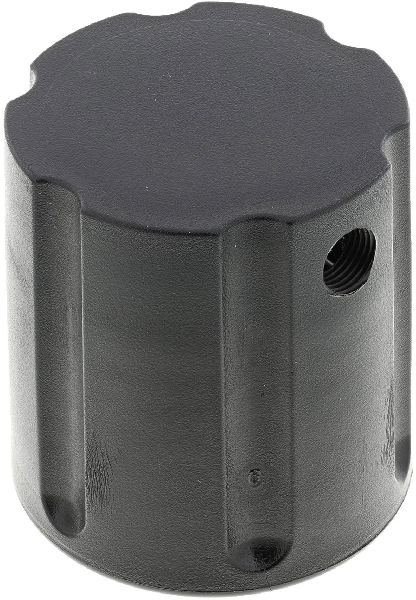
Est. part cost: $10-$50 - Faulty Vapor Canister Purge Valve/Solenoid 🟡 Medium Probability → Shop Vapor Canister This valve, located in the engine bay on top of the engine, can get stuck partially open, causing a constant small leak. It's a common failure point on many vehicles.
How to confirm: With the engine off, disconnect the valve and try to blow through it or pull a vacuum on it; it should be closed and not allow air to pass. You can also apply 12V to the terminals to see if it clicks open and closed. A stuck valve will often cause other codes like P0441 or P0446.
Typical fix: Replacement is straightforward. The valve is located on top of the engine and is held by a bracket with two hoses and an electrical connector. A common ACDelco replacement part is 214-2317.
Est. part cost: $30-$90 - Cracked Charcoal Canister ⚪ Low Probability → Shop Vapor Canister The plastic housing of the canister can develop hairline cracks over time, especially if the vehicle is in a region with harsh weather or road salt. Over-filling the gas tank can also saturate the charcoal with liquid fuel, ruining it and causing codes and refueling issues. One owner on GenVibe forums fixed their P0442 by replacing the canister after trying all other common fixes.
How to confirm: A smoke test is the best method. Smoke will be seen escaping from a crack in the canister body. A visual inspection may also reveal cracks. Gently shaking the canister should not produce a rattling sound; if it does, the internal charcoal media has broken apart and the canister is bad.
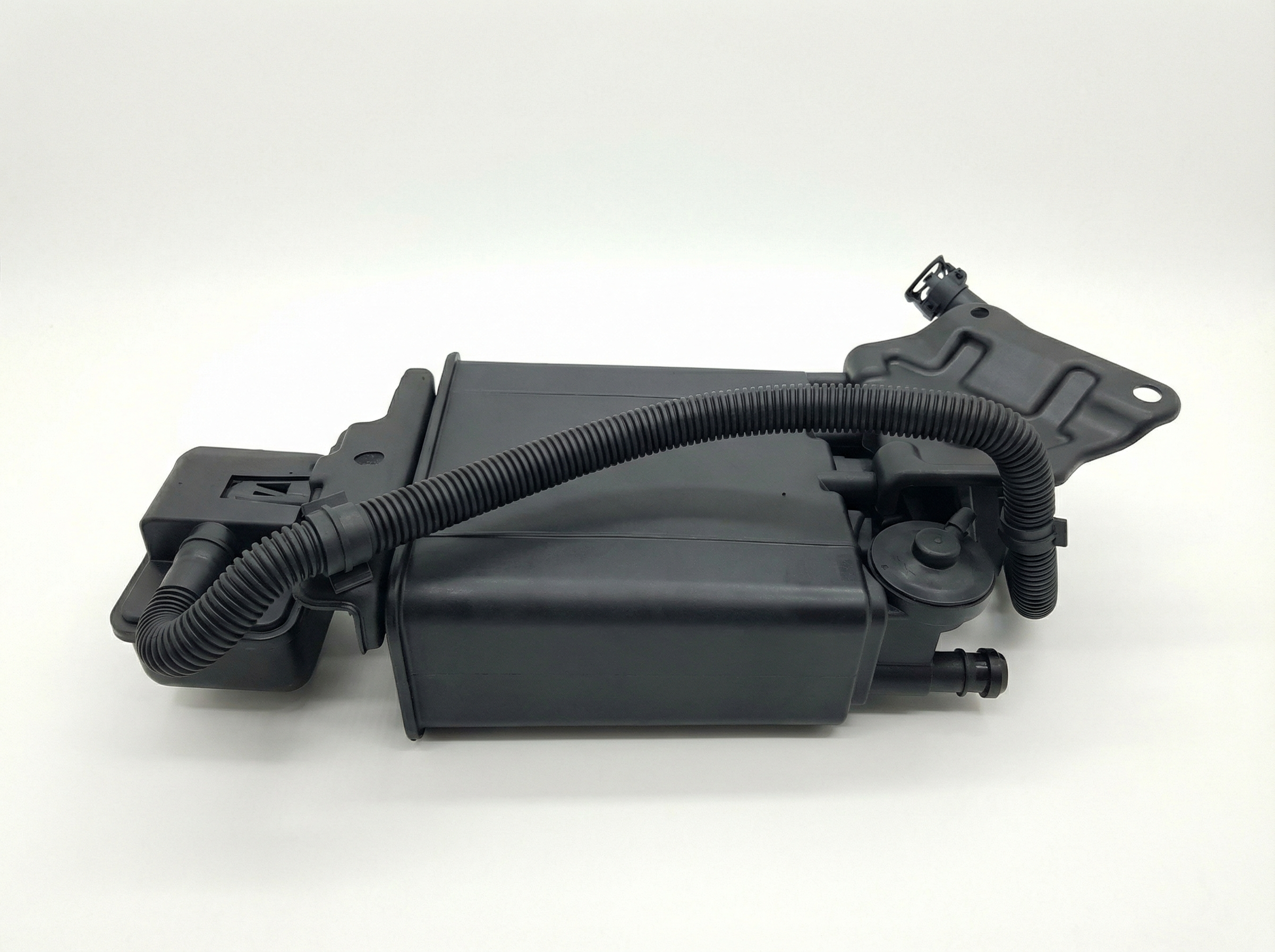
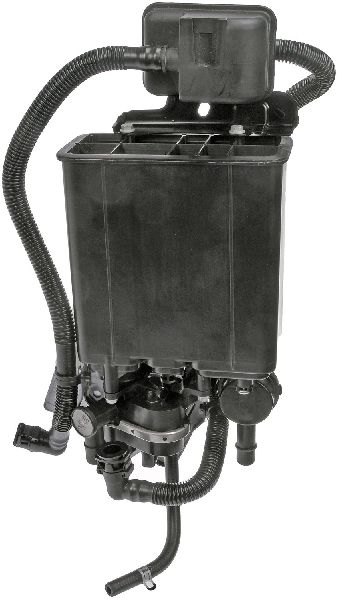
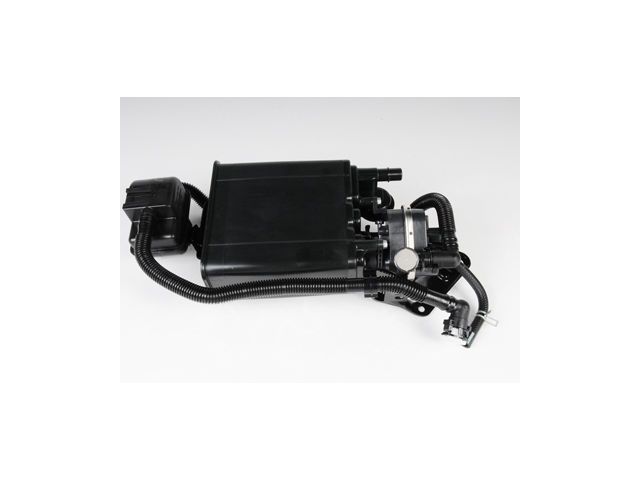
Typical fix: Replace the entire charcoal canister assembly. On the Vibe/Matrix, this is located under the rear of the car on the driver's side. The GM part for many FWD models is 88973481; the equivalent Toyota part is often 77740-02121 or 77740-02130.
Est. part cost: $200-$550
Rare But Worth Checking
- Rusted Fuel Filler Neck: → Shop Fuel Filler Neck In areas where road salt is used (the 'Salt Belt'), the metal fuel filler neck can rust and develop pinhole leaks, which will trigger a P0442 code. A smoke test will show smoke escaping from the filler neck area behind the fuel door. A GenVibe forum member's mechanic confirmed this exact failure via a smoke test.
- Faulty EVAP Vent Valve/Solenoid: → Shop Vapor Canister This valve is typically located on or near the charcoal canister. If it fails to seal properly, it can cause a leak. On many Vibe/Matrix models, the vent valve is integrated into the charcoal canister assembly and is replaced with it.
Diagnosis Steps
- Read the code with an OBD-II scanner to confirm P0442 is present.
- Inspect the gas cap. Remove it, check the seal for cracks, and retighten it until it clicks several times. Clear the code and drive for a few days to see if it returns.
- If the code returns, consider replacing the gas cap with an OEM part (GM #88974427 for 2006-10) as an inexpensive next step.
- Perform a thorough visual inspection of all EVAP hoses and lines, from the engine bay to the rear of the vehicle. Look for any visible cracks, disconnections, or rot. Pay special attention to the corrugated plastic lines.
- If no visual faults are found, the most effective next step is to have a smoke test performed. This involves injecting pressurized smoke into the EVAP system to pinpoint the exact location of the leak. This is the definitive way to find cracks in hoses, the canister, or the fuel filler neck.
- Based on the smoke test results, replace the leaking component.
- If no smoke machine is available, you can test the purge valve in the engine bay. Disconnect it and ensure it's closed at rest (should hold vacuum). Apply 12V to test for a 'clicking' sound of activation.
- Inspect the charcoal canister. If you experience the fuel pump clicking off during refueling, the canister is a strong suspect. You can also remove it and shake it; a rattling sound indicates it has failed internally.
- After any repair, clear the trouble codes with the scanner and perform a complete drive cycle to allow the EVAP monitor to run and confirm the fix.
Parts You'll Likely Need
- Fuel Cap
(OEM #GM #88974427 (for 2006-2010 models))— This is the most frequent cause. The seal wears out over time, causing a small leak.
Trusted brands: ACDelco, Toyota OE, Stant
OEM price range: $25-$40
Aftermarket price range: $15-$30 - Vapor Canister Purge Valve / Solenoid
(OEM #ACDelco #214-2317 (Common Service Part))— Located in the engine bay, this valve can stick open and is a common, easy-to-replace part.
Trusted brands: ACDelco, Denso, Standard Motor Products
OEM price range: $60-$90
Aftermarket price range: $30-$70 - Charcoal Canister Assembly (FWD)
(OEM #GM #88973481 / Toyota #77740-02130)— The plastic body can crack or the internal charcoal can become saturated from over-filling the fuel tank. It's a more expensive repair but is often the culprit if the gas cap and purge valve are good. Vibe owners can use the equivalent Toyota Matrix part.
Trusted brands: ACDelco, Toyota OE, Dorman
OEM price range: $200
Aftermarket price range: $135-$295
Related Codes That Often Appear With This One
- P0441 — Incorrect Purge Flow. Often appears with P0442 when the purge valve is malfunctioning or a hose is blocked.
- P0446 — Vent Control Circuit Malfunction. Can appear if the vent valve (often part of the canister assembly) is faulty, which can also present as a leak.
- P0455 — Gross Leak Detected. If a small leak (P0442) worsens, or if the gas cap is left off entirely, it may eventually be detected as a large leak.
Technical Service Bulletins (TSBs) & Recalls
- Bulletin #PIT4943D (2010 FUEL SYSTEM, GASOLINE, dated 2015-12-09): This is a procedural bulletin from GM that advises technicians who find a P0442 code to consult a specific Techlink article about proper use of the EVAP system tester for diagnosis.
- A Toyota TSB for an 'improved fuel filler tube' to correct a P0442 code on the related Toyota Matrix has been mentioned by owners in forums, lending strong support to the 'Rusted Fuel Filler Neck' being a verified cause.
Platform-Specific Known Issues
- As a rebadged Toyota Matrix, it's crucial to cross-reference parts. An ACDelco part for a Vibe is often a repackaged Toyota part, and sometimes buying the Toyota-branded part can be cheaper or more available.
- A TSB for the related Toyota Matrix mentions an improved fuel filler tube to correct a P0442 code, indicating the filler neck can be a source of the leak, especially in rust-prone areas.
- The charcoal canister on the 1.8L FWD models is a known failure point that can be diagnosed by refueling issues (pump clicks off) or by removing and shaking it to listen for rattling. A user on GenVibe.com confirmed that replacing the canister solved their P0442 after all other attempts failed.
Mechanic-Grade Diagnostic Values
- EVAP Canister Purge Solenoid Valve Resistance — expected: 30 - 36 Ohms at approx. 60°F (15.5°C). Failure: An open circuit (infinite resistance) or a very high reading indicates a failed coil in the solenoid.
- Fuel Tank Pressure (FTP) Sensor Voltage — expected: 1 to 4 volts during normal operation.. Failure: A voltage outside this range can indicate a faulty sensor, which may contribute to incorrect EVAP leak detection.
- EVAP Leak Detection Pump Harness - Ground Continuity — expected: Continuity (less than 1 Ohm) between Pin 2 of the 10-pin connector and chassis ground.. Failure: No continuity indicates a bad ground wire to the pump assembly, which can cause various EVAP codes.
- EVAP Leak Detection Pump Harness - 5V Reference — expected: Approximately 5V DC between the ground pin (Pin 2) and the 5V reference pin (Pin 4) with the key on, engine off.. Failure: Absence of 5V suggests a wiring issue from the ECU, not a faulty pump/sensor.
Scan Tool Commands That Help
- Toyota Techstream: Evaporative System Check (Utility) — This bidirectional test allows a technician to manually command the EVAP system components (like the purge valve and vent valve) to open and close, pulling the system into a vacuum and monitoring the pressure decay. It is the factory method for confirming a leak exists and can help isolate which part of the system is failing without requiring a smoke machine initially.
- Professional Scan Tool: Close EVAP Vent Valve/Solenoid — This command is essential when performing a smoke test. The vent valve is normally open, so it must be commanded shut to seal the system and allow it to build pressure, forcing smoke out of any leaks.
Wiring & Ground Locations
- G104 / G105 — For the 1.8L engine, these grounds are located on the top of the engine. For the 2.4L engine, they are on the left rear of the engine.. These are primary engine grounds. A poor connection at these points can cause erratic behavior in various sensors and solenoids, including those in the EVAP system which are grounded through the engine harness.
- EVAP Canister Purge Solenoid Valve Connector — In the engine bay, on the left side of the engine compartment, sometimes next to the air cleaner assembly.. This is the connection point for testing the purge valve's resistance and voltage supply from the PCM.
- EVAP Canister Assembly Connector — Under the rear of the vehicle, near the charcoal canister, which is located on the driver's side. The connector is a 10-pin plug on 2005-2008 models.. This connector houses the wiring for the vent valve, leak detection pump, and fuel tank pressure sensor. A damaged harness or corroded pins here can cause multiple EVAP codes. One owner found the harness under the spare tire, near the left rear strut, was damaged and repairing it solved their EVAP issues.
Real Owner Repair Stories
- GenVibe Forums user 'jolt' (2004 Pontiac Vibe Base 1.8L, 160,000 miles) — Check Engine Light with code P0442.
❌ Tried (didn't work) Tightening the gas cap, Replacing the gas cap, Replacing the fuel filler tube, Performing a smoke test (which incorrectly suggested a hose leak), Replacing the purge and vent valve solenoids
✅ What actually fixed it Replacing the entire charcoal canister assembly. The owner purchased an AC Delco part from RockAuto which resolved the code immediately. - GenVibe Forums user 'adamh' (2005 Pontiac Vibe Base, Manual FWD) — Check Engine Light with code P0453 (EVAP Pressure Sensor High), but diagnostic path is relevant to the entire canister assembly.
❌ Tried (didn't work) Testing purge solenoid (was good), Testing power to canister pump (pump ran), Visual inspection of hoses
✅ What actually fixed it Found a damaged wiring harness located under the spare wheel, by the left rear strut. The harness leading to the charcoal canister assembly had been sliced. Soldering and protecting the wires fixed the issue.
"I Checked Everything" — The Actual Cause
- In one documented case, a smoke test was performed and the technician suspected a leak in a hose between the canister and tank, but replacing it did not fix the P0442. The actual cause was later found to be an internally cracked or faulty charcoal canister that did not leak externally during the smoke test.
OEM Part Supersession History
GM #88973482, 88973484, 88973485→GM #88973481— Part consolidation and minor revisions by the manufacturer.
Heads up: This part is listed for 2005-2010 Vibe 1.8L and 2.4L without AWD. AWD models use a different canister. Always verify fitment with VIN.
Model Year Variations Within This Range
- 2005-2008 vs 2009-2010: The first generation (ending in 2008) and second generation (starting in 2009) use different engines (1ZZ-FE vs 2ZR-FE for the 1.8L) and have different body styles. While the EVAP system function is identical, specific component part numbers (like the charcoal canister) and their mounting brackets can differ. For example, a canister for a 2004 Matrix can be fitted to a Vibe by swapping the brackets. Always confirm the part number for the specific model year.
Helpful Videos

Used OEM Parts in Stock
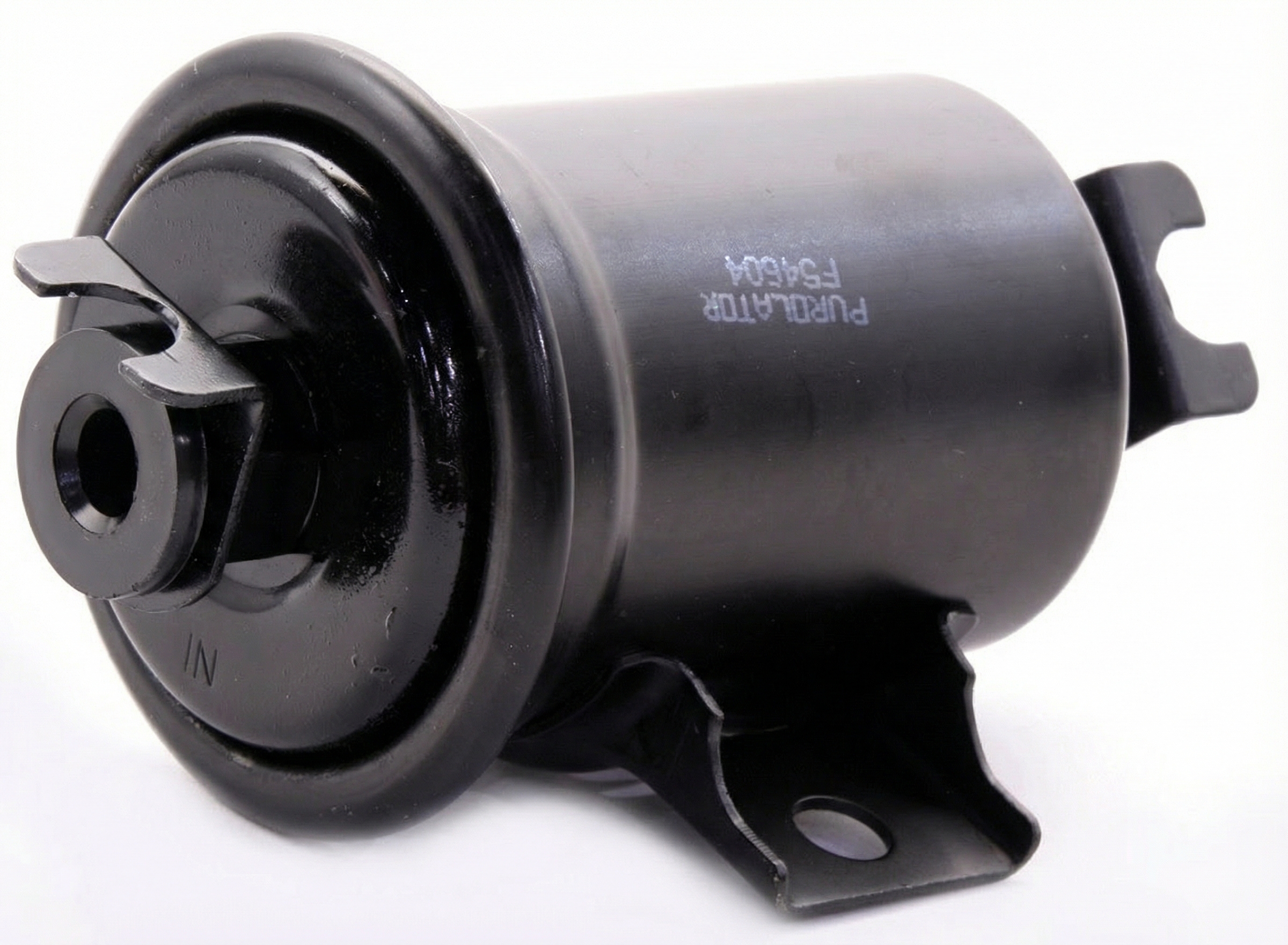
New Aftermarket Parts Available


The information in this article is provided for general reference and educational purposes only. Vehicle specifications, procedures, and part compatibility can vary by production date, trim level, and region. Always consult your vehicle's factory service manual and verify part numbers before purchasing or performing repairs. Safety-critical components such as airbags, seat belts, and braking systems should be installed by a qualified professional.
- Pontiac VIBE:
- 🧭 Diagnostic Flowchart
- 🎬 Helpful Videos
- 🛍️ Shop This Part
- What's Unique About the 2005-2010 Pontiac VIBE
- Symptoms You May Notice
- Most Likely Causes
- Rare But Worth Checking
- Diagnosis Steps
- Parts You'll Likely Need
- Related Codes That Often Appear With This One
- Technical Service Bulletins (TSBs) & Recalls
- Platform-Specific Known Issues
- Mechanic-Grade Diagnostic Values
- Scan Tool Commands That Help
- Wiring & Ground Locations
- Real Owner Repair Stories
- "I Checked Everything" — The Actual Cause
- OEM Part Supersession History
- Model Year Variations Within This Range
- 🎟️ Get 5% Off