

P0442 on 2003-2010 Porsche Cayenne: EVAP Small Leak Causes and Fixes
On a 2003-2010 Porsche Cayenne, code P0442 most often means the gas cap is loose or its seal has failed. An OEM replacement cap is around $40 and is the first and easiest part to replace. If that doesn't work, a unique and common cause on this platform is a cracked brake booster vacuum hose. If neither is the cause, a smoke test is needed to find the leak.
- Always start with the gas cap. It's the cheapest, easiest, and most common fix for P0442.
- If a new gas cap doesn't solve the issue, your next step should be to inspect the brake booster vacuum hose for cracks, as this is a known quirk of the Porsche Cayenne.
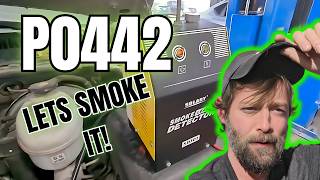
- Do not replace expensive parts like the purge valve or leak detection pump without confirming the failure. A professional smoke test is the best way to accurately diagnose the leak and avoid wasting money on unnecessary parts.
What's Unique About the 2003-2010 Porsche Cayenne
On the first-generation Cayenne (955/957), the P0442 code is a very common issue that owners encounter. While the causes are typical for any vehicle (gas cap, purge valve), a unique and frequently overlooked culprit on the Cayenne is a cracked brake booster vacuum hose. This hard plastic hose is linked to the same vacuum system that serves the EVAP components. A single vacuum pump powers both the brake booster and other systems like EVAP. A crack in this hose creates a vacuum leak that the engine computer misinterprets as an EVAP system fault, triggering the P0442 code. Many owners and even dealers report this as a common failure.
Generation note: This range covers the entire first generation of the Porsche Cayenne, which includes the 955 (2003-2006) and the facelifted 957 (2007-2010). The underlying causes and diagnostic procedures for P0442 are largely identical across both versions, though some part numbers may differ slightly. The platform-mate VW Touareg and Audi Q7 share many of these issues.
Symptoms You May Notice
- Check Engine Light is on
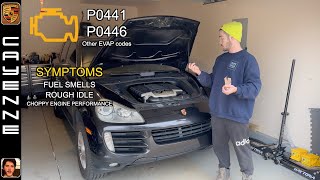
- A faint smell of fuel, particularly around the gas cap area or rear of the vehicle.
- Difficulty starting immediately after refueling (a symptom pointing towards a faulty purge valve stuck open).
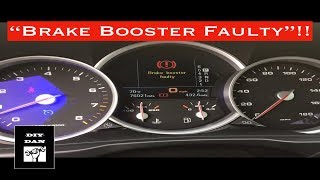
- In some cases, a 'Brake Booster Faulty' message may appear on the dash 🎬 Watch: How to clear the Brake Booster Faulty message. if the brake booster vacuum hose is the source of the leak.
- Replacing the purge valve or leak detection pump before checking the gas cap and brake booster hose. Always start with the simplest and most common fixes.
- Using a cheap, aftermarket gas cap which fails to seal properly and causes the code to persist.
Most Likely Causes
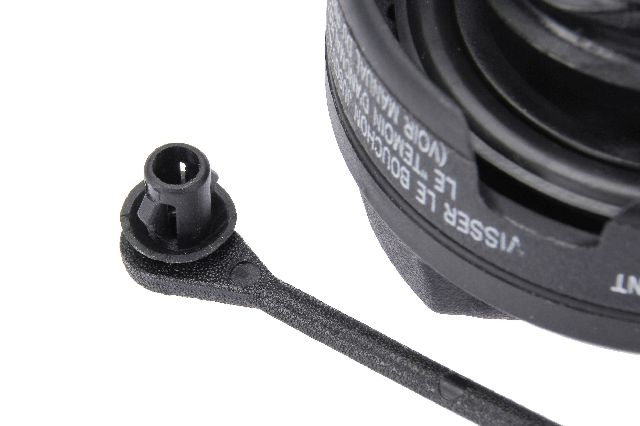
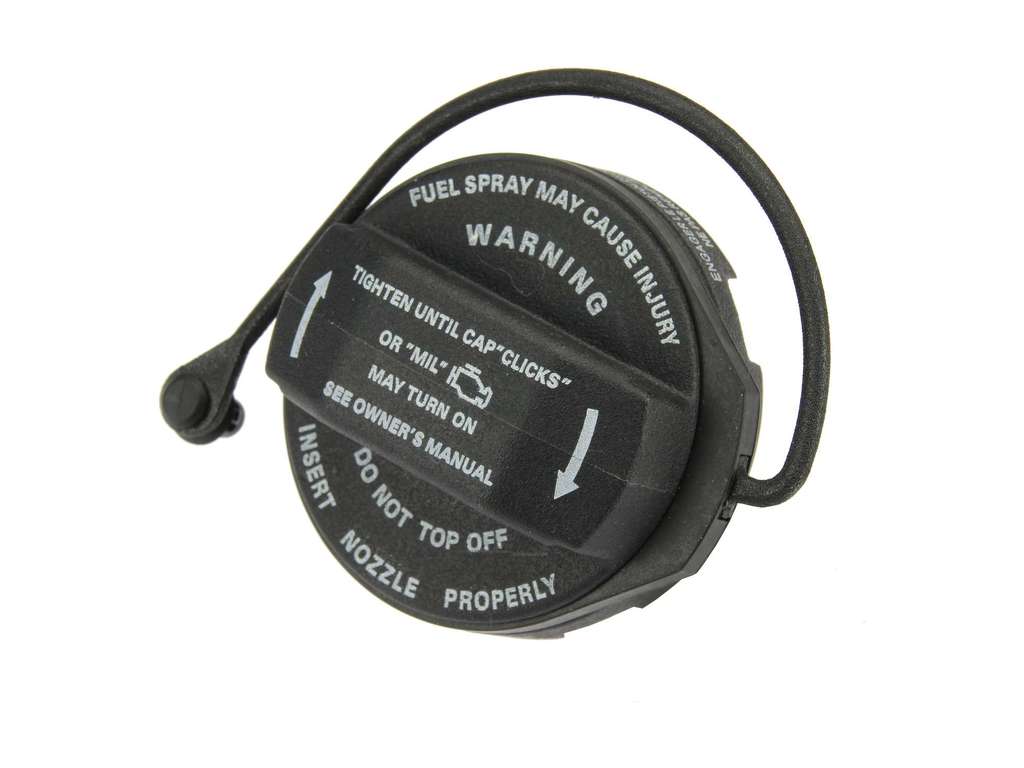
- Loose or Faulty Gas Cap 🔴 High Probability → Shop Fuel Tank Cap The rubber O-ring seal on the gas cap dries out, cracks, and fails over time, preventing a proper seal. This is a very common failure item on all vehicles, including the Cayenne, and is often the first part to be replaced.
How to confirm: First, ensure the cap is tightened until it clicks at least 3 times. If the light returns, inspect the rubber seal on the cap for any visible cracks, stiffness, or damage. Often, the cracks are obvious upon inspection. A new OEM cap is an inexpensive and definitive test.
Typical fix: Replace the gas cap with a new OEM part. It is highly recommended to use a genuine Porsche cap (Part No. 99620124103), as some aftermarket caps do not seal correctly and will cause the code to return.
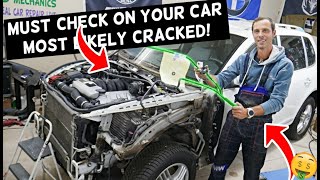
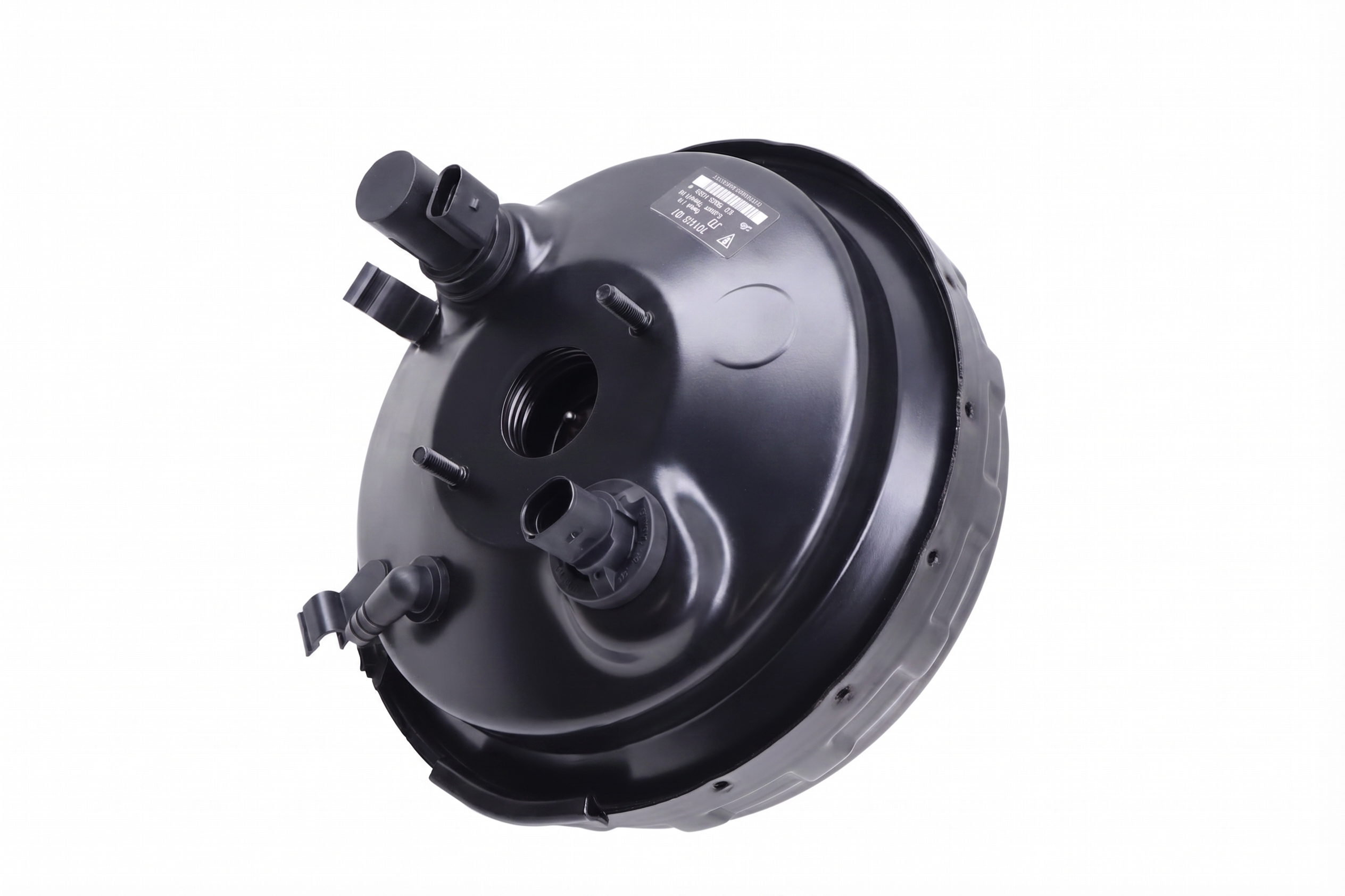
Est. part cost: $20-$50 - Cracked Brake Booster Vacuum Hose 🟡 Medium Probability → Shop Power Brake Booster The hard plastic vacuum hose for the brake booster becomes brittle from engine heat and age, developing hairline cracks, especially at connection points. Because a single vacuum pump serves both the brakes and the EVAP system, a leak here is often diagnosed as an EVAP leak by the ECU. This is a well-documented issue on Rennlist and other forums.
How to confirm: Visually inspect the hard plastic vacuum line that runs across the passenger side of the engine bay, particularly near the coolant expansion tank and where it enters the firewall. A smoke test will definitively reveal a leak from this hose. Sometimes a 'Brake Booster Faulty' warning will accompany the CEL.
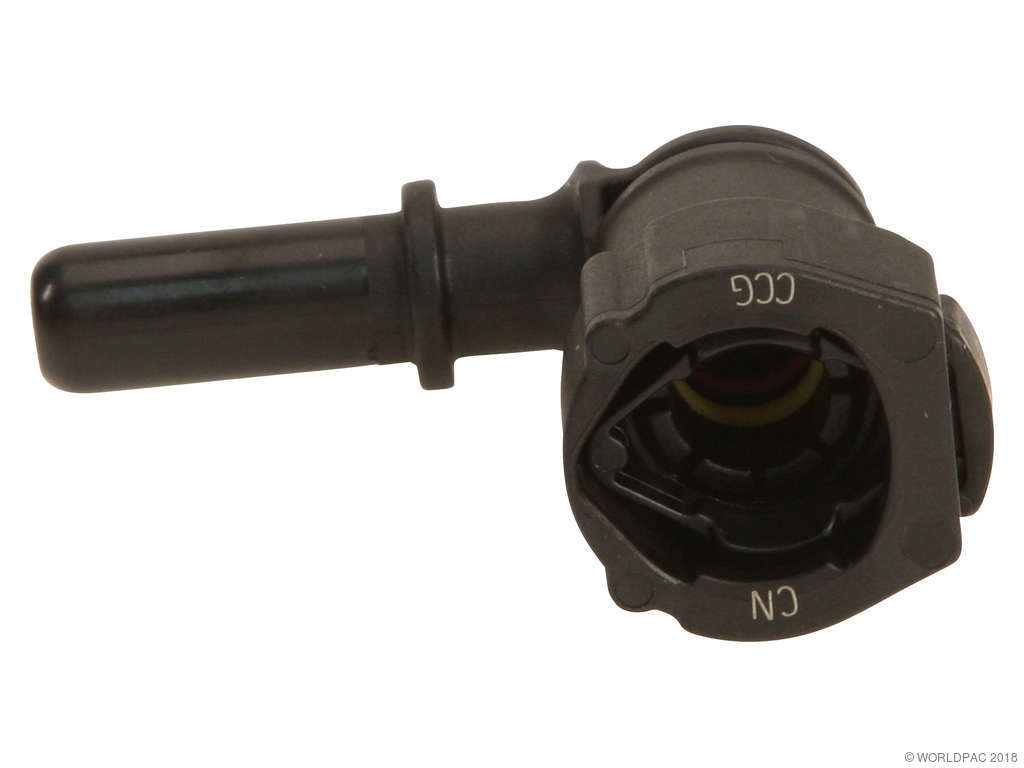
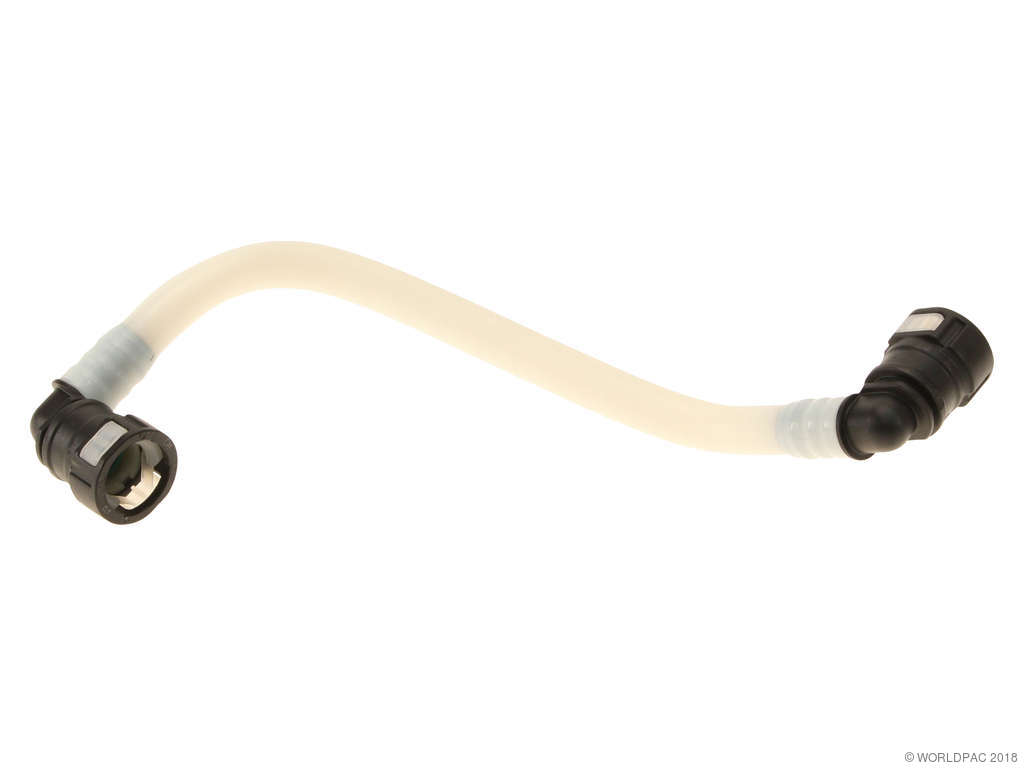
Typical fix: Replace the cracked brake booster hose assembly. The part number varies by model; 955-355-579-30 is cited for some models, while 955-355-579-51 is for 03-06 Turbo models. 🎬 See this walkthrough for replacing cracked plastic vacuum lines. Some owners perform a temporary repair using heater hose and clamps.
Est. part cost: $60-$120 - Faulty EVAP Purge Valve (N80 Valve) 🟡 Medium Probability → Shop Vapor Canister This solenoid valve can fail by sticking partially open or not sealing correctly, creating a constant small leak in the system. It's a common failure point on many VAG vehicles, including Porsche.
How to confirm: A common symptom is difficulty starting the engine right after filling the gas tank. The definitive test is to remove the valve and see if you can blow air through it; it should be closed by default when unpowered. A smoke test will also show smoke passing through a faulty valve.
Typical fix: Replace the purge valve. It is typically located in the engine bay, mounted to a bracket, and is relatively easy to access. The OEM part is often made by Bosch. 🎬 Watch: Step-by-step purge valve replacement on a Cayenne VR6.
Est. part cost: $50-$120 - Leaking EVAP Hoses or Lines ⚪ Low Probability Rubber and plastic hoses throughout the EVAP system can become brittle and crack over time due to heat and exposure, especially at connection points.
How to confirm: This is the most difficult cause to find without special tools. A professional smoke test is the most effective method. A technician injects pressurized smoke (preferably with nitrogen, not compressed air) into the EVAP system via a service port or by disconnecting the purge valve line and looks for where it escapes.
Typical fix: Once the leaking hose is identified via a smoke test, it must be replaced.
Est. part cost: $20-$100 - Faulty Leak Detection Pump (LDP) ⚪ Low Probability → Shop Evaporative Emissions System Leak Detection Pump The LDP is the component that pressurizes the system to test for leaks. The internal diaphragm can fail, or the pump itself can develop a leak, causing it to report a fault.
How to confirm: This usually requires a smoke test or a diagnostic scan tool capable of running the EVAP system self-test. The pump is located near the fuel tank, typically in the right rear wheel well area.
Typical fix: Replace the leak detection pump assembly. This is often one of the last parts to be replaced after other, more common causes are ruled out.
Est. part cost: $200-$400
Rare But Worth Checking
- Cracked Charcoal Canister: → Shop Vapor Canister While rare, the plastic housing of the charcoal canister can develop cracks from age or impact from road debris, creating a leak. This is usually found during a smoke test. Over-filling the fuel tank can also saturate and ruin the canister.
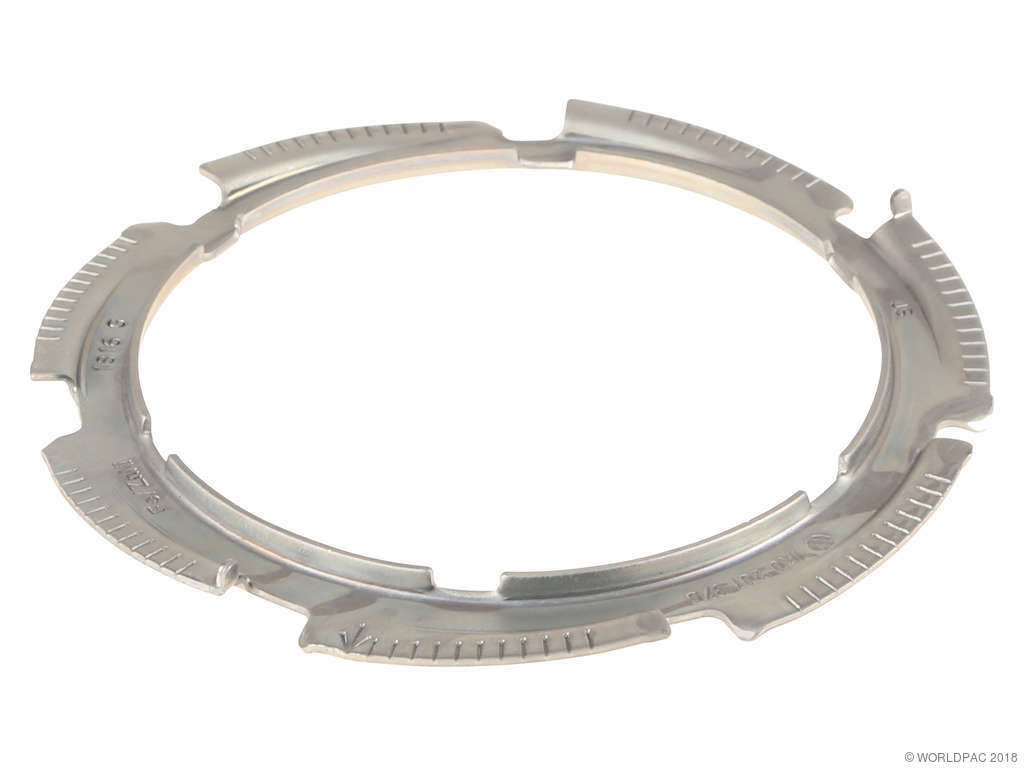
- Cracked Fuel Tank Seal Nut: → Shop Fuel Tank On the platform-mate Audi Q7, owners have discovered a cracked plastic seal/nut on top of the fuel tank, accessible from inside the vehicle under the rear carpet. This can be a hidden source of a small EVAP leak.
Diagnosis Steps
- Read the code with an OBD-II scanner to confirm P0442 is present.
- Inspect the gas cap. Ensure it is tightened until it clicks several times. If the seal looks old, cracked, or brittle, replace it with a genuine OEM part as the first step. Clear the code and drive for a few days to see if it returns.
- If the code returns, perform a thorough visual inspection of the engine bay. Specifically look at the hard plastic brake booster vacuum line on the passenger side for any visible cracks, especially at the ends and check valves.
- Inspect the EVAP purge valve (N80 valve) in the engine bay. Check its connected hoses for cracks and ensure the electrical connector is secure.
- If the simple checks do not reveal the issue, the most effective next step is a professional smoke test. This involves injecting low-pressure smoke into the EVAP system to visually identify the source of the leak, which could be a cracked hose, a faulty valve, the charcoal canister, or the leak detection pump.
- Based on the smoke test results, replace the component that is leaking.
Parts You'll Likely Need
- Fuel Tank Cap
(OEM #99620124103)— This is the most frequent cause. The seal degrades over time, causing a small leak that triggers the code.
Trusted brands: Porsche (OEM)
OEM price range: $20-$50
Aftermarket price range: $15-$30 - EVAP Purge Valve (N80 Valve)
(OEM #94811002002 / Bosch 0280142431 (V8 Models))— A common failure point that gets stuck open, causing a persistent small leak and sometimes hard starting after refueling.
Trusted brands: Bosch, Porsche (OEM)
OEM price range: $90-$150
Aftermarket price range: $40-$80 - Brake Booster Vacuum Hose
(OEM #95535557930, 95535557951 (Turbo 03-06))— A unique failure on the Cayenne platform where a crack in this hose is misinterpreted by the ECU as an EVAP leak.
Trusted brands: Porsche (OEM)
OEM price range: $60-$120
Related Codes That Often Appear With This One
- P0455 — Indicates a large EVAP leak. If a small leak (P0442) worsens, or if the gas cap is left off entirely, it may eventually trigger a P0455 code.
- P0441 — Indicates incorrect purge flow, often pointing directly to a faulty or stuck EVAP purge valve (N80 valve).
- P0456 — Indicates a very small EVAP leak. Some systems use different codes for different leak sizes, and this may appear alongside or instead of P0442 depending on the exact size of the leak detected.
Platform-Specific Known Issues
- Brake Booster Vacuum Hose Confusion: → Shop Power Brake Booster A cracked brake booster vacuum line is a well-documented cause of P0442 on this platform, even though it's not technically part of the EVAP system. Many owners have chased the code by replacing EVAP parts only to find this hose was the culprit. A forum member on Rennlist noted, 'the single vacuum pump powers the brake booster and other systems like evap. So it throws evap codes predictably when there are leaks in the system.'
- Owner Repair Story: On Rennlist, a user with an '08 Cayenne S fixed a nagging P0442 code by replacing the brake booster hose (Part #955-355-579-30) after already replacing the gas cap and checking the purge valve. They noted the crack was at a connection point on the passenger side of the engine bay and that after replacement, the CEL was gone.
Mechanic-Grade Diagnostic Values
- EVAP Purge Valve (N80) Solenoid Resistance — expected: 15 to 35 Ohms. Failure: A reading outside of this range (open circuit or short) indicates a faulty solenoid coil.
- Brake Booster Vacuum Pump Output — expected: 20-22 inHg (inches of Mercury) at idle. Failure: A reading below 17 inHg suggests the vacuum pump is failing and may not be able to supply adequate vacuum for both the brake booster and the LDP-driven EVAP test, potentially triggering a P0442.
Scan Tool Commands That Help
- Porsche PIWIS Tester: EVAP System Leak Test / Short Test — This function automates the process of sealing the EVAP system and running the leak detection pump (LDP) to check for leaks. It can command the vent valve closed and the purge valve closed to isolate the system for a smoke test or pressure decay test. It provides a more controlled environment than waiting for the vehicle's own drive cycle monitor to run.
- Porsche PIWIS Tester: Activate EVAP Purge Valve (N80) — To manually test the purge valve's function. A technician can command the valve to open and close while listening for a click or checking for flow with a vacuum gauge or by blowing through it (when removed). This confirms if the valve is physically stuck or electrically non-responsive.
- Porsche PIWIS Tester: Activate EVAP Canister Shutoff Valve (Vent Valve) — To seal the EVAP system for a smoke test. The vent valve is normally open, so it must be commanded closed to pressurize the system with smoke. If smoke immediately escapes from the vent, the valve is faulty or the command is not working.
Wiring & Ground Locations
- GP-12, GP-13, GP-14 — Located on the right rear and right center of the engine compartment.. These are primary ground points for the engine compartment. The DME (engine computer) and associated sensors/solenoids for the EVAP system rely on these grounds. A corroded or loose ground at these locations can cause erratic behavior or incorrect readings from EVAP components.
- GP-5, GP-6 — Located at the left and right front of the engine compartment.. These ground points serve various front-end electronics. While not directly tied to the rear-mounted EVAP components, they can affect the DME and other modules that interpret EVAP data. Verifying all engine bay grounds is a crucial step in diagnosing persistent, hard-to-find electronic faults.
Real Owner Repair Stories
- Rennlist user 'JMC376' (2008 Porsche Cayenne S (957)) — Nagging Check Engine Light with code P0442.
❌ Tried (didn't work) Replaced the gas cap., Removed and tested the EVAP purge valve, which appeared to be working correctly.
✅ What actually fixed it The user visually inspected accessible hoses and found a cracked plastic fitting on the brake booster vacuum hose (Part #955-355-579-30) on the passenger side of the engine bay. Replacing this hose resolved the P0442 code. - Rennlist user 'thesteve' (2003 Porsche Cayenne Turbo (955)) — P0442 code that returns after reset, accompanied by a 'Brake Booster Faulty' warning light.
❌ Tried (didn't work) Temporary repair with self-vulcanizing tape, which eventually failed again.
✅ What actually fixed it The user initially had a crack on one end of the brake booster vacuum line. Later, the small EVAP leak code turned into a major leak with rough idling. The user found another crack on the opposite end of the same brake booster line. Repairing this second crack resolved all issues, confirming that the entire line is a failure point and is tied into more than just the brake system.
"I Checked Everything" — The Actual Cause
- A common scenario for the P0442 on this platform is a smoke test that shows no leaks within the traditional EVAP system (from filler neck to purge valve). The actual cause is often a crack in the brake booster vacuum hose. Because this hose is part of the vacuum supply system *for* the EVAP test pump (LDP), a leak here is interpreted by the DME as an EVAP system leak, even though the EVAP system itself is sealed. A technician might not include the brake booster circuit in a standard EVAP smoke test, thus missing the root cause.
OEM Part Supersession History
95535557930→N/A - This is a valid number for some models.
Heads up: This part number is cited for non-Turbo models.95535557951→N/A - This is a valid number for some models.
Heads up: This part number is specifically cited for 2003-2006 Cayenne Turbo and Turbo S models. Using the wrong hose will result in fitment issues.
Model Year Variations Within This Range
- 2003-2006 (955): The brake booster vacuum hose for Turbo models (95535557951) is specific to this sub-generation. While the failure mechanism is the same, the part itself is different from later 957 models or base/S models.
Diagnostic Flowchart
Real Owner Stories
Aggregated from forums and TSBs cited above. Mileages and costs reflect what owners reported in those sources.
2008 Porsche Cayenne S
Symptoms: Nagging P0442 code that persisted even after replacing the gas cap and checking the purge valve.
What fixed it: Replaced the brake booster hose (Part #955-355-579-30) which had a crack at a connection point on the passenger side of the engine bay. The CEL disappeared after replacement.
Source hint: Rennlist.com: 'Small Evap Leak Investgation - P0442'
2005 Porsche Cayenne Turbo
Symptoms: Brake booster warning message appearing on the dash alongside EVAP codes.
What fixed it: Replaced the brake booster vacuum hose with part number 955-355-579-51. The error message cleared after driving the vehicle.
Source hint: RennTech.org: 'Brake booster warning troubleshooting'
2003-2010 Porsche Cayenne
Symptoms: CEL P0442 returning over and over again.
What fixed it: Replaced the gas cap first as a preliminary step, but required further diagnosis to resolve the persistent code.
Source hint: 6SpeedOnline.com: 'CEL P0442 - over and over'
Related OBD-II Codes
Frequently Asked Questions
Why am I getting a 'Brake Booster Faulty' message on my dash along with the P0442 code?
What is the correct part number for a replacement gas cap for the 2003-2010 Cayenne?
I have a 2005 Cayenne Turbo with a cracked brake booster hose. What part number do I need?
My Cayenne is hard to start immediately after filling up the gas tank. Is this related to P0442?
Where is the leak detection pump (LDP) located on the 955/957 Cayenne?
Can I use heater hose to fix the cracked brake booster vacuum line?
Helpful Videos
Used OEM Parts in Stock
New Aftermarket Parts Available

The information in this article is provided for general reference and educational purposes only. Vehicle specifications, procedures, and part compatibility can vary by production date, trim level, and region. Always consult your vehicle's factory service manual and verify part numbers before purchasing or performing repairs. Safety-critical components such as airbags, seat belts, and braking systems should be installed by a qualified professional.
- Porsche Cayenne:
- 🧭 Diagnostic Flowchart
- 🎬 Helpful Videos
- 🛍️ Shop This Part
- What's Unique About the 2003-2010 Porsche Cayenne
- Symptoms You May Notice
- Most Likely Causes
- Rare But Worth Checking
- Diagnosis Steps
- Parts You'll Likely Need
- Related Codes That Often Appear With This One
- Platform-Specific Known Issues
- Mechanic-Grade Diagnostic Values
- Scan Tool Commands That Help
- Wiring & Ground Locations
- Real Owner Repair Stories
- "I Checked Everything" — The Actual Cause
- OEM Part Supersession History
- Model Year Variations Within This Range
- Real Owner Stories
- 2008 Porsche Cayenne S
- 2005 Porsche Cayenne Turbo
- 2003-2010 Porsche Cayenne
- Related OBD-II Codes
- Frequently Asked Questions
- 🎟️ Get 5% Off