

P0442 on 2003-2005 Saturn L300: EVAP Small Leak Causes and Fixes
For a P0442 code on a 2003-2005 Saturn L300, the most likely fix is a loose or worn-out gas cap, which costs about $10-$30. An OEM-spec cap is highly recommended for a proper seal. If a new gas cap doesn't solve it, the next most common causes are a cracked EVAP hose, a faulty purge valve in the engine bay, or a faulty vent valve near the fuel tank. A smoke test is the most reliable way to locate these less obvious leaks.
- Always start with the simplest fix: check that your gas cap is tight. If it is, replace it with a new one before attempting any other repairs.
- The only symptom you will likely notice is the Check Engine Light; the car will drive normally.
- If a new gas cap does not fix the code, the next step should be a smoke test. This avoids the costly and time-consuming process of guessing which hose or valve is leaking.
- The two main valves to suspect after the gas cap are the purge valve (in the engine bay) and the vent valve (at the rear of the car).
What's Unique About the 2003-2005 Saturn L300
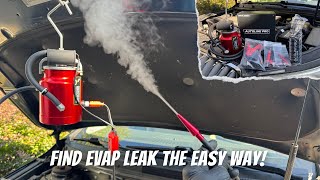
While P0442 is a generic code, its diagnosis on the Saturn L300, part of the GM Epsilon platform, is specifically addressed by General Motors. A Technical Service Bulletin (TSB) for this vehicle directs technicians to use a professional EVAP system tester (a smoke machine) to find the leak. 🎬 Watch: How to find small leaks using a smoke machine. [⭐] This suggests that unlike some vehicles where the cause is almost always one specific part, the L300 may require a more thorough diagnostic approach to avoid needlessly replacing parts, a situation highlighted by owner forum discussions where multiple components are sometimes replaced before the true, small leak is found.
Diagnostic Flowchart
Tap your situation to follow the diagnostic path that matches what you're seeing on this vehicle.
Symptoms You May Notice
- Check Engine Light is on
- A faint fuel smell may be noticeable, especially when parked in an enclosed space like a garage.
- Difficulty refueling, where the gas pump nozzle clicks off repeatedly before the tank is full, can sometimes occur if the vent valve is clogged or stuck.
- Replacing the oxygen sensor, as this is an emissions code but is unrelated to the O2 sensors.
- Replacing the charcoal canister when the leak is actually a simple hose or valve. The canister is often the most expensive part of the system and should only be replaced if a smoke test confirms it is cracked.
Most Likely Causes
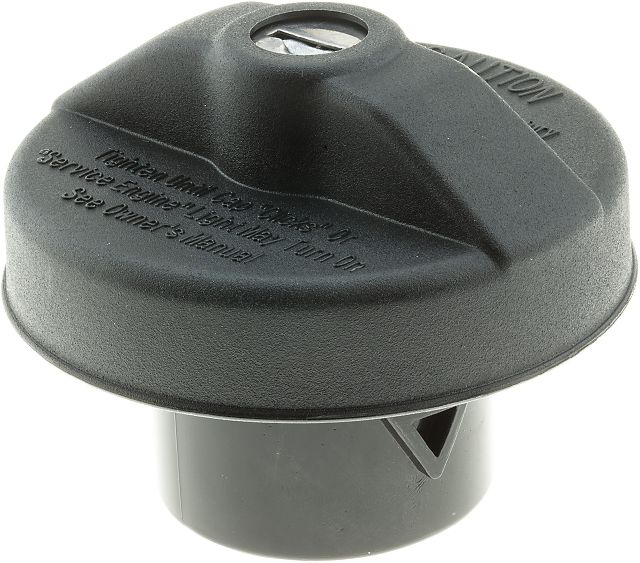
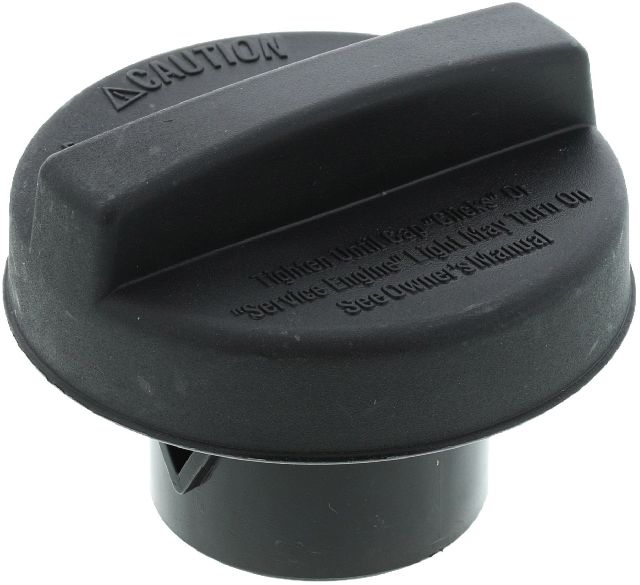
- Loose, Worn, or Incorrect Gas Cap 🔴 High Probability → Shop Fuel Tank Cap The gas cap seal is a rubber O-ring that degrades over time with exposure to fuel vapors and weather, making it the most frequent failure point for the EVAP system seal. Using a non-OEM cap can also lead to a poor seal.
How to confirm: Ensure the gas cap is tightened until it clicks several times. Inspect the rubber O-ring on the cap for cracks, stiffness, or damage. Check the fuel filler neck for rust or debris that could prevent a good seal.
Typical fix: Replace the gas cap with a new, OEM-spec part. The genuine GM part is ACDelco GT265.
Est. part cost: $10-$35 - Cracked or Disconnected EVAP Hose 🟡 Medium Probability The rubber and plastic hoses in the EVAP system, especially small rubber elbows and connectors, become brittle with age and exposure to engine heat, leading to small cracks that are hard to see.
How to confirm: A visual inspection may reveal an obvious crack, especially at connection points and bends. However, the most reliable method is to have a smoke test performed, which will force smoke through the system and reveal the exact location of the leak.
Typical fix: Replace the specific section of cracked hose or the faulty connector. A common failure point on similar GM vehicles is a rubber hose on top of the gas tank.
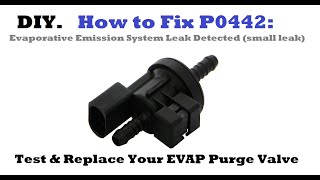
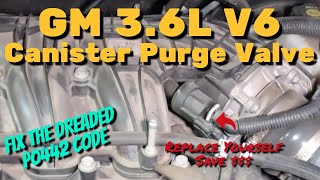
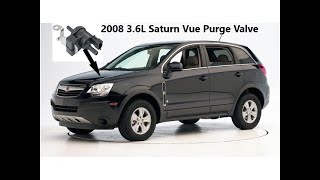
Est. part cost: $5-$50 - Faulty EVAP Canister Purge Valve 🟡 Medium Probability → Shop Vapor Canister This solenoid, located in the engine bay near the intake manifold, can fail by not closing completely, creating a constant small leak that the system detects. It can sometimes trigger a P0496 code along with P0442.
How to confirm: With the engine off, remove the valve and try to blow through it. If air passes through, it is stuck open and faulty. A professional can also command it open and closed with a scan tool to test its function. A classic symptom of a stuck-open purge valve is difficulty starting the engine immediately after refueling.
Typical fix: Replace the canister purge valve.
Est. part cost: $35-$90 - Faulty EVAP Canister Vent Valve/Solenoid ⚪ Low Probability → Shop Vapor Canister Located at the rear of the car near the fuel tank, this valve can get stuck or fail to seal due to dirt, debris, or internal failure, causing a leak. Its exposure to road grime and moisture makes it a common failure point on GM vehicles.
How to confirm: This is best confirmed with a smoke test or by using a scan tool to command the valve closed to see if it holds pressure. Visual inspection for dirt or corrosion can also be a clue. You can also test it by applying 12V to see if the solenoid clicks.
Typical fix: Replace the vent valve solenoid.
Est. part cost: $25-$50 - Rusted Fuel Filler Neck ⚪ Low Probability → Shop Fuel Filler Neck
How to confirm: Visually inspect the metal lip where the gas cap seals. If it is rusted, pitted, or uneven, it will not allow the cap's gasket to create a proper seal. Also inspect the entire length of the neck for rust holes, which may be hidden.
Typical fix: Clean the sealing surface with a wire brush or emery cloth. If corrosion is severe or there are holes, the entire fuel filler neck must be replaced.
Est. part cost: $50-$150
Rare But Worth Checking
- Cracked Charcoal Canister: → Shop Vapor Canister The canister itself, a black plastic box located near the fuel tank, can develop a hairline crack from age or impact from road debris, creating a small leak detectable by a smoke test.
- Leaking Fuel Tank Pressure Sensor Seal: → Shop Fuel Tank The seal for the sensor that measures tank pressure can degrade, creating a small leak at the top of the fuel tank/fuel pump module. A faulty sensor can also trigger other EVAP codes like P0452 or P0453.
- Leaking Fuel Pump Module Gasket: → Shop Fuel Pump The large O-ring that seals the fuel pump/sending unit assembly to the top of the gas tank can fail, causing a leak. A Saturn L300 owner on a forum found a leak on the top of the fuel sending unit itself.
Diagnosis Steps
- First, check the gas cap. Remove it and reinstall it, making sure it clicks at least three times. Clear the code and drive for a few days to see if it returns. This simple step fixes the majority of P0442 issues.
- If the light returns, inspect the gas cap's rubber seal for cracks or damage and the fuel filler neck for rust or debris. Clean the filler neck sealing surface with a wire brush or emery cloth.
- If the cap and filler neck are in good condition, replace the gas cap with a quality OEM-spec part like an ACDelco GT265. This is an inexpensive and very common fix.
- If the code persists, perform a thorough visual inspection of all accessible EVAP hoses in the engine bay and running along the chassis to the fuel tank. Pay close attention to rubber elbows and connectors for any cracks, splits, or loose connections.
- The most definitive diagnostic step is to have a professional smoke test performed. This test fills the EVAP system with a harmless, visible smoke and pressurizes it slightly. Any leaks will be revealed by a trail of smoke. This is the procedure recommended by the manufacturer TSB and is the best way to avoid replacing unnecessary parts.
- Based on the smoke test results, replace the leaking component, which could be a hose, the purge valve, the vent valve, the fuel filler neck, or the canister itself.
- After the repair, the code must be cleared. The vehicle will then need to complete a full drive cycle (which may take a few days of normal driving) for the EVAP monitor to run and confirm the fix.
Parts You'll Likely Need
- Fuel Tank Cap
(OEM #ACDelco GT265 (GM 19432733))— This is the most common failure point for a P0442 code, as the seal wears out over time. It is always the first and cheapest part to check and replace.
Trusted brands: ACDelco, Stant, Gates, Motorad
OEM price range: $25-$35
Aftermarket price range: $10-$20 - Vapor Canister Purge Valve / Solenoid
(OEM #ACDelco 214-648 (GM 12581282) - V6 Engine)— This valve in the engine bay can fail to close completely, causing a persistent small leak. It's a common cause if the gas cap is not the issue.
Trusted brands: ACDelco, Dorman, Standard Motor Products
OEM price range: $60-$90
Aftermarket price range: $35-$60 - Vapor Canister Vent Valve / Solenoid
(OEM #ACDelco 214-1091 (GM 25932571))— Located at the rear of the vehicle near the charcoal canister, this valve can get stuck or fail due to exposure to road debris and moisture, preventing the system from sealing for its pressure test.
Trusted brands: ACDelco, Dorman, Standard Motor Products
OEM price range: $40-$60
Aftermarket price range: $25-$45
Related Codes That Often Appear With This One
- P0455 — A large leak (P0455) may be fixed, but a secondary, smaller leak (P0442) was also present and is now being detected on its own.
- P0446 — This code points to a fault in the EVAP vent control circuit. A vent valve that is malfunctioning can also cause a leak code like P0442.
- P0496 — This code indicates 'EVAP Flow During a Non-Purge Condition,' which almost always points to a faulty purge valve stuck open. A stuck-open purge valve is a type of leak, which can also trigger P0442.
Technical Service Bulletins (TSBs) & Recalls
- PIT4943D: Informs technicians that for a P0442 code, they should refer to a specific Techlink article about using an EVAP smoke machine for proper diagnosis, rather than just replacing parts.
Platform-Specific Known Issues
- A GM Technical Service Bulletin (TSB), #PIT4943D, was issued regarding this code on Saturn vehicles. It advises technicians to use an EVAP system tester (smoke machine) for diagnosis, underscoring that finding the leak may require more than a simple visual inspection.
- Owner forums contain accounts of this code being difficult to resolve on Saturns, with dealerships sometimes replacing multiple parts (like the purge solenoid and fuel pressure sensor) before finding the true cause, reinforcing the value of an accurate smoke test diagnosis.
- A Reddit user with a Saturn L200 (a close sibling) reported a P0442 code was ultimately caused by a cracked rubber hose on top of the gas tank, a difficult-to-see location without a smoke test or dropping the tank.
Mechanic-Grade Diagnostic Values
- Fuel Tank Pressure (FTP) Sensor Voltage — expected: Approximately 2.5 volts at atmospheric pressure (normal). Voltage decreases with vacuum and increases with pressure.. Failure: A reading stuck near 0 volts or 5 volts indicates a failed sensor.
- EVAP Canister Vent Valve Solenoid Resistance — expected: Typically between 20 and 50 ohms.. Failure: An open circuit (infinite resistance) or a short (zero resistance) indicates a bad solenoid coil.
Scan Tool Commands That Help
- Tech2 / Professional Scan Tool: EVAP Vent Solenoid Close/Open Test — This bidirectional control is used to command the normally-open vent valve to close. While monitoring system pressure with a smoke machine or pressure gauge, this command seals the system for a leak test. It directly verifies the electrical and mechanical function of the vent solenoid.
- Tech2 / Professional Scan Tool: EVAP Purge/Seal — This function commands the purge valve and vent valve to seal the system, then monitors the Fuel Tank Pressure (FTP) sensor to see if vacuum or pressure holds. It's the automated version of the test the ECM runs and is crucial for verifying a fix without waiting for a full drive cycle.
Wiring & Ground Locations
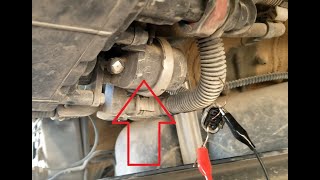
- EVAP Canister Purge Solenoid — On the right side of the engine for both 2.2L and 3.0L engines. On the V6, it's often on or near the air induction box.. This is a key actuator for the EVAP system. Knowing its location is essential for testing and replacement, as it's a common failure point for P0442.
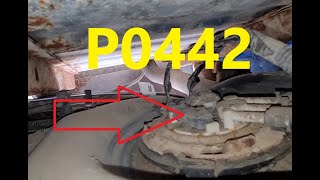
- EVAP Canister Vent Solenoid — At the rear of the vehicle, near the fuel tank filler tube/neck, attached to the charcoal canister.. This solenoid must close to seal the system for the leak test. Its location near the rear wheels exposes it to road grime and moisture, leading to corrosion and wiring issues. A common failure point is a broken wire inside the insulation right at the connector.
- G118 (2.2L Engine) — Ground point located on the front of the engine block, above the starter.. A poor ground connection here could potentially affect the operation of engine-mounted sensors or solenoids, although it's not a primary suspect for EVAP codes.
- EVAP Service Port — Located in the engine compartment in the EVAP purge line, often near the air induction box, and is identified by a green colored cap.. This is the designated access point for a technician to connect a smoke machine to test the system for leaks, as recommended by the TSB.
Real Owner Repair Stories
- BobIsTheOilGuy forum user (2005 Saturn L300 3.0L V6) — Check Engine Light on from the day the car was purchased with only 16 miles on the odometer.
❌ Tried (didn't work) 4 different gas caps, 1 fuel pump
✅ What actually fixed it The issue was finally resolved after the dealership replaced the fuel tank twice. This implies the leak was in the tank itself or one of its integrated components/seals.
When the Usual Fixes Don't Work
- While the gas cap, purge valve, and vent valve are the most common culprits, at least one owner of a 2005 L300 reported an ongoing P0442 issue that was only resolved after the dealership replaced the entire fuel tank twice, after having already replaced the gas cap four times and the fuel pump once. This highlights that in rare cases, the leak can be from the fuel tank body or its integrated seals, which a standard smoke test might not easily pinpoint if the leak is very small or occurs only under specific conditions.
OEM Part Supersession History
10382105, 15750484, 22728634→25932571— Standard part evolution and consolidation across multiple GM platforms.
Heads up: Some GM parts vendors note that part 25932571 has been redesigned and may not be correct for all original applications. They advise verifying the correct part number with a VIN before ordering.
Model Year Variations Within This Range
- 2003-2005: The 2003 model year received a mild facelift compared to the 2000-2002 models. While the core EVAP system components are similar, early L-series (2000-2002) were known for more electrical issues, making 2003 and newer models generally more reliable.
Helpful Videos

We Have This Part in Stock


The information in this article is provided for general reference and educational purposes only. Vehicle specifications, procedures, and part compatibility can vary by production date, trim level, and region. Always consult your vehicle's factory service manual and verify part numbers before purchasing or performing repairs. Safety-critical components such as airbags, seat belts, and braking systems should be installed by a qualified professional.
- Saturn L300:
- 🧭 Diagnostic Flowchart
- 🎬 Helpful Videos
- 🛍️ Shop This Part
- What's Unique About the 2003-2005 Saturn L300
- Symptoms You May Notice
- Most Likely Causes
- Rare But Worth Checking
- Diagnosis Steps
- Parts You'll Likely Need
- Related Codes That Often Appear With This One
- Technical Service Bulletins (TSBs) & Recalls
- Platform-Specific Known Issues
- Mechanic-Grade Diagnostic Values
- Scan Tool Commands That Help
- Wiring & Ground Locations
- Real Owner Repair Stories
- When the Usual Fixes Don't Work
- OEM Part Supersession History
- Model Year Variations Within This Range
- 🎟️ Get 5% Off